Parquet and herringbone are installation patterns rather than separate product categories, though they are most commonly executed in solid or engineered blocks. The geometry of the layout changes the acoustic and visual behavior of the floor significantly.
Everything discussed in this article applies to both solid and engineered hardwood unless a benefit is specifically tied to one format. Bamboo, while botanically a grass, is often included in the wood flooring conversation and shares many of the same structural and environmental properties.
11 Benefits of Wood Flooring
1. Exceptional Longevity — A Floor That Outlasts the Renovation Cycle
The single most structurally important benefit of wood flooring is how long it lasts. A well-installed, properly maintained hardwood floor routinely reaches 50 years of service life. Historic homes in New England, the Pacific Northwest, and across Europe contain original oak floors that are well over a hundred years old and still structurally sound.
This is not merely a talking point. It has direct financial consequences. Carpet typically needs replacement every 8 to 12 years. Laminate, depending on AC rating and traffic load, has a functional lifespan of 15 to 25 years. Luxury vinyl plank sits in a similar range. A hardwood floor installed once, maintained correctly, and refinished periodically will outlast two or three full replacement cycles of any of those alternatives — which means the upfront cost premium erodes significantly over a 30-year ownership horizon.
The longevity differential is directly tied to what wood flooring is, at a material level. It is a dense, dried, and finished biological structure with no synthetic polymers to degrade under UV exposure or heat cycling. Its enemies are moisture imbalance and abrasion, both of which are manageable.
2. Refinishability — The Ability to Reset the Clock
Most flooring materials are consumable. When a vinyl plank chips, a ceramic tile cracks, or a laminate board swells, the response is replacement. Wood flooring operates on a different logic. Surface damage — scratches, dullness, minor dents, staining, outdated finish tone — can be resolved through sanding and refinishing without touching the subfloor or adjacent rooms.
A standard solid hardwood board at 18mm can be sanded between 5 and 8 times over its lifetime before the wood becomes too thin to refinish safely. Engineered hardwood with a 4mm to 6mm veneer can typically be refinished 2 to 3 times. The cost of refinishing is a fraction of full replacement — and the result is a floor that looks new again, without the waste stream of a full tearout.
This also gives homeowners genuine design flexibility across decades. Refinishing is not just a repair operation. It is an opportunity to change the stain color, switch from a gloss finish to a matte or satin tone, or add texture through wire-brushing or fuming. A floor installed with a dark walnut stain in 2005 can become a natural Nordic-style surface in 2030 through a sand and re-coat, at a cost that is meaningfully lower than new flooring.
For a deeper look at what the process involves and what finish options are available, this guide on how to refinish hardwood floors walks through the full sequence from assessment to final coat.
3. Indoor Air Quality — What Wood Does Not Trap
Carpet accumulates dust mites, pet dander, pollen, mold spores, and VOCs that are tracked in from outside. These particles embed in fiber structures at a depth that neither vacuuming nor steam cleaning fully reaches. For households with asthma, allergies, or respiratory sensitivities, carpet is a continuous background source of airborne particulate.
Wood flooring does not harbor these contaminants in the same way. Its smooth, hard surface means that allergens and dust sit on top, where they are easily swept, vacuumed, or damp-mopped away rather than embedded. This is one reason hardwood is the standard choice in clinical environments, schools, and healthcare settings where air hygiene is a priority.
Quality hardwood with a water-based or low-VOC finish also contributes less off-gassing to the indoor environment than laminate cores, certain vinyl formulations, or carpet adhesives. The wood itself is hygroscopic — it absorbs and releases moisture — which means it functions as a passive humidity buffer, helping to stabilize the indoor climate rather than simply sitting inert on the floor plane.
It is worth noting that the air quality benefit is tied to finish chemistry. Older oil-based polyurethane finishes can off-gas at high levels during and after installation. Modern water-based and UV-cured finishes significantly reduce that exposure window. If indoor air quality is a primary concern, specifying a GREENGUARD Gold certified hardwood product is a straightforward way to verify low emission levels.
4. Acoustic Performance — Neither Silent Nor Harsh
The acoustic behavior of a floor is one of the least-discussed but most lived-in aspects of a flooring choice. Hard surfaces generally fall into two categories: those that reflect sound (tile, polished concrete) and those that absorb it (carpet). Hardwood sits between these poles in a way that is genuinely useful.
Wood absorbs impact noise through its cellular structure rather than reflecting it the way ceramic or stone does. It reduces the hollow, echoey quality that open-plan spaces develop when they have tile or polished concrete underfoot. At the same time, it does not produce the muffled, acoustically dead quality of carpet, which flattens room sound and makes music and conversation feel dampened.
The acoustic result in a wood-floored room is what sound engineers often describe as warm and balanced — reflective enough to give a space energy, absorptive enough to prevent flutter echo. This is why hardwood has been the standard in music studios, performance rehearsal spaces, and dance floors for generations.
Impact sound transmission between floors — footfall noise heard by occupants below — is primarily a function of the underlayment system rather than the surface material. If noise reduction between levels is a concern, the choice of acoustic underlay matters considerably. This article on how to soundproof wood floors covers the underlayment options and installation details that drive IIC performance in practice.
5. Thermal Comfort and Underfloor Heating Compatibility
Wood is a natural thermal insulator. Its cellular structure traps air in a way that denser materials like tile and stone cannot, which means it does not feel cold underfoot at ambient room temperature. In San Diego’s climate this matters less than in colder regions, but for homeowners considering whole-home heating efficiency, the difference in floor surface temperature between hardwood and ceramic tile in an unheated room is measurable and meaningful.
Engineered hardwood is also one of the more compatible solid surface materials for use over radiant and hydronic underfloor heating systems. The dimensional stability of its layered construction means it tolerates the thermal cycling of a radiant system — warming up and cooling down over daily use — without the cupping and gapping risk that solid hardwood faces when heat is applied from below.
The key compatibility variable is the surface temperature ceiling. Most hardwood manufacturers specify a maximum surface temperature of 27°C (80°F) to prevent excessive drying and movement. A correctly designed radiant system will operate well within this range in normal use. For anyone exploring this combination, the full guide on hardwood flooring and underfloor heating covers species selection, installation method, and moisture management in detail.
6. Design Versatility Across Every Interior Style
Wood flooring does not belong to a single aesthetic. This is worth stating clearly, because the mental model many homeowners carry — hardwood equals traditional, formal, older — is not accurate and has not been for decades.
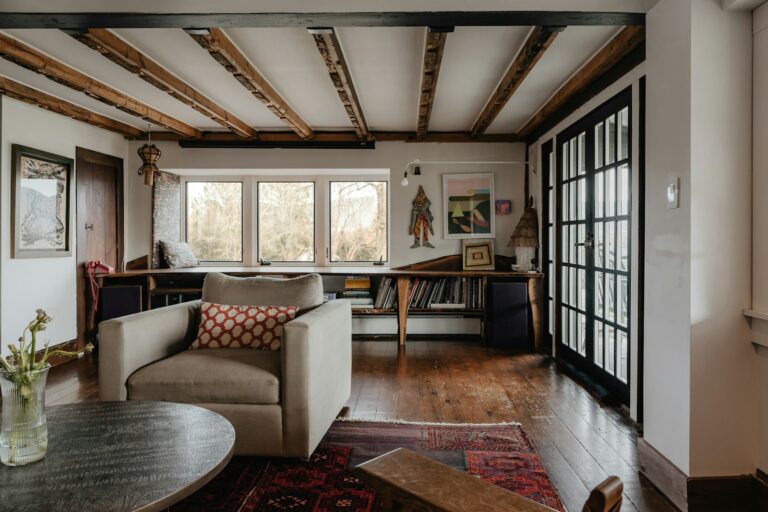
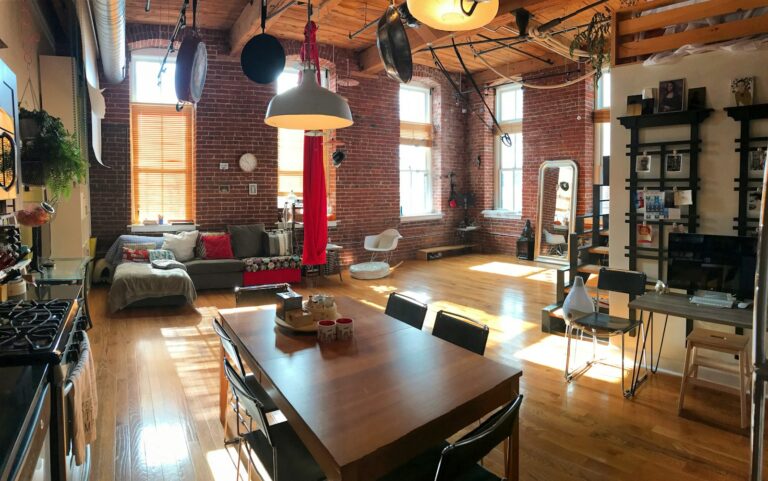
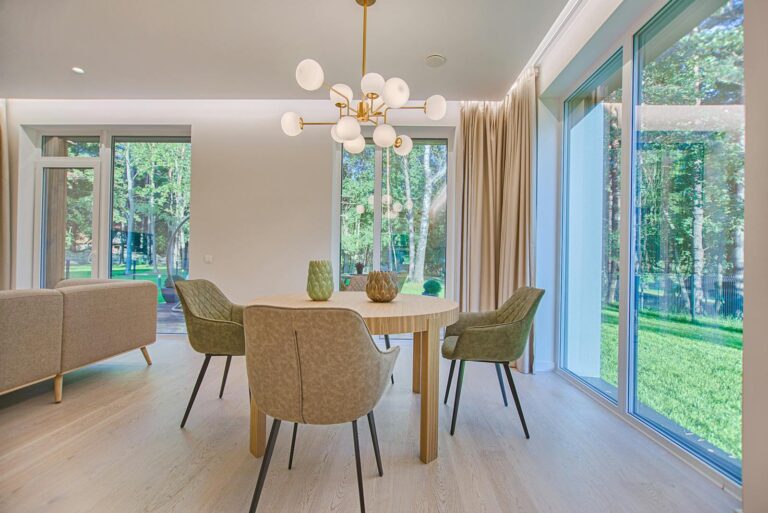
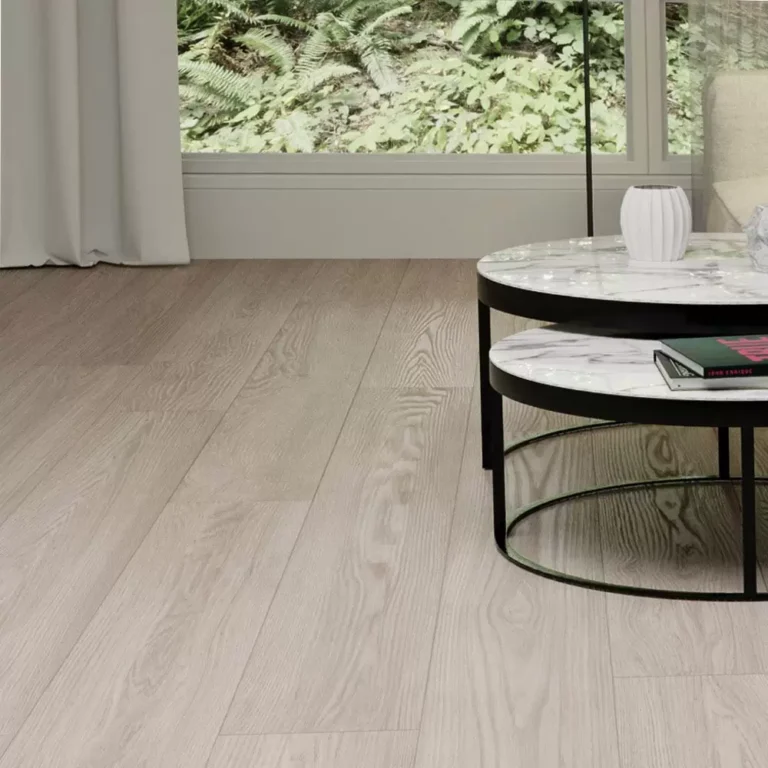
The design range available within hardwood alone is wide enough to support virtually any interior direction. Wide-plank white oak in a natural or Osmo-oiled finish reads as contemporary Scandinavian. Dark-stained walnut planks align with mid-century modern palettes. Reclaimed wide plank pine connects to farmhouse and industrial aesthetics. Herringbone parquet in a light ash or maple functions cleanly in both traditional and transitional spaces. Wire-brushed and lightly smoked formats have become dominant in high-end residential and hospitality settings over the last several years precisely because they combine the natural quality of real wood with a surface texture that hides everyday wear.
Species selection adds another layer of differentiation. The color range across just the most common North American hardwoods — from pale maple through blonde ash, amber pine, warm cherry, mid-tone red oak, cool white oak, and dark walnut — covers essentially the full warm-to-cool spectrum. The question is not whether wood flooring can work in a given design. The question is which wood, which finish, which format, and which installation pattern serves that design best.
For those working through species selection specifically, the comparison between red oak versus white oak is one of the most common decision points, and the linked article covers color variation, hardness, grain character, and cost differential between them.
7. Structural Strength and Load Tolerance
Dense hardwood species — hickory, maple, white oak, and walnut, for example — sit at the upper end of the Janka hardness scale for residential flooring materials. Hickory registers at approximately 1820 lbf. White oak sits around 1360 lbf. Both figures represent materials that resist indentation from furniture legs, rolling loads, and point pressure far better than laminate, vinyl, or softwood species.
Hardness is not the only relevant structural property, though. Modulus of rupture — how a board responds to bending stress — is also important in applications like floors installed over joisted subfloors with span variations. Hardwood’s natural structural integrity makes it appropriate in high-traffic commercial applications that would destroy softer or thinner materials within a few years.
For homeowners with dogs, high foot traffic, or furniture that moves frequently, species hardness selection is one of the most practical decisions in the specification process. The linked comparison of hickory versus oak flooring is a useful starting point for understanding what the hardness differential means in actual day-to-day use.
8. Ease of Cleaning and Long-Term Maintenance
Wood flooring does not require specialized cleaning products, extraction equipment, or complex maintenance protocols. In normal residential use, dry sweeping or vacuuming with a soft-brush attachment removes the majority of particulate. A lightly damp microfiber mop handles the rest. Standing water should be avoided and spills wiped up promptly, but the maintenance burden in practice is genuinely low.
Comparison to carpet is stark. Carpet requires regular deep extraction to prevent allergen buildup, and high-traffic areas develop matting and color change that no amount of cleaning fully reverses. Pet households that choose carpet are accepting a continuous cycle of spot treatment, odor management, and premature replacement.
Maintenance of a hardwood finish over time consists primarily of periodic re-coating rather than full refinishing. A maintenance coat — a light screen-and-coat without sanding down to bare wood — restores the finish layer and protects the surface at roughly one-quarter the cost and disruption of a full refinish. Most floors in normal residential use need this treatment every 5 to 7 years depending on traffic.
For daily care and the cleaning products that are safe to use without damaging the finish, this deep cleaning guide for hardwood floors covers both the routine and the periodic process.
9. Resale Value and Buyer Appeal
The financial case for hardwood flooring is better documented than almost any other home improvement category. According to the National Association of Realtors’ 2022 Remodeling Impact Report, refinishing existing hardwood floors produces a cost recovery rate of 147%, and new hardwood installation recovers approximately 118% of the investment at resale. No other flooring material comes close to those figures.
At a per-square-foot property value level, hardwood typically adds 3 to 5 percent to a home’s value. On a $500,000 property, that translates to $15,000 to $25,000 of additional assessed value — a return that exceeds the installation cost in many markets. 54 percent of homebuyers in National Wood Flooring Association surveys indicate they would pay more for a property specifically because it has hardwood floors, and 99 percent of realtors report that hardwood-floored homes are easier to sell.
The underlying logic is simple: buyers see a hardwood floor and perceive a finished, quality product that they will not need to replace. They see carpet and see a line item — an eventual replacement cost, allergen concerns, and a surface associated with previous occupants. The buyer psychology around hardwood floors is among the most consistent findings in real estate research.
For a direct comparison of what different flooring materials actually contribute to a sale, this breakdown of hardwood versus laminate examines the financial and buyer-perception differences between the two in detail.
10. Sustainability — The Material with a Carbon Argument
Wood is the only major flooring material that functions as a long-term carbon sink. During growth, trees absorb atmospheric CO2 through photosynthesis. When the wood is processed and installed as flooring, that stored carbon remains locked in the material for the lifetime of the floor — potentially a century or more in the case of properly maintained hardwood. Each cubic meter of timber holds approximately one metric ton of stored CO2.
This is categorically different from synthetic flooring materials, whose production involves the extraction and processing of petrochemical feedstocks, with no equivalent carbon sequestration mechanism. Vinyl, laminate, and carpet are petroleum-derived products. Their manufacture generates CO2. Their end-of-life typically involves landfill disposal. Hardwood, at end of life, can be reclaimed, repurposed, recycled into secondary products, or used as biomass fuel.
FSC (Forest Stewardship Council) certification is the most widely recognized verification standard for sustainable sourcing. FSC-certified hardwood carries a documented chain of custody from managed forest to finished product, with requirements covering biodiversity protection, replanting ratios, community impact, and fair labor practices. For homeowners who want to verify their flooring’s environmental credentials beyond a marketing claim, the FSC label is the most reliable indicator currently available.
The refinishability benefit discussed earlier is also an environmental multiplier: extending the lifespan of a hardwood floor through refinishing rather than replacement has been estimated to reduce associated carbon footprint by approximately 78 percent compared to full floor replacement and the disposal of the old material.
11. Timeless Aesthetic — A Surface That Does Not Date
Interior design trends cycle on roughly 10-year periods. Colors shift, furniture proportions change, surface texture preferences rotate from polished to matte to rustic and back. Almost every synthetic flooring material is dated by those cycles — the 1990s laminate wood effect, the mid-2000s distressed bamboo, the 2010s grey LVP. Real wood flooring, particularly in neutral species and natural finish tones, does not date in the same way.
This is partly because real wood does not imitate a material — it is the material that everything else is attempting to imitate. A natural oak floor in a matte finish is not an interpretation of what oak looks like. It is oak. The surface variation, the grain movement, the subtle color range across planks, and the way the finish responds to light at different times of day are properties that photographic vinyl and printed laminate can approximate but not replicate.
There is also the quality of how hardwood ages. Unlike synthetic materials, which degrade — losing color uniformity, developing micro-scratches that catch light poorly, or losing the crispness of an embossed texture — hardwood develops patina. The surface becomes richer, not worn-looking. The grain becomes more pronounced. Areas of higher traffic develop a slight sheen that reads as evidence of a well-used, well-maintained space rather than damage.
This quality — the capacity to improve with age rather than simply deteriorate — is the reason hardwood floors remain the benchmark against which other materials are measured.
Wood Flooring Compared: Where It Holds an Advantage
Understanding benefits in isolation is useful, but the practical decision for most homeowners is a comparison. How does wood actually measure up against the alternatives in areas where buyers are genuinely weighing options?
Wood vs. Carpet
Carpet’s primary advantages are acoustic absorption and surface warmth underfoot. Both of those properties can be replicated with hardwood by selecting the right underlay and area rugs. Carpet’s disadvantages — allergen retention, shortened lifespan, poor moisture tolerance, and negligible resale value contribution — are structural to the material and cannot be designed around. In bedrooms, where carpet has historically held its ground due to comfort and warmth arguments, the shift to hardwood has accelerated considerably. A quality rug on a hardwood floor delivers the softness and warmth of carpet with none of the hygiene or longevity drawbacks.
Wood vs. Tile
Ceramic and porcelain tile is genuinely waterproof, harder than most hardwood species, and dimensionally stable in wet environments. For bathrooms, wet rooms, and covered outdoor spaces, tile holds a clear functional advantage. In living rooms, kitchens, and hallways, the comparison is less clear. Tile is cold underfoot at ambient temperature, acoustically harsh in large open spaces, uncomfortable for extended standing periods, and brittle under point impact. Hardwood addresses all of those drawbacks. The resale value contribution of hardwood also typically exceeds that of standard ceramic tile in all but high-specification porcelain or natural stone applications.
Wood vs. Laminate and LVP
The honest answer here is that laminate and luxury vinyl plank have closed a significant portion of the gap with hardwood in terms of surface appearance and practical durability. A well-specified LVP or SPC product can deliver excellent water resistance, reasonable hardness, and a convincing wood-like appearance at a substantially lower installation cost.
What they cannot do is be refinished. Once the wear layer is exhausted — typically after 15 to 25 years of normal use — replacement is the only option. They cannot be stained, and their appearance is fixed at installation. And critically, they do not carry the resale value premium that real hardwood does. Buyers know the difference, and the price discovery process in real estate reflects it.
For high-moisture areas like bathrooms and basements, LVP’s waterproof construction is a genuine advantage that hardwood cannot match without specific engineering. In those rooms, the comparison goes to LVP or tile on functional grounds. Everywhere else, the long-term value case for real wood remains strong.
Common Questions About Wood Flooring Benefits
Does wood flooring work in every room?
Solid hardwood is not appropriate in rooms with sustained moisture exposure — bathrooms, saunas, and full laundry rooms being the primary exclusions. Below-grade applications in basements require engineered hardwood over solid due to the moisture differential between concrete subfloors and conditioned air. In kitchens, both solid and engineered hardwood perform well with routine spill management, and the material has been used successfully in commercial kitchen service areas with appropriate finish specification.
In all other spaces — living rooms, dining rooms, hallways, bedrooms, home offices, and above-grade areas generally — wood flooring is appropriate and well-supported by both manufacturer warranties and decades of installation practice.
How does humidity affect wood flooring performance?
Wood is hygroscopic, meaning it exchanges moisture with the surrounding air. In practical terms, this means hardwood expands slightly as humidity rises and contracts as it falls. Correct installation practice accounts for this through expansion gaps at walls and transitions. Maintaining indoor relative humidity between 35 and 55 percent year-round is the standard recommendation for hardwood floor stability.
In climates with significant seasonal humidity variation, engineered hardwood’s dimensional stability advantage over solid becomes more pronounced. For San Diego’s mild, relatively consistent climate, this is less of a constraint than it would be in humid coastal markets or dry continental interiors. This article on how humidity affects hardwood flooring covers the specific thresholds and how to manage them in practice.
What hardwood species is best for high-traffic areas?
In rooms with heavy daily traffic — entryways, main hallways, kitchens, open-plan living areas — species hardness matters considerably. The hardest commonly available domestic hardwoods are hickory, hard maple, and white oak. All three sit above 1,300 lbf on the Janka scale, which places them in a durability category appropriate for commercial as well as residential applications.
For the most demanding residential environments, the guidance on best hardwood flooring for high-traffic areas provides species-by-species Janka data alongside practical finish recommendations that extend surface durability beyond what species hardness alone can deliver.
Is solid or engineered hardwood the better choice?
Neither is universally better. They are different engineering solutions to the same design goal. Solid hardwood can be refinished more times, which extends its lifespan advantage. It is not appropriate over concrete subfloors at or below grade. Engineered hardwood handles subfloor moisture better, works over radiant heating, and is frequently more dimensionally stable in climates with significant seasonal variation. Both are real wood. Both add resale value. The choice between them is primarily driven by subfloor conditions, installation method, and budget rather than a meaningful quality differential at the surface level.
The Bottom Line on Wood Flooring Benefits
The case for wood flooring is not made by any single property. It is made by the combination. No other common flooring material can be refinished. No other material actively stores carbon while it sits on your floor. No other material adds measurable resale value above its installation cost, according to NAR’s own data. No other hard surface material delivers the same acoustic warmth in an open-plan room.
The objections to wood flooring — cost, sensitivity to moisture, scratch visibility — are real but manageable. Species selection, finish specification, and correct subfloor preparation address the majority of them. The rest are trade-offs that every material carries in some form.
What wood flooring offers, ultimately, is a floor that performs across every dimension simultaneously. That combination is why it has remained the benchmark for residential flooring for several hundred years, and why it continues to do so against alternatives that are engineered specifically to compete with it. If you are considering installation, our hardwood flooring services page covers what the full process looks like from consultation through installation in the San Diego area.
James Miller is a seasoned flooring contractor with years of hands-on experience transforming homes and businesses with high-quality flooring solutions. As the owner of Flooring Contractors San Diego, James specializes in everything from hardwood and laminate to carpet and vinyl installations. Known for his craftsmanship and attention to detail, he takes pride in helping clients choose the right flooring that balances beauty, durability, and budget. When he’s not on the job, James enjoys sharing his expertise through articles and guides that make flooring projects easier for homeowners.
Installing laminate flooring is one of the most consequential decisions a homeowner makes about their interior. Get it right and you have a floor that lasts 15–25 years. Get the preparation wrong and no amount of careful plank placement saves you from buckling, gaps, and noise inside six months. This guide covers every phase —…
The maximum expansion gap for laminate flooring is 10mm to 12mm (approximately 3/8 inch) at all fixed surfaces for standard rooms. For rooms wider than 8 meters in any direction, that figure increases to 15mm or more. These gaps must be maintained at every wall, door casing, pipe penetration, post, hearth, and fixed cabinet in…
Tongue and groove laminate flooring breaks differently than click-lock flooring. That distinction is not a footnote — it is the entire reason this repair requires its own process, its own tool list, and its own decision tree. If you walk into this repair treating it like a floating click-lock replacement, you will either damage the…
Installing underfloor heating under laminate flooring is the process of placing an electric or hydronic radiant heat source between the subfloor and a floating laminate floor, separated by an insulation board, a low-tog underlay, and a floor temperature sensor. The installation succeeds when the laminate surface temperature stays below 80°F (27°C), the underlay total thermal…
Carpet installation looks straightforward until it isn’t. You order the carpet, pull up the old floor, roll out the pad, and then somewhere between the first tack strip and the last trimmed edge, something goes wrong. A ripple shows up two weeks later. A seam opens. The edges start lifting. The floor sounds hollow underfoot…
Laying laminate in a doorway is the part of the installation where most DIY jobs start to look amateur. The planks click together easily across an open room, but the moment the floor reaches a door jamb, casing, or threshold, the work changes. The doorway is a transition zone, and the floor has to pass…