CARPET FLOORING SERVICES — SAN DIEGO COUNTY
Carpet Flooring Installation in San Diego, CA
Carpet is specified by fiber, pile construction, face weight, and pad — not by color alone. Below is the vocabulary we actually quote from: what nylon does that polyester can't, how San Diego's coastal humidity and inland heat change the recommendation, what a proper stretch-in installation involves step by step, and what it costs per square foot in San Diego County.
5 — Nylon, Triexta, Polyester, Olefin, Wool
1–2 days, most residential jobs
6–8 lb rebond, 7/16 in minimum
(619) 776-0631
THE SPEC
What "Carpet Flooring" Means as a Built Assembly
Carpet is not one material — it's a stack of layers assembled to a spec. Face yarn is tufted through a primary backing, locked in place with a coat of latex adhesive, then a secondary backing is laminated over the latex for dimensional stability. Underneath that sits the cushion pad, sold separately from the carpet itself, and below the pad is the subfloor. Everything on this page comes back to six measurable attributes in that assembly: fiber, pile construction, face weight, density and twist, pad, and stain warranty.
ATTRIBUTE 01 — FIBER
Fiber Type Determines Everything Else
Every other decision — pile style, pad, even where in the house a carpet belongs — follows from what the face yarn is made of. Five fiber families cover almost every residential job we quote in San Diego.
| Fiber | Durability | Stain & Fade Resistance | Feel Underfoot | Installed Cost / Sq Ft | Best For |
|---|---|---|---|---|---|
| Nylon (Type 6 / 6,6) | Highest of the synthetics — resists crushing and matting under repeat traffic | Good with a topical treatment; can be professionally re-treated over time | Springy, resilient, bounces back after furniture is moved | $3.75–$6.50 | High-traffic living rooms, stairs, homes with kids or large dogs |
| Triexta (PTT) | High — different polymer structure resists crushing without a topical coating | Best-in-class; stain resistance is built into the fiber itself | Soft, slightly less springback than nylon under heavy furniture | $3.50–$6.00 | Households worried about spills — family rooms, kids' rooms |
| Polyester (PET) | Moderate — can crush or mat in heavy-traffic zones within 3–5 years | Very good, especially recycled-PET constructions | Soft, plush hand-feel | $2.25–$4.00 | Bedrooms, low-traffic formal rooms, budget-conscious jobs |
| Olefin (Polypropylene) | Low resilience — crushes under sustained weight, doesn't recover well | Excellent resistance to water-based stains and mildew | Coarser hand-feel than nylon or polyester | $1.75–$3.25 | Basements, indoor-outdoor areas, Berber-loop builds, offices |
| Wool | Very high — decades of service life with proper care | Naturally soil-resistant; acidic spills (wine, coffee) can still stain | The most luxurious natural hand-feel available | $9.00–$16.00 | Formal living rooms in low-humidity interiors — wool absorbs moisture |
Ranges include an 8 lb rebond pad and standard stretch-in labor for a typical San Diego home. Wool requires specialty padding and professional-only installation.
ATTRIBUTE 02 — PILE CONSTRUCTION
How the Yarn Is Looped Changes How the Room Wears
Every pile style is a variant of two families: cut pile, where the yarn loops are sheared open at the top, and loop pile, where the loops stay intact. What varies is twist, height, and whether cut and loop are combined in the same pass.
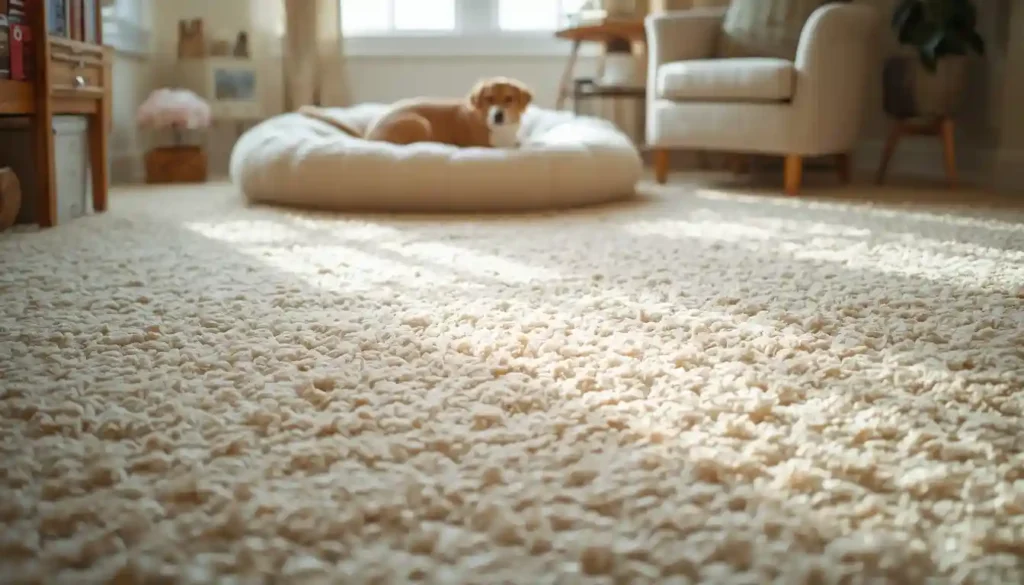
Plush / Saxony
Cut pile, yarn stands straight up, dense and formal. Shows vacuum lines and footprints because every fiber catches light from the same angle. Best in bedrooms and formal rooms with lower foot traffic.
Plush vs. Textured Cut Pile →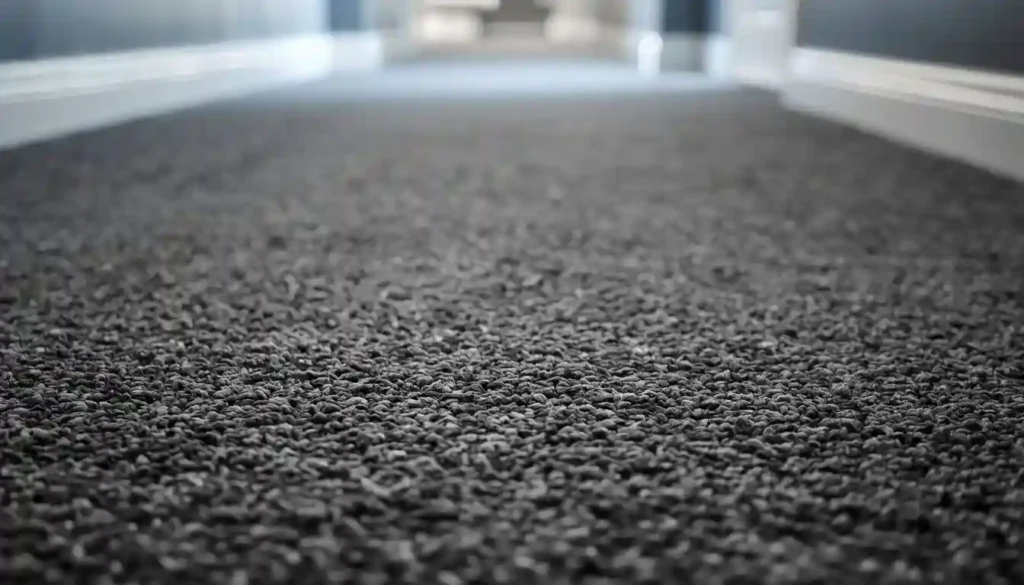
Textured / Frieze
Yarn is twisted before heat-setting, so light scatters unevenly and hides footprints, vacuum marks, and everyday soil. The most common residential pile we install in San Diego living rooms and hallways.
Pros & Cons of Frieze Carpet →Berber / Level Loop
Loops stay uncut, packed tight and low. Extremely durable underfoot, but one snagged loop — a dog's dewclaw, a moved box — can run the entire row. We steer homes with clawed pets away from Berber in main living areas.
Pros & Cons of Berber Carpet →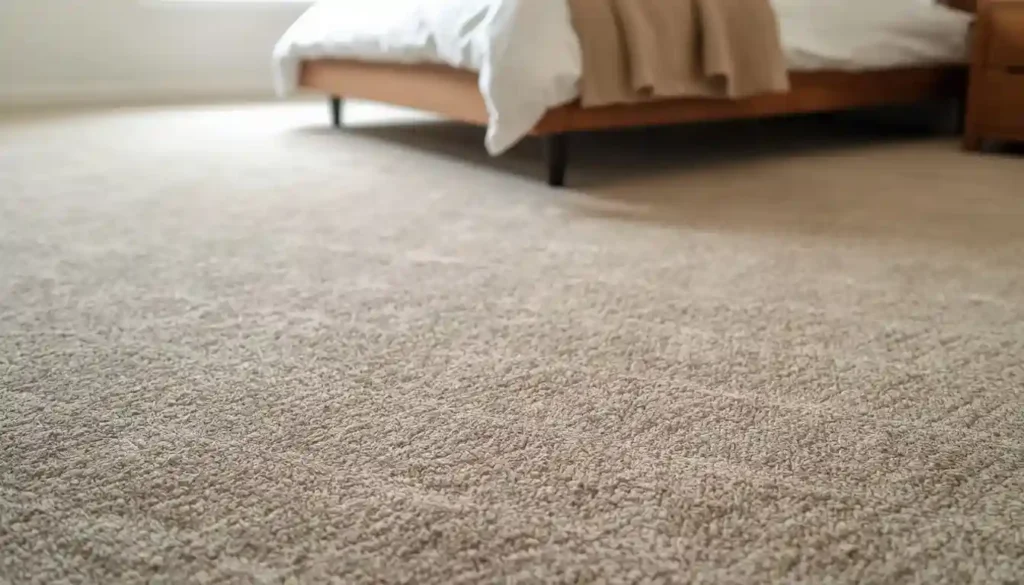
Cut & Loop / Patterned
Cut and looped yarn combined in the same pass to create a sculpted, patterned surface. Hides soil better than plain plush and sits between Saxony and Berber on durability.
Loop Pile vs. Cut Pile →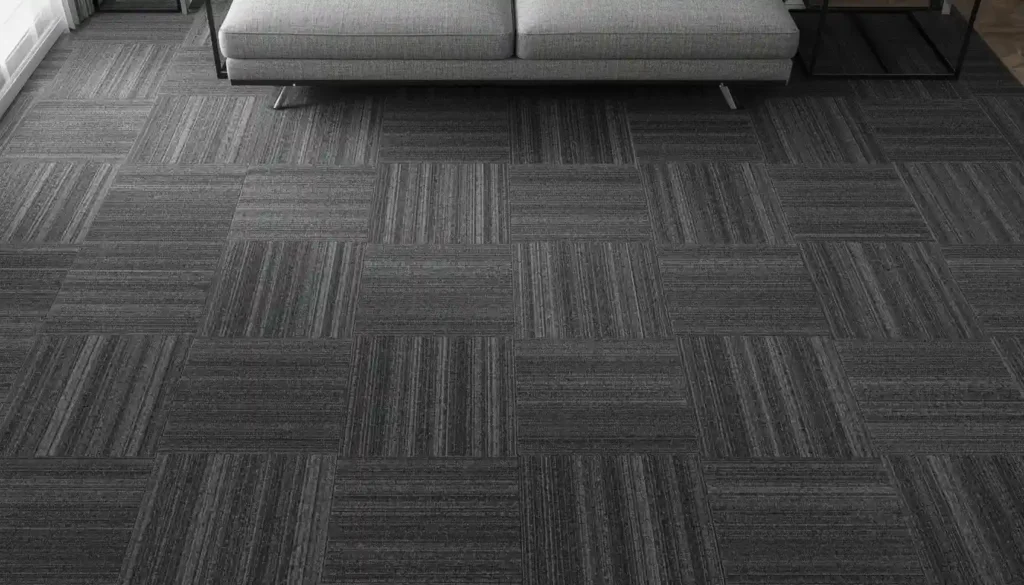
Carpet Tile / Modular
18×18 in or 24×24 in squares installed with releasable adhesive. A stained or damaged tile gets pulled and swapped individually instead of re-carpeting the room — a fit for home offices and basements.
How Carpet Tile Installs →ATTRIBUTE 03 — FACE WEIGHT, DENSITY & TWIST
What the Numbers on a Carpet Sample Actually Mean
Two carpets in the same fiber and color can wear completely differently based on three numbers most showroom visits never get into.
| Spec | Typical Residential Range | What It Actually Tells You |
|---|---|---|
| Face Weight | 25–60 oz/yd² | Ounces of face yarn only, backing excluded. Higher isn't automatically better if the twist level is low. |
| Density | 2,000–5,000 | Face weight × 36 ÷ pile height. The single best predictor of matting resistance — above 3,000 performs well in living rooms. |
| Twist Level | 3.5–7+ turns per inch | How tightly yarn is twisted before heat-setting. Higher twist resists untwisting and matting under sustained foot traffic. |
| Pile Height | 3/8–3/4 in | Taller pile feels softer but shows traffic patterns faster. Shorter pile in high-traffic zones wears more evenly over time. |
| Stain Warranty | 5–25 years | Manufacturer's written coverage against staining — a separate document from the wear or texture-retention warranty. |
We check density and twist level on the manufacturer's spec sheet before quoting any high-traffic room. Face weight alone is not a reliable durability number.
ATTRIBUTE 04 — CUSHION PAD
The Pad Underneath Determines the Warranty Above
Most manufacturer warranties list a minimum and maximum pad thickness and density. Installing outside that range can void the carpet's warranty even if the carpet itself is undamaged.
6–8 lb Rebond Foam
The bonded-foam standard for most residential stretch-in jobs. 7/16 in is the common minimum thickness — go thinner and you risk voiding the manufacturer's warranty.
Choosing the Right Pad →High-Density Memory Foam
Denser, slower-recovery foam. We spec this under stairs and in home offices with rolling chairs, where a soft rebond pad breaks down fast.
Moisture-Barrier Pad
A film-backed pad that blocks vapor rising up through a concrete slab — standard on ground-floor San Diego homes without a raised foundation.
Insulation Under Carpet on Concrete →Waffle / Flat Rubber Pad
Denser and flatter than foam, rated for rolling loads. Costs more up front but outlasts foam under office chairs and heavier commercial-style traffic.
SITE CONDITIONS
How San Diego's Microclimates Change the Recommendation
San Diego County runs from marine-layer coastline to dry inland valleys within roughly a twenty-mile stretch, and carpet fiber performs differently across it.
Coastal & Bay Zones
La Jolla, Pacific Beach, Coronado, Del Mar. Marine-layer humidity runs consistently higher near the coast. Wool and other natural fibers absorb ambient moisture — we lean synthetic (nylon or triexta) with a moisture-barrier pad on slab foundations near the water.
How Humidity Affects Carpet →Inland Valleys & East County
El Cajon, Santee, Rancho Bernardo, Poway. Lower humidity and dry Santa Ana wind events increase static buildup in synthetic fiber. Anti-static treated nylon with a higher twist level holds up better through the dry months.
South- & West-Facing Rooms
Direct UV through unfiltered glass fades printed carpet patterns unevenly within a few years. Solution-dyed fiber — color built into the yarn rather than printed on top — resists fading in sun-exposed rooms.
Protecting Carpet From Sun Damage →Homes Near the Beach
Sand tracked in from the beach is abrasive to carpet pile at entryways and hallways. We often spec Berber loop or carpet tile at entry transitions specifically so those high-wear squares can be swapped without redoing the room.
THE SEQUENCE
What a Stretch-In Installation Actually Involves
Six steps, in order, for a standard residential stretch-in job — the method used for roughly 90% of the whole-house carpet we install.
Measure & Seam Plan
Square yardage is calculated off the actual room, not the flooring's roll width, and seams are laid out to fall under furniture rather than across walkways.
Removal & Haul-Away
The existing carpet and pad come out, and the old tack strip is pulled or inspected for reuse.
Subfloor Prep
We sweep, check for moisture on slab foundations, and re-fasten any squeaks before anything new goes down.
Tack Strip & Pad
Tack strip is set roughly 3/8 in from the wall for tucking, and pad is stapled to a wood subfloor or glued to concrete.
Stretch-In
A power stretcher tensions the carpet wall to wall; a knee kicker handles edges and tight corners a power stretcher can't reach.
Seam, Trim & Walkthrough
Seams are joined with heat-activated tape from underneath, edges are trimmed and tucked, and a final power-rake pass grooms the pile.
PRICING BY TIER
What Carpet Actually Costs, Installed, in San Diego
Four tiers cover nearly every job we quote, from a rental turnover to a wool formal room.
| Tier | Material Only / Sq Ft | Installed / Sq Ft (incl. 8 lb pad + labor) | Typical Fiber |
|---|---|---|---|
| Builder-Grade | $0.75–$1.75 | $2.75–$3.75 | Polyester or Olefin |
| Mid-Grade | $1.75–$3.25 | $3.75–$5.75 | Nylon or Triexta |
| Premium | $3.25–$5.50 | $5.75–$8.50 | High-twist Nylon or Triexta |
| Wool / Luxury | $6.00–$12.00 | $9.00–$16.00 | Wool blends |
Old-carpet removal and haul-away typically runs $0.50–$1.00/sq ft extra. Stairs are priced per step — roughly $8–$18 each — rather than by square footage, because of the added labor per step.
ROOM BY ROOM
Matching Fiber and Pile to the Room It's Going In
The same fiber that's right for a bedroom is often the wrong call on a staircase. Here's how we spec by room.
Bedrooms
Lower foot traffic makes bedrooms the one place a soft, dense plush or Saxony in polyester or nylon makes sense without a durability trade-off.
Best Carpet for Bedrooms →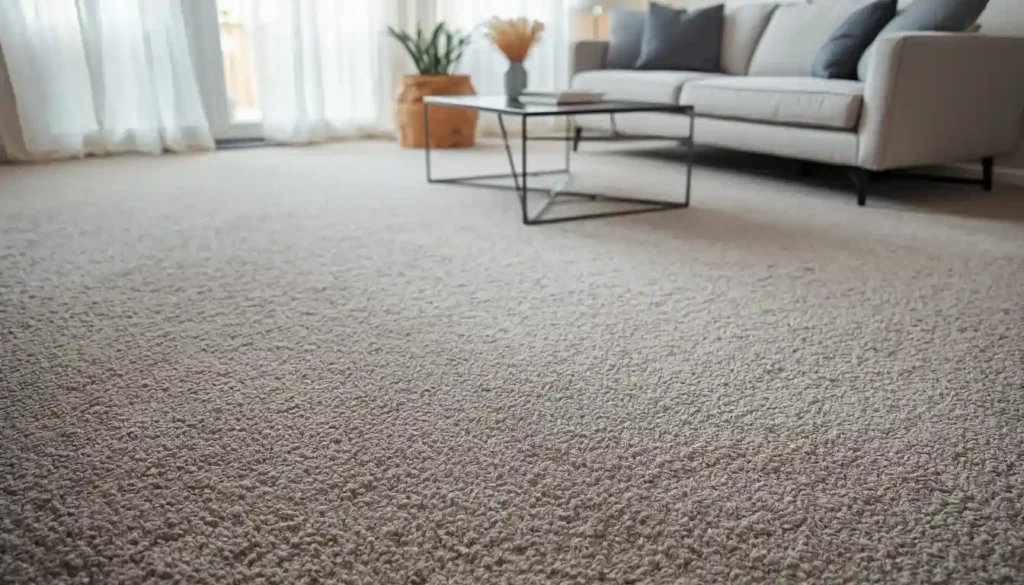
Living & Family Rooms
The highest-traffic common area in most homes. We default to textured or frieze nylon or triexta here specifically because it hides footprints and vacuum lines between cleanings.
Choosing Carpet for a Living Room →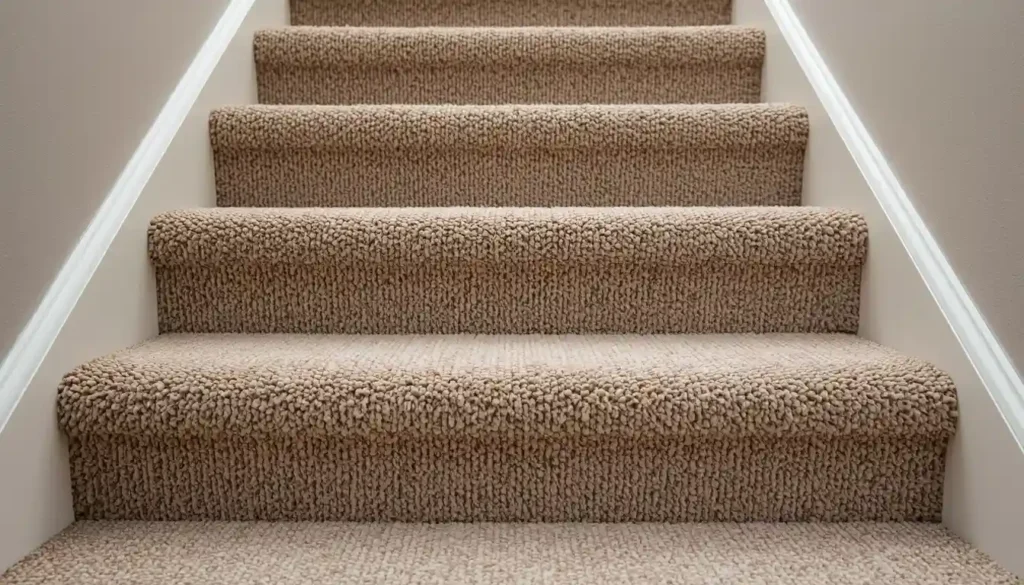
Stairs & Hallways
Stairs see more wear per square foot than any other surface in the house. Low-pile, high-twist nylon on a firm, high-density pad holds a stair's edge profile far longer than a plush pile.
Best Carpet for Stairs →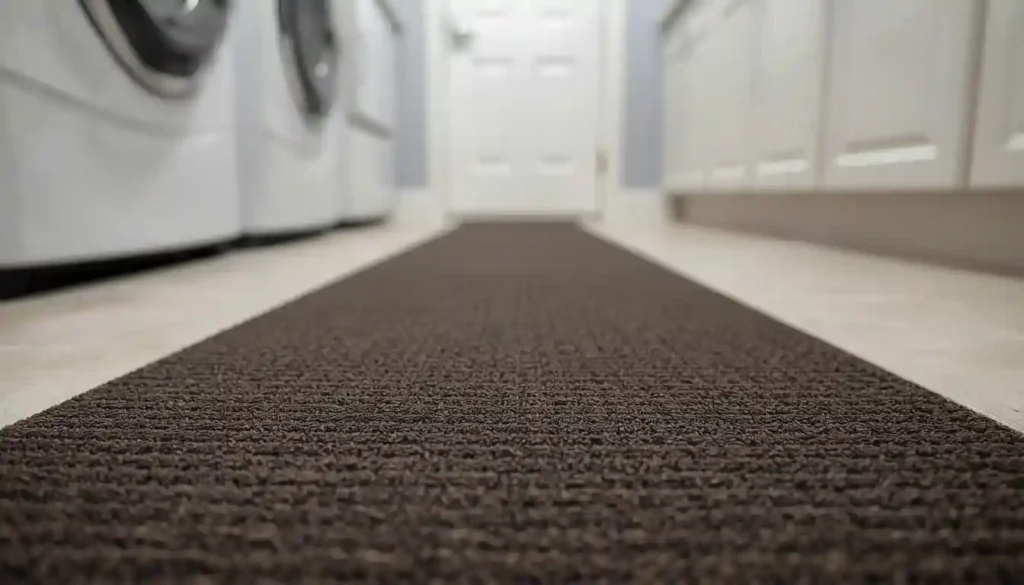
Basements & Rec Rooms
Below-grade rooms need a moisture-tolerant fiber. Olefin or treated nylon on a moisture-barrier pad is the standard spec for San Diego slab-on-grade rec rooms.
Choosing Carpet for a Basement →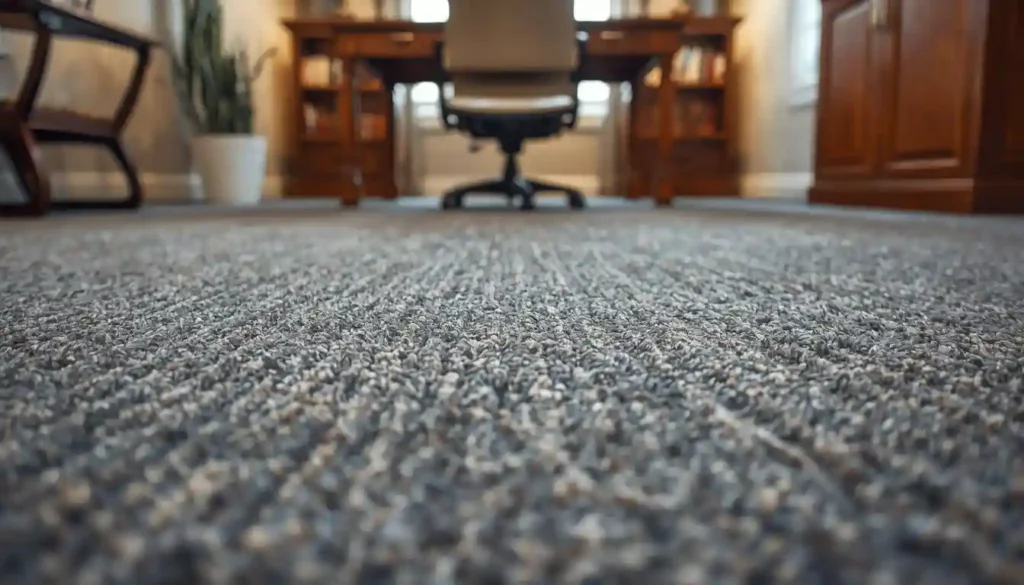
Home Offices
Rolling chairs wear a track into soft pad within a year. We spec a low, dense loop or cut-loop pile on high-density pad, or carpet tile so a worn chair-track square can be swapped.
Selecting Carpet for a Home Office →
Kids' Rooms & Playrooms
Stain resistance matters more than plushness here. Triexta's built-in stain resistance handles juice and marker spills better than a topically treated fiber.
Carpet Benefits for Kids' Rooms →AFTER INSTALLATION
The Maintenance Schedule That Keeps a Warranty Valid
Vacuum high-traffic paths at least twice a week — dry soil particles work like sandpaper against the fiber with every step across them. Blot spills immediately, don't rub; most stain warranties require action within a specific window listed on the warranty card. Most manufacturers also require a professional hot-water extraction cleaning every 12–18 months to keep a stain or wear warranty valid — the single warranty clause we see missed most often.
RESOURCE LIBRARY
Every Carpet Guide We've Written, Grouped by Question
The full library behind this page — organized the way homeowners actually ask, not the way a sitemap lists it.
Fiber & Material Guides
Room-by-Room Picks
Installation & Subfloor
Care, Stains & Repair
OTHER FLOORING SERVICES
If Carpet Isn't the Right Fit for Every Room
Most whole-home projects mix flooring types by room. Here's what else we install in San Diego.
Hardwood Flooring
Solid and engineered hardwood installation for living areas and formal rooms.
Hardwood Services →Laminate Flooring
Wood-look, AC-rated laminate for high-traffic rooms on a budget.
Laminate Services →Vinyl Flooring
LVP, LVT, SPC, and sheet vinyl for kitchens, baths, and moisture-prone rooms.
Vinyl Services →Window Treatments
Blinds, shades, and shutters, quoted alongside a flooring project or on their own.
Window Treatment Services →SERVICE AREA
Carpet Installation Across San Diego County
Coastal, inland, and everywhere between — see the full service area list →
QUESTIONS
Carpet Installation, Answered Directly
How long does carpet installation take for an average home?
A single room typically finishes in half a day. A whole-house job — bedrooms, hallways, stairs — usually runs one to two days, mostly determined by how many seams and stair steps are involved rather than total square footage.
Do I need to move my own furniture before installation?
Small and medium furniture is on you to clear out beforehand. Larger pieces — beds, dressers, sectionals — can be handled by the crew for an additional labor fee; let us know what's staying in the room when you book so it's quoted up front, not added on-site.
What's the difference between stretch-in and glue-down installation?
Stretch-in tensions carpet over pad using tack strips around the room's perimeter — the standard for residential rooms and the method that lets pad do its job. Glue-down bonds carpet directly to the subfloor with no pad, which is more common in commercial spaces, over radiant heat, or on stairs where tension can't hold.
Can carpet be installed directly over a concrete slab?
Yes, with a moisture-barrier pad. Concrete slabs — common in ground-floor San Diego homes — can transmit vapor upward even when the surface feels dry, and a film-backed pad stops that vapor from reaching the carpet backing and causing mold or odor.
Is carpet a good choice for allergies?
Modern carpet with a tight, low-pile construction actually traps airborne particles rather than letting them recirculate, provided it's vacuumed on the schedule above and professionally cleaned on the interval your warranty requires. Skipping that schedule is what turns carpet into an allergen reservoir.
What pad thickness and density do you install on stairs?
A firm, high-density pad around 1/4–3/8 in thick — much thinner and denser than a living-room pad. A soft, thick pad on a stair tread compresses unevenly under a foot's landing point and shortens the carpet's life on that step specifically.
How soon can I walk on new carpet, and when can I put furniture back?
Light foot traffic is fine immediately. We recommend waiting 24 hours before rolling heavy furniture back into place, and using furniture coasters under legs for the first few weeks while the pile and pad fully settle.
Do you haul away and dispose of the old carpet?
Yes — removal and haul-away of the existing carpet and pad is quoted as a line item alongside the new installation, typically $0.50–$1.00 per square foot on top of install pricing.
READY WHEN YOU ARE
Get a Carpet Quote Built From the Actual Spec
Tell us the room, the traffic level, and any pets or allergies in the house — we'll come back with a fiber, pile, and pad recommendation, not just a color swatch.