VINYL FLOORING — SAN DIEGO COUNTY
Vinyl Flooring Installation, Fitted To What San Diego Subfloors Actually Do
We install luxury vinyl plank (LVP), luxury vinyl tile (LVT), rigid SPC and WPC core vinyl, and sheet vinyl across San Diego County — from an Encinitas duplex still standing on its original 1970s slab to a Chula Vista new-build with concrete that hasn't finished curing. The job is three things done in order: reading the subfloor correctly, matching the vinyl format to the room's moisture load and traffic, and installing it — floating, glue-down, or loose-lay — the right way the first time.
THE FORMAT
Five Materials, One Category
"Vinyl flooring" isn't one product — it's a category of five distinct constructions that share a PVC base and a printed, urethane-sealed wear layer on top, and diverge in core material, thickness, and where they're allowed to go in a house. Picking the wrong one for the room is the single most common vinyl installation mistake we get called to fix.
Luxury Vinyl Plank (LVP)
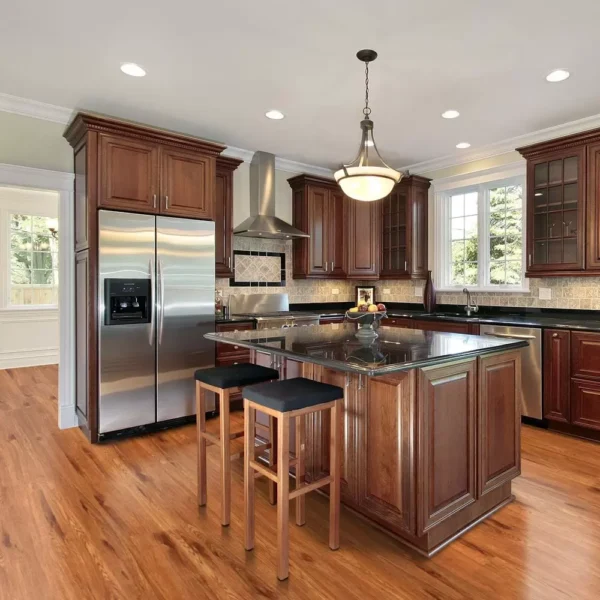
Individual planks, 6–9 inches wide, printed with a wood visual and finished with a urethane wear layer. Our stocked residential lines run 4.5mm overall with a 12 mil wear layer; commercial-grade planks step up to 20 mil for high-traffic runs. Click-lock or glue-down, and the closest resilient match to hardwood's look without hardwood's moisture risk.
Read the LVP install guide →Luxury Vinyl Tile (LVT)
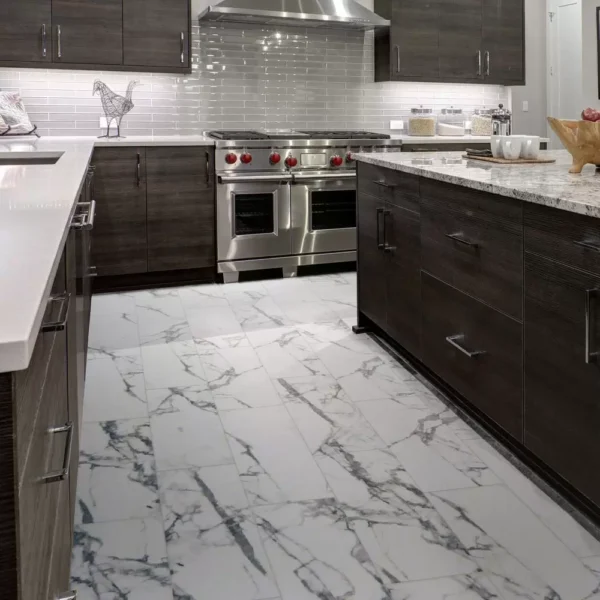
Same PVC/wear-layer construction as LVP, cut to tile format — often with a beveled edge — and printed with a stone or ceramic visual instead of wood. It runs thicker in our catalog, commonly 5.2mm overall with a 20 mil wear layer, because tile visuals get specified for bathrooms and kitchens, where both wear and moisture exposure run higher.
See LVT for wet rooms →SPC — Rigid Core
A limestone-composite core replaces the flexible PVC-only base, so the plank won't flex, dent, or telegraph subfloor imperfections the way standard LVP can. That rigidity is why our commercial-grade lines carry 20 mil wear layers as standard and get specified for rentals, ADUs, and light commercial spaces.
SPC pros and cons →WPC — Wood-Plastic Composite
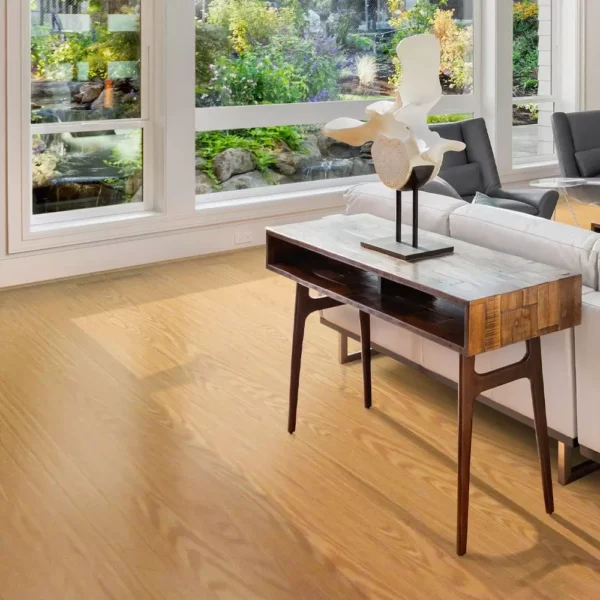
A foamed-core alternative to SPC — softer underfoot, quieter when walked on, and slightly warmer to the touch, at the cost of a little more give under heavy point loads. We spec WPC into bedrooms and living rooms where comfort underfoot outweighs commercial-grade dent resistance.
WPC pros and cons →Sheet Vinyl
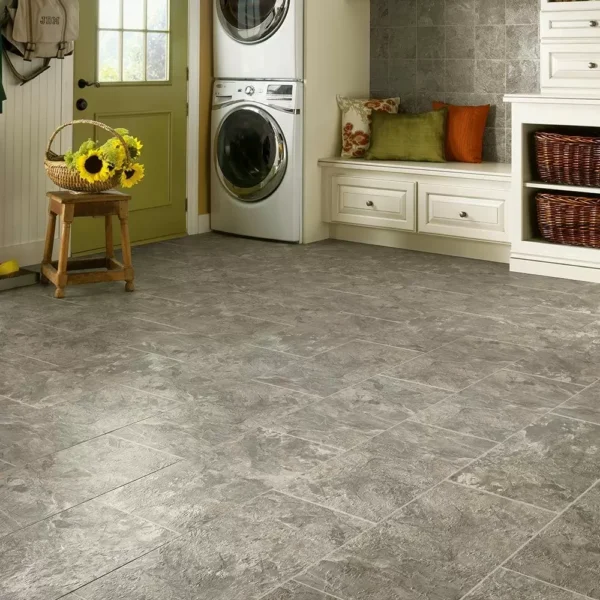
A single continuous roll instead of interlocking pieces, so there are no seams in a room narrower than the roll's pattern-repeat width — 54″ to 72″ in our stocked lines. That's why it's still the first call for small, plumbing-heavy rooms: powder baths, laundry closets, utility rooms. It's water-resistant at the surface and seams, not a rigid waterproof assembly the way SPC is.
Sheet vinyl pros and cons →SPEC SHEET
How The Five Formats Actually Compare
Numbers pulled from the ranges across our current in-stock catalog, not manufacturer marketing copy.
| Format | Core | Overall Thickness | Wear Layer | Install Method | Best For |
|---|---|---|---|---|---|
| LVP | Flexible PVC | 4.5mm – 6mm | 12 – 20 mil | Floating click-lock or glue-down | Living rooms, bedrooms, whole-home floors |
| LVT | Flexible PVC | 4.5mm – 5.5mm | 20 mil common | Glue-down (tile format), some click-lock | Bathrooms, kitchens, entries |
| SPC | Rigid limestone-composite | 5mm – 7mm | 20+ mil (commercial grade) | Floating click-lock | Rentals, ADUs, commercial, high-traffic |
| WPC | Foamed wood-plastic composite | 6mm – 8mm | 12 – 20 mil | Floating click-lock | Bedrooms, living rooms — comfort priority |
| Sheet Vinyl | Flexible PVC, roll goods | 2mm – 3mm total build | Thin laminate wear film | Full-spread or perimeter glue-down | Powder rooms, laundry, utility, budget rooms |
Ranges reflect our current in-stock lines. Exact specs vary by product — check the spec sheet on each product page before ordering.
LOCAL CONDITIONS
What San Diego Subfloors Actually Bring To A Vinyl Install
The material rarely fails on its own. It fails because of what's underneath it, or what's coming through the window above it — both of which look different in San Diego County than they do in a generic install guide.
Concrete Slab Subfloors
Most San Diego County homes built after the 1970s sit on a concrete slab, not a wood subfloor. A slab can look bone-dry and still be pushing enough vapor to fail an adhesive bond, so moisture testing comes before material selection, not after.
Prepping a concrete subfloor →Coastal Humidity
Neighborhoods west of I-5 run higher ambient humidity than inland San Diego. That mostly changes the acclimation period, not the finished floor — vinyl's closed PVC structure doesn't absorb moisture the way wood or laminate does once it's down.
Vinyl in humid spaces →Installing Over Existing Tile
A lot of the county's 1980s–90s stock still has ceramic tile down, with grout lines that can telegraph through a thin floating floor. We check grout depth and surface flatness before deciding between a direct overlay and a skim coat first.
Vinyl over existing tile →UV Exposure
South- and west-facing rooms with large glass — common in newer San Diego construction — will fade a vinyl surface unevenly over years if the finish doesn't carry UV inhibitors. We check the finish spec, not just the wear-layer number, before it goes on a sun-heavy floor.
Preventing UV fade →THE PROCESS
How A Vinyl Install Actually Runs, Start To Finish
Five steps, in order. Skipping the first two is where most vinyl flooring problems actually start.
Subfloor & Moisture Assessment
Moisture meter reading on slabs, calcium chloride test if the slab is suspect, flatness check across the room. This determines the material and method — not the other way around.
Material Selection
Format matched to the room's moisture load and traffic — SPC for a rental unit, WPC for a primary bedroom, LVT for a bathroom. Sample viewed at the home under its actual lighting.
Acclimation
Material sits on-site for a minimum of 48 hours in the room's actual service conditions before installation starts, so it stops expanding and contracting after it's down.
Subfloor Prep & Installation
Patch, level, or vapor-barrier the subfloor as the assessment called for, then install — floating click-lock, glue-down, or loose-lay — per the method the room actually needs.
Trim, Transitions & Walkthrough
Transition strips set at doorways and material changes, base trim reset, and a final walkthrough before we call the job done.
PRICING
What Vinyl Flooring Actually Costs, Installed
Material plus labor, San Diego County, current in-stock lines. Subfloor repair, moisture barriers, and trim replacement price separately — see our full vinyl flooring cost guide and installation cost breakdown for the line items.
| Format | Material, per sq ft | Installation labor, per sq ft | Typical installed range |
|---|---|---|---|
| LVP | $2.50 – $5.00 | $1.75 – $3.00 | $4.25 – $8.00 / sq ft |
| LVT | $3.00 – $6.00 | $2.00 – $3.25 | $5.00 – $9.25 / sq ft |
| SPC | $3.25 – $6.50 | $2.25 – $3.50 | $5.50 – $10.00 / sq ft |
| WPC | $3.50 – $6.50 | $2.25 – $3.50 | $5.75 – $10.00 / sq ft |
| Sheet Vinyl | $1.50 – $3.50 | $1.25 – $2.25 | $2.75 – $5.75 / sq ft |
Ranges are estimates, not a quote. Ask for a line-item breakdown rather than one blended number per square foot.
IN STOCK
Vinyl Flooring We Currently Stock
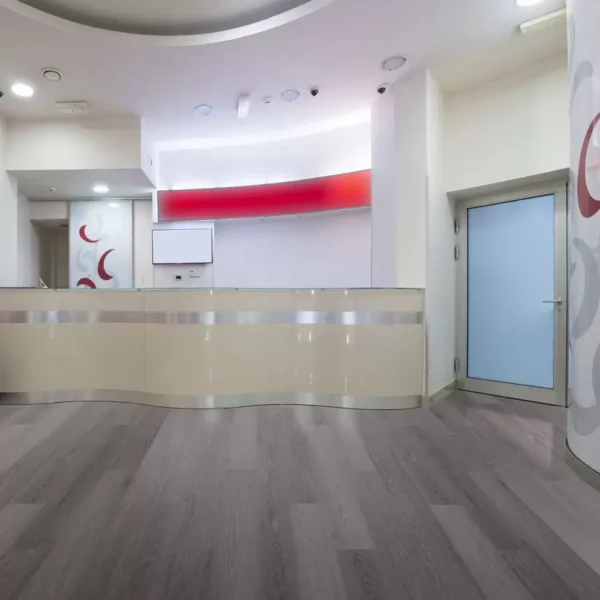
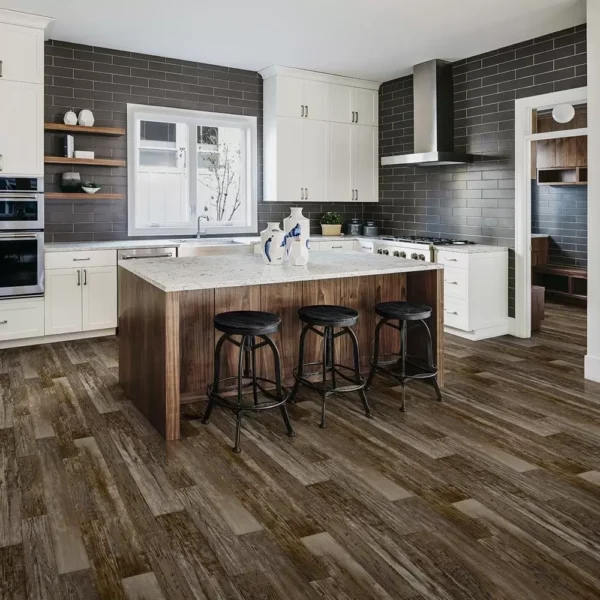
A cross-section of what's in the catalog right now — one from each format we install.
GO DEEPER
The Full Vinyl Flooring Library
Every guide on this site that touches vinyl flooring, grouped by the decision it actually helps you make.
Choosing A Format
Subfloors & Installation
Room-By-Room
Care, Repair & Longevity
Cost & Buying
WHERE WE WORK
Vinyl Flooring Installation Across San Diego County
Based in Santee, working county-wide. See the full service area list →
QUESTIONS
Vinyl Flooring — Answered Straight
Is vinyl flooring actually waterproof, or just water-resistant?
It depends on the format. Rigid-core LVP, LVT, SPC, and WPC use a solid PVC or composite core that doesn't absorb water, so the plank or tile itself is genuinely waterproof — standing water won't swell or warp it. Sheet vinyl is different: it's water-resistant at the surface and, if seams are sealed correctly, largely watertight, but it isn't a rigid waterproof assembly the way SPC is. See our full breakdown: is vinyl flooring waterproof?
What's the actual difference between SPC and WPC vinyl flooring?
Both are rigid-core vinyl, but the core material differs. SPC uses a stone-plastic composite core — dense, rigid, and highly resistant to dents and heavy point loads, which is why it gets specified in commercial and rental settings. WPC uses a foamed wood-plastic composite core that's softer, quieter underfoot, and slightly warmer to the touch, at the cost of a bit more give under furniture legs. Full comparison: SPC vs. WPC flooring.
Can vinyl flooring be installed over existing tile or hardwood?
Usually yes, with conditions. Rigid-core vinyl can go over existing ceramic tile if the grout lines are shallow and the surface is flat and sound — deep grout lines usually need a skim coat first. Over hardwood, the floor needs to be flat, structurally solid, and free of active moisture issues before vinyl goes down. See: vinyl over existing tile and vinyl over existing hardwood.
Do I need underlayment under vinyl plank flooring?
Most rigid-core LVP and SPC products ship with an attached pad and don't need separate underlayment on a flat, dry subfloor. A separate moisture barrier becomes necessary on a concrete slab testing high for vapor emission, and a sound-control underlayment is worth adding in multi-unit buildings. Details: underlayment for vinyl plank flooring.
How long does vinyl flooring actually last?
Residential-grade LVP with a 12 mil wear layer typically holds up for 10 to 20 years under normal household traffic. Commercial-grade lines with a 20 mil or heavier wear layer are built for a longer service life under harder use. The wear layer thickness, not the visual on top, is what determines lifespan — see how long vinyl flooring lasts.
Is vinyl flooring a good choice for San Diego's coastal humidity?
Yes. Vinyl's PVC structure doesn't absorb ambient moisture the way solid wood or laminate can, so it doesn't cup, swell, or gap in response to coastal humidity swings once installed. What actually matters in humid conditions is acclimation before installation and a correct moisture read on the subfloor. More here: vinyl in humid spaces.
Click-lock or glue-down — which installation method is better?
Neither is universally better; they solve different problems. Click-lock floating floors install faster, tolerate minor subfloor imperfections, and make it easier to replace a damaged plank. Glue-down installations sit lower to the floor and are the standard choice for LVT in wet rooms, where a fully bonded floor reduces the chance of water tracking under seams. Full comparison: click-lock vs. glue-down.
NEXT STEP
Get An Exact Vinyl Flooring Quote
Send us the room dimensions and current subfloor — slab, existing tile, existing hardwood — and we'll come back with a format recommendation and a line-item price, not a blended per-square-foot guess.