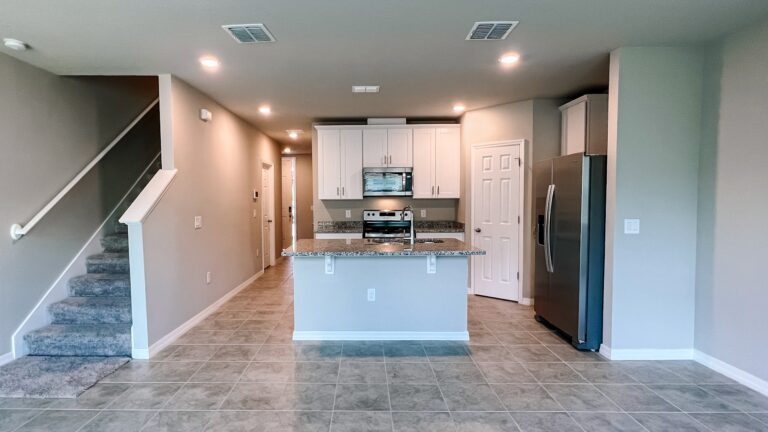
Net positive: Laminate replaces worn carpet or beat-up vinyl in a starter or mid-range home. Resale value rises because the home now feels updated.
Net neutral: Laminate replaces older laminate or basic vinyl. The floor looks current, but the value bump is small because the home was already presentable.
Net negative: Laminate replaces existing hardwood, or is installed in a high-end home. Buyers perceive a quality downgrade and discount the offer.
What Is the Return on Investment of Laminate Flooring?
The return on investment for laminate flooring typically falls between 50% and 91%, with most projects landing in the 70% to 80% range. This is lower than the 118% to 147% ROI reported for solid hardwood, but the absolute dollar cost of laminate is also a fraction of the cost of hardwood, which is why mid-market sellers often see a stronger net financial result from laminate.
The ROI math works like this: if you spend $4 per square foot installing quality laminate over a 1,200 square foot area, your total cost is $4,800. Recovering 80% of that means the home’s appraised value rises by roughly $3,840 — but the more important effect is that the home no longer carries the $4,800-plus mental deduction a buyer would have made for replacing the old floors themselves.
Hardwood remains the highest ROI flooring option, which is why some sellers in higher-end markets choose to invest in professional hardwood flooring services rather than laminate. But for the majority of homes in the under-$700,000 range, the cost-to-impact ratio of laminate makes it the more rational choice.
How Do Appraisers Value Laminate Flooring?
Appraisers do not assign laminate flooring a fixed dollar value. Instead, they evaluate four attributes during the property inspection:
Material type and grade — AC3 vs AC4 vs AC5, plank thickness, and brand quality.
Installation quality — flat seams, no peaking, proper expansion gaps, no hollow spots.
Consistency across rooms — whether the same floor flows through the main living areas.
Worn or low-grade laminate triggers downward adjustments because the appraiser knows the buyer will eventually replace it. Fresh, properly installed laminate at AC4 or above in a mid-tier home is treated as a neutral or modest positive — not a “luxury feature,” but not a deduction either.
Why Do Some Buyers Prefer Laminate Flooring?
Buyers prefer laminate flooring when their priorities are durability, low maintenance, scratch resistance for pets and children, and a wood-look aesthetic without the price of solid wood. Survey data shows that around 54% of homebuyers actively favor laminate as a hard-surface option, and that figure climbs in markets with younger families, pet-owning households, and rental investors.
The specific buyer-side advantages include:
A wear layer of aluminum oxide that resists scratches better than most hardwoods.
Stain resistance that outperforms carpet by a wide margin.
Lower projected maintenance cost over a 10-to-20-year ownership window.
Visual consistency with current design trends — wide planks, matte finishes, and neutral wood tones.
This is also why laminate is one of the strongest options for the best flooring for a rental property, where landlords need durability and a clean look without sinking capital into hardwood.
When Do Buyers Reject Homes With Laminate Flooring?
Buyers reject or discount homes with laminate flooring under three conditions: when the laminate is visibly older or low-grade, when it has been installed inconsistently across the main living space, and when the home’s price tier signals that hardwood or stone should have been used instead.
Older laminate is a particular problem. Early-generation laminate had thinner wear layers, more obviously printed grain, and beveled edges that collected dirt. A buyer walking into a home with 15-year-old laminate will discount the offer by the cost of replacement, often more than the laminate originally cost to install.
Which Quality Factors Decide Laminate’s Resale Impact?
Three quality factors decide whether laminate adds or subtracts from resale value: the AC durability rating, the plank thickness, and the realism of the surface texture and finish.
How Important Is the AC Rating for Resale Value?
The AC rating is the single most important quality marker. Buyers and home inspectors increasingly recognize the AC scale, which runs from AC1 (light residential) to AC5 (heavy commercial). For resale, you want AC4 or higher because it signals the floor will survive the next owner’s daily wear without obvious deterioration.
Sellers who use AC3 laminate in high-traffic areas often regret it. The floor begins showing wear within a few years, and that wear becomes a visible deduction at the next sale. Comparing the durability tiers — for example, the difference between AC3 vs AC4 laminate flooring — is one of the most cost-effective decisions a seller can make before listing.
Does Plank Thickness Affect Resale Value?
Yes. Plank thickness affects both the feel of the floor underfoot and its long-term stability over uneven subfloors. Thinner planks (6mm to 8mm) are cheaper but feel hollow and amplify footstep noise — a sensation that buyers register immediately during a walk-through, even if they cannot articulate why the floor “feels cheap.” Thicker planks (10mm to 12mm) feel more like real wood, hide minor subfloor imperfections, and dampen sound.
Choosing the best thickness for laminate flooring at the time of purchase prevents one of the most common buyer objections: the hollow, plastic-sounding floor.
Does the Wear Layer Thickness Matter for Resale?
The wear layer is the transparent aluminum oxide coating that protects the printed decorative layer underneath. A thicker wear layer extends the floor’s appearance lifespan and directly correlates with how the floor presents at resale. Thin wear layers fade and scuff within a few years; thick wear layers stay photo-ready well past the average ownership period. Understanding laminate flooring wear layer thickness is therefore not just a maintenance question — it is a resale-value question.
How Does Installation Quality Affect Resale Value?
Installation quality affects resale value as much as the laminate itself does. A premium plank installed badly will appraise lower than a mid-grade plank installed correctly. The reasons buyers and inspectors notice poor installation include visible gaps at walls, lifted seams, peaking joints, hollow zones, and uneven transitions between rooms.
Three installation details carry the most resale weight:
Acclimation: Laminate must sit in the room for 48 hours before installation so the planks adjust to local humidity. Skipping this step causes the gaps and peaking that buyers spot immediately. The reasons why you should acclimate laminate flooring apply directly to long-term appearance.
Subfloor preparation: A flat, clean, dry subfloor is the foundation of every successful laminate installation. Bumps over 3/16″ telegraph through the planks within months. The choice of the best laminate flooring subfloor setup determines whether the floor still looks tight at the time of sale.
Expansion gaps: Laminate expands and contracts with seasonal humidity. Without proper perimeter gaps hidden under the baseboard, the floor buckles — and a buckled floor is a dollar-for-dollar deduction on the offer.
Where Should You Install Laminate to Maximize Resale Value?
Laminate produces the strongest resale return when it is installed in continuous flow through the main living areas: entry, hallway, living room, dining room, and family room. It produces a weaker or negative return in moisture-heavy areas such as full bathrooms, laundry rooms, and basements unless a waterproof variant is used.
The room-by-room logic is straightforward:
Living areas, hallways, dining rooms: High-impact zones. Laminate here defines the buyer’s first impression and adds value.
Bedrooms: Acceptable. Some buyers still prefer carpet here, but laminate with area rugs is a widely accepted modern look.
Kitchens: Acceptable only with waterproof laminate. Standard laminate in a kitchen is a known buyer red flag.
Bathrooms and laundry: Avoid. Use tile or luxury vinyl plank instead. Laminate here is a value subtractor, not an addition.
Basements: Use only with a moisture barrier and a waterproof rating. Otherwise, the buyer’s home inspector will flag it.
Should the Same Laminate Run Through the Whole House?
Continuous flooring through the open-concept area is one of the strongest resale signals a home can give. Disjointed transitions — laminate in one room, different laminate in the next, carpet stripe between them — break visual flow and tell the buyer the home was renovated piecemeal. Appraisers also note this inconsistency in their evaluation.
For a unified look, sellers commonly run a single laminate through the entry, hallway, and main rooms, then transition cleanly to tile in wet areas and carpet in bedrooms. Even better is a single hard-surface floor across the entire main level, which is one of the most-requested features in current buyer surveys.
Laminate Flooring vs Hardwood: Which Is Better for Resale?
Hardwood beats laminate on raw ROI percentage and on top-of-market sale prices. Laminate beats hardwood on cost-efficiency, scratch resistance, and net cash position for sellers in mid-market homes. The right answer depends on the price tier of the home and the buyer pool you are selling to.
For a $400,000 home, spending $20,000 on hardwood to recover 118% means roughly $23,600 in added value — a $3,600 net gain. Spending $6,000 on quality laminate to recover 80% means roughly $4,800 in added value — a smaller absolute gain, but a smaller capital risk and faster project. For a $1.2 million home, the calculation flips entirely: buyers in that bracket expect hardwood, and laminate becomes a deduction.
Sellers who already have engineered or solid hardwood are usually better off refinishing rather than replacing. The ROI on hardwood refinishing is the highest of any flooring project at around 147%. Reviewing the differences in engineered hardwood vs hardwood pros and cons can help homeowners decide whether to upgrade or restore before listing.
Laminate vs Luxury Vinyl Plank for Resale Value
Luxury vinyl plank (LVP) and laminate now occupy overlapping positions in the resale market, with LVP gaining ground because of its full waterproof rating. In kitchens, bathrooms, and basements, LVP outperforms laminate on resale impact because buyers know the floor will survive water exposure. In dry main living areas, the two materials produce similar resale outcomes when chosen at comparable quality grades.
The choice between waterproof laminate or waterproof vinyl often comes down to the look and feel rather than resale numbers — both materials can deliver a near-identical wood-look aesthetic, but laminate generally feels harder underfoot while LVP feels slightly softer and warmer.
What Is the Best Laminate Style and Color for Resale?
The best laminate style for resale is a wide-plank format (5 inches wide or more), in a neutral wood tone such as light oak, warm beige, soft gray, or honey, with a matte or low-sheen finish. These choices match current buyer preferences and survive style cycles longer than dark, glossy, or heavily orange-toned wood imitations.
Two style decisions decide most of the resale impact:
Color: Lighter, neutral tones appeal to a wider buyer pool. Very dark floors show every speck of dust and pet hair, which buyers notice during showings.
Finish: The shift toward matte finishes is now strong enough that high-gloss laminate dates a home immediately. The gap between high gloss vs matte laminate finishes is no longer just a taste question — it is a resale signal.
Does Laminate Flooring Help a Home Sell Faster?
Yes. Homes with updated, hard-surface flooring — including modern laminate — sell measurably faster than homes with worn carpet or dated tile. MLS data shows that consistent hard-surface flooring reduces average days on market from roughly 67 days to 41 days, and homes with original flooring from earlier decades sit roughly 45% longer.
The mechanism is simple: buyers in today’s market overwhelmingly want move-in-ready homes. Every renovation a buyer has to budget for after closing reduces the offers they are willing to make. Laminate flooring removes one of the largest of those line items at a fraction of the cost of hardwood.
Common Mistakes That Cause Laminate to Hurt Resale Value
Several specific mistakes turn laminate from a value-neutral or value-positive feature into a deduction at the time of sale:
Installing low AC-rated laminate in high-traffic areas — by the time you sell, the wear is visible, and the floor reads as worn.
Using laminate in full bathrooms or laundry rooms — water damage almost always appears, and the inspector flags it.
Mixing laminate styles between rooms — the home reads as patchwork rather than renovated.
Skipping the underlayment — the floor sounds hollow, and buyers feel it immediately.
Choosing a heavily textured or strongly orange-toned plank — these date quickly and limit your buyer pool.
Installing over a damaged or uneven subfloor — peaks, gaps, and squeaks all surface within a few years.
Using laminate in a luxury home — the buyer pool in that price bracket actively penalizes it.
Final Take: Is Laminate Flooring Worth It Before Selling?
Laminate flooring is worth installing before selling when your current floors are worn, dated, or inconsistent, and when your home sits in the entry-level or mid-market price range. In that scenario, quality laminate at AC4 or above, installed continuously through the main living areas in a neutral wide-plank style, will recover most of its cost, shorten time on market, and protect against the value deductions buyers apply to dated floors.
It is not worth installing when you are in a luxury market that expects hardwood, when your existing hardwood only needs refinishing, or when your installation budget cannot cover a quality grade and proper subfloor preparation. In those cases, the laminate becomes a visible compromise rather than an upgrade — and buyers are now skilled at spotting that compromise.
The clearest framing is this: laminate flooring rarely raises a home’s value in the way hardwood does, but it consistently prevents the home from losing value to outdated floors. For most sellers, that protective effect — combined with faster sale times and a broader buyer pool — is exactly the financial outcome they need.
James Miller is a seasoned flooring contractor with years of hands-on experience transforming homes and businesses with high-quality flooring solutions. As the owner of Flooring Contractors San Diego, James specializes in everything from hardwood and laminate to carpet and vinyl installations. Known for his craftsmanship and attention to detail, he takes pride in helping clients choose the right flooring that balances beauty, durability, and budget. When he’s not on the job, James enjoys sharing his expertise through articles and guides that make flooring projects easier for homeowners.
Most flooring comparisons jump straight to price or aesthetics. That approach misses what actually drives the performance difference between hardwood and SPC vinyl. These are fundamentally different material systems, and understanding how each one is built is the only way to make a decision that holds up five, ten, or twenty years from now. Hardwood…
When most people say they want to pick a carpet type, they are really picking three separate things at once: the pile construction, the fiber material, and the surface style that results from those two choices. Miss the distinction and you end up comparing a Berber to a frieze without realizing one is a construction…
Concrete is the most common subfloor surface in American homes — slab foundations account for the majority of ground-level construction — yet it is also one of the most misunderstood surfaces when it comes to choosing a finished floor. The question of what flooring goes directly on concrete is not just a product-selection question. It…
What Makes SPC Flooring Structurally Different From Other Vinyl Products SPC stands for Stone Plastic Composite. The core layer is a compressed blend of natural limestone powder, polyvinyl chloride, and stabilizers, calendared under high pressure into a rigid slab. That manufacturing process produces a core density typically between 1.85 g/cm³ and 2.0 g/cm³, which is…
A gap in laminate flooring is a visible separation between two adjacent planks — a space where the locking joints have either partially disengaged or failed to close flush. This is not a surface crack or a scratch. The gap runs along the seam between planks, and it can appear mid-floor, along rows, or near…
There is something almost instinctive about the way warm hardwood floors make a room feel complete. Long before interior designers coined terms like biophilic design or soft minimalism, homeowners understood that a golden oak plank beneath their feet changed the entire mood of a space. That emotional pull has only grown stronger in recent years….