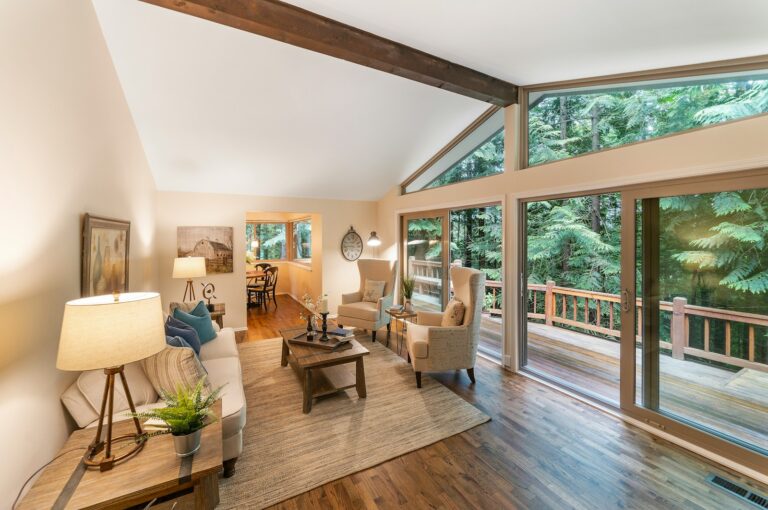
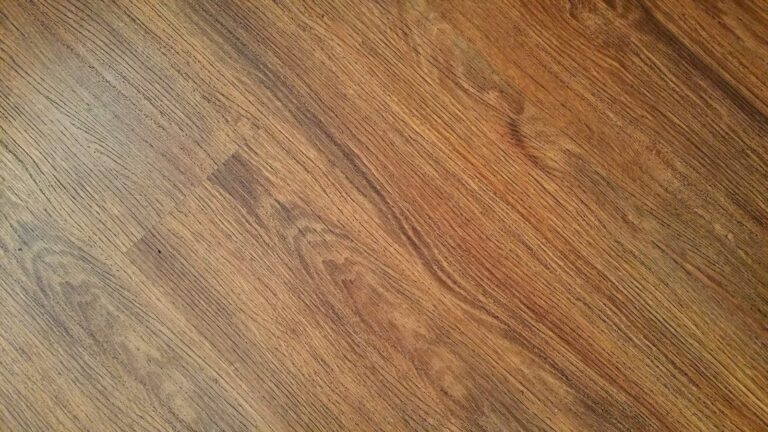
Because matte surfaces diffuse light instead of reflecting it, they hide micro-scratches, footprints, and dust between cleanings. This makes matte laminate the preferred choice in households with pets, children, or heavy daily foot traffic. Matte finishes are also the common surface for higher AC4 and AC5 abrasion ratings, since the textured wear layer can incorporate denser aluminum oxide particles than a glossy coating.
Key Characteristics of Matte Laminate
Non-reflective surface: Absorbs light, reduces glare, and produces a calm, natural look.
Hides imperfections: Scuffs, dust, pet hair, and minor scratches disappear into the texture.
Better traction: Textured surface provides more grip and reduces slip risk in socks or wet conditions.
Realistic wood look: EIR embossing aligned with the printed grain pattern mimics genuine timber.
Versatile aesthetic: Works with rustic, farmhouse, Scandinavian, transitional, and contemporary interiors.
High-Gloss vs Matte Laminate Flooring: Side-by-Side Comparison
Attribute
High-Gloss Laminate
Matte Laminate
Light reflection
High, mirror-like
Low, diffused
Scratch visibility
Highly visible
Concealed
Dust and footprint visibility
Shows easily
Hides well
Slip resistance
Lower (can be slick)
Higher (textured grip)
Common AC rating range
AC3
AC3 to AC5
Best room traffic level
Light to moderate
Moderate to heavy
Cleaning frequency
More frequent
Less frequent
Aesthetic style
Modern, formal, opulent
Natural, casual, rustic, contemporary
Glare under direct sunlight
High
Minimal
Mimics
Polished or lacquered hardwood
Oiled or unfinished hardwood
How Sheen Level Is Measured on Laminate Flooring
Sheen on laminate flooring is measured in gloss units (GU) using a gloss meter that projects light at a fixed angle, usually 60 degrees, and records how much is reflected back. The gloss-unit reading classifies the finish into a sheen category:
Low sheen / satin: 10–30 GU — soft glow, subtle highlights along the grain.
Semi-gloss: 30–70 GU — moderate shine without strong mirror effect.
High-gloss: 70+ GU — full mirror reflection, “piano finish” appearance.
Most laminate manufacturers do not list the GU value on consumer packaging, but the descriptor (matte, satin, semi-gloss, gloss, high-gloss) follows the same scale. The thickness of the wear layer and the density of the HDF core matter more for long-term durability than the sheen number, but sheen directly controls how the floor looks day-to-day. Understanding this is similar to how wear layer thickness affects laminate longevity — the surface specs you can’t see often matter more than the ones you can.
Durability and AC Rating: Why Finish Affects Performance
The Abrasion Class (AC) rating, defined under the EN 13329 standard by the European Producers of Laminate Flooring, scores the wear layer’s resistance to abrasion, impact, staining, and burns on a scale from AC1 to AC5 (and AC6 for industrial use). Sheen has a direct relationship with the AC rating a manufacturer can practically achieve.
High-gloss finishes are physically thinner and smoother because additional clear-coat layers would dull the mirror effect. As a result, true piano-finish laminates typically cap at AC3, suitable for heavy residential use but not commercial environments. Matte finishes accept thicker, denser wear layers loaded with aluminum oxide particles, allowing them to reach AC4 and AC5 ratings used in offices, retail spaces, and hospitality settings. For a deeper breakdown of where each rating fits, see the comparison of AC3 vs AC4 laminate flooring and AC4 vs AC5 laminate flooring.
Scratch Resistance vs Scratch Visibility
Scratch resistance and scratch visibility are different properties. Two laminates can carry the same AC4 rating, meaning the wear layer resists damage equally, yet a matte plank will look pristine while a glossy plank looks worn after the same foot traffic. The reason is optical: scratches on a matte surface scatter light the same way the surrounding texture does, so they blend in. On a glossy surface, scratches break the mirror and reflect light differently from the rest of the plank, making each one stand out.
Maintenance and Cleaning: How Each Finish Behaves
Both finishes use the same cleaning procedures — dry sweeping, microfiber dust mopping, and damp mopping with a pH-neutral laminate cleaner — but they expose different problems between cleanings.
High-gloss laminate shows every fingerprint, water spot, paw print, and dust speck because each one breaks the reflective surface. Daily dusting is often needed to keep the floor looking finished. Streaks from incorrect cleaners are also more visible.
Matte laminate hides dust between cleanings and rarely streaks. Spills and smudges still need to be wiped, but the floor tolerates a longer interval between full cleanings without looking dirty.
Neither finish should be cleaned with wax, oil-based polish, abrasive pads, or steam mops, all of which damage the wear layer regardless of sheen. Choosing the right approach is part of a broader maintenance strategy — our guide on the best cleaning products for laminate floors covers what works on both finishes.
Slip Resistance and Safety
Slip resistance is a meaningful safety difference between the two finishes. A high-gloss surface is essentially smooth, which lowers the coefficient of friction, especially in socks or when even small amounts of water are present. Matte finishes, particularly those with embossed-in-register texture, provide measurably more grip.
This matters most in households with young children, elderly family members, or pets, and in any room where water might land on the floor. Bathrooms and kitchens are the obvious cases, though laminate is generally not recommended for bathrooms regardless of finish — for moisture-prone rooms, see our breakdown of where you should not use laminate flooring.
Foyers and entryways without direct sun: Reflective floor expands the perceived footprint of the space.
Small or windowless rooms: Bounces what little light is available and makes the room feel larger.
Modern living rooms with minimalist décor: Glossy floors complement clean lines and lacquered furniture.
Master bedrooms with controlled light: Adds a luxurious, hotel-suite feel without heavy traffic.
Where Matte Laminate Works Best
Family rooms: Hides the daily reality of kids, snacks, and pets.
Hallways and high-traffic corridors: Conceals scuffs from constant foot movement.
Open-plan living areas: Reduces glare across large surfaces with mixed light sources.
Home offices and studies: No screen reflection from the floor.
Sun-drenched rooms: Eliminates the strong glare a glossy floor would produce in direct sunlight.
Rental properties: Lower upkeep between tenants, better wear concealment over years.
Cost Differences
High-gloss laminate generally costs more per square foot than matte laminate from the same product line. The price gap comes from the additional finishing steps — extra clear coats, polishing, and quality control to keep the mirror finish defect-free. Matte finishes are produced in higher volume across more AC ratings, which spreads tooling costs over more SKUs and lowers the price point.
That said, the price difference between two finishes of the same plank rarely exceeds 10–20%, so the deciding factor is almost always lifestyle fit rather than budget. The bigger cost variable in laminate is plank thickness and core density, not surface sheen.
Aesthetic Match: Which Finish Goes With Which Style?
High-gloss laminate matches contemporary, modern, art deco, glam, and high-end minimalist interiors. Pair it with lacquered furniture, metallic accents, dark cabinetry, or monochrome color palettes.
Matte laminate matches farmhouse, Scandinavian, Japandi, mid-century modern, transitional, industrial, and rustic interiors. Pair it with natural textiles, exposed wood beams, soft upholstery, or earthy color palettes.
If your décor is still evolving, matte is the safer long-term pick because it does not lock the room into a single style. Once you know the look you want to live in for years, browse our laminate flooring services to see the full sheen range we install across San Diego homes.
Common Misconceptions About Laminate Sheen
“Glossy floors are more durable because they look harder”
False. The visual hardness of a glossy floor is purely optical. The wear layer sits beneath the sheen coating, and matte products often carry equal or higher AC ratings.
“Matte floors look cheap”
False. Matte is the dominant finish in premium European and high-end engineered hardwood lookalikes. Most luxury laminate launched in the last decade uses matte or low-sheen finishes precisely because they read as more authentic wood.
“Glossy floors are easier to clean”
Mixed. The smooth surface wipes faster, but it shows dirt sooner, so total cleaning time is usually higher. Matte takes longer per wipe but needs fewer wipes per week.
“Sheen affects waterproofing”
False. Water resistance comes from the core (HDF, SPC, or WPC) and the locking joint seal, not the surface finish. A glossy plank with a standard HDF core is no more waterproof than its matte counterpart.
How to Choose Between High-Gloss and Matte Laminate
Use the following decision framework:
Audit room traffic. Any room with kids, pets, or daily heavy use → matte. Formal, low-use rooms → either, with gloss as a viable option.
Check natural light. Direct, all-day sun → matte (avoid glare). Dim or windowless space → gloss (amplify available light).
Match the décor. Modern, formal, contemporary → gloss. Natural, rustic, Scandinavian, transitional → matte.
Weigh maintenance tolerance. Willing to dust daily → gloss is fine. Want a floor that looks clean with weekly upkeep → matte.
Confirm AC rating. If the room demands AC4 or AC5, the practical option is matte; gloss is rarely available above AC3.
Order samples and view them in your actual lighting. Showroom lighting flattens differences; a sample in your living room shows the truth.
Frequently Asked Questions
Does high-gloss laminate fade faster than matte?
Both finishes use UV-stable coatings, so neither fades quickly under normal indoor light. Direct, unfiltered sunlight over years can dull a glossy surface noticeably faster than a matte one, simply because any loss of sheen is visible on a mirror finish but invisible on a textured one.
Can you change a glossy laminate floor to matte after installation?
No. Unlike solid hardwood, laminate cannot be sanded or refinished. The decorative layer is a printed image protected by a sealed wear layer, so any attempt to dull the finish destroys the floor. Sheen is a permanent purchase decision.
Are matte laminate floors warmer or colder than glossy?
Sheen has no measurable thermal effect. Plank thickness, underlayment, and subfloor type determine perceived warmth.
Which finish is better for resale value?
Matte and low-sheen finishes have outpaced gloss in design trends since roughly 2015. Buyers today read matte as “high-end engineered wood” and gloss as “early-2000s laminate,” so matte typically supports resale value better in most markets.
Do glossy floors really make rooms look bigger?
Yes, optically. A reflective floor doubles the visible light path and softens the boundary between floor and wall, making the room read as larger. The effect is real but works best in small or dim rooms where the extra reflected light has somewhere to go.
Final Verdict
High-gloss laminate is the right choice when the goal is visual drama, light amplification, and a polished, formal interior in a low-traffic room. Matte laminate is the right choice for almost every other scenario — busy households, modern wood-look authenticity, sun-filled rooms, and floors that need to look good with minimal effort.
For most homes, matte wins on durability, slip safety, scratch concealment, AC rating availability, and current design relevance. Reserve high-gloss for the room where you specifically want the floor to be a statement piece. Whichever sheen you choose, the underlying plank quality — wear layer thickness, HDF core density, and locking system — will determine how long the floor lasts. The finish only decides how that floor will look while it does.
James Miller is a seasoned flooring contractor with years of hands-on experience transforming homes and businesses with high-quality flooring solutions. As the owner of Flooring Contractors San Diego, James specializes in everything from hardwood and laminate to carpet and vinyl installations. Known for his craftsmanship and attention to detail, he takes pride in helping clients choose the right flooring that balances beauty, durability, and budget. When he’s not on the job, James enjoys sharing his expertise through articles and guides that make flooring projects easier for homeowners.
Laminate flooring won’t click together when the locking edge is obstructed, damaged, misaligned, or installed over a subfloor that does not meet the manufacturer’s flatness tolerance. The click-lock mechanism is a precision joint — it depends on three conditions occurring simultaneously: a clean tongue and groove, the correct insertion angle (20–30 degrees), and a stable,…
Hybrid flooring and laminate flooring may look similar on the surface, but they are built for very different realities inside a home. Hybrid flooring combines a rigid waterproof core with a vinyl-based wear system, while laminate flooring relies on a high-density fiberboard core designed for dry, controlled environments. The key difference comes down to how…
What the Janka Scale Actually Tells You — and What It Doesn’t Every hickory vs. oak flooring discussion eventually circles back to the Janka hardness test, which measures the force required to embed a steel ball halfway into a wood sample. Hickory scores 1820 lbf, making it one of the hardest domestic hardwoods on the…
Laminate flooring is warmer than tile in almost every condition. Laminate has a thermal conductivity of around 0.10–0.17 W/m·K and an R-value between 0.4 and 0.8, while ceramic tile conducts heat at roughly 1.0–1.3 W/m·K with an R-value near 0.25. The result: tile pulls body heat away from your feet up to ten times faster…
There is a reason wide plank vinyl flooring keeps appearing in renovation after renovation. The extra width changes everything about how a room reads. Fewer seam lines mean the eye travels further without interruption, the grain pattern of each plank gets more room to express itself, and the overall impression is one of calm, curated…
The short answer is: it depends on which layer of the product you are asking about. Vinyl flooring is routinely marketed as the hypoallergenic hard-floor choice, and on the surface — literally — that claim holds up. The wear layer is non-porous, it does not trap dust mites, pet dander, or pollen the way carpet…