Quick-Step laminate flooring is a premium laminate flooring product manufactured using high-density fiberboard (HDF), a protective wear layer, and advanced click-lock technology designed for floating floor installation. It is positioned in the market as a high-performance alternative to traditional laminate, focusing on durability, realistic wood visuals, and installation reliability rather than being a low-cost flooring solution.
When people search for “What is Quick-Step laminate flooring”, they are not just asking what type of flooring it is — they are trying to understand whether Quick-Step is different from regular laminate flooring and if that difference justifies the higher price point. This is where Quick-Step stands apart. Unlike generic laminate brands, Quick-Step integrates proprietary technologies such as Uniclic locking systems, enhanced wear layers, and moisture-resistant edge sealing, all of which directly affect the floor’s lifespan and daily performance.
From a functional perspective, Quick-Step laminate flooring is designed to be:
- Scratch-resistant for high-traffic areas
- Dimensionally stable across temperature changes
- Easy to install without glue or nails
- Visually similar to real hardwood flooring
It is commonly used in living rooms, bedrooms, hallways, home offices, and kitchens, where homeowners want the appearance of wood flooring without the maintenance requirements or cost of solid hardwood. However, it is still a laminate product, which means it relies on a fiberboard core and should be evaluated differently from luxury vinyl or engineered wood flooring.
Understanding what Quick-Step laminate flooring is at its core — a brand-driven laminate system rather than just a surface material — sets the foundation for evaluating its construction, durability, water resistance, and overall value in the sections that follow.
What Is Quick-Step? (Brand & Manufacturer Overview)
Quick-Step is a flooring brand, not a flooring material itself. It is best known for producing laminate, luxury vinyl, and engineered wood flooring systems, with laminate flooring being the category that originally established the brand’s reputation. Quick-Step products are developed under Unilin, a Belgian flooring technology company that is now part of Mohawk Industries, one of the largest flooring manufacturers in the world.
This distinction matters because Quick-Step laminate flooring is not manufactured in isolation. It is part of a broader technology-driven flooring ecosystem, where research, locking mechanisms, surface treatments, and core materials are shared and refined across multiple flooring categories. As a result, Quick-Step laminate is typically engineered with tighter tolerances and more consistent quality control than entry-level laminate brands.
From a manufacturing standpoint, Quick-Step pioneered the click-lock installation system that later became an industry standard. The original Uniclic technology, developed by Unilin, allowed laminate planks to lock together securely without glue, nails, or staples. This innovation positioned Quick-Step as a technology leader rather than a trend follower, which continues to influence how its laminate flooring is designed today.
In the global flooring market, Quick-Step is commonly positioned as a mid-to-premium laminate brand. It is not marketed as a budget solution, nor does it compete solely on price. Instead, the brand emphasizes:
- Precision-engineered locking systems
- Realistic surface textures and visuals
- Long-term performance under daily wear
- Strong residential warranties
Because Quick-Step is backed by Mohawk Industries, its laminate flooring benefits from large-scale testing, standardized performance metrics, and compliance with international flooring standards. This manufacturing background explains why Quick-Step laminate flooring often performs more consistently across different climates, subfloors, and usage conditions compared to generic laminate alternatives.
What Is Quick-Step Laminate Flooring Made Of?
Quick-Step laminate flooring is made from multiple engineered layers, each serving a specific functional purpose. Rather than being a single material, it is a composite flooring system designed to balance durability, stability, and visual realism. Understanding these layers is essential to evaluating how Quick-Step laminate performs under daily use.
High-Density Fiberboard (HDF) Core
At the center of Quick-Step laminate flooring is a high-density fiberboard (HDF) core. This core is manufactured by compressing wood fibers under high pressure, creating a dense and stable structure. The density of the HDF core directly influences:
- Impact resistance
- Dimensional stability
- Locking system strength
Quick-Step typically uses a higher-density HDF compared to standard laminate brands, which helps reduce edge swelling, minimizes flexing, and supports tighter click-lock connections. This is especially important in floating floor installations where plank integrity determines long-term performance.
Decorative Image Layer
Above the HDF core sits the decorative layer, which is responsible for the floor’s appearance. This is a high-resolution photographic image designed to replicate natural materials such as oak, walnut, stone, or tile. In Quick-Step laminate flooring, this layer is engineered with:
- Realistic wood grain variation
- Natural color transitions
- Consistent plank-to-plank visuals
The decorative layer does not contribute to structural strength, but it plays a critical role in how authentic the flooring looks once installed.
Wear Layer (Protective Surface)
The top layer of Quick-Step laminate flooring is the wear layer, typically made from melamine resin reinforced with aluminum oxide. This transparent protective layer is what gives the floor its resistance to:
- Scratches
- Abrasion
- Stains
- Fading from sunlight
The thickness and quality of this wear layer directly relate to the AC rating of the laminate, which determines whether it is suitable for light residential use or high-traffic environments.
Balancing Backing Layer
The bottom layer of Quick-Step laminate flooring is the balancing or backing layer. Its purpose is to counteract tension from the top layers, helping the plank remain flat over time. This layer also adds basic moisture resistance from below and improves overall dimensional stability when installed over underlayment.
Quick-Step Laminate Flooring Construction Explained
Quick-Step laminate flooring construction is not defined by individual layers alone, but by how those layers are engineered to function as a single system. The construction process determines how the floor handles foot traffic, moisture exposure, temperature changes, and long-term wear after installation.
Layer Compression & Structural Bonding
During manufacturing, the wear layer, decorative layer, HDF core, and backing layer are thermally fused under high pressure. This compression process creates a rigid plank with consistent density across its surface. For Quick-Step laminate flooring, this results in:
- Reduced plank flexing
- Stronger edge integrity
- More reliable locking performance
The quality of this bonding is one of the reasons Quick-Step planks tend to feel more solid underfoot compared to low-end laminate flooring.
Edge Sealing & Surface Integration
A defining feature of Quick-Step laminate flooring construction is the integration of moisture-resistant edge treatments. The plank edges are designed to resist minor spills by slowing water penetration at the seams. While this does not make the flooring fully waterproof, it significantly improves resistance to surface moisture compared to traditional laminate construction.
This construction detail is especially relevant in areas like kitchens and entryways, where spills are more likely to occur.
Locking Profile Integration
The construction of Quick-Step laminate flooring is tightly linked to its locking system geometry. The Uniclic profile is milled directly into the HDF core with high precision. This ensures:
- Tight seam connections
- Reduced gapping over time
- Better plank alignment
Because the locking mechanism is part of the plank’s core structure, its performance depends heavily on the density and stability of the HDF material used.
Dimensional Stability & Climate Adaptation
Quick-Step laminate flooring is engineered to remain dimensionally stable across typical indoor temperature and humidity fluctuations. The balanced construction helps control expansion and contraction, reducing issues such as:
- Peaking
- Buckling
- Edge lifting
This stability allows the flooring to perform consistently in a variety of residential environments when proper expansion gaps and installation guidelines are followed.
Overall, Quick-Step laminate flooring construction emphasizes system reliability rather than surface aesthetics alone. The way its layers are bonded, sealed, and integrated with the locking system plays a direct role in how the floor performs years after installation — not just on day one.
Quick-Step Locking Systems (Uniclic & Uniclic Multifit)
The locking system is one of the defining features of Quick-Step laminate flooring. Rather than using a generic click mechanism, Quick-Step relies on patented Uniclic locking technology, which is engineered to create a strong mechanical connection between planks without glue, nails, or adhesives. This locking system plays a critical role in installation quality, long-term stability, and resistance to gapping.
What Is Uniclic Locking Technology?
Uniclic is a precision-milled locking profile integrated directly into the HDF core of the laminate plank. Unlike simple snap-lock systems, Uniclic allows planks to be connected using:
- Angle-angle installation
- Horizontal tapping installation
This flexibility makes installation easier in tight spaces such as doorways and narrow hallways, where traditional angle-only systems can be difficult to use.
Uniclic Multifit Explained
Uniclic Multifit is an advanced version of the original Uniclic system. It is designed to offer greater tolerance during installation while maintaining a tight seam. With Uniclic Multifit, planks can be installed using:
- Angle-angle
- Angle-tap
- Tap-down methods
This adaptability reduces the risk of damaged locking joints during installation and allows installers to work more efficiently without compromising plank alignment.
Why the Locking System Matters in Laminate Flooring
In laminate flooring, the locking system is responsible for:
- Keeping planks tightly joined
- Distributing load across the floor
- Preventing vertical movement between planks
- Minimizing visible gaps over time
Because Quick-Step locking systems are milled into a high-density core, they tend to maintain their shape better under pressure, which directly affects long-term floor performance.
Locking System vs Glue-Down or Nailed Floors
Quick-Step laminate flooring uses a floating floor installation method, meaning the planks are not attached to the subfloor. The strength of the locking system allows the entire floor to move as a single unit, accommodating natural expansion and contraction without cracking or separating.
This construction also allows:
- Faster installation
- Easier plank replacement
- No permanent subfloor damage
The Uniclic and Uniclic Multifit locking systems are not just installation conveniences — they are structural components that influence how Quick-Step laminate flooring performs over time. Their design, precision, and integration into the core material are key reasons Quick-Step laminate is often perceived as more reliable than standard laminate flooring systems.
Quick-Step AC Ratings & Wear Layer Performance
AC ratings are the standardized way laminate flooring durability is measured, and they are directly tied to the quality and thickness of the wear layer. For Quick-Step laminate flooring, AC ratings are not just a label — they define where the floor can be installed and how it will perform under long-term use.
What AC Ratings Mean in Laminate Flooring
AC stands for Abrasion Criteria, a testing standard that evaluates a laminate floor’s resistance to wear, scratching, impact, and staining. The higher the AC rating, the more durable the flooring surface.
The most common AC ratings used in Quick-Step laminate flooring include:
- AC3 – Suitable for moderate residential use
- AC4 – Designed for heavy residential and light commercial use
- AC5 – Built for high-traffic residential and commercial environments
Quick-Step primarily focuses on AC4 and AC5 rated laminate, positioning its products above entry-level residential flooring.
Wear Layer Thickness & Surface Protection
The wear layer in Quick-Step laminate flooring is made from melamine resin reinforced with aluminum oxide, which increases resistance to scratches and abrasion. While laminate wear layers are not measured in mils like vinyl flooring, their performance is validated through AC testing rather than thickness alone.
This surface protection helps Quick-Step laminate resist:
- Daily foot traffic
- Furniture movement
- Pet claws
- Minor impact damage
The result is a surface that maintains its appearance longer, even in active households.
Residential vs Commercial Suitability
Because many Quick-Step laminate floors carry AC4 or AC5 ratings, they are suitable for:
- Busy households
- Hallways and entryways
- Home offices
- Light commercial spaces such as boutiques or offices
This level of durability is one of the reasons Quick-Step laminate is often chosen over budget laminate flooring for long-term installations.
Scratch Resistance vs Scratch Proof Claims
It is important to clarify that no laminate flooring is completely scratch-proof. Quick-Step laminate flooring is scratch-resistant, meaning the wear layer significantly reduces visible damage under normal use. However, sharp objects, heavy dragging, or grit trapped under furniture can still cause surface wear over time.
Is Quick-Step Laminate Flooring Waterproof or Water-Resistant?
Quick-Step laminate flooring is water-resistant, not fully waterproof. This distinction is important because laminate flooring, by design, uses a wood-based HDF core, which reacts differently to moisture than vinyl or tile. Quick-Step improves moisture performance through surface and edge technologies, but it does not change the fundamental nature of laminate flooring.
Waterproof vs Water-Resistant Laminate Explained
- Waterproof flooring can withstand standing water without damage to the core
- Water-resistant flooring slows moisture penetration but is not immune to prolonged exposure
Quick-Step laminate flooring falls into the water-resistant category, meaning it can handle everyday spills when they are cleaned up promptly.
Hydroseal Technology Explained
Many Quick-Step laminate collections feature Hydroseal technology, which applies a water-repellent coating to the plank edges and surface seams. This helps prevent liquid from seeping between planks during short-term exposure.
Hydroseal improves:
- Seam tightness
- Spill resistance
- Protection against surface moisture
However, it does not make the HDF core waterproof. If water is allowed to sit for extended periods or penetrate from below, swelling and damage may still occur.
Suitable Rooms for Quick-Step Laminate Flooring
Because of its water-resistant properties, Quick-Step laminate flooring is commonly installed in:
- Living rooms
- Bedrooms
- Hallways
- Home offices
- Kitchens (with precautions)
Bathrooms, laundry rooms, and areas with frequent standing water are generally not recommended, unless the product is specifically approved for those environments.
Moisture Limitations to Be Aware Of
Even with Hydroseal technology, Quick-Step laminate flooring can be affected by:
- Prolonged spills
- Flooding
- High humidity without proper ventilation
- Moisture coming from the subfloor
Using proper underlayment, moisture barriers, and following manufacturer installation guidelines is essential to prevent long-term moisture-related issues.
Thickness Options in Quick-Step Laminate Flooring
Quick-Step laminate flooring comes in several thicknesses, typically 8mm, 10mm, and 12mm. The thickness of the plank affects not only how the floor feels underfoot, but also its durability, noise reduction, and tolerance for subfloor imperfections.
How Thickness Impacts Performance
- 8mm planks: Lightweight and easier to handle, suitable for low-traffic areas, but slightly less resistant to impact.
- 10mm planks: The most common choice for residential use; balances durability, comfort, and ease of installation.
- 12mm planks: Premium thickness; ideal for high-traffic areas and spaces where extra sound insulation and stability are desired.
Thickness vs Stability
Thicker planks reduce flexing when walked on and provide a more solid feel, which is especially noticeable in larger rooms. Thicker laminate also tends to minimize gapping or peaking in response to temperature and humidity changes, which can occur with thinner planks in floating installations.
Subfloor Considerations
Quick-Step laminate flooring performs best when installed over a flat, dry, and level subfloor. While thicker planks can better accommodate minor irregularities, proper preparation is always essential. Underlayments can further improve sound absorption, thermal insulation, and moisture protection.
9. Quick-Step Laminate Flooring Styles & Finishes
One of the reasons Quick-Step laminate stands out is its wide range of realistic styles and finishes, which aim to replicate natural wood, stone, or tile textures with remarkable fidelity.
Wood Species & Visuals
Quick-Step offers laminate planks mimicking popular wood species, including:
- Oak (light, medium, dark)
- Walnut
- Hickory
- Maple
The decorative layer combines high-resolution photographic imagery with embossing techniques, creating texture that looks and feels like real wood.
Plank Sizes & Bevel Types
Planks come in various lengths and widths, from classic narrow boards to extra-long planks. Bevel types vary as well, including:
- Micro-bevels: subtle edges for a smooth transition
- V-bevels: deeper edges for more definition between planks
These options affect the overall visual impact, helping floors look either more contemporary or traditional.
Surface Finishes
Quick-Step laminate floors are available in matte, satin, and textured finishes:
- Matte: Low-gloss, natural wood appearance
- Satin: Slight sheen, easier to clean
- Embossed or textured: Adds realism and hides minor scratches
By combining surface texture, beveling, and realistic imagery, Quick-Step laminate flooring achieves a premium look without the cost of hardwood, making it a popular choice for both modern and classic interior designs.
Installation of Quick-Step Laminate Flooring
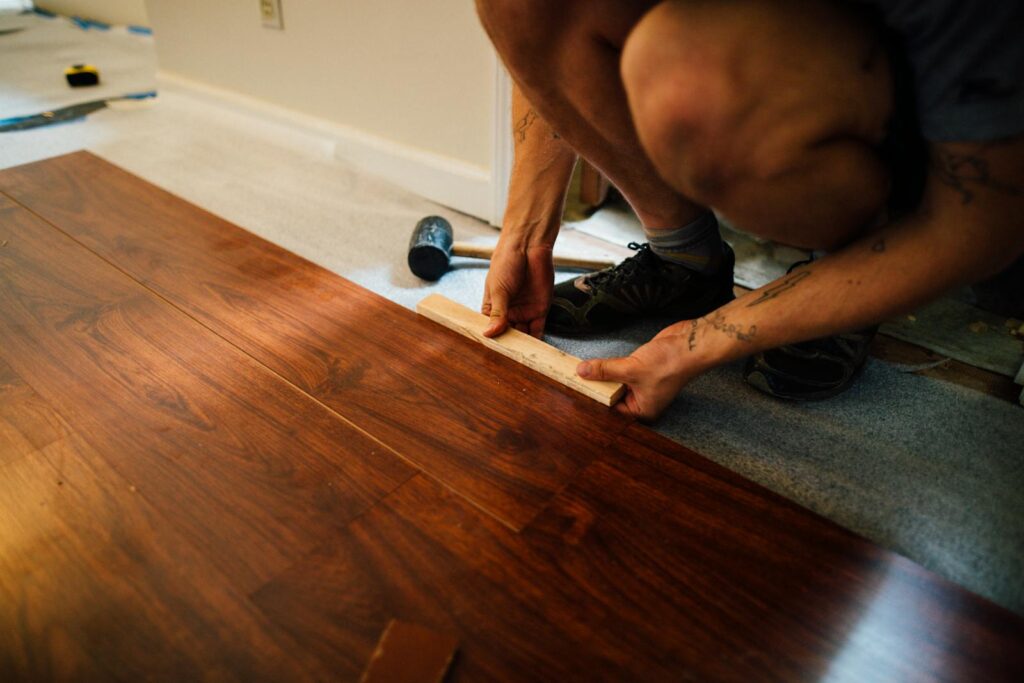
Quick-Step laminate flooring is designed as a floating floor system, which means the planks do not attach to the subfloor. Instead, they interlock using the Uniclic or Uniclic Multifit locking system, allowing for faster and cleaner installation compared to glue-down or nailed floors.
Preparation Before Installation
- Subfloor requirements: Must be flat, dry, and structurally sound. Uneven surfaces can cause gaps or plank movement.
- Moisture barriers: Recommended for concrete subfloors or areas prone to humidity to protect the HDF core.
- Acclimation: Planks should be left in the room for 48 hours to adjust to temperature and humidity changes.
Installation Methods
Quick-Step offers multiple ways to lock planks:
- Angle-angle method: Tilt plank into place at an angle and press down
- Horizontal tap: Snap planks together side by side
- Tap-down (Multifit): Press the plank directly onto the locking profile without angling
DIY vs Professional Installation
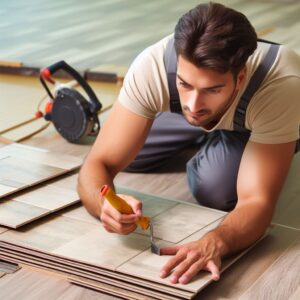
Quick-Step laminate is generally DIY-friendly, thanks to its click-lock system. However, large rooms, irregular layouts, or high-traffic areas may benefit from professional installation to ensure perfect alignment, expansion gaps, and consistent seams.
11. Maintenance & Care for Quick-Step Laminate Flooring
Maintaining Quick-Step laminate flooring is relatively simple compared to solid hardwood, but there are some do’s and don’ts to ensure longevity.
Daily & Weekly Cleaning
- Sweep or vacuum regularly to remove dust and grit
- Use a slightly damp mop for cleaning; avoid soaking the floor
- Spot-clean spills immediately to prevent moisture from reaching the core
Approved Cleaning Products
Quick-Step offers specific cleaning solutions formulated for laminate, but a mild, pH-neutral floor cleaner is also safe. Avoid abrasive or wax-based products, which can damage the wear layer.
What to Avoid
- Steam mops or excessive water: can swell the HDF core
- Harsh chemicals: bleach or ammonia-based cleaners can dull the surface
- Dragging heavy furniture: use felt pads or lift furniture to prevent scratches
Long-Term Maintenance Tips
- Place mats at entrances to reduce dirt and grit
- Use rugs in high-traffic areas to protect the wear layer
- Maintain indoor humidity between 35–65% to reduce expansion or contraction
With proper installation and care, Quick-Step laminate flooring retains its appearance for 15–25 years, depending on traffic levels and environmental conditions. Its scratch-resistant surface and robust locking system make it a practical, low-maintenance alternative to hardwood, while still offering realistic aesthetics.
Quick-Step Laminate Flooring Pros and Cons
Quick-Step laminate flooring is often praised for its premium feel, durability, and ease of installation, but like any flooring option, it has trade-offs. Understanding both sides helps homeowners make an informed choice.
Pros of Quick-Step Laminate Flooring
- Durability – Thanks to its high-density fiberboard core and wear layer reinforced with aluminum oxide, Quick-Step laminate resists scratches, dents, and daily wear better than most budget laminate brands.
- Realistic Appearance – The decorative layer and embossed finishes closely mimic natural hardwood, stone, or tile, offering premium visuals without the hardwood price tag.
- Advanced Locking Systems – Uniclic and Uniclic Multifit allow easy, glue-free installation and long-term plank stability.
- Low Maintenance – Quick-Step laminate is easy to clean and maintain, requiring only regular sweeping and damp mopping.
- Wide Range of Styles and Thicknesses – Homeowners can choose from various finishes, plank widths, thicknesses, and textures to suit different design preferences and performance needs.
- Consistent Quality – Backed by Unilin and Mohawk Industries, Quick-Step offers high manufacturing standards and reliable plank consistency.
Cons of Quick-Step Laminate Flooring
- Not Fully Waterproof – Even with Hydroseal technology, Quick-Step is water-resistant, not waterproof. Prolonged exposure to moisture or standing water can damage the HDF core.
- Higher Cost Compared to Budget Laminate – Quick-Step laminate commands a premium price, which may not suit all budgets.
- Cannot Be Refinished – Unlike solid hardwood, scratches or wear cannot be sanded out; the plank must be replaced if the surface is damaged.
- Susceptible to Subfloor Irregularities – Proper subfloor preparation is critical; uneven surfaces can cause gaps, squeaks, or plank damage.
- Edge Swelling Risk – While minimized with water-resistant treatments, the HDF core can swell if moisture penetrates seams or edges over time.
Here’s Section 13: Quick-Step vs Other Flooring Types, done in Koray-style — clear comparisons that explain how these flooring types differ in performance, cost, installation, and everyday use.
Quick-Step vs Other Flooring Types
When people explore flooring options, they’re usually comparing cost, durability, water performance, appearance, and installation ease. Quick-Step laminate competes with vinyl (especially luxury vinyl plank), engineered hardwood, and solid hardwood — each with its own strengths and trade‑offs.
Quick-Step Laminate vs Luxury Vinyl Plank (LVP)
Material & Core
- Quick-Step laminate has a high‑density fiberboard (HDF) core with a decorative image layer and protective wear surface.
- Vinyl plank (LVP/LVT) uses a PVC or SPC core, which is inherently 100% waterproof.
Water & Moisture
- Laminate is water‑resistant, not waterproof — it handles everyday spills well but not standing water.
- Vinyl is fully waterproof, making it better for bathrooms, kitchens, and basements.
Durability & Wear
- Laminate often has superior scratch resistance due to its hard wear layer.
- Vinyl is slightly softer underfoot and can be more impact‑resistant over time in moisture‑rich areas.
Installation
- Both install easily as floating floors with click‑lock systems, but vinyl can sometimes be laid without underlayment.
Best Use Cases
- Laminate (Quick-Step): Bedrooms, living rooms, hallways where water isn’t constant.
- Vinyl plank: Bathrooms, kitchens, basements, laundry rooms where moisture is common.
Bottom Line: Vinyl wins on moisture protection; laminate often wins on scratch resistance and realistic wood look in dry areas.
Quick-Step Laminate vs Engineered Hardwood
Appearance & Authenticity
- Engineered hardwood has a real wood veneer, giving unmatched natural warmth and grain variation.
- Laminate uses high‑resolution visuals to mimic wood but isn’t real wood.
Durability & Lifespan
- Engineered hardwood can often last longer and may be refinished at least once (depending on veneer thickness).
- Laminate offers excellent surface durability and scratch resistance but cannot be refinished; it’s replaced instead.
Moisture & Stability
- Engineered wood is more dimensionally stable than solid hardwood but still not waterproof.
- Laminate remains water‑resistant only.
Installation
- Laminate is typically easier and cheaper to install as a floating floor.
- Engineered wood installation can be floating, glue‑down, or nail‑down, which takes longer and may cost more.
Best Use Cases
- Laminate: Value‑focused rooms with active family use.
- Engineered hardwood: Areas where real wood aesthetics and longevity matter most.
Bottom Line: Engineered hardwood offers natural aesthetics and potential resale value, while laminate gives high durability and budget‑friendly performance.
Quick-Step Laminate vs Solid Hardwood
Authenticity & Value
- Solid hardwood is 100% natural wood, refinishes repeatedly, and can last generations.
- Laminate delivers wood‑like looks but not the natural material’s depth and aging potential.
Cost
- Laminate is significantly less expensive in both materials and installation.
- Solid hardwood is a long‑term investment with higher upfront and installation costs.
Wear & Maintenance
- Hardwood develops character over time and can be repaired; laminate resists day‑to‑day wear but must be replaced once worn.
Best Use Cases
- Solid hardwood: Formal living spaces and homes where long‑term value is a priority.
- Laminate: Everyday living areas with pets, kids, or frequent foot traffic.
Quick-Step Laminate vs Tile
Moisture & Durability
- Tile is 100% water‑proof and ideal for wet areas.
- Laminate is water‑resistant but can be damaged by standing water.
Comfort & Warmth
- Laminate feels warmer underfoot; tile can feel cold and hard.
- Underfloor heating works with both, but laminate pairs nicely with underlayment for thermal comfort.
Cost & Installation
- Tile involves more labor and higher installation costs.
- Laminate is faster and cheaper to install.
Best Use Cases
- Tile: Bathrooms, entryways, outdoor thresholds.
- Laminate: Dry interior spaces prioritizing comfort and wood look.
Quick Summary Table (High‑Level)
| Flooring Type | Water Protection | Authentic Look | Durability | Installation Ease | Typical Cost |
|---|---|---|---|---|---|
| Quick-Step Laminate | Water‑resistant | ✔️ Realistic | High scratch resistance | Very easy (click‑lock) | Lower to mid |
| Vinyl Plank (LVP) | Waterproof | Good | Excellent in wet areas | Easy | Mid |
| Engineered Hardwood | Moisture‑stable | Real wood | Durable & refinishable | Moderate | Mid to high |
| Solid Hardwood | Slightly water‑resistant | Best natural | Long lifespan | Harder | Highest |
| Tile | Waterproof | Stone/ceramic look | Very durable | Moderate to hard | Mid |