
Both are vinyl. Both are waterproof. Both sit at the affordable end of the flooring market. So why do so many homeowners end up unhappy with whichever one they chose?
The answer is almost never about the product itself. It is about a mismatch between what the product does structurally and what the room demands from it. Vinyl plank and vinyl sheet share a core material but diverge sharply in construction, installation behavior, subfloor tolerance, and long-term performance. Conflating them because they share a name leads to costly mistakes — wrong installation method, wrong underlayment decision, wrong room assignment.
This article breaks down exactly what separates vinyl plank from vinyl sheet, where each format performs well, where each fails, and how to make the right call for your specific situation.
What Vinyl Plank Flooring Actually Is
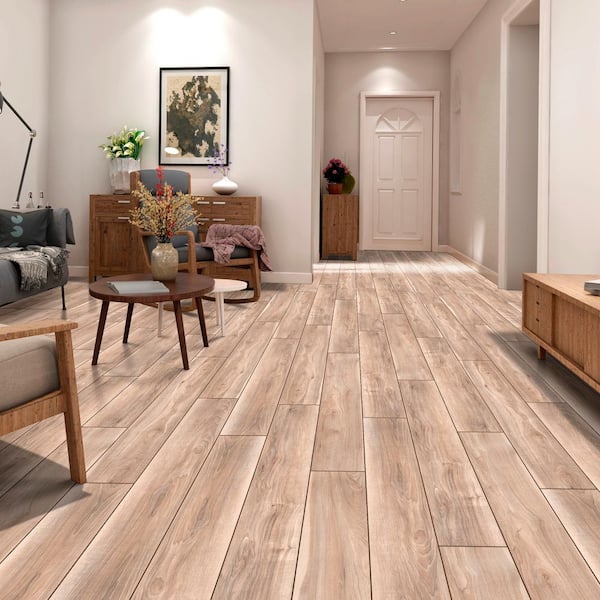
Vinyl plank flooring — sold under the umbrella terms LVP (luxury vinyl plank) and LVT (luxury vinyl tile) — is a rigid or semi-rigid product cut into individual planks or tiles, typically 4 to 9 inches wide and 36 to 60 inches long. Its construction is layered: a dimensionally stable core (either WPC, SPC, or standard PVC), a printed vinyl film that carries the visual design, and a wear layer on top that determines scratch and abrasion resistance.
The plank format matters for one specific reason: it installs as a floating floor. Individual planks connect at their edges through click-lock or tongue-and-groove mechanisms, meaning the entire floor moves as a semi-independent surface above the subfloor rather than being bonded to it. This floating behavior is what gives LVP its tolerance for minor subfloor imperfections and its suitability over concrete, plywood, and even existing hard flooring in many situations.
The wear layer on vinyl plank deserves particular attention. Wear layer thickness for LVP flooring typically runs from 6 mil in entry-level residential products to 12 or even 20 mil in commercial-grade options. This single specification has more influence over how long the floor holds up in real use than any other number in the product data sheet.
What Vinyl Sheet Flooring Actually Is
Vinyl sheet flooring is a single continuous roll of flexible vinyl, typically sold in widths of 6, 12, or 13.2 feet. Unlike plank flooring, it has no seams across the room — or at most one seam for very wide spaces — which is the characteristic that defines both its primary advantage and its primary limitation.
Construction varies significantly. Felt-backed sheet vinyl bonds to the subfloor using adhesive and is considered a permanent installation. Fiberglass-backed sheet vinyl can be installed as a loose lay or perimeter-only installation, making removal easier. The printed wear layer on sheet vinyl tends to be thinner than LVP — commonly 0.5 to 1.0mm — which places it below the durability threshold of most plank products in high-traffic use.
Sheet vinyl was the dominant residential vinyl product for most of the 20th century. LVP has since taken significant market share, but sheet remains highly relevant in specific applications — particularly in bathrooms, laundry rooms, and kitchens where seamlessness is a functional requirement rather than an aesthetic preference.
Construction Differences That Drive Real Performance Gaps
The most important structural difference is rigidity. Vinyl plank, especially SPC (stone plastic composite) core products, is dimensionally stable and relatively rigid. It resists indentation, doesn’t telegraph subfloor texture aggressively, and maintains its profile under heavy furniture. Sheet vinyl is inherently flexible — a useful property during installation, but one that means it will conform to whatever the subfloor presents. Every ridge, fastener head, crack, or grain pattern in the subfloor eventually telegraphs through to the surface of sheet vinyl. This is not a defect. It is a physical consequence of the product’s construction.
The second structural gap is at the seams — or more precisely, the absence of them in sheet vinyl. A kitchen or bathroom installed with 12-foot-wide sheet vinyl and no mid-room seams is genuinely more water-resistant at the floor plane than a plank installation, where each click-lock joint is a potential pathway for water infiltration if the floor sits in standing water for extended periods. Whether water ruins vinyl flooring depends heavily on how long it sits and whether it reaches the subfloor — and sheet vinyl’s seamlessness is a meaningful defense against that in wet environments.
Third, and less discussed, is the core density effect on acoustics. Sheet vinyl, being thin and flexible, transmits impact sound effectively — footsteps and dropped objects are clearly audible through it. Vinyl plank, particularly WPC-core products with an attached foam underlayment, absorbs considerably more impact noise. This difference is meaningful in multi-story homes. Methods to soundproof vinyl flooring address this gap, but it is worth understanding that the product format itself plays a significant role before any additional treatment is considered.
Subfloor Requirements: Where Each Format Is More Forgiving
Subfloor preparation is where most installation failures originate, and the two formats have meaningfully different tolerances.
Sheet vinyl is demanding. Because it bonds directly to — or lies directly against — the subfloor, it reveals surface irregularities over time. The standard installation specification calls for the subfloor to be flat within 3/16 inch over a 10-foot radius, with no ridges, humps, or depressions greater than 1/16 inch over 6 inches. In practice, most renovation subfloors fall outside these tolerances without remediation work. Fastener heads need to be countersunk. Cracks need to be filled. Old adhesive residue needs to be scraped level. Skipping this work produces a floor that telegraphs every imperfection, often within weeks of installation.
Vinyl plank is more forgiving, particularly in SPC-core formats. The rigid core bridges minor gaps and absorbs small transitions without telegraphing them to the surface. Choosing the right subfloor for vinyl flooring is still important for plank products, but the practical tolerance is wider — typically 3/16 inch over 10 feet remains the specification, but the rigidity of SPC in particular means real-world performance on imperfect subfloors tends to be better than sheet vinyl’s.
One area where sheet vinyl holds an advantage: it handles above-grade moisture better in some configurations. Felt-backed sheet vinyl installed with full adhesive effectively seals the subfloor from above, preventing moisture from becoming trapped in the flooring system. Floating vinyl plank installations over concrete require careful attention to moisture testing and appropriate underlayment for vinyl plank flooring on concrete to manage vapor transmission from below.

Installation Method Differences
Installation is where the DIY question typically gets decided.
Vinyl plank with a click-lock system is DIY-accessible for most homeowners with basic tool skills. Cuts are straightforward — a utility knife and straight edge, or a miter saw for more precise work. The floating installation means mistakes at individual planks can be corrected without disturbing the whole floor. The expansion gap requirement around perimeters is critical and must be maintained, but it is a simple rule to follow.
Sheet vinyl installation is more technically demanding. Cutting a single continuous sheet to fit a complex room — one with cabinets, toilets, door casings, and irregular alcoves — requires accurate templating and confident cuts. Errors in a sheet of vinyl are not recoverable the way errors in an individual plank are. Full-spread adhesive installations require working quickly in sections before the adhesive skins over. For these reasons, professional installation is more commonly used with sheet vinyl than with LVP, particularly in rooms with complex layouts.
Click-lock vs glue-down vinyl flooring is a separate but related decision that applies primarily to plank products and affects repairability, stability in temperature-variable environments, and the permanence of the installation.
Durability and Wear Resistance Compared
In direct comparisons of wear resistance, vinyl plank wins in most residential scenarios. The wear layer on quality LVP products is thicker and harder than what sheet vinyl typically offers, meaning it holds up better against pet scratches, dragged furniture, and sustained foot traffic.
This gap narrows significantly in low-traffic areas. In a guest bathroom used twice a week, the difference in wear layer between 0.7mm sheet vinyl and 6-mil LVP is essentially academic — neither floor will show meaningful wear in a decade of that use pattern. In a kitchen with four people cooking daily, or a main entrance corridor, the wear layer difference becomes real within years rather than decades.
Indentation resistance is a more nuanced comparison. Sheet vinyl, being flexible, is more vulnerable to point loads from heavy furniture legs and appliances. Refrigerator legs, piano legs, and heavy shelving bases can permanently dent sheet vinyl over time. Vinyl plank — especially SPC-core — resists these point loads considerably better because the rigid core distributes the load over a wider area rather than concentrating it at the contact point.
Fading under UV exposure is a shared vulnerability. Both formats use printed vinyl film for their visual design, and both are susceptible to color shift under prolonged direct sunlight. Keeping luxury vinyl plank from fading involves window treatments, UV-blocking films, and area rugs — measures that apply equally to sheet vinyl in sunny rooms.
Repair and Replacement: A Major Practical Difference
This is one of the most underweighted factors in purchase decisions and one of the most consequential in long-term ownership.
A damaged vinyl plank is replaceable. A floating floor can be disassembled from the nearest wall to the damaged plank, the affected board swapped, and the floor reassembled. The repair requires matching planks from the same product line — which is a caveat worth noting, as discontinued colors can make future repairs difficult — but the process is straightforward and leaves no visible evidence if the match is good.
A damaged section of sheet vinyl is significantly harder to address. Full-spread adhesive installations essentially cannot be repaired invisibly. The most common approach is to cut out the damaged section and patch in a matching piece, but the seam created by the patch is visible, particularly as both pieces age at different rates. Perimeter-only or loose-lay sheet vinyl installations are more repair-friendly, but they are also less common and less stable in high-traffic areas.
For rental properties, high-traffic commercial applications, or any situation where isolated damage is likely, this repairability difference is a decisive practical argument in favor of vinyl plank.
Cost Differences: Material, Installation, and Long-Term Value
On material cost alone, sheet vinyl is generally less expensive per square foot than comparable-quality vinyl plank. Entry-level sheet vinyl runs from $0.50 to $2.00 per square foot for the material. Entry-level vinyl plank runs from $1.50 to $4.00 per square foot, with quality SPC products sitting at $3.00 to $6.00 before installation.
Installation costs complicate this picture. Sheet vinyl professional installation adds $1.50 to $3.00 per square foot. Vinyl plank professional installation adds $1.00 to $2.50 per square foot, and the DIY option is realistic for LVP in a way it often isn’t for sheet vinyl in complex rooms, potentially eliminating labor costs entirely.
Long-term cost includes replacement frequency. A mid-grade sheet vinyl product in a busy kitchen might show meaningful wear in 10 to 15 years. A mid-grade LVP with a 12-mil wear layer in the same room might last 20 to 25 years before showing comparable wear. The math on total cost of ownership over a 20-year period often narrows the gap between the two formats or reverses it.
Room-by-Room Application Guide
Bathrooms: Sheet vinyl holds a genuine functional advantage in full bathrooms and wet baths. The absence of seams means water pooling around a tub or toilet does not have a direct route to the subfloor. Small bathrooms under 100 square feet are ideal sheet vinyl applications — the room is simple enough to template accurately, and the seamlessness pays real dividends. Large bathrooms with complex layouts tilt back toward LVP for installation practicality.
Kitchens: Both formats work well in kitchens. LVP is more commonly chosen because it installs more easily around cabinet bases and islands, repairs more gracefully if appliances create damage, and offers better comfort underfoot due to its core thickness. Sheet vinyl remains a sound choice in open-plan kitchen layouts where a 12-foot width can be installed without seams.
Living rooms and bedrooms: LVP is the stronger choice here, almost without qualification. The acoustic performance, comfort, appearance, and repairability all favor plank format over sheet. Sheet vinyl in these rooms has no meaningful functional advantage.
Basements: Both formats handle below-grade moisture exposure, but the installation method matters more than the product format. Any vinyl installation over a concrete slab should include proper moisture testing first. Vinyl flooring for bathrooms and kitchens principles about moisture management apply at least as strongly in basement environments.
Commercial spaces: Sheet vinyl, particularly in healthcare and institutional settings, has a long track record because its seamless surface is easier to sanitize and provides no joint gaps for contaminant accumulation. Commercial-grade LVP with 20-mil wear layers competes well in retail and office environments, but healthcare and food service still often favor sheet.
Which One Should You Choose
The decision simplifies to a small set of governing conditions.
Choose vinyl sheet when: the installation area is small and geometrically simple (under 150 square feet), water resistance at the floor plane is the primary requirement, budget is the governing constraint, or the application is institutional/healthcare where seamless surfaces are required.
Choose vinyl plank when: the installation area is large or geometrically complex, the subfloor has minor imperfections that would require significant remediation for sheet vinyl, acoustic performance matters, repairability over the floor’s lifespan is important, or you intend to install it yourself. Also choose LVP when the visual goal is a realistic wood or stone appearance, since the print clarity and plank dimensionality of modern LVP outperforms sheet vinyl in aesthetic realism by a significant margin.
Neither format is universally superior. They are different tools for different jobs, and the most useful thing you can do before purchasing either is to be specific about what the room actually needs — not just what looks appealing in a showroom.
If you are weighing vinyl against other formats entirely, the full pros and cons of sheet vinyl flooring and the pros and cons of LVT flooring offer deeper dives into each format’s performance characteristics across more specific variables.