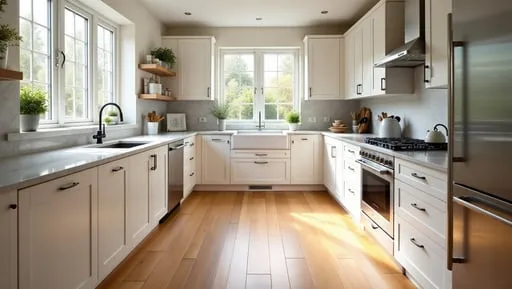
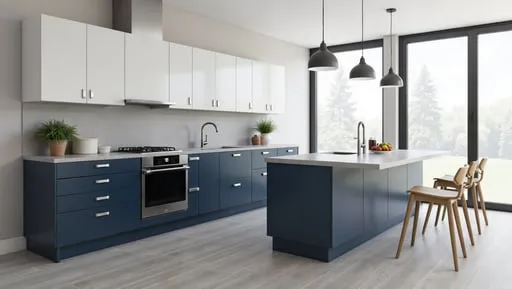
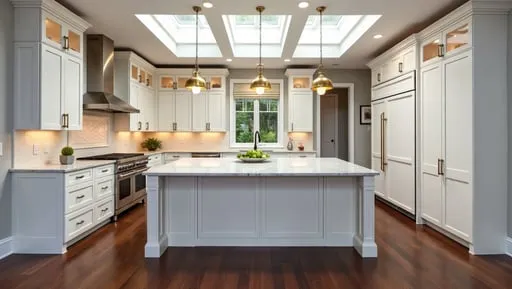
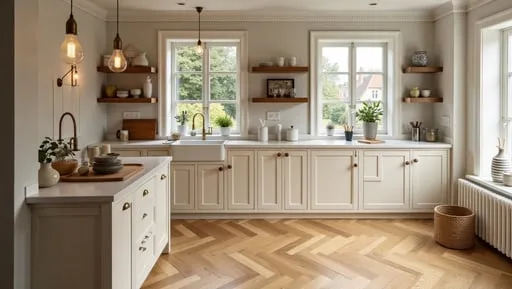
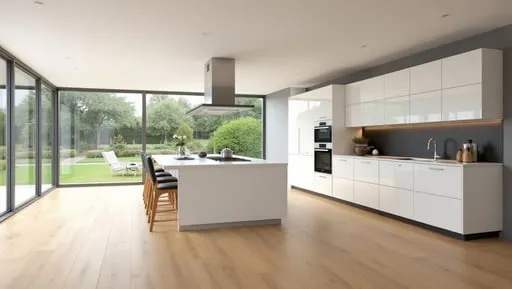
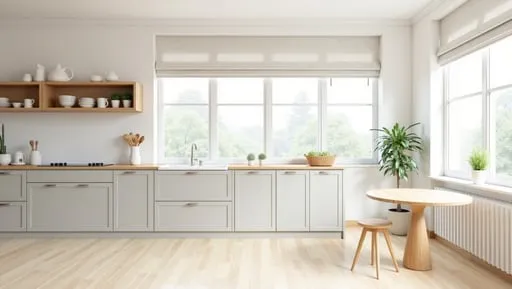
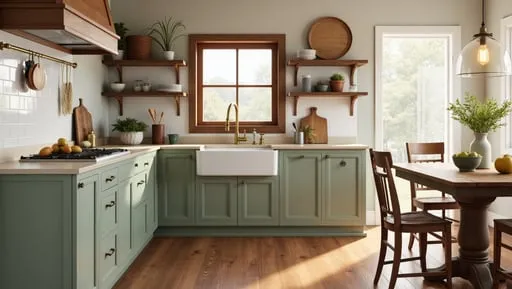
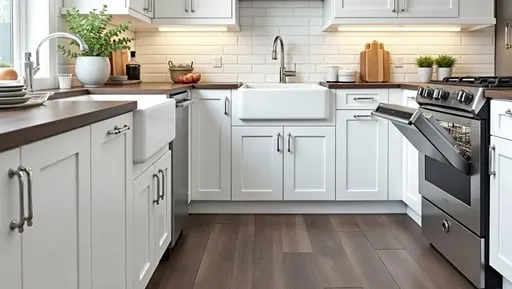
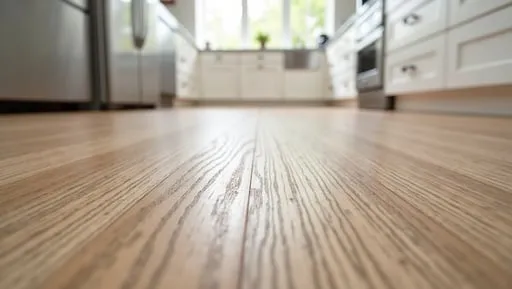
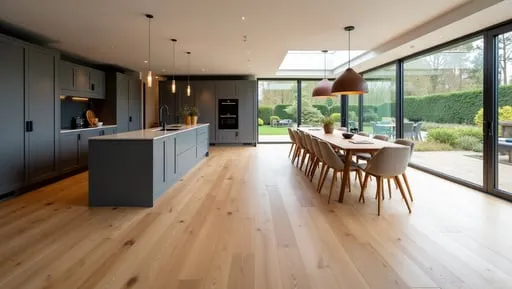
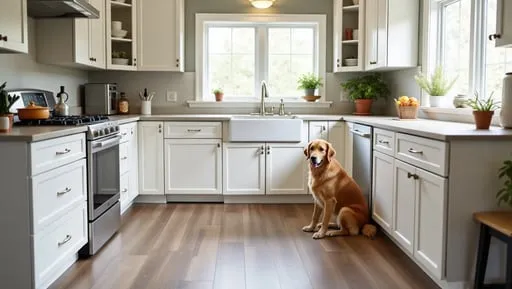
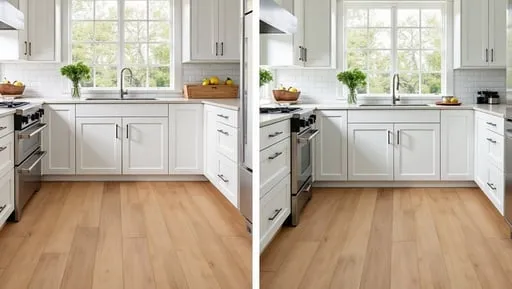
When installing classic oak laminate in the kitchen, laying planks parallel to the longest wall is the most traditional approach, which visually elongates the space. If you have an open-plan layout connecting the kitchen to a living area, running the planks consistently throughout both spaces creates a seamless, cohesive flow.
2. Grey Washed Laminate for a Contemporary Look
Grey has dominated interior design for over a decade, and its popularity in kitchen flooring shows no signs of slowing down. Grey washed laminate flooring brings a cool, contemporary sophistication to the kitchen that works exceptionally well with modern and Scandinavian-style design aesthetics. The slightly muted, washed-out tone gives the appearance of driftwood or weathered timber, adding texture and character without overwhelming the space.
What makes grey washed laminate so versatile is its neutrality. It pairs seamlessly with both cool-toned and warm-toned kitchens. Against crisp white or light grey cabinets, it creates a clean, minimalist look that feels fresh and modern. Against dark navy or charcoal cabinetry, it provides a softer contrast that keeps the overall scheme from feeling too heavy or dramatic. Pair it with brushed nickel or matte black hardware for a truly polished contemporary finish.
Grey washed laminate tends to hide dust, light scratches, and pet hair better than darker options, making it a highly practical choice for busy kitchens. The lighter grey tones are particularly forgiving and low-maintenance, which is an important consideration in a room that sees heavy daily use.
For a cohesive look, extend the grey laminate into adjoining dining or living areas. This eliminates visual breaks between spaces and makes your entire ground floor feel more expansive. If your kitchen features an island, the continuous flooring beneath it anchors the island as part of the broader space rather than an afterthought.
If you want your kitchen to make a bold, luxurious statement, dark walnut laminate flooring delivers drama and elegance in equal measure. The deep, chocolate-brown tones of walnut-look laminate create a stunning contrast against light-coloured cabinetry — particularly white, cream, or pale grey — making the overall design feel intentional, high-end, and beautifully curated.
Dark walnut laminate works particularly well in larger kitchens where there is enough visual space to absorb the depth of the colour without making the room feel small or oppressive. In open-plan layouts where the kitchen flows into a dining or living area, dark walnut flooring unifies the entire space with a sense of warmth and sophistication that few other flooring choices can match.
The rich grain patterns typical of walnut-look laminate add a tactile, natural quality to the floor that elevates the entire kitchen aesthetic. Pair it with brass or gold hardware and fixtures for a luxurious, editorial finish, or keep it grounded with matte black fittings for a more industrial-luxe look. Warm under-cabinet lighting will accentuate the richness of the dark tones beautifully.
One important consideration with dark laminate in the kitchen is maintenance visibility — light dust, flour, pet hair, and footprints tend to show more readily on dark surfaces. However, a quick sweep and occasional damp mop is all it takes to restore the floor’s pristine appearance. The payoff in visual impact is well worth the slightly higher maintenance frequency.
4. Herringbone Pattern Laminate for Timeless Style
Herringbone is one of the most iconic and enduring floor patterns in interior design, and when executed in laminate, it brings a level of visual sophistication to the kitchen that far exceeds its price tag. The interlocking V-shaped zigzag arrangement of the planks creates a dynamic, eye-catching floor surface that draws the eye across the room and adds architectural interest that standard straight-lay installations simply cannot replicate.
Herringbone laminate works in a wide range of kitchen styles. In a traditional or farmhouse kitchen, it evokes the charm of old European manor houses and French country estates. In a modern kitchen with handleless cabinetry and minimal decoration, the herringbone pattern provides just enough visual complexity to keep the space from feeling stark or sterile. In a transitional kitchen that blends old and new, it acts as a timeless bridge between the two aesthetics.
The key to a successful herringbone installation is scale. In smaller kitchens, narrower planks in a tighter herringbone pattern maintain the visual elegance without overwhelming the space. In larger, grander kitchens, wider planks create a more dramatic and impactful effect. Medium-toned wood shades — such as warm honey, light oak, or soft greige — tend to work best in the herringbone format as they allow the pattern itself to remain the star of the show.
It is worth noting that herringbone installations require more precision and slightly more material than straight-lay patterns due to the angled cuts required. Hiring an experienced installer is strongly recommended to ensure the pattern is perfectly aligned and centred within the room.
Wide plank laminate is one of the most effective design tools for making a kitchen feel larger, more open, and more luxurious. Planks that measure 7 inches or wider create fewer seams across the floor, which reduces visual interruption and allows the eye to travel smoothly across the surface. This seamless visual flow makes the room feel more expansive — a particularly valuable quality in kitchens of all sizes.
Wide plank laminate also showcases the wood-grain pattern more dramatically than narrow planks because there is simply more surface area to display the natural variations in colour and texture. This gives the floor a more authentic, premium appearance that closely resembles genuine solid hardwood. When you select a wide plank product with subtle colour variation and realistic embossing, the visual result is exceptionally convincing.
In kitchen design, wide plank laminate works beautifully under large islands, connecting the island seamlessly to the rest of the floor without a cluttered, choppy appearance. It also pairs exceptionally well with open-plan kitchens where the continuous wide plank runs through multiple zones without visual interruption, reinforcing the sense of spaciousness and cohesion throughout the home.
For best results, choose a wide plank product with a registered emboss finish — where the texture is aligned with the print beneath it — as this creates the most realistic replication of genuine timber grain. This level of detail is particularly apparent in wider planks where the surface area is large enough to appreciate the craftsmanship.
6. Light Blonde Laminate for Airy Scandi Vibes
Inspired by the interiors of Scandinavia, light blonde laminate flooring brings a serene, airy quality to the kitchen that feels simultaneously fresh, timeless, and deeply livable. The pale, almost whitewashed tones of blonde laminate reflect natural light beautifully, making even the smallest or darkest kitchens feel brighter and more open. It is one of the most effective ways to maximise the sense of light and space in a kitchen without a costly renovation.
The Scandinavian aesthetic that light blonde laminate so perfectly complements is built around simplicity, functionality, and a deep connection to natural materials. Pair your blonde laminate floor with natural wood open shelving, linen Roman blinds, ceramic pendant lights, and simple white or pale grey cabinetry for an authentically Nordic look. Add a few potted herbs on the windowsill and a woven basket or two for texture, and your kitchen will feel like it belongs in a Copenhagen design magazine.
Beyond aesthetics, light blonde laminate is extraordinarily practical in the kitchen. Its pale tones are forgiving of everyday dust and fine debris, meaning your floor looks clean and presentable with minimal effort. It also creates a warm, welcoming backdrop for food preparation and family gatherings, making the kitchen feel like a place you genuinely want to spend time in rather than simply a functional workspace.
When shopping for light blonde laminate, look for products with a subtle, low-sheen finish rather than a high-gloss surface. A satin or matt finish is more forgiving of footprints and cleaning streaks, and it looks more authentic to the natural timber aesthetic that Scandinavian design celebrates.
7. Farmhouse-Style Laminate with Distressed Finish
The farmhouse aesthetic is one of the most beloved and enduring interior design trends of recent years, and laminate flooring with a distressed or hand-scraped finish is one of the easiest ways to bring authentic farmhouse character into your kitchen. Unlike smooth, uniform laminate, distressed finishes feature intentional surface variations — knots, scrapes, wire-brushed textures, and colour variation — that replicate the look of old, reclaimed timber boards with extraordinary realism.
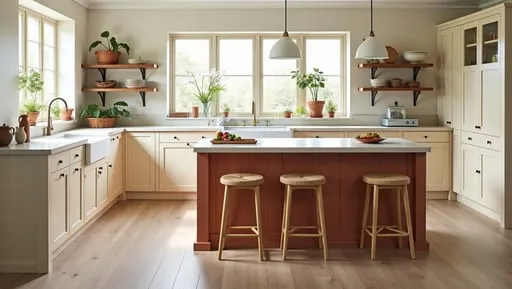
In a farmhouse kitchen, the floor is often the foundation of the entire aesthetic. A wide-plank, hand-scraped laminate in a warm chestnut, rustic grey-brown, or reclaimed oak tone instantly sets the scene for the shiplap walls, open shelving, apron-front sink, and vintage-inspired hardware that characterise the style. The floor tells the story of age, warmth, and history that is central to the farmhouse look, and laminate delivers this at a fraction of the cost of genuine reclaimed wood.
Distressed laminate is also highly practical — the built-in surface variation makes it far more forgiving of real-life scratches, dents, and scuffs than smooth, high-gloss products, as any new marks simply blend into the existing texture. For families with children, pets, or simply busy, active lifestyles, this is an enormous practical advantage that makes farmhouse-style laminate as functional as it is beautiful.
Pair your distressed laminate with warm, earthy tones throughout the kitchen — cream or sage green painted cabinetry, exposed wooden beams if possible, an apron sink in white or fireclay, and vintage-style brass or oil-rubbed bronze fixtures. Layered with a few woven rugs in natural fibres, your kitchen will exude the relaxed, welcoming charm that farmhouse design is all about.
8. Waterproof Laminate for High-Moisture Kitchen Zones
The kitchen is one of the most moisture-prone rooms in the home — between the sink, dishwasher, refrigerator water line, and inevitable cooking spills, water exposure is a daily reality. Traditional laminate can swell, warp, or delaminate when exposed to prolonged moisture, which is why waterproof laminate — also known as water-resistant or 100% waterproof laminate with a sealed core — has become an increasingly important category for kitchen flooring.
Modern waterproof laminate products use advanced core technologies — such as water-resistant HDF cores, fully sealed edges, and hydrophobic surface treatments — to prevent moisture penetration even in high-spill areas. Some premium products are genuinely submersion-tested, meaning they can withstand standing water for extended periods without any warping or swelling. This makes them an ideal choice for the zones immediately surrounding the sink, dishwasher, and refrigerator.
The best waterproof laminate products do not sacrifice aesthetics for functionality. They come in the same wide range of wood-look finishes, colours, and plank widths as standard laminate, meaning you can achieve any design look you desire with the added confidence of superior moisture protection. Look for products specifically labelled as waterproof rather than simply water-resistant — the distinction is significant and worth the slightly higher investment for kitchen use.
When installing waterproof laminate in the kitchen, pay particular attention to the perimeter edges and transitions between the kitchen and adjacent rooms. Using waterproof sealant along perimeter walls and selecting appropriate transition strips at doorways will complete the moisture barrier and ensure your floor performs at its best for the long term.
9. Stone-Effect Laminate for a Refined Kitchen Look
Stone and tile have long been classic choices for kitchen floors, but their hardness underfoot, coldness in winter, and higher cost can be drawbacks for many homeowners. Stone-effect laminate offers a compelling alternative — delivering the visual grandeur of marble, slate, travertine, or concrete with the comfort, warmth, and affordability of laminate underfoot.
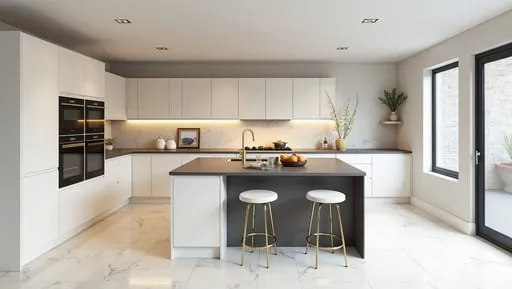
Large-format stone-effect laminate tiles are particularly effective in the kitchen, where their scale visually expands the floor plane and creates a sense of spacious elegance. A light marble-effect laminate with subtle grey veining, for example, transforms a kitchen into something that looks like it belongs in a luxury interior magazine — but at a fraction of the cost of genuine stone. Pair it with white or cream cabinetry, polished chrome fixtures, and a few metallic accents for a cohesive, high-end result.
Slate-effect and concrete-effect laminate options offer a more industrial, contemporary look that works beautifully in modern kitchens with dark cabinetry, exposed metal shelving, and handleless units. These cooler, textural options create a sophisticated urban aesthetic that feels current and design-forward without being cold or unwelcoming.
One of the key advantages of stone-effect laminate over real stone is the comfort factor — laminate provides a small degree of give and warmth underfoot that genuine stone cannot offer, making it much more comfortable to stand on during long cooking sessions. Combined with a good-quality underlay, stone-effect laminate is also an effective sound insulator, reducing the impact noise that can travel between floors in multi-storey homes.
10. Grey-Brown Greige Laminate for Universal Appeal
Greige — the perfect blend of grey and beige — is one of the most universally flattering and enduringly popular tones in interior design, and as a laminate flooring option for kitchens, it is practically foolproof. Greige laminate flooring occupies a unique sweet spot between the coolness of grey and the warmth of beige, making it compatible with virtually every cabinet colour, countertop material, and kitchen style you can imagine.
In a kitchen with warm-toned cabinetry — honey oak, cream, or terracotta — the beige undertones in greige laminate provide a harmonious connection. In a kitchen with cooler tones — white, pale grey, or soft blue — the grey element of greige keeps the floor feeling current and cohesive. This chameleon quality is what makes greige laminate such a smart investment, particularly if you anticipate changing your kitchen’s colour scheme over time without replacing the floor.
From a practical standpoint, greige tones are among the most forgiving of everyday dirt, dust, and light scratches. The mid-tone colour range sits in the sweet spot where neither light debris nor dark scuff marks are particularly visible, meaning your kitchen floor looks clean and presentable with minimal effort between deeper cleans. For busy family kitchens, this low-maintenance quality is invaluable.
Greige laminate with a subtle wire-brushed or lightly textured surface finish is particularly effective in the kitchen, as it adds a tactile depth that elevates the floor beyond a simple flat surface and hints at the natural timber it replicates. Look for products with realistic knot and grain variation for the most convincing result.
11. Embossed in Register (EIR) Laminate for Authentic Texture
For homeowners who want their kitchen laminate flooring to be virtually indistinguishable from real hardwood, Embossed in Register (EIR) technology represents the gold standard of laminate realism. Unlike standard embossed laminate where a generic texture is applied uniformly across the surface, EIR laminate features texture that is precisely aligned with the printed grain pattern beneath — so the ridges, pores, and surface variation you see correspond exactly to the texture you feel underfoot.
The result is a floor that passes the visual and tactile test of authenticity with remarkable success. When you run your hand across an EIR laminate plank, you feel the slight elevation of the grain lines, the gentle depression of the pores, and the natural variation of the knots — all of which build the convincing illusion of standing on genuine hardwood. In a kitchen where guests and family spend considerable time, this level of detail makes a meaningful difference to the overall impression of quality.
EIR laminate typically comes at a slightly higher price point than standard textured or smooth laminate products, but for kitchens where aesthetics are a priority, the investment is well justified. It works in every kitchen style from rustic farmhouse to sleek contemporary, and its authenticity means it photographs beautifully — an important consideration if you ever plan to sell your home or simply want a kitchen you love to show off.
When selecting an EIR product for the kitchen, pair it with a realistic colour palette — natural oak, aged walnut, or worn pine tones — that allows the texture to do its work most convincingly. Avoid overly vivid or unnatural colour stains that undermine the realistic effect the EIR texture creates.
12. Whitewashed Laminate for a Coastal Kitchen Feel
If your design dream is a kitchen that feels like a breezy beach house — light, airy, relaxed, and utterly welcoming — whitewashed laminate flooring is your most powerful starting point. The white-over-wood effect of whitewashed laminate mimics the bleached timber of seaside boardwalks and coastal cottages, creating a floor that feels sun-soaked and effortlessly casual in the best possible way.
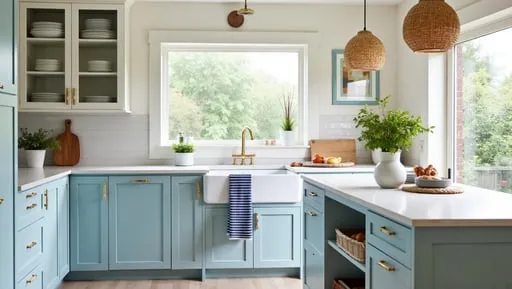
Whitewashed laminate works beautifully in kitchens with a coastal or Hamptons-style aesthetic — think white or pale blue shaker cabinets, shiplap walls, glass-fronted upper cabinets, rattan or wicker bar stools, and nautical accents in navy, rope, and brushed chrome. The pale, bleached tone of the floor reflects light generously, making the kitchen feel as though the doors have been thrown open to the ocean breeze even when you are miles from the coast.
Beyond coastal styles, whitewashed laminate also works in bohemian kitchens where layered rugs, macramé accents, and eclectic collections of ceramics create a relaxed, free-spirited atmosphere. The pale floor provides a clean, neutral canvas that allows the personality of the decor to shine without competition from the flooring.
A practical note: whitewashed laminate, like all pale floors, requires more frequent cleaning to maintain its fresh appearance in the kitchen. In exchange, it makes the space feel extraordinarily bright and generous, particularly in kitchens with limited natural light where darker floors might make the room feel heavy and confined.
13. Two-Tone Transition Laminate in Open-Plan Kitchen
In open-plan homes where the kitchen flows directly into the dining area, living room, or both, using two complementary laminate tones — one for the kitchen zone and a slightly different shade for the adjacent area — can be a clever design strategy that defines each functional area without using walls or hard transitions. This approach creates a subtle visual separation while maintaining the overall sense of openness that makes open-plan living so appealing.
For example, a slightly cooler, mid-grey laminate in the kitchen zone can transition into a warmer, honey-toned laminate in the adjacent dining or living area. The two tones are visually related enough to feel intentional and cohesive, yet different enough to signal a change in function and atmosphere. This technique works particularly well when the two zones have different lighting conditions — the cooler tone in the well-lit kitchen, the warmer tone in the softer-lit dining or living area.
Alternatively, some homeowners choose to use a different plank width or laying pattern in each zone rather than a different colour — for example, a standard straight-lay in the kitchen and a herringbone or diagonal layout in the dining area — while keeping the colour consistent. This approach maintains colour harmony while still using the flooring itself to define separate zones within the open plan.
When executing any form of planned transition, the connection between the two laminate zones should be carefully considered. A well-chosen transition strip, a natural doorway threshold, or a flush T-bar transition can make the change feel elegant and deliberate rather than accidental or unresolved.
For households with dogs, cats, or other pets, the kitchen floor takes a particular beating — claws scratching the surface with every pass, water bowls sloshing their contents, and the inevitable accidents that even the best-trained pets occasionally have. Choosing a laminate specifically engineered for pet households is not just a design decision — it is a practical investment that will save you considerable frustration and money over time.
Pet-friendly laminate flooring is manufactured to an AC4 or AC5 abrasion class rating, which represents the highest levels of scratch and wear resistance available in laminate products. These ratings mean the surface layer is reinforced with aluminium oxide crystals that repel the abrasive force of pet claws far more effectively than standard laminate finishes. Some specialist pet-friendly products also feature anti-static treatments that reduce pet hair attraction to the surface — a small but genuinely appreciated feature for pet owners.
Colour choice matters significantly for pet owners. Medium-toned laminates in the greige, warm grey-brown, or natural tan spectrum tend to be the most forgiving of pet hair, as neither the lightest nor darkest fur tones contrast as sharply against these mid-range backgrounds. Textured surfaces with wire-brushed or hand-scraped finishes are also more forgiving of light surface scratches than smooth, high-sheen products.
Pair your pet-friendly laminate with a high-quality moisture-resistant underlay and ensure all edges are properly sealed with sealant to prevent the small spills and splashes that inevitably accompany pet water bowls from seeping beneath the floor. With the right product and correct installation, your kitchen floor will withstand years of pet life while still looking beautiful.
15. Budget-Friendly Laminate That Looks Expensive
One of the most compelling arguments for laminate flooring in the kitchen is the extraordinary value it delivers. Modern budget-friendly laminate products — available at accessible price points — have improved so dramatically in recent years that even entry-level options can achieve genuinely impressive aesthetic results when chosen carefully and installed correctly. The key is knowing what to look for in a budget laminate product to maximise your visual return on investment.
The single most important factor in making budget laminate look expensive is choosing a product with realistic colour variation. Budget products that feature a single, flat, repeating pattern across all planks look obviously artificial because real wood never looks that uniform. Choose a budget laminate with at least four to six different plank face variations in the production run, as this ensures that no two adjacent planks will look identical — the fundamental visual cue that separates convincing wood replication from cheap imitation.
Surface texture is the second key differentiator. Even at a budget price point, avoid completely smooth, high-gloss laminate finishes in the kitchen — they show every footprint, scratch, and cleaning streak, and they rarely replicate the appearance of genuine wood convincingly. Instead, look for lightly embossed or satin-finish budget products that provide a degree of surface texture and a more realistic, matte appearance.
Colour choice can also make a significant difference to the perceived quality of a budget laminate. Classic, restrained tones — natural oak, warm greige, or soft mid-grey — tend to look more expensive than overly vivid or theatrical colour choices. Paired with quality accessories such as brushed metal transition strips and coordinated skirting boards, a well-chosen budget laminate can genuinely hold its own against far more expensive flooring options.
Installation quality also dramatically affects the final result. Even the best budget laminate will look poor if it is not installed flat, level, and with correctly managed expansion gaps. Investing in a professional installation — even if you choose to save money on the product itself — is always a worthwhile strategy.
Final Thoughts: Choosing the Right Laminate for Your Kitchen
With so many stunning options available, choosing kitchen laminate flooring has never been more exciting — or more manageable. Whether you are drawn to the timeless warmth of classic oak, the dramatic sophistication of dark walnut, the architectural interest of herringbone, or the coastal lightness of whitewashed planks, there is a laminate option that will bring your kitchen vision to life.
As you make your decision, keep the following key principles in mind. First, always prioritise moisture resistance for kitchen use — look for waterproof core technologies and sealed edges to protect your investment. Second, choose an abrasion class of AC3 at minimum for kitchen use, with AC4 or AC5 recommended for high-traffic or pet-friendly households. Third, consider the long-term maintenance implications of your colour choice — pale floors show dirt more readily, dark floors show dust and pet hair more readily, and mid-tones are the most forgiving of everyday use. Finally, never underestimate the power of a professional installation to transform even a modest product into a floor that looks and performs beautifully for years to come.
The kitchen you have always dreamed of is closer than you think — and it starts from the floor up.
James Miller is a seasoned flooring contractor with years of hands-on experience transforming homes and businesses with high-quality flooring solutions. As the owner of Flooring Contractors San Diego, James specializes in everything from hardwood and laminate to carpet and vinyl installations. Known for his craftsmanship and attention to detail, he takes pride in helping clients choose the right flooring that balances beauty, durability, and budget. When he’s not on the job, James enjoys sharing his expertise through articles and guides that make flooring projects easier for homeowners.
13 Grey Carpet Flooring Ideas That Actually Work in Every Room Grey carpet is one of those flooring choices that divides people right down the middle. Half the room says it is cold, uninspiring, the safe default for people who cannot make a decision. The other half knows something the skeptics do not: grey carpet…
There is something almost instinctive about the way warm hardwood floors make a room feel complete. Long before interior designers coined terms like biophilic design or soft minimalism, homeowners understood that a golden oak plank beneath their feet changed the entire mood of a space. That emotional pull has only grown stronger in recent years….
Vinyl flooring has completely outgrown its old reputation. What was once considered a budget workaround is now a first-choice material in designer kitchens, open-plan living rooms, and high-end renovations across the country. The reason is simple: today’s luxury vinyl plank (LVP) and luxury vinyl tile (LVT) look genuinely beautiful, perform in places real wood can’t…
Small spaces come with big design challenges, and the floor beneath your feet plays a surprisingly powerful role in how large or cramped a room feels. The good news? Laminate flooring is one of the smartest, most budget-friendly tools you have for visually expanding a compact room. With the right color, plank direction, and pattern,…
Farmhouse style has never really gone anywhere, but the way people are interpreting it has matured considerably. The barn-door-on-everything moment has given way to something more considered: spaces that feel grounded in natural materials, lived-in texture, and warm color without tilting into cliché. And laminate flooring, once dismissed as the budget option nobody talked about…
Open plan living has become the default layout for modern homes — that sweeping merge of kitchen, dining, and living space that makes a house feel larger, brighter, and more connected. But this kind of layout puts enormous pressure on one design element: the floor. Unlike a room with walls, an open plan space exposes…