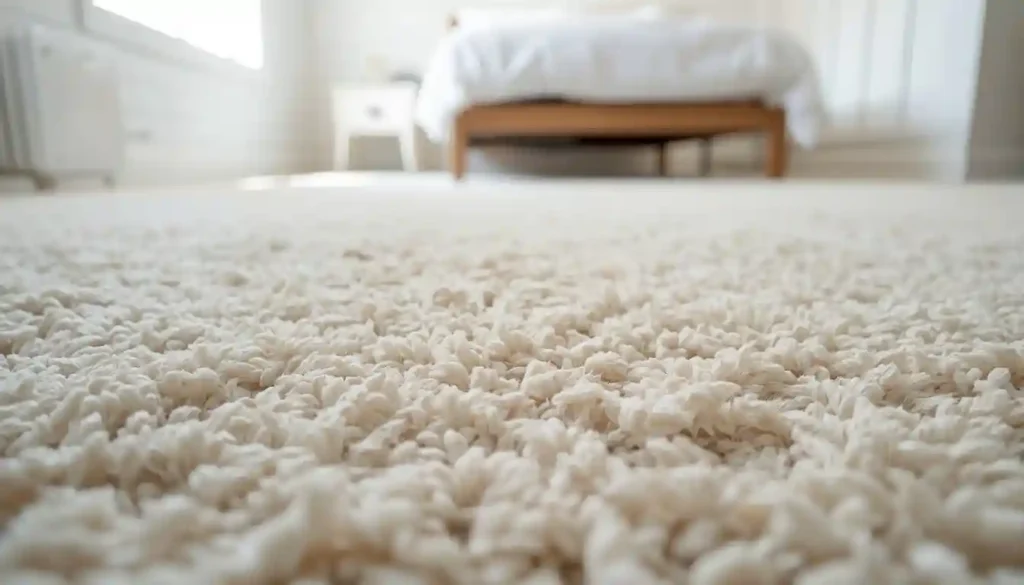
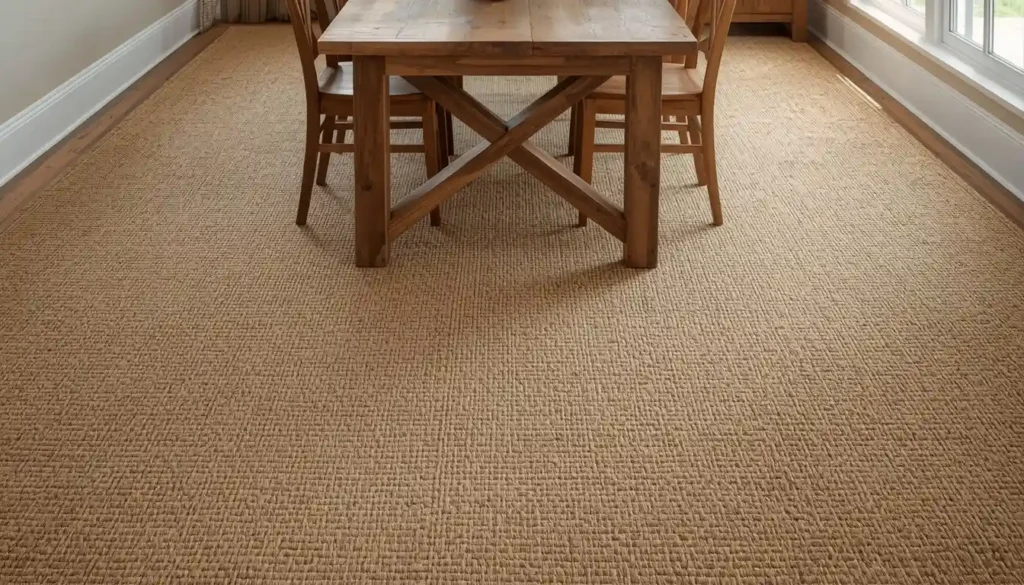
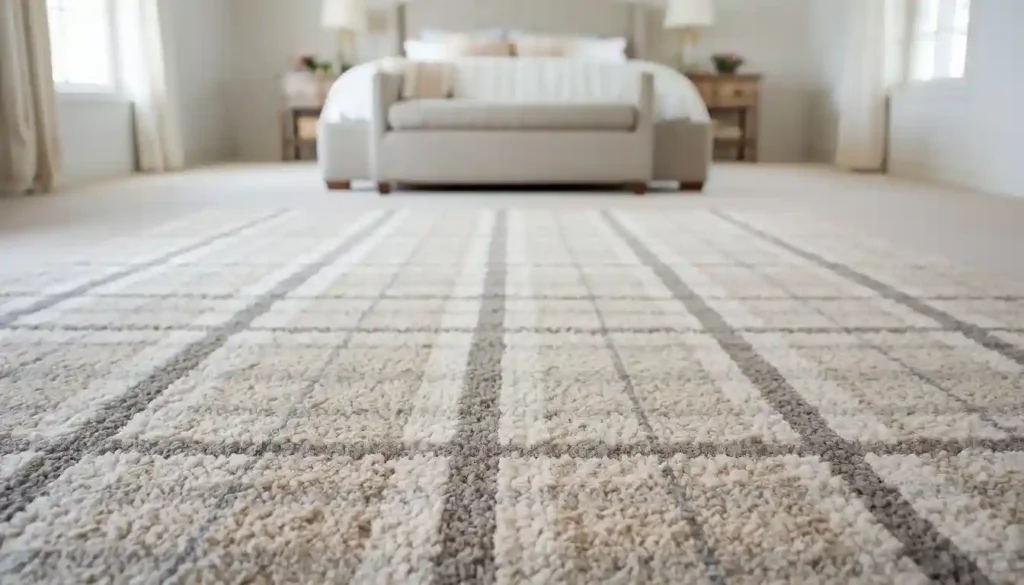
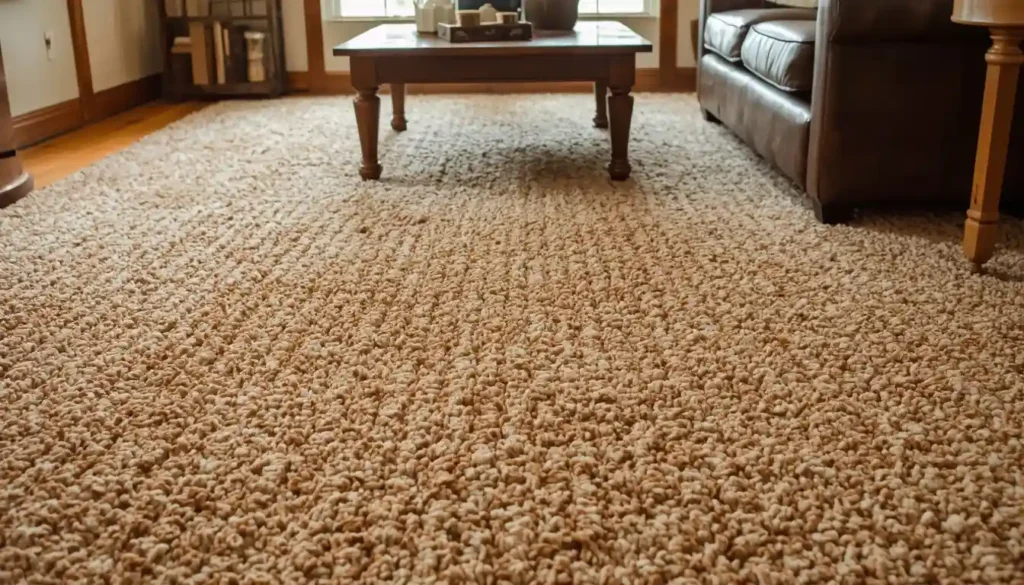
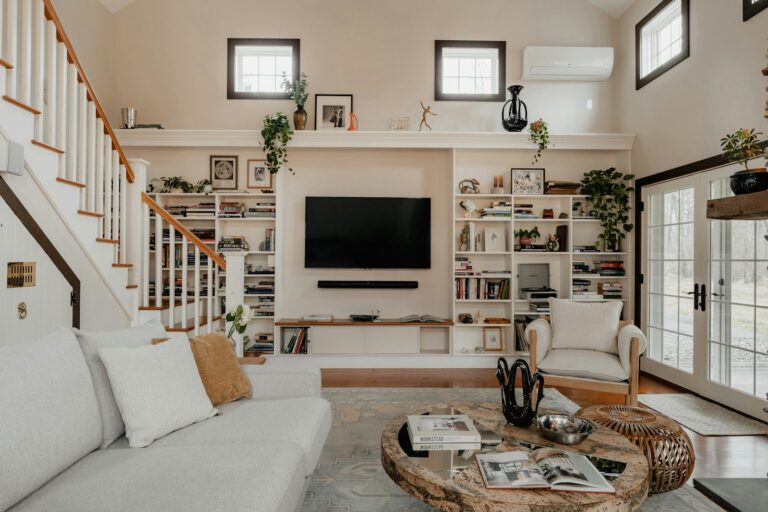
For rooms where you need this carpet to perform under genuine foot traffic and daily family use, choose a dense, low-pile wool rather than a plush Saxony. A twist-pile or loop construction in wool gives you durability without sacrificing the soft, luxurious feel that makes this option worth the investment.
2. Natural Sisal Wall-to-Wall Carpet
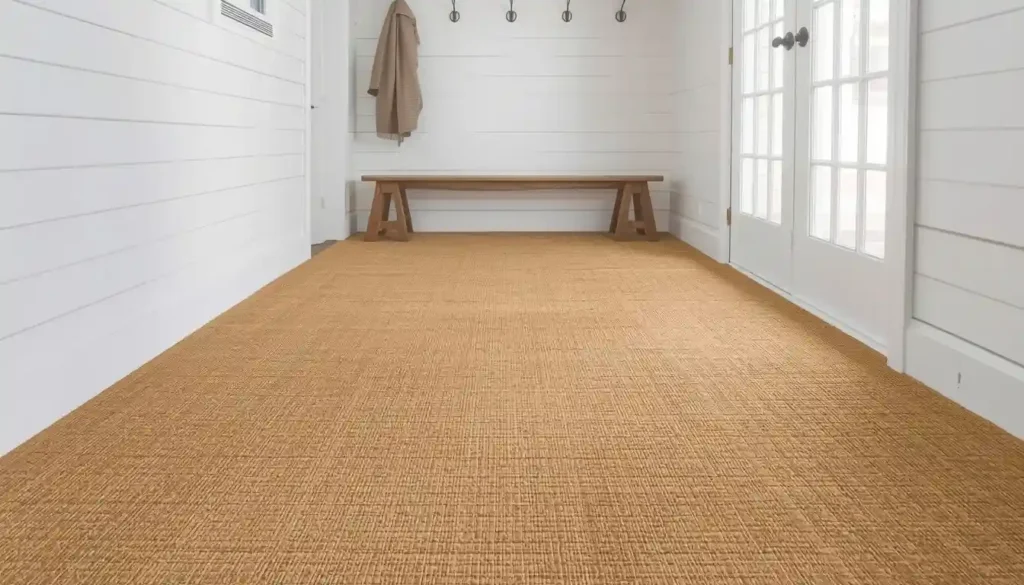
Sisal is woven from the fibers of the agave plant, and it brings an unmistakably raw, organic quality to any room it occupies. In farmhouse interiors, where natural materials are the entire point, sisal carpet functions the same way exposed wood beams or a stone fireplace surround do — it adds honest, unmanufactured texture that feels rooted and authentic.
Wall-to-wall sisal in a farmhouse home office, study, or dining room looks intentional and grounded. It is not soft underfoot in the way wool or nylon are, but the trade-off is a density and durability that stands up to heavy use. Sisal is also naturally moth-resistant and contains tannins that repel dust mites, which is a meaningful benefit in a home that prioritizes natural, low-chemical living.
From a design standpoint, sisal comes in tight flat bouclé weaves as well as more pronounced herringbone or basket-weave patterns. The herringbone sisal in particular reads as deeply farmhouse without being decorative or busy. Install it in a natural undyed colorway and the texture does all the work.
The one important caveat: sisal does not handle moisture well and should not be used in bathrooms, mudrooms, or any area prone to spills. For those spaces, a sisal-look synthetic or a wool-sisal blend is a more practical alternative.
3. Plaid Carpet in the Bedrooms
Plaid carpet is one of the most distinctly farmhouse flooring choices available, and it is having a genuine resurgence. The windowpane plaid and buffalo check patterns in particular translate the classic farmhouse textile motif directly into the floor plane, creating a design statement that feels deliberately styled rather than generic.
In a bedroom, plaid carpet reads as cozy and character-driven. The pattern is best executed in a muted, low-contrast colorway — think oatmeal and soft grey, cream and camel, or sage and ivory. High-contrast black and white plaid works in modern farmhouse spaces with a cleaner, more edited aesthetic. The scale of the plaid matters too: a small, fine plaid reads as more traditional and formal, while a larger windowpane plaid aligns better with contemporary farmhouse sensibilities.
From a construction standpoint, plaid carpet in a bedroom should be a cut-pile or textured Saxony to ensure it feels as soft as the room demands. Durability is less of a concern in a low-traffic bedroom than comfort and warmth, so you can prioritize pile height here.
If you are weighing carpet against hard floors for your bedrooms, it is worth thinking through what each surface actually delivers in terms of comfort, insulation, and sound. The answer might surprise you — carpet flooring in bedrooms offers thermal and acoustic benefits that hard floors simply cannot replicate.
4. Textured Berber in Living Areas
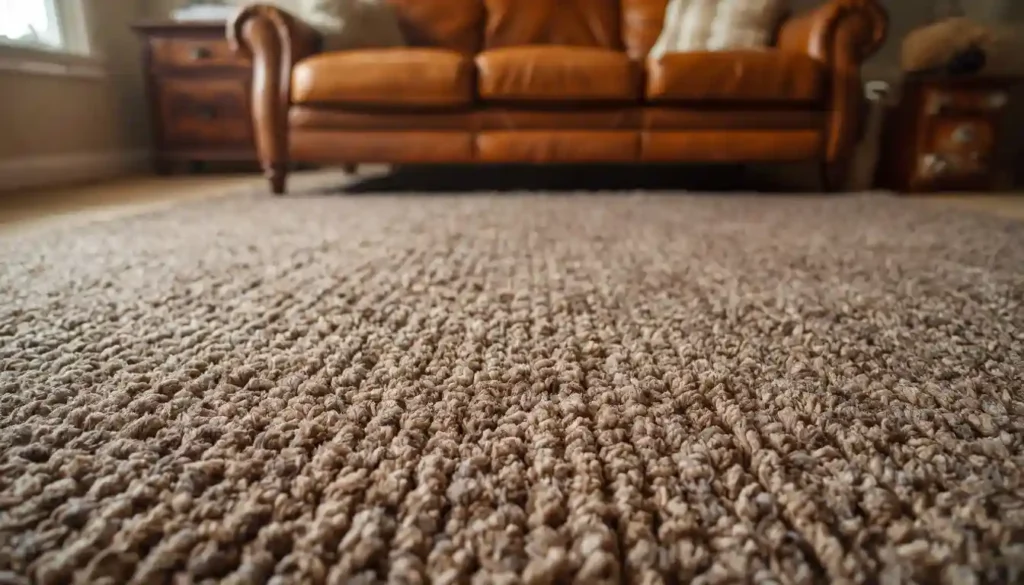
Berber carpet — specifically the loop-pile construction with a flecked or heathered color — is one of the most practical farmhouse flooring choices for main living areas. The flecked appearance comes from the original craft tradition of using undyed wool with natural color variation, and that quality translates directly into a farmhouse aesthetic built on honest materials and visual depth.
Modern Berber in nylon or wool is highly durable, stain-resistant, and excellent at concealing everyday dirt and wear — which makes it particularly well-suited to the farmhouse living room, where the entire design ethos is built around a home that is actively lived in rather than preserved. Berber’s tight loop construction also resists crushing under heavy furniture, making it a long-term investment that performs as well as it looks.
The most farmhouse-appropriate Berber colorways are cream with warm flecks, oatmeal with brown flecks, and light grey with charcoal flecks. These carry enough visual texture to feel layered and grounded without competing with the room’s furnishings. Pair with exposed wood furniture, leather seating, and linen textiles for a living room that feels effortlessly warm and complete.
5. Herringbone Patterned Carpet
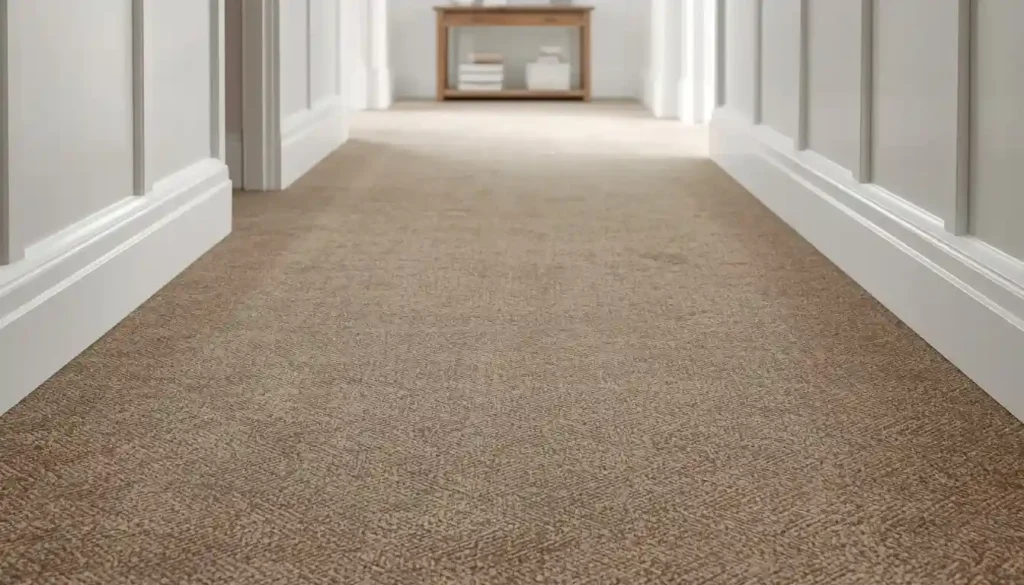
Herringbone is one of the oldest textile patterns in existence, and its geometric regularity has made it a perennial choice in both traditional and contemporary interiors. In a farmhouse context, a herringbone-patterned carpet brings a layer of visual sophistication that lifts the space without introducing anything that feels out of place or overly decorative.
Herringbone carpet works particularly well in transitional spaces — hallways, landings, and staircases — where a pattern can create visual rhythm and make the journey through the home feel intentional. It also performs beautifully in living rooms and dining rooms where you want the floor to carry some design weight without competing with the furnishings above it.
In colorway, the most farmhouse-appropriate herringbone carpets are those in natural tones: warm grey, taupe, oatmeal, or a two-tone blend of cream and camel. Wool herringbone is the premium choice for quality and texture; wool-nylon blends offer a cost-effective middle ground without sacrificing the woven, handcrafted appearance that makes this pattern so compelling in a farmhouse setting.
6. Grey Textured Carpet for a Modern Farmhouse
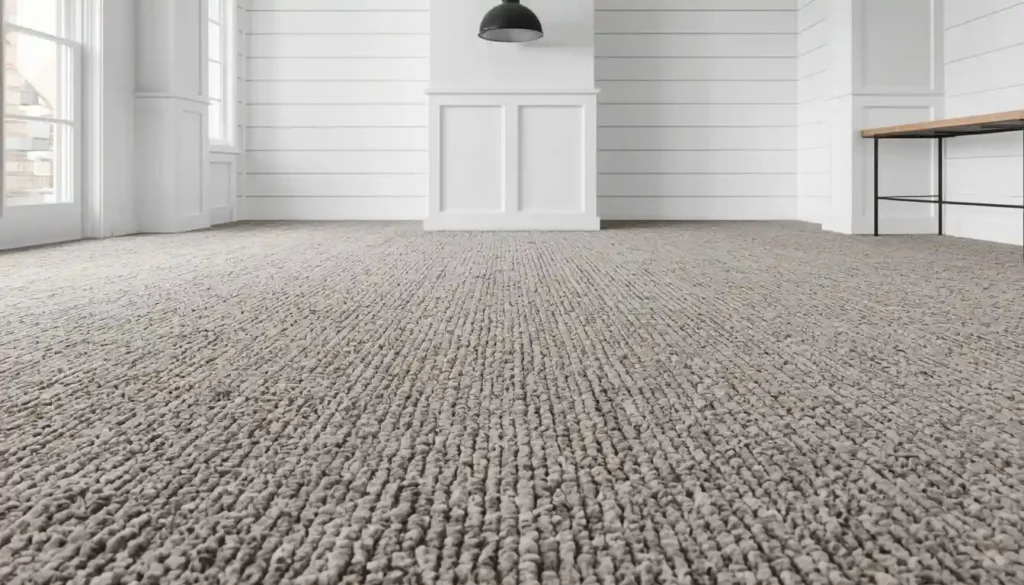
Modern farmhouse design leans harder into the grey palette than its traditional counterpart. Where old farmhouse style reached for cream and warm beige, the modern interpretation balances those warm neutrals with cooler, cleaner greys that feel slightly more refined and contemporary. A textured grey carpet — specifically a cut-pile or twist-pile construction in a medium warm grey — is one of the clearest expressions of this updated aesthetic.
The texture is what separates this from a generic grey carpet installation. A flat-woven or plush Saxony in grey reads as corporate or bland. A twisted-pile, textured, or frieze construction in the same grey carries visual movement and depth that keeps it anchored in the farmhouse world. Look for carpets described as “tweed” or “heathered” grey, which carry subtle variations in tone that prevent the floor from looking flat or lifeless.
This grey textured carpet works in virtually every farmhouse room — living rooms, master bedrooms, and home offices especially — and coordinates easily with white walls, black iron hardware, warm wood tones, and the industrial accents that modern farmhouse design often incorporates.
7. Wool Runner on Farmhouse Stairs
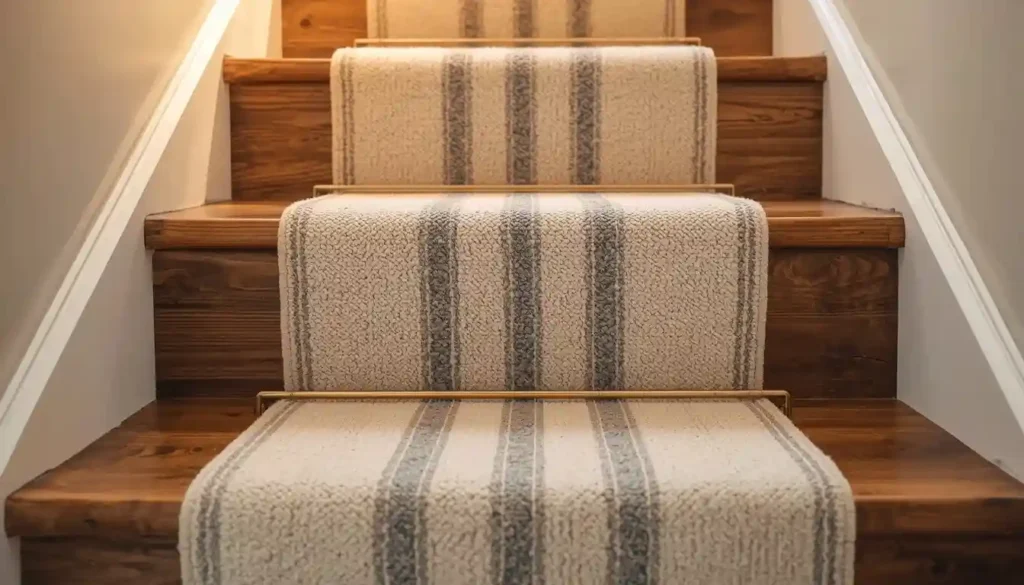
Staircases are one of the most impactful places to introduce farmhouse carpet, and a properly chosen runner can transform an ordinary staircase into one of the most memorable design moments in the home. A wool runner — particularly one in a natural stripe, subtle herringbone, or traditional runner pattern — brings warmth, traction, and acoustic softening to a space that would otherwise feel hard and echoey.
Wool is the clear best choice for stair runners from both a practical and aesthetic standpoint. It handles the concentrated, repetitive foot traffic that staircases endure better than most synthetics, and it maintains its appearance over years of use when properly maintained. Aim for a wool composition of at least 80% for the highest-traffic staircases. For lighter-use secondary stairs, a wool-nylon blend at 50-50 performs extremely well.
From a style perspective, farmhouse stair runners are most successful when the pattern is bold enough to read but controlled enough not to overwhelm. A classic stripe in cream and warm grey, a plaid in oatmeal and navy, or a simple solid taupe with a decorative border all strike the right balance. The runner should be installed with a proper pad underneath for both safety and cushioning, and secured with stair rods in a brushed brass or matte black finish for an authentic period-appropriate detail.
Installing carpet on stairs requires some specific planning. Understanding how to install carpet on stairs properly — including how to handle the nosing and how to cut around balusters — will save you significant time and money regardless of whether you are hiring a professional or tackling it yourself.
8. Wide-Stripe Carpet in Soft Neutrals
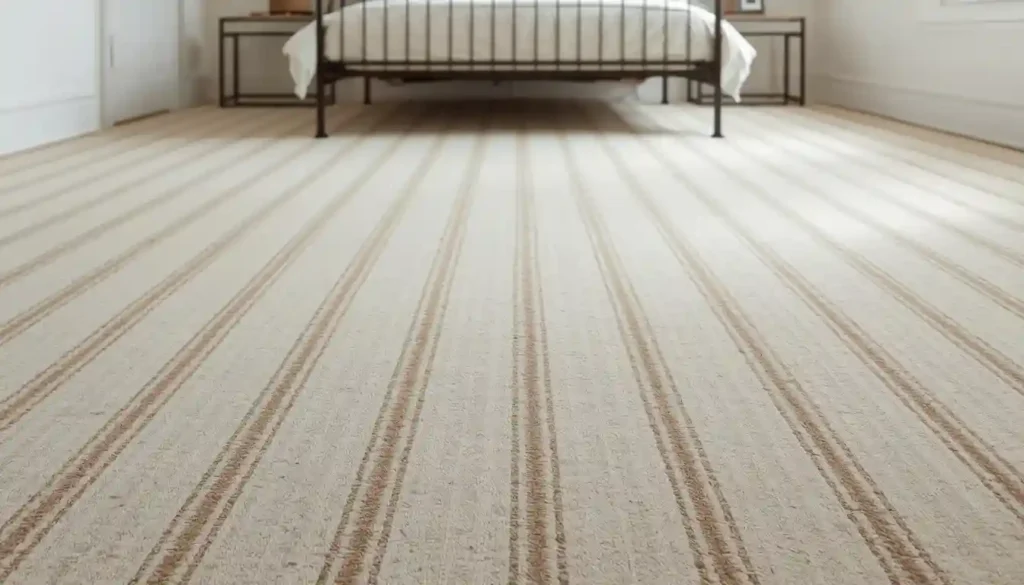
A wide horizontal or runner stripe in soft neutrals brings a relaxed, almost coastal-farmhouse quality to any room it occupies. This is different from a bold, high-contrast stripe — the key here is keeping the stripe pattern in tones that are close enough in value to feel harmonious rather than graphic. Think cream and pale linen, warm white and oatmeal, or two shades of the same greige.
Wide-stripe carpet works particularly well in bedrooms and nurseries where you want the floor to feel lively and interesting without introducing pattern that competes with other elements in the room. The stripe also has an optical effect of widening or lengthening a space depending on its orientation — running stripes parallel to the room’s longer wall makes a narrow room feel proportionally wider, which is a useful tool in older farmhouse homes where rooms can be long and corridor-like.
This carpet style is especially effective under natural light, which picks up the subtle tonal differences between the stripe bands and creates a soft, living quality that flat-colored carpet cannot achieve. Cotton-loop construction and wool flatweave both execute the wide stripe well in a farmhouse context.
9. Frieze Carpet for High-Traffic Farmhouse Spaces
Frieze carpet — sometimes called a twist carpet — is made from highly twisted fibers that curl at the tips, creating a shaggy, textured appearance that resists showing footprints and vacuum marks. In a farmhouse home, this quality is not just aesthetically useful. It is essential for spaces like family rooms, mudroom entries, and children’s playrooms where the floor has to absorb real daily punishment without looking wrecked.
The twisted fiber construction of frieze carpet means it has excellent resilience — fibers spring back after compression in a way that denser, straighter-pile carpets do not. This makes it one of the most practical choices for a lived-in farmhouse where the design intention is a home that is used and loved, not preserved under glass.
From a visual standpoint, frieze in a warm taupe, sandy brown, or heathered grey reads as naturally textured and organic — qualities that align directly with farmhouse design values. The slightly informal, laid-back appearance of frieze is an asset rather than a liability here. It says “this home is comfortable and real,” which is exactly what farmhouse style is supposed to communicate.
It is worth understanding the full picture of frieze carpet before committing — including its specific maintenance requirements and how it performs in very humid or very dry climates — to make sure it is the right call for your particular situation.
10. Seagrass or Jute Carpet in Common Areas
Seagrass and jute carpets occupy a similar space to sisal in the farmhouse flooring palette, but each has its own distinct character. Seagrass is smooth, slightly waxy, and naturally resistant to moisture and staining — making it one of the few natural fiber carpets that can handle a dining room or kitchen area without the anxiety that comes with sisal. Jute is softer underfoot than either seagrass or sisal, with a warm golden-brown color that deepens beautifully over time.
Both materials are inherently farmhouse in their appearance and ethos. They bring in the same kind of grounded, agricultural texture that raw linen, leather, and reclaimed wood do — materials that look better with age and use rather than worse. A wall-to-wall seagrass or jute installation in an entry hall, family room, or screened porch creates a sense of continuity between the interior and the landscape outside, which is central to what farmhouse design is trying to achieve.
One practical note: neither material takes dye well, so color options are limited to the natural spectrum — amber, honey, tan, and warm brown. This is a feature, not a limitation, in a farmhouse context where the natural palette is exactly what you want.
11. Cozy Bedroom Carpet in Warm Caramel or Tan
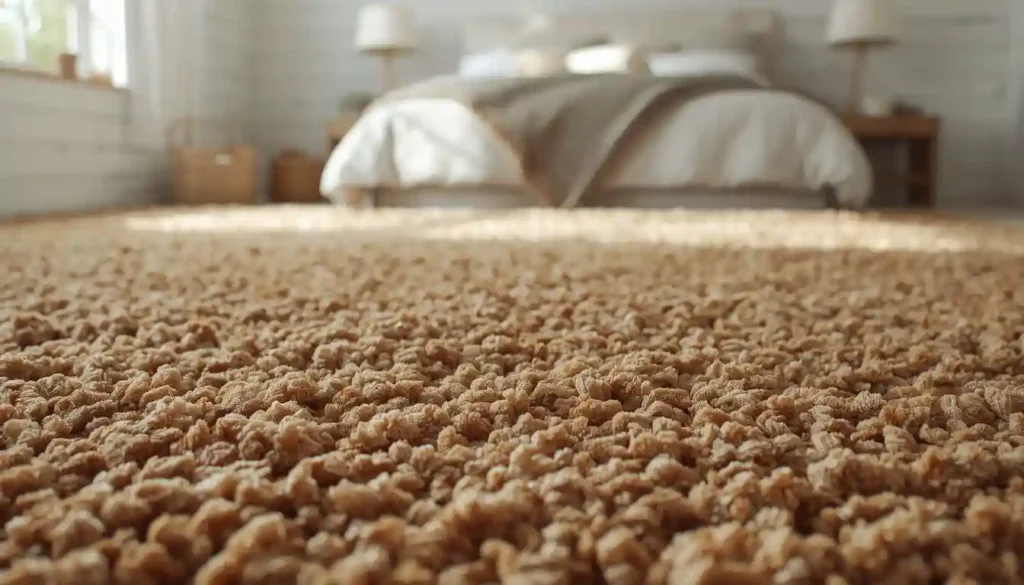
The farmhouse bedroom is supposed to feel like a retreat — wrapped in warmth, softened by layers, and free of anything sharp or cold. A carpet in warm caramel, tan, or sandy brown amplifies this quality in a way that no hard floor can fully replicate. The warm mid-tone neutrals absorb light rather than reflecting it, which makes a room feel enveloping and intimate rather than bright and stark.
This color works with virtually every farmhouse bedroom palette — it sits comfortably under white walls, coordinates naturally with wood tones in furniture and trim, and creates a warm backdrop for bedding in cream, navy, dusty blue, or terracotta. It is a floor color that reads as completely natural rather than selected, which is exactly the intention.
In terms of pile construction, a dense cut-pile in this colorway — either a textured plush or a Saxony — gives the bedroom a luxurious, cushioned quality underfoot that makes getting out of bed in the morning feel far less punishing. Nylon in this color performs extremely well for longevity; wool is the premium choice if budget allows.
12. Looped Wool Carpet with Subtle Pattern for Transitional Spaces
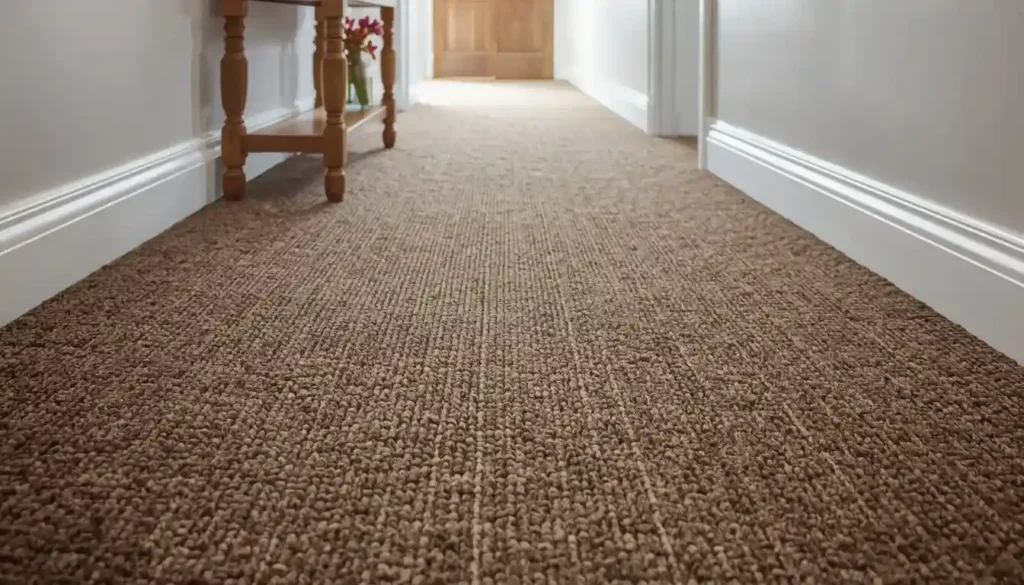
Hallways, landings, and mudrooms present a specific design challenge in a farmhouse home: they need to be durable enough for the highest foot traffic in the house while still feeling considered and intentional. A looped wool carpet with a subtle woven-in pattern — a small geometric, a tone-on-tone stripe, or a textured lattice — answers this challenge precisely.
The loop construction resists crushing and wear in a way that cut-pile cannot match in high-traffic environments. The woven-in pattern adds visual interest that hides soil between cleanings, which is critically important in a mudroom or entry hall where outdoor dirt is a daily reality. And the wool fiber keeps the whole thing looking and feeling genuinely premium rather than merely durable.
In farmhouse transitional spaces, the color palette for this carpet should lean toward mid-tones — warm grey, dark taupe, or earthy brown — that tolerate dirt and hide wear while still feeling warm and welcoming. A tightly woven Berber in a natural flecked colorway is a particularly strong choice that ticks every practical and aesthetic box simultaneously.
Understanding how different types of carpet pile constructions compare — particularly the difference between loop and cut pile — is useful background before making any final selection. A detailed look at loop pile versus cut pile carpet covers the trade-offs clearly and will help you match the right construction to each room’s demands.
13. Buffalo Check or Plaid in a Mudroom or Laundry Room
Buffalo check — the bold, oversized plaid pattern that has become one of the defining visual motifs of farmhouse style — translates surprisingly well into carpet form for utility spaces like mudrooms and laundry rooms. In these spaces, a patterned carpet tile or a bound area carpet in a buffalo check pattern adds a strong design moment without requiring the carpet to perform as a full flooring system.
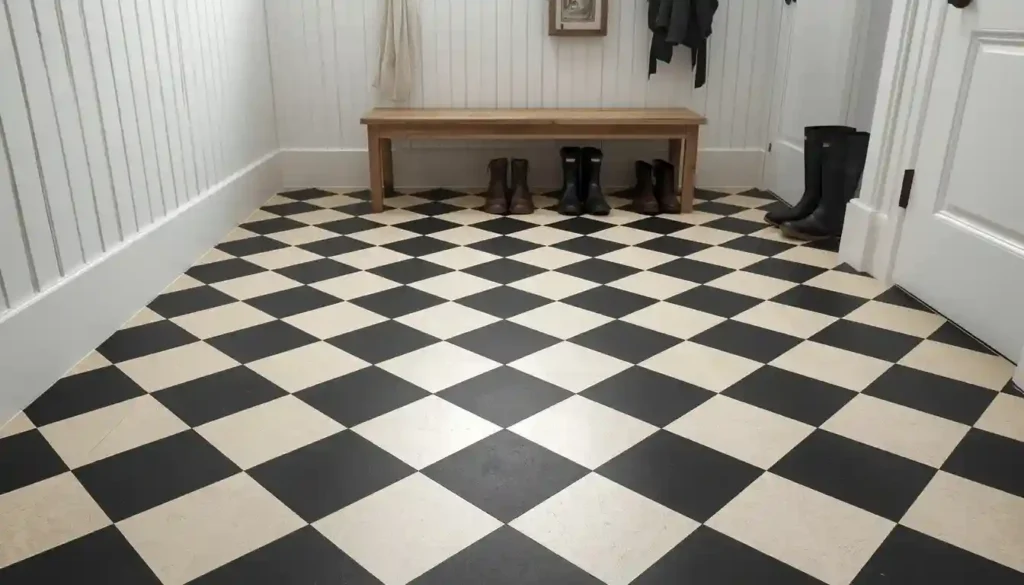
The checked pattern is highly practical in these environments because the contrast between the two colors conceals dirt, pet hair, and scuffs far more effectively than a solid-color carpet would. A buffalo check in black and cream, navy and white, or red and cream is the classic farmhouse execution. The scale of the check should relate to the room size — a smaller room benefits from a smaller check that does not overpower the space.
For these functional spaces, prioritize a carpet with inherent stain resistance — either a solution-dyed nylon or a polypropylene construction — over the premium fiber options like wool. The pattern does the aesthetic heavy lifting here, and the construction needs to handle the practical demands of a room that sees wet boots, pet traffic, and heavy loads.
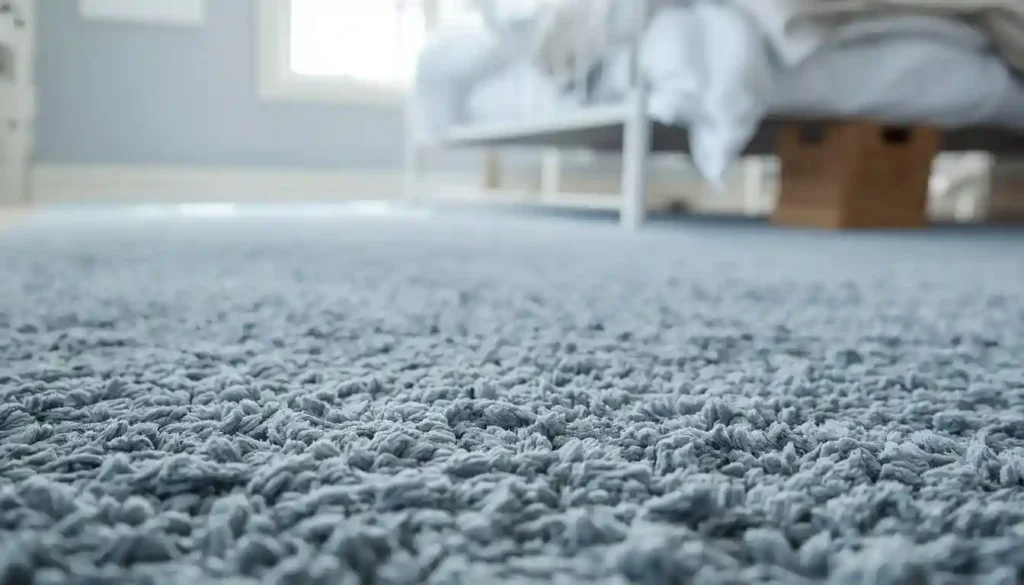
14. Soft Grey-Blue Carpet for a Farmhouse Guest Room
Grey-blue is one of the most characteristic colors in the farmhouse palette — it appears in painted shutters, kitchen cabinets, barn doors, and textiles across both traditional and modern farmhouse interiors. Bringing this color into carpet form in a guest room creates a space that feels simultaneously peaceful, considered, and completely at home within the broader farmhouse aesthetic.
The key is choosing a grey-blue that sits closer to grey than to true blue — something that reads as softened and slightly weathered rather than bright or saturated. Think of the color of old denim, or a weathered barn door, or a piece of faded linen. These slightly desaturated, complex blue-greys carry the same depth and character that the best farmhouse furnishings do.
In a guest room, a plush or Saxony cut-pile in this colorway creates an immediately cozy and welcoming atmosphere that pairs beautifully with white bedding, natural linen curtains, and warm wood furniture. Layer a jute or sisal area rug over the carpet for additional texture and to define the sleeping area — a technique that works extremely well in farmhouse bedrooms of all sizes.
15. Layered Area Rug Over Wall-to-Wall Neutral Carpet
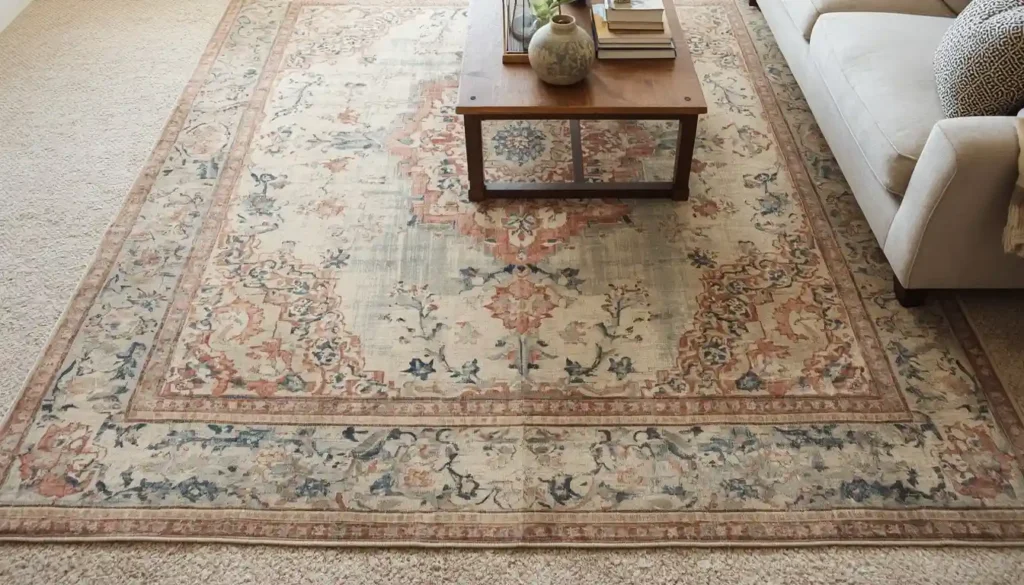
Layering a patterned or textured area rug over a wall-to-wall neutral carpet is one of the most versatile and adaptable farmhouse carpet strategies available. It allows the foundational floor to be supremely practical — a durable, neutral, cut-pile or loop-pile carpet in cream, oatmeal, or light grey — while the area rug carries the pattern, color, or personality of the room’s design story.
In farmhouse spaces, the most successful layered rugs include vintage-look Persian or Oriental patterns in faded, desaturated colorways; natural fiber area rugs like jute or seagrass over plush pile carpet; or geometric flatweave rugs in neutral two-tone combinations. The layering technique is particularly effective in living rooms and bedrooms where you want the floor to define zones and add visual interest without committing to a patterned wall-to-wall installation.
The practical benefit of this approach is significant: the wall-to-wall carpet provides the warmth, sound absorption, and durability the room needs as a background system, while the area rug can be swapped out seasonally or as the room evolves without requiring a full floor replacement. This kind of flexibility is genuinely useful in a farmhouse home where the design is supposed to feel layered and lived-in rather than locked in.
Choosing the right area rug for a carpeted floor involves specific considerations around backing type, rug pad selection, and pile compatibility. Understanding what makes certain rugs perform better over flooring surfaces will help you avoid the most common mistakes in this layering approach.
Choosing the Right Carpet Fiber for a Farmhouse Home
The ideas above span a range of styles and rooms, but they all share a common thread: the fiber and construction of the carpet matter as much as the color or pattern. Farmhouse interiors reward carpets made from natural or high-quality synthetic fibers that carry inherent texture, durability, and visual depth.
Wool is the gold standard for farmhouse carpet. It is naturally stain-resistant, regulates humidity, resists fire, and improves in appearance with proper care over years of use. It is expensive, but its longevity makes it cost-effective over time. Nylon is the best synthetic alternative — it handles heavy traffic better than polyester and does not crush under furniture the way olefin does. Polypropylene (olefin) is useful in utility spaces where moisture resistance is the priority, but it should not be the first choice for main living areas where appearance over time matters.
Natural fibers like sisal, seagrass, and jute are excellent for specific applications where their unique textures and organic qualities are the point, but they require more careful placement and maintenance planning than wool or nylon.
Carpet fiber also determines how your floor performs from a comfort, health, and sound perspective. The insulation benefits of carpet are substantial — both thermal and acoustic — and the fiber type and pile density directly affect how well any given carpet delivers on those benefits. This is especially relevant in farmhouse homes, which often have older construction with less insulation in the walls and subfloors.
Colors That Always Work in a Farmhouse Carpet
The farmhouse palette for carpet is anchored in a specific range of colors that share common qualities: they are warm rather than cool, muted rather than saturated, and complex rather than flat. The following colorways consistently perform in farmhouse interiors across every room type and construction style:
Cream and oatmeal are the most foundational. They read as neutral while carrying a warmth that cool white or grey cannot offer. Natural wool in undyed or lightly processed form typically lands in this range and looks both intentional and deeply authentic. Warm grey — specifically greys with a yellow, brown, or green undertone rather than a blue undertone — bridges the farmhouse palette with modern sensibilities and coordinates easily with black iron hardware and white woodwork. Taupe and greige — the ambiguous middle ground between grey and beige — are universally flattering in farmhouse spaces because they sit comfortably with both warm wood tones and cooler painted finishes. Sandy brown, caramel, and tan bring a depth and richness that feels connected to the earth, grain, and natural materials that define traditional farmhouse aesthetics.
The colors to avoid are those that are overly saturated, bright, or distinctly cool. A vivid blue, a true red, or a stark charcoal can all work as accent colors in a farmhouse interior, but as wall-to-wall carpet they typically overwhelm the quiet, layered quality that makes farmhouse spaces feel genuinely comfortable rather than decorated.
Understanding Carpet Padding for Farmhouse Installations
The carpet itself is only half of the flooring system. The padding underneath determines how the carpet feels underfoot, how long it lasts, and how well it insulates against both cold and sound. In a farmhouse home, where comfort and acoustic warmth are two of the primary goals of the entire design scheme, padding selection deserves as much attention as the carpet itself.
For bedrooms and main living areas, a rebond foam pad in the 7/16-inch thickness range at a density of 6 to 8 pounds provides excellent cushioning and thermal insulation without compressing the carpet above it in a way that shortens its lifespan. For staircases, a firmer pad — specifically a flat slab rubber or waffle rubber construction — is better because it provides stability underfoot and does not compress in the precise spot where each tread impacts the runner repeatedly.
For natural fiber carpets like sisal and seagrass, a felt or fiber pad is the appropriate choice, as foam pads can cause these materials to shift and buckle over time. The pad should always be stapled or glued to the subfloor rather than just laid in place to prevent movement.
Selecting the right padding is one of those decisions where most people defer entirely to the installer, but understanding the basics of what type of padding is best for different carpet applications will help you ask better questions and get a better result.
Maintenance Considerations for Farmhouse Carpet
A farmhouse aesthetic embraces the worn, the lived-in, and the imperfect — but that does not mean your carpet should be neglected. Regular maintenance is what separates a carpet that ages beautifully from one that simply deteriorates. The good news is that the natural and heathered carpet colors typical of farmhouse style are among the most forgiving in terms of hiding everyday dirt and wear between cleanings.
Weekly vacuuming is the single most important maintenance task for any carpet, but particularly for the loop-pile and natural fiber constructions common in farmhouse spaces. Loop piles can catch debris in their construction; natural fibers like sisal can shed and accumulate fiber particles. Use a vacuum without a beater bar on natural fiber carpets, and a standard upright on cut-pile and loop constructions.
For stain treatment, the farmhouse approach aligns with practical reality: act immediately, blot rather than rub, and use the mildest effective cleaning solution first. Wool requires pH-neutral cleaners — standard spot-cleaning products formulated for synthetic carpet can strip wool’s natural lanolin and leave the fiber brittle over time. For nylon and polypropylene, most commercial spot removers perform well if applied promptly.
Professional deep cleaning every 12 to 18 months extends carpet life significantly and refreshes colors that have flattened under daily use. Understanding the full range of professional and home cleaning methods available will help you maintain any of the farmhouse carpet options above in good condition for years. A detailed look at the best types of professional carpet cleaning covers the key methods and their appropriate applications clearly.
Final Thoughts
Farmhouse carpet is not a single product or a single color — it is a design philosophy expressed through fiber, texture, pattern, and color choices that share a commitment to warmth, authenticity, and honest materials. The 15 ideas above span the full range of farmhouse carpet applications, from the most foundational (cream wall-to-wall wool) to the most expressive (buffalo check in a mudroom, grey-blue in a guest room, layered rugs over neutral carpet).
The common thread across all of them is intentionality. Each of these approaches makes a specific choice about what the floor needs to contribute to the room — whether that is grounding warmth, acoustic softening, durable practicality, or visual personality — and executes that choice with materials and constructions suited to the task. That is what farmhouse design, at its best, is always doing.
If you are in the process of selecting carpet for your home and want guidance on which materials and pile types work best for specific rooms and traffic levels, exploring a broader overview of the different types of carpet will give you the foundational knowledge to make confident decisions for every room in your farmhouse home.
James Miller is a seasoned flooring contractor with years of hands-on experience transforming homes and businesses with high-quality flooring solutions. As the owner of Flooring Contractors San Diego, James specializes in everything from hardwood and laminate to carpet and vinyl installations. Known for his craftsmanship and attention to detail, he takes pride in helping clients choose the right flooring that balances beauty, durability, and budget. When he’s not on the job, James enjoys sharing his expertise through articles and guides that make flooring projects easier for homeowners.
Tile flooring has always been a cornerstone of interior design, but the way people are using it today looks almost nothing like it did a decade ago. Oversized slabs in soft concrete tones, terrazzo floors flecked with bold color, herringbone porcelain running through open-plan kitchens — these are the choices that are reshaping homes right…
Carpet bubbles — those raised, wavy sections that push up from the surface — are one of the most common and most misunderstood flooring problems homeowners deal with. They appear without warning. They worsen with foot traffic. And the first instinct most people have, which is to press them down and hope for the best,…
Concrete is one of the most common subfloor surfaces in San Diego homes — found in slab-on-grade construction, basements, garages converted into living space, and ground-floor additions. And yet, most installation guides treat it like a minor footnote. They say “prep the floor,” draw a few steps, and move on. What they skip is everything…
Laminate flooring goes slippery when its melamine wear layer loses friction against the sole of a shoe. The cause is almost always one of five things: cleaning-product residue, a wax or polish coating, moisture sitting on the surface, a worn wear layer, or a glossy factory finish that was slick from day one. None of…
Carpet installation looks deceptively straightforward until you are standing in the middle of a half-stretched room with a wrinkle you cannot remove and a knee kicker that keeps slipping. The difference between a result that looks pulled from a showroom floor and one that buckles within six months almost never comes down to the carpet…
Wood floors transmit noise in two distinct ways, and most people only think about one of them. They buy a thick rug, lay it down, and assume the job is done. It helps, but it does not address what is actually happening inside the floor assembly when someone walks across the room above you. Understanding…