The other reality is that comfort is trending. After years of interiors that photographed beautifully but felt cold, there’s a visible shift toward spaces that actually feel good to be in. Carpet is central to that shift.
Idea 1: Low-Pile Neutral Carpet in a Minimalist Living Room
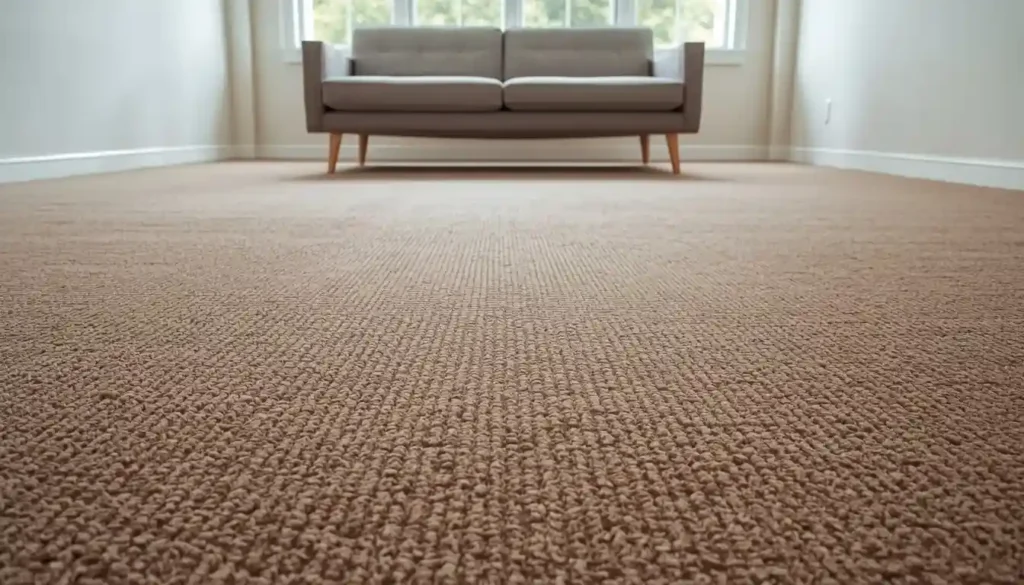
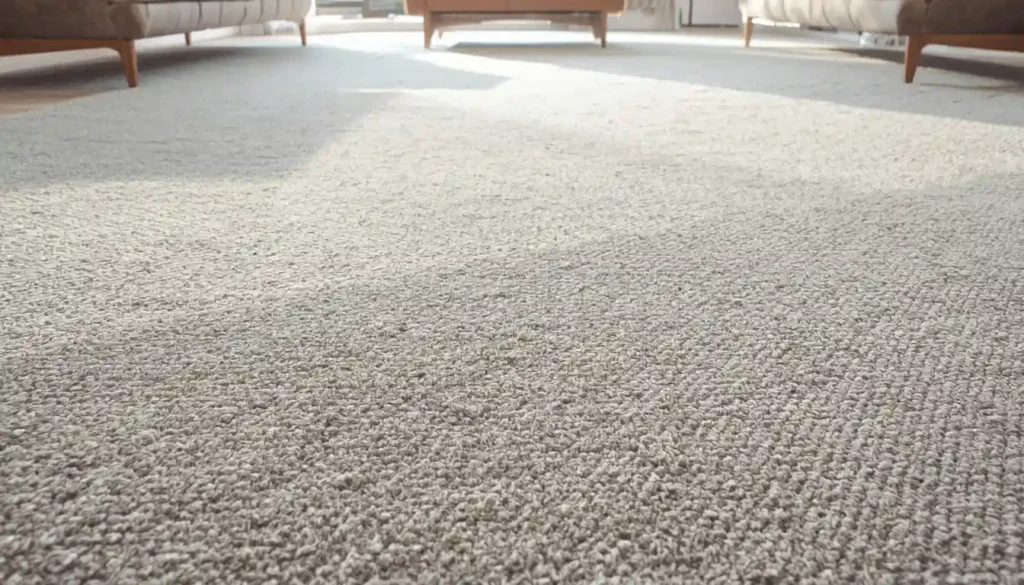
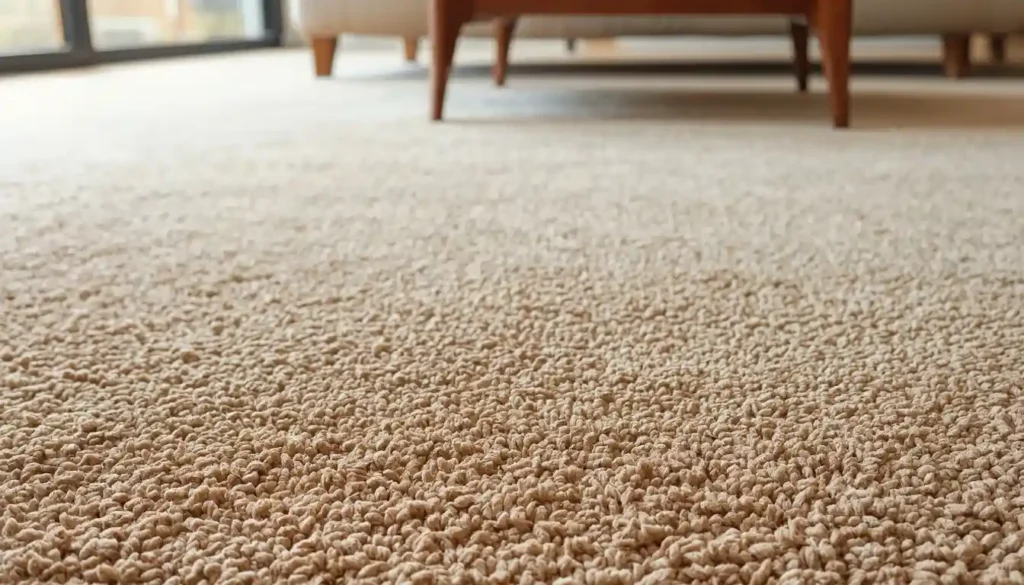
This is the entry point for anyone who wants the warmth of carpet without any visual drama. A dense, low-pile carpet in warm gray, taupe, or pale greige reads almost like a solid plane of texture rather than a traditional floor covering. The surface stays visually quiet, which means every piece of furniture, every architectural detail, and every accessory reads more clearly against it.
Low-pile construction — sometimes called flat or level loop — keeps the floor plane from competing with anything above it. It also hides footprints better than you’d expect and handles foot traffic well over time. For minimalist rooms where the aesthetic is built on restraint, this is the carpet that fits without asking for attention.
The mistake people make with neutral low-pile is going too light. True white carpet shows every mark and requires relentless maintenance. A step warmer — a warm linen, a soft greige, or a medium taupe — reads as clean but ages gracefully. Pair it with warm-white walls and natural wood furniture and the room feels composed without feeling sterile.
For rooms with an existing hard floor elsewhere in the home, consider how the carpet shade transitions. If your entry or hallway uses a light wood or stone tile, the carpet in the adjacent living room should sit harmoniously in the same tonal range. The right transition strip matters here too — a poorly chosen threshold can undermine an otherwise polished floor plan.
Idea 2: Bold Geometric Patterned Carpet
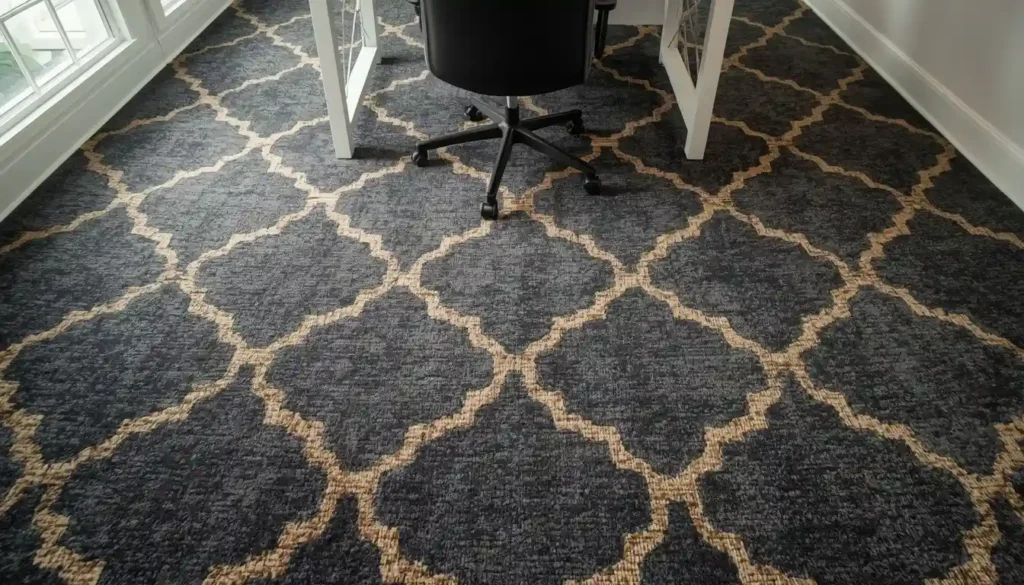
Pattern is back, and geometric is leading the return. Where traditional carpet patterns leaned floral and ornate, the contemporary version is built on clean lines — hexagons, chevrons, lattice work, and abstract grid formations. These patterns perform two functions simultaneously: they add visual complexity to a space that might otherwise feel flat, and they do it in a way that reads as intentional rather than decorative.
Moroccan trellis designs, reminiscent of the trending arabesque tile shapes, alongside geometric patterns are among the hottest directions right now, especially in living rooms and home offices where the floor has room to make a statement.
Scale is the critical variable. A small geometric repeat in a large room gets lost — the pattern reads as texture from a standing height, which can work but doesn’t deliver the visual impact the pattern is capable of. A large geometric repeat in a small room can feel overwhelming. The general rule is to let the room size guide the repeat size: dining rooms and larger living areas can carry a bold, large-scale geometric, while hallways and home offices work better with a smaller, tighter repeat.
Color choices within geometric patterns work best when they stay within a tight tonal range. A two-tone geometric — dark charcoal lines on a medium gray ground, or ivory on a warm cream — creates movement without visual noise. The pattern becomes something you feel as much as see. High-contrast color combinations (black and white, navy and ivory) create more drama and work in rooms where the furniture and walls are intentionally plain.
Idea 3: Plush Velvet Carpet in the Bedroom
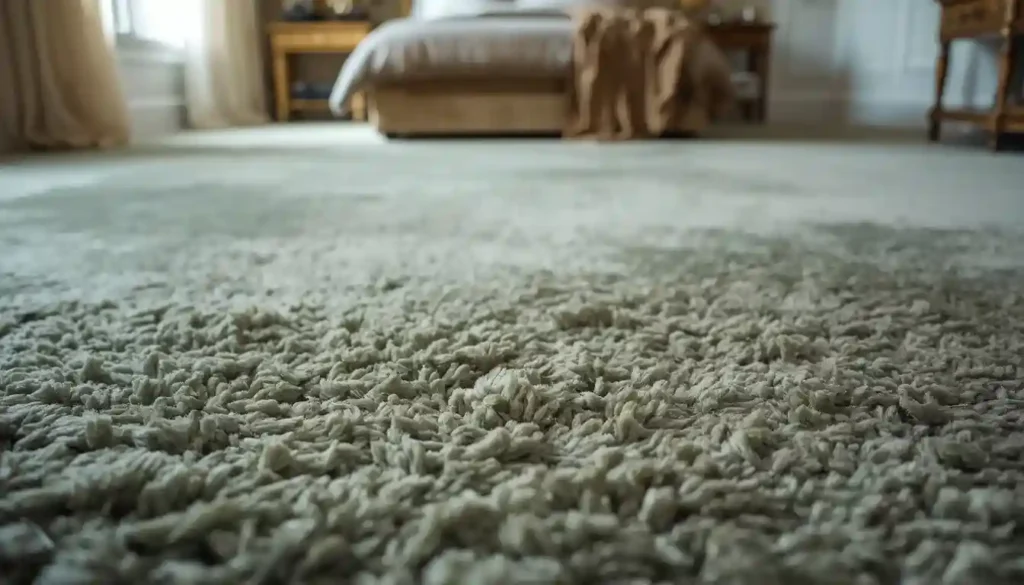
The bedroom is where carpet’s comfort argument is completely uncontested. The moment you step out of bed onto dense, plush velvet carpet, any case for hard flooring in a sleeping space collapses. High-pile options like Saxony and velvet are popular for bedrooms and living areas, providing both comfort and elegance.
Velvet or Saxony cut-pile carpet has an almost reflective quality — the fibers stand upright and catch light in a way that makes the floor look as considered as anything else in the room. In a bedroom with good natural light, a velvet carpet in a deep sage, dusty blue, or muted rose creates a floor treatment that’s genuinely beautiful, not just functional.
The practical note: velvet carpet shows footprints and vacuum marks more readily than textured pile. In a bedroom this is usually fine — foot traffic is minimal and the marks disappear with daily use. It’s not the right choice for hallways or family rooms where the surface will be constantly disturbed. In the bedroom, it earns its place.
Think carefully about the color’s relationship to the ceiling height. A deep-colored velvet carpet in a room with low ceilings will make the space feel compressed. In those rooms, move toward mid-tones — a warm mushroom, a muted steel blue, or a soft sage — which read as saturated without pulling the walls inward. In rooms with generous ceiling height, a deep jewel tone works beautifully.
If you are building a complete bedroom floor plan, choosing the right carpet type for the bedroom goes well beyond pile height — fiber content, padding depth, and color all play equal roles in the final result.
Idea 4: Herringbone Carpet Tiles
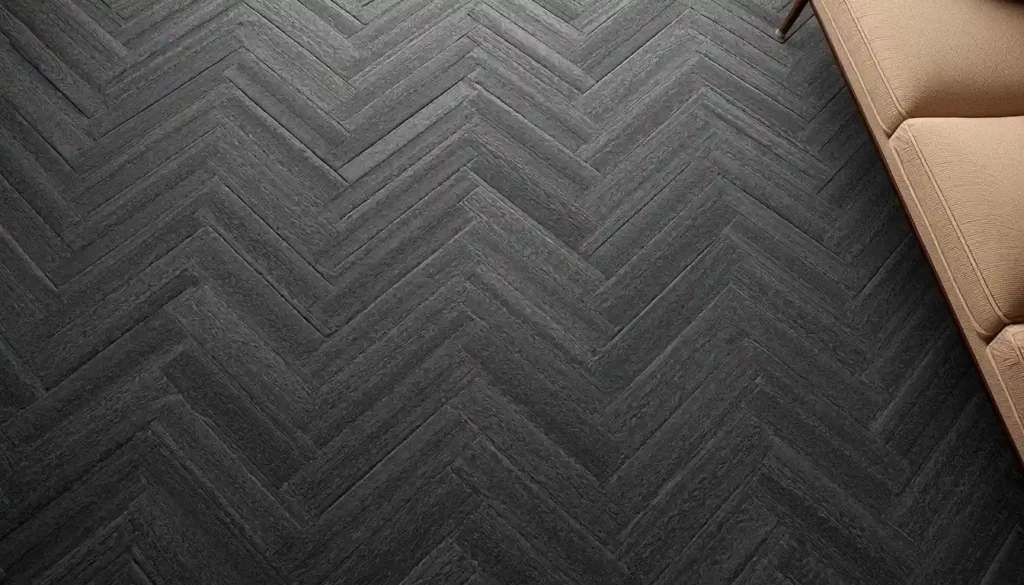
Carpet tiles arranged in a herringbone pattern represent one of the most current intersections of material and layout in modern interiors. With carpet planks, you can have the famous herringbone tile pattern in your carpet, and homeowners are using carpet tiles to create shapes and designs through the layout of their tiles. This is especially gaining ground in homes as it moves from commercial interiors into residential spaces.
The herringbone arrangement does something that a standard broadloom carpet cannot: it introduces directional pattern through the orientation of the tiles rather than the fiber itself. Tiles in a single, solid color laid in herringbone produce a floor that has visual complexity without any printed pattern whatsoever. The directionality of the weave shifts as the tiles change angle, catching light differently across the surface.
Carpet tiles also offer a practical advantage that broadloom cannot match: individual tile replacement. If one section is damaged or stained, it can be swapped out without replacing the entire floor. For rooms that receive heavy use — a family room, a basement entertainment space, a home office — that replaceability has real value.
For a herringbone layout to read clearly, the tiles need to have some directional texture to them. A flat, undifferentiated pile in herringbone arrangement can be subtle to the point of invisibility. Loop pile, ribbed cut pile, or any weave with a clear grain direction will make the herringbone legible from across the room.
Idea 5: Earthy Terracotta and Warm Sienna Carpet
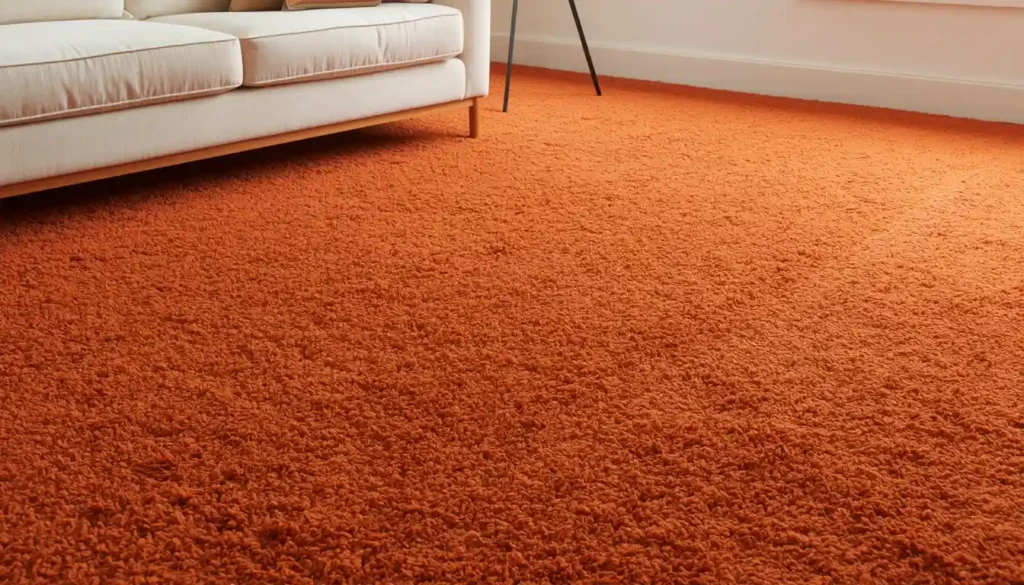
Color in carpet is having its strongest moment in decades. The specific direction is warm and earthy: terracotta, sienna, caramel, and saffron are all moving into living rooms and dining spaces where, a few years ago, nothing but greige would have been considered appropriate. Caramel, saffron, sienna, and terracotta colors are going to be seen more — they’re not the easiest as they all have a bit of retro image, but if you know how to combine them, they can be a perfect design statement.
The key to making warm-toned carpet work in a modern interior is the surrounding palette. These floors do not work against warm-toned walls — the result is heavy and undifferentiated. They work best against cool or neutral walls: warm white, soft off-white, a pale sage, or a cool stone gray. The contrast between the warm floor and the cooler walls creates the kind of dynamic tension that makes a room feel designed.
Furniture choices matter equally. Cream linen, pale oak, natural rattan, and matte black all sit well on a terracotta or sienna carpet. Avoid dark mahogany or heavily saturated upholstery colors — they fight with the floor rather than complementing it.
From a fiber perspective, warm-toned carpets benefit from wool or wool-blend construction. Wool has a natural warmth and slight sheen that synthetic fibers don’t replicate well, and the color depth in dyed wool is richer than in most synthetics. If budget is a constraint, a high-quality triexta or nylon in an earth tone is a very close second.
Idea 6: Tone-on-Tone Textured Carpet
Tone-on-tone carpet is one of the more underappreciated directions in modern flooring, largely because it doesn’t photograph dramatically — which is exactly what makes it so livable. Tone-on-tone designs, small geometric patterns, and Berber flecks are growing in popularity. These subtle styles add movement to a room without clashing with other features.
The concept is simple: a carpet that uses two or more shades of the same color — or very closely related hues — in its construction. The result is a surface that shifts slightly as you move around it, catching light differently at different angles, never reading as flat. From a distance it looks like a solid, clean floor. Up close the complexity becomes apparent.
Cut-and-loop construction is the most common technique for achieving this effect. By combining cut pile fibers with looped fibers in the same carpet, manufacturers create subtle geometric or organic shapes through pile height variation alone — no color printing required. The raised cut fibers catch light, the lower loops recede, and the result is a floor with visible depth.
This approach works in nearly any room because its subtlety means it rarely conflicts with anything. It’s particularly good in open-plan spaces where the carpet needs to feel coherent over a large area without becoming visually tiring, and in rooms with strong furniture or artwork where the floor should support rather than compete.
Idea 7: Emerald Green Statement Carpet
If the earthy tones represent one direction of the carpet color revival, the jewel tones represent the other — bolder, more committed, and considerably more dramatic. Rich, moody tones such as emerald greens, navy blue, and maroon are going to be seen plenty in interiors, and jewel tones like deep burgundy and sapphire blue will find favor in homes that are sophisticated and grand.
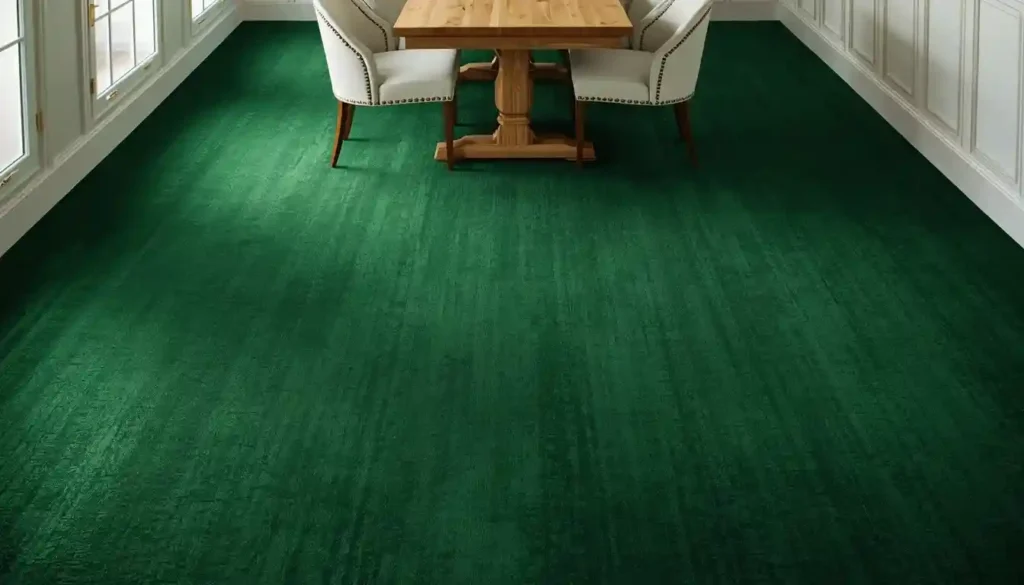
Emerald green has specific qualities that make it especially effective as a floor color. It reads simultaneously as natural and luxurious — the reference to botanical life makes it feel grounded rather than garish. Against white or pale gray walls, an emerald carpet creates the kind of rich contrast that makes a room feel finished without requiring much decorative effort beyond the floor itself.
The palette it works with is disciplined. Brass and warm gold metallic accents elevate emerald carpet immediately. Natural wood — particularly mid-tone oak or walnut — sits beautifully against it. White walls, natural linen textiles, and ceramic objects in earthy neutrals complete the picture. What to avoid: anything that fights for saturation. A highly colored sofa on an emerald carpet produces chaos, not character.
For a dining room, a study, or a primary bedroom, emerald cut-pile carpet is a commitment that pays significant design dividends. It defines the room’s entire identity and makes even simple furniture feel intentional.
Idea 8: Patterned Stair Runner with Matching Landing Carpet
Stairs are often the most neglected flooring surface in a home — defaulting to bare hardwood, exposed laminate, or a runner chosen purely for durability. The modern approach treats the staircase as a design moment in its own right, using a patterned carpet runner that carries a deliberate aesthetic choice from floor to floor.
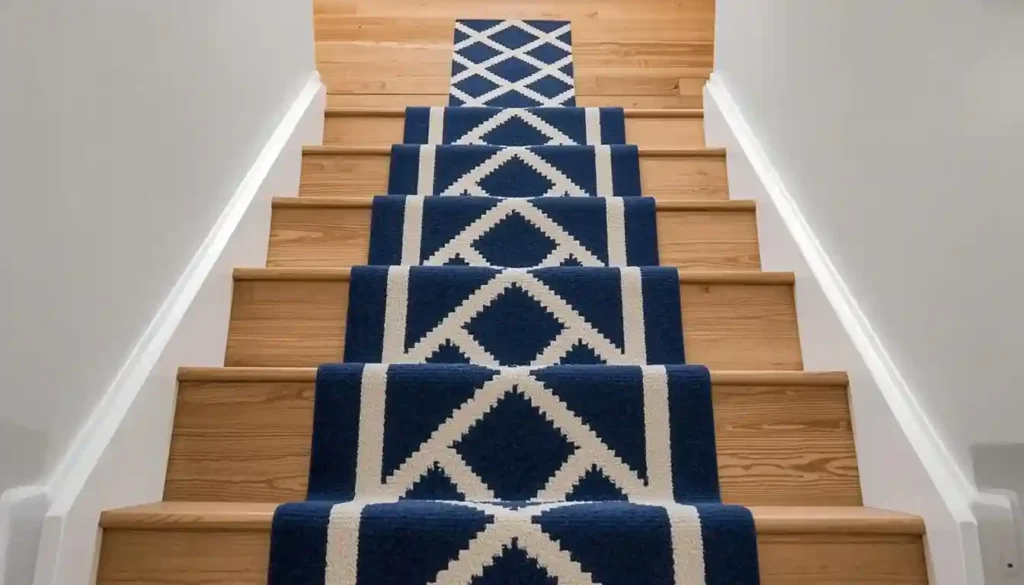
Patterned runners, especially stripes and geometric designs, add visual interest to an otherwise plain staircase. A stair runner over hardwood treads is a popular option that combines the beauty of hardwood flooring with the safety and comfort of carpet.
The most resolved version of this idea extends the carpet from the stair runner to a matching or complementary carpet on the landing above. This creates visual continuity between levels and makes the transition feel considered rather than accidental. The pattern and color of the stair runner effectively connects the flooring palette of two floors, giving the home a coherent interior logic.
For pattern choice, a classic stripe in two or three tonal colors is the most versatile — it works in both traditional and contemporary homes depending on the stripe width and color combination. Thin, closely-spaced stripes in dark and light tones read as modern and tailored. Wide stripes in warm earth tones feel more relaxed and bohemian. Geometric runner patterns work well in spaces with otherwise minimal detailing.
Durability is non-negotiable on stairs. Nylon is the most appropriate fiber — its resilience under repeated impact from stair use is superior to polyester, and its dye-fastness ensures the color holds through years of heavy traffic. If you are planning the installation yourself, the method of securing the runner matters significantly. Professional installation for stair carpet ensures the runner is tensioned correctly and won’t shift underfoot. Installing carpet on stairs is one of the more technically demanding residential flooring tasks, and the result is only as good as the execution.
Idea 9: Sustainable Wool Carpet in Warm Neutrals
Wool is the original luxury carpet fiber and, despite being more expensive than synthetics, it remains the material of choice for interiors where quality and longevity take priority. Wool, jute, and sisal are popular choices, offering durability without harming the environment, and sustainability is a major focus in interior design with homeowners prioritizing eco-friendly flooring options made from recycled and natural materials.
The specific qualities that make wool carpets appealing from a modern design standpoint go beyond sustainability. Wool fiber has a natural crimp that gives it resilience — it springs back from compression better than most synthetics. It dyes in a way that produces warmer, deeper color than synthetic equivalents because the fiber absorbs dye all the way through rather than coating the surface. And it has a natural resistance to soiling that comes from lanolin in the fiber structure.
From a color perspective, wool carpet in warm neutrals — undyed natural fleece tones, warm oatmeal, soft camel, and creamy ivory — has a quality of light that manufactured colors rarely replicate. The slight variation in natural fleece tones gives the carpet surface a living quality that reads as luxurious without being opulent.
In a modern interior, a wool carpet in natural tones works particularly well in rooms that lean toward the organic and the considered: a library, a sitting room, a master bedroom. It pairs with natural materials — linen, cotton, leather, stone, oak — and complements them because it belongs to the same material family. It doesn’t work as well in rooms with a hard-edged, high-contrast aesthetic where the softness of natural wool can read as indecisive.
Idea 10: Dark Charcoal Carpet in a Home Theater or Media Room
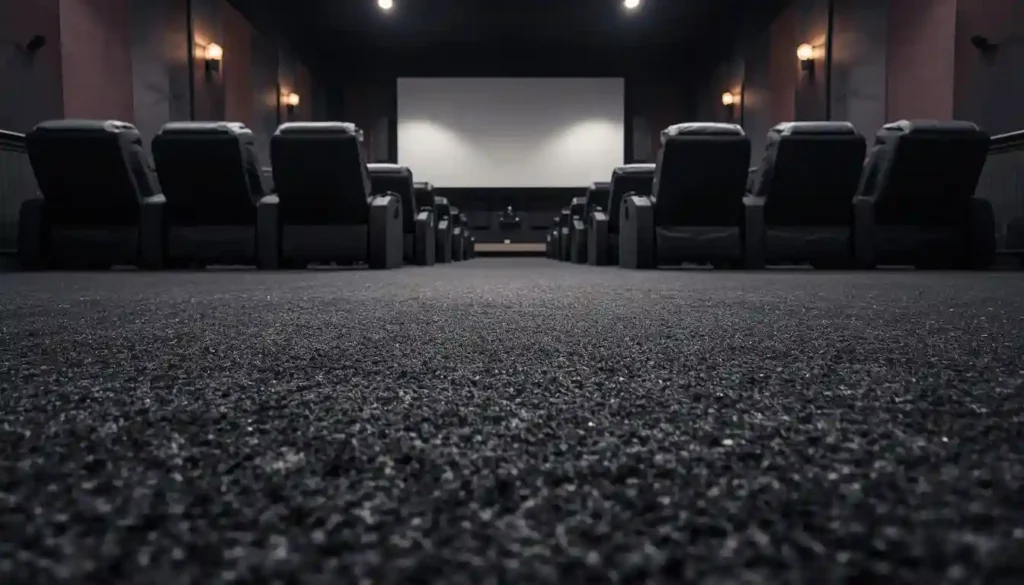
Dark carpet in a dedicated media or home theater space is one of those decisions that looks obvious in retrospect but takes confidence to commit to. A deep charcoal, near-black, or slate carpet achieves several things simultaneously: it absorbs ambient light that would otherwise create glare on a screen, it provides maximum acoustic dampening, and it creates the kind of immersive, cocooning atmosphere that makes a media room feel genuinely cinematic.
The acoustic argument for carpet in entertainment spaces is well-established. New carpets absorb sound and add insulation, making rooms feel more relaxed, and they’re nothing like the carpets we grew up with. In a dedicated home theater where echo and reverberation affect sound quality, a dark, dense carpet — ideally a high-pile cut pile in a dense construction — does more for audio performance than most people realize.
Dark carpet shows light-colored debris — pet hair, dust, crumbs — more readily than medium tones, so it requires more frequent vacuuming. For a dedicated media room that doesn’t double as a general living space, this trade-off is entirely manageable. The design payoff is substantial.
Pair dark charcoal carpet with dark gray or near-black walls and ceiling for a fully immersive space. Acoustic panels in a complementary dark tone can be integrated into the wall design without visually interrupting the room. The result is a space with a clear, singular purpose and an aesthetic that serves it.
Idea 11: Mixed-Material Floor – Carpet Zones Within a Hard Floor
The final idea is a contemporary floor planning strategy rather than a single carpet style: using carpet to define specific zones within a larger open-plan space, rather than covering the entire floor. This approach treats hard floor and soft floor as complementary materials within the same room, each occupying the areas where they perform best.
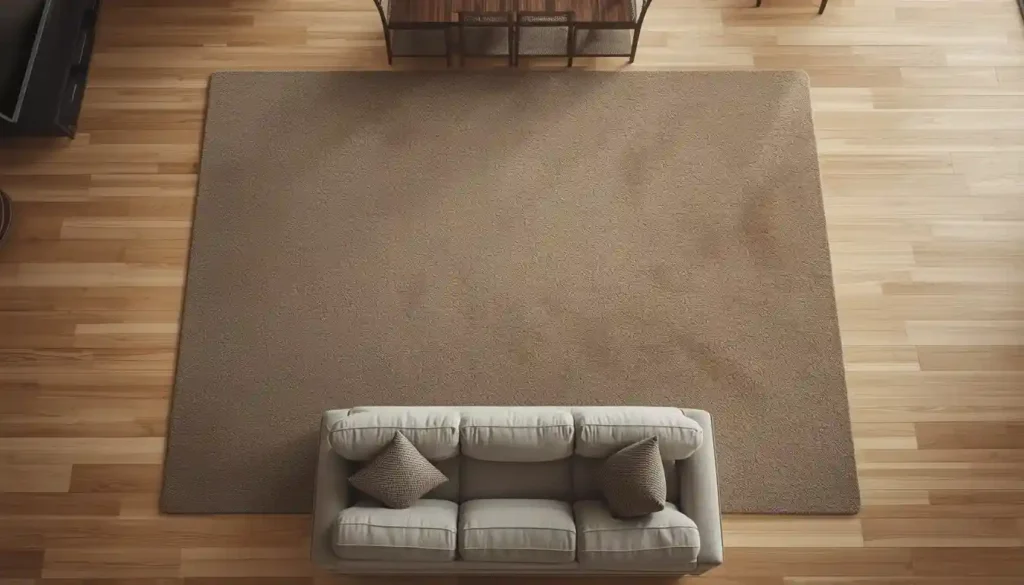
In a large open-plan living and dining space, for example, the seating area might be defined by a plush carpet inset, while the dining area retains the hard floor for ease of cleaning and chair movement. The carpet zone creates an implied room within the open plan, giving the seating area a sense of enclosure and comfort that an area rug approximates but never quite achieves.
The technical execution requires careful planning of the transition points and threshold details. A flush or near-flush transition between carpet and hard floor creates the cleanest result. The carpet border should align with natural architectural breaks — a change in ceiling height, a column, the edge of a built-in — rather than sitting arbitrarily in the middle of a space.
Color relationship between the carpet zone and the surrounding hard floor is the other key decision. For a cohesive result, choose a carpet color that draws from the tonal family of the hard floor — a warm-toned carpet alongside warm oak flooring, a cool gray carpet alongside pale stone tile. Strong contrast between the two materials can work as a deliberate graphic statement, but it requires commitment to the concept throughout the room’s other details.
If you are exploring how carpet behaves alongside other flooring materials in terms of comfort, noise, and foot feel, the comparison between carpet and hard flooring categories is worth a close read. The post comparing carpet versus wood flooring covers the key performance differences in detail that help clarify which zones benefit from which material.
Choosing the Right Carpet Fiber for Modern Applications
The visual ideas above can only be executed well if the fiber and construction match the room’s demands. Here is a practical summary of the main options:
Nylon remains the most durable synthetic option, resilient under high traffic and receptive to a wide range of dye colors. It handles moisture well when treated and is the default choice for stairs, hallways, living rooms, and any space that sees consistent foot traffic. Most of the bold geometric and statement-color ideas above work best in nylon because the color stays consistent over years of use.
Triexta (sometimes marketed under the trade name Sorona) is the most stain-resistant option currently available and has become a common choice for family homes and pet households. It is softer than nylon to the touch and carries color well. Its resistance to liquid-based stains is superior to any other fiber type without surface treatments, making it genuinely low-maintenance in a way that other carpet fibers require additives to approximate.
Polyester is the budget-conscious option and has improved considerably in quality over recent years. It is inherently stain-resistant because the fiber does not absorb liquid readily. Its weakness is resilience — polyester carpet can flatten in high-traffic areas over time, which is why it works better in bedrooms and lower-traffic spaces than in main living areas. For the plush velvet bedroom look described in Idea 3, polyester delivers a very good result at a fraction of wool’s cost.
Wool sits at the premium end and is worth the investment in the right application. Its natural properties — fire resistance, moisture regulation, and acoustic performance — make it especially well-suited to rooms where indoor air quality and environmental impact are priorities. The difference in fiber quality between grades of wool carpet is significant; look for carpet specifying New Zealand or UK fleece at tight twists for the best long-term performance.
The line between a modern carpet and a dated one often comes down to decisions that have nothing to do with the carpet itself. Here are the factors that most consistently determine which side of that line a carpet ends up on.
Pile height is the first signal. Modern spaces work best with clean lines and simple details, and flat or low-pile carpet works well, especially with subtle geometric patterns that add texture without creating clutter. Extremely high pile — the shag carpet of a previous era — has returned in some contexts as a deliberate retro reference, but it reads that way. Medium to high cut pile, particularly velvet and Saxony styles, carries genuine luxury without the retro association. Flat and low-loop pile is the most broadly contemporary construction.
Pattern scale and abstraction matter considerably. Traditional carpet patterns are characterized by repetitive floral motifs, scrolling leaf forms, and highly symmetrical classical repeats. Modern patterns are geometric, abstract, or tonal. The shift in pattern language is as significant as any color choice in determining whether a carpet reads as contemporary.
Color saturation and palette discipline are equally decisive. A carpet chosen from one tonal family — whether warm neutrals, earthy mid-tones, or saturated jewel tones — and installed in a room where the surrounding palette responds to it, will always read as designed. A carpet chosen in isolation, without reference to the room’s light quality and existing materials, will almost always read as an afterthought regardless of its quality.
Finally, the padding underneath the carpet shapes the underfoot experience as much as the carpet itself. Dense, resilient padding extends the carpet’s life, improves its acoustic performance, and changes the tactile quality of every step. Choosing the correct padding type and thickness for the specific carpet construction is as important as the carpet selection itself. The recommendations for what padding type works best with different carpet styles provide a clear guide to this often-overlooked part of the installation.
Carpet and Indoor Air Quality — The Modern Picture
One concern that historically weighed against carpet — its effect on indoor air quality — deserves an updated assessment. The assumption that carpet is bad for allergies and air quality is based on older products and older installation standards. While older carpet styles were known to trap dust and allergens, today’s carpets often come with hypoallergenic materials and antimicrobial treatments.
Modern carpet certified to low-VOC standards — including CRI Green Label Plus certification — emits minimal volatile organic compounds after installation. The off-gassing that gave carpet a poor reputation in earlier decades came primarily from adhesive systems and older fiber treatments that have largely been reformulated or eliminated.
The dust and allergen question is more nuanced. Carpet does capture airborne particles in its fibers, which means those particles are held at floor level rather than recirculating in the air. Regular vacuuming with a HEPA-filtered machine removes those captured particles effectively. The net effect on indoor air quality depends heavily on the maintenance routine — a properly maintained modern carpet in a well-ventilated room can be an entirely appropriate choice for allergy-sensitive households.
Professional Installation vs DIY for Modern Carpet Projects
The eleven ideas in this article range from relatively straightforward broadloom installation to more technically demanding projects like carpet tile herringbone layouts and zone-inset carpet-within-hardwood designs. The level of installation complexity varies considerably between them.
Standard wall-to-wall broadloom carpet installation — Ideas 1, 3, 5, 6, 7, 9, and 10 — is manageable for experienced DIY installers in simple room geometries. Rooms with multiple doorways, bay windows, angled walls, or significant furniture require more experience to seam and stretch correctly. A poorly stretched broadloom carpet will buckle within a year or two of installation. Home offices need carpet that allows rolling desk chairs to move smoothly, absorbs sound for video calls, and creates a professional background for virtual meetings, with low-pile commercial-style carpet or dense Berber working best.
Carpet tile installation (Idea 4) is the most DIY-friendly option — the modular format eliminates seaming, and the herringbone layout is a matter of careful measuring and layout planning rather than specialist technique.
Stair runner installation (Idea 8) and zone-inset installation (Idea 11) are the most demanding projects and are generally best left to professional installers. The precision required to achieve clean results — a stair runner that stays tensioned over years of foot impact, a carpet zone with flush, accurate borders — is difficult to achieve without specialized tools and experience.
Every carpet idea in this article requires a maintenance commitment to sustain its appearance. The maintenance demands differ by pile type and color, but the underlying routine is consistent: regular vacuuming, prompt attention to spills, and periodic deep cleaning.
For low-pile and loop-pile carpets (Ideas 1, 4, 6), weekly vacuuming is sufficient in rooms with average foot traffic. A vacuum with strong suction and a beater bar appropriate for the pile height works best. For cut-pile carpets (Ideas 3, 5, 7, 9, 10), the same frequency applies but the equipment matters more — a beater bar set too aggressively can damage cut-pile fibers over time. A suction-only or adjustable-height vacuum is safer for delicate velvet and Saxony constructions.
Stain treatment should happen immediately. The longer a liquid sits in carpet fiber, the deeper it penetrates the pile and the harder it becomes to remove fully. Blotting — never rubbing — with an absorbent cloth, followed by a pH-neutral carpet cleaning solution, handles the majority of spills without professional intervention.
For a deeper clean addressing the accumulated soil that vacuuming doesn’t reach, professional hot-water extraction (steam cleaning) every twelve to eighteen months maintains carpet appearance and fiber health over the long term. Understanding which professional cleaning method works best for different carpet constructions can make a meaningful difference in the results.
Final Thoughts
Modern carpet flooring is not about choosing the least offensive option. The eleven ideas above represent carpet used as a genuine design decision — one that considers color, texture, construction, and room function together rather than separately.
The thread running through all of them is intention. A terracotta carpet in a bright living room, a charcoal home theater floor, a herringbone tile arrangement in a study — each one works because it was chosen for a reason, with a clear understanding of what it contributes to the space. That’s what separates modern carpet from dated carpet, and it’s available at every price point in the market.
If you are planning a carpet installation in the San Diego area and want to discuss the specific ideas above with a professional who can assess your space and subfloor conditions, the team at Flooring Contractors San Diego is available to provide guidance and installation across all the carpet categories covered here.
James Miller is a seasoned flooring contractor with years of hands-on experience transforming homes and businesses with high-quality flooring solutions. As the owner of Flooring Contractors San Diego, James specializes in everything from hardwood and laminate to carpet and vinyl installations. Known for his craftsmanship and attention to detail, he takes pride in helping clients choose the right flooring that balances beauty, durability, and budget. When he’s not on the job, James enjoys sharing his expertise through articles and guides that make flooring projects easier for homeowners.
What you put under vinyl flooring is not a secondary decision. It is, in many ways, the primary decision. The vinyl plank or tile you select determines how the floor looks. What goes beneath it determines how the floor performs, how long it survives, and whether the installation itself holds together after the first winter…
Parquetry flooring is wood flooring where individual pieces, blocks, or strips are arranged into deliberate geometric patterns rather than laid in simple parallel rows. The word itself comes from the French parchet, meaning a small enclosed space, and it has been a mark of architectural prestige since the Palace of Versailles replaced its marble floors…
Carpet tiles — also called modular carpet or carpet squares — are pre-cut sections of carpet, typically 18×18 inches or 24×24 inches, designed to interlock across a floor without the need for seaming, stretching, or tack strips. Unlike broadloom carpet that arrives in a roll and requires a professional to cut and stretch it wall…
Loose lay vinyl flooring is a type of luxury vinyl plank (LVP) that relies entirely on friction and weight — not adhesive, nails, staples, or interlocking click-lock tabs — to stay in position on the subfloor. Each plank sits directly on the subfloor surface, held in place by a specialized rubber or fiberglass backing combined…
When most people say “steam cleaning,” they picture a machine blasting hot vapor into carpet fibers. What professional cleaners actually use is something slightly different — hot water extraction (HWE), where pressurized hot water and a cleaning agent are injected deep into the pile and immediately vacuumed back out. The two terms get used interchangeably…
The living room is where everything in a home converges. It absorbs daily foot traffic, hosts family gatherings, and sets the tone for every other design decision you make. No single element does more to establish that atmosphere than the floor beneath your feet. Hardwood flooring, in particular, carries a warmth and permanence that no…