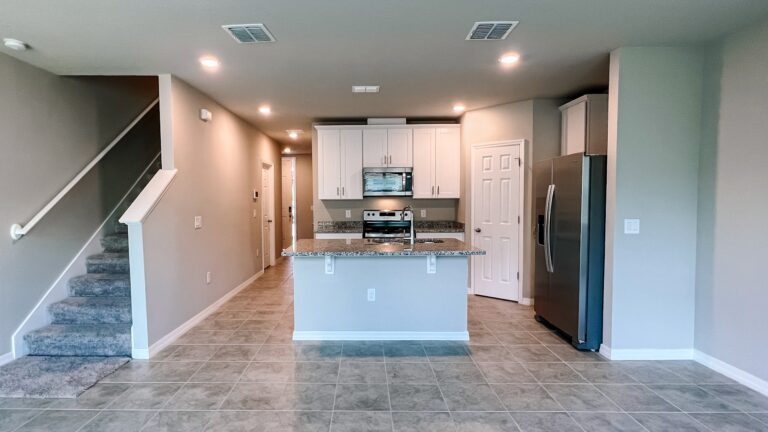
The complexity compounds in rooms with closets, multiple doorways, alcoves, or stairs. A rectangular bedroom with no closets is the easiest room a DIYer can tackle. A staircase, a hallway with pattern-matched carpet, or a large open-plan area is a different category of job entirely.
The Real Cost Breakdown: DIY vs. Professional
Labor for professional carpet installation runs between $1 and $3 per square foot nationally, depending on region and job complexity. For a standard 200-square-foot bedroom, that’s $200 to $600 in labor. For a whole house covering 700 square feet of carpeted area — roughly 30 to 35 percent of the average home — professional installation adds between $700 and $2,100 to the total project cost.
DIY appears to save all of that. But the tool requirement changes the math considerably.
A power carpet stretcher is not optional for any room wider than a closet. Renting one costs approximately $35 per day. A knee kicker (required alongside the power stretcher) rents for around $15. A seam iron runs another $15 to $25. Carpet knives, tuck tools, and a stapler add $30 to $50 if you don’t already own them. For a single room, tool rental alone approaches $75 to $100 — before materials.
If the project spans multiple rooms or multiple days, rental costs stack up. And if something goes wrong — a seam that separates, a cut that removes too much material, padding stapled in the wrong orientation — the cost of replacement carpet can exceed what professional labor would have cost from the start.
The cost difference between DIY and professional narrows considerably once tool rental, waste from cutting errors, and time are factored in. For a single small room with a simple layout, DIY likely still saves $100 to $300. For anything more complex, the savings become unreliable.
The Tool Problem Most DIYers Underestimate
The single most consequential mistake in DIY carpet installation is relying on a knee kicker alone to stretch the carpet. A knee kicker is a roughly 20-inch tool with a toothed head that the installer kicks with their knee to drive the carpet forward. It is useful for corners, closets, and fine adjustments — it is not a stretching tool for open rooms.
A power stretcher is a pole-based tool that braces against the opposite wall and uses mechanical leverage to pull the carpet across the entire room. Industry guidelines call for 8 to 12 pounds of tension per inch of carpet width. A knee kicker cannot achieve that across a 10- or 12-foot span. The result is carpet that looks fine on installation day and starts rippling within months as foot traffic redistributes the slack.
This is not speculation. It is the most commonly cited DIY failure mode in carpet installation, and it’s what most “carpet bubbling” problems trace back to. If you’ve noticed carpet that has developed bubbles or waves after a DIY install, insufficient stretching from a power stretcher is the likely cause.
Professional installers use commercial-grade power stretchers as standard equipment on every job. Rental units available to homeowners are functional but often lower-quality than professional tools — they work, but the technique matters as much as the equipment.
Where DIY Carpet Installation Makes Sense
DIY carpet installation is most appropriate when all of the following are true:
The room is a simple rectangle or near-rectangle with no alcoves, multiple doorways, or irregular angles. The carpet is a solid color or a very small repeat pattern that doesn’t require seam alignment. The subfloor is in good condition — flat, dry, and without squeaks or soft spots. The room is small enough that you can realistically complete the work in a single rental day. You are comfortable with the tools and have watched thorough instructional content before starting.
A single bedroom, a small study, or a closet system are reasonable DIY candidates. These rooms are forgiving of minor imperfections, and the relatively modest cost of materials limits the financial downside if something goes wrong.
Even in these cases, skipping the power stretcher is not advisable. Rent it. The $35 rental cost is negligible against the cost of carpet that needs to be re-stretched or replaced in a year.
Where Professional Installation Is the Right Call
There are specific project types where DIY savings are illusory and professional installation is the structurally correct choice.
Stairs. Stair carpet installation requires precise cuts around nosings and risers, consistent wrapping tension on every tread, and the ability to manage directional pile so the carpet looks uniform when viewed from below. Professionals use specialized tools and have done this hundreds of times. Poorly installed stair carpet is both an aesthetic failure and a safety issue. If you want to understand the full scope of the process, installing carpet on stairs has a learning curve that most first-time DIYers find difficult to clear on a first attempt.
Patterned carpet. Any carpet with a repeat pattern — whether a geometric, a stripe, or a Berber loop — requires seam alignment across the full width of the room. Misaligned seams on patterned carpet are immediately visible and cannot be corrected without cutting new material. This is an advanced skill that professional installers train specifically for.
Large open areas. A living room, a primary bedroom suite, or any space above roughly 300 square feet multiplies the consequences of every error. More square footage means more seams, more stretching runs, more opportunity for the carpet to go off-square. Professionals plan the seam layout before cutting so seams fall in low-traffic areas and don’t run perpendicular to natural light sources (which makes them far more visible).
Subfloor issues. If the subfloor has soft spots, squeaks, moisture damage, or significant unevenness, those problems need to be resolved before carpet goes down. Professionals identify and address these issues as part of the installation process. A DIYer may not recognize subfloor moisture until the carpet backing begins to delaminate, or may not know how to fix a squeaking subfloor board before covering it.
High-value carpet. If you’re investing in wool carpet, a high-density nylon, or any fiber that costs significantly per square foot, that investment deserves professional installation. The cost of materials versus labor shifts decisively toward “protect the investment” thinking once the carpet itself is expensive.
The Warranty Question That Most DIYers Don’t Know About
This is possibly the most overlooked factor in the DIY vs. professional decision: many carpet manufacturers require professional installation to maintain the product warranty.
When a carpet warranty specifies “professional installation,” it means certified installation by a licensed installer — not a competent homeowner with rental tools. If you install carpet yourself and a manufacturing defect appears six months later (delaminating backing, tuft loss, pile distortion), the manufacturer may deny the warranty claim on the basis of DIY installation.
This isn’t theoretical. Workmanship warranties offered by professional installers also cover specific failure modes: seam separation, premature rippling due to insufficient stretch, edge detachment. These issues have no coverage path under a DIY install.
For lower-cost carpet in a secondary room, this may be an acceptable tradeoff. For a whole-house installation or a premium product, voiding the manufacturer warranty by installing yourself is a meaningful financial risk.
The Subfloor Factor
Carpet doesn’t hide subfloor problems — it telegraphs them. High spots create visible ridges in the pile. Low spots become soft, spongy areas that feel uneven underfoot. Moisture in the subfloor migrates into the padding and eventually the carpet backing, creating mold and odor problems that aren’t visible until they’re serious.
Professional installers assess subfloor condition as a standard part of the job. They know what levelness tolerances carpet requires (typically 3/16 inch over a 10-foot span), how to identify moisture issues before they become carpet problems, and how to address squeaks by face-screwing subfloor panels before covering them.
DIY installers who skip subfloor inspection are setting up a failure that won’t appear immediately. The carpet may look perfect on day one and develop problems within the first year that trace directly to subfloor conditions that were present at installation.
If you’re installing carpet over concrete — in a basement or ground-floor slab — concrete subfloor preparation introduces additional considerations around moisture barriers and adhesion methods that professional installers handle routinely and DIYers often underestimate.
Carpet Type and Installation Method Complexity
Not all carpet installs use the same method. The three primary installation approaches each carry different DIY difficulty levels.
Stretch-in installation uses tack strips around the room perimeter. The carpet is stretched over the strips and secured by pressing the backing onto the tack points. This is the most common residential method and the one most DIY guides address. It requires a power stretcher and a knee kicker. Achievable by a careful DIYer on simple layouts.
Glue-down installation applies adhesive directly to the subfloor and presses the carpet into it. This method is common for commercial carpet tiles and for installations over concrete. It eliminates the need for stretching equipment but requires precise adhesive application, careful seam work, and the right adhesive for the specific subfloor material.
Double-glue installation glues the padding to the floor and the carpet to the padding — used for certain specialty products and high-traffic applications. This is the most technically demanding method and is generally not appropriate for DIY.
The type of carpet fiber also affects installation complexity. Berber loop-pile carpet, for example, requires extra care around seams because the loops unravel if the seam edges aren’t properly sealed. Cut pile carpet is more forgiving. Understanding these differences is part of what separates a professional’s approach from a DIYer’s.
Beyond installation method, the carpet you choose for each room reflects different priorities. Whether you’re selecting carpet for a living room or a bedroom, the pile type, fiber, and density all affect how demanding the installation will be — and how much the result matters.
The Time Investment Nobody Budgets For
Professional installers complete a standard bedroom in two to four hours. A whole house takes one to two days with a two-person crew. They arrive with everything, know how to handle the unexpected, and leave when the job is finished.
A first-time DIYer in the same bedroom should budget six to eight hours — accounting for layout planning, a first tack strip run that may need adjustment, learning to use the power stretcher, and the inevitable problem that doesn’t match the YouTube video. Multi-room installations multiply those time requirements, with fatigue and cumulative learning affecting quality in later rooms.
This time cost isn’t reason alone to hire professionals — plenty of people genuinely enjoy the work and want the satisfaction of doing it themselves. But it needs to be factored honestly. A Saturday DIY project that turns into a two-weekend project affects life around it in ways that professional installation, typically complete within a day, does not.
Disposal of Old Carpet: The Hidden Labor
Most professional installation quotes include removal and disposal of existing carpet. This is not trivial work. Old carpet is heavy — a 12×15-foot section with padding can weigh 80 to 100 pounds — and municipal waste programs typically don’t accept it curbside in rolls. Disposal may require scheduling a special pickup, renting a dumpster, or making trips to a waste facility that accepts flooring materials.
DIY savings on installation need to account for old carpet removal and disposal costs if they’re not part of a professional quote. Disposing of old carpet properly adds time, physical effort, and sometimes cost that the “I’ll do it myself” calculation often doesn’t include.
When to Hire Professionals Even If You Can Do the Work
There’s a category of homeowner who is genuinely capable of installing carpet correctly — good spatial reasoning, experience with home improvement projects, comfortable with tools — and who still might reasonably choose professional installation.
If the carpet spans multiple rooms, professional installation often brings economies of scale that make the per-room cost lower than the estimate for a single room. Installers optimize material cuts across the full project to minimize waste, a skill that takes experience to execute well.
If the project involves a rental property where speed and durability are prioritized over cost savings, professional installation is standard for good reason. The carpet needs to be right the first time, without callbacks. Choosing the right flooring approach for rental properties almost always leads to professional installation as the practical choice.
If the home is being prepared for sale, the installation quality affects resale perception. A living room carpet with visible seams or waves reads as deferred maintenance to buyers. Professional work that looks seamless and smooth is worth the cost in that context.
Getting Accurate Quotes and What to Ask For
When hiring professional carpet installers, the quality of the quote matters as much as the number on it. A complete, accurate quote should itemize materials, labor, padding, furniture removal (if included), old carpet removal and disposal, tack strip replacement, and any known subfloor work.
Always get at least three written estimates. Labor rates vary by region and by company, and comparing quotes reveals whether any single estimate is significantly above or below market. Ask each installer what is and isn’t included — the lowest quote often excludes items that the others include, making it not the cheapest option at all.
Ask specifically about the installation method, the stretching equipment they use, how they handle seams, and what their workmanship warranty covers. A professional who can’t or won’t answer those questions clearly is worth moving past.
Also confirm whether the manufacturer warranty on your chosen carpet requires certified installation and whether the installer’s certification satisfies that requirement. This matters for expensive carpet purchases where warranty coverage has real financial value.
The Decision Framework
The DIY vs. professional question for carpet comes down to three variables: room complexity, carpet value, and your personal skill and tool access.
A single bedroom, solid-color budget carpet, healthy subfloor, and a willingness to rent and correctly use a power stretcher is a reasonable DIY candidate. The savings are real and the risk is limited.
Stairs, pattern-matched carpet, large open spaces, expensive product, concrete subfloors, or any room where visible seams would be unacceptable are professional territory. The cost of professional installation in these contexts is the cost of getting the outcome right.
Most homeowners fall somewhere between those poles — and most of them are best served by professional installation, because the tool access, the experience with failure modes, and the warranty protection that professionals bring are genuinely valuable. The DIY path works well when it works. It fails in ways that are difficult and expensive to reverse when it doesn’t.
Understanding the different types of carpet available is the productive place to spend your decision-making energy before installation. The more you know about what you’re putting down, the better positioned you are to evaluate whether the installation needs professional hands or can be handled yourself.
And if carpet isn’t the right call for a particular space — if you’re weighing it against harder surfaces for a high-traffic area or a room with moisture exposure — comparing carpet against vinyl flooring puts both options in honest perspective before you commit to either one.
For homeowners in the San Diego area who want a professional assessment of their specific project — room layout, subfloor condition, and carpet selection — carpet installation services are available with on-site measurement and detailed quoting.
James Miller is a seasoned flooring contractor with years of hands-on experience transforming homes and businesses with high-quality flooring solutions. As the owner of Flooring Contractors San Diego, James specializes in everything from hardwood and laminate to carpet and vinyl installations. Known for his craftsmanship and attention to detail, he takes pride in helping clients choose the right flooring that balances beauty, durability, and budget. When he’s not on the job, James enjoys sharing his expertise through articles and guides that make flooring projects easier for homeowners.
What Makes SPC Flooring Structurally Different From Other Vinyl Products SPC stands for Stone Plastic Composite. The core layer is a compressed blend of natural limestone powder, polyvinyl chloride, and stabilizers, calendared under high pressure into a rigid slab. That manufacturing process produces a core density typically between 1.85 g/cm³ and 2.0 g/cm³, which is…
Laminate flooring and PVC flooring are often placed in the same category in flooring guides. Both float over a subfloor. Both use click-lock joints. Both mimic the appearance of wood or stone. That surface-level similarity is exactly where the confusion starts — and it is also where most comparison articles fail. The real differences between…
What the Janka Scale Actually Tells You — and What It Doesn’t Every hickory vs. oak flooring discussion eventually circles back to the Janka hardness test, which measures the force required to embed a steel ball halfway into a wood sample. Hickory scores 1820 lbf, making it one of the hardest domestic hardwoods on the…
Vinyl plank flooring and traditional hardwood are not two versions of the same product. They are built differently, perform differently, and solve different problems. Hardwood is a natural wood material — hygroscopic, refinishable, and capable of lasting generations when maintained correctly. Vinyl plank (specifically luxury vinyl plank, or LVP) is a synthetic multi-layer product: a…
The bedroom floor does more quiet work than most people give it credit for. It is the first surface your feet touch each morning and the last thing you step across before bed. That repeated daily contact means comfort, noise, and visual tone all matter more here than in a hallway or kitchen. Vinyl flooring…
A teak shower floor sits at an interesting crossroads between practical engineering and bathroom aesthetics. It is not simply a flooring choice — it is a system decision, one that touches subfloor preparation, waterproofing assemblies, drain geometry, wood species behavior under constant moisture, and long-term maintenance chemistry. Most guides collapse all of that into a…