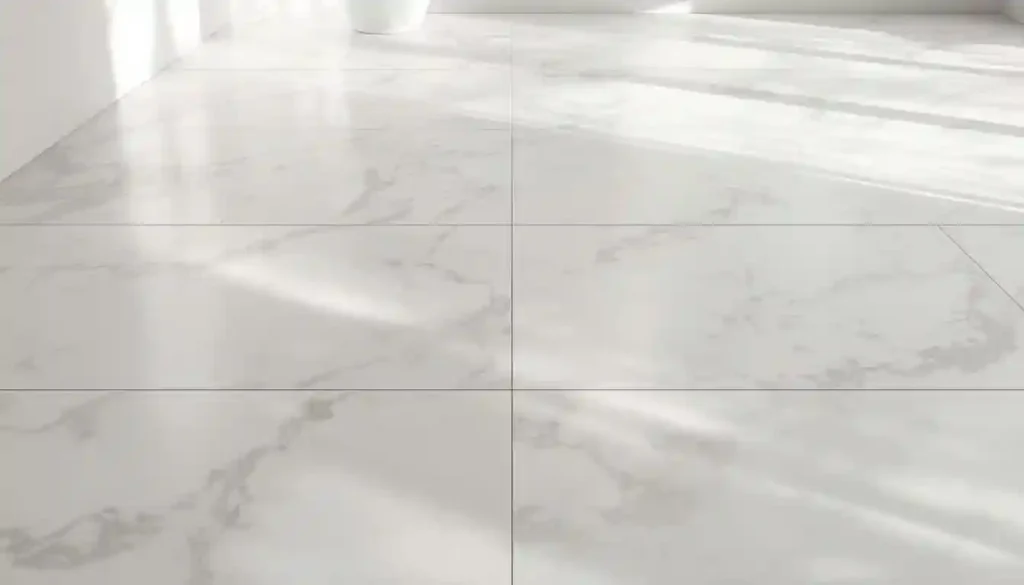
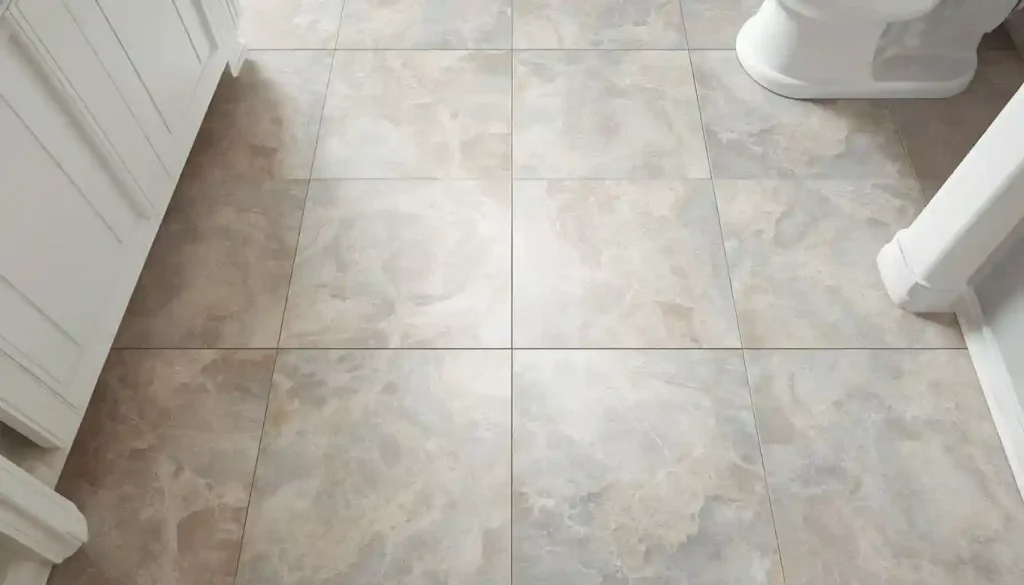
In a bathroom, marble-look LVT works best in larger format tiles — 12×24 inches or 18×18 inches — because the bigger surface area allows the veining pattern to read clearly and the room to feel more expansive. White and light gray Carrara styles brighten small bathrooms and pair naturally with chrome or brushed nickel fixtures. Darker Calacatta Gold styles with pronounced gold veining read as genuinely luxurious in a master bath with brass hardware and a floating vanity.
The practical benefits are significant. Unlike real marble, vinyl tile does not need sealing. Acetone nail polish remover, bleach-based cleaners, and hair dye — all bathroom regulars — will not stain it. The SPC core used in premium marble-look tiles will not warp from steam or standing water, and the surface cleans completely with a damp mop. If you have been drawn to marble but hesitated because of the maintenance, marble-look vinyl removes the last remaining objection.
When shopping, look for tiles with a wear layer of at least 12 mil for residential bathrooms. A thicker wear layer — 20 mil or more — makes more sense if the bathroom sees heavy use or if you have children. The wear layer thickness is the single biggest predictor of how long the floor will look new, and in a bathroom where wet footprints and cleaning traffic are constant, it matters.
2. Wood-Look Vinyl Plank for a Warm, Spa-Like Feel
There is something deeply appealing about wood floors in a bathroom — the warmth, the organic texture, the way they transform a functional room into something that feels like a personal retreat. The problem has always been that real wood and water are incompatible. Hardwood warps. Even engineered hardwood has moisture limits that a steamy bathroom regularly exceeds.
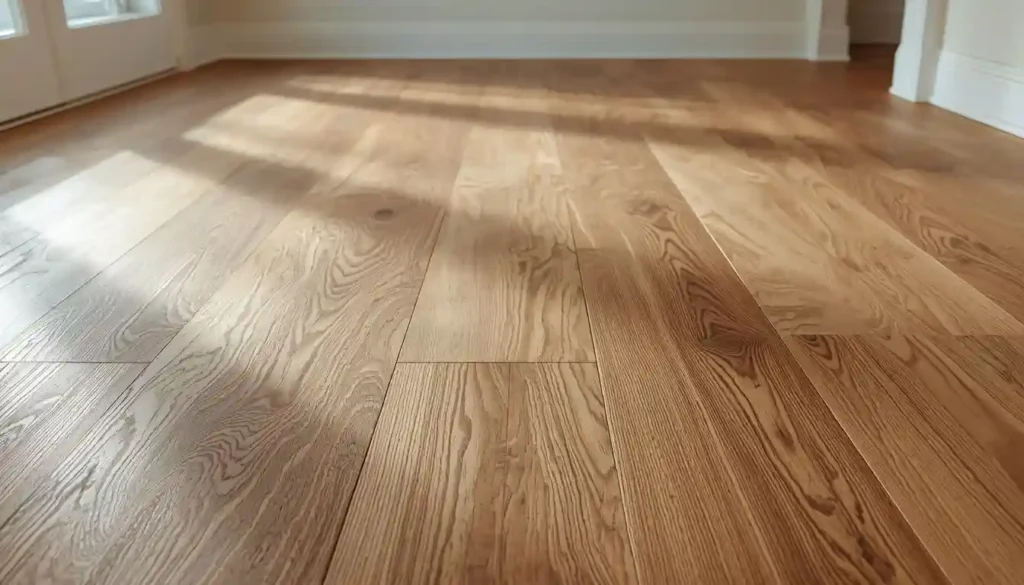
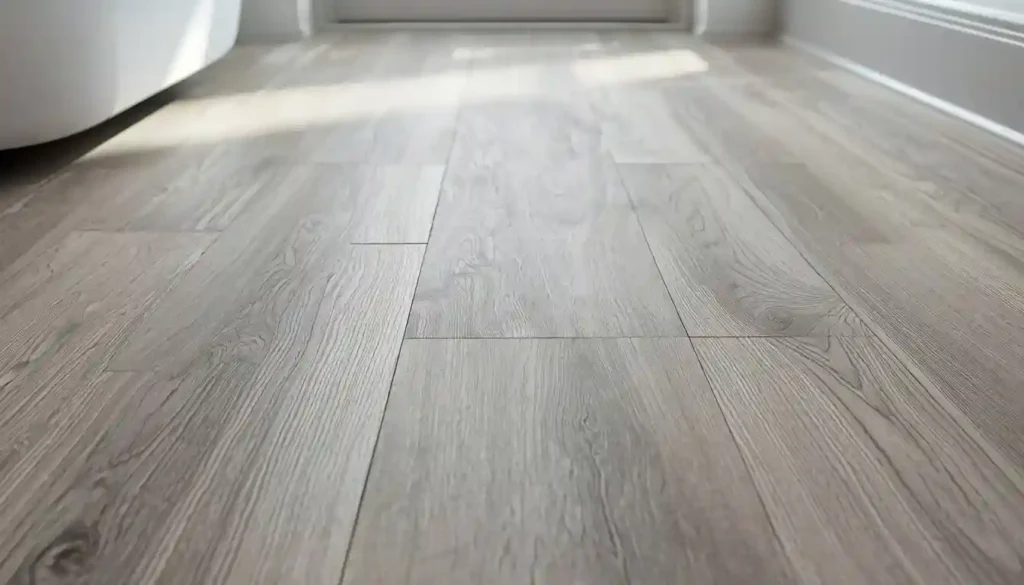
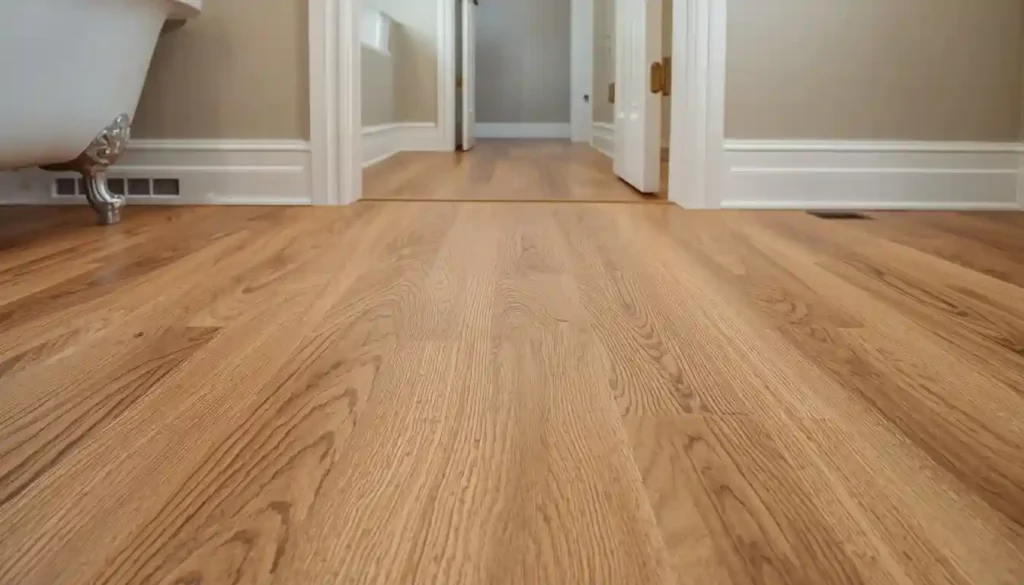
Wood-look luxury vinyl plank (LVP) is the answer that the flooring industry has been refining for the past decade, and the results in 2025 are genuinely impressive. A quality wood-look LVP floor is indistinguishable from real hardwood at normal viewing distance, carries a fully waterproof WPC or SPC core, and will not warp, swell, or delaminate regardless of how long the shower runs.
For bathrooms, light oak tones in wide plank formats — 6 to 8 inches wide — are particularly effective. They make small bathrooms read as larger, they pair with virtually any wall color, and they create the kind of calm, natural atmosphere that turns a morning routine into something you actually look forward to. Whitewashed and greige oak tones are especially popular right now because they work with both warm and cool bathroom palettes.
Darker wood tones — rich walnut, deep espresso, smoked oak — make a stronger visual statement and work well in larger bathrooms where they add depth rather than closing the space in. A dark wood-look plank floor paired with white walls, a freestanding tub, and matte black fixtures is one of the most striking bathroom combinations currently trending.
The installation direction matters in a bathroom. Running planks lengthwise down the longest wall makes a narrow bathroom feel wider. Running them toward the door draws the eye forward and makes the room feel deeper. In a square bathroom, a diagonal installation adds visual energy and makes the room feel larger than it is. If you are exploring different installation approaches, the guide on vinyl flooring for bathrooms and kitchens covers installation considerations specific to wet spaces in more detail.
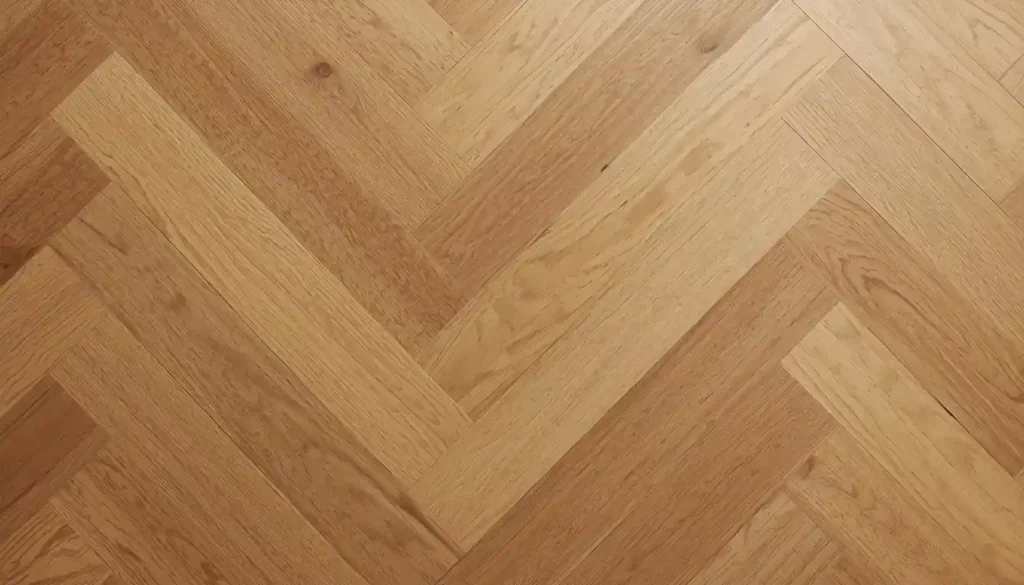
3. Herringbone Vinyl Plank for Classic Sophistication
The herringbone pattern has been used in floors since the Roman Empire, and it has never been more popular than it is right now. In a bathroom, herringbone vinyl plank does something that straight-laid planks cannot: it adds visual complexity and a sense of craftsmanship without requiring the expensive and difficult installation that traditional herringbone patterns in wood or stone demand.
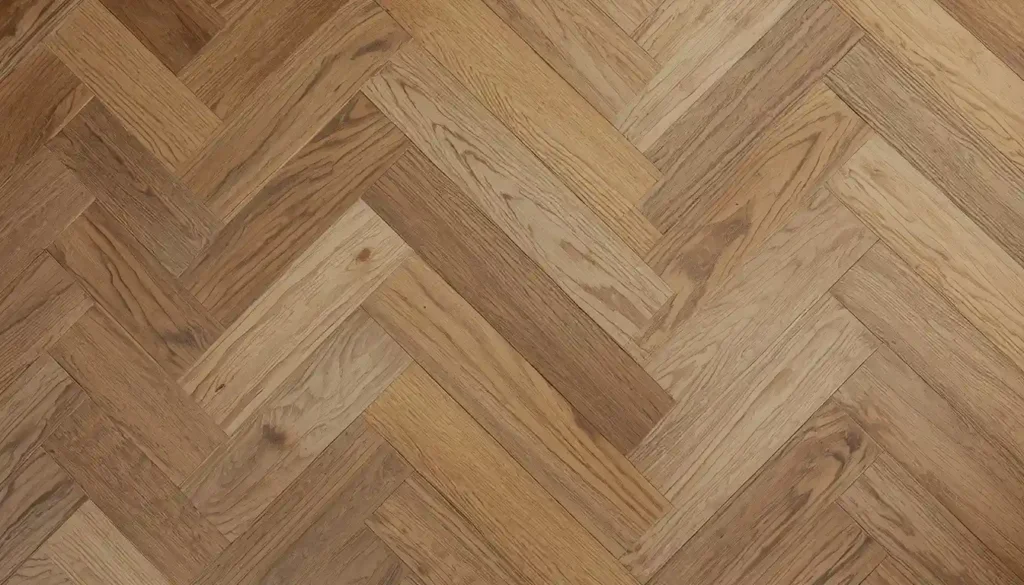
Herringbone works by laying rectangular planks at 90-degree angles to each other, forming a zigzag pattern across the floor. The result is a floor that looks expensive and intentional — more like a design decision than a default choice. In a medium to large bathroom, herringbone vinyl fills the floor with visual interest that makes the room feel finished and considered from every angle.
The choice of color and tone dramatically changes the character of herringbone. Light gray or bleached oak herringbone creates a French country or Scandinavian atmosphere — calm, elegant, slightly romantic. Dark walnut or ebony herringbone is dramatically more formal and suits a bathroom with dark walls, brass fixtures, and a vessel sink. Natural mid-tone oak herringbone is the most versatile option and works in transitional or traditional bathrooms.
From a practical standpoint, herringbone in vinyl is significantly more accessible than herringbone in hardwood or tile. Several LVP products are manufactured specifically for herringbone installation with pre-cut ends that make alignment straightforward. The floor is still fully waterproof, still click-lock for easy installation, and still carries all the durability advantages of modern vinyl. The pattern simply adds a layer of visual sophistication that straight-laid planks cannot achieve.
One consideration: herringbone requires more material than straight installation because of the angled cuts at room edges. Budget for a 10 to 15 percent overage when ordering. In a small bathroom, this is a minor cost increase for a major visual upgrade.
4. Concrete-Look Vinyl for an Industrial or Modern Bathroom
Concrete floors have become a major trend in interior design over the past several years, and the bathroom is one of the rooms where the look translates most effectively. The problem with actual concrete in a bathroom is considerable — it is cold, hard, requires sealing to resist moisture and staining, and can crack over time with subfloor movement. Concrete-look vinyl solves all of those problems.
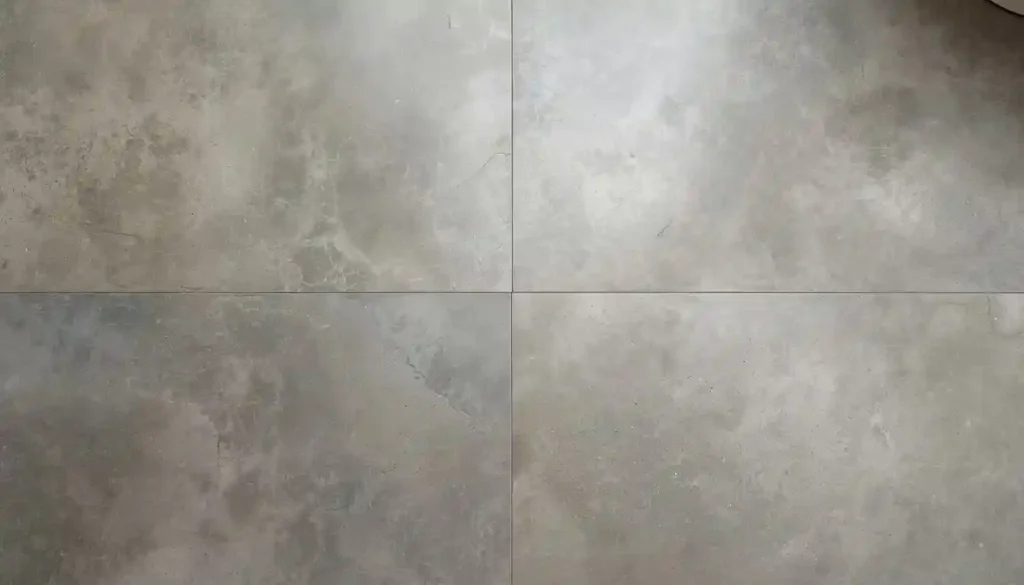
The best concrete-look vinyl tiles and planks capture the subtle variation, aggregate texture, and trowel marks that give real concrete its character. They come in the full spectrum of concrete tones, from warm buff and taupe through neutral mid-gray to the cool, almost blue-gray of aged industrial concrete. Large format tiles in 24×24 or 12×24 sizes are the most convincing because they minimize the number of seams and allow the surface variation to play out across a large area without interruption.
Concrete-look vinyl suits modern, minimalist, and industrial bathroom designs particularly well. Pair it with wall-mounted fixtures, a vessel sink on a floating teak vanity, matte black hardware, and exposed pipe details for a full industrial treatment. For a cleaner modern look, concrete floors work beautifully with white walls, frameless glass shower enclosures, and simple chrome fixtures — the floor provides all the visual texture the room needs.
One advantage of concrete-look vinyl over actual polished concrete is that vinyl provides better slip resistance in wet conditions. Real polished concrete can be dangerously slick when wet. Vinyl tiles designed for bathroom use include textured surfaces that maintain traction even when the floor is wet, which is a critical safety consideration.
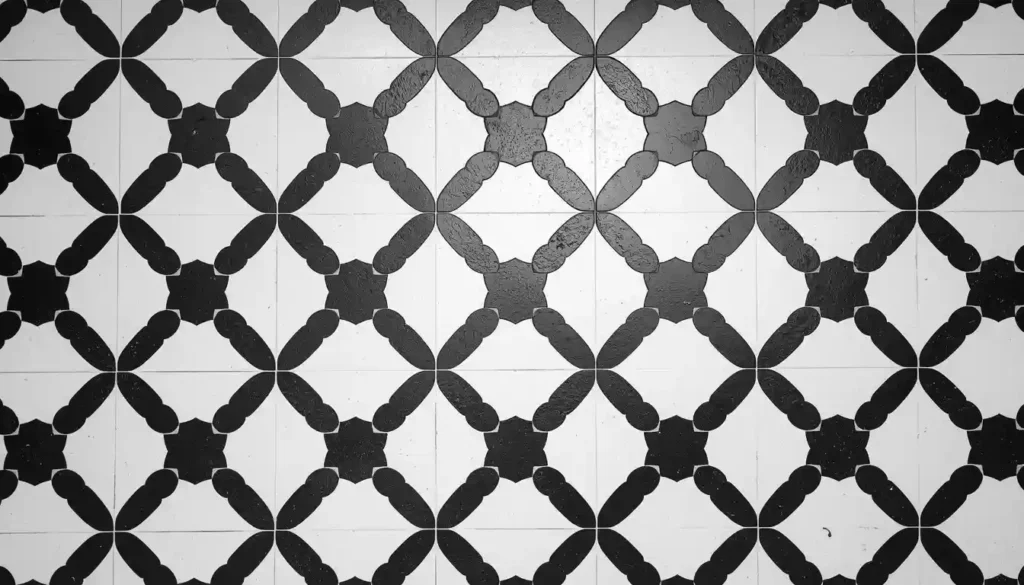
5. Black and White Geometric Vinyl for a Bold Statement
Black and white patterned floors are one of the most enduring design statements in interior history, and their resurgence in bathroom design is unmistakable. In 2025, the trend has evolved well beyond the traditional checkerboard — geometric vinyl tiles now offer diamond patterns, hexagon arrangements, Moroccan motifs, encaustic-inspired designs, and bold floral geometrics that would have been impossible to achieve affordably just a decade ago.
In a bathroom, a black and white geometric floor does something that few other design moves can accomplish: it makes the floor itself the primary design element of the room. When the floor is this visually strong, everything else can be simple — white walls, simple white fixtures, basic chrome hardware — and the room will still feel considered and individual. The floor carries the entire personality of the space.
Smaller geometric patterns work best in smaller bathrooms because the pattern has room to repeat enough times to read clearly before reaching the walls. Larger diamond or hexagon tiles suit larger bathrooms where the scale of the pattern matches the scale of the room. In a powder room — where the entire floor might be 30 to 40 square feet — a bold Moroccan-inspired pattern in black and white is genuinely dramatic and costs relatively little in materials.
Vinyl geometric tiles offer a significant advantage over cement or ceramic tiles for the same look: they are warmer underfoot, quieter, softer on dropped items, and considerably easier to install. They are also significantly less expensive. A black and white cement encaustic tile floor can cost $15 to $30 per square foot installed. A vinyl equivalent that looks nearly identical typically costs $3 to $7 per square foot.
The practical consideration for geometric vinyl in a bathroom is grout line management. Some vinyl tile products are groutable — they are designed to be installed with real grout between tiles for maximum authenticity. Non-groutable tiles have tighter seams that read as geometric pattern lines. For a bathroom where water and soap residue will collect, groutable vinyl with epoxy grout is the cleaner long-term choice because it prevents moisture from working into the seams.
6. Wide-Plank Gray Vinyl for a Contemporary Coastal Look
Gray has become one of the most requested colors in bathroom flooring, and for good reason. It is versatile enough to work with warm and cool palettes, it hides water spots and soap residue better than white or very dark floors, and it anchors a bathroom design without competing with accent colors and wall treatments.
Wide-plank gray vinyl — planks in the 6 to 9 inch width range in tones ranging from light ash to deep charcoal — is particularly effective in bathrooms designed around a coastal, Scandinavian, or contemporary aesthetic. The wide planks minimize visual busyness, the gray tones suggest driftwood and sea glass, and the overall effect is calm and clean without being stark.
Light gray planks with subtle wood grain texture create a Scandinavian spa atmosphere that has been enormously popular in bathroom design. Pair with white walls, brushed nickel or matte black fixtures, a vessel sink in white ceramic, and soft linen towels for a complete look. The restraint of the palette makes the room feel larger and more serene.
Medium gray planks with more pronounced wood grain work in transitional bathrooms where you want some warmth but prefer a cooler palette. They pair well with greige walls, natural wood vanities, and chrome or warm brass hardware. Dark gray planks in a large master bath create genuine drama — particularly when paired with marble-look walls, a freestanding tub, and statement lighting.
Understanding the different types of vinyl flooring including LVP, LVT, SPC, WPC, and sheet vinyl is useful when selecting a gray plank product, because the core construction affects how the floor performs in the steam and humidity of a bathroom environment. For most residential bathrooms, an SPC core provides the best dimensional stability — it will not expand or contract with temperature changes the way a WPC core sometimes does.
7. Terrazzo-Look Vinyl for an Artful, Retro-Modern Bathroom
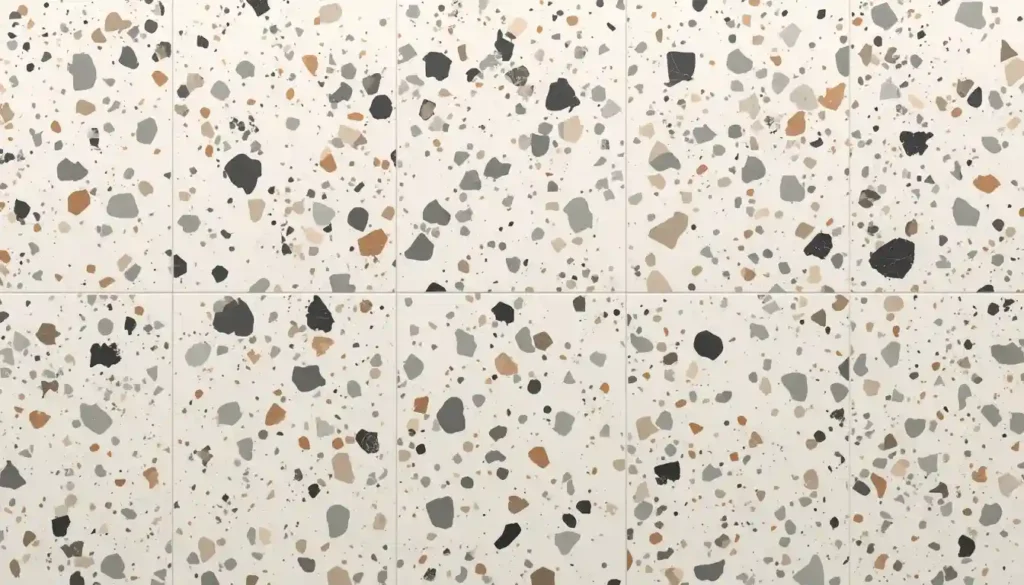
Terrazzo is one of the most photogenic flooring options available, and its combination of small color chips set in a contrasting matrix gives it a visual richness that few other materials can match. Real terrazzo is gorgeous. It is also difficult to install, expensive, and requires periodic polishing and sealing to maintain its appearance. Terrazzo-look vinyl tiles capture the same aesthetic at a fraction of the cost and without any of the maintenance burden.
The terrazzo trend in bathroom design began in high-end hospitality and residential projects and has moved steadily into mainstream renovation. Its appeal is specific: it is simultaneously retro and contemporary, it introduces color into a space without overwhelming it, and it provides a floor that looks genuinely unique rather than like a default choice. In a small bathroom or powder room where you want maximum design impact from a single element, terrazzo-look vinyl is one of the most effective options available.
Color combinations vary widely. Classic terrazzo uses neutral chips — gray, cream, black, taupe — in a white or light gray matrix for a clean, timeless look. Contemporary terrazzo tiles push into blush pink, sage green, or terracotta chip colors for a warmer, more personality-driven result. Some designers are using terrazzo-look vinyl specifically in powder rooms where the smaller scale allows a bolder color statement that would be exhausting in a larger space.
From a practical standpoint, terrazzo-look vinyl has all the waterproof and durability advantages of any quality LVT product. The complex visual pattern also does an excellent job of hiding small footprints, water spots, and the inevitable product spills that accumulate on a bathroom floor — a practical benefit that is rarely mentioned but genuinely appreciated in daily use.
8. Sheet Vinyl for Seamless, Budget-Friendly Bathrooms
Sheet vinyl deserves far more respect than it typically receives in design conversations. While luxury vinyl tile and plank get most of the attention in flooring media, sheet vinyl has genuine advantages that make it the right choice for many bathrooms — particularly smaller spaces and budget-conscious renovations.
The defining characteristic of sheet vinyl is that it comes in rolls typically 6 or 12 feet wide and is installed as a single continuous piece across the bathroom floor. This means no seams. A seamless floor has no places for water to work underneath the surface, which makes sheet vinyl arguably the most water-resistant vinyl option for a bathroom where water regularly gets on the floor — around the toilet, in front of the sink, at the shower threshold. In a high-moisture bathroom, seamless installation is a genuine functional advantage, not just an aesthetic one.
Modern sheet vinyl has moved well beyond the bland patterns of the past. Today’s sheet vinyl is available in convincing stone-look, wood-look, concrete-look, and geometric designs that match or approach the visual quality of vinyl tile and plank products at a lower price point. Material costs for quality sheet vinyl typically range from $1.50 to $4 per square foot — often meaningfully less than equivalent LVT or LVP products.
The practical trade-off is that sheet vinyl is more difficult to repair than tile or plank products. A damaged section requires patching rather than a simple plank swap. In a bathroom where damage is unlikely — no heavy objects being dropped, no sharp-edged furniture being dragged — this is a theoretical concern rather than a practical one for most homeowners. For rental properties or high-traffic family bathrooms, the lower repair flexibility is worth considering.
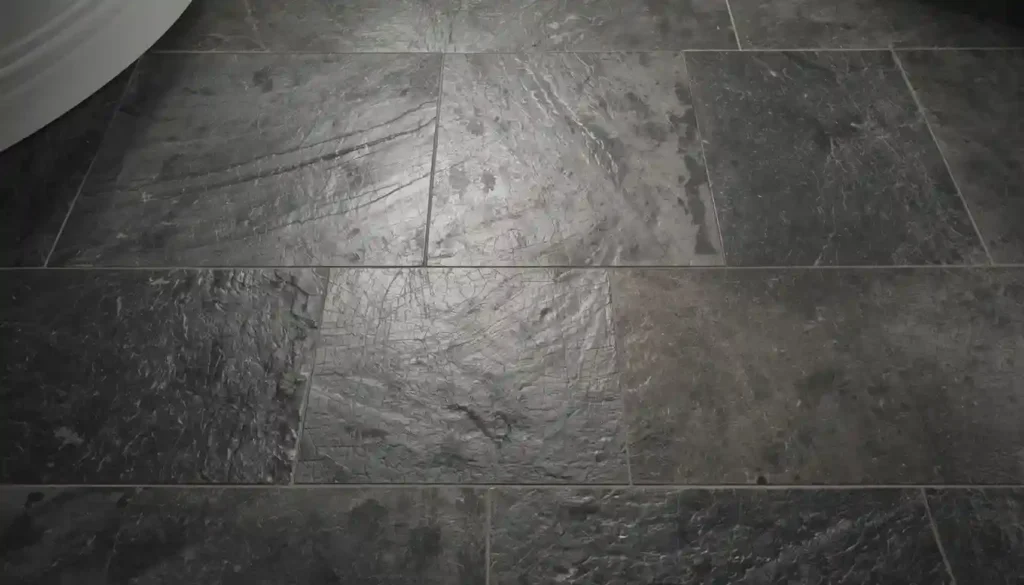
9. Slate-Look Vinyl Tile for a Natural, Earthy Bathroom
Slate has a quality that few other natural materials possess: it looks genuinely aged and natural from the moment it is installed. The irregular surface, layered cleft texture, and color variation — ranging from deep charcoal to warm purple-gray to rusty brown — give slate-look floors a depth and character that smooth stone-look options cannot match. Real slate in a bathroom is beautiful but comes with significant drawbacks: it is heavy, cold, requires sealing, and can be uneven in thickness, making installation complex.
Slate-look vinyl tile addresses all of those limitations while preserving the visual character that makes slate worth considering in the first place. The textured surface of quality slate-look LVT is actually an advantage in a bathroom: the surface relief provides grip that smooth tile surfaces lack, making it safer underfoot when wet. This is particularly valuable in a bathroom used by children or older adults.
The color palette of slate-look vinyl is broader than most people expect. Beyond the classic charcoal and gray-black tones, there are warm copper-slate looks, rust and burgundy slate tones, and even multicolored slate products that incorporate greens, purples, and tans into a naturalistic surface. A warm copper-slate or rust-slate bathroom floor creates an earthy, cave-like atmosphere that pairs beautifully with wood vanities, hammered copper fixtures, and warm amber lighting.
For a more rustic or natural bathroom design, slate-look vinyl laid in a random offset pattern with slightly wider grout lines creates the most convincing stone appearance. For a contemporary bathroom, large-format slate tiles in 12×24 or larger are more refined and suit a cleaner aesthetic without sacrificing the natural texture that makes slate distinctive.
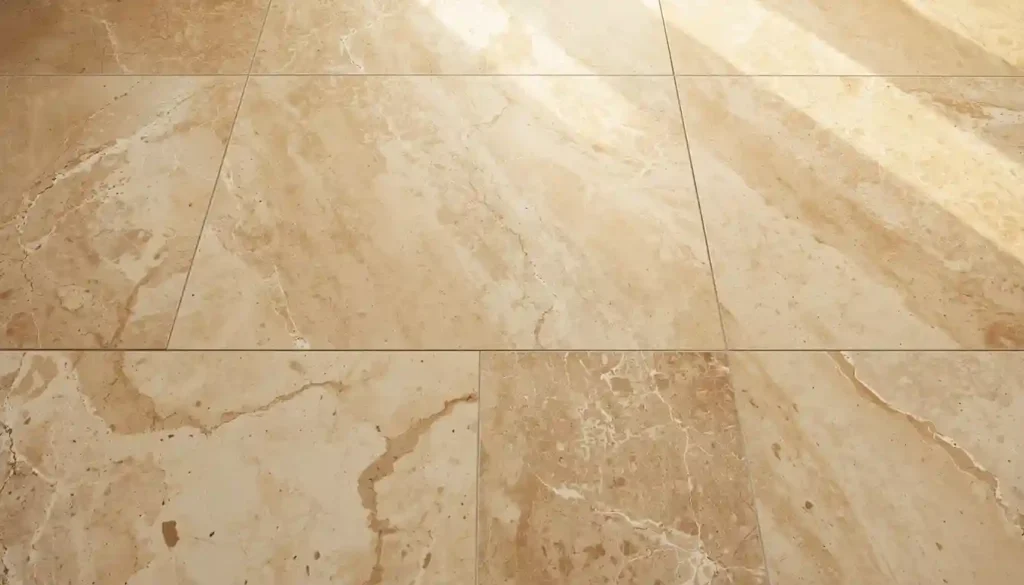
10. Travertine-Look Vinyl for a Warm Mediterranean Bathroom
Travertine is one of the most beloved bathroom flooring materials in the world, and Mediterranean and Tuscan-inspired bathrooms have relied on it for decades. Its warm ivory, cream, and tan tones, natural pitting and surface variation, and subtle veining create a floor that feels inherently warm and welcoming — exactly the atmosphere most homeowners want in a bathroom. Real travertine requires filling, sealing, and periodic maintenance to prevent the natural pores from absorbing moisture and staining. Travertine-look vinyl eliminates all of that while delivering a convincing reproduction of the original.
The warmth of travertine tones — ranging from pale cream through honey and gold to warm brown — makes this look particularly effective in bathrooms that might otherwise feel cold. Where marble-look and concrete-look options tend toward cool neutrals, travertine-look vinyl fills a bathroom with warmth that no amount of accent lighting can fully replicate. Paired with warm brass or oil-rubbed bronze fixtures, natural wood vanity elements, and cream or tan walls, travertine-look vinyl creates a bathroom that feels genuinely Mediterranean.
Large format travertine-look tiles — 18×18 or 12×24 — read most convincingly because the natural surface variation has more room to develop across a larger tile. Smaller formats can work, particularly for more rustic or traditional designs where smaller travertine tiles would be historically accurate. A diagonal installation of travertine-look vinyl adds a Mediterranean reference and makes a square bathroom feel more spacious.
Travertine-look vinyl is also an excellent choice for bathrooms that include underfloor heating. Real travertine conducts heat reasonably well, but vinyl with an SPC core is even more efficient at transmitting warmth from a radiant heating system, and it does not require the lengthy warmup times that stone floors need. The result is a warm, comfortable bathroom floor that does not punish bare feet on a winter morning.
11. Chevron Pattern Vinyl for a Modern, Directional Energy
Chevron is frequently confused with herringbone, but the two patterns are meaningfully different. In herringbone, the planks meet at 90 degrees and the ends are cut square, creating a broken zigzag. In chevron, the planks are cut at an angle so the ends meet in a perfect point, creating a continuous V-shape that flows across the floor with a more fluid, directional energy. Chevron is cleaner and more contemporary; herringbone is more traditional.
In a bathroom, a chevron vinyl floor does something that few other pattern options accomplish: it creates a strong sense of movement and direction that draws the eye through the space. When the chevron points toward the main feature of the bathroom — a freestanding tub, a double vanity, a statement wall — the floor actively reinforces the design hierarchy of the room. It is one of the few flooring patterns that genuinely functions as a design tool rather than just a background element.
Light toned chevron — pale oak, ash, or whitewashed tones — creates an airy, Scandinavian feel that suits modern and transitional bathrooms. Dark chevron in deep walnut or ebony reads as more formal and luxurious. For maximum impact, a two-tone chevron in contrasting light and dark vinyls creates a floor that is genuinely striking and works as the primary design statement of the room.
The installation consideration for chevron vinyl is precision. The angled cuts and perfect point alignment require careful planning and execution. While the installation is manageable as a confident DIY project, a professional installation ensures the pattern lines up correctly throughout the room and at the walls. An imprecise chevron installation is very visible — the pattern’s directional precision makes any deviation from the perfect V-shape immediately apparent.
For an informed look at how different vinyl flooring formats compare and what to consider when choosing between them, exploring the pros and cons of click-lock vinyl flooring will help clarify which product type suits a specific bathroom renovation.
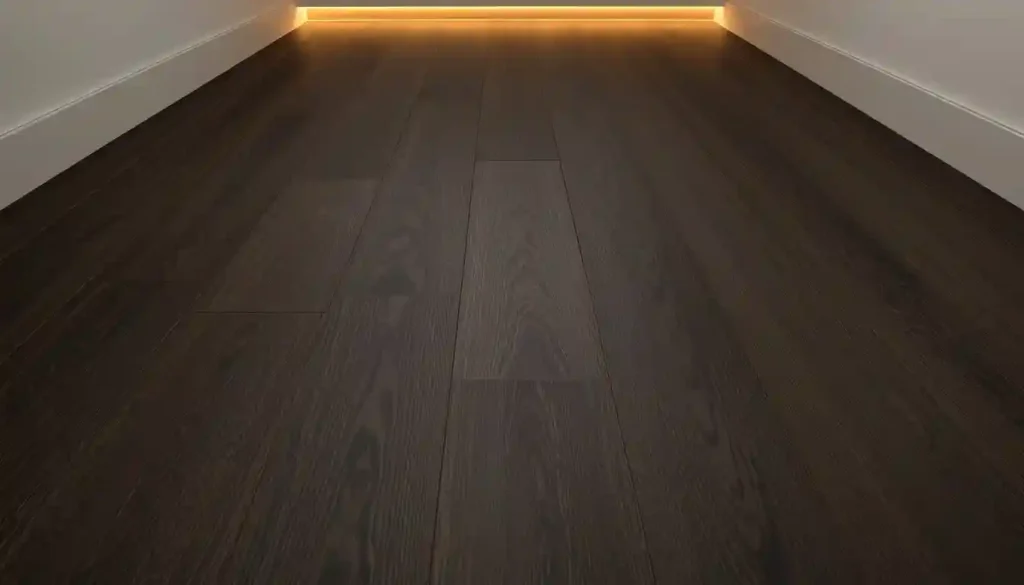
12. Dark Vinyl Plank for a Dramatic, Moody Bathroom
Dark bathroom floors are one of the most deliberately confident design choices a homeowner can make, and they are significantly more popular right now than they have been in decades. The instinct to keep small rooms light is deeply ingrained, but in a bathroom — where the walls, fixtures, and ceiling can all carry brightness — a dark floor creates drama and anchors the space in a way that light floors simply cannot.
Deep espresso, smoked oak, charcoal, and near-black vinyl planks work most effectively in bathrooms with good natural light or well-designed artificial lighting. The contrast between a dark floor and white or light gray walls, a white soaking tub, and bright chrome or gold fixtures is striking in a way that a uniformly light bathroom rarely achieves. The floor becomes the ground of the composition, and everything else reads more clearly against it.
Practically, dark vinyl planks are more forgiving of certain kinds of maintenance challenges — dust and light-colored debris are more visible, but water spots and soap residue are much less so. In a household where keeping the floor dry and spotless is not always possible, a mid-to-dark floor shows significantly less of the entropy of daily use than a white or very light floor.
Wide planks in dark tones — 7 to 9 inches wide — avoid the choppy, busy feeling that narrow dark planks can create. The wide plank format makes the dark color read as sophisticated rather than heavy. A matte finish on dark vinyl also reduces the showing of footprints and cleaning streaks, which on glossy dark floors can be constant.
For context on how dark and light vinyl options compare in real renovation decisions, the considerations around luxury vinyl flooring in humid spaces is useful reading — it covers why core construction matters as much as surface color in a bathroom environment.
13. Continuous Flow Vinyl from Bathroom to Hallway
The final idea is not about a specific look or pattern — it is about an installation approach that is becoming one of the most discussed concepts in contemporary bathroom design: running the same vinyl floor continuously from the bathroom through into the connecting hallway or adjacent space without a transition strip.
The seamless floor concept works because of a simple visual principle: interrupted floors make spaces look smaller. A transition strip between a bathroom and a hallway announces “the room ends here” and cuts the floor line. When the same vinyl floor flows from one space into the other, both spaces feel larger, and the overall home feels more coherent and considered.
This works for two practical reasons that are specific to modern vinyl. First, vinyl click-lock floors can be run continuously through doorways without structural concerns — unlike hardwood, there is no risk of expansion and contraction creating problems at the threshold. Second, waterproof vinyl in a bathroom does not require a different product than waterproof vinyl in a hallway. The same plank or tile that handles bathroom moisture will handle hallway use without any change in construction.
The design effect is strongest when the vinyl choice is visually neutral enough to suit both spaces — a medium-toned oak, a gray concrete, a warm stone look. Very bold or pattern-heavy bathroom floors can feel incongruous when they extend into a more neutral hallway. The seamless flow approach rewards restrained floor choices that age well in multiple contexts.
Practically, running continuous vinyl requires planning from the outset. The installation needs to start from a point that keeps the pattern or plank orientation consistent across both spaces. Door casings may need to be undercut to allow the vinyl to slide beneath them for a clean finish at the threshold rather than a butt joint. These are manageable installation details that a professional floor installer will handle automatically, but they are worth knowing if you are planning the project yourself. The overview of how to install vinyl plank flooring covers threshold and doorway handling in the context of a full installation walkthrough.
Choosing the Right Vinyl for Your Bathroom
The 13 ideas above represent very different visual outcomes, but they all start with the same foundational decision: which type of vinyl is right for the bathroom in question? The three main formats — LVP (luxury vinyl plank), LVT (luxury vinyl tile), and sheet vinyl — each have strengths that map to different bathroom scenarios.
LVT and LVP with SPC cores are the most dimensionally stable in bathrooms with temperature fluctuations or radiant floor heating. The rigid SPC core does not expand or contract meaningfully with changes in temperature and humidity, which makes it ideal for bathrooms where those conditions vary — particularly in climates with significant seasonal swings or in bathrooms adjacent to exterior walls. If you are considering radiant heat in your bathroom renovation, the comparison of SPC and WPC flooring explains the thermal performance difference in practical terms.
WPC products offer better underfoot comfort and superior sound dampening at the cost of slightly less dimensional stability. In a bathroom over a wood subfloor, the added cushion of WPC can make a noticeable difference to daily comfort. In a bathroom over a concrete slab where temperature is consistent, the choice between SPC and WPC comes down primarily to comfort preference.
Sheet vinyl wins on water resistance because it has no seams for water to penetrate. In a bathroom with young children, around a bathtub used for vigorous play, or in any situation where water regularly gets onto the floor beyond the immediate vicinity of the tub and shower, sheet vinyl’s seamless installation is a genuine practical advantage over tile or plank products.
Wear layer thickness is the single most important specification for bathroom durability. A 12 mil wear layer is adequate for low-traffic guest bathrooms. A 20 mil wear layer is the right choice for master bathrooms, family bathrooms, and any space that sees daily heavy use. For a full framework on how to evaluate vinyl products against each other, the vinyl flooring buying guide covers the technical specifications — wear layer, core construction, attached underlayment, locking systems — in the context of making a real purchase decision.
Installation is one more consideration that affects which vinyl format makes sense. Click-lock LVP and LVT are the most DIY-friendly options and can be floated over existing substrates in good condition. Sheet vinyl requires more careful measurement and cutting, particularly around bathroom fixtures and curved walls. Glue-down vinyl tile is the most stable option for bathrooms with radiant heat but requires the most careful subfloor preparation. For the most demanding installations, the details around best adhesive for vinyl flooring on concrete and wood is relevant reading before starting work.
The bathroom is one of the rooms where flooring choice most directly affects how the space feels to use every day. A floor that is cold, hard, and difficult to maintain reduces the quality of every morning and every evening in the space. A floor that is warm, visually satisfying, and genuinely waterproof does the opposite — it makes a functional room feel like a room worth being in. That is the real case for vinyl in the bathroom: not that it is practical (though it is), but that it enables beautiful, lasting design at a price and performance level that no other material can currently match.
James Miller is a seasoned flooring contractor with years of hands-on experience transforming homes and businesses with high-quality flooring solutions. As the owner of Flooring Contractors San Diego, James specializes in everything from hardwood and laminate to carpet and vinyl installations. Known for his craftsmanship and attention to detail, he takes pride in helping clients choose the right flooring that balances beauty, durability, and budget. When he’s not on the job, James enjoys sharing his expertise through articles and guides that make flooring projects easier for homeowners.
Small rooms have a reputation for being difficult to design, but the truth is that the floor beneath your feet does more heavy lifting than most people realize. Tile, in particular, is one of the most powerful tools available for reshaping how a compact space feels. The right tile can pull walls apart visually, lift…
Quick-Step is a Belgian flooring brand founded in 1994 under the Unilin Group, which is itself owned by Mohawk Industries — the largest flooring manufacturer in the world. That corporate lineage matters because it explains something important: Quick-Step does not manufacture laminate the way most brands do. It manufactures the machinery, the raw board, the…
There is something about a dark floor that changes the entire personality of a room. Walls feel taller. Furniture looks more intentional. The whole space settles into itself with a quiet confidence that lighter floors rarely achieve. For a long time, dark flooring meant dark hardwood, which meant high cost, moisture sensitivity, and years of…
11 Budget Carpet Flooring Ideas That Look Expensive There is a widely held belief that beautiful carpet flooring requires a significant financial commitment. Walk into any showroom and the plush wool options stacked against the wall can make the whole project feel out of reach before you even start. But the gap between what looks…
The idea of parquet flooring in a bathroom divides people. Tile advocates call it reckless. Design enthusiasts call it the boldest upgrade a bathroom can get. The truth, as usual, sits somewhere in the middle — but it leans further toward “yes, it can work” than most flooring guides let on. What most articles skip…
Vinyl plank flooring has a wear layer. That wear layer is the entire reason the floor holds up to foot traffic, resists scratches, and maintains its printed pattern year after year. It is also the first thing that gets compromised when the wrong cleaner or tool makes contact with the surface. Most cleaning mistakes on…