If you are still working out whether hardwood is the right material for your project before committing to plank width, a thorough review of species comparisons, grading, and cost ranges is worth doing before selecting a width.
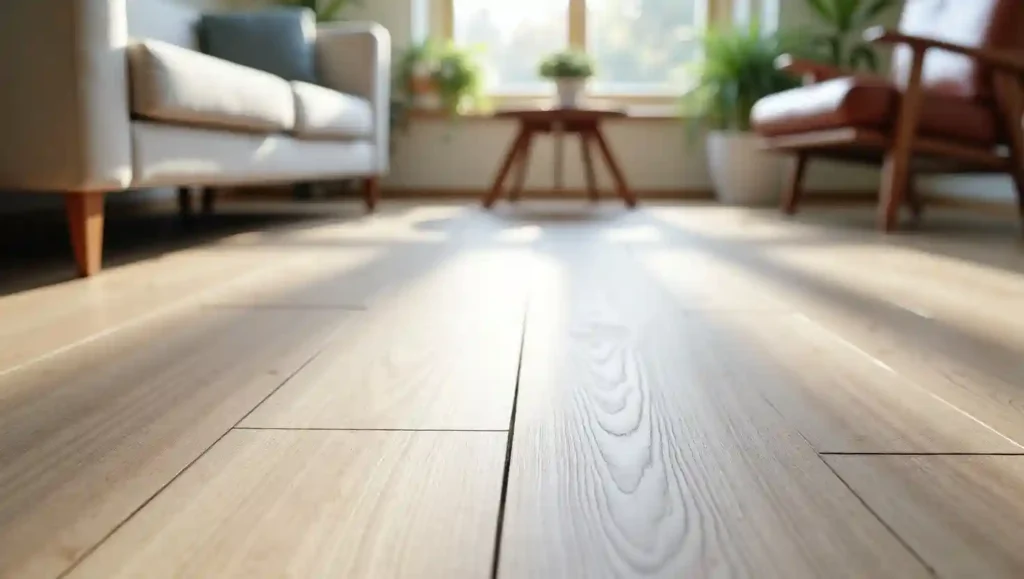
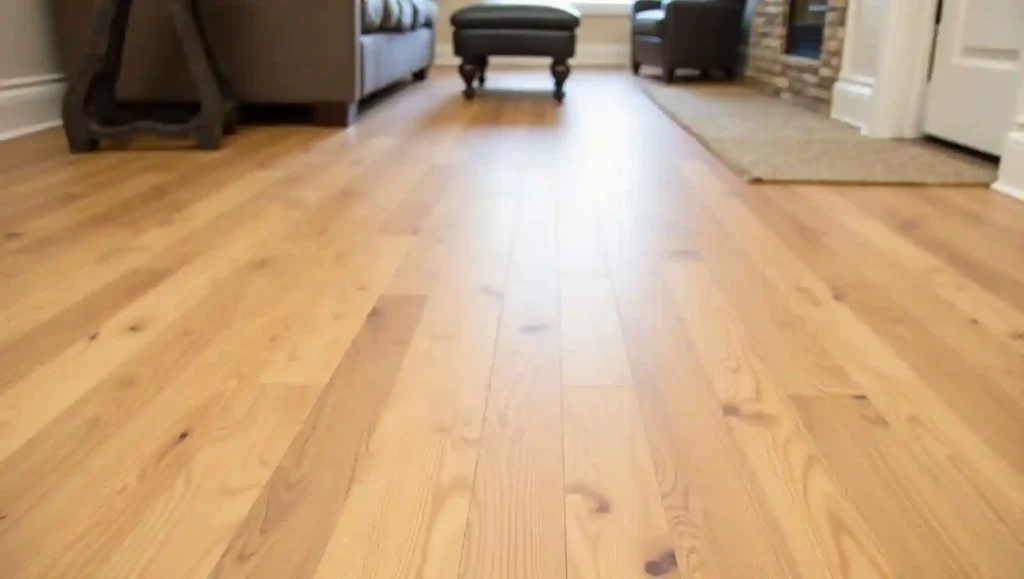
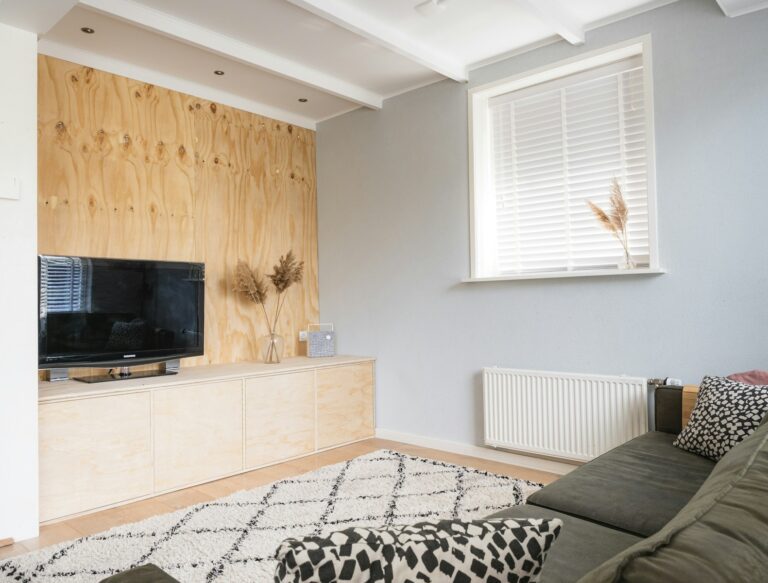
1. White Oak Wide Planks With a Matte Oil Finish in the Living Room
White oak has earned its reputation as the go-to species for wide plank floors because of its grain consistency and its natural undertone. Unlike red oak, which pulls slightly pink when sealed, white oak sits in a cool grey-beige range that works with virtually every wall color and furniture palette. In wide planks — particularly in the 7- to 8-inch range — white oak’s ray fleck patterns become a genuine focal point. Those silver-grey flecks that run perpendicular to the grain are a structural characteristic of the species, and wider boards show more of them.
An oil finish suits wide plank white oak better than a thick film polyurethane for several reasons. Oil penetrates the wood rather than sitting on top of it, which means the floor looks and feels like wood rather than like something coated in plastic. Matte oil finishes are also far more forgiving of everyday wear — minor scuffs blend rather than shine, and spot repairs are possible without refinishing the entire floor.
In a living room setting, run 8-inch white oak planks the length of the longest wall to draw the eye through the space. Pair with a low-pile area rug in a warm neutral tone to break the visual field without interrupting the floor’s continuity. This combination — wide plank white oak, matte oil, natural rug — is the floor treatment underlying most of the Scandinavian and transitional interiors you see performing well on Pinterest right now.
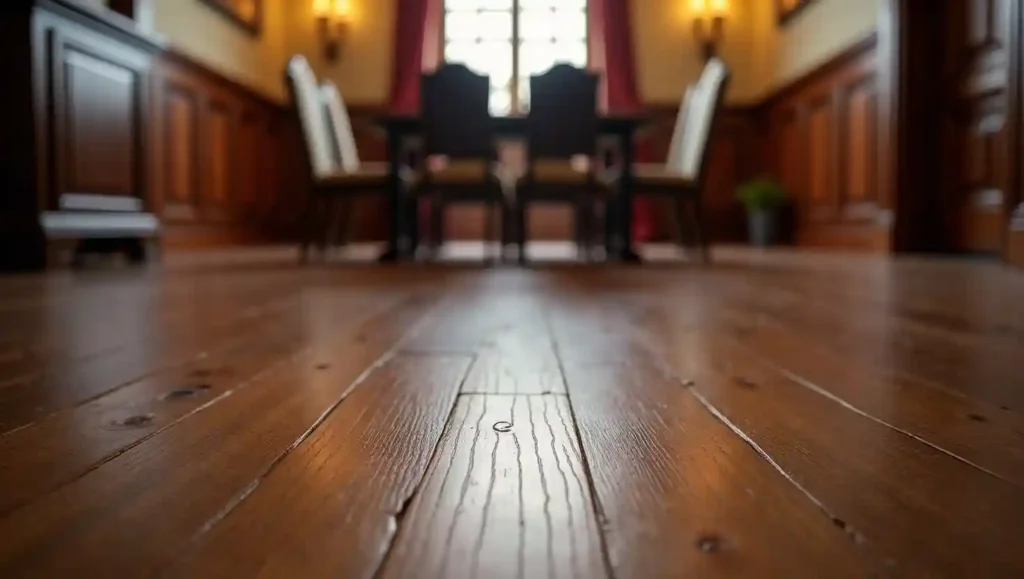
2. Dark Walnut Wide Planks in a Formal Dining Room
American black walnut is one of the most visually arresting hardwood species available for residential flooring. Its heartwood ranges from a warm chocolate brown to deep purplish-black, with grain patterns that are more varied and dramatic than oak. In wide plank format — 7 inches or wider — a walnut floor in a dining room stops being background and becomes architecture.
The conventional design hesitation around dark wood floors is that they show dust and pet hair. This is a real consideration, but the solution is choosing the right finish rather than avoiding the species. A wire-brushed surface on walnut adds a subtle texture that breaks up the floor’s reflective quality, making everyday dust far less visible than it would be on a smooth, high-gloss surface. A satin-level sheen rather than high gloss keeps the drama of the dark color without turning the floor into a mirror.
In a formal dining room, a rich walnut wide plank floor reads as an investment — visually and literally. The contrast between the deep floor and white or light grey walls creates the kind of interior that photographs beautifully and holds its appeal across decorating changes. Walnut also pairs particularly well with brass or bronze hardware, linen upholstery, and any warm-toned stone on countertops or fireplace surrounds nearby.
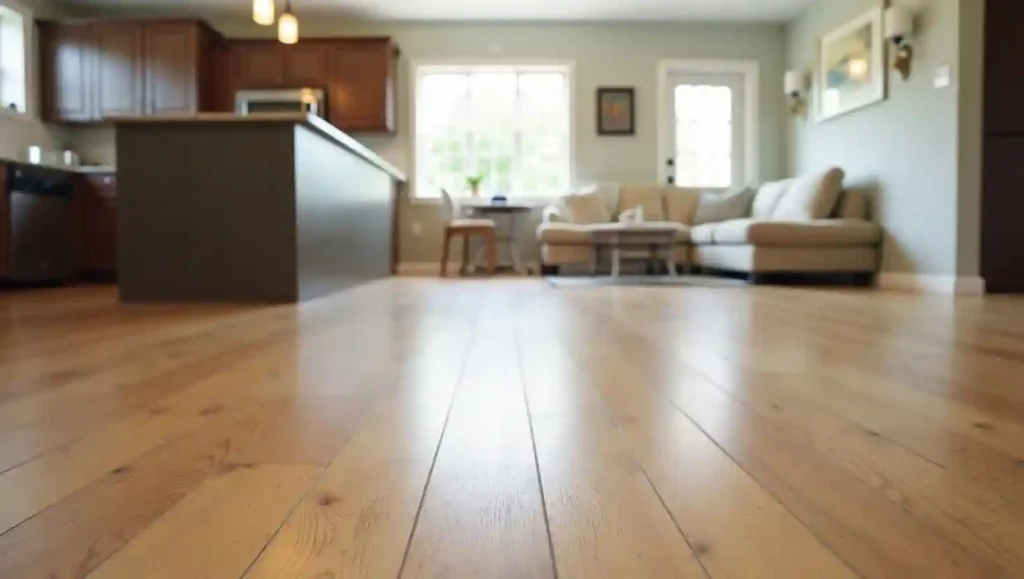
3. Wire-Brushed Wide Plank Oak in an Open-Concept Kitchen and Living Area
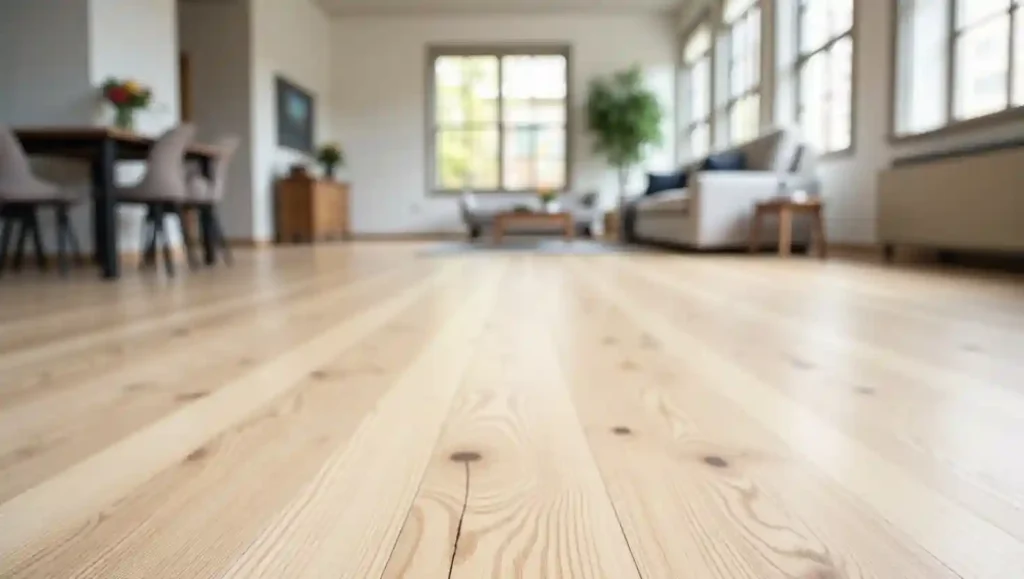
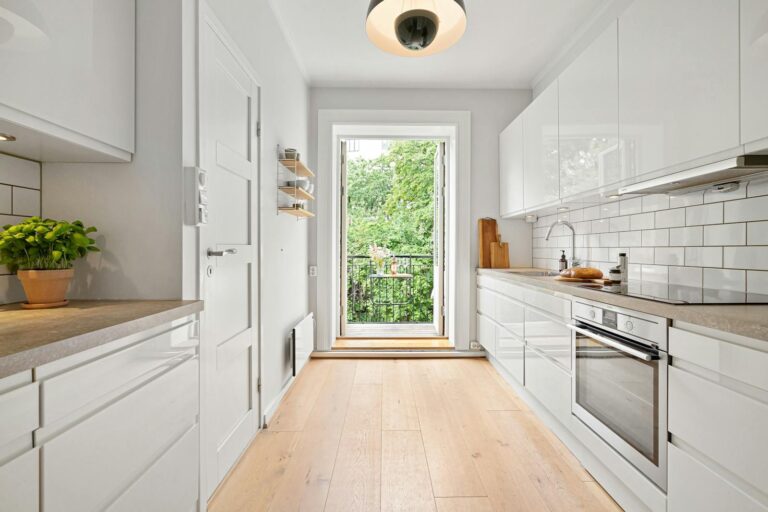
Open-concept floor plans are where wide plank hardwood delivers its most dramatic effect. In a combined kitchen-living-dining space, a continuous run of wide plank flooring with no transition strips is what creates the sense of one large, unified room rather than several smaller zones pushed together. Narrower boards interrupt that visual unity with too many seam lines. Wide planks in the 8- to 10-inch range minimize the joint count and let the space breathe.
Wire-brushed finishes are the practical choice for a kitchen-adjacent floor. The wire-brushing process removes the softest wood fibers along the grain, leaving gentle ridges that add texture and, more importantly, disguise the fine scratches and scuffs that accumulate in high-traffic areas. A wire-brushed floor looks better longer than a smooth floor because the surface texture absorbs evidence of everyday use rather than displaying it.
Species-wise, white oak and hickory both perform well in wire-brushed wide plank format. Hickory’s pronounced color variation — running from near-white sapwood to dark brown heartwood within a single plank — adds character that works particularly well in farmhouse and transitional-style open plans. White oak gives a cleaner, more uniform look that suits contemporary interiors.
One technical note for open-concept installations: if your floor spans from a kitchen subfloor (often concrete or plywood over a slab) into a living area over a crawlspace, the subfloor conditions may differ significantly. Consult your installer about moisture readings at each zone before selecting plank width and whether solid or engineered construction is more appropriate. If part of your open-concept space sits over a concrete subfloor, the structural and moisture considerations described in the context of hardwood floor on concrete slab problems are worth reviewing.
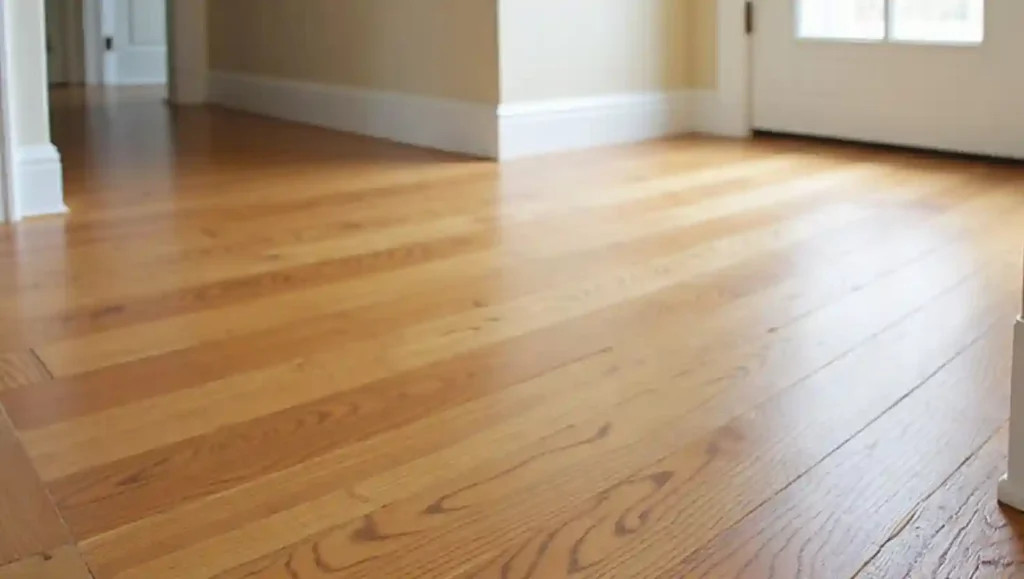
4. Wide Plank Floors Laid at a Diagonal in a Narrow Hallway
Most homeowners default to installing hardwood planks parallel to the longest wall or perpendicular to the joists. Those are sound practical defaults, but a diagonal installation — running planks at a 45-degree angle across the room — is one of the most effective ways to make a narrow hallway or entry feel wider without changing a single wall.
In wide plank format, a diagonal installation is especially striking because the planks are long enough that the angular run reads clearly rather than appearing choppy. A 6- to 7-inch plank laid diagonally across an 8-foot-wide hallway creates a strong visual geometry that draws the eye toward the end of the hall rather than toward the constraining side walls.
This approach works best with species that have a relatively straight, consistent grain — white oak, maple, and ash all hold up well under diagonal cutting. Avoid highly figured or extremely knotted species for diagonal runs, as the already-busy character can read as visual noise when the angular geometry adds another layer of complexity. Finish choices are wide open; the installation angle is the statement here, and the finish should support rather than compete with it.
One practical caveat: diagonal installation generates significantly more waste than straight installation because of all the angled cuts at room perimeters. Budget an additional 15-20% overage in material when planning a diagonal wide plank layout.
5. Reclaimed Wide Plank Floors in a Farmhouse Bedroom
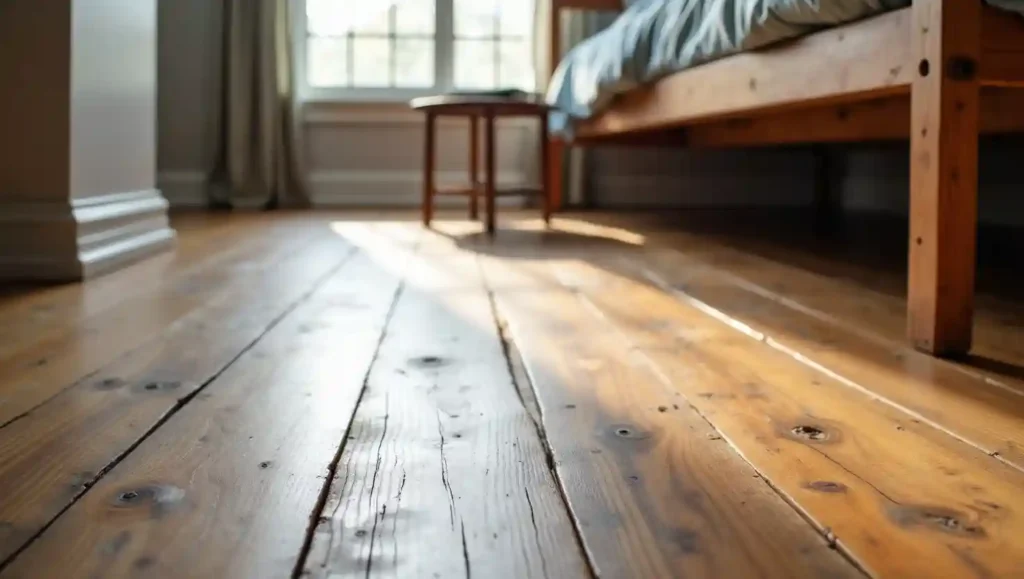
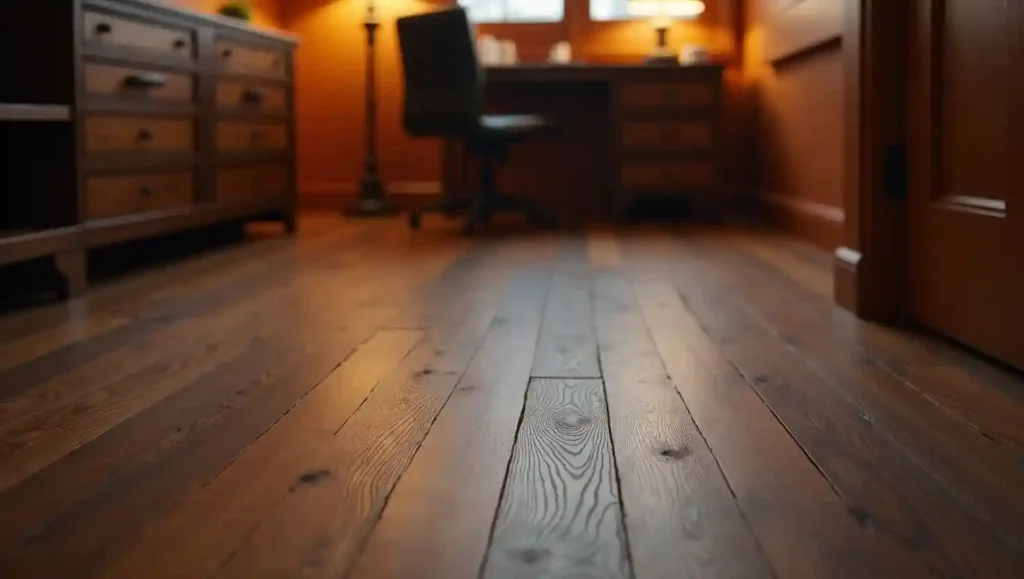
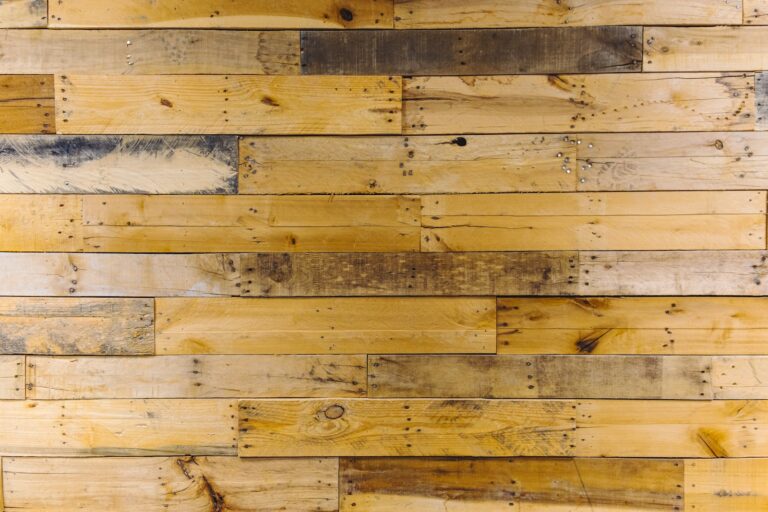
Reclaimed wide plank hardwood is a distinct category from new wood milled to look reclaimed. Genuinely reclaimed planks — sourced from old barns, factories, warehouses, and demolished structures — carry markings that cannot be manufactured: saw marks from original milling, nail holes from previous installations, staining from decades of use, and grain density that reflects slower old-growth timber growth. The result is a floor that looks as though it has always been there, even in a new or recently renovated home.
Farmhouse bedrooms are the natural environment for reclaimed wide plank floors because the design vocabulary of the style — shiplap walls, exposed beams, linen bedding, vintage iron hardware — shares an honest, materials-first sensibility with reclaimed wood. Wide planks in the 8- to 12-inch range are common in reclaimed stock because older structures used wider timber than modern mills typically produce.
The practical consideration with reclaimed wood is milling and preparation. Reclaimed planks must be kiln-dried to eliminate pests and bring moisture content to an acceptable range before installation. They also need to be face-planed to a consistent thickness if they come from a barn or industrial source. Reputable suppliers handle this; it is worth asking specifically whether planks have been kiln-dried and milled to consistent thickness before purchasing.
Color variation in reclaimed stock is wider than in new wood, and this variation is part of the appeal. No two runs of reclaimed wide plank flooring look the same, which is precisely what makes them valuable in a design context.
6. Light Ash Wide Planks in a Scandinavian-Inspired Space
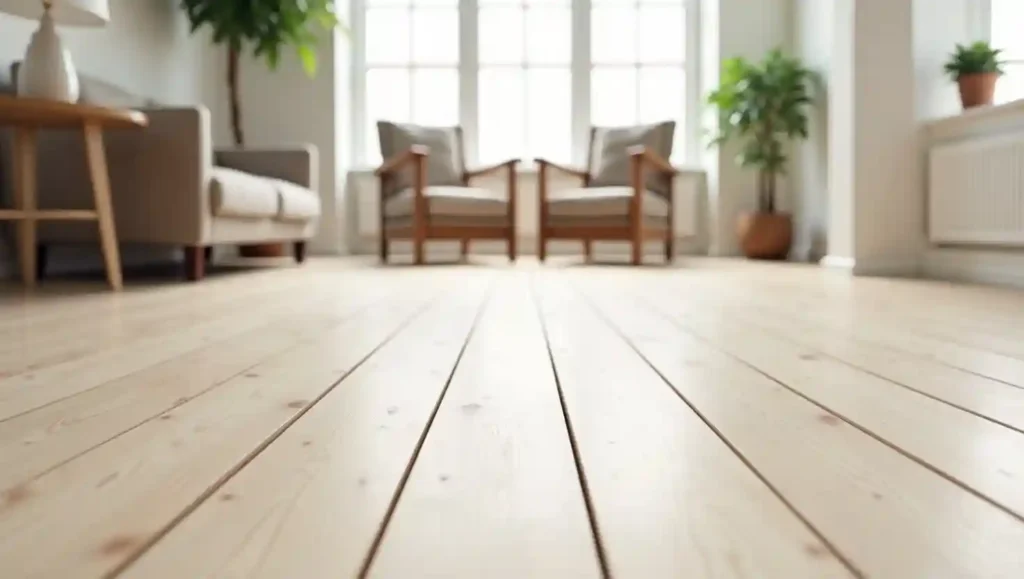
Ash hardwood occupies an interesting position in the species hierarchy. It is harder than oak on the Janka scale, which makes it a genuinely durable choice for high-traffic areas, and its grain is long, straight, and relatively fine — producing wide planks that look clean and contemporary rather than rustic or dramatic. In lighter stain colors or a natural soap finish, ash reads as warmly Nordic: blond, airy, and effortlessly understated.
The Scandinavian-inspired interior — characterized by low-contrast color palettes, functional furniture with clean lines, natural textiles, and an emphasis on light — needs a floor that does not compete with the quiet intentionality of the rest of the space. Light ash in 7- or 8-inch wide planks with a natural soap or white-oil finish does exactly this. It is present without being loud, warm without being heavy, and its texture is finely grained enough to read as refined rather than rustic.
One important note for homeowners considering ash: the emerald ash borer beetle has significantly reduced North American ash supply over the past decade, making ash flooring less widely stocked than oak. Pricing has risen, and lead times may be longer than for other species. European ash (fraxinus excelsior) is an alternative with similar visual qualities if domestic supply is limited in your area.
The comparison between ash and oak in more detail can be found in the ash flooring vs. oak flooring breakdown, which covers both species’ durability, grain, and cost considerations side by side.
7. Hand-Scraped Wide Plank Hickory in a Rustic or Craftsman Interior
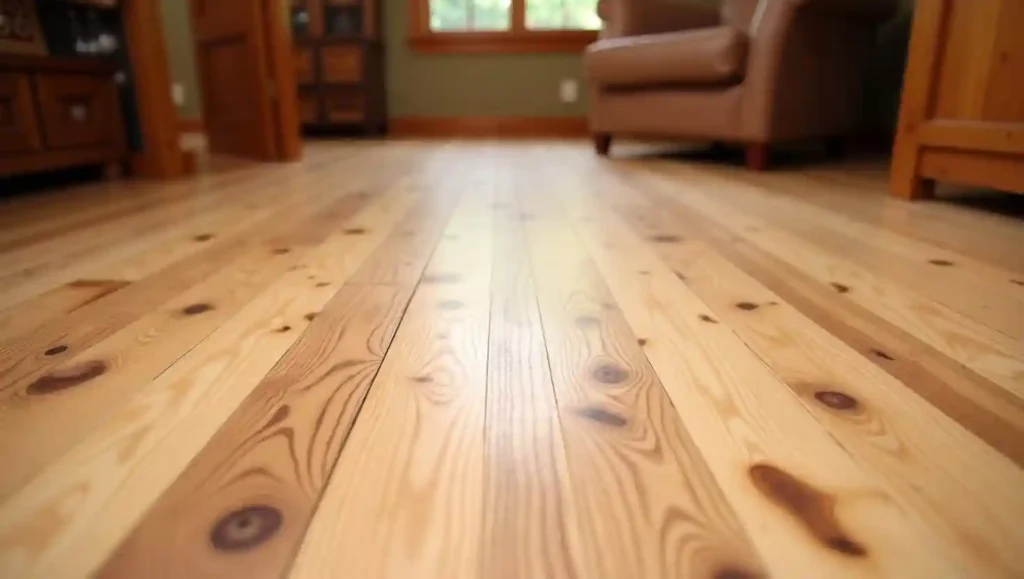
Hickory is the hardest domestic hardwood used for residential flooring — significantly harder than oak, walnut, or maple. In wide plank format, its dramatic color variation, from pale cream sapwood to rich reddish-brown heartwood, becomes one of the most characterful floors available. No two hickory planks look the same, and in the 7- to 9-inch range, each board functions almost as an individual visual element within the larger composition of the floor.
Hand-scraping is a finish technique where a craftsman pulls a steel blade across each plank to create irregular surface texture that mimics the marks left by the drawknife of historical wood preparation. The result is a floor that looks genuinely old in the best possible sense — one that carries the marks of a process rather than the uniformity of a machine. On hickory’s already-varied grain and color, hand-scraping adds a layer of dimensional complexity that is difficult to replicate with any other finish.
Craftsman and arts-and-crafts interiors — with their emphasis on hand-worked materials, exposed structure, and warm natural color — are the natural home for hand-scraped hickory wide planks. So too are rustic mountain homes, lodge-style interiors, and any space that takes its design cues from the built environment of the late 19th and early 20th century rather than from contemporary minimalism.
Hickory’s hardness also makes it a strong choice if durability is a primary concern. It resists denting from furniture legs and pet claws better than most other domestic hardwoods, which matters when you are investing in wide planks that will be difficult to replace without re-doing the entire floor.
8. Grey-Stained Wide Plank Oak in a Contemporary Urban Interior
Grey hardwood floors had their dominant moment in the mid-2010s, but the version of grey that’s holding appeal into 2026 is different from what flooded the market a decade ago. Earlier grey floors tended toward a flat, cool, almost silver tone that read as trendy rather than timeless. Current grey-stained wide plank floors are warmer — they sit closer to greige or driftwood, with the underlying wood grain still clearly visible through the stain rather than obscured by it.
In wide plank format, a grey-stained oak reads as distinctly urban — the kind of floor you would expect in a high-ceilinged loft conversion or a new construction apartment with large windows and a open-plan layout. The combination of width, muted color, and the natural grain showing through the stain creates a floor that feels modern without feeling cold.
White oak is the preferred species for grey staining because its natural undertone leans cool rather than red. Red oak stained grey tends to fight the natural color of the wood, requiring more stain to achieve the same effect and producing a flatter result. White oak accepts grey stain more readily and holds the tone more consistently across a full floor installation.
Pair grey wide plank oak with white or off-white walls, black metal fixtures, and furniture in warm natural materials — linen, leather, raw wood — to prevent the palette from reading as sterile. The floor provides the cool anchor; the furnishings bring the warmth.
If you are drawn to grey tones across the hardwood category more broadly, there are a wide range of approaches across different species, finishes, and room types that demonstrate how this palette behaves in real installations.
9. Wide Plank Floors in Herringbone Pattern for an Entryway
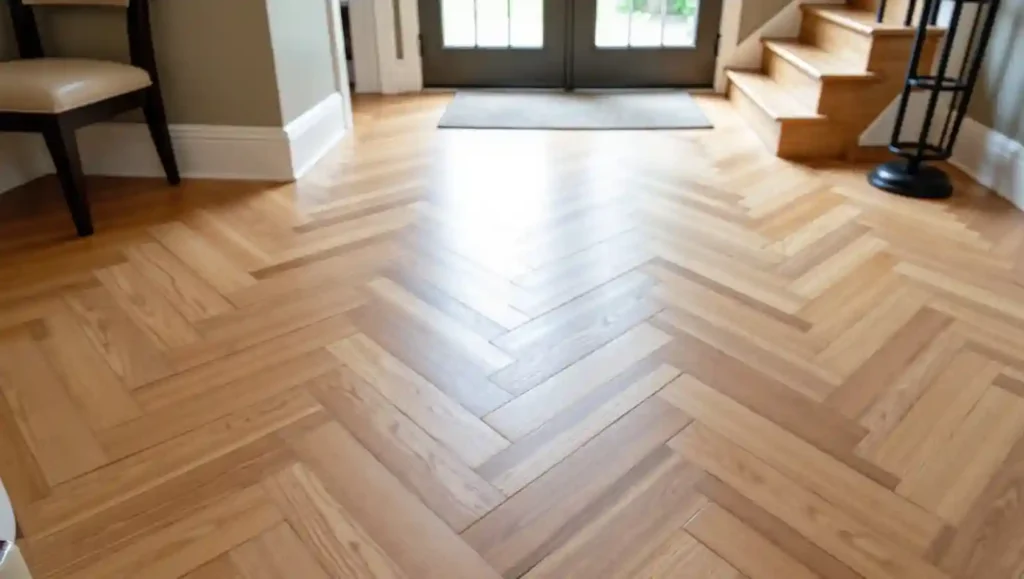
Running wide planks in a straight pattern is the default, but the herringbone layout — where rectangular boards are arranged in a 90-degree zigzag — is one of the oldest and most architecturally significant wood floor patterns in existence. It has appeared in European manor houses, Parisian apartments, and Georgian townhouses for centuries, and it continues to read as sophisticated and intentional in contemporary settings.
The question of plank width in herringbone installations is genuinely interesting. Traditional herringbone used narrower blocks (often 2 to 3 inches wide) because that is what maximized the number of visible direction changes and created the densest, most intricate pattern. Wider planks in herringbone — in the 5- to 7-inch range — create a bolder, more contemporary version of the pattern, where each direction change is more emphatic and the individual plank reads more clearly within the composition.
An entryway or foyer is the ideal location for wide plank herringbone because it creates an immediate design statement that sets the tone for the rest of the home. The pattern is also practical in this location: the angular grain direction means foot traffic wears the floor more evenly than a straight installation, since each step engages different grain orientations.
White oak in a natural or slightly warm stain is the most versatile choice for a herringbone entry floor. For a more dramatic first impression, consider a dark walnut herringbone — the pattern and the species together are unmistakably considered. A border strip in a contrasting species or color around the perimeter of the herringbone field can elevate the installation further, creating a parquet-style frame for the pattern. You can see how this pattern reads across different room types in the herringbone hardwood flooring ideas collection.
10. Engineered Wide Plank Hardwood in a Basement or Below-Grade Room
One of the most common misconceptions about wide plank hardwood is that it cannot be used in basements or below-grade spaces. Solid wide plank hardwood genuinely cannot — the moisture movement in below-grade environments is too unpredictable for boards that wide to remain stable. But engineered wide plank hardwood is a different material with a different structure, and it is purpose-designed for exactly these environments.
Engineered hardwood is constructed with a real hardwood veneer on top — typically 2 to 6mm thick — bonded over a plywood or HDF core. The cross-ply construction of the core layers resists the dimensional changes that humidity causes in solid wood. A wide plank engineered floor can be installed below grade, over radiant heat, and in rooms with higher moisture levels where solid wood would cup, buckle, or gap. The engineered hardwood vs. solid hardwood comparison covers the structural differences and appropriate installation contexts for both.
In a finished basement, engineered wide plank hardwood in a 7- to 8-inch width with a natural or wire-brushed finish transforms what is typically a low-status space into a room that reads as an intentional extension of the home’s main living areas. The wider plank especially matters in basements, which often have lower ceilings — the continuous, seam-light quality of wide planks visually opens the room in a way that narrower strips cannot.
Installation below grade can be floating (click-lock), glue-down, or a combination, depending on the specific product and subfloor condition. Your installer should take moisture readings at the concrete subfloor before selecting an adhesive and installation method.
11. Whitewashed or Ceruse-Finish Wide Planks for a Coastal or Beach Home
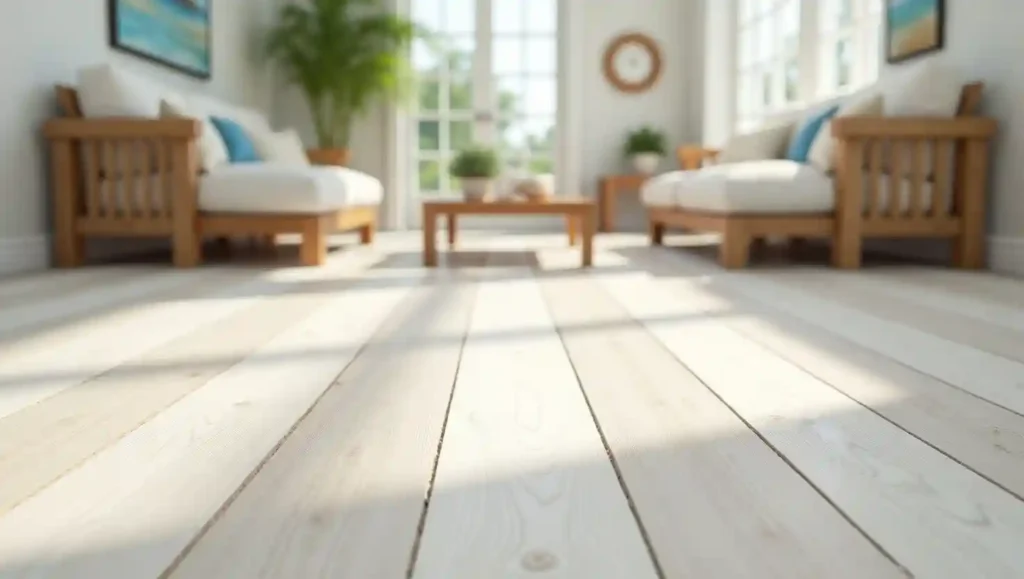
The ceruse finish — also called liming or whitewashing — is a technique where a white or light-pigmented paste is worked into the open grain of the wood and then wiped back, leaving the pigment lodged in the grain channels while the surface of the wood itself remains its natural color. The result is a two-tone floor where the wood’s natural tone and the white-filled grain create a striated, beach-bleached quality that is practically synonymous with coastal design.
Wide plank white oak is the species most commonly used for ceruse finishes because white oak has a characteristically open, ring-porous grain structure with clearly defined channels that hold the liming paste reliably. The ray fleck pattern in white oak also reads through a ceruse finish as a subtle, slightly pearlescent variation in the lighter areas of the plank.
For a coastal or beach home, wide plank ceruse-finish white oak in the 7- to 9-inch range creates a floor that looks like it belongs exactly where it is — a floor that references the bleached driftwood, white sand, and washed textiles of its environment rather than importing an interior vocabulary from somewhere else. This is what good residential design does: it uses the materials available to locate the home in its specific landscape.
Pair with natural fiber textiles — jute, sisal, cotton — and furniture in whitewashed wood, rattan, and linen to complete the palette. Avoid cool blue accents, which can make the look feel more nautical-themed than genuinely coastal.
12. Dark Stained Wide Planks Paired With Underfloor Heating
Underfloor heating and hardwood flooring have a complicated relationship that has improved significantly with better engineered hardwood products and improved installation practices. The concern is real: radiant heat introduces warmth from below that drives moisture out of the wood, which can cause solid hardwood to crack, gap, and cup if not managed correctly. Wide plank solid hardwood is particularly vulnerable because the greater wood mass amplifies the movement.
The practical solution for wide plank hardwood over radiant heat is using engineered construction with a European or American hardwood veneer on a cross-ply core. Engineered wide planks tolerate the temperature and humidity fluctuations of radiant systems without the structural movement that would compromise solid wood. The veneer layer is still real hardwood, which means refinishing is possible — typically 2 to 4 times over the life of the floor depending on veneer thickness.
Dark stains — rich espresso, warm ebony, deep brown — work particularly well in rooms with underfloor heating because radiant heat naturally suggests a warm, enveloping room environment. A dark wide plank floor in a study, library, or master bedroom over a heated concrete slab creates a space that feels genuinely cozy rather than merely decorated.
Temperature management is critical: radiant systems under hardwood should not exceed 27°C (80°F) at the floor surface, and the wood should be acclimated to the room with the heating system running before installation begins. The hardwood flooring and underfloor heating guide covers the full protocol in detail.
13. Mixed-Width Wide Plank Installation for an Artistic, Curated Look
Most wide plank installations use a consistent board width throughout — all 7-inch, all 9-inch. Mixed-width installations combine planks of two or three different widths within the same floor, laid in a repeating or random sequence. The result is a floor that reads as less manufactured and more found — closer to the look of an original wide plank floor in a centuries-old home where planks were milled to whatever width the timber allowed rather than cut to a uniform specification.
The most common mixed-width combination for contemporary installations is three widths — for example, 5, 7, and 9 inches — laid in a repeating sequence or distributed randomly. A random-width installation requires more planning than it sounds, because truly random distribution often produces unintentional clustering of similar widths that reads as a pattern. Skilled installers will lay out the planks before installation to ensure visual balance across the floor surface.
Mixed-width installations work best with species that have naturally high character: white oak with visible ray fleck, walnut with its tonal variation, or hickory with its color range from light to dark. The width variation adds one layer of visual complexity; the species’s natural grain variation adds another. Together, they produce a floor that rewards close looking rather than reading as flat and uniform.
From a Pinterest and design-photography standpoint, mixed-width wide plank floors are among the most-saved flooring images because the visual complexity is apparent even in a small image thumbnail — the width variation is readable at any scale. If you are choosing a wide plank floor specifically for a space you plan to photograph and share, mixed-width deserves serious consideration.
Choosing the Right Species for Wide Plank Hardwood
Wide plank flooring amplifies the natural character of whatever species you choose, which means species selection matters more than it does with narrow strip floors. Here is how the most common wide plank species compare across the factors that matter most for a purchasing decision.
White oak is the most popular species for wide plank installation in residential projects right now, and for good reason. Its grain is consistent and moderately figured, it accepts stain well across the color spectrum from natural to dark, and its Janka hardness of 1,360 lbf gives it solid resistance to everyday dents and scratches. Its natural undertone is cool grey-beige, which pairs with both warm and cool interior palettes. If you are reading one species comparison before making a decision, the red oak vs. white oak comparison covers the practical and visual differences between the two most common domestic oaks.
American walnut offers the most dramatic visual impact of any common domestic hardwood. Its chocolate-to-dark-purple heartwood in wide planks creates a statement floor that can anchor even a sparsely furnished room. Walnut is softer than oak (1,010 lbf Janka), which means it will show fine scratches in high-traffic areas more readily than oak or hickory. It is also more expensive, and the price premium grows with plank width.
Hickory is the hardest and most visually variable of the common domestic species, with a Janka rating of 1,820 lbf and a color range within individual planks that spans from near-white to deep reddish-brown. In wide plank format, hickory is practically unsurpassed for character and durability. It suits rustic, farmhouse, and craftsman interiors better than contemporary or minimalist spaces.
Maple is the understated option — harder than oak (1,450 lbf), with a finer, more uniform grain and a pale, creamy tone. Wide plank maple reads as clean and contemporary when kept in natural or lightly stained tones, but its tight grain makes it challenging to stain darker colors evenly. It is a strong choice if you want a light, near-white floor without the open grain of ash or the noticeable ray fleck of white oak.
Wide Plank Installation Considerations That Affect the Final Look
The beauty of a wide plank floor depends as much on installation quality as on the wood itself. Several technical factors directly affect the visual result.
Subfloor flatness matters more with wide planks than with narrow strips. Industry standards for hardwood installation generally require that the subfloor not vary more than 3/16 inch over a 10-foot span, or 1/8 inch over 6 feet. Wide planks, because they span greater distances between fasteners, will telegraph subfloor irregularities more visibly than narrow boards. If your subfloor is significantly out of level or has humps and dips, address them before installation rather than hoping the floor will bridge over them.
Acclimation is the process of letting the wood adjust to the temperature and humidity of the installation environment before it is fastened down. Wide plank hardwood requires longer acclimation than narrow strip flooring — typically 5 to 7 days at minimum, sometimes longer in climates with significant seasonal humidity swings. Skipping or shortening acclimation is one of the most common causes of wide plank floors that gap in winter or cup in summer.
Finish selection shapes not only the appearance but also the maintenance profile of the floor over its lifetime. Oil finishes require periodic re-oiling — typically annually or every two years in high-traffic areas — but can be spot-repaired without refinishing the entire floor. Polyurethane is more durable against surface scratches but cannot be spot-repaired, and a full refinish becomes necessary when the surface is compromised. For wide plank floors where a single refinish job covers a lot of square footage, the lower maintenance frequency of polyurethane may be worth the trade-off in repairability.
Finally, the direction of plank installation changes the room’s apparent proportions. Running planks toward the primary light source (a large window or door) creates the most flattering light play across the grain. Running them the length of a long, narrow room makes the room feel longer; running them across the width of the same room makes it feel wider. Wide planks make these directional effects more pronounced, which gives you more visual control than narrow boards — but also means the decision matters more.
Wide Plank Hardwood vs. Other Flooring Types
Wide plank hardwood is not the right choice for every room or every homeowner, and it is worth being clear about where alternatives serve better before committing to the investment.
In rooms with high moisture exposure — bathrooms, laundry rooms, mudrooms with wet boots — solid wide plank hardwood is genuinely inadvisable. Even engineered wide plank hardwood has limits in moisture-exposed environments. Luxury vinyl plank in wide widths can replicate the visual of wide plank hardwood convincingly while tolerating water that would ruin real wood. The detailed comparison of hardwood flooring vs. SPC vinyl is useful here if you are weighing the two in a mixed-use or potentially wet environment.
For homeowners who want the wide plank aesthetic but have significant budget constraints, wide plank laminate flooring offers a lower cost entry point. The visual fidelity of premium laminate products has improved substantially, and the AC rating system for laminate durability means you can choose a product calibrated to your traffic level. That said, laminate cannot be refinished when the wear layer is exhausted — unlike real hardwood, which can be sanded and refinished multiple times over its lifespan. This difference in long-term lifecycle cost often makes genuine hardwood the better total investment, particularly for permanent installations in primary living spaces.
Tile flooring, particularly large-format porcelain in stone or wood-look finishes, is another wide-plank competitor in kitchens and bathrooms. Tile is harder underfoot and colder in winter, but it handles water and heavy traffic without any of the concerns that apply to real wood. For spaces where both comfort and durability matter, these trade-offs are worth thinking through before committing to either material.
How Wide Plank Hardwood Affects Resale Value
Real hardwood flooring consistently ranks among the top home improvements for return on investment at resale, and wide plank hardwood carries a premium within that category. Wide planks signal quality in a way that buyers recognize even without being able to articulate exactly why — the material looks expensive because it is expensive, and that visual communication of quality transfers to the perceived value of the home overall.
Neutral species and finishes — white oak in natural or greige tones, walnut in its natural color, light ash with an oil finish — perform better at resale than highly trend-specific choices. A wide plank floor in an unusual color or an extremely fashionable grey tone that reads as dated five years after installation is a harder sell than a classic natural-toned floor that reads as timeless regardless of when it was installed.
The condition of the floor at sale matters as much as the original choice of species and width. Hardwood floors that have been maintained — cleaned properly, protected from deep scratches, and refinished when needed — sell homes. Hardwood floors that have been neglected create negotiating leverage for buyers. If you are investing in wide plank hardwood as a long-term asset, build a maintenance plan alongside the installation plan from the beginning.
James Miller is a seasoned flooring contractor with years of hands-on experience transforming homes and businesses with high-quality flooring solutions. As the owner of Flooring Contractors San Diego, James specializes in everything from hardwood and laminate to carpet and vinyl installations. Known for his craftsmanship and attention to detail, he takes pride in helping clients choose the right flooring that balances beauty, durability, and budget. When he’s not on the job, James enjoys sharing his expertise through articles and guides that make flooring projects easier for homeowners.
Choosing hardwood floors when you share your home with dogs or cats is one of the most debated decisions in interior design. People love the warmth and character of real wood, but they worry constantly about scratches, accidents, and the daily wear that comes from paws, claws, and enthusiasm. The good news is that with…
Most flooring comparisons waste your time. They list bullet points, dodge the hard trade-offs, and leave you exactly where you started. This one won’t do that. Laminate and vinyl plank flooring look almost identical in a showroom. They both click together. They both run $2 to $6 per square foot at the entry level. They…
The best thermal insulation under laminate flooring is extruded polystyrene (XPS) foam board, ranked first for thermal resistance per millimetre of thickness. The full ranking, from highest to lowest thermal performance per millimetre, is XPS foam, dense wood fibreboard, natural cork, premium combination foam, rubber crumb, and standard polyethylene foam. XPS reaches a TOG rating…
There is a real difference between cleaning your hardwood floors and actually cleaning them. Most homeowners sweep, occasionally vacuum, and consider the job done. What they don’t account for is the slow, invisible accumulation of grime inside board seams, the dull film left behind by evaporated cleaning solutions, and the fine grit lodged in surface…
Here is the thing nobody tells you before you start a glued-down laminate installation: the adhesive you choose matters more than the brand of laminate you buy. You can spend $4 per square foot on premium laminate, apply the wrong adhesive, and watch it buckle within six months. You can also do the opposite —…
What Is Reclaimed Wood Flooring, Really? Reclaimed wood flooring is lumber that has already lived a previous life — pulled from demolished barns, decommissioned factories, old warehouses, railway structures, ships, and century-old homes. It is not “distressed” wood with an artificial finish. It is not factory-aged. It is wood that has genuinely existed for decades,…