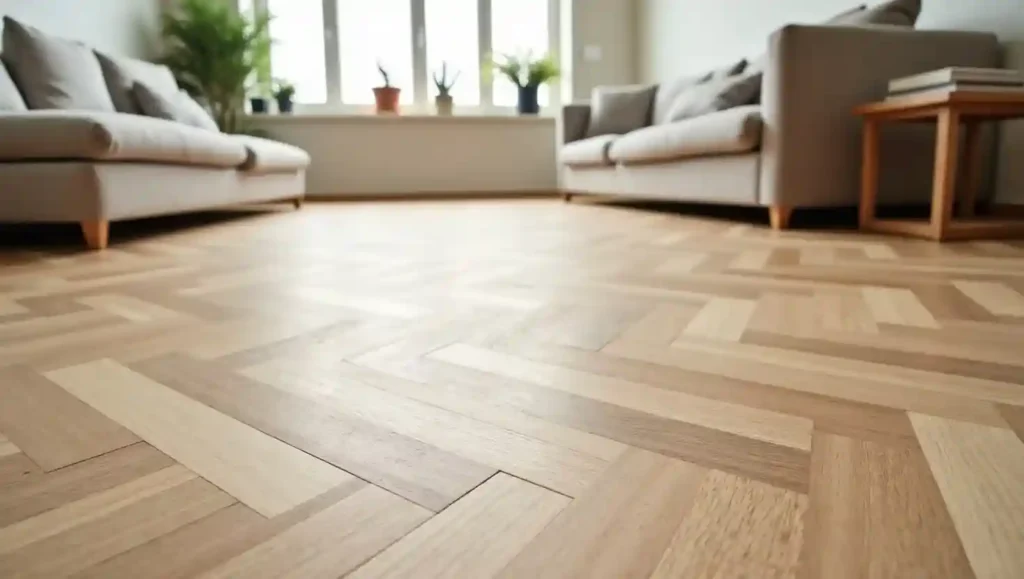
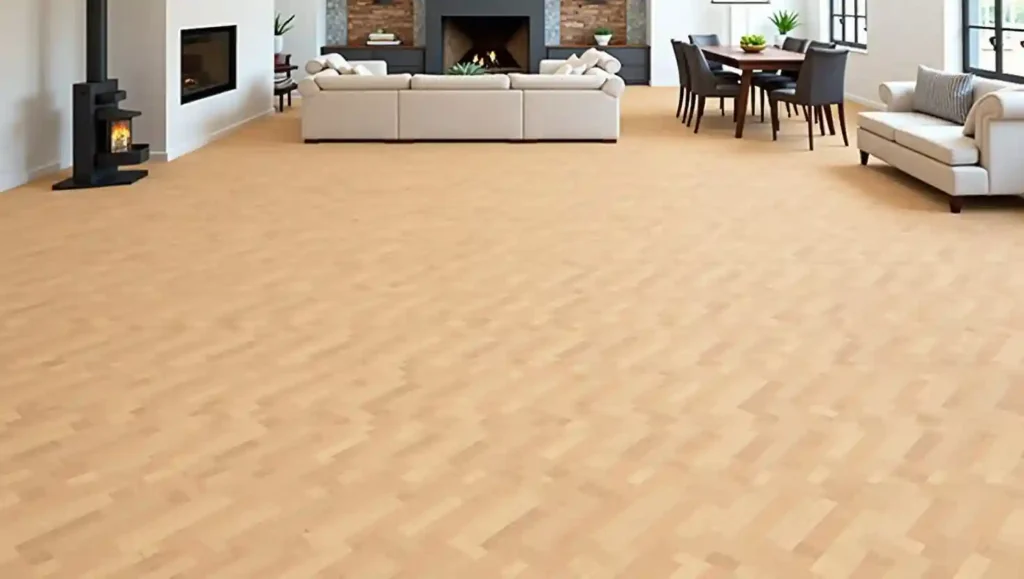
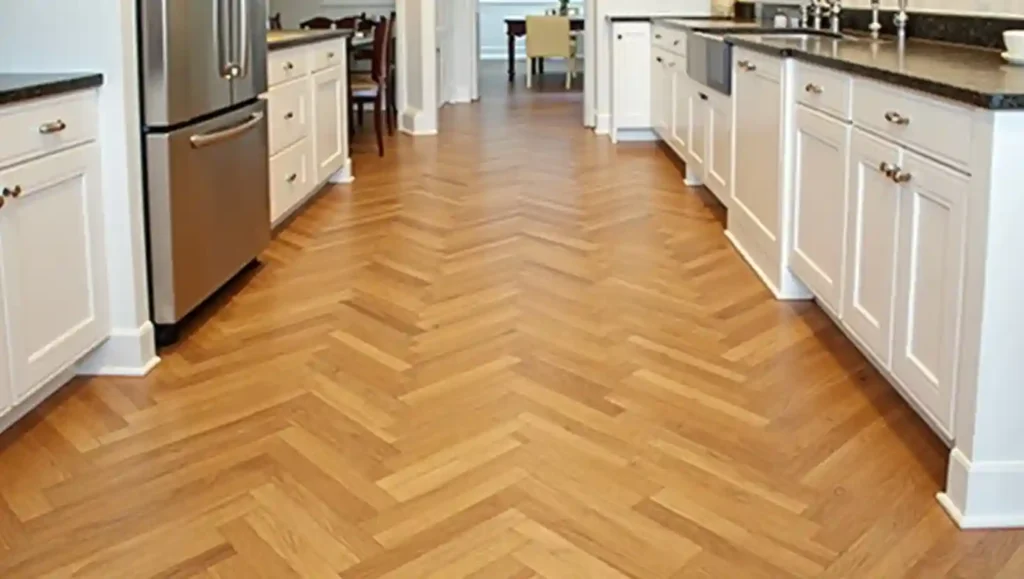
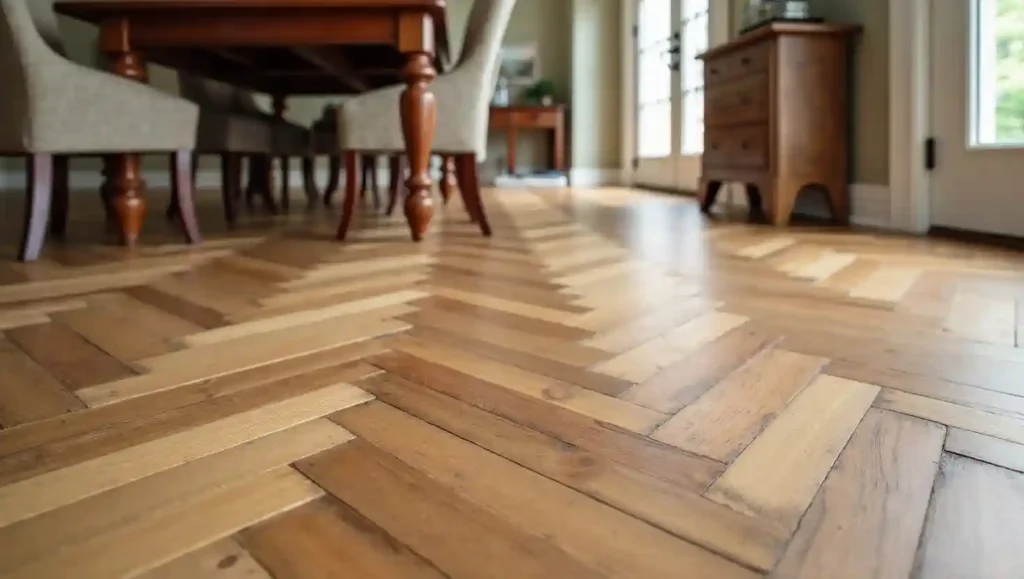
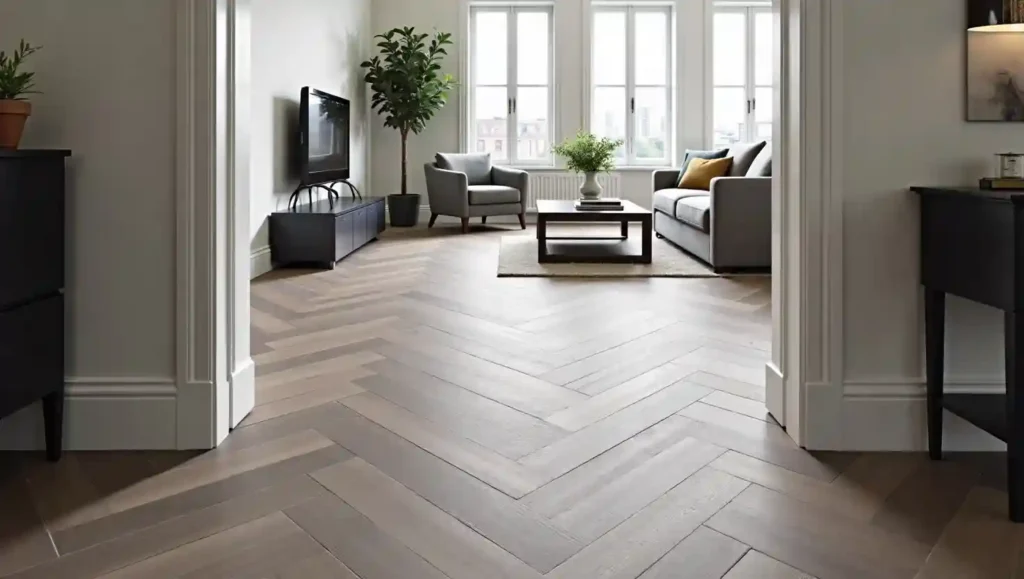
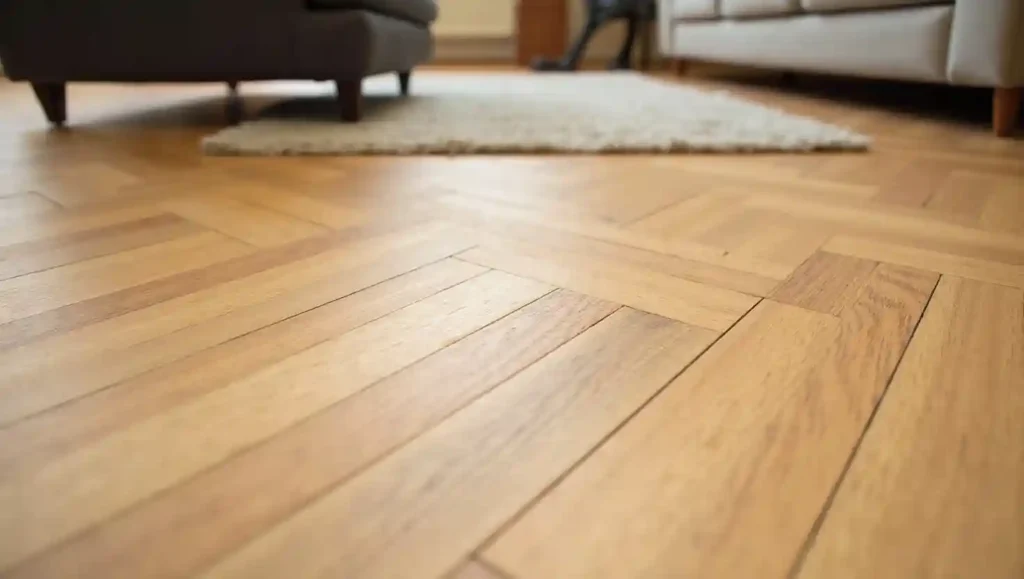
In terms of plank size, a medium width of 3.5 to 4 inches with a length around 20 inches works beautifully in standard living rooms. This scale shows enough of the herringbone geometry to be clearly intentional while keeping the pattern from becoming the only thing you notice. If the room is large and ceilinged well above 9 feet, moving toward 4.5-inch-wide planks maintains the right visual balance.
White oak also takes stain exceptionally well, which means this starting point can shift in almost any direction — warmer with a honey wash, cooler with a smoke or ash treatment, or left completely natural for the cleanest version of the look. For a comprehensive overview of how this species stacks up against other popular options, the comparison between red oak and white oak is worth reading before you commit to a species.
2. Dark Walnut Herringbone for a Dramatic Master Bedroom
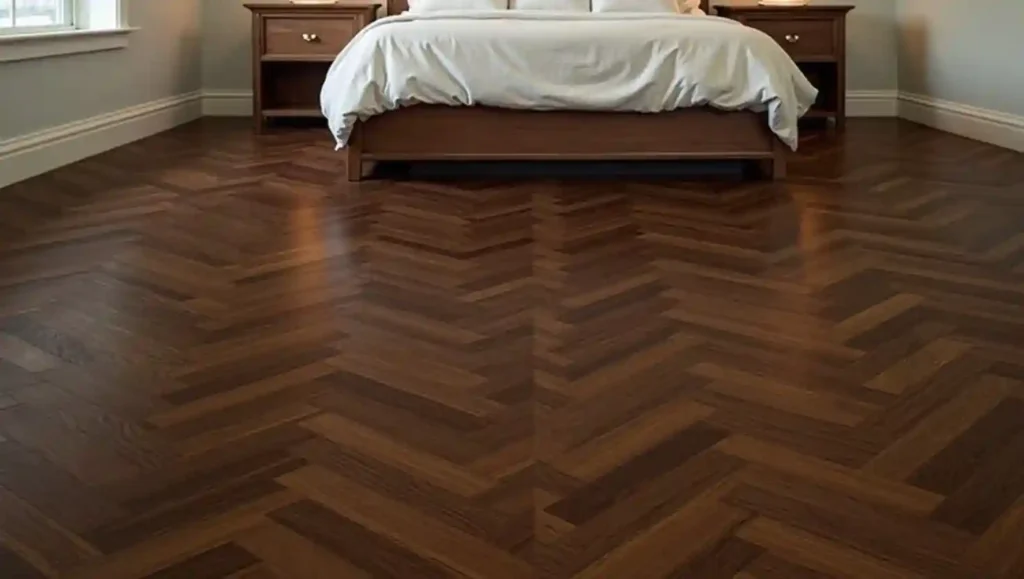
Dark walnut herringbone is one of those flooring decisions that transforms a master bedroom from a functional sleeping space into something that feels genuinely considered. The deep chocolate-brown tones of walnut — rich, warm, and complex in the way that only natural wood grain can be — create a foundation that immediately elevates the entire room. When those planks are arranged in a herringbone pattern, the geometry adds rhythm and movement that plain plank layouts simply cannot deliver.
The visual dynamic works because of contrast. Against lighter bedding in ivory, warm white, or soft taupe, the dark walnut herringbone reads as intentional grounding — a floor that anchors the room. Against white or light-painted walls, it creates a dramatic vertical relationship between the horizontal geometry of the floor and the vertical lift of the walls. In rooms with coffered ceilings, molded baseboards, or other architectural detailing, dark walnut herringbone ties the whole composition together.
One practical consideration with walnut is its Janka hardness rating of around 1,010, which places it softer than oak. This means walnut is best suited to lower-traffic areas like master bedrooms and formal dining rooms where it will not be subjected to the kind of daily abrasion an entryway or kitchen sees. For bedroom applications this is typically not a concern — foot traffic is light, and the beauty of walnut in this setting more than justifies the choice.
A satin finish suits dark walnut better than either high gloss or full matte. A slight sheen lets the rich grain catch light without creating the mirror-like reflection that can make dark floors look artificial. Keep rugs to a minimum in the initial layout so the herringbone can do its work; a single area rug centered under the bed is all that is needed.
3. Light Ash Herringbone for Scandinavian and Modern Interiors
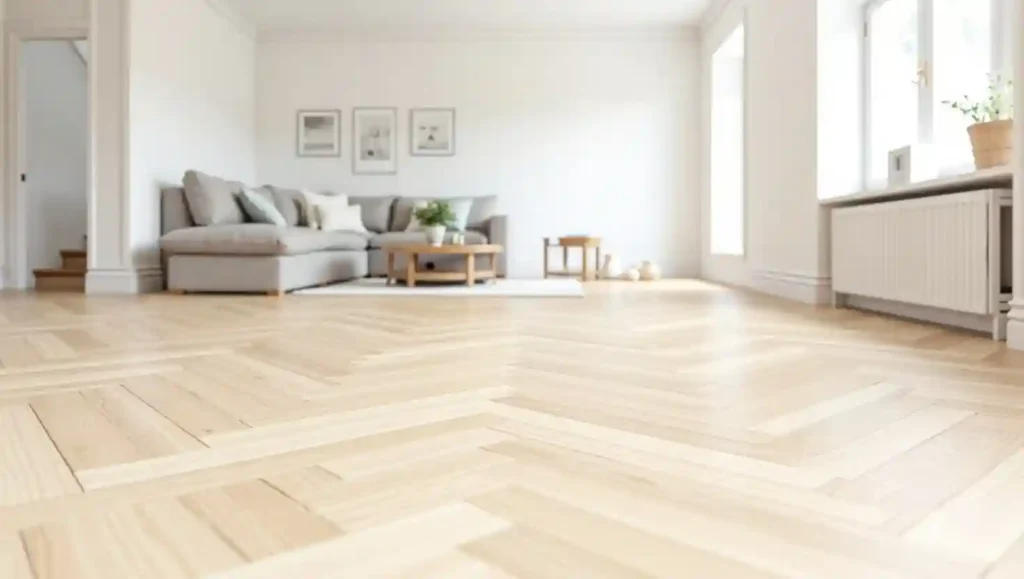
Ash is not the first species most homeowners think of for herringbone, but designers who have worked with it know its secret: ash has a bold, straight grain that makes the herringbone pattern pop with a crispness that oak and walnut cannot quite match. In light natural or whitewashed treatments, ash herringbone produces a floor that is simultaneously bright, graphic, and inherently warm — qualities that make it ideal for Scandinavian-influenced interiors and contemporary minimalist spaces.
The visual effect in a light ash herringbone is different from what you get with white oak. Where oak reads warm and familiar, ash reads slightly cooler and more architectural. The grain lines in ash tend to be more pronounced and run more parallel, which means the herringbone geometry is more clearly articulated — you see the V-shapes more distinctly. This works in favor of the pattern in modern spaces where the floor is meant to be a quietly bold statement rather than a background element.
In rooms with white walls, black or dark steel accents, and furniture that leans Scandinavian — clean lines, pale wood tones, wool textiles — a natural or light-grey-washed ash herringbone is near perfect. It is bright enough to lift the room in the way lighter floors do, but the grain pattern gives it enough visual interest that it does not feel anonymous. Grey-washed ash is particularly relevant right now as the interior design world shifts away from the cool grey floors of the previous decade toward something that has warmth and texture rather than uniformity.
4. Herringbone Entryway in Red Oak with a Painted Border
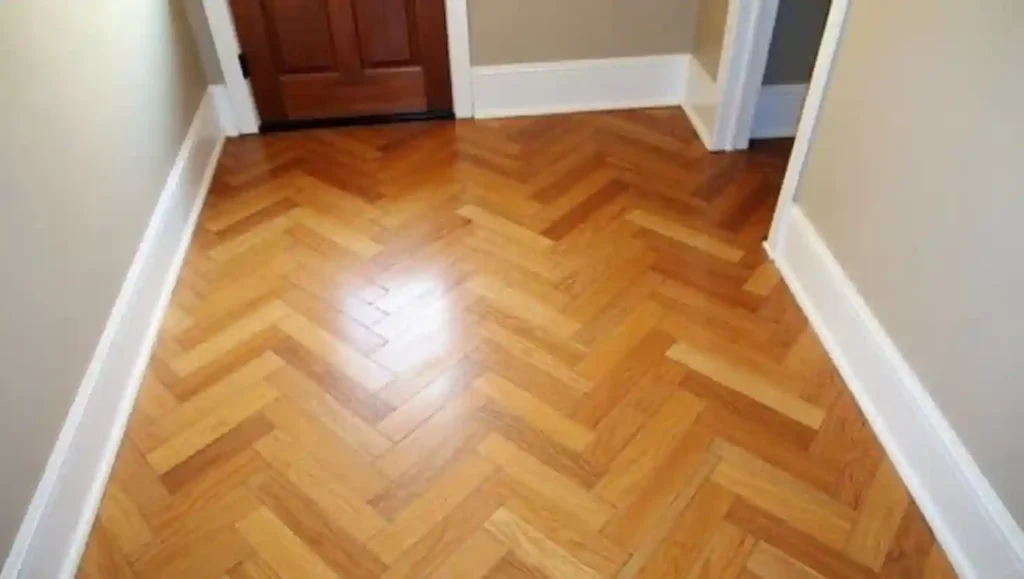
The entryway is one of the strongest arguments for herringbone hardwood in the entire home. It is the first floor surface a visitor encounters, and the pattern — even in a relatively small footprint — communicates something immediately about the intention and quality of the space beyond. Red oak is a particularly appropriate species choice for entryways because of its Janka hardness rating of around 1,290, which means it handles the kind of foot traffic, grit, and occasional moisture that entryways see on a daily basis.
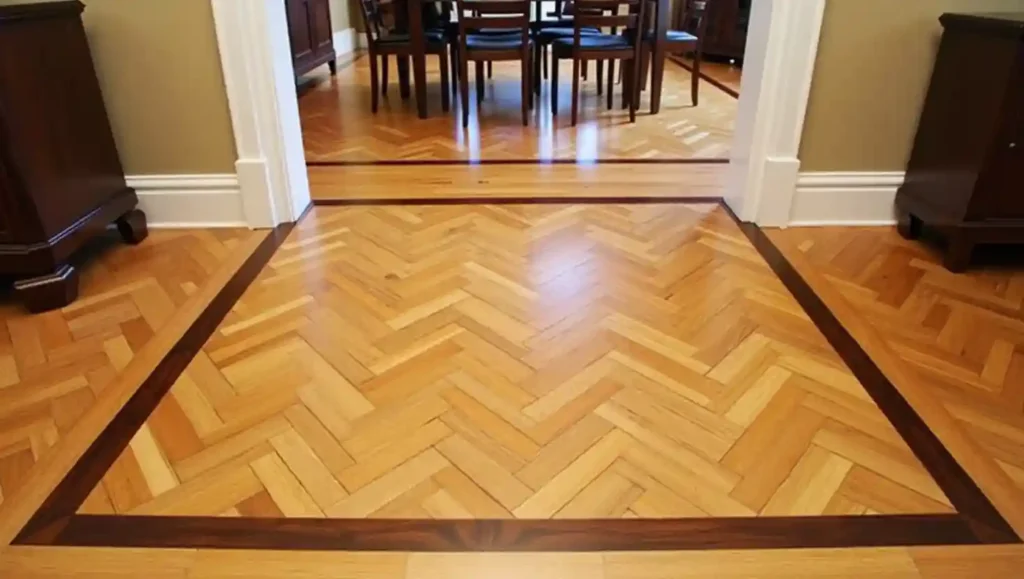
A painted border around the herringbone field is a classic finishing move that elevates this idea from nice to genuinely striking. The approach is simple: the herringbone pattern runs in the central field of the entryway, and a painted border — typically one or two plank widths wide — frames it like a rug. This technique has been used in historical European interiors for centuries and translates into contemporary spaces with equal elegance. The border can be painted in white, black, charcoal, or a color that picks up from an accent in the adjoining room.
In practical terms, the key to making this work is precision in the installation. The border planks need to be cut and fitted with the same care as the herringbone field; any gaps or variation in the border will draw the eye away from the pattern rather than completing it. This is not a DIY shortcut situation — it is a job for an experienced flooring installer who understands how the geometric demands of herringbone interact with the straight lines of a border frame.
Red oak’s warm amber-pink undertone pairs beautifully with traditional millwork — wainscoting, picture rails, paneled doors — making this idea most at home in craftsman, colonial, traditional, or transitional interiors. For those considering which hardwood is the right long-term investment for their home, hardwood options rated for high-traffic areas are worth exploring alongside the species choices available in herringbone format.
5. Wide-Plank Herringbone for Contemporary Open-Plan Spaces
The conventional wisdom that herringbone requires narrow planks to look its best is being overturned by a growing number of contemporary installations using planks in the 5-inch-and-wider range. Wide-plank herringbone does something the traditional narrow format cannot: it makes the pattern feel modern and expansive rather than period-correct and intricate. In large open-plan living and dining spaces, this is precisely what is called for.
The mechanics of why this works come down to scale. In a generous open-plan room of, say, 600 square feet or more, narrow planks in herringbone can feel small and fussy — the pattern is technically present but reads as a kind of visual busyness that competes with the scale of the room. Wide planks shift the geometry: the V-shapes are larger, more relaxed, and the individual planks are broad enough to show their grain character alongside the pattern. The result is a floor that reads as both patterned and substantial.
Species choices for wide-plank herringbone lean toward those with interesting grain character that rewards the larger surface area of each plank — white oak with its cathedral grain, hickory with its dramatic contrast, or even character-grade material that has knots and variation deliberately preserved rather than selected against. A wire-brushed or hand-scraped texture on wide planks adds another layer of visual depth that smooth finishes do not provide at this scale.
The installation challenge with wide-plank herringbone is that the pattern requires more material than a standard herringbone layout due to the additional waste from angle cuts at walls. Budget for a 15 to 20 percent overage rather than the standard 10 percent, and work with an installer who has laid wide-plank herringbone specifically — the substrate preparation and layout planning are considerably more demanding than standard plank installation.
6. Herringbone Kitchen Floor in Natural Oak
Kitchens and herringbone hardwood have a long, intertwined history — the pattern has been found in European kitchen floors dating back several centuries — and the pairing is experiencing a significant resurgence as homeowners move away from plain plank and tile toward flooring that has more character and presence. In a kitchen, natural oak herringbone does something that tile and plain plank cannot: it creates visual interest at floor level that completes the room rather than leaving it as an afterthought.
The key concern most homeowners raise about hardwood in the kitchen is moisture and wear. These are legitimate considerations. A kitchen floor sees spills, dropped utensils, heavy foot traffic, and concentrated use in specific areas near the sink and stove. The best response is to choose a species rated for durability — red oak or hard maple at minimum — and apply a finish that is specifically formulated for high-traffic, potential-moisture environments. Waterborne polyurethane with a satin sheen, applied in multiple coats, provides good protection. Area rugs near the sink and stove provide additional protection in the zones that see the most abuse.
Engineered hardwood is also worth serious consideration for kitchen herringbone. It has the same species face as solid hardwood, so it looks identical, but its dimensional stability under humidity fluctuations is significantly better. Since kitchens experience more humidity variation than most rooms in the home, engineered herringbone can be a practical compromise that does not require sacrificing the look. The hardwood services available for professional installation cover both solid and engineered options, and an experienced installer can help you weigh the trade-offs specific to your kitchen’s layout and HVAC situation.
Design-wise, natural oak herringbone works with almost any kitchen cabinet color — white shaker cabinets, navy blue painted cabinetry, warm green, black, or even stained wood tones. It is a floor with enough pattern interest to stand alone while being restrained enough not to compete with bold cabinet choices.
7. Distressed Herringbone in a Farmhouse Dining Room
The farmhouse aesthetic is built on the idea that surfaces should look like they have lived a little — that wear, texture, and imperfection are features rather than flaws. Distressed hardwood herringbone is one of the most convincing ways to bring this sensibility to a dining room, because the combination of a historic pattern with textured wood creates something that reads as genuinely aged rather than deliberately rustic.
Distressing in hardwood flooring can happen through several techniques: hand-scraping, wire-brushing, saw-marking, and chemical or physical aging processes that open the grain and soften the edges of planks. Wire-brushed is the most refined version — it opens the grain just enough to catch light and shadow differently than a smooth floor without looking artificial. Hand-scraped has more pronounced texture and works best in spaces where the rustic quality is fully committed rather than subtly implied.
For a farmhouse dining room, species choice matters enormously. Pine is the historical reference point — colonial American homes used wide-plank pine floors extensively — but pine’s relatively low Janka hardness means it dents easily under dining chairs and table legs. A more practical approach is to use oak or hickory in a distressed treatment that evokes pine’s character without pine’s vulnerability. Hickory is particularly interesting here because its natural grain variation — dramatic streaks of cream and brown — works with the distressed treatment to create a floor that genuinely looks like it has accumulated decades of character.
In a farmhouse dining room with a trestle table, mismatched wooden chairs, shiplap walls, and open shelving, distressed herringbone in natural hickory or character-grade oak creates a floor that feels like it belongs in the room rather than having been installed last spring. The pattern adds formality and structure to what could otherwise be a casual, slightly undisciplined aesthetic — the tension between the refined geometry and the distressed texture is what makes the combination work.
8. Smoked or Grey-Stained Herringbone for a Modern Urban Apartment
Grey-stained and smoked hardwood in herringbone is the urban apartment version of this pattern — a floor that carries the sophistication of herringbone geometry while reading as contemporary and metropolitan rather than period or traditional. The grey treatment works by introducing cool, slightly desaturated tones into the wood that shift its character away from the warmth of natural grain and toward something that fits easily alongside concrete, metal, glass, and the mixed material palettes of modern interior design.
There is an important distinction between grey-stained and smoked hardwood. A grey stain is a surface application — a pigmented finish that sits in and on the wood, tinting it gray while allowing the grain to remain visible. Smoked or fumed hardwood is chemically treated (typically with ammonia fumes) in a process that reacts with the tannins in the wood to produce a deep, rich color change from within the cell structure itself. Fumed oak in particular produces tones ranging from a warm medium brown to deep charcoal, depending on exposure time, and the result has a depth and authenticity that surface staining cannot replicate.
In a modern apartment with high ceilings, industrial window frames, and furniture that mixes warm leather, dark metal, and pale concrete or plaster surfaces, a smoked oak herringbone floor is near architectural in quality. The pattern gives the floor enough visual interest to stand on its own without rugs, which suits the clean-lined furniture arrangements that work best in contemporary apartments.
The tonal relationship between smoked herringbone and interior colors requires some thought. Against walls that are very dark — deep navy, forest green, charcoal — smoked herringbone can disappear. Against walls in medium tones or whites with cool undertones, it holds its own clearly. The mid-toned urban palette of warm whites, terracotta accents, and raw-material textures is currently the best environment for smoked herringbone hardwood.
9. Herringbone Hardwood on Stairs
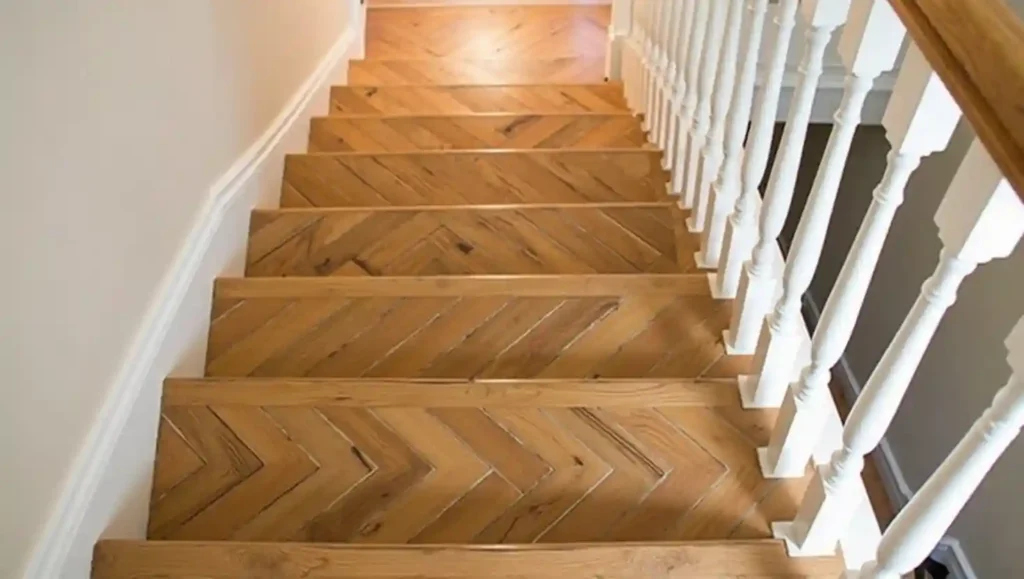
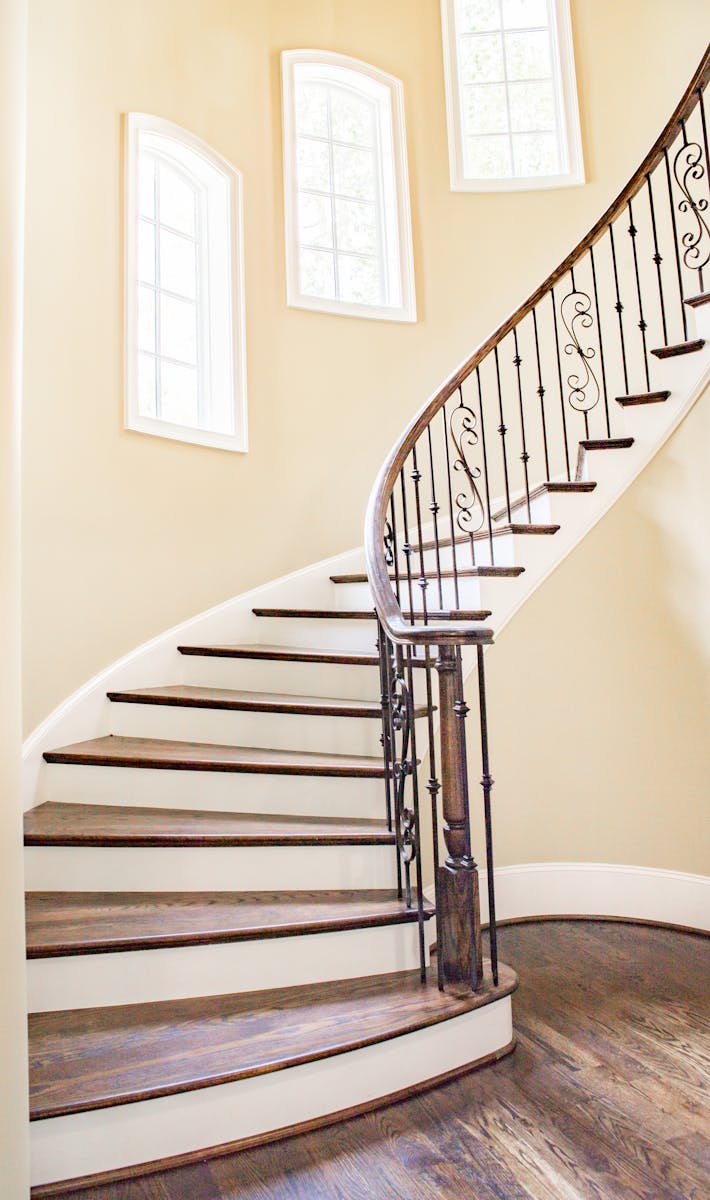
Stairs covered in herringbone hardwood are among the most photographed flooring installations on Pinterest and design platforms for good reason — the pattern, applied to stair treads, creates a visual rhythm that turns a functional architectural element into something genuinely beautiful. The zigzag geometry moves with the staircase in a way that feels intentional and dynamic, particularly on a straight run of stairs where the repeating pattern can be seen from below in a single, unbroken view.
The practical execution requires more thought than simply applying herringbone to a flat floor. Each tread is a separate piece of wood, and the herringbone pattern must be carefully planned so that it reads consistently from tread to tread as the eye travels up the staircase. On standard treads of 36 to 42 inches wide, a medium-width plank herringbone can complete two or three full pattern repeats per tread, which gives a clear reading of the design. On narrower treads, the pattern may need to be scaled down — shorter, narrower planks — to avoid having a single tread show only a fragment of the geometry.
Finish selection for stair treads is critical because stairs are among the highest-wear surfaces in any home. A commercial-grade waterborne polyurethane in satin or semi-gloss, applied in a minimum of three coats, provides the best combination of durability and appearance. The slightly higher sheen on a stair tread is also practically beneficial — it makes the edge of each tread more visible, which is a safety consideration.
For the risers — the vertical faces between treads — a painted finish in white or the wall color is the most common approach, and it creates a clean contrast with the patterned treads. A full-wood riser in matching herringbone is possible but significantly more complex and expensive to execute, and it can make the staircase feel visually heavy rather than elegant.
10. Herringbone in a Home Office or Study
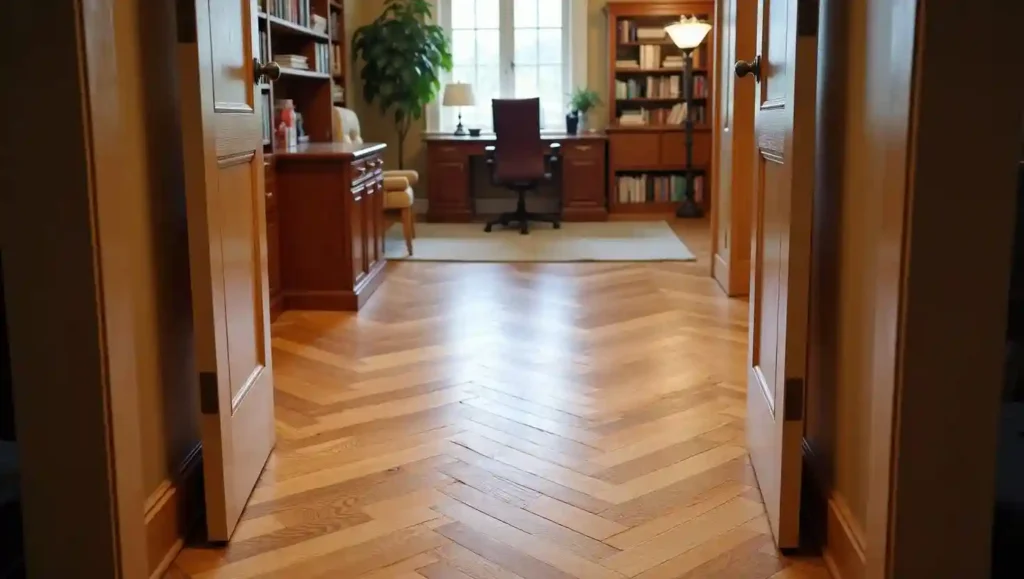
A home office with herringbone hardwood flooring sends a signal about how seriously its owner takes the space — and that signal is one of considered investment and professional intent. The pattern is historically associated with European libraries, studies, and formal offices precisely because it carries an inherent authority that plain planks do not. In a contemporary home office context, it reads as deliberate and interesting without being decorative in a distracting way.
The species and finish choice for a home office herringbone depends significantly on how the room is used and how it photographs. For video calls and virtual meetings, the floor behind the desk is often visible in the frame, and a herringbone floor in that background contributes immediately to an impression of quality and taste. In this context, a rich medium-toned oak — neither dramatically light nor very dark — photographs well and reads clearly as premium without becoming the dominant visual element in the frame.
In a dedicated library or study with built-in bookshelves, a darker herringbone in walnut or dark-stained oak is a natural partner for the weight and warmth of book-lined walls. The geometric floor grounds the room, the vertical rhythm of books covers the walls, and the combination creates the layered, considered quality that distinguishes a real study from a room with a desk in it.
A useful design detail for home offices is a herringbone floor that runs under a substantial area rug, with the edges of the herringbone visible around the rug’s perimeter. This layering technique is common in high-end design because it gives the floor its full due while also providing the acoustic softness and physical comfort of a rug underfoot at the desk. Understanding how proper underlayment for hardwood floors contributes to acoustic performance and comfort is worth considering before installation, particularly if the office is above a living space.
11. Two-Tone or Mixed-Species Herringbone
One of the more advanced herringbone ideas gaining traction in high-end residential design is the deliberate use of two wood species — or two tones of the same species — in an alternating or complementary arrangement within the herringbone pattern. The result is a floor that is genuinely custom, impossible to buy off a shelf, and visually arresting in a way that single-species herringbone, however beautiful, simply cannot achieve.
The most classic version of this approach alternates light and dark planks within the herringbone pattern — for example, natural white oak alternating with dark-stained oak. Because herringbone involves rows of parallel planks running in alternating directions, the two tones create a secondary visual effect: the pattern reads as both a zigzag and a checkerboard simultaneously, each geometry reinforcing the other. This version is formal and dramatic and works best in large, architecturally significant rooms — grand entryways, formal dining rooms, or living spaces with high ceilings and substantial crown molding.
A subtler version uses two different finishes on the same species — say, natural and lightly wire-brushed on the same white oak — to create tonal variation without dramatic contrast. This approach is quieter and reads as sophisticated rather than theatrical. In rooms where the decor itself carries significant pattern and color, this understated two-tone approach gives the floor distinction without competition.
Mixed-species herringbone — genuinely combining two different wood species — requires careful planning because different species have different hardness ratings, expansion coefficients, and responses to humidity changes. An installer experienced in mixed-species work can navigate these challenges, but it is not a project for a generalist flooring contractor. The investment in both material and labor is considerable, but the result is a floor with true one-of-a-kind quality.
12. Herringbone Hardwood with Underfloor Heating
Radiant underfloor heating and hardwood flooring have a complicated relationship — wood responds to heat and humidity changes by expanding and contracting, and a heating system that cycles between temperatures adds stress to the dimensional stability of any wood floor. Herringbone hardwood in this context is absolutely achievable, but it requires specific decisions about species, construction type, plank size, and the heating system’s operating parameters.
Engineered hardwood is the correct choice for herringbone over radiant heat. The cross-ply construction of engineered wood — thin face veneers bonded over multiple layers of plywood or HDF running in alternating grain directions — makes it significantly more dimensionally stable than solid hardwood under the temperature and humidity changes that accompany radiant systems. A quality engineered hardwood with a face veneer of at least 3mm — ideally 4 to 6mm — will provide the same visual experience as solid hardwood and the durability of a floor that can be refinished once or twice over its lifetime.
Species selection also matters. Tighter-grained species like maple and walnut are more tolerant of radiant heat than species with very open grain like red oak. Oak is still usable, but it requires a carefully managed heating system that does not allow the subfloor temperature to exceed 27 degrees Celsius (80 degrees Fahrenheit).
Plank width is an additional consideration. Narrower planks in herringbone — the 2.5 to 3.5 inch range — move less in absolute terms under humidity and temperature changes than wide planks do, which means the narrower format is somewhat more forgiving over radiant heat. For anyone weighing these options, understanding the specific interaction between hardwood flooring and underfloor heating systems before installation is essential — the operating temperature range of the system needs to be confirmed with your flooring installer before any material is ordered.
13. Herringbone Flooring in a Bathroom or Ensuite
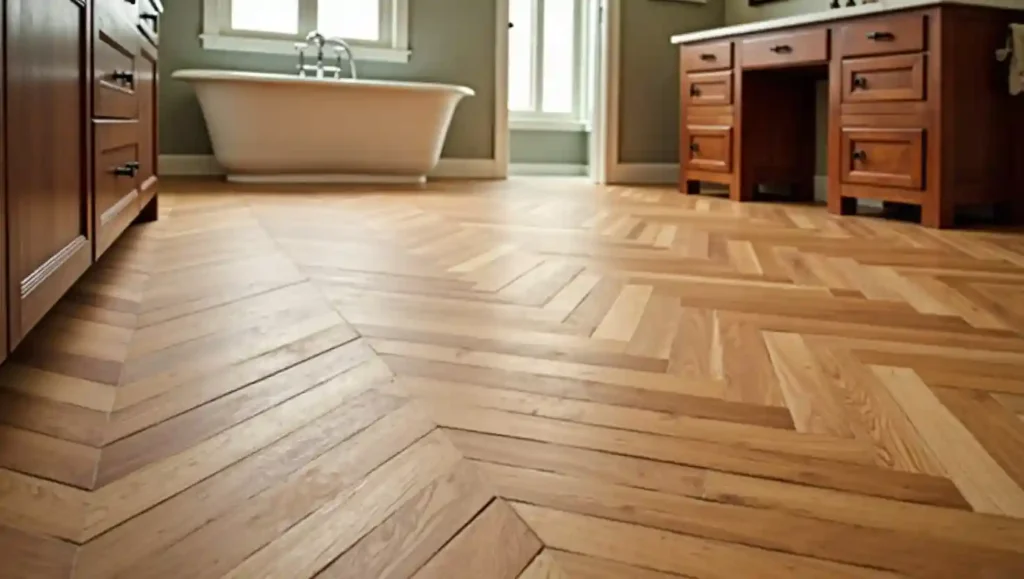
Hardwood in bathrooms is a decision that divides designers and homeowners, and the debate is legitimate. Solid hardwood in a bathroom exposed to significant daily moisture — steam from a shower, wet feet on the floor, cleaning with wet mops — is genuinely risky and generally inadvisable. But the more nuanced reality is that a carefully selected and properly finished hardwood or engineered hardwood, in a bathroom that is well-ventilated and not excessively humid, can be beautiful and durable for many years.
For a herringbone hardwood bathroom floor, the right approach involves three key decisions. First, use engineered hardwood rather than solid — its dimensional stability under humidity fluctuations is dramatically better. Second, choose a species known for its density — teak is the historical reference point for waterproof flooring applications due to its natural oil content, which provides inherent moisture resistance. Third, the finish must be applied meticulously — a high-quality waterborne polyurethane in multiple coats, with particular attention to the seams between planks where moisture is most likely to penetrate.
Teak herringbone in a bathroom — particularly in a luxurious ensuite with a freestanding tub, white marble surfaces, and warm brass fixtures — is among the most beautiful flooring combinations in residential design. The golden-brown of teak, the herringbone geometry, and the formal bathroom elements create a space that reads as unambiguously high-end. For those specifically interested in teak for water-exposed settings, the properties that make teak flooring water-resistant are worth understanding before making this investment.
In practice, small bathrooms are well suited to narrower herringbone planks — the tighter pattern can make a small space feel larger through its diagonal energy, in the same way diagonal tile layouts visually expand compact rooms.
14. Herringbone Hardwood in an Open-Plan Kitchen-Dining Transition
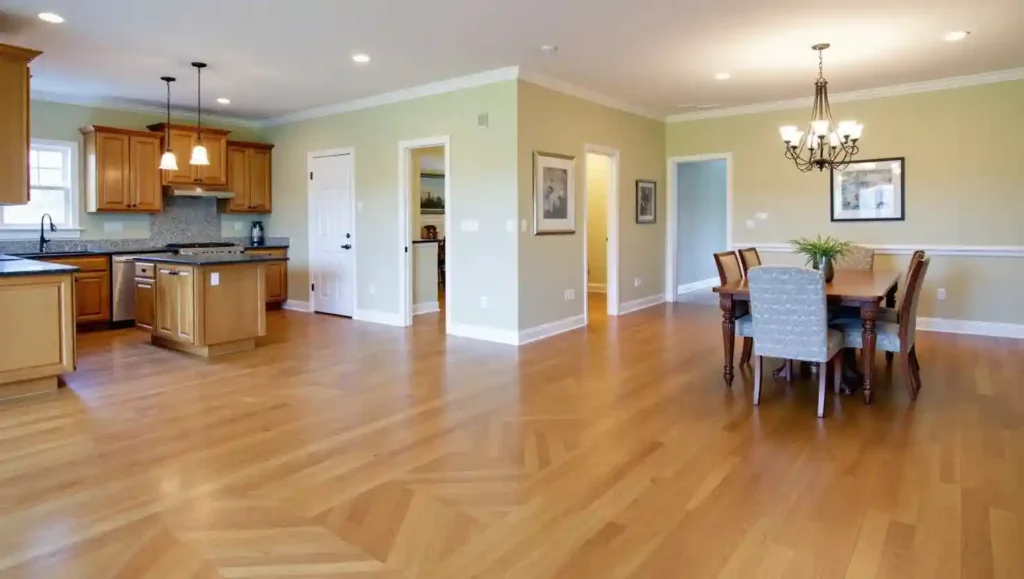
One of the most effective uses of herringbone hardwood is at the transition between two open-plan zones — particularly the kitchen and dining area in a combined kitchen-dining layout. Rather than using a single floor material that reads as uniform across both spaces, a herringbone section in the dining area that transitions to straight-lay planks in the kitchen, or vice versa, creates zone definition without walls or visual barriers.
This zone-defining approach is a technique used extensively in high-end residential interiors and open-plan commercial spaces. The principle is that the herringbone pattern, by virtue of its visual complexity and directionality, reads as a distinct zone. When you move from a straight-lay floor into a herringbone floor — even when both are in the same species and finish — you instinctively sense that you have moved from one area to another. It is subtler than a rug or a different material, but it is remarkably effective at creating what designers call spatial differentiation without physical separation.
The execution requires planning the transition point carefully so that the change in pattern aligns with a natural architectural boundary — the edge of a kitchen island, the line where ceiling height changes, or the boundary between different cabinetry zones. A threshold piece or a change in grout line direction are both approaches used to mark the transition cleanly. The two patterns can also be separated by a border strip, a single row of contrasting-finish planks, or simply butted together where the pattern change is dramatic enough to be self-evident.
For a kitchen-dining room that sees significant daily use, material durability is non-negotiable. Red oak or maple — both above 1,200 on the Janka hardness scale — are the species to consider for any floor that spans a working kitchen and a dining room used for family meals. The best hardwood flooring options for high-traffic areas can help narrow down species choices that will hold up in this demanding environment.
15. Wide Border Framed Herringbone — The European Formal Room
The formal room herringbone with a wide, contrasting border is the apex expression of this flooring pattern — the version you find in historic European interiors, restored Georgian townhouses, and the kind of high-end residential projects that appear in architectural publications rather than real estate listings. It is a floor that is unambiguously intentional, deeply referential to the long history of European craftsmanship, and visually complete in a way that requires nothing else at floor level.
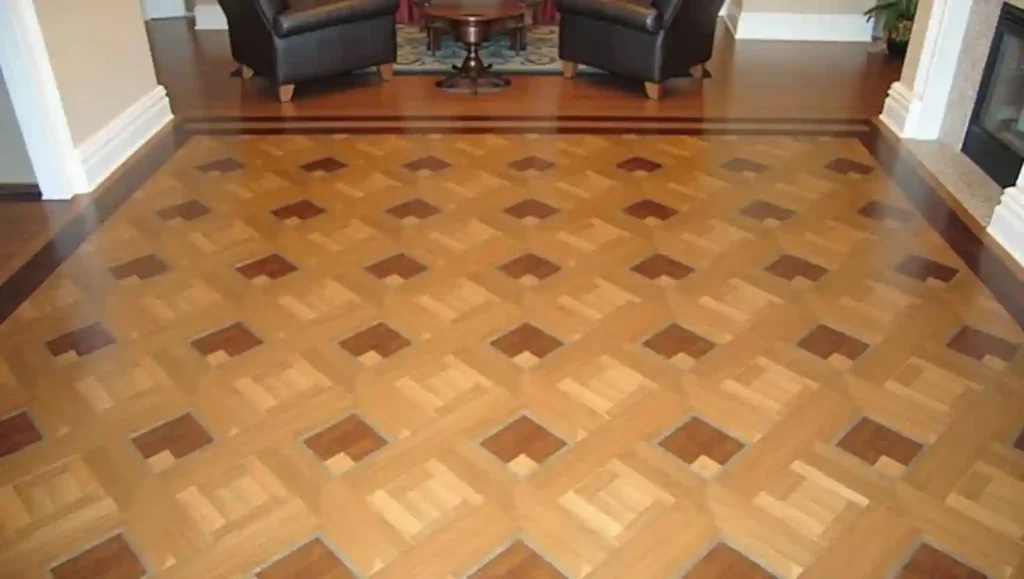
The concept is straightforward: a herringbone field runs in the center of the room, and a border of straight planks — typically one to three planks wide, often in a contrasting species or stain — frames the field on all four sides. In the most elaborate versions, an additional inset strip of contrasting species separates the herringbone field from the border, creating three distinct zones: the central herringbone, a thin accent strip, and the wider perimeter border. This three-element composition mirrors the classical architectural treatment of fields, frames, and surrounds found in ceiling plasterwork, wall paneling, and formal tile layouts.
In terms of material, the border and herringbone field are often in the same species but different finishes or stains — natural oak herringbone with a dark-stained oak border, for example — or in genuinely different species for maximum contrast, such as white oak herringbone with a walnut border. Either approach creates visual hierarchy: the eye naturally reads the herringbone as the primary element and the border as its frame, which reinforces the room’s center and gives the layout a sense of completion.
This treatment is most at home in formal living rooms, dining rooms, ballrooms, and other spaces with architectural detail that warrants the formal vocabulary of a bordered floor. In a room with crown molding, wainscoting, paneled doors, and a fireplace with a formal surround, a wide-border framed herringbone pulls every element together into a coherent interior composition. It is a floor that improves the home’s resale value in the measurable, documented way that high-end hardwood installations do — and it does so while also simply being beautiful. Those thinking through the long-term financial picture of hardwood installation decisions may want to review how hardwood flooring installation costs and the value they generate compare to other flooring investments.
Choosing the Right Species for Your Herringbone Project
The fifteen ideas above draw from several wood species, and the decision about which species is right for your specific project is arguably more important than any other choice in a herringbone installation. The pattern is fixed; the species, finish, and plank dimensions are where your floor becomes uniquely yours.
White oak is the most versatile choice — neutral enough to work with virtually any interior direction, hard enough (Janka 1,290) for high-traffic areas, and able to accept stains across a wide tonal range. Red oak is slightly more amber-warm and similarly hard, making it the right choice where a traditional, warm American hardwood character is preferred. Walnut is the luxury option for lower-traffic areas — its grain and color are uniquely beautiful but its softer hardness rating means it requires more careful use in high-traffic zones. Maple is the hard, clean-surfaced option for contemporary spaces where a subtle grain and smooth, refined finish are the goal. Hickory is the choice where dramatic natural variation — wide streaks of light and dark — is a feature rather than an inconsistency to be managed.
The distinction between solid and engineered hardwood in herringbone contexts is also worth understanding clearly. Solid hardwood herringbone is the historical standard and still the preference for above-grade, stable environments. Engineered hardwood opens up herringbone for use over concrete subfloors, over radiant heat, and in environments with moderate humidity fluctuation that would rule out solid wood. The visual result is identical — the face veneer of engineered hardwood is the same species, same grade, and same finish as a comparable solid plank. The structural difference is internal and invisible once the floor is installed.
For anyone planning a herringbone project from scratch, a professional installation assessment is essential. The pattern requires more precise subfloor preparation than a straight-lay installation — any variation in subfloor flatness is amplified by herringbone’s geometry, and slight irregularities that a straight-lay floor might absorb will produce visibly misaligned planks in herringbone. Budget additional labor for subfloor leveling and layout planning, and work with an installer who can show you previous herringbone projects they have completed. The hardwood flooring installation process has specific steps for pattern layout that an experienced installer will navigate fluently and a generalist may not. For more context on what different hardwood species look like and how they compare in residential applications, reviewing the different types of hardwood flooring available provides a useful species overview before you commit to material selection.
Getting the Scale Right: Plank Size and Room Proportion
The single most common mistake in herringbone hardwood installations is a mismatch between plank size and room scale. A room of 200 square feet with 5-inch-wide planks in herringbone will look busy and cramped — the large planks mean fewer pattern repeats per square foot, and in a small room this reads as incomplete geometry rather than bold design. Conversely, a 600-square-foot open-plan space with 2-inch-wide narrow planks will look like a mosaic rather than a floor — the pattern is technically correct but visually lost in the room’s scale.
The rule of thumb that most experienced installers and designers apply is proportional: narrower planks (under 3.5 inches) for rooms under 300 square feet or rooms with lower ceilings, medium planks (3.5 to 4.5 inches) for standard residential rooms from 300 to 600 square feet, and wide planks (4.5 inches and above) for large rooms with ceiling heights above 9 feet. This is a starting framework rather than a rigid rule — the height and complexity of ceiling treatments, the amount of natural light, and the weight of the furniture all modify how the floor reads at any given plank scale.
The orientation of the herringbone pattern within the room is the final layout decision. Herringbone can be oriented so the V-shapes point toward the main entrance (the most common and traditional orientation), perpendicular to the main entrance, or at a 45-degree angle to the room’s walls. The 45-degree orientation is the most dynamic and contemporary; it makes the zigzag appear to travel diagonally across the room, which can visually widen a long, narrow room. It is also the most demanding installation technically, requiring that the layout reference lines be established at 45 degrees to all four walls before the first plank is placed. For those considering hardwood flooring beyond the pattern discussion, understanding the full range of hardwood flooring grades helps clarify what the wood will actually look like in terms of grain consistency, knots, and natural variation once it arrives on the job site.
Final Thoughts
Herringbone hardwood flooring is one of those rare design choices that is simultaneously timeless and current — a pattern with centuries of use behind it that nevertheless reads as fresh and intentional in the present moment. The fifteen ideas here span the full range of how this pattern can be expressed: from the quiet sophistication of white oak in a neutral living room to the formal grandeur of a wide-border framed installation in a Georgian-style dining room, with stops along the way for contemporary urban apartments, farmhouse dining rooms, luxury bathrooms, and the practical engineering of kitchens and radiant heat systems.
What they all share is the recognition that a floor is not just a surface — it is an architectural element with real influence over how a room is experienced. Herringbone hardwood takes that influence seriously. The pattern gives the floor a visual presence that plain plank installation does not, and the species and finish choices give you enough flexibility to calibrate that presence for nearly any interior direction you are working toward.
The practical path from inspiration to installation involves working with professionals who understand both the design intent and the technical demands of herringbone layout, subfloor preparation, and pattern planning. The investment — in material, labor, and planning — is real. So is the result.
James Miller is a seasoned flooring contractor with years of hands-on experience transforming homes and businesses with high-quality flooring solutions. As the owner of Flooring Contractors San Diego, James specializes in everything from hardwood and laminate to carpet and vinyl installations. Known for his craftsmanship and attention to detail, he takes pride in helping clients choose the right flooring that balances beauty, durability, and budget. When he’s not on the job, James enjoys sharing his expertise through articles and guides that make flooring projects easier for homeowners.
Most people shopping for vinyl plank flooring spend hours comparing wear layers, core types, and color options. Almost nobody spends the same time on underlayment. That is a mistake — and it is one that produces floors that sound hollow, transmit every footstep to the room below, and fail HOA acoustic requirements that were posted…
High-gloss and matte laminate finishes are the two surface sheens applied to the wear layer of laminate flooring that determine how the floor reflects light, conceals wear, and complements interior design. A high-gloss finish produces a mirror-like, reflective surface measured at a high gloss-unit level, while a matte finish produces a low-sheen, light-absorbing surface that…
Most homeowners spend weeks choosing the right hardwood species, finish, and installation method. They rarely spend more than five minutes reading the warranty. That is a problem, because the warranty document sitting at the bottom of your purchase folder is the only thing standing between you and a four-figure out-of-pocket repair bill when something goes…
Most carpet conversations collapse into a single question: which fiber lasts longest? But that framing misses the actual decision. Triexta and nylon are built around different molecular priorities, and the one that performs better in your home depends entirely on what “perform” means to your household. A family with two dogs and a toddler has…
The cleaning product sitting under your sink right now might be slowly destroying your hardwood floors. Not dramatically, not overnight — but over months of repeated use, the wrong formula strips finish, dulls grain, and forces you into an early refinishing cycle that costs far more than the bottle of cleaner ever saved you. This…
Most flooring failures in basements do not start with the flooring. They start with what is underneath it, and with the assumption that because something is labeled waterproof, the work is already done. Vinyl flooring is genuinely the most capable category for below-grade installations. That part is true. But the difference between a basement floor…