Maple is a good hardwood floor for most residential applications. It is the second-hardest domestic hardwood in North America, behind only hickory, and it sits at a Janka hardness rating of approximately 1,450. That number is not just a statistic — it is the reason bowling alleys and basketball courts are built from maple, and it is the clearest indication of what the material does under sustained, punishing load. For a household floor, that translates to resistance against dropped objects, rolling furniture, high heels, and years of foot traffic without visible denting.
But hardness is not the full answer to whether maple is a good floor for your specific project. The material’s behavior under humidity, its difficulty to stain consistently, and its relationship with natural light all determine whether it performs the way you expect it to. This article addresses each of those dimensions so you can make a decision based on how maple actually behaves — not just on the fact that it is hard.
What Type of Maple Is Used for Hardwood Flooring?
Not all maple species are appropriate for flooring. The maple family includes both hard maple and soft maple, and the distinction matters significantly before you purchase anything.
Hard maple — also called sugar maple or rock maple, the same tree from which maple syrup is harvested — is the species used for flooring applications that need real durability. It carries the 1,450 Janka rating that makes it suitable for high-traffic environments. Soft maple, which includes species like silver maple and red maple, has a Janka rating closer to 950. That is still a serviceable number for residential use, but it does not carry the performance reputation of hard maple. Soft maple is more commonly used in furniture, decorative woodwork, and cabinetry.
When a flooring retailer or contractor discusses maple flooring, they are typically referring to hard maple unless stated otherwise. If you are comparing quotes or products, confirm which species you are being offered, because the performance difference between the two is not trivial — particularly in a hallway or living room with constant traffic.
Maple Hardwood Floor Grades and What They Mean
Maple is graded based on the appearance of the wood face, not its structural quality. All grades are durable; the distinction is cosmetic.
First and Select grade maple shows minimal color variation, virtually no knots, and a consistent pale cream or light blonde tone. This is the grade most commonly pictured in showrooms and the one associated with that clean, uniform look. It costs more because more of each board is usable without defects.
Number 1 Common and Number 2 Common grades allow increasing levels of color variation, mineral streaking, and small knot holes. These grades are not inferior in durability — a Number 2 Common maple board is just as hard and just as resistant to denting as a Select board. For homeowners who prefer a floor with more character, or who are working with a tighter budget, lower grades of maple can reduce material costs without any compromise to performance.
The grade you choose affects the final look more than anything else. If uniformity matters to your design intent, budget for Select or higher. If you value character marks and natural variation, the lower grades can actually produce a more interesting result.
The Durability Case for Maple Floors
The reason maple continues to be specified for flooring — in gyms, in commercial corridors, and in busy family homes — is that its hardness is not theoretical. It is tested under real conditions daily in facilities that cannot afford floor damage.
Maple resists denting extremely well. A standard red oak floor has a Janka rating of 1,290. Maple’s 1,450 rating means a meaningfully higher threshold before a dent registers. For a home with children, pets, or frequent furniture rearranging, that margin matters over ten or fifteen years of use.
The caveat is scratching. While maple resists dents effectively, its smooth, tight grain surface shows surface scratches more readily than a species with pronounced grain patterns. Oak, for instance, has an open grain texture that visually obscures fine scratches because the grain lines themselves interrupt the continuity of any mark. Maple’s smooth surface has no such camouflage. A scratch on maple is more visible on maple than the same scratch would appear on hickory or white oak.
This is not a reason to avoid maple. It is a reason to use felt pads under furniture legs, to sweep regularly so grit and sand particles do not act as abrasives underfoot, and to consider finish selection carefully. A matte or satin finish shows scratches less than a high-gloss finish, which acts almost like a mirror and highlights every imperfection. You can read more about how finish type affects appearance and maintenance in our comparison of high-gloss versus matte hardwood floor finishes.
Hard Maple vs. Soft Maple: The Numbers Side by Side
To give this context, here is how maple fits within the wider range of domestic hardwoods:
Hickory leads domestic species at around 1,820 Janka. Hard maple follows at approximately 1,450. White oak sits at 1,360, red oak at 1,290, yellow birch at 1,260, and American cherry at 950. Soft maple, at roughly 950, lands at the bottom of what is typically considered durable enough for flooring.
What this means practically: maple gives you more durability than oak without the additional cost and rarity of hickory. For most households, that positions hard maple as an excellent middle point between accessibility and performance.
Maple’s Aesthetic Character: What It Looks Like and Why It Matters
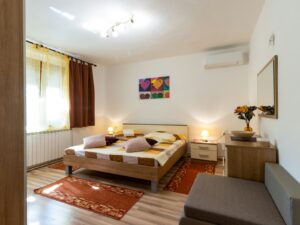
Maple floors have a light, creamy color range — from pale white to light tan, sometimes with faint warm or pinkish undertones depending on the board. The grain is fine and relatively uniform, without the open, dramatic patterns found in oak or the flowing character of walnut. This subtlety is the whole point for certain design directions, and it is a genuine limitation for others.
For contemporary interiors, minimalist spaces, or rooms where the flooring is meant to serve as a quiet backdrop for furniture and decor, maple is nearly ideal. Its neutral, light tone makes rooms feel larger and brighter. It works with almost every paint color and reflects natural light well, which matters significantly in rooms with limited window exposure.
For interiors where the floor itself is meant to be a statement — where dramatic grain, rich color, or heavy texture is the intention — maple will feel plain. Walnut delivers grain character and deep color. Hickory provides bold, wild variation. Oak sits between the two in terms of expressiveness. If you want a floor that announces itself visually, maple is not that floor.
One additional aesthetic consideration is sunlight behavior. Maple tends to yellow slightly and lose some of its initial brightness under prolonged UV exposure. A window bay that floods one section of the floor with direct afternoon light can create a two-tone effect over time as the exposed boards shift in tone faster than the shaded areas. Using UV-protective window film or window treatments mitigates this, but it is worth knowing before installation.
Why Staining Maple Is Genuinely Difficult
This is the area where maple causes the most frustration, and understanding why it happens will save you from a costly mistake.
Maple has a very tight, closed grain structure. That density, which is responsible for its hardness, also makes it less porous than most other hardwoods. When stain is applied to an open-grain species like oak, it absorbs relatively evenly because the grain structure distributes the pigment consistently. On maple, absorption is uneven. Some areas pull stain more aggressively than others, producing a blotchy, inconsistent result — even when the application technique is correct.
Dark stains are the most problematic. Attempting to achieve a rich espresso or dark walnut color on maple frequently results in a patchy appearance that no amount of additional coats will fully correct, because the problem is in the absorption, not the coverage. The screen marks left during sanding also become visible through dark stain in a way they typically do not on other species.
The practical guidance from flooring professionals is consistent: leave maple in its natural state or apply a clear coat. If you want a slightly warmer tone, light golden or honey stains can be applied by an experienced finisher using the water-popping technique — dampening the wood before staining to open the grain slightly and encourage more even absorption. This helps, but it requires professional execution.
If your design requires a specific stained finish, particularly anything darker than a light golden tone, maple is likely the wrong species for your project. You would be better served by oak, ash, or pine, all of which accept stain with far less difficulty. If you are comparing maple against a stainable alternative, our page on birch versus maple flooring covers how birch handles stain by comparison and where each species has the edge.
How Humidity Affects Maple Hardwood Floors
Maple is more sensitive to humidity fluctuations than most other domestic hardwoods. This is not a disqualifying trait, but it is a condition that requires consistent management.
When indoor humidity drops significantly — as it commonly does in winter when heating systems dry the air — maple boards can shrink, creating gaps between planks. When humidity spikes in summer without air conditioning or a dehumidifier, maple can expand, cup, or even split in extreme cases. The wider the board, the more pronounced this movement becomes, which is why wide-plank maple installations in humid climates require particularly careful humidity control.
The target range is 35% to 55% relative humidity maintained year-round. A quality hygrometer costs very little and gives you the data you need to intervene before problems develop. Running a humidifier in dry winter months and a dehumidifier in humid summer months keeps the floor within acceptable dimensional range.
Before installation, maple should be acclimated in the installation environment for 48 to 72 hours with boards out of their packaging and stacked to allow air circulation. This step is non-negotiable — skipping it means the wood will continue adjusting after installation, potentially producing gaps or buckling. To understand what happens to hardwood when this process is mishandled or skipped, see our article on how humidity affects hardwood flooring across species.
Solid Maple vs. Engineered Maple: Which Should You Choose?
The choice between solid and engineered maple determines where you can install the floor, how it responds to moisture, and how many times it can be refinished over its lifespan.
Solid maple is a single piece of wood from top to bottom, typically 3/4 inch thick. It can be sanded and refinished four to six times over its lifetime, giving it a potential lifespan well in excess of 100 years in a well-maintained home. It must be installed above grade — meaning not in a basement — and requires a wood subfloor for nail-down installation. Its sensitivity to humidity is at its highest in solid form.
Engineered maple has a real maple veneer on top bonded to a layered plywood or composite core. The cross-ply construction resists humidity-related movement far better than solid wood because the layers counteract each other’s expansion and contraction. Engineered maple can be installed below grade, on concrete, and over radiant heating systems. The tradeoff is refinishing potential: depending on the veneer thickness, engineered maple can typically be sanded and refinished zero to two times, after which the veneer layer is exhausted.
For most residential projects in climates with seasonal humidity variation, and particularly for any installation on a concrete subfloor, engineered maple is the more technically appropriate choice. For stable environments and above-grade installations where longevity over multiple refinishing cycles matters, solid maple has the clear advantage. If your installation involves a concrete subfloor and you are weighing your hardwood options broadly, the considerations in our guide to installing solid wood flooring over concrete are directly relevant.
Where Maple Floors Perform Well and Where They Do Not
Maple’s hardness makes it genuinely well-suited to certain rooms and contexts, and its moisture sensitivity and scratch visibility make it poorly suited to others.
Living rooms and hallways are the strongest use cases. These are the highest-traffic areas in most homes, and maple’s dent resistance works exactly as intended here. The light tone is also practical in hallways with limited natural light, as it keeps the space feeling open rather than closed in.
Bedrooms are a reasonable choice for maple, though the durability argument is less compelling given the lower traffic. Maple works well aesthetically in bedrooms for the same reasons it works in living areas — the neutral tone and clean grain do not fight with bedding, furniture, or paint colors.
Kitchens are feasible but require more management. Promptly cleaning spills is essential because standing moisture will damage any hardwood. Using floor mats at the sink and cooking area reduces both moisture exposure and the fine scratches that kitchen foot traffic accumulates over time. Maple’s hardness is actually an asset in a kitchen; the challenge is moisture, not durability.
Bathrooms are not appropriate for any solid hardwood, including maple. The moisture environment is simply beyond what the material is designed to tolerate without significant engineering controls, and the risk of warping and damage is high. Basements present the same problem for solid maple; if you need hardwood in a below-grade or high-moisture environment, engineered maple is the only version of the material suitable for that application.
Maple vs. Oak: Which Is Actually Better?
This is the comparison most homeowners face because oak and maple are the two most widely available domestic hardwoods in the United States. The honest answer is that neither is universally better — they make different tradeoffs.
Maple is harder. Hard maple’s 1,450 Janka rating beats white oak’s 1,360 and red oak’s 1,290. If pure dent resistance is the priority, maple wins that comparison.
Oak accepts stain far more easily. Its open grain absorbs pigment evenly and consistently, which means you can achieve essentially any color you want on oak with predictable results. On maple, you are largely limited to natural and light tones or you accept the risk of blotchy staining.
Oak’s grain conceals scratches better. The visible grain pattern in oak visually interrupts fine surface scratches. Maple’s smooth, uniform surface makes scratches more apparent.
White oak also has better moisture resistance than maple, making it a better candidate for kitchens and more humid environments. If you are choosing between the two specifically for a space with occasional moisture exposure, white oak has the advantage. For a detailed species-by-species breakdown, our article on red oak versus white oak addresses the differences between the two oak varieties that are most commonly available in flooring.
The practical summary: maple is the better choice when you want the hardest possible domestic wood and a light, clean aesthetic that you intend to leave natural. Oak is the better choice when you want staining flexibility, grain character, and a material with proven forgiveness in environments with more moisture variability.
Maple Hardwood Floor Costs
Maple is competitively priced among domestic hardwoods. Material costs for solid maple typically run between $3.50 and $9.00 per square foot depending on grade, thickness, and whether the boards are prefinished. Installed costs — including labor, finishing, and materials — commonly range from $7.00 to $17.00 per square foot for solid maple and $5.50 to $12.50 per square foot for engineered maple.
For comparison, exotic hardwoods like teak and mahogany sit considerably higher on the cost spectrum. Among domestic species, maple is roughly comparable to ash and cherry, and slightly less expensive than high-grade white oak. Lower grades of maple can reduce material costs without compromising durability, making it one of the more accessible high-performance flooring options available.
Prefinished maple is generally easier to price and faster to install, but limits your finish choice to what the manufacturer offers. Site-finished maple gives you full control over the final appearance but adds labor cost and drying time. For most homeowners using maple in its natural or lightly treated state, prefinished boards from a reputable manufacturer are the more practical choice. The comprehensive hardwood flooring cost guide covers how to think about the full cost breakdown across species and installation methods.
Installation Considerations Specific to Maple
Maple’s hardness creates specific installation challenges that distinguish it from easier-to-work species like pine or cherry.
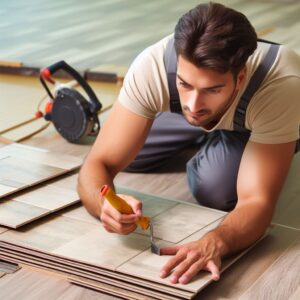
The density that makes maple resistant to denting also makes it more difficult to cut and fasten. Carbide-tipped saw blades are necessary — standard blades dull quickly on maple and can produce burn marks on the cut edge. A pneumatic flooring nailer is the standard tool for nail-down installation; hand nailing maple is slow and inconsistent. Pre-drilling is recommended when face-nailing near edges to prevent splitting.
Sanding maple requires careful abrasive selection and technique. The tight grain can produce swirl marks and screen marks that become clearly visible under any stain — even light ones. Professional sanding with the correct progression of grits and proper technique is strongly recommended. This is not a floor where DIY sanding typically produces a satisfactory result unless the installer has specific experience with hard maple.
Acclimation is essential and must not be rushed. The wood needs to reach equilibrium with the temperature and humidity of the installation space before any boards are fastened down. Installers who skip or shorten this step are setting the floor up for movement problems after installation.
For homeowners considering the broader hardwood installation process and what subfloor conditions need to be in place before any species goes down, the guidance on how to prepare a subfloor for wood flooring is a practical starting point.
Maintaining a Maple Hardwood Floor
Maple’s maintenance requirements are straightforward but need to be followed consistently because the material’s light color and smooth surface are unforgiving of neglect.
Dry cleaning is the foundation. A microfiber dust mop used daily in high-traffic areas removes the grit and sand particles that act as abrasives on the finish surface. A broom pushes debris rather than collecting it and is less effective. Vacuuming with a soft-brush attachment works well on maple because it lifts particles rather than dragging them.
Damp mopping with a pH-neutral, wood-safe cleaner is appropriate for routine cleaning. The mop should be well-wrung — not wet — to avoid introducing standing moisture to the wood surface. Steam mops, wet mops, vinegar solutions, and oil soap-based cleaners should never be used on maple floors. Steam introduces direct moisture and heat, and oil soap leaves a residue that dulls the finish over time and makes future refinishing more difficult.
Felt pads under all furniture legs are essential on maple because of how visibly scratches register on the smooth surface. Area rugs in high-traffic zones protect the finish in the areas that receive the most wear. Keeping humidity between 35% and 55% year-round prevents the dimensional movement that leads to gaps in dry conditions and cupping in humid conditions.
Refinishing solid maple extends its lifespan significantly. A well-maintained maple floor can be sanded back and recoated when the finish begins to show wear, restoring it to near-original condition. Given that solid maple can withstand multiple refinishing cycles over its life, the total cost of ownership over several decades is lower than many alternatives that cannot be refinished at all.
Is Maple the Right Hardwood for You?
Maple is a good hardwood floor when the conditions of its use align with what the material actually delivers. If you want the hardest domestic hardwood available at a mid-range price, a light and neutral aesthetic that works in contemporary spaces, and a floor you plan to leave in a natural or lightly finished state, maple is an excellent choice. Its performance record in commercial and institutional environments — gyms, courts, concert halls — is not marketing language. It reflects a genuine material property that translates directly to residential durability.
If you want a floor you can stain to a specific dark or rich color, or if your installation environment has persistent humidity challenges without reliable climate control, maple is likely not the best fit. In those cases, white oak or ash will give you more flexibility on color, and engineered oak specifically will manage moisture variability better than either maple variant.
For homeowners who sit squarely in the right use case — stable indoor climate, design intent that favors light and clean aesthetics, high-traffic rooms, and long-term ownership with refinishing as part of the plan — maple remains one of the most defensible hardwood flooring decisions you can make.
If you are still comparing options across species before committing, our hardwood flooring buying guide covers the full decision framework from species selection through installation and long-term care.