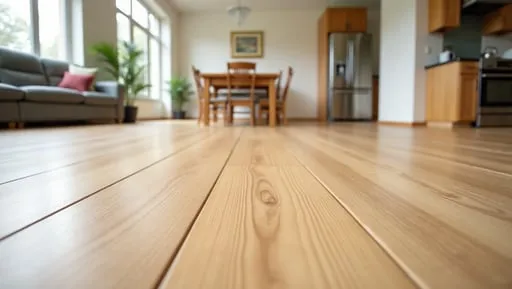
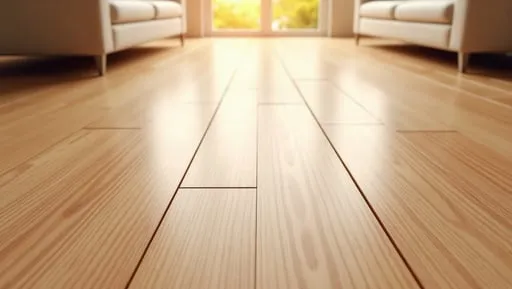
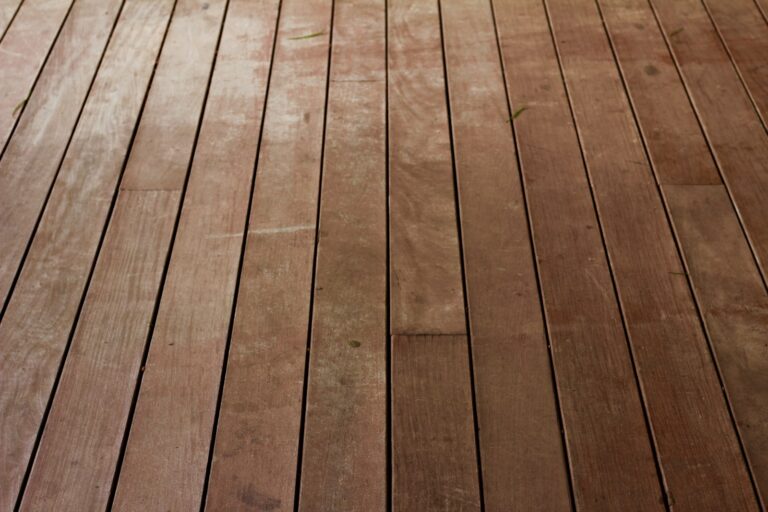
The texture matters as much as the color here. A smooth, high-sheen surface on a light oak plank looks dated almost immediately and shows every footprint and dust particle. A matte or satin finish with embossed grain texture, on the other hand, reads as genuinely contemporary and hides the evidence of daily living far more graciously. For plank thickness, 10mm to 12mm gives the floor the underfoot feel that makes it seem solid rather than like a surface you are floating on top of.
2. Herringbone Pattern in a Hallway or Entryway
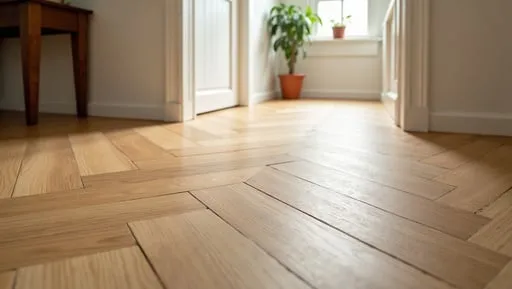
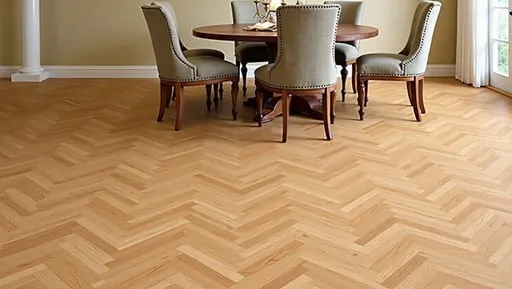
Herringbone is experiencing an extended moment, and it has earned its popularity honestly. The pattern, where each rectangular plank is set at a 90-degree angle to its neighbor in an interlocking zigzag, adds genuine visual complexity to a space without requiring any unusual materials. In a hallway or entryway, where there often is not much else to carry the design, a herringbone floor makes the space feel considered and intentional.
What has made herringbone accessible in recent years is that manufacturers now produce laminate planks pre-cut for the pattern with click-lock systems. You no longer need to buy standard planks and make dozens of angled cuts yourself. The installation is still more involved than a straight-lay floor, but the difficulty gap has closed considerably. The planks tend to be shorter than standard laminate boards, which is by design. The shorter format creates a tighter, more defined weave in the final pattern. Herringbone laminate flooring ideas span a wide range, from warm blonde oak to cool grey and even darker walnut tones depending on what mood you are trying to create.
For color selection in a herringbone layout, mid-tones tend to do the most work. Very light herringbone can wash out and lose the pattern’s definition unless the lighting is strong. Very dark herringbone in a small hallway can feel heavy. A natural greige or warm medium-brown strikes the balance where the geometry reads clearly without overwhelming the space. In dining rooms or larger entryways, the pattern pairs especially well with whitewashed walls, which soften its formality while letting the floor remain the focal point.
3. Dark Laminate in a Living Room with High Ceilings
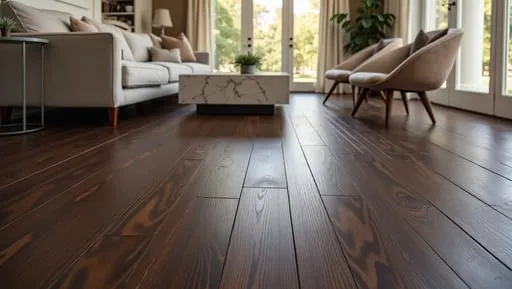
Dark laminate, in tones that run from deep espresso to rich walnut to charcoal-tinged grey, gets unfairly dismissed as a design choice that shows dust. That concern is legitimate in the wrong context, which is a small room with low ceilings and limited natural light. In the right context, specifically a living room with generous ceiling height, large windows, and lighter walls, dark laminate creates a grounding quality that expensive rugs and statement furniture cannot fully replicate on their own.
The floor becomes an anchor. Light-colored sofas and natural wood furniture read differently when they sit on a dark surface, developing a contrast that feels deliberate and layered rather than accidental. Dark floors also have a tendency to make walls look taller, which is a useful optical effect in rooms where the architecture is already generous. Dark laminate flooring ideas cover everything from near-black ebony-finish boards to deep chestnut tones that retain warmth while still reading as distinctly moody.
The practical objection about showing dust is manageable with the right texture. A brushed or wire-brushed surface finish scatters light more than a flat surface, which means it disguises fine dust and minor scuffs instead of broadcasting them. Avoiding a high-gloss finish on dark laminate is essentially non-negotiable for anyone who does not want to be sweeping every day. High-gloss versus matte laminate finishes is a decision that affects maintenance as much as aesthetics, and on dark tones the matte option is almost always the smarter call.
4. Grey Laminate in a Contemporary Bedroom
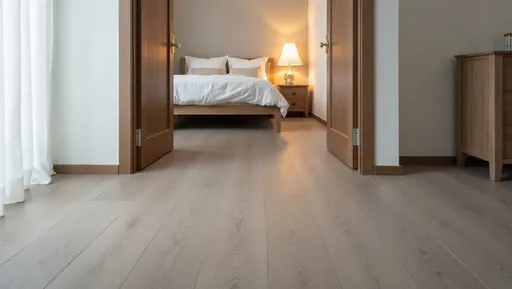
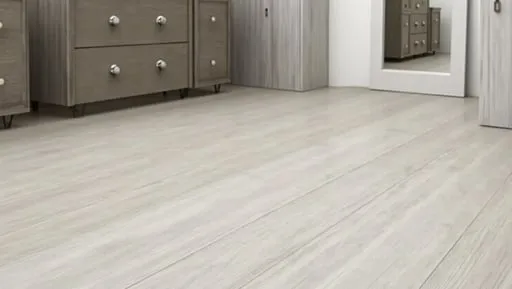
Grey laminate has been a dominant force in interior design for the better part of a decade, and while the coldest, most blue-tinged versions are beginning to cycle out, the more nuanced greige and warm grey tones are very much still relevant. In a bedroom context, grey laminate functions as a genuinely neutral base that reads as cooler and more calming than brown tones while being more forgiving and less demanding than white.
The key distinction in 2026 grey laminate is the undertone. Grey with a clearly blue or cool base can feel clinical in a bedroom, especially when combined with grey walls. Grey with a brown or beige undertone, sometimes called greige, softens the effect considerably and plays well with the organic textures, linen bedding, woven throws, and natural wood nightstands, that define the organic modern aesthetic that many bedrooms are moving toward. Grey laminate flooring ideas span everything from barely-there silver-ash tones to deeper slate shades that bring real drama to a master bedroom.
For bedroom installations, the acoustic experience matters more than most people account for during the selection process. Laminate thickness directly affects how the floor sounds underfoot, and in a bedroom where foot traffic at night needs to be quiet, 12mm laminate over a good quality foam underlay produces a noticeably different experience than 7mm or 8mm over a thin underlayment. This is worth building into the budget rather than economizing on.
5. Light Wood Laminate in a Small Kitchen
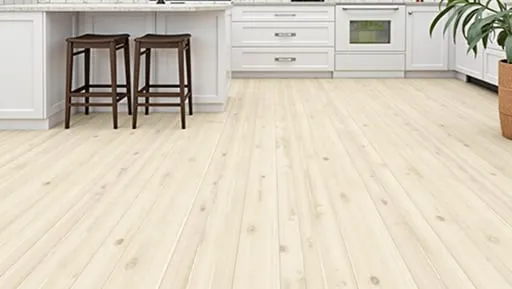
Kitchens present a specific set of requirements for flooring: resistance to spills, resilience under heavy use, a surface that can handle regular mopping without warping, and ideally a tone that reflects light rather than absorbs it. Light wood laminate in the kitchen checks most of those boxes, particularly in smaller kitchens where every design choice either adds or subtracts from the perception of space.
The concern most people raise about laminate in kitchens is moisture. That concern is legitimate for standard laminate construction, but the current generation of water-resistant and waterproof laminate products changes the calculation significantly. Products with waterproof cores and sealed surfaces are now specifically engineered for kitchen use. The key installation detail is sealing the expansion gap at the perimeter, because even waterproof laminate will swell if water sits in the gap at the wall junction for extended periods. Laminate flooring for kitchens has its own product considerations that are worth reviewing before committing to a specific product line.
In terms of specific tones, blonde oak and whitened ash laminate both do well in kitchens with lower natural light. Paired with white or cream cabinetry, they create the clean, airy quality that smaller kitchens benefit from enormously. Against darker cabinetry in navy, forest green, or charcoal, a light wood floor creates a sharp contrast that reads as intentional and sophisticated. The floor becomes the neutral element that lets the cabinets carry the color story. Light wood laminate ideas are well worth exploring alongside your cabinet and countertop selection rather than treating the floor as an afterthought.
6. Reclaimed Wood Look Laminate for a Farmhouse Aesthetic
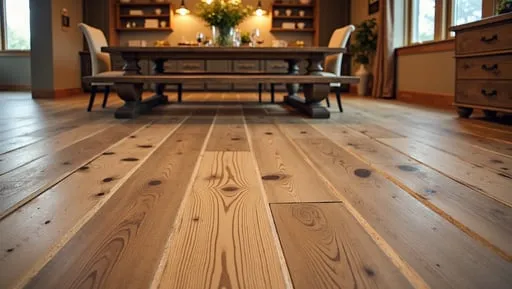
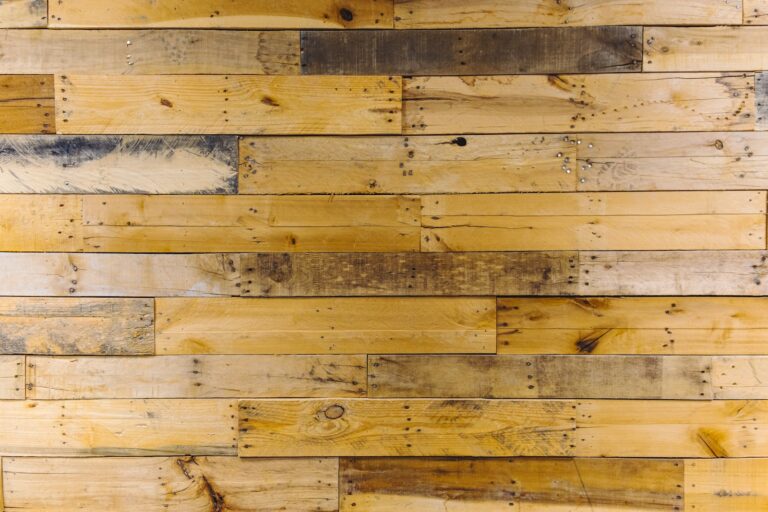
Reclaimed wood laminate takes everything that people love about authentic reclaimed wood, the variation in plank color, the visible knots, the occasional crack, the sense of history written into the surface, and renders it in a format that is uniform in thickness, consistent in click-lock fitting, and free from the structural surprises that genuine reclaimed material sometimes brings. For homeowners who want the farmhouse or rustic aesthetic without the premium price or installation complexity of real reclaimed timber, this approach delivers impressive results.
The manufacturing technology behind this look has improved substantially. Embossed-in-register printing means that the grain pattern in the image layer of the plank and the physical texture of the surface are matched precisely. Run your hand across a high-quality reclaimed-look laminate plank and you feel the knots and grain lines exactly where you see them. This tactile accuracy is what separates the better products from cheaper imitations where the texture and image are clearly misaligned.
This floor works particularly well in living rooms and dining rooms where the informal, worn quality of the surface texture softens what might otherwise be an over-designed space. It pairs naturally with brick or stone accents, exposed wood beams, and open shelving. It also happens to be one of the most forgiving finishes available in terms of showing wear and minor damage, because the character of the floor is already built on imperfection. A small scratch on a reclaimed-look board blends far more gracefully than the same scratch on a clean, smooth blonde oak plank.
7. Chevron Pattern for a Formal Dining Room
Chevron is the more precise cousin of herringbone. Where herringbone planks meet end-to-edge in a staggered zigzag, chevron planks are cut at an angle so that their ends align in a continuous V-shape, creating a cleaner, more directional pattern. The result reads as more tailored and architectural, which is why it works particularly well in dining rooms where a slightly elevated formality is appropriate.
The difference in installation complexity between chevron and herringbone is meaningful. Chevron requires planks with angled cuts on both ends, which means you either need to buy pre-cut chevron-specific laminate or have the cuts made precisely during installation. Most high-quality laminate manufacturers now offer pre-cut chevron planks with compatible click systems, which has made this pattern much more accessible than it was five years ago. The seams in a chevron layout need to align cleanly for the pattern to read as intended, which is why material quality and installation precision both matter more here than in a standard straight lay.
In a dining room application, a chevron pattern in a medium warm-brown or natural oak tone creates a floor that functions as a design statement without competing with other elements in the room. The pattern draws the eye but is not aggressive about it. Paired with a statement light fixture above the dining table and upholstered chairs in a complementary fabric, the floor becomes one layer in a composed design rather than a novelty element. If you are also considering whether the dining room will be photographed extensively, which is a real consideration for anyone who hosts regularly or uses their home for short-term rental, the chevron pattern photographs exceptionally well.
8. Through-Floor Continuity Across Multiple Rooms
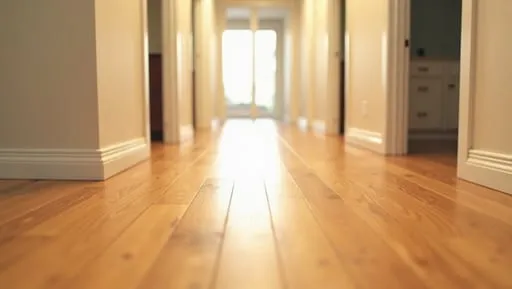
One of the most powerful and underused laminate design strategies is simply running the same plank in the same direction through every room in the house. The through-floor approach, where a single laminate selection flows from the entrance through the hallway into the living room, kitchen, and bedrooms, creates a sense of spatial continuity that makes a home feel larger and more cohesive than the same square footage divided by different flooring in each room.
This concept is sometimes called “flooring continuity” in interior design terms, and it relies on a specific condition to work: the transition between spaces needs to be handled without visible threshold strips wherever possible. When you move from the living room into a hallway and the floor continues without interruption, the two spaces read as one extended environment. Threshold strips, while functionally necessary in some situations, visually chop the floor into separate areas. Whether transition strips are actually necessary for laminate flooring depends on specific conditions at the junction between rooms, and in many cases the answer is no.
The challenge with this approach is selecting a laminate that works in genuinely different lighting conditions across different rooms. A plank that looks warm and inviting in the south-facing living room may look cool and slightly grey in the north-facing bedroom. Testing samples in every room you plan to use them before committing to a full order is not optional when you are working at this scale. Buy a few boxes, lay them out in each space at different times of day, and live with them for a weekend before making the final call.
9. Laminate on Stairs for a Streamlined Look
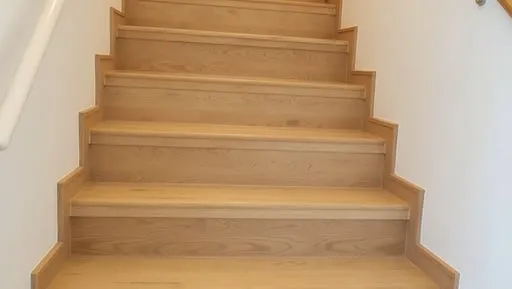
Running laminate up a staircase used to be a difficult installation with significant structural considerations, but dedicated stair nose profiles and nosing strips have made it a reliable option for homes that want a unified look from the ground floor up. The main reason to consider laminate stairs rather than carpet is visual continuity: if the ground floor runs in laminate, a staircase covered in the same plank with matching stair nosing carries that visual language upward instead of breaking it with a different material.
The installation specifics matter considerably here. Installing laminate flooring on stairs requires a different approach than a standard floating floor installation, because stairs need to be glued or mechanically fixed rather than floated. The click-lock system that makes laminate so convenient on a flat surface does not translate to a stair tread, where the plank is exposed on three sides and experiences a very specific type of directional stress with each step. Good-quality stair nose profiles also need to be selected that match or complement the plank color precisely, because a mismatched nosing undermines the whole idea.
In terms of finish selection for stairs specifically, a wire-brushed or textured matte finish is strongly preferable to a smooth or glossy surface. Stairs need traction, and a smooth laminate surface becomes genuinely hazardous in bare feet or socks when the angle changes slightly. The texture that reads as authentic and attractive on a living room floor serves a real safety function on a staircase.
10. Stone-Look Laminate in a Modern Bathroom-Adjacent Space
Laminate has historically been excluded from bathrooms and wet rooms due to its vulnerability to moisture, but the advancement of waterproof laminate cores has opened up new territory. The more practically sound application, however, is using stone-look laminate in spaces adjacent to bathrooms, such as a master bedroom, a dressing room, or a laundry area, where the visual language reads as connected to the wet areas without the risk of constant exposure to standing water or steam.
Stone-look laminate typically mimics concrete, slate, or light marble-effect surfaces through the same embossed-in-register technology that makes wood-look laminate so convincing. The result is a floor that has the cool, clean quality of actual stone without the weight, the cold surface temperature underfoot, or the installation complexity that natural stone requires. In a dressing room or closet area off the master bedroom, a grey concrete-look laminate creates a distinct zone that feels like a different material from the bedroom floor without requiring a different installation system or subfloor preparation.
It is worth noting that the comparison between waterproof laminate and waterproof vinyl for moisture-adjacent applications is a real one worth making. Waterproof laminate versus waterproof vinyl comes down to several factors including core construction, surface durability, and long-term performance in humid conditions. Stone-look LVT (luxury vinyl tile) is a strong competitor for bathroom-adjacent spaces because it handles humidity at the core level rather than relying on surface sealing. Both options are worth evaluating before committing.
11. Mixed-Width Laminate for a Custom, Designer Look
Most laminate flooring comes in a single plank width, typically somewhere between 5 and 8 inches, laid in a repeating pattern across the floor. Mixed-width laminate, where planks of two or three different widths are installed in a deliberate pattern, breaks that visual predictability in a way that reads as custom and architecturally intentional. It is the kind of floor that makes people stop and ask what it is, because it does not look like standard laminate.
The traditional application of mixed-width flooring comes from historical European hardwood floors, where timber was milled in whatever widths the logs permitted, creating naturally varied plank widths throughout a room. Reproducing that logic in laminate, usually with a combination of narrow, medium, and wide planks, captures some of that organic quality while using modern materials and installation methods. Some manufacturers produce mixed-width laminate collections where the different widths are designed to work together with compatible click-lock profiles, which simplifies the installation significantly.
This idea works best in larger rooms where the floor has enough surface area for the varied widths to develop a rhythm. In a small room, mixed-width planks can feel busy rather than sophisticated. In a living room, master bedroom, or open-plan space over 250 to 300 square feet, the varied widths create a floor that develops genuine visual interest as you move through the space rather than repeating a single pattern from wall to wall. Pairing mixed-width laminate with a simple, quiet wall treatment lets the floor carry the design story, which is where this idea is at its most effective.
If you are interested in how laminate performs against competing flooring materials at this design level, comparing it to engineered hardwood or luxury vinyl plank is worthwhile. Laminate versus vinyl plank flooring is a genuinely close comparison in 2026, particularly in the mid-to-high price range where both materials have converged on similar performance characteristics.
Choosing Your Approach: Practical Considerations Before You Buy
The eleven ideas above cover a wide span of design directions, but they all share common ground in the practical factors that determine whether a laminate floor succeeds in a real home over time. Understanding those factors is as important as the design decision itself.
Thickness and core construction sit at the top of the list. The correlation between laminate thickness and underfoot performance is real. Thicker boards, particularly in the 10mm to 12mm range, deliver a floor that sounds solid, compresses minimally underfoot, and bridges minor subfloor imperfections more gracefully than thinner products. The decision between 8mm and 12mm laminate affects long-term satisfaction more than almost any other specification, and it is worth spending the time to understand it properly rather than defaulting to whatever is available at a given price point.
The AC rating, as noted at the outset, determines abrasion resistance and longevity. A laminate floor in a master bedroom that sees two adults in bare feet does not need the same rating as the main hallway of a family home with three children and a dog. Matching the AC rating to the actual use of the space avoids both overspending and under-specifying.
Subfloor preparation is the unsexy factor that determines whether an otherwise excellent floor installation succeeds or fails. Laminate is not forgiving of a subfloor that is out of level by more than the manufacturer’s specified tolerance, typically 3mm over 6 feet in most cases. Boards laid over a subfloor with high spots will develop movement, noise, and in some cases cracking at the locking joints over time. Spending the necessary time on subfloor leveling before installation is never wasted.
Finally, the decision about whether to bring in a professional or attempt installation as a DIY project is worth thinking through honestly. Straight-lay floating floors on a well-prepared subfloor are genuinely achievable for a careful, patient homeowner. Herringbone, chevron, stair installations, and mixed-width layouts are considerably more demanding and will typically look better and last longer with professional installation. Our laminate flooring services cover everything from initial room measurement and subfloor assessment through full installation and finishing, if you would rather have experienced hands handle the project from start to finish.
Modern laminate flooring, chosen thoughtfully and installed correctly, is one of the more effective and honest investments you can make in a home’s appearance and livability. The ideas in this piece are starting points. The right floor for your space is the one that fits the room’s proportions, serves the way you actually live in it, and holds up to the honest demands of the years ahead.
James Miller is a seasoned flooring contractor with years of hands-on experience transforming homes and businesses with high-quality flooring solutions. As the owner of Flooring Contractors San Diego, James specializes in everything from hardwood and laminate to carpet and vinyl installations. Known for his craftsmanship and attention to detail, he takes pride in helping clients choose the right flooring that balances beauty, durability, and budget. When he’s not on the job, James enjoys sharing his expertise through articles and guides that make flooring projects easier for homeowners.
Most cost guides give you a single number and call it a day. That number is almost always wrong for your project — because hardwood flooring cost is not one variable. It is the sum of a dozen decisions you make before a single plank hits the floor. This guide breaks down every cost layer:…
What Is Reclaimed Wood Flooring, Really? Reclaimed wood flooring is lumber that has already lived a previous life — pulled from demolished barns, decommissioned factories, old warehouses, railway structures, ships, and century-old homes. It is not “distressed” wood with an artificial finish. It is not factory-aged. It is wood that has genuinely existed for decades,…
11 Modern Carpet Flooring Ideas – Styles, Colors & Design Inspiration Carpet has spent a few years in the design penalty box. Hard surfaces dominated, minimal interiors went viral, and soft flooring quietly retreated to one demographic: people who hadn’t yet renovated. That story is now over. In 2025 and into 2026, carpet is returning…
The kitchen is the most demanding room in any home for flooring. It collects spill after spill, bears the brunt of dropped cast iron pans, and sees more foot traffic before noon than most rooms see all day. Yet hardwood remains one of the most sought-after materials for kitchen floors, not because it is the…
Quick Answer: To level a wood subfloor for laminate flooring, the surface must be flat to within 3/16 inch over any 10-foot span. Sand down high spots. Fill low spots with floor patch compound (dips under ¼ inch), self-leveling compound (larger areas), or a plywood overlay (widespread unevenness). Fix all squeaks with screws before applying…
The kitchen is the hardest-working room in any home. Spills happen before breakfast, grease lands on the floor during dinner, and heavy foot traffic never really stops. That combination of demands makes the flooring decision genuinely consequential — pick the wrong material and you’ll be replacing it within a few years. Pick the right one…