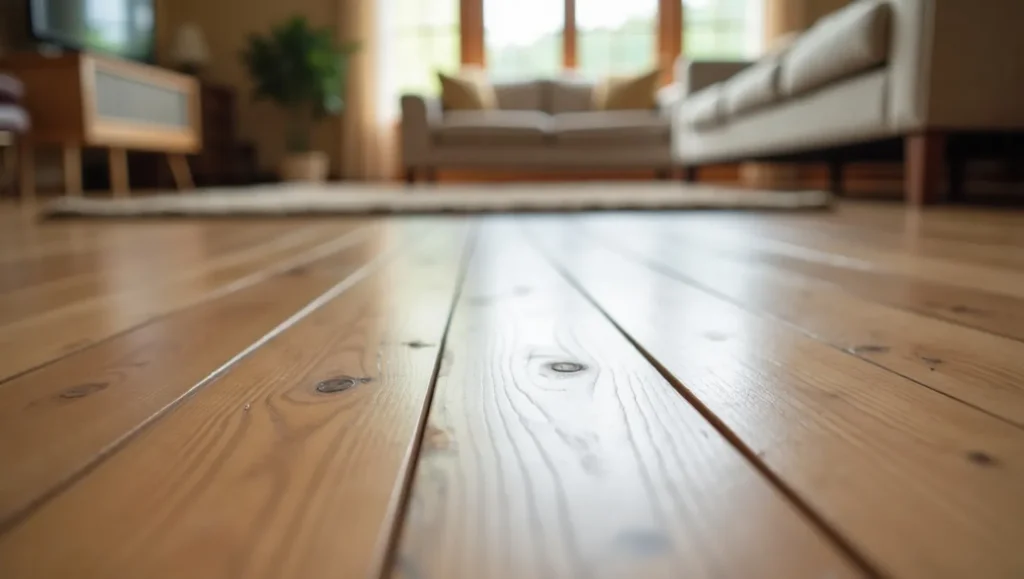
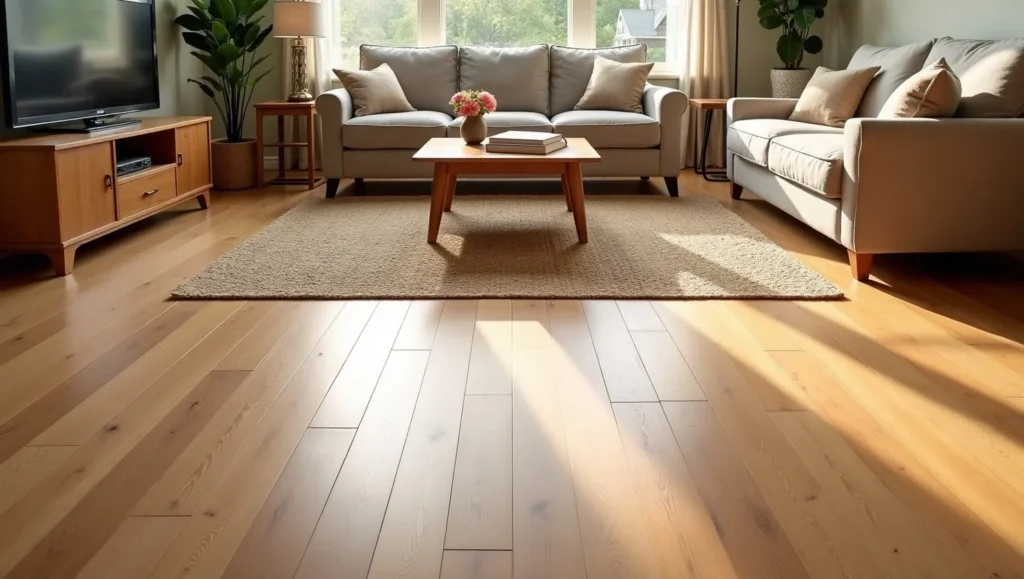
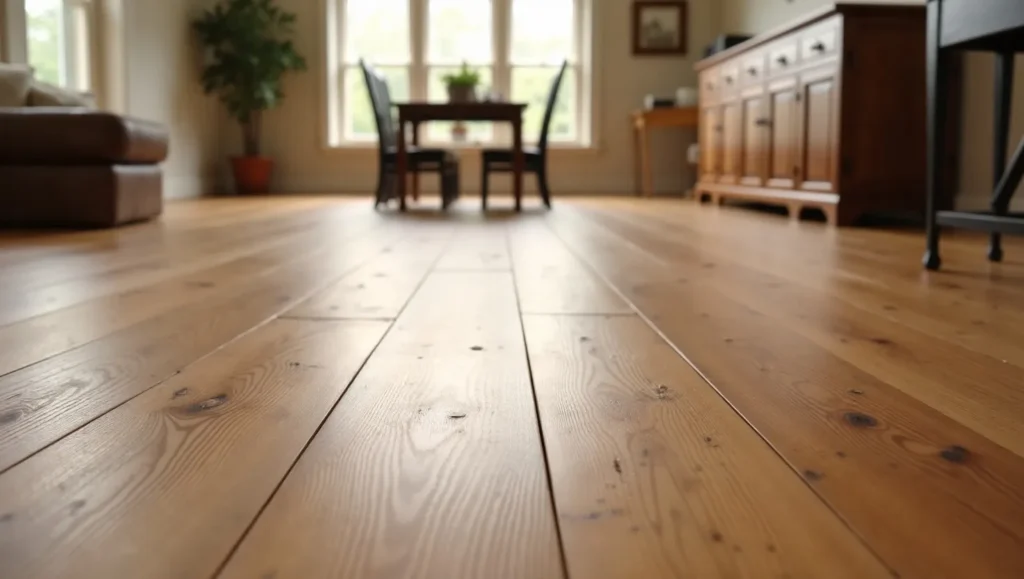
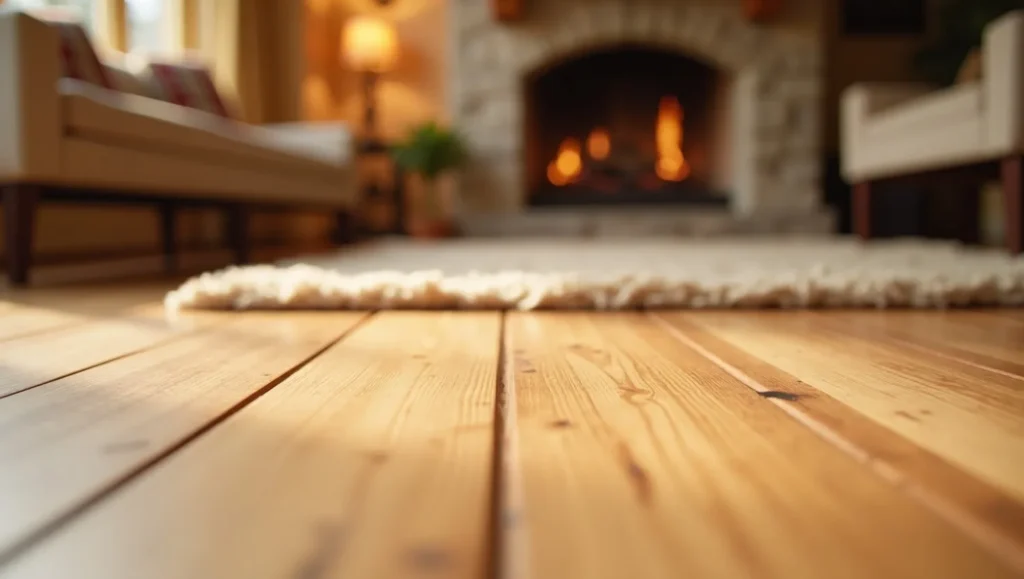
Honey oak in a wide plank format is the most versatile starting point for a classic farmhouse interior. The color sits in that middle range between golden and medium brown that reads warm without being heavy. It pairs naturally with white-painted shiplap, cream linen upholstery, black iron hardware, and natural wood furniture. It does not compete with the room’s other elements, which is exactly what you want from a floor intended to be the backdrop rather than the centerpiece.
When selecting a honey oak laminate, look for one with genuine grain variation between planks rather than a pattern that repeats every three or four boards. A repeating pattern breaks the illusion at close range. The best products in this category use four to six distinct grain patterns that cycle unpredictably enough to avoid the eye catching the repeat.
For thickness, 8mm to 12mm laminate is the practical range for most farmhouse installs. Thicker boards feel more substantial underfoot and tend to muffle sound better, which matters in rooms without much soft furnishing to absorb noise.
2. Hand-Scraped Texture for Authentic Rustic Character
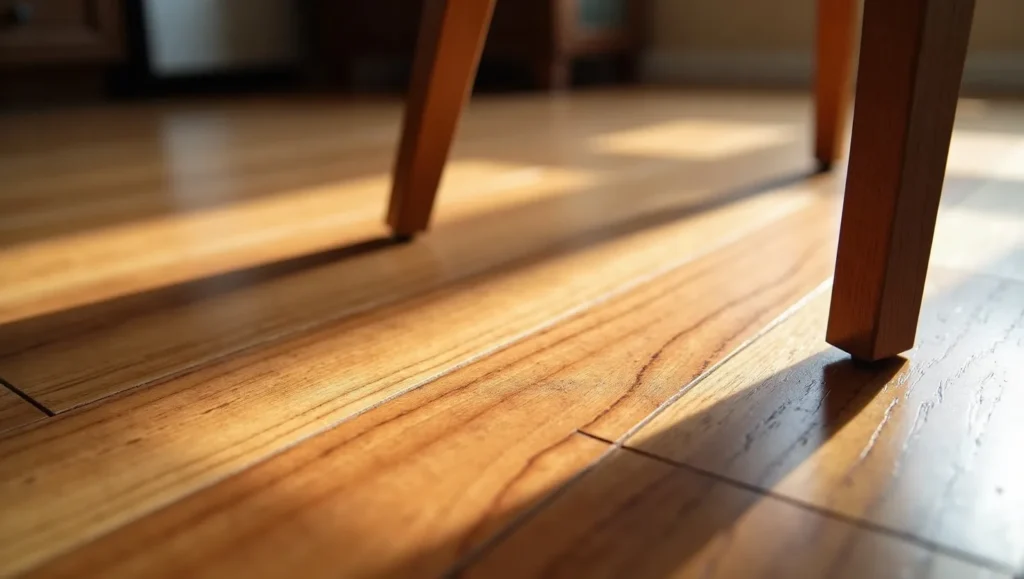
Hand-scraped laminate is one of the most direct ways to introduce genuine visual age into a floor without committing to real reclaimed wood. The surface texture mimics what was once an actual process: craftsmen would drag a hand tool across freshly milled planks to create subtle undulations, gouges, and high-low variation that gave the wood a worn, lived-with quality. On a laminate plank, this texture is pressed into the surface during manufacturing rather than carved in by hand, but the visual result is remarkably convincing, especially in natural light.
The key thing that hand-scraping does for a farmhouse interior is break up the uniformity that can make laminate feel synthetic. A perfectly flat, perfectly smooth floor reflects light evenly and reads as clearly manufactured. A hand-scraped surface catches light differently across each plank, creating that shadow play that natural aged wood produces. This matters most in rooms with directional sunlight or pendant lighting close to the floor.
Hand-scraped textures work best in medium to dark color ranges for farmhouse applications. Deep browns, russet oaks, and walnut tones all show the texture more dramatically because the shadows created by the surface variations read more clearly against a darker base color. Lighter colors work too, but they tend to show the texture more subtly.
One practical consideration: hand-scraped surfaces are better at hiding everyday scratches than smooth laminates because the existing surface texture makes new marks less visible. In a farmhouse home with kids, dogs, or high foot traffic, this is a genuine advantage rather than just a design preference. Laminate for homes with pets benefits significantly from a textured surface for exactly this reason.
3. Weathered Gray Laminate for Modern Farmhouse Spaces
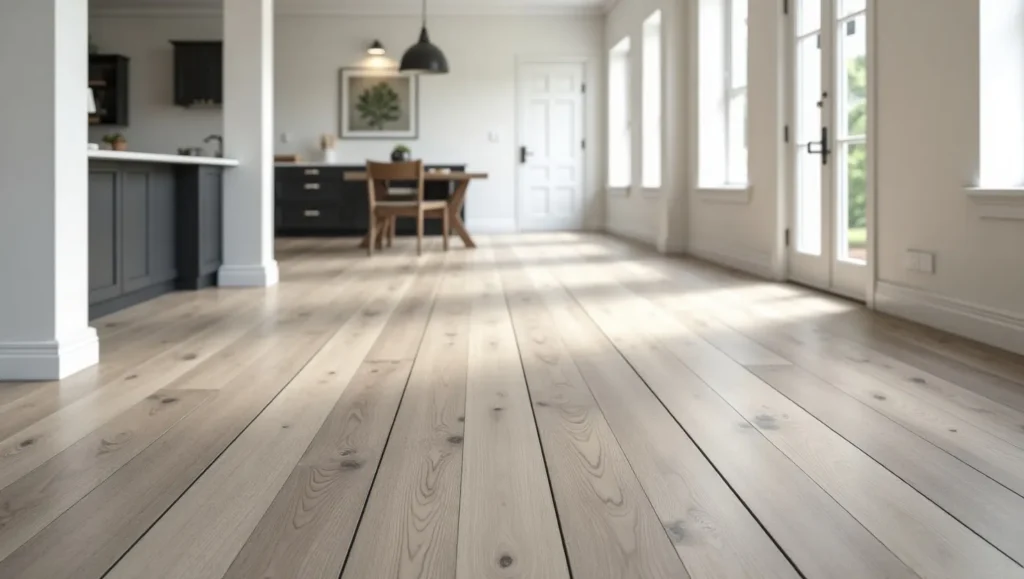
The modern farmhouse movement shifted farmhouse flooring away from exclusively warm brown tones and toward cooler, driftwood-inspired grays. Weathered gray laminate sits at the intersection of rustic and contemporary, making it one of the most versatile options for homes that want farmhouse warmth without heavy traditionalism.
What separates a good weathered gray laminate from a poor one is the undertone and the texture. Flat, solid gray looks industrial or cold rather than farmhouse. Weathered gray, done well, has warm or neutral undertones layered underneath the gray, creating something that reads more like sun-bleached driftwood or a silver-gray barn board than a concrete floor. The best versions also carry visible grain lines and subtle color variation between planks, so the surface feels organic rather than painted.
Gray laminate pairs exceptionally well with white walls, black metal fixtures, natural linen, and warm-toned wood furniture. The contrast between the cool floor and warm wood accents creates that layered, curated look that characterizes modern farmhouse interiors at their best. Avoid pairing weathered gray floors with cool gray walls, as the result tends to feel flat and monochromatic without any visual tension.
In terms of room applications, weathered gray works particularly well in open-plan spaces where the floor runs continuously from living to dining to kitchen. The neutral tone does not fight with the different zones’ individual color schemes, which is exactly what you need in a floor that has to serve multiple purposes simultaneously. Open-plan laminate flooring ideas explore this concept in more depth for homes with combined living spaces.
4. Whitewashed Laminate for a Light, Airy Farmhouse Feel
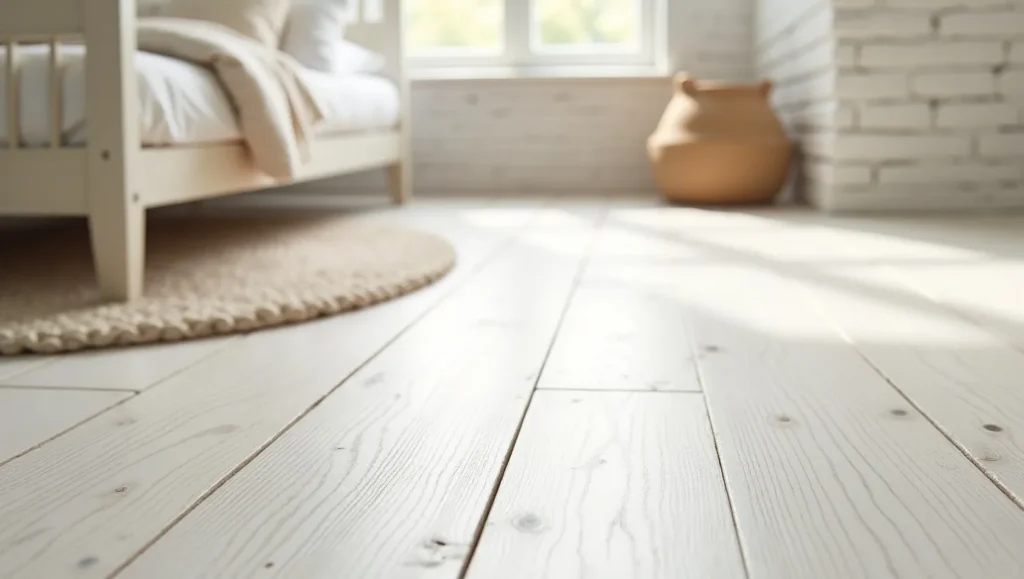
Whitewashed wood floors have a long history in Nordic and coastal American vernacular architecture, and they translate naturally into modern farmhouse design for the same reason they were popular originally: they brighten interior spaces significantly, make rooms feel larger, and create a clean, uncluttered visual backdrop for natural materials and simple furniture.
In laminate form, whitewashed finishes are achieved through the print layer, which typically shows a base of pale cream or off-white with visible grain lines in a slightly deeper tone breaking through. The effect mimics the look of white-pickling or lime-washing real hardwood, where the white finish partially fills the grain while leaving the wood structure visible. Done well, it reads as intentionally aged rather than unfinished.
Whitewashed laminate works especially well in farmhouse bedrooms and farmhouse living rooms where you want the space to feel fresh and open. It reflects more light than darker floors, which matters in rooms with limited window exposure or north-facing orientation. The pale base also means the floor does not compete with patterned textiles, vintage rugs, or detailed furniture pieces that you might want to be the focal point of the room.
The main consideration with whitewashed laminate is visible dirt. Light floors show dust, pet hair, and fine grit more readily than darker options. In high-traffic areas or kitchens, this requires more frequent sweeping. In a bedroom or formal living room with lower daily traffic, it is rarely a practical issue. Light wood laminate flooring ideas cover this territory in detail, including which light tones age most gracefully over time.
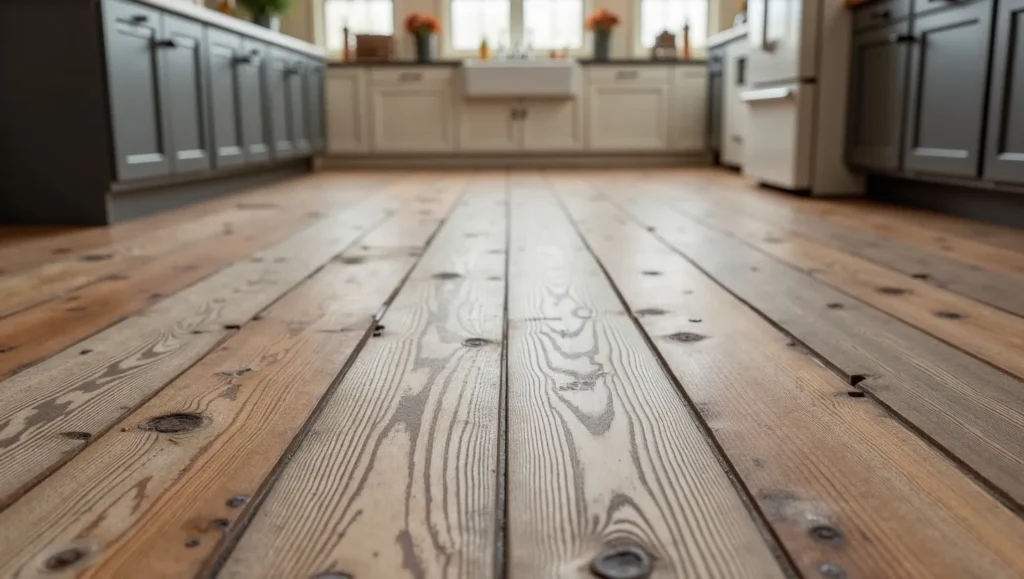
5. Distressed Finish Laminate Imitating Reclaimed Barn Wood
Reclaimed barn wood is one of those materials that has become so desired and so expensive that the market for products that convincingly replicate its appearance has grown into its own category. Distressed laminate targeting the barn wood aesthetic is now sophisticated enough that, installed at a distance, it requires close inspection to distinguish from the genuine article.
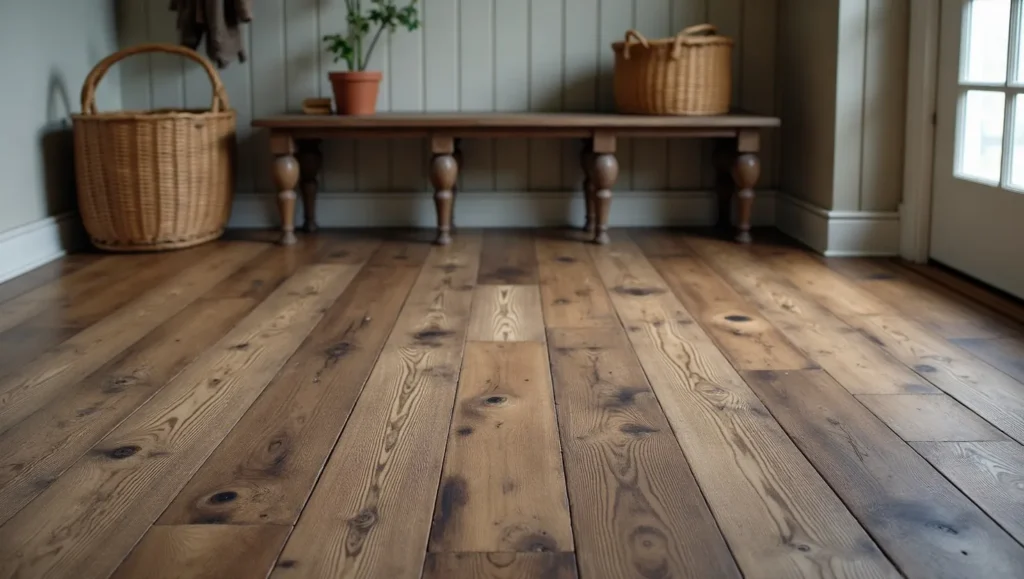
The visual signature of barn wood is specific: deep, irregular color variation within each plank ranging from silver-gray to warm brown; prominent knots often accompanied by checking cracks; surface texture that is neither smooth nor uniformly rough but instead varies plank to plank; and occasional streaks where the wood’s original grain has oxidized differently in different sections. The best barn wood laminate products capture at least three or four of these characteristics simultaneously.
Color range matters a lot here. Barn wood is not a single color but a range — the same plank might show warm amber near a knot, silver-gray across the main body, and a darker brown at the edge. Laminate products that use a single flat color with a printed knot on top do not read as convincingly as products that layer multiple tones within a single plank print.
Distressed barn wood laminate is naturally suited to mudrooms, entryways, and farmhouse kitchens where the worn aesthetic is both appropriate and practical. These are spaces that will accumulate real wear over time anyway, so starting with a floor that already looks beautifully aged means the years of use are working with the design rather than against it.
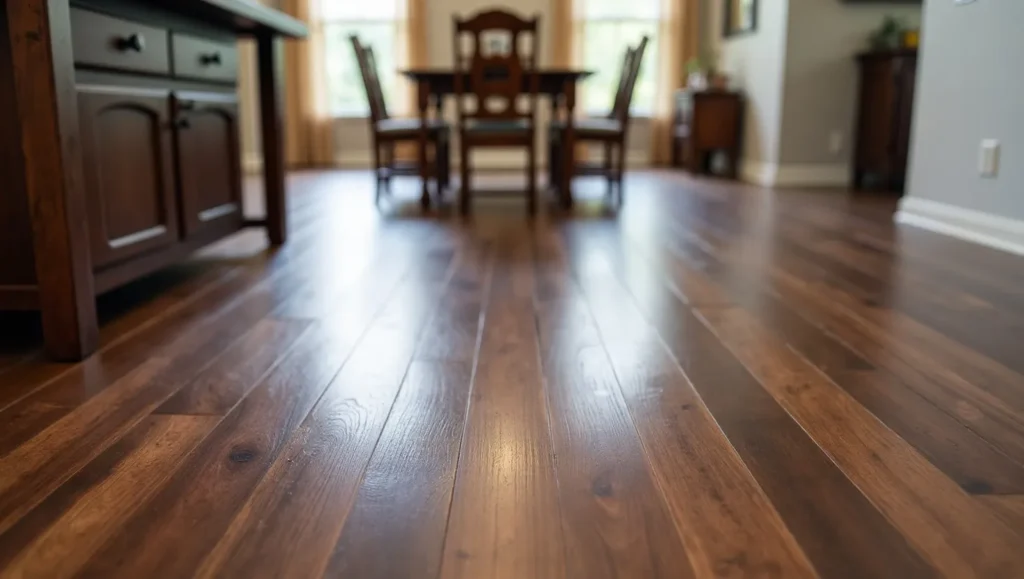
6. Dark Walnut Laminate for a Sophisticated Farmhouse Interior
There is a version of farmhouse style that leans heavier and richer — fewer whites and linens, more deep wood tones, leather, iron, and the feeling of a space that has accumulated history rather than been designed to look like it has. Dark walnut laminate serves that version of the farmhouse aesthetic particularly well.
Walnut, as a natural species, has a warm brown base with chocolate and sometimes purplish undertones that read immediately as elegant and grounded. In a farmhouse context, those deep tones add weight to a room in a way that prevents it from feeling like a catalog set. The floor becomes something the rest of the room anchors to rather than floating above.
Dark walnut laminate works best in rooms with good natural light, because in dark or low-light spaces, the floor can make the room feel smaller and heavier than intended. In a well-lit farmhouse living room or dining room with tall windows and high ceilings, dark walnut creates a beautiful contrast with white painted walls, cream or ivory textiles, and the natural grain of lighter wood furniture pieces.
One common mistake with dark laminate is pairing it with dark walls or dark furniture, which closes the room down visually. The farmhouse approach typically uses the dark floor as a grounding element against a lighter palette above it. Dark laminate flooring ideas explore how to build complete color palettes around deep floor tones without making rooms feel oppressive.
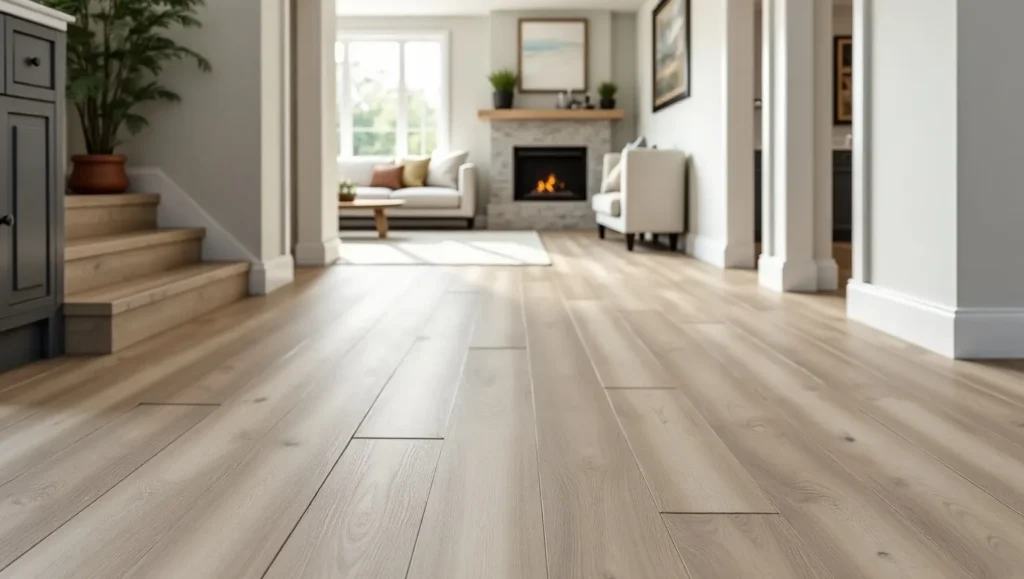
7. Greige Laminate: The Perfect Neutral for Transitional Farmhouse Homes
Greige — a blend of gray and beige — has become the most broadly useful neutral in laminate flooring, and for farmhouse applications specifically, it occupies a productive middle ground between the cooler modern farmhouse palette and the warmer traditional one. It reads as neither decisively warm nor decisively cool, which gives it unusual versatility across different lighting conditions and design directions.
In a farmhouse home where not every room has the same orientation or light exposure, greige laminate running continuously through the space avoids the problem of a floor looking warm in one room and cold in another as the light changes. The mixed undertone holds its character more consistently than purely warm or purely cool tones.
Greige also has a practical advantage in farmhouse spaces that incorporate multiple material types. Farmhouse interiors typically layer wood, natural stone, linen, cotton, iron, and sometimes brick. A greige floor does not compete with any of these materials and creates a unifying base that allows the room’s other textures to take center stage. It is, in the best sense of the word, a background color that makes everything around it look more intentional.
From a maintenance standpoint, greige is forgiving. It shows neither the dark dust that a light floor accumulates nor the light dust that a dark floor shows. It is one of the most practical color choices for households with daily traffic, and its longevity as a design neutral means it will not feel dated in five years.
8. Herringbone Pattern Laminate for a Farmhouse with European Flair
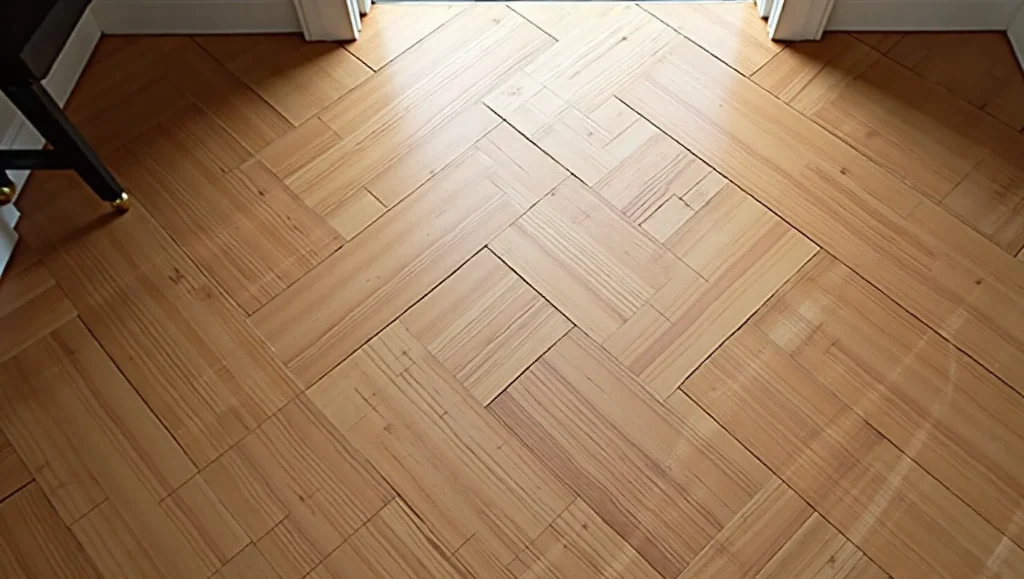
Herringbone is not a new pattern — it appears in European stone floors dating back centuries — but its application in laminate has expanded significantly as production technology has made it more accessible. In a farmhouse context, herringbone laminate introduces a layer of craftsmanship and tradition that straight-lay planks simply cannot replicate.
The herringbone layout arranges rectangular planks at 45-degree angles, creating a zigzag pattern that draws the eye across the floor in a dynamic, engaging way. In large rooms, this visual movement adds energy without requiring color or contrast. In entryways and hallways, herringbone naturally emphasizes the direction of travel, creating a subtle sense of arrival.
For farmhouse applications, the best herringbone laminate choices are warm oak tones — natural, honey, or lightly aged — that reference the wood floors found in old European farmhouses where the pattern originated. Darker walnut herringbone works in more formal farmhouse dining rooms. Lighter gray or whitewashed herringbone reads more contemporary and suits modern farmhouse spaces.
One installation consideration: herringbone requires cutting planks at angles, which increases material waste compared to straight-lay installation. Planning for 10 to 15 percent additional material beyond the room’s square footage is a reasonable buffer. The herringbone laminate flooring ideas guide goes deeper into layout planning, including how to center the pattern in different room shapes for the best visual result.
9. Wide-Plank Laminate in a Farmhouse Living Room
The farmhouse living room is where the floor has to work hardest aesthetically, because it is the room where people spend the most deliberate time, where furniture groupings create distinct zones, and where the full expanse of the floor is visible from multiple vantage points simultaneously. Wide-plank laminate is the right foundation for this room for several interconnected reasons.
Wide planks, as discussed earlier, reduce the number of seams visible across a room. In a living room where you might look across 15 or 20 feet of floor from the sofa, fewer seams creates a more restful, uninterrupted visual surface. The floor reads as calmer and more spacious than a narrow-plank installation would in the same room.
The color temperature of the living room floor should work with the room’s primary light source and wall color. In south-facing living rooms with warm afternoon light, even greige or slightly cool floors will appear warm. In north-facing rooms, stick to genuinely warm tones — honey oak, light walnut, amber — to prevent the floor from reading cold during the hours when the light is indirect.
Furniture pad protection matters more in living rooms than in most other spaces because chairs and sofas are moved for cleaning regularly. The right furniture pads prevent the micro-scratches that accumulate over time and dull an otherwise well-maintained floor. Felt pads rather than rubber or plastic are the correct choice for laminate specifically.
Wide-plank farmhouse laminate in a living room is also a sensible long-term investment. According to most assessments of how flooring affects property value, a quality laminate floor installed correctly and maintained well will perform comparably to engineered wood in most buyer evaluations at resale. The visual quality of current wide-plank laminate at that price point is difficult to distinguish on a showing.
10. Farmhouse Laminate in the Kitchen: Waterproof and Warm
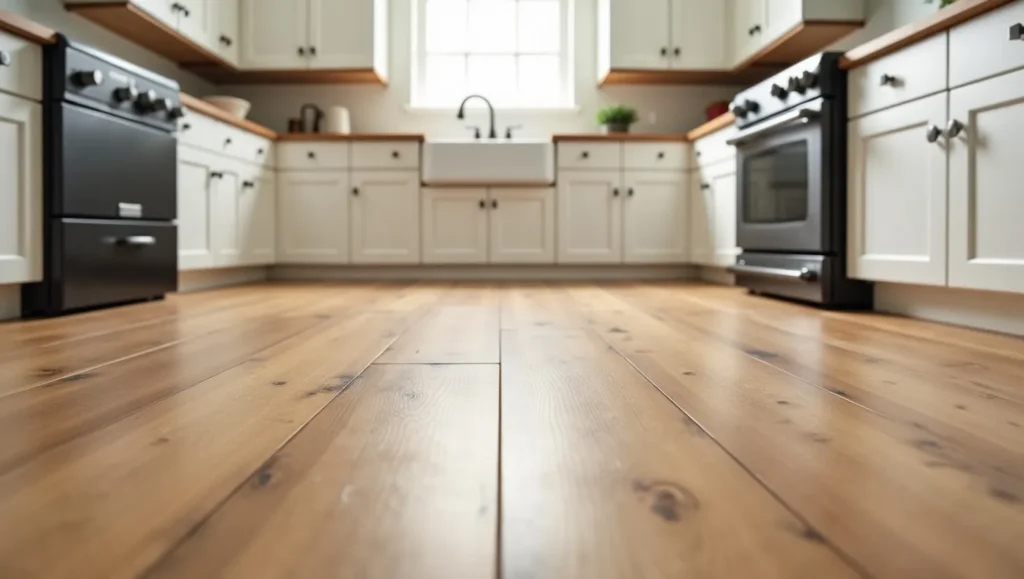
The farmhouse kitchen is where the aesthetic and the practical have to reach an agreement, and laminate flooring is frequently where that negotiation gets interesting. Traditional wisdom said laminate did not belong in kitchens because water exposure from splashes and spills would cause swelling at the seams over time. That limitation has been substantially addressed in current generation products, but the selection process requires attention to the right specifications.
For a farmhouse kitchen, the laminate product should have a water-resistance rating sufficient for the room’s actual conditions. Not all kitchens are the same: a kitchen that hosts daily cooking for a large family generates different moisture conditions than a kitchen used lightly for a couple. Waterproof laminate with a sealed core — as distinct from water-resistant laminate with a standard HDF core — handles true kitchen conditions more reliably.
Aesthetically, the farmhouse kitchen floor has a specific job. It needs to work with cabinetry, countertops, and backsplash materials simultaneously, and those elements are typically fixed. A medium oak or warm greige laminate works with the widest range of cabinet and countertop combinations. Avoid very dark floors in kitchens because they show food debris and crumbs against a light-colored background, requiring more frequent sweeping to maintain their appearance.
Installation direction matters in a kitchen. Running planks parallel to the longest wall or parallel to the primary sightline from the entrance makes the room feel longer and more continuous. Running planks perpendicular to windows creates more shadow definition from natural light, which can make the grain texture of the laminate more visible throughout the day.
The farmhouse kitchen is also where considering the best laminate for kitchens in terms of AC rating matters most. An AC4 rating — appropriate for heavy residential and light commercial use — gives meaningful protection against the dropped items, chair leg scraping, and general abuse that a kitchen floor absorbs daily.
11. Gray Barnwood Laminate for the Farmhouse Bedroom
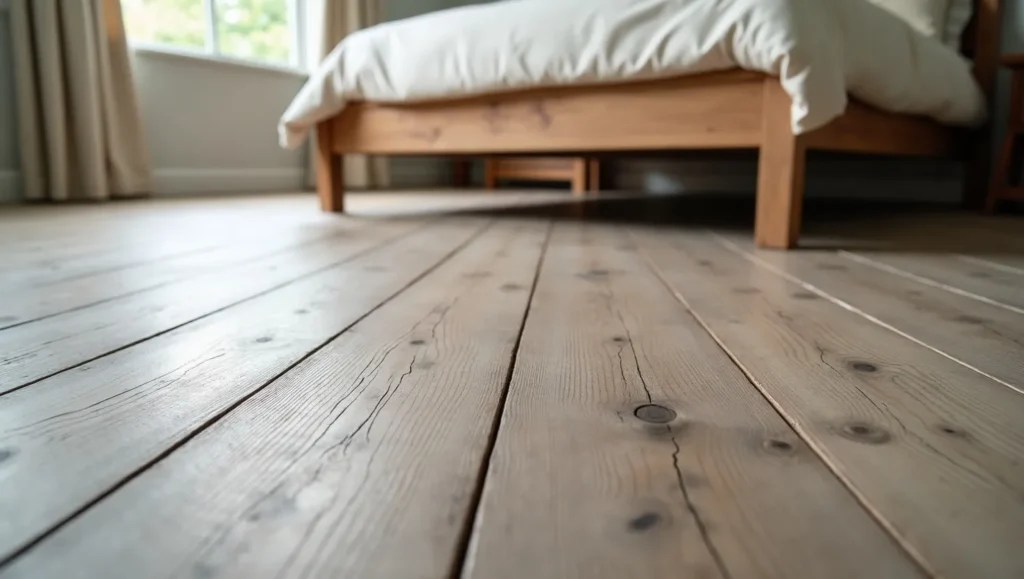
The farmhouse bedroom benefits from flooring that creates an immediate sense of calm and warmth underfoot. Gray barnwood laminate — planks that mimic the look of weathered barn boards in a gray-brown tone — does this particularly well because the color is restful without being stark, and the visible grain and texture add visual interest without visual noise.
In a bedroom, the floor’s relationship to textiles is more important than in any other room. The pillows, bedding, curtains, and rugs that occupy a farmhouse bedroom are typically in soft neutrals — cream, ivory, pale blue, warm white — and the floor should anchor those textiles without fighting them for attention. Gray barnwood sits in the right tonal range: warm enough to feel cozy, cool enough to not make the room feel heavy.
The practical advantage of laminate in a farmhouse bedroom is also worth naming: bedrooms experience relatively light traffic and low moisture exposure, which means the floor will maintain its surface quality for many years with minimal maintenance beyond regular dry mopping. In a bedroom, laminate’s longevity relative to its cost is at its most favorable.
From a layout perspective, running the planks parallel to the longest wall of the bedroom and toward the primary light source — typically the window — creates a floor that reads as naturally as possible. This orientation matches the way light would fall across real floorboards and avoids the slightly disconnected feeling that cross-room plank orientation can produce in intimate spaces.
12. Farmhouse Laminate in a Mudroom or Entryway
The mudroom and entryway are where farmhouse style gets genuinely tested, because these are the hardest-working spaces in the home. Shoes, outdoor gear, wet boots in wet months, pet paws, and the daily in-and-out traffic of a household all concentrate here. The floor needs to perform under conditions that would expose weakness in any material quickly.
For the mudroom, a distressed or heavily textured laminate in a medium-to-dark tone is the most practical and most appropriate choice aesthetically. The distressed texture hides real-world wear remarkably well because the existing imperfections in the design absorb new marks without making them noticeable. A dark or medium tone does the same for dirt — grit and tracked-in debris are far less visible on a dark walnut or barn brown floor than on a light whitewashed one.
The farmhouse mudroom or entryway floor also benefits from being a continuation of the home’s main floor if possible, even if the transition requires a threshold strip. Visual continuity from the entry into the main living areas makes a home feel more cohesive and larger. The alternative — tile in the entry and laminate throughout the rest of the house — works functionally but can fragment the space visually in smaller homes.
Sealing the edges of the laminate installation carefully at the entryway is worth particular attention because this is where rain, snow, or just wet shoes create repeated moisture exposure at the perimeter. Installing a quality moisture barrier underneath and ensuring the transition to the exterior threshold is properly sealed prevents long-term water intrusion that would compromise the laminate’s core.
13. Mixing Plank Widths for an Old Farmhouse Look
One of the most visually interesting techniques in farmhouse laminate installation is mixing two plank widths within the same floor, alternating between a wider and narrower board to create a pattern that references historical flooring from an era when sawyers used whatever width the log produced rather than standardizing to a single dimension.
This approach requires careful planning and the right product selection. Not all laminate collections offer mixed-width options, but some do, and these collections typically include both wide and medium planks in the same color and finish that are designed to be intermixed. The installation pattern — wide, narrow, wide, narrow, or wide, narrow, wide with occasional double-narrow courses — determines how traditional versus modern the result reads.
Mixed-width farmhouse floors work best in medium to large rooms where there is enough floor area for the pattern variation to register as deliberate rather than accidental. In small rooms, the eye does not get enough of the pattern to read it as a design choice, and it can instead look like inconsistency.
The color and finish choice for mixed-width laminate should lean toward naturalistic tones that feel like they might have come from different cuts of the same tree — meaning slight variation in tone is a feature, not a defect. Avoid mixing planks where the color difference between widths is significant, as this tends to look intentionally contrived rather than authentically rustic.
14. Farmhouse Laminate with Underfloor Heating: Cozy Throughout
Underfloor heating and laminate flooring are compatible, but the pairing requires selecting a product specifically rated for use above a radiant system. The concern is that laminate, like all wood-based products, responds to heat and humidity changes. A standard laminate plank subjected to the repeated thermal cycling of an underfloor heating system without being designed for it may gap at the seams in winter or cup under sustained heat.
Laminate products rated for underfloor heating are manufactured with this thermal cycling in mind. They use denser core materials, more stable adhesive layers in the construction, and are tested across the temperature ranges that hydronic or electric radiant systems typically produce. The product’s specification sheet should explicitly state compatibility with underfloor heating and list the maximum surface temperature rating, which is typically 27 degrees Celsius or 80 degrees Fahrenheit for most residential systems.
For farmhouse applications specifically, the cozy warmth of a radiant-heated floor transforms the experience of the space during cold months in a way that is hard to overstate. Walking onto a warm oak or warm walnut floor in bare feet in January in a house where the air temperature is comfortable but not hot is one of those small daily pleasures that significantly affects how a home feels to live in.
The thickness recommendation for laminate over underfloor heating is typically on the lower end of the range — 8mm to 10mm rather than 12mm — because thicker boards offer more thermal resistance that reduces the system’s efficiency. Laminate thickness for underfloor heating is covered in detail for homeowners navigating this specific technical question, including what underlayment to pair with it.
15. Farmhouse Laminate on Stairs: Completing the Look from Floor to Landing
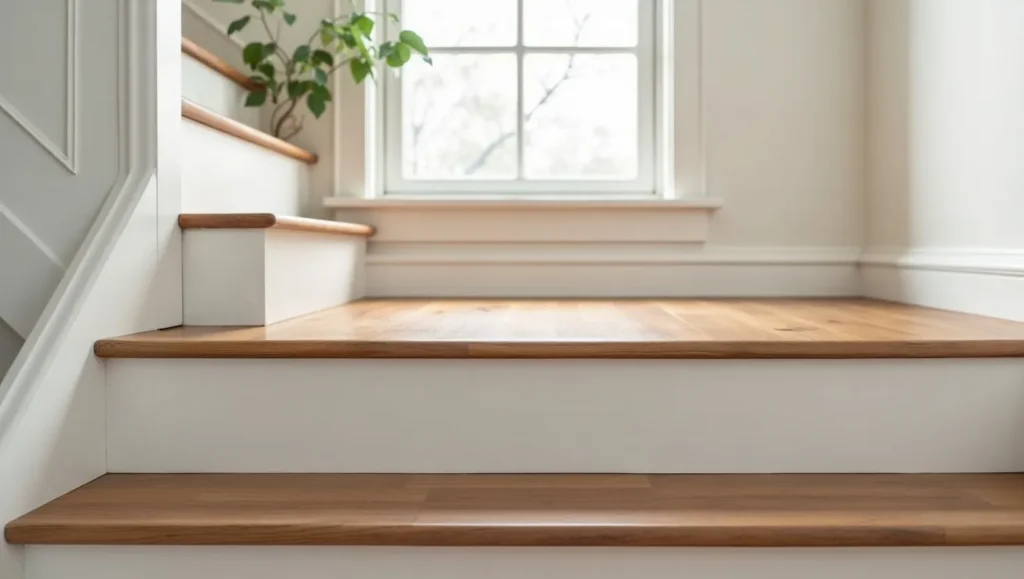
Extending the farmhouse laminate floor to the staircase is the detail that transforms a good install into a coherent interior. When the floor material changes at the bottom of the stairs, the eye registers the transition and the continuity breaks. Matching the stair treads to the main floor laminate carries the design language through the full vertical dimension of the home.
Stair installation with laminate uses bull-nose or stair-nose trim pieces that wrap the front edge of each tread, creating a rounded profile that is safe underfoot and durable against the heel-strike that the front edge of each tread absorbs with every use. These trim pieces are typically available from the same manufacturer as the laminate planks in a matching finish.
The installation approach for stair treads is different from flat floor installation because each tread needs to be glued or mechanically fastened rather than floated. Floating installation — the typical method for laminate on flat floors — is not appropriate for stairs because the small individual pieces have no room to expand and contract independently, and the structural load on each tread demands a more secure attachment.
Farmhouse staircase laminate pairs beautifully with painted white risers. The contrast between the warm wood-toned treads and bright white risers is one of the most recognized visual signatures of farmhouse stair design, and it is easy to achieve: the risers are simply painted after the treads are installed. The result is a staircase that feels purposeful, completed, and entirely of a piece with the rest of the farmhouse aesthetic below it.
For a full walkthrough of what is involved in this kind of project, the step-by-step guide on installing laminate flooring on stairs covers everything from measurement to trim selection to the correct adhesive for each substrate type.
How to Choose the Right Farmhouse Laminate: Key Decisions Before You Buy
Arriving at the right farmhouse laminate for your specific home requires working through a short set of decisions in the right order, because the choices build on each other and a mistake early in the process creates problems that are harder to solve later.
The first decision is color temperature: warm, neutral, or cool. This is determined primarily by your walls, cabinetry, and the dominant light direction in the rooms where the floor will be installed. Warm floors — honey oak, walnut, amber — need either warm or neutral wall colors to avoid clashing. Cool floors — weathered gray, driftwood — pair naturally with whites and greiges. Greige floors are the most forgiving of mixed conditions.
The second decision is surface texture. Smooth or lightly brushed finishes are appropriate for modern farmhouse applications where you want the warmth of the look without the full weight of the rustic. Hand-scraped or heavily textured finishes suit more traditional farmhouse interiors where the aged, worn-in feeling is the primary goal. The texture also affects how the floor shows wear: textured surfaces hide scratches and daily marks far better than smooth ones.
The third decision is thickness and underlayment. For most residential farmhouse applications on a wood subfloor, a 10mm or 12mm laminate with an appropriate underlayment provides the combination of underfoot comfort, sound attenuation, and long-term stability that these floors require. Thinner products save money but often feel hollow underfoot — a sensation that breaks the hardwood illusion that farmhouse laminate is working to create. Understanding what to look for in a laminate underlay before purchasing will prevent the common mistake of pairing a quality laminate plank with an inadequate underlayment that undermines both performance and feel.
The fourth and final consideration is the AC rating, which indicates the laminate’s abrasion resistance. AC3 is appropriate for standard residential use in moderate-traffic rooms. AC4 suits high-traffic residential applications — main living areas, kitchens, entryways — and is a reasonable standard for the majority of farmhouse laminate installs. Understanding what AC ratings mean in practice helps connect the specification to the real conditions the floor will face.
Farmhouse Laminate vs. Other Flooring Options for the Same Look
Farmhouse aesthetics can be achieved with several different flooring materials, and laminate is not automatically the right choice for every situation. Understanding where laminate wins and where it does not helps you make the decision with clear expectations.
Against real hardwood, laminate offers a lower cost, more stable response to humidity changes, and better scratch resistance in many product lines. Hardwood offers the genuine material authenticity, the ability to be sanded and refinished multiple times over decades, and often a better resale perception. For farmhouse aesthetics in a primary living space where you will stay in the home long-term, hardwood may be worth the premium. For a rental property, a guest bedroom, or a first home where budget is genuinely constrained, quality farmhouse laminate is a practical choice that will look excellent for the 15 to 25 years you are likely to own the space.
Against luxury vinyl plank, farmhouse laminate offers a more convincing surface texture in most direct comparisons and typically a thicker, denser construction that feels more substantial underfoot. LVP has the advantage of being genuinely waterproof through its full thickness, which laminate cannot claim. In a bathroom or laundry room, LVP is the better choice. In a bedroom, living room, or dining room, the texture and feel advantage of quality laminate is real.
For a comprehensive look at where each material performs best across different room conditions, the comparison of laminate versus vinyl plank flooring lays out the tradeoffs clearly enough to guide the choice for most home situations.
Maintaining Your Farmhouse Laminate Floor
One of the reasons farmhouse laminate is a practical choice for active households is that its maintenance requirements are genuinely simple, provided you follow a few consistent practices from the beginning.
Dry mopping or vacuuming with a hard-floor setting — one that raises the brush roll to prevent it from spinning against the surface — should be the default cleaning method. Fine grit is the primary enemy of laminate: it acts as an abrasive under foot traffic and gradually dulls the wear layer. Removing it frequently before it has a chance to grind into the surface is the single most important maintenance habit.
When wet cleaning is needed — and it will be needed periodically — a damp mop with a well-wrung cloth is the correct approach. Standing water on a laminate floor is problematic because it can work into the seams between planks and swell the HDF core. The mop should be damp, not wet, and the floor should dry within a few minutes of mopping. Products designed specifically for laminate cleaning are preferable to general floor cleaners, which may leave a residue that dulls the surface over time. The best cleaning products for laminate covers this in detail, including what to avoid.
Preventing surface damage is easier than repairing it. Entry mats at exterior doors catch grit before it reaches the floor. Furniture pads prevent scratches from chair movement. Keeping pet nails trimmed reduces the risk of deep scratches in the wear layer. These habits cost almost nothing but extend the floor’s surface life significantly.
James Miller is a seasoned flooring contractor with years of hands-on experience transforming homes and businesses with high-quality flooring solutions. As the owner of Flooring Contractors San Diego, James specializes in everything from hardwood and laminate to carpet and vinyl installations. Known for his craftsmanship and attention to detail, he takes pride in helping clients choose the right flooring that balances beauty, durability, and budget. When he’s not on the job, James enjoys sharing his expertise through articles and guides that make flooring projects easier for homeowners.
Most people frame this decision wrong. They ask “which is better” when the real question is “better at what, and for whom.” Carpet and wood flooring are not competing for the same job. One prioritizes sensory comfort, acoustic softness, and upfront affordability. The other trades those qualities for structural permanence, allergen resistance, and long-term financial…
Oak has defined American hardwood flooring for well over a century. Walk into almost any home built before 1980 and you are standing on oak. Walk into a newly renovated kitchen today and you are probably still standing on oak. The species simply refuses to leave, because it earns its place in every room it…
Most hardwood flooring conversations orbit around oak, maple, and hickory. Teak rarely enters those conversations by accident. When it does come up, it tends to stop the discussion entirely — because the moment you start looking at teak’s actual properties, you realize it occupies a different category from every other wood on the residential market….
Pros and Cons of SPC Flooring: What the Specs Actually Tell You Before You Buy SPC flooring gets recommended constantly — and for mostly the right reasons. But the way it gets explained online does buyers a disservice. “Durable, waterproof, easy to maintain” describes half the products on the market. What you actually need to…
Most people shopping for vinyl plank flooring spend hours comparing wear layers, core types, and color options. Almost nobody spends the same time on underlayment. That is a mistake — and it is one that produces floors that sound hollow, transmit every footstep to the room below, and fail HOA acoustic requirements that were posted…
Disposing of old carpet is not as simple as dragging it to the curb. The City of San Diego explicitly lists carpets under construction and building debris — a category that cannot go into standard refuse containers. That single rule changes the entire process for homeowners and contractors who assume curbside pickup handles everything. This…