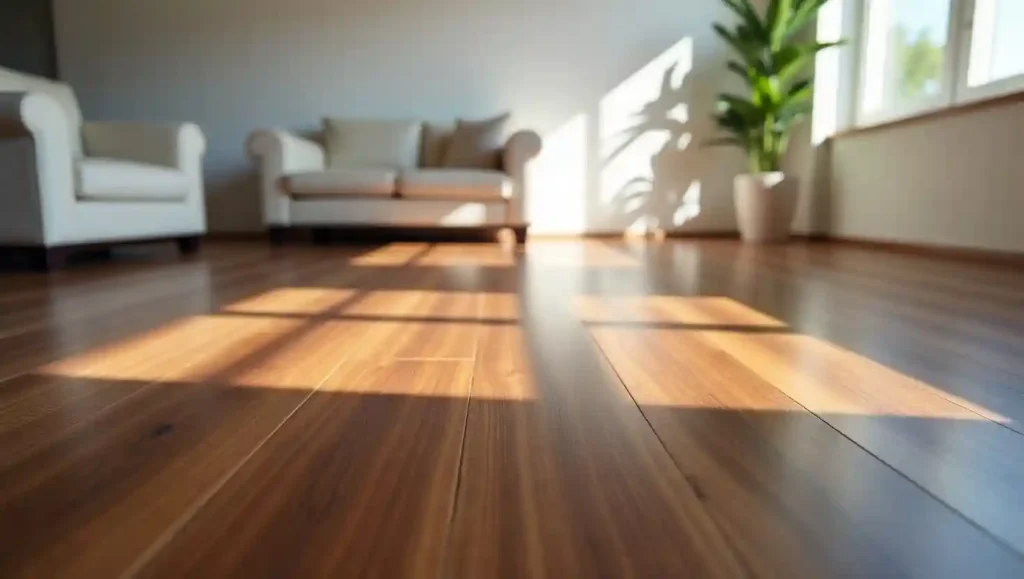
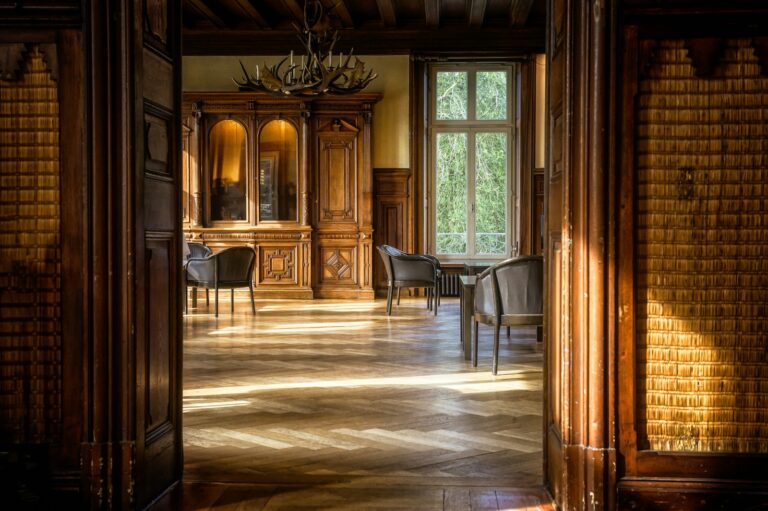
The result is a floor that does what dark floors do best, which is ground the room visually and create a sense of depth and permanence, while eliminating the practical problems that used to come with going dark. If you are weighing your options and want to understand how dark vinyl compares to other waterproof choices, the comparison between waterproof laminate and waterproof vinyl is worth reading before you decide.
Idea 1: Espresso Wide-Plank LVP in an Open-Plan Living Space
Espresso is the most versatile of all dark vinyl tones. It reads as a warm, deep brown with enough red-amber undertones to keep it from feeling cold or industrial. In an open-plan living and dining area, espresso wide-plank LVP creates a flowing foundation that ties the different zones together without any visual interruption.
The key to making espresso work in a large space is contrast. White or off-white walls allow the floor to command attention without the room tipping into darkness. Cream-toned sofas, linen throw cushions, and natural wood furniture in lighter tones like maple or light oak create the kind of warm layering that makes espresso floors feel luxurious rather than heavy. Adding brass or gold metal accents, whether in light fixtures, cabinet hardware, or decorative objects, pulls out the warm undertones in the floor and ties the palette together.
For open-plan spaces specifically, the wide plank format matters. Planks in the 7-inch to 9-inch width range reduce the number of seam lines, which preserves that seamless, expansive quality that open-plan designs depend on. Espresso LVP is also practical here because it hides crumbs and fine debris between foot traffic cycles, which is important in spaces that double as dining areas.
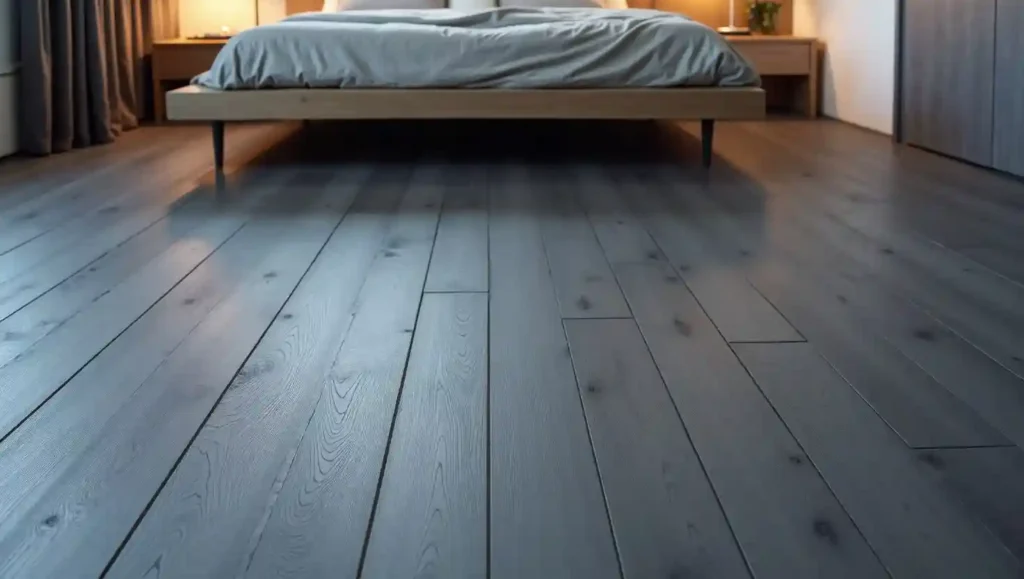
Idea 2: Charcoal Vinyl Plank in a Modern Minimalist Bedroom
Charcoal is where dark vinyl flooring starts to push into genuinely dramatic territory. It sits between deep gray and near-black, often with cool blue or slate undertones that give it a contemporary, almost architectural quality. In a minimalist bedroom, charcoal vinyl plank flooring becomes the defining element that everything else is arranged around.
The design logic for charcoal bedrooms is about restraint. Keep the wall color simple, soft white, pale gray, or even a very light sage, and let the floor do the heavy lifting visually. A platform bed in a medium-toned wood like walnut creates a beautiful tonal bridge between the dark floor and the lighter walls. White or light gray bedding keeps the overall palette from closing in, and a single wool area rug in cream or oatmeal tones adds warmth underfoot while softening the contrast slightly.
One of the less obvious advantages of charcoal flooring in bedrooms is how it handles artificial lighting. Warm-toned light from bedside lamps pulls the cool gray tones of charcoal vinyl toward a softer, more inviting brown-gray that feels cozy rather than stark. This tonal shift between daytime and evening creates a naturally dynamic space that changes character with the hour.
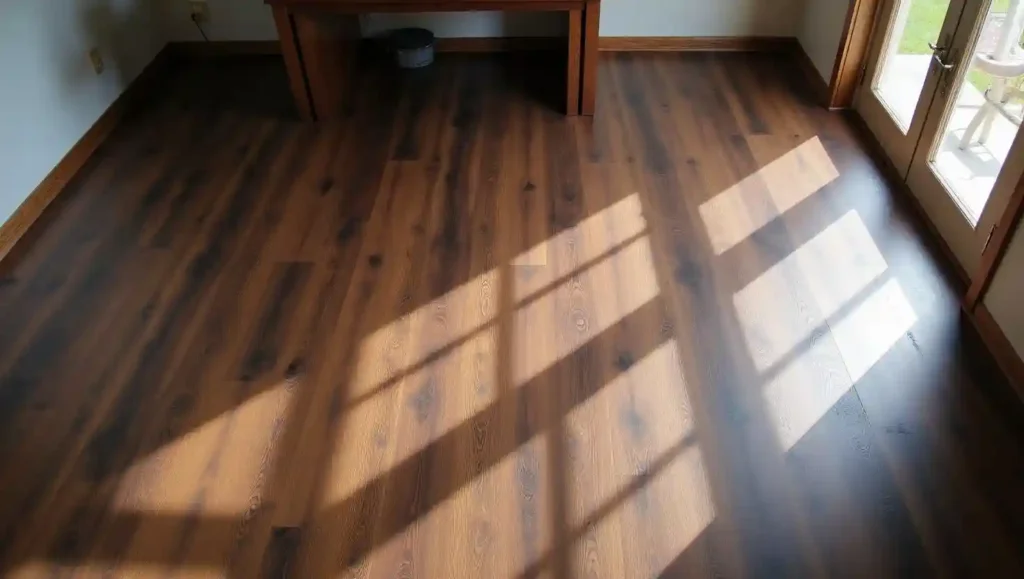
Idea 3: Dark Walnut Vinyl Planks in a Home Office
Dark walnut as a vinyl colorway is distinct from espresso in an important way. Where espresso leans warm and slightly red-brown, walnut tends toward a cooler, more neutral brown with sometimes purplish or grayish undertones. That neutrality makes it exceptionally adaptable in work environments where you do not want the floor competing with screens, shelving, or task-focused design elements.
In a home office, dark walnut vinyl planks create a sense of seriousness and focus. The floor anchors the space and communicates that this room means business. Pair it with built-in shelving in white or a warm gray, a desk in natural oak or pale ash to create tonal contrast, and leather or upholstered seating in cognac or navy. The dark floor then becomes the neutral foundation against which all of those more characterful elements play out.
Walnut-toned vinyl is also practically well-suited to offices because it handles chair casters, rolling furniture, and heavy foot-traffic patterns near desks without showing wear as readily as lighter floors. The grain variation typical of walnut-look vinyl also breaks up any single-tone heaviness, giving the floor visual depth that lighter wood looks sometimes lack.
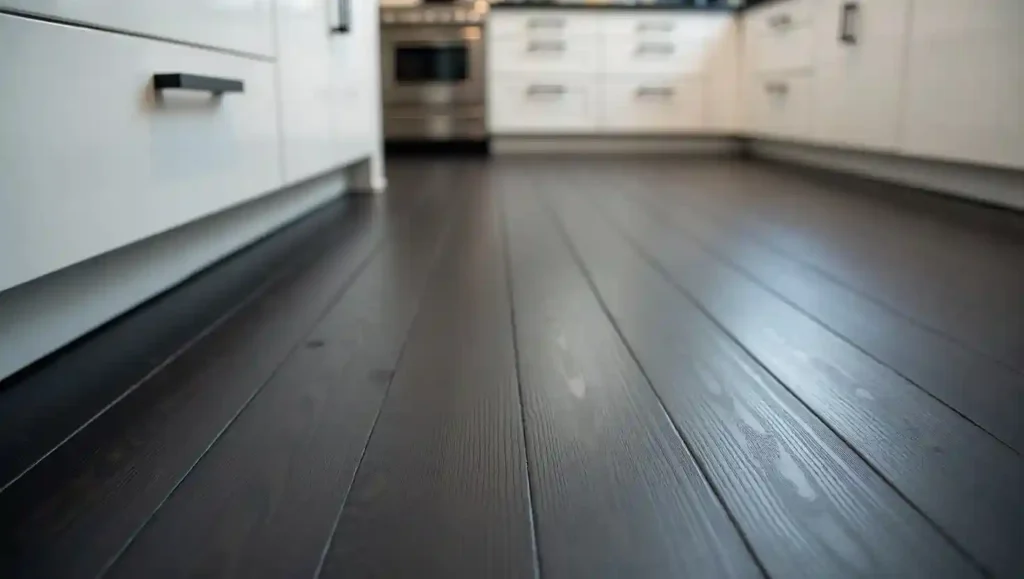
Idea 4: Ebony Vinyl Plank in a High-Contrast Kitchen
Ebony vinyl flooring is the bravest choice on this list, and when it works, it works spectacularly. True ebony-toned vinyl sits at nearly the darkest end of the color spectrum, often with a very slight cool undertone that keeps it from feeling simply black. In a kitchen, that depth creates a high-contrast stage that makes white or light-colored cabinetry genuinely pop.
The classic pairing is white shaker cabinets over ebony vinyl floors, but that combination works best with the right countertop to bridge the two extremes. Calcatta marble or white quartz with subtle gray veining connects the white cabinetry to the dark floor without feeling like an afterthought. Matte black hardware on the cabinets echoes the darkness of the floor without exactly matching it, creating a layered tonal relationship rather than a flat match.
Lighting is non-negotiable with ebony kitchen floors. Recessed lighting at the ceiling level and under-cabinet task lighting ensure that the floor receives enough ambient light to show its texture and depth. Without adequate lighting, ebony floors in kitchens can make the space feel like a cave. With it, the same floor transforms the kitchen into something editorial.
If you are installing in a kitchen that already has an existing surface, it helps to understand the right approach for your subfloor situation before you start. The guidance on preparing a concrete subfloor for vinyl covers the pre-installation steps that determine whether your finished floor stays flat and secure long-term.
Idea 5: Dark Gray Stone-Look Vinyl Tile in a Bathroom
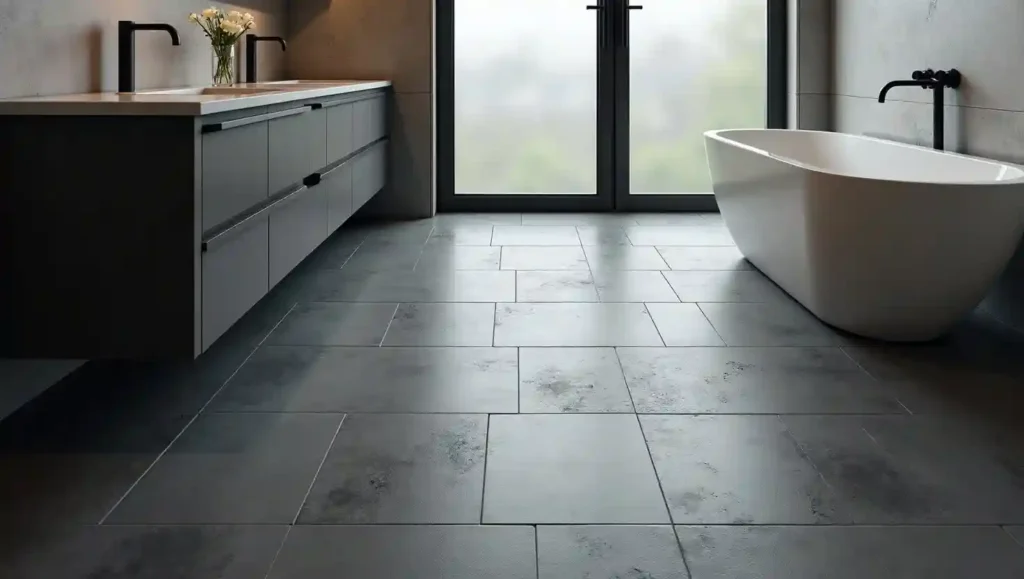
Stone-look vinyl tile in dark gray tones gives bathrooms a spa-like gravitas that real stone delivers at three times the cost. The beauty of dark gray LVT in bathrooms specifically is that it resolves the moisture problem that keeps most people from using dark materials in wet spaces. Genuine slate or honed dark granite requires sealing, is prone to moisture damage, and can be cold and hard underfoot. Dark gray vinyl tile is fully waterproof, softer underfoot, and warmer to the touch.
For bathroom applications, the tile format rather than plank format is usually more appropriate. Larger format tiles in the 12×24 or even 18×18 inch range minimize grout lines and give the floor a cleaner, more premium appearance. The large-format approach also works particularly well in smaller bathrooms where too many grout lines can fragment the floor visually and make the space feel even more compressed.
Pair dark gray stone-look LVT with white or very pale gray wall tile, matte black fixtures, and minimalist vanity hardware. A single element in warm metal, brushed gold or antique brass, prevents the palette from feeling entirely cold and adds a layer of intentional contrast.
Idea 6: Dark Mahogany Vinyl Plank in a Formal Dining Room
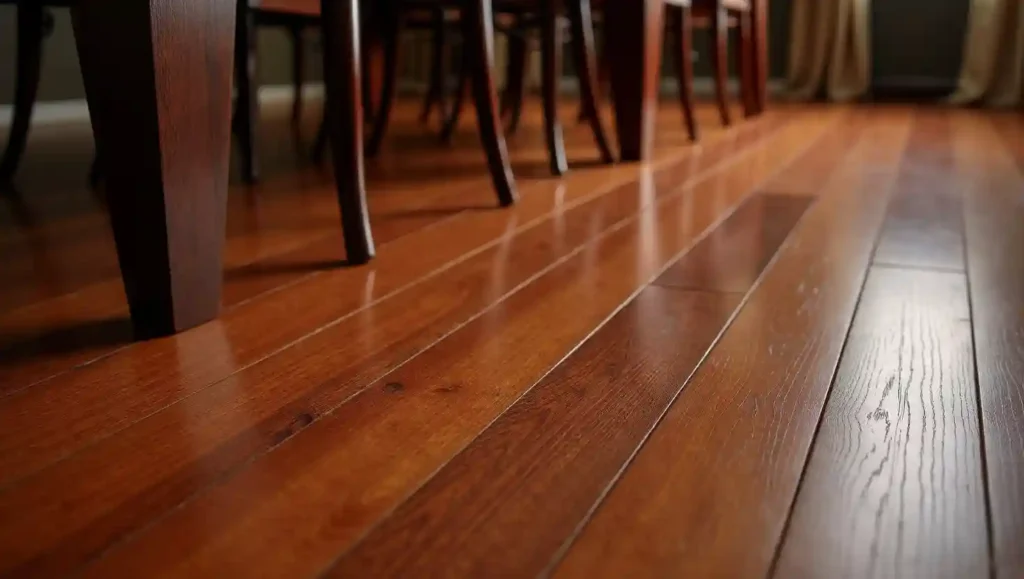
Mahogany-toned vinyl carries a richness and warmth that few other colorways can match. The red-brown depth of mahogany-look vinyl is rooted in one of the most historically prestigious flooring materials in existence, and the associations with elegance and formality transfer directly to the spaces where you use it. Formal dining rooms benefit enormously from this kind of gravitas.
The styling approach for mahogany vinyl in a dining room is to embrace the warmth rather than contrast against it. Deep teal or forest green walls complement mahogany floors with a richness that creates an enveloping, intimate atmosphere perfect for dinner parties and formal gatherings. A dining table in dark wood, whether walnut or dark-stained oak, creates a tonal conversation with the floor. Upholstered dining chairs in velvet or bouclé fabrics in dusty rose, terracotta, or warm cream soften the overall scheme while honoring its depth.
One thing to be aware of with mahogany-toned floors is the effect of sunlight. Strong direct sunlight can shift warm red-brown tones toward a more washed-out orange over time with some flooring materials. Quality vinyl with UV-resistant wear layers handles this much better than natural wood, but it is worth choosing a product with adequate UV protection particularly in south-facing rooms with large windows. The guide to keeping luxury vinyl plank from fading walks through exactly which protection features matter most for sun-exposed installations.
Idea 7: Smoked Oak Vinyl Plank for Industrial-Modern Interiors
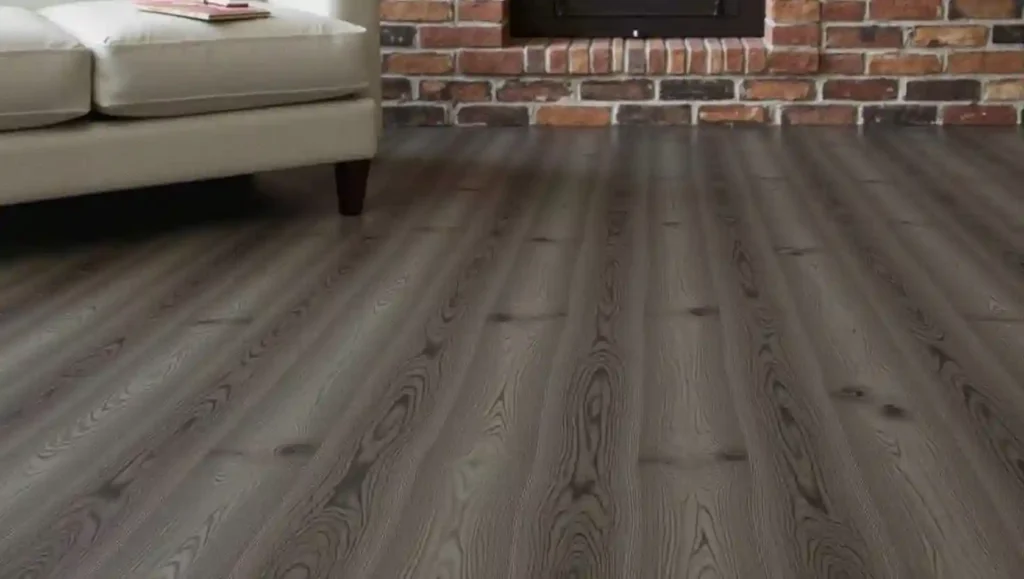
Smoked oak sits in a fascinating middle ground between natural wood warmth and the cooler, more architectural character of gray. The smoking process on real oak darkens the wood through a chemical reaction with tannins, producing a complex, almost silvery dark brown. Vinyl manufacturers have captured this look with impressive accuracy, and the resulting planks are among the most sophisticated dark flooring options currently available.
Smoked oak vinyl works particularly well in industrial-modern interiors where the design language combines raw materials, dark metal elements, and organic textures. Think exposed brick or concrete walls, steel-framed windows, Edison bulb pendant lights, and leather furniture in black or deep cognac. The smoked oak floor anchors all of those rough-textured elements with a warmth that prevents the space from feeling cold or unwelcoming.
The gray undertones in smoked oak also make it one of the easier dark floors to style, because it bridges warm and cool palettes rather than committing entirely to one. If your furniture is a mix of warm wood tones and cool metal or gray upholstery, smoked oak vinyl is likely to be the most forgiving choice.
Idea 8: Dark Reclaimed Wood-Look Vinyl for Farmhouse Spaces
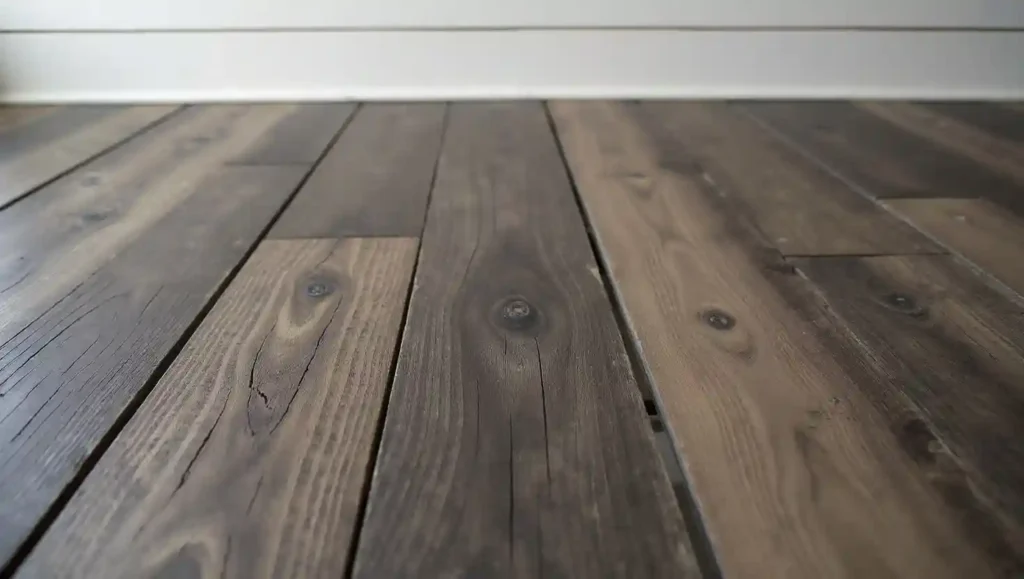
Reclaimed wood-look vinyl combines the aesthetic of weathered, salvaged timber with the practical advantages of modern vinyl construction. The dark tones in this category, which include aged barn wood grays, oxidized cedar browns, and deeply weathered walnut-blacks, are particularly evocative in farmhouse-style interiors where history and character are central to the design language.
What defines the reclaimed look in vinyl is surface texture. The best dark reclaimed wood vinyl features hand-scraped or saw-marked textures, beveled plank edges that simulate the irregular surfaces of old timber, and high color variation from plank to plank. That variation is important because it prevents the floor from reading as uniform, which is what keeps it feeling authentic rather than mass-produced.
In farmhouse kitchens and living rooms, dark reclaimed wood vinyl pairs beautifully with shiplap walls in white or cream, open wooden shelving in natural-finish oak, and farmhouse sink fixtures in matte black or brushed nickel. The contrast between the dark, weathered floor and the clean, light walls creates the kind of layered, lived-in quality that farmhouse interiors depend on.
Idea 9: Black Vinyl Tile in a Bold Entryway
The entryway is one of the few places in a home where a genuinely black floor is not just acceptable but ideal. Entryways are transitional spaces, not living spaces, which means the psychological weight of a very dark floor does not register the same way it would in a room you spend hours in every day. What the dark floor does do in an entryway is create an immediate, powerful first impression.
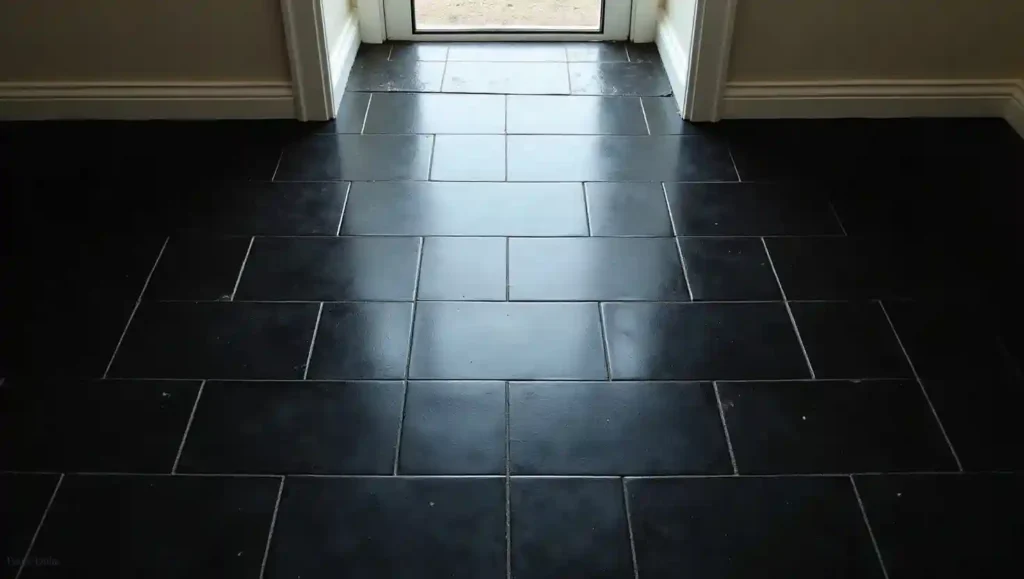
Black vinyl tile in a checkerboard or large-format layout sets a tone for the entire home from the moment the front door opens. The pattern matters enormously here. A classic black and white checkerboard is timeless and works with both traditional and contemporary interiors. Large-format black-only tiles in a brick-laid offset pattern feel more modern and architectural. Herringbone in black vinyl plank creates an incredibly sophisticated entryway that signals quality before a guest has even taken their coat off.
Because entryways need to handle dirt and moisture from outdoor footwear, black vinyl is also genuinely practical here. The dark tone conceals tracked-in debris until cleaning time, and the waterproof nature of quality vinyl makes wet umbrella drips and snow melt a non-issue.
Idea 10: Deep Teak-Look Vinyl in a Bathroom or Wet Room
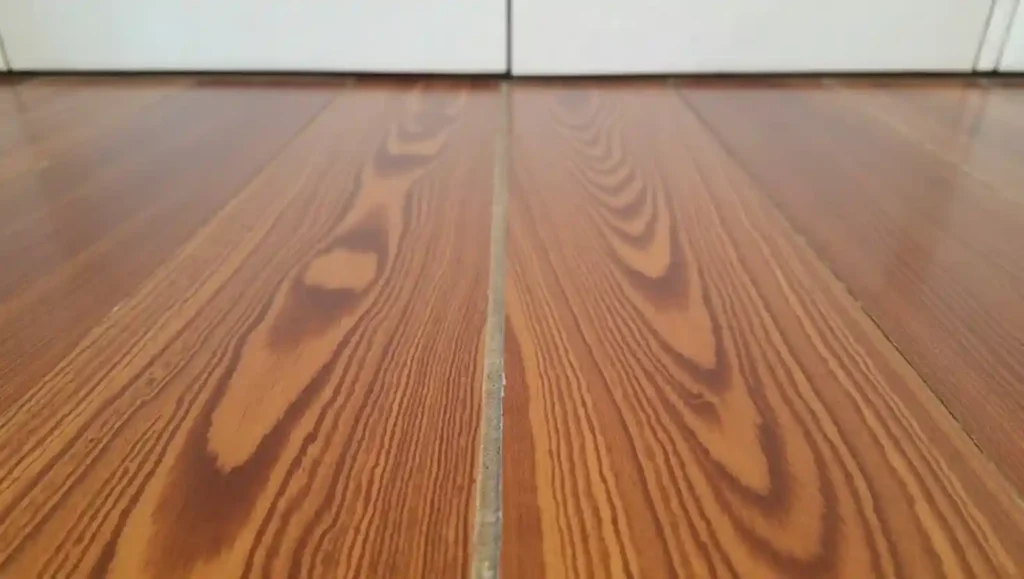
Teak has an almost mythological reputation in wet-space design. Its natural oils make it genuinely water-resistant, and it has been used in boat decking and outdoor shower floors for centuries. The problem is that genuine teak flooring is expensive, difficult to source sustainably, and requires regular oiling to maintain its properties. Teak-look vinyl captures the rich, warm brown tones and distinctive tight grain of the real thing in a format that is fully waterproof from the factory.
Deep teak-look vinyl in a bathroom creates an organic warmth that other dark bathroom floor options do not. While dark gray stone-look vinyl feels cool and spa-like, dark teak-look vinyl feels warm and natural in a way that makes bathrooms genuinely inviting rather than simply stylish. The richness of the color, which typically ranges from golden-brown to deep reddish-brown depending on the specific product, plays beautifully against white ceramic wall tile and brushed brass fixtures.
For wet rooms and walk-in showers where the floor must handle standing water, the choice of installation method matters as much as the flooring itself. The installation practices for vinyl in challenging spaces provide useful context, and understanding what genuinely makes vinyl waterproof helps you choose a product with the right core construction for wet-area use.
Idea 11: Dark Vinyl Herringbone in a Narrow Hallway
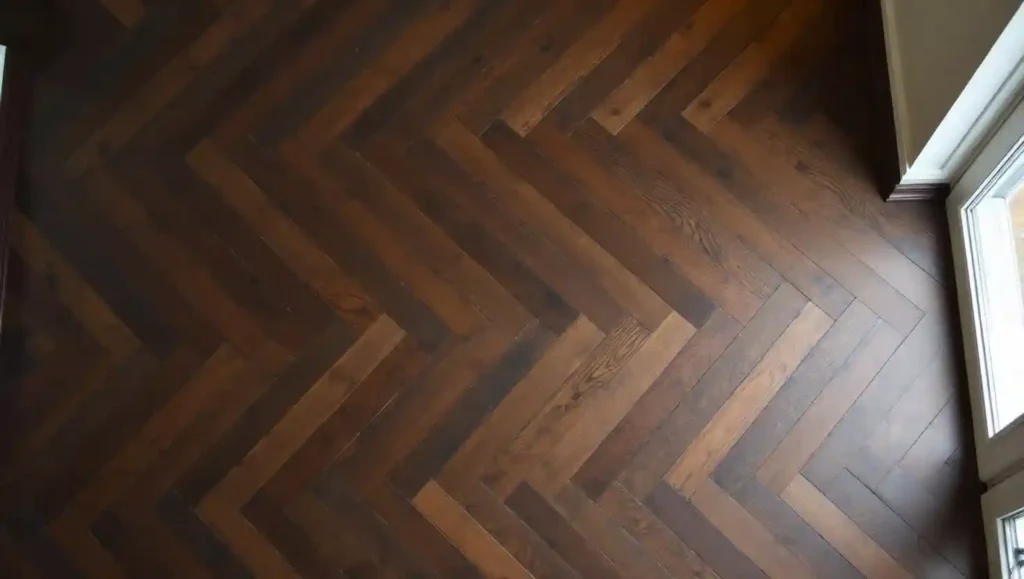
Herringbone is one of those layout patterns that changes the entire visual dynamic of a floor, and in narrow hallways specifically, it is transformative. A standard straight-laid plank in a narrow corridor draws the eye down the length of the space and emphasizes the tunnel-like quality. A herringbone pattern, particularly when laid at a 45-degree angle to the hallway axis, creates a lateral movement that visually widens the space and gives the floor an artisan quality that a straight lay simply cannot match.
In dark tones, herringbone vinyl becomes genuinely arresting. Espresso herringbone in a hallway leading from a front door communicates that the interior was designed with intention from floor to ceiling. Charcoal herringbone with a subtle texture creates an almost fabric-like quality underfoot. Dark walnut herringbone in a period property bridges traditional architectural details with a contemporary installation method.
The choice of plank width matters for herringbone installations. Narrower planks in the 3-inch to 4-inch range produce a denser, more intricate pattern that suits smaller hallways and powder rooms. Wider planks create a bolder, more graphic herringbone that works well in larger entryways and open corridors where there is enough visual space to appreciate the scale of the pattern.
Idea 12: Graphite Vinyl Plank in a Contemporary Living Room
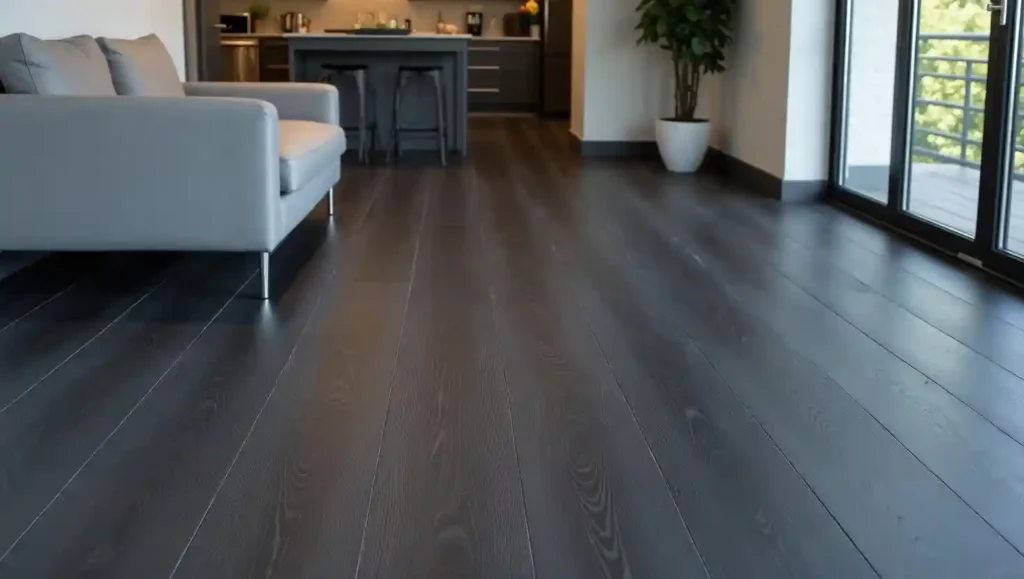
Graphite occupies a specific tonal niche that makes it one of the most design-forward choices in dark vinyl flooring. Unlike charcoal, which sits closer to gray with possible warm tints, graphite has a distinctive cool darkness with blue-black undertones that give it an almost metallic quality. In contemporary living rooms built around clean lines, minimal ornamentation, and curated color palettes, graphite vinyl plank is close to ideal.
The contemporary living room pairings for graphite floors work best when the color temperature is consistent throughout the palette. Cool-toned graphite floors anchor a room furnished with light gray concrete-look surfaces, white oak or light ash wood furniture, and upholstery in pale blue-gray, ivory, or very pale green. The floor reads as anchoring and grounding rather than heavy because everything above it is similarly cool in temperature and light in value.
Graphite vinyl is also one of the most forgiving dark floors for spaces with limited natural light. Because its undertones are cool rather than warm, it does not absorb artificial light and turn muddy the way some warm dark browns can in low-light conditions. The coolness keeps it reading clearly even under LED lighting, which gives it flexibility that warmer dark floors do not always have.
Image Prompt: Graphite-toned vinyl plank flooring in a modern living room, wide photograph from floor level showing the cool blue-black grain of the planks with their subtle metallic quality, a low-profile light gray sofa visible at the frame edge, recessed ceiling lighting casting clean light across the floor surface revealing the planks’ texture and graphite color depth, the floor occupying the majority of the image with its complex dark tone as the central subject.
Idea 13: Dark Vinyl Planks with Contrasting White Grout-Look Joints
This final idea operates at the intersection of dark vinyl plank flooring and a design detail that amplifies its visual impact: contrasting joint treatment. Some dark LVT products and installation methods create a visible joint line that, when combined with a very dark plank body, reads almost like grout between dark stone tiles. Designers working in contemporary and transitional styles have begun deliberately emphasizing this joint with slightly recessed bevel edges on the plank, creating a grid-like definition across the floor surface.
The effect is particularly strong in dark espresso and ebony vinyl tile formats where the joint lines create a structured, almost architectural quality. It transforms the floor from a single dark expanse into a composed surface with rhythm and repetition. In large rooms, this definition prevents the floor from feeling formless and heavy. In smaller spaces, the defined joints actually help by creating a sense of organized scale.
This approach works best in spaces with a clean, contemporary aesthetic where geometric precision is a design value rather than something to be hidden. Modern kitchens with handleless cabinetry, master bathrooms with linear shower niches, and open-plan spaces with exposed structural elements all benefit from the additional layer of visual structure that defined plank joints provide.
If you are exploring the various formats and construction types available before making a final choice, the breakdown of LVP, LVT, SPC, WPC, and sheet vinyl clarifies which construction is best suited to each installation scenario. For rooms with significant temperature variation or subfloor imperfections, the core construction type will affect long-term performance as much as the color choice does.
How to Choose the Right Dark Vinyl Tone for Your Room
Thirteen ideas covering a wide range of dark tones raises an obvious question: how do you decide which specific dark is right for your space? The answer comes down to four variables that interact with each other: the light levels in the room, the undertone of your existing furniture and wall colors, the size of the space, and the mood you are trying to create.
Light levels are the most fundamental variable. Rooms with abundant natural light from large windows or south-facing orientation can accommodate the darkest tones, including ebony and graphite, without the space feeling oppressive. Rooms with limited natural light should stay in the medium-dark range, espresso, dark walnut, and dark mahogany, rather than going to the near-black end of the spectrum. The reclaimed and smoked oak categories offer a middle path because their surface variation and mixed tones catch available light in ways that single-tone darks do not.
Undertone matching matters more with dark floors than with light ones because the undertone becomes more visible as the overall value drops. A warm espresso floor under cool gray walls creates a subtle visual tension that slightly warmer walls would resolve. A cool graphite floor under ivory walls works because ivory has enough warmth to bridge the cool floor without feeling disconnected. Getting the undertone relationship right is what separates dark floor installations that look intentionally designed from ones that just look dark.
Room size affects dark flooring in ways that run counter to intuition. Small rooms with high ceilings and strong natural light actually benefit from dark floors because the floor recedes visually and makes the walls and ceiling feel even taller. Small rooms with low ceilings and limited light are the ones that need the most care, and in those situations, the reclaimed wood and smoked oak categories tend to work better than single-tone darks because their surface variation and warm-cool complexity keeps the space from feeling closed in.
If you want to understand more about how vinyl performs specifically in bathrooms and kitchens where water resistance is a primary concern alongside aesthetics, the full guide on vinyl flooring for bathrooms and kitchens covers both the practical and design considerations in detail.
Maintenance Realities for Dark Vinyl Floors
Dark vinyl floors are honest about what they show and honest about what they hide. Fine dust and pet hair are more visible against a dark background than a light one, which means sweeping frequency increases. Conversely, dirt, debris, and food crumbs that accumulate between cleanings are far less visible on a dark floor than a light one, which creates a very different visual experience in high-use areas.
The finish type makes a significant practical difference. High-gloss dark vinyl shows fingerprints, footprints, and watermarks almost immediately after cleaning. Matte and satin finishes scatter light rather than reflecting it, which means the surface reads as clean for much longer between wipes. For any dark vinyl installation in a busy household, particularly one with children or pets, a matte or low-sheen finish is almost always the better choice.
Cleaning dark vinyl is the same process as cleaning any quality vinyl floor: regular dry sweeping or vacuuming to remove loose debris, followed by damp mopping with a pH-neutral floor cleaner when the floor needs deeper cleaning. Avoid any product with wax additives or high-pH cleaners, which can build up on the wear layer over time and cloud the surface. The full cleaning routine for vinyl plank flooring covers each step and which products are safe for long-term use.
One maintenance advantage that dark vinyl offers over dark hardwood is scratch visibility. On a dark hardwood floor, light-colored scratches are highly visible because they expose the wood fiber beneath the finish. On dark vinyl, the wear layer extends through the full depth of the color, which means light surface marks do not expose a different color underneath. Scratches can still appear, but they are far less conspicuous than on genuine dark wood.
The Bottom Line on Going Dark
Dark vinyl flooring is one of the most reliable ways to elevate the perceived quality of a space without a complete renovation budget. The thirteen ideas in this guide cover a spectrum from the warmest mahogany tones to the coolest near-black graphite, from traditional herringbone patterns to contemporary defined-joint tile layouts. Each has a specific context where it excels, and none of them requires the ongoing maintenance or moisture anxiety that dark hardwood brings with it.
The most important thing to remember is that going dark is a commitment to contrast. Dark floors work because they create a visual tension with lighter walls, furniture, and fixtures that gives the room its energy. Lean into that tension rather than trying to soften it with mid-tone everything, and you will get a result that looks like a deliberate design choice rather than an accident.
If you are ready to move from ideas to installation and want professional guidance on which product and format is right for your specific space and subfloor conditions, the vinyl flooring services page explains how to get started with a professional assessment.
James Miller is a seasoned flooring contractor with years of hands-on experience transforming homes and businesses with high-quality flooring solutions. As the owner of Flooring Contractors San Diego, James specializes in everything from hardwood and laminate to carpet and vinyl installations. Known for his craftsmanship and attention to detail, he takes pride in helping clients choose the right flooring that balances beauty, durability, and budget. When he’s not on the job, James enjoys sharing his expertise through articles and guides that make flooring projects easier for homeowners.
What Is Frieze Carpet? Frieze carpet is a cut-pile carpet style built around one defining characteristic: an unusually high twist level. Each fiber is twisted multiple times before being cut, which causes the strands to curl and kink rather than stand upright. The result is a surface that looks intentionally relaxed — almost shaggy —…
Drying a subfloor under laminate flooring is the process of removing trapped moisture from the plywood, OSB, or concrete substrate beneath laminate planks using airflow, dehumidification, heat, and water extraction, until the subfloor returns to a moisture content of 12% or less for wood and 75% relative humidity or less for concrete. The procedure protects…
Carpet is the quietest flooring among vinyl, hardwood, and laminate. In controlled acoustic testing, carpet with a standard pad scores between IIC 60 and IIC 75 for impact noise and between STC 55 and STC 65 for airborne noise. Vinyl ranks second, with luxury vinyl plank averaging IIC 50–70. Hardwood follows at IIC 45–55. Laminate…
Light hardwood floors have quietly become the defining feature of modern interior design. Walk into almost any newly remodeled home, and you will likely find wide-plank blonde oak stretching from the entryway all the way into the kitchen, or creamy maple running through bedrooms that feel twice as spacious as they actually are. That is…
What Makes Cork a Viable Bathroom Flooring Material Cork flooring carries a structural advantage that most bathroom flooring materials simply do not have: suberin. Suberin is the naturally occurring waxy polymer embedded within every cell wall of cork oak bark, and it is the reason cork resists moisture, repels mold, and refuses to support microbial…
Laminate flooring goes slippery when its melamine wear layer loses friction against the sole of a shoe. The cause is almost always one of five things: cleaning-product residue, a wax or polish coating, moisture sitting on the surface, a worn wear layer, or a glossy factory finish that was slick from day one. None of…