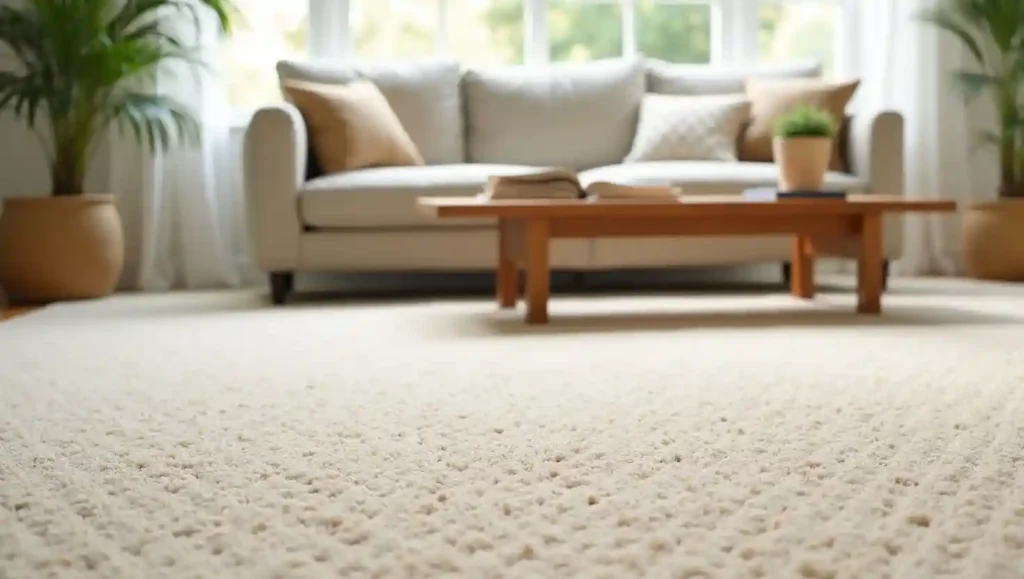
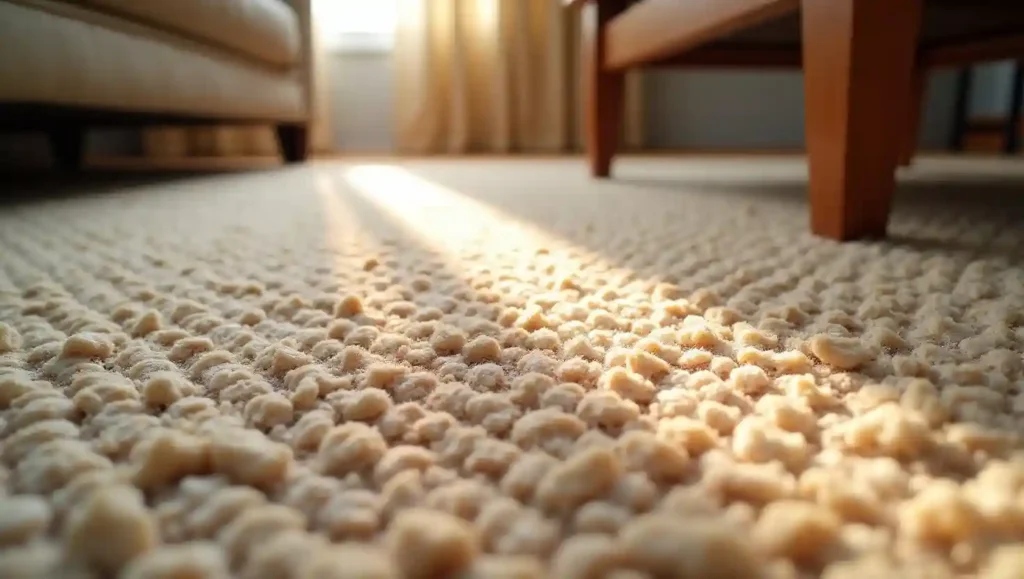
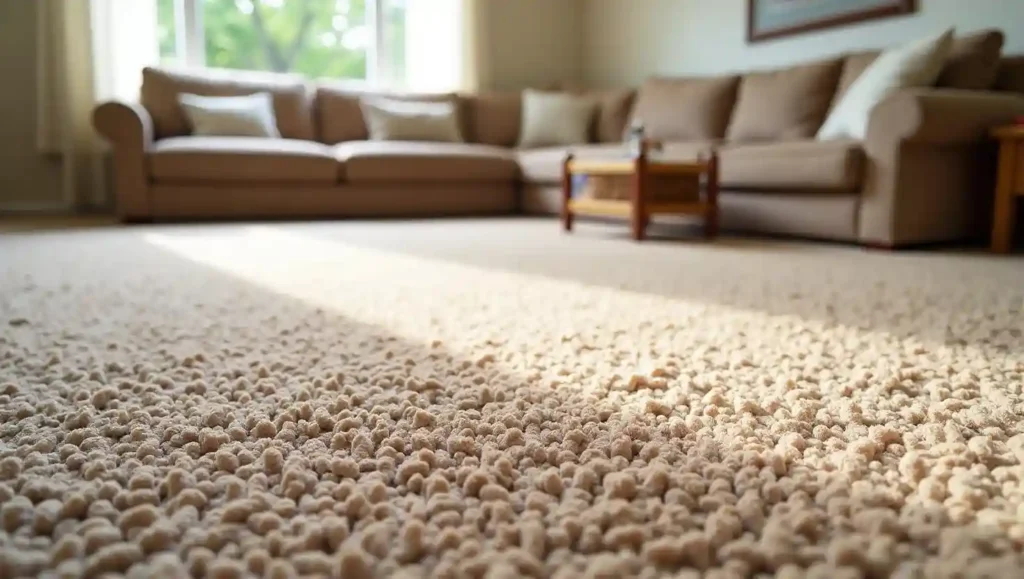
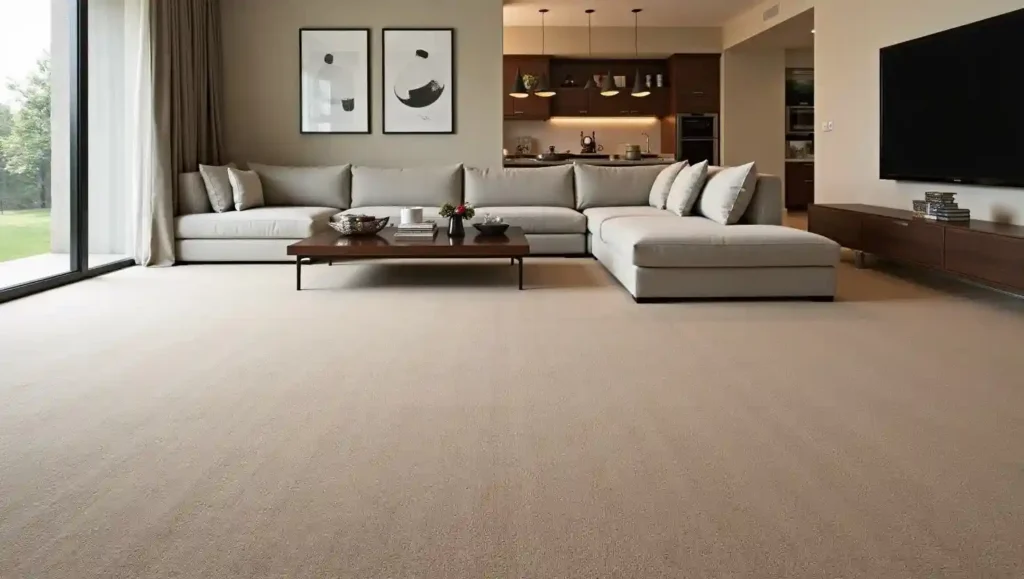
Berber carpet takes its name from the hand-woven loop pile textiles of North African tribes, and the contemporary commercial version retains what made the original so enduring: a tightly constructed loop surface that resists wear in ways smooth cut-pile carpets simply cannot match. In a living room context, this durability is valuable. The floor between the sofa and the television sees more foot traffic per square foot than almost any other surface in the house.
Modern residential Berber has moved significantly beyond the flat, featureless loops of older installations. Today’s versions incorporate multi-tone flecked yarns — subtle mixes of charcoal, cream, and warm brown wound together — that add visual texture and, practically speaking, make dirt and light debris far less conspicuous between vacuums. Earth tones dominate because they work across the widest range of interior styles: the same warm sand Berber that suits a modern farmhouse interior also reads well in a transitional or contemporary space.
One important practical note for households with cats or dogs: looped pile fibers can catch and snag pet claws, which can pull individual loops out of the backing. If pets are a major living room presence, a cut-pile option is safer. For homes without pets, or where pets are kept off the furniture and carpet, Berber is genuinely one of the most hardwearing and long-lasting living room carpet choices available. If you are weighing durability factors closely, reading through the pros and cons of Berber carpet in detail before purchasing will help set accurate expectations.
3. Deep Plush Carpet in Moody Dark Tones
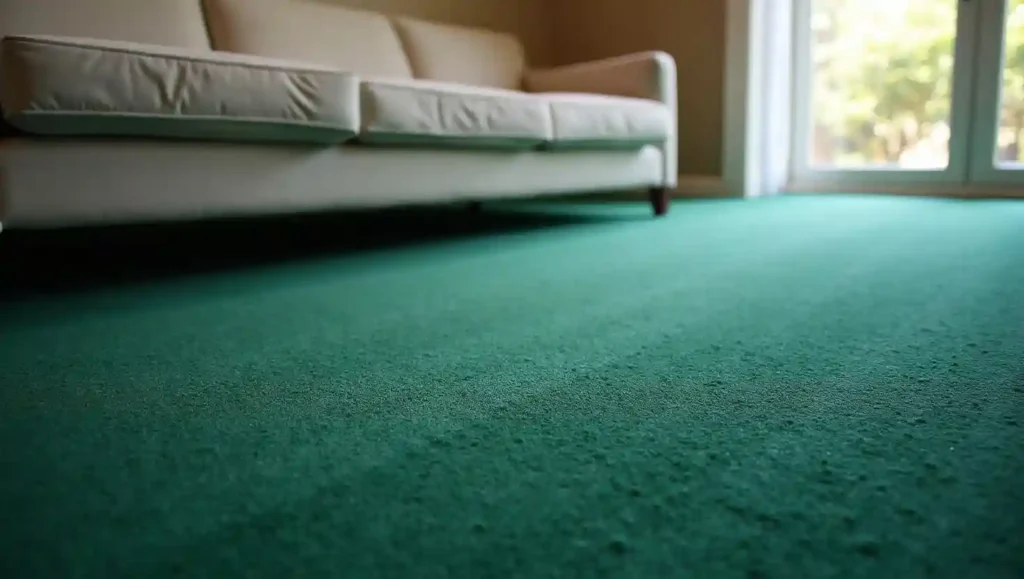
The living room is the space where deep, saturated carpet colors work most confidently, especially in rooms with good natural light. A dark charcoal, forest green, navy, or warm oxblood carpet in a dense cut-pile construction does something no neutral floor can: it grounds the entire room, making furniture feel deliberately placed and the overall design feel intentional rather than assembled by chance.
The shift toward color drenching — painting walls, ceiling, and choosing soft furnishings all within the same tonal family — has pushed dark carpet back into the design conversation in a serious way. A deep sage green carpet with sage-toned walls and warm linen upholstery creates a cohesive interior environment that feels curated. A charcoal plush carpet under a gray sofa with white walls is less about color drenching and more about anchoring a room through tonal contrast at the floor level.
Plush cut-pile in darker colors shows vacuum marks and footprints less obviously than the same pile in lighter shades, which makes it more practical than people often expect. The real maintenance consideration is surface soiling — debris and light dust are more visible on dark carpet than on medium or light tones — which means regular vacuuming matters more. For rooms with significant natural light exposure, choosing a solution-dyed fiber helps maintain color vibrancy over time. If you are weighing the long-term performance of carpet versus other flooring in terms of comfort and insulation, the insulation benefits of carpet give carpet a genuine edge that hard floors simply cannot replicate.
4. Geometric Patterned Carpet as a Statement Floor
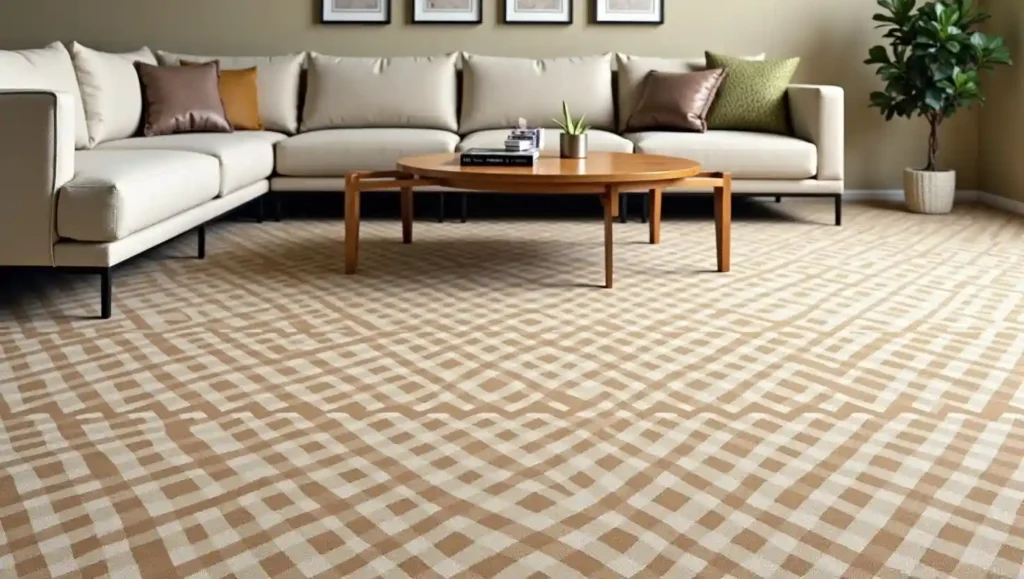
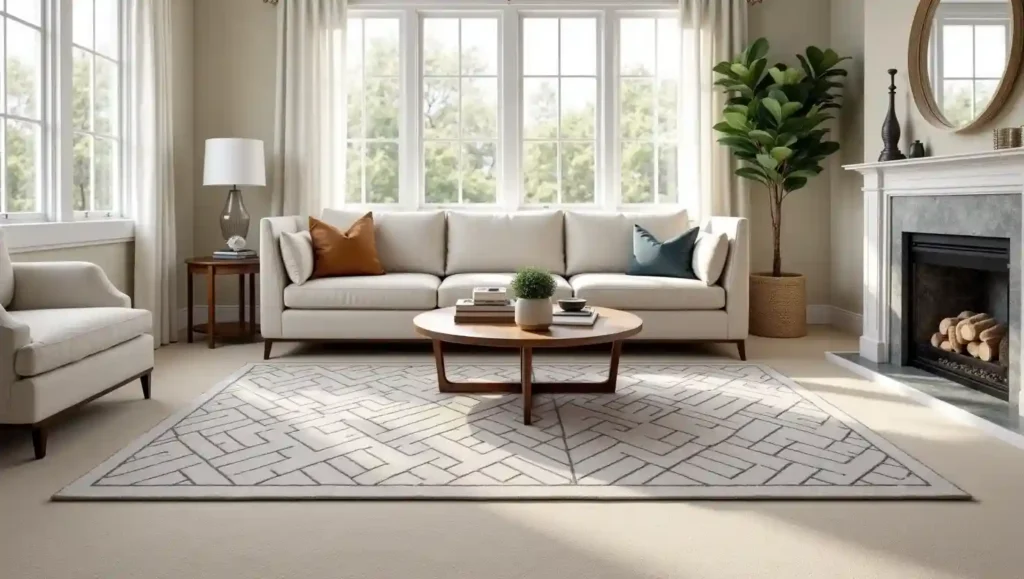
Geometric patterned carpet occupies a design space that most other flooring types simply cannot enter. A subtle tonal diamond pattern, a more assertive Moroccan trellis design, or a clean linear grid in two tones can function in a living room the way a statement sofa or a bold piece of art does — as the thing the entire design conversation orbits.
Contemporary geometric carpet designs have pulled away from the dated large-repeat patterns of the 1980s and toward much tighter, more modern executions. Small-scale hexagons, understated herringbone weaves, and tonal diamond grids look contemporary without being aggressive. Maximalist interiors are using larger, bolder versions — Moroccan-inspired repeat patterns in rich jewel tones — and the results are living rooms that feel genuinely distinctive.
Practically, patterned carpet requires slightly more planning during installation to ensure pattern alignment at seams, which adds a small amount to labor costs. The pattern also needs to be considered when the room is large enough to require multiple carpet widths joined together. For rooms where you want to explore the patterned floor direction without committing to wall-to-wall coverage, a large format area rug in a geometric pattern laid over solid flooring achieves a similar visual effect with greater flexibility. Understanding the full range of different types of carpet available, including woven and tufted patterned constructions, helps narrow down which approach best fits your installation goals.
5. Frieze (Twist) Carpet for Relaxed Casual Living Rooms
Frieze carpet — also commonly called twist carpet — uses fibers that are spun very tightly and then set at a curl, so the individual yarn ends sit at different angles across the surface rather than standing uniformly upright. The practical consequence of this construction is that frieze is among the most forgiving carpet pile types for a busy household: vacuum marks, footprints, and light surface disturbances simply do not show because there is no uniform directional surface for them to register against.
This quality makes frieze an excellent choice for living rooms in homes with children, where the floor sees toys, spills, and high-frequency traffic that would visually age a plush or Saxony cut pile very quickly. Frieze also has a casually textured appearance that suits more relaxed interior styles — coastal, bohemian, contemporary casual, or transitional spaces where a formal look would feel out of place. The pile texture adds visual depth and warmth without announcing itself aggressively.
Color-wise, frieze performs well across a wide range of tones. Mid-toned warm grays, warm taupe, and earthy brown-beige are the most popular living room selections because they hide typical soil accumulation reasonably well while still reading warm and inviting. Frieze in darker colors works beautifully but shows light debris slightly more. If carpet durability in high-traffic conditions is a primary concern alongside sound management, it is worth reading about how carpet contributes to thermal and acoustic insulation — the twisted pile of frieze is particularly effective at trapping air and dampening sound.
6. Natural Wool Carpet for a Luxurious Organic Look
Wool carpet occupies a category of its own in the living room context. It is heavier than synthetic alternatives, naturally resilient due to the crimp structure of wool fibers, inherently flame-resistant without chemical treatment, and acoustically superior to every synthetic pile type tested. Wool fibers absorb and release moisture in response to humidity changes, which gives wool-carpeted rooms a naturally regulated feel. The surface has a specific visual quality that no synthetic replicates accurately — a slight sheen, a natural variation in pile structure, and a depth of color absorption that makes even neutral tones look genuinely rich.
The practical trade-off is cost and care. Wool carpet sits at the premium end of the market, and it requires appropriate cleaning products rather than the universal carpet cleaners that work on synthetics. Harsh alkaline detergents will damage wool fibers. Regular professional cleaning is recommended. Moths can be a concern in very lightly trafficked rooms where fibers are not disturbed often, though modern wool carpets are typically treated preventatively.
For design-forward living rooms where the floor is intended to be a true quality statement — a visible investment in the space — wool in a dense loop or cut pile is unmatched. Heathered tweeds, dense felted loops, and textured cut-pile in earthy tones such as warm mushroom, dusty sage, and camel are the most popular current directions. Natural fibers are also part of a broader interest in sustainable and environmentally responsible interior choices, which makes wool increasingly relevant to buyers who want their flooring materials to align with those values.
7. Cut-and-Loop Patterned Carpet for Subtle Visual Depth
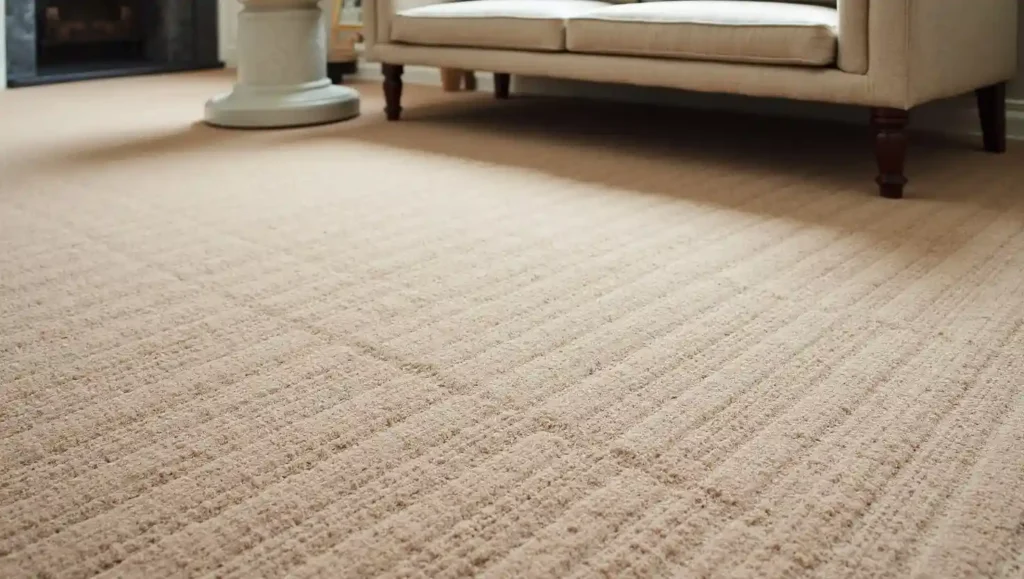
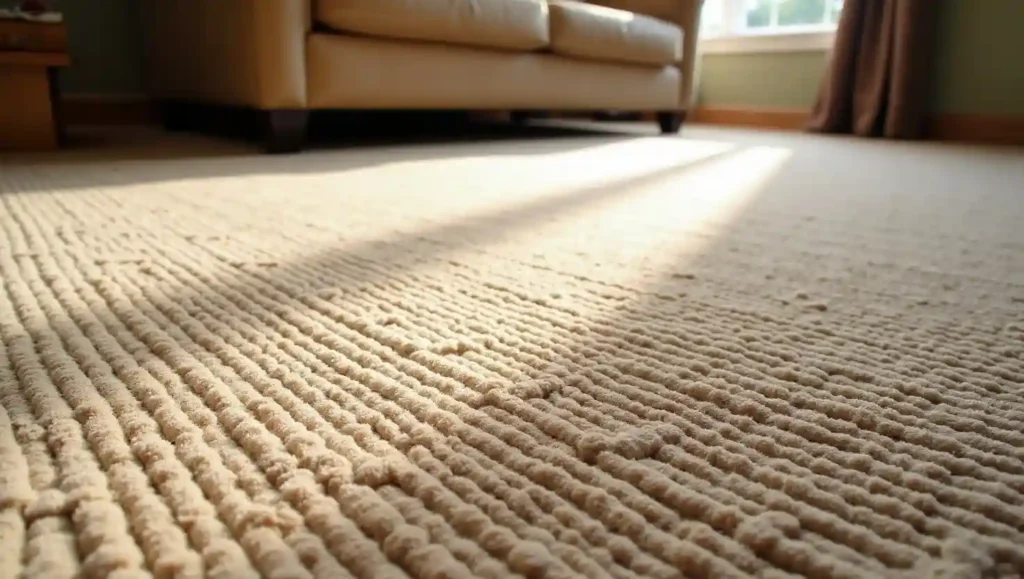
Cut-and-loop carpet combines two different construction techniques — sections of cut pile and sections of uncut loop — within the same surface. The height difference between these two pile types creates a dimensional, sculptural quality that reads as pattern without requiring dye variation. The effect is subtle: a tone-on-tone appearance where the visual interest comes entirely from surface texture rather than color contrast.
This is one of the most underutilized but genuinely practical options for living rooms where the goal is a floor with visual character that still feels neutral and broadly compatible with the rest of the design. Because the pattern is structural rather than chromatic, cut-and-loop carpet can be used in spaces with already-busy wallpapers, patterned upholstery, or layered textiles without creating visual conflict. It reads as sophisticated rather than statement-driven.
In terms of durability, cut-and-loop performs well in living rooms because the looped sections reinforce the surface against crushing, while the cut sections provide the softer feel that most homeowners prefer. The textural variation between pile heights also disguises everyday wear patterns more effectively than uniform surfaces. Common design executions include subtle square or diamond grid reliefs, gentle scrolling or botanical shapes, and contemporary geometric reliefs. This type of carpet pairs particularly well with the transitional design style that dominates a large share of contemporary living room interiors.
8. Wall-to-Wall Carpet in Cool Gray for Modern Interiors
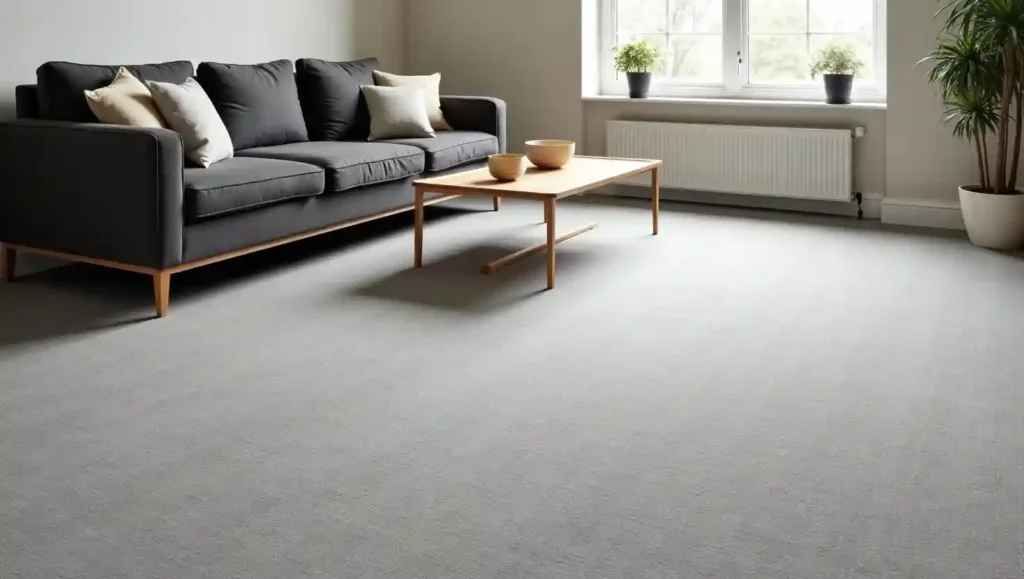
Cool gray wall-to-wall carpet became the defining neutral of interior design for most of the 2010s and early 2020s, and while warm neutrals have taken over a significant portion of that territory recently, cool gray retains genuine relevance for contemporary and modern interior design styles. A clean, light to mid-cool gray carpet in a textured or low-pile construction provides the visual clarity that modern interiors require: it recedes without disappearing, providing a clean backdrop that makes white walls, charcoal furniture, and brushed metal hardware read with the kind of graphic contrast that defines the aesthetic.
The key to making cool gray carpet work in a living room without the space feeling cold or clinical is layering warmth through other materials. A warm timber coffee table, off-white or stone-toned upholstery, and warm-toned lighting fixtures all counterbalance the cool floor tone and create a room that feels modern without reading as sterile. Textured pile adds to this warming effect — smooth plush in a cool gray can tip into coldness, while a lightly textured or loop construction retains some visual complexity that softens the effect.
One category where cool gray carpet particularly excels is open-plan living areas where the carpet zone is visually adjacent to hard flooring in an adjoining kitchen or dining space. A cool gray carpet in the lounge zone creates a clear visual boundary and anchor for the seating arrangement without competing with the hard flooring tones. Understanding how different flooring types interact across an open plan is part of a broader decision about carpet versus vinyl flooring — comparing the acoustic, comfort, and maintenance profiles of each before making a final call.
9. Carpet Layering — Area Rug Over Wall-to-Wall Carpet
Layering an area rug over wall-to-wall carpet is one of the most effective ways to zone a living room, add a design focal point, and introduce pattern or color without committing to a full carpet replacement. It is also significantly more complex to execute well than it appears. The wrong rug on top of carpet looks accidental; the right one looks curated and intentional.
The rules that make carpet-over-carpet work are mostly about pile height and visual contrast. A flatweave rug, a low-pile kilim, or a woven jute rug over a medium or low-pile wall-to-wall carpet provides a stable, crisp edge rather than the rolled or slipping edges that thicker area rugs create over plush carpets. The rug needs to be large enough to sit under the front legs of all major seating pieces — too small and it reads as a decorative mat rather than a proper zone anchor.
From a design standpoint, the layering approach works beautifully in living rooms where the wall-to-wall carpet is a functional, neutral choice (textured taupe, gray Berber, mid-tone frieze) and the homeowner wants to inject personality, pattern, or a specific color direction through the area rug. A jute-woven area rug over neutral Berber creates a natural, organic look. A vintage-effect patterned rug over smooth taupe carpet adds character without the permanence of patterned wall-to-wall coverage. For living rooms where the desire is a more casual or global aesthetic, the principles that apply to rug selection over hard floors translate equally well to rug-over-carpet layering in terms of size, backing, and visual proportion.
10. Soft Sage Green or Earthy Terracotta Carpet for Nature-Inspired Rooms
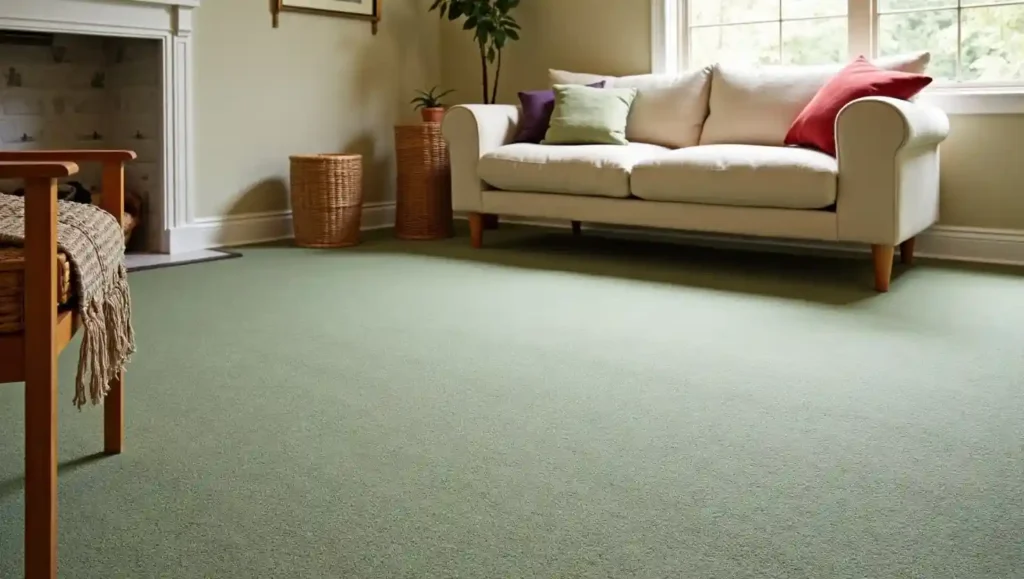
Color has returned to living room carpet in a measured, nature-referenced way. The dominant direction is not the saturated jewel tones of an earlier maximalist moment but something softer and more considered: sage green, dusty terracotta, muted clay, and warm olive. These are pigment-adjacent tones that reference the natural landscape rather than the paint chart, and they work in living rooms because they are warm without being loud and distinctive without demanding the room be designed around them.
Sage green carpet in a textured cut-pile or frieze construction suits living rooms with warm timber furniture, linen-toned upholstery, and botanical or natural accessories. The combination reads as a complete design language without requiring careful coordination — the earthiness of the carpet color is inherently compatible with the earthy materials and warm whites that dominate the natural interior design style. Terracotta is warmer and more assertive than sage, working best in rooms where there is already some warmth in the wall tone or where furniture leans toward rattan, leather, or warm timber tones.
In practical terms, earthy mid-tones in carpet are among the most forgiving for everyday use. They neither show light surface debris as obviously as very dark tones nor show heavy soil as obviously as very light ones. They sit in the sweet spot of practical invisibility while still providing genuine design distinction. The broader shift toward bringing natural references into the interior — which includes natural fiber floors, organic texture in upholstery, and botanical prints — makes earthy carpet tones a cohesive part of a whole-room design direction. This connects to the same sensibility that drives interest in flooring for relaxed, nature-connected interiors across multiple flooring categories.
11. Acoustic Carpet for Living Rooms with Open Plans or Hard Parallel Walls
The acoustic function of carpet in a living room is one of the least discussed but most practically significant reasons to choose it over hard surface alternatives. Open-plan living spaces — where the kitchen, dining area, and lounge share a continuous volume — are acoustically problematic because sound generated in any zone reflects off every hard surface and travels across the entire space. Television audio, conversation, kitchen noise, and the sound of footsteps all compete and overlap. Carpet in the living zone absorbs sound at the floor level, reducing reverberation and creating a measurable acoustic separation between zones without any physical barrier.
Research consistently shows that carpet can reduce airborne noise by around 35% on its own, with the addition of a quality acoustic underlay pushing that figure to between 50% and 70%. This is not a marginal improvement — it is the difference between a living room that functions as a genuinely comfortable gathering space and one that feels noisy and slightly fatiguing at the end of the day. The dense, high-pile construction types — plush cut-pile and high-pile frieze — perform best acoustically, though even a medium-density loop pile provides significant benefit over bare hard flooring.
Beyond the acoustic benefits, a dense carpet with a quality underlay provides meaningful thermal insulation, retaining warmth in the living room at a level that hard floors cannot match. In homes with underfloor heating, the interaction between the carpet and the heating system matters — carpet slows the heat transfer from the floor surface, which affects the efficiency of radiant heat systems. This is not necessarily a disqualifying factor, but it is worth understanding how your heating setup and carpet pile density interact before installation. For homeowners looking to explore the broader relationship between carpet and energy costs, there is genuinely useful information on how carpet contributes to maintaining comfortable room temperatures without proportional increases in heating output.
The carpet type best suited to the acoustic living room goal is a dense-backed, medium to high-pile cut or cut-and-loop construction paired with a thick, dense underlay. Wool performs best acoustically among fiber types; nylon and triexta blends provide a good synthetic alternative with the durability required for high-traffic living areas. The combination of acoustic performance, thermal benefit, and genuine comfort underfoot makes carpet, properly specified, one of the most functional flooring decisions a living room can have.
Choosing the Right Carpet for Your Living Room
The eleven ideas above cover a range from the most practical and hardwearing options to the most design-forward and material-specific choices. What ties the best living room carpet decisions together is the alignment between what the floor needs to do — handle specific traffic patterns, suit the acoustic environment, integrate with the design direction — and what the carpet is actually constructed to deliver.
Pile type is the first filter. For living rooms with heavy daily use, loop pile or textured cut-pile outperform smooth plush over time. For rooms with pets, cut-pile eliminates the snagging risk associated with loop constructions. For rooms where the floor is intended to be a deliberate design statement, patterned or colored cut-pile or cut-and-loop options provide the most expressive options. For rooms prioritizing acoustic comfort, dense constructions paired with quality underlays deliver the most measurable benefit.
Fiber type is the second filter. Nylon offers the best durability at mid-range price points. Triexta combines inherent stain resistance with a softer feel. Polyester provides softness and color richness but compresses more over time under heavy furniture and foot traffic. Wool sits at the premium tier with the best acoustic, thermal, and aesthetic qualities, but requires appropriate maintenance and a higher upfront investment. If you are comparing your living room carpet decision against the broader context of what the full range of your home’s flooring categories involves, the full breakdown of carpet pros and cons gives a structured framework for that comparison.
Color follows from the practical decisions rather than leading them. The most functional living room carpet colors sit in the mid-toned range — warm taupe, soft gray, earthy sand, heathered mushroom — because they conceal the ordinary accumulation of foot traffic marks, light soil, and surface debris most effectively while remaining broad enough in their aesthetic compatibility to work with a wide range of furniture and decor directions. Bold and saturated colors are entirely achievable in living rooms where maintenance standards are high and the design direction calls for them; they simply require a clear understanding of the maintenance commitment they bring.
Installation quality matters as much as product selection. Carpet stretched correctly over quality padding lies flat, wears evenly, and looks better for longer. Poorly stretched carpet buckling at the edges or developing ripples across the room is not a product failure — it is an installation failure. Choosing experienced installers who stretch carpet properly using power stretchers rather than knee-kickers alone is worth factoring into the total cost of the project. The long-term performance you get from even an excellent carpet is significantly influenced by the quality of the installation under it. For a thorough look at how professional carpet installation compares to DIY in terms of outcome, the comparison between DIY and professional installation is a useful reference point before making that decision.
James Miller is a seasoned flooring contractor with years of hands-on experience transforming homes and businesses with high-quality flooring solutions. As the owner of Flooring Contractors San Diego, James specializes in everything from hardwood and laminate to carpet and vinyl installations. Known for his craftsmanship and attention to detail, he takes pride in helping clients choose the right flooring that balances beauty, durability, and budget. When he’s not on the job, James enjoys sharing his expertise through articles and guides that make flooring projects easier for homeowners.
What Is Birch Flooring? Birch is a domestic hardwood native to North America and parts of Northern Europe, and it has a long history in residential flooring. When people talk about birch as a flooring material, they are almost always referring to one of two commercially relevant species: yellow birch (Betula alleghaniensis) or sweet birch…
Amorim is not a flooring brand in the conventional sense. It is a division of Corticeira Amorim, a Portuguese cork manufacturing group founded in 1870 that has grown into the world’s largest cork processing company. Most people know the Amorim name through cork stoppers and cork-based flooring, but the company has a parallel product arm…
Your living room carpet works harder than any other floor in the house. It absorbs foot traffic from every member of the household, takes the weight of furniture that never moves, and is expected to look good for a decade or more. Getting that decision wrong is expensive. Getting it right changes how a room…
Most people vacuum their carpets the wrong way — not because they are careless, but because nobody ever explained that technique actually matters here. You push the machine forward, pull it back, and call it done. The carpet looks fine until it doesn’t, and by then the damage is already below the surface where you…
Sunlight does not ask permission before it starts destroying your carpet. It enters through south- and west-facing windows every single afternoon, and the damage it delivers is cumulative, invisible at first, and entirely irreversible once it sets in. By the time you see a faded band of color running across your living room floor, the…
Carpet and vinyl flooring sit at opposite ends of the flooring spectrum — one built for softness, warmth, and acoustic comfort; the other engineered for water resistance, durability, and low maintenance. Yet when homeowners face an actual flooring decision, the real question is never as simple as “which is better?” The right answer depends entirely…