1. Light Oak Waterproof Laminate in a Modern Bathroom
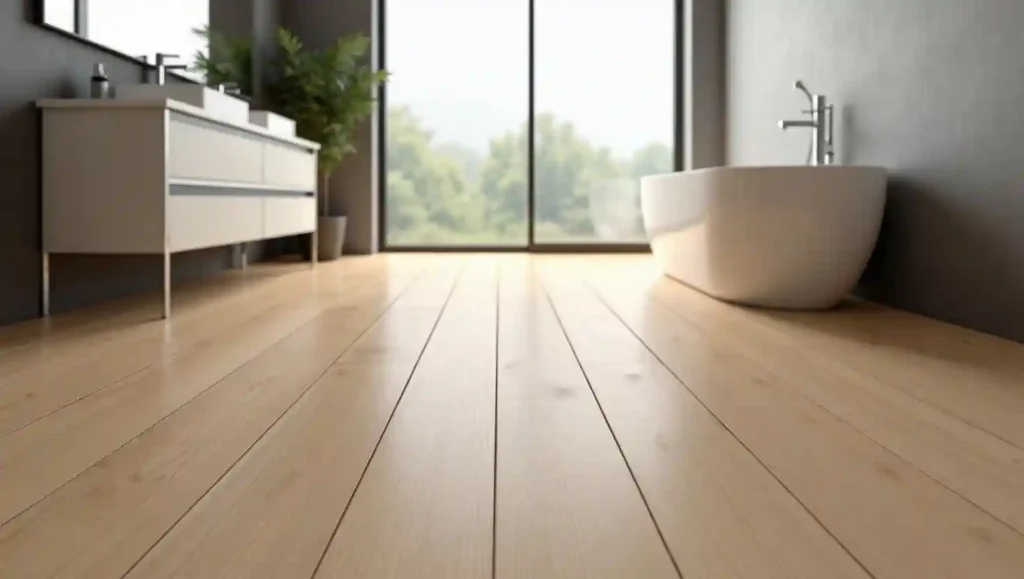
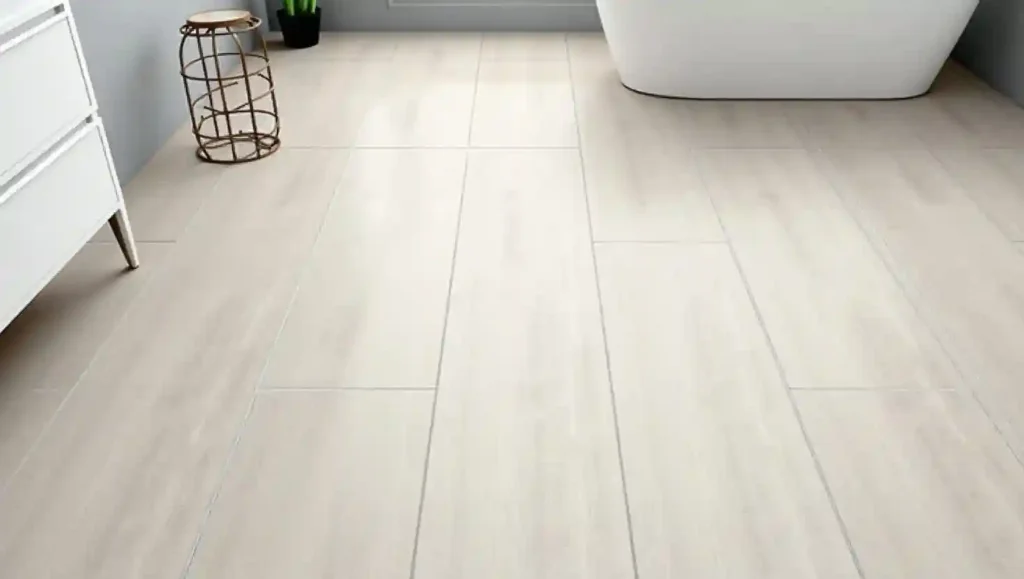
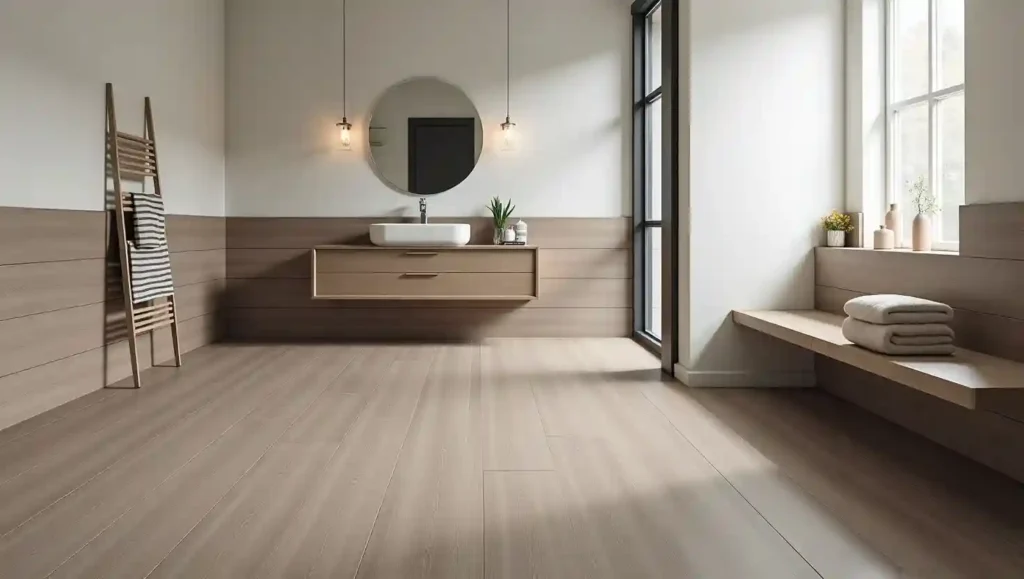
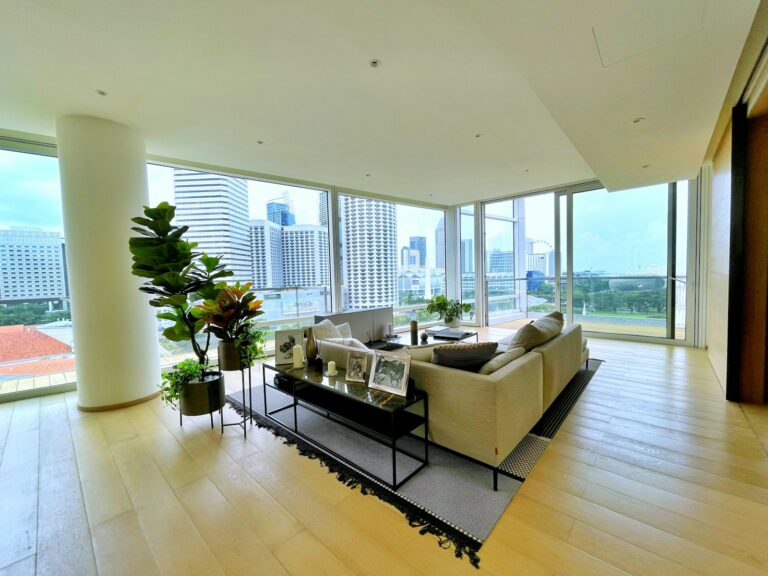
Light oak is the default wood tone of modern interior design right now, and for good reason. The pale, warm grain reads as clean and contemporary without veering cold. In a bathroom context, where white walls, chrome fixtures, and neutral tile are the backdrop, a light oak waterproof laminate floor introduces the one thing that space often lacks: organic warmth.
The format matters here. Wide planks — anywhere from 6 to 9 inches — reduce the number of seams, which is always a benefit in a moisture-heavy room. Fewer seams means fewer potential points of water entry, and it also creates a cleaner visual sweep across a floor that is usually competing with grout lines, grout joints, and fixture bases for visual attention.
For this application, look for a matte or low-sheen finish rather than a high-gloss surface. Glossy floors in bathrooms show every water droplet and footprint, which becomes exhausting to maintain. A hand-scraped or wire-brushed texture not only hides minor scuffs and water marks but also adds an authenticity that flat, smooth laminates lack. An AC4 rating is appropriate for a residential bathroom — AC3 is the minimum, but the step up in wear resistance is worth it given how frequently bathroom floors get wet and wiped.
2. Grey Waterproof Laminate for a Basement Living Space
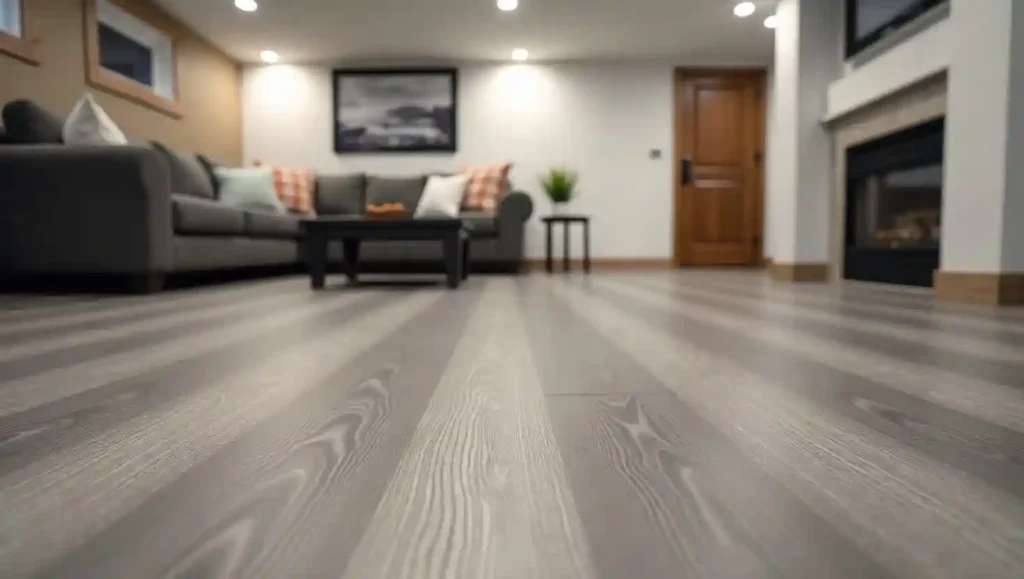
Basements present one of the most challenging flooring environments in the home. Concrete subfloors retain moisture, humidity levels fluctuate seasonally, and any plumbing above can fail. Traditional laminate has no place in a finished basement, but waterproof laminate with a sealed HDF or composite core changes the risk profile significantly — provided you also use a quality moisture barrier beneath the flooring and leave proper expansion gaps at the perimeter.
For a basement living room or rec room, grey laminate is a practical and aesthetically smart choice. Cool grey tones work well under artificial light, which is the primary light source in most below-grade spaces. They also read as fresh and modern rather than cave-like, which is the visual challenge basements always present. A medium-grey tone with subtle undertones — warm greige rather than stark slate — tends to be the most livable choice.
Plank width in a basement should favor the wider end. A wider plank makes the space feel larger and also ties together any sectioned areas — a home gym corner, a media zone, a playroom — without creating visual fragmentation. Thickness is worth paying attention to too. A 12mm waterproof laminate will absorb minor subfloor imperfections better than an 8mm option, and in a basement where the concrete slab is rarely perfectly level, that resilience matters.
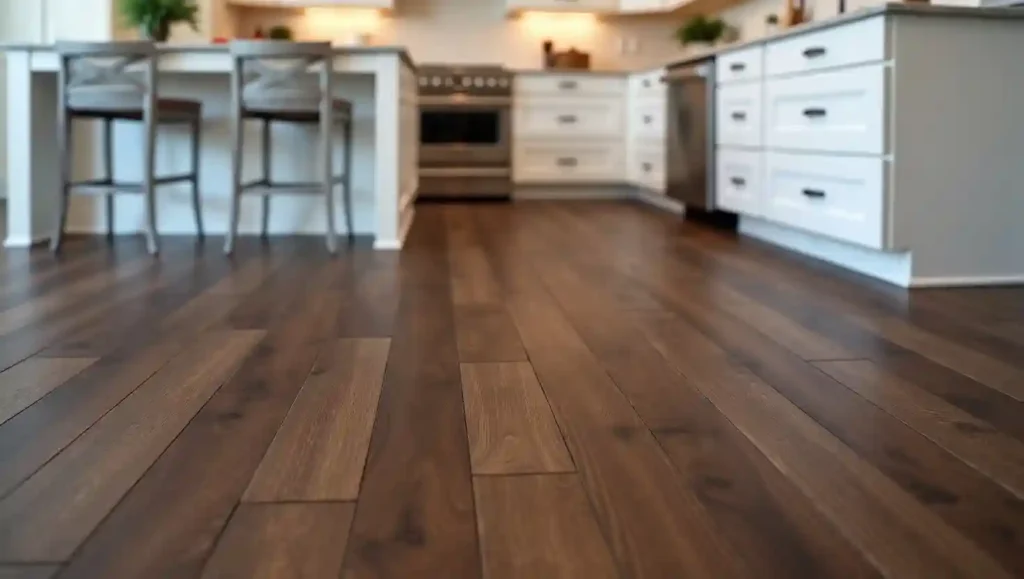
Dark laminate in kitchens divides opinion, but when it works, it works dramatically well. A deep walnut-toned waterproof laminate against white or light grey cabinetry creates a contrast that anchors the room. The floor becomes the visual weight that the rest of the kitchen wraps around, and because laminate’s surface is consistent and clean-looking, it holds its own against reflective countertops, cabinet hardware, and appliance finishes.
The kitchen is one of the rooms where the waterproof specification is non-negotiable. Standing water around the sink, steam from cooking, spills from pots, and condensation from the refrigerator base make kitchens one of the most moisture-demanding spaces in the house. Waterproof laminate with a sealed core and sealed edge joints handles all of this far better than standard or even water-resistant laminate.
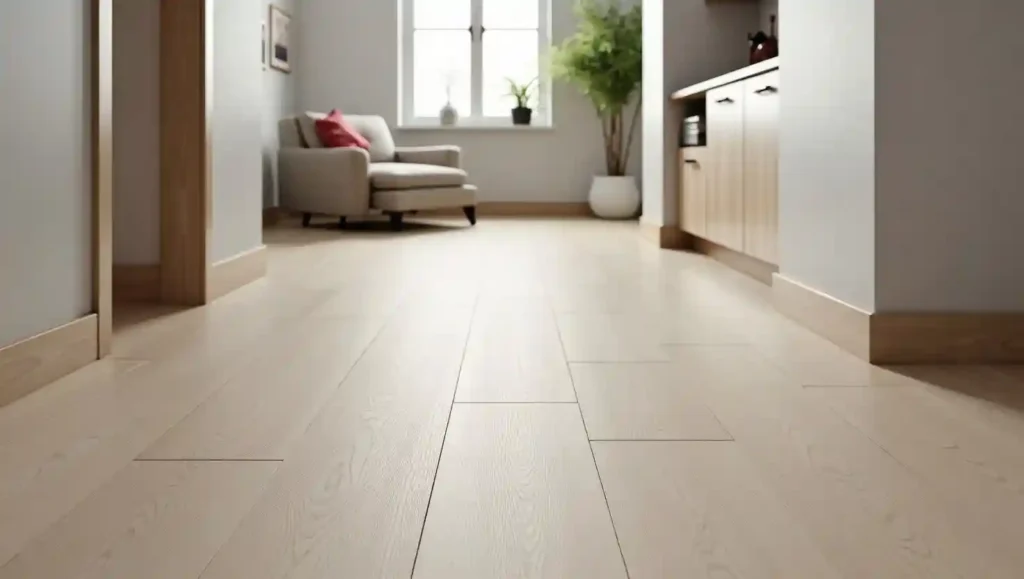
For a dark walnut look, prioritize a product with an embossed-in-register (EIR) finish — meaning the surface texture aligns with the printed grain pattern beneath it. This creates a tactile depth that makes dark laminates look far more convincing. Without EIR, dark tones can look flat and plasticky, particularly under kitchen task lighting. Also note that dark floors show dust and light debris more readily than mid-tone options, which is worth considering in a room where crumbs are a daily reality.
4. Herringbone Waterproof Laminate in a Hallway
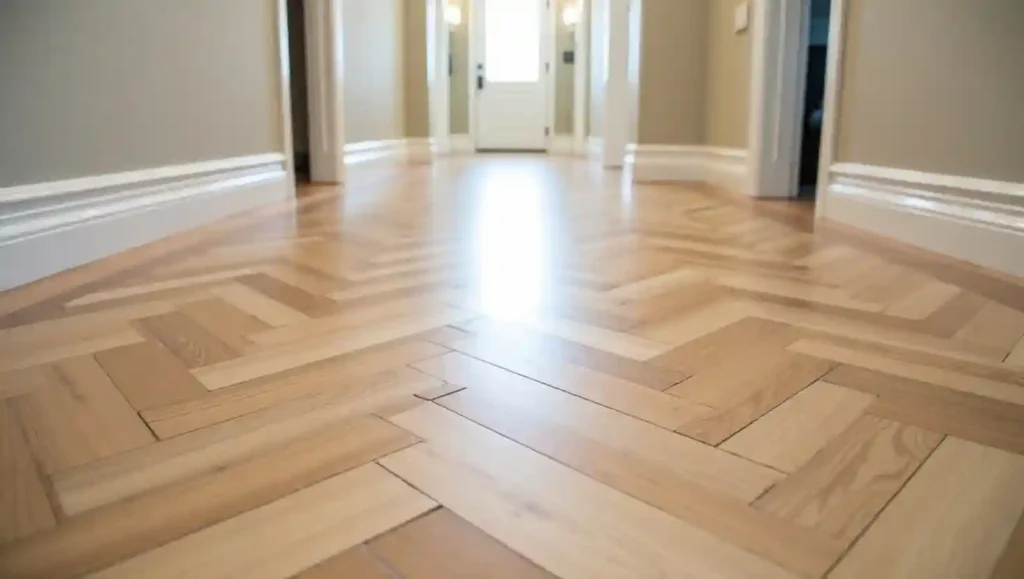
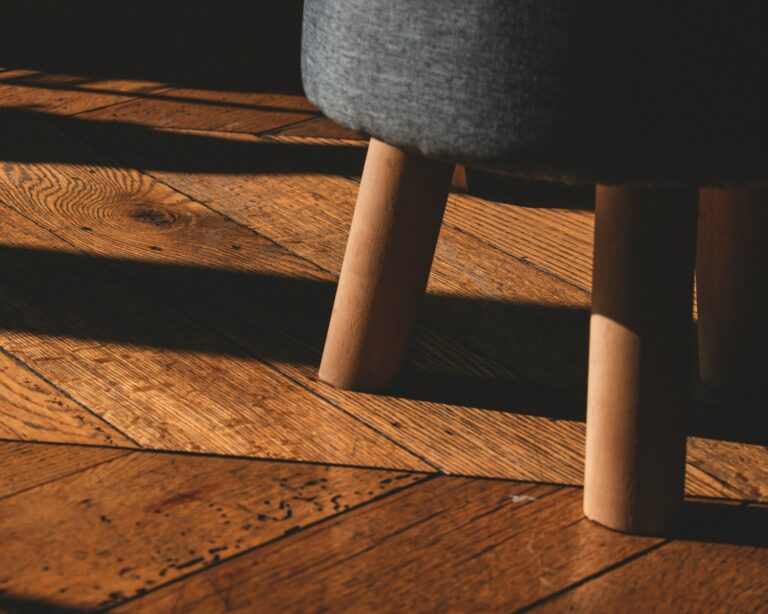
The herringbone pattern does something that straight-lay laminate cannot: it turns the floor itself into a design statement. Two planks laid at 90 degrees to each other create an interlocking zigzag that has appeared in everything from Versailles-era parquet to contemporary Scandi interiors. In a narrow hallway — a space that can easily feel like a corridor — herringbone breaks the monotony, creates diagonal movement that draws the eye through the space, and makes the floor the most interesting thing about an otherwise functional room.
Waterproof laminate in a herringbone pattern is now available from multiple manufacturers as a pre-designed format, which simplifies installation considerably. Alternatively, standard plank waterproof laminate can be cut and laid in a herringbone orientation, though this requires more planning and generates more material waste. Either way, the installation demands a precise subfloor — any unevenness is amplified by the angular pattern.
Tone selection for hallway herringbone should account for light levels. A light or mid-tone oak in herringbone reads as elegant and bright in a naturally lit hallway. A darker tone brings drama but can make a short hallway feel compressed. If the hallway connects to a main living area, tying the herringbone tone to the adjacent floor color creates continuity even when the pattern changes.
The full picture on why herringbone works the way it does visually — and how to plan the layout correctly — is covered in detail in the herringbone laminate flooring ideas guide.
5. Stone-Look Waterproof Laminate in a Bathroom
Stone-look laminate challenges the assumption that laminate always has to mimic wood. Modern print technology allows manufacturers to replicate the veining, tonal variation, and surface texture of slate, travertine, limestone, and concrete with genuinely convincing results. In a bathroom where the cold, hard reality of actual stone would require heated underlayment to be comfortable underfoot, a stone-look laminate gives you the aesthetic without the thermal drawback.
Grey or beige stone-look waterproof laminate works particularly well in bathrooms that lean minimalist or spa-like. The absence of visible wood grain reads as quieter and more uniform, which suits spaces intended for relaxation. Large-format stone-look planks — typically wider and slightly shorter than traditional plank formats — reduce the number of visible joints and reinforce the impression of continuous stone slabs.
One practical note: stone-look laminate with a textured embossed surface can trap soap residue and hard water deposits in its surface grooves more readily than a smooth-finished product. Choosing a finish with a shallow texture profile makes cleaning more straightforward, which matters in a bathroom that gets daily use.
6. White or Whitewashed Waterproof Laminate in a Coastal Bedroom
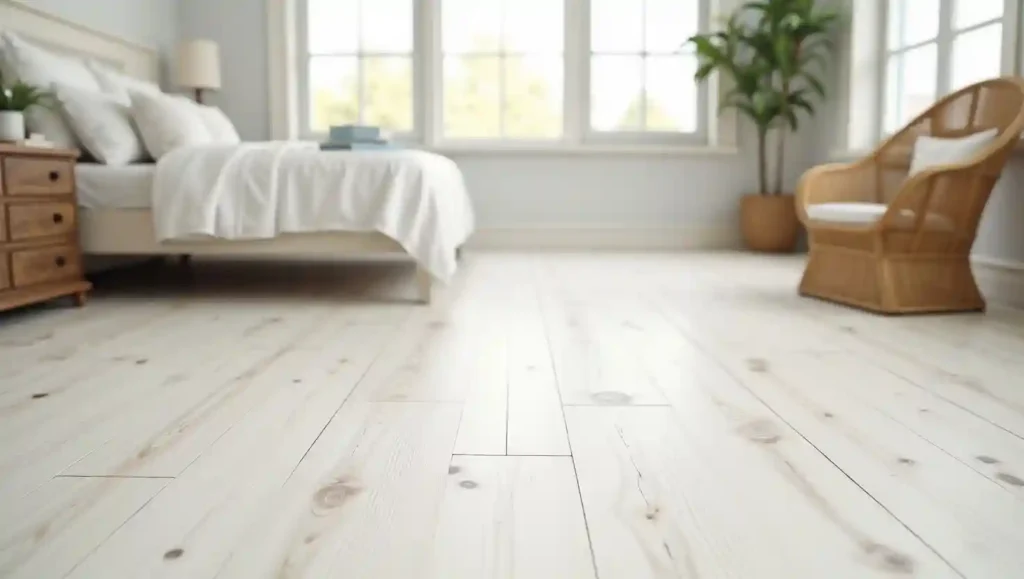
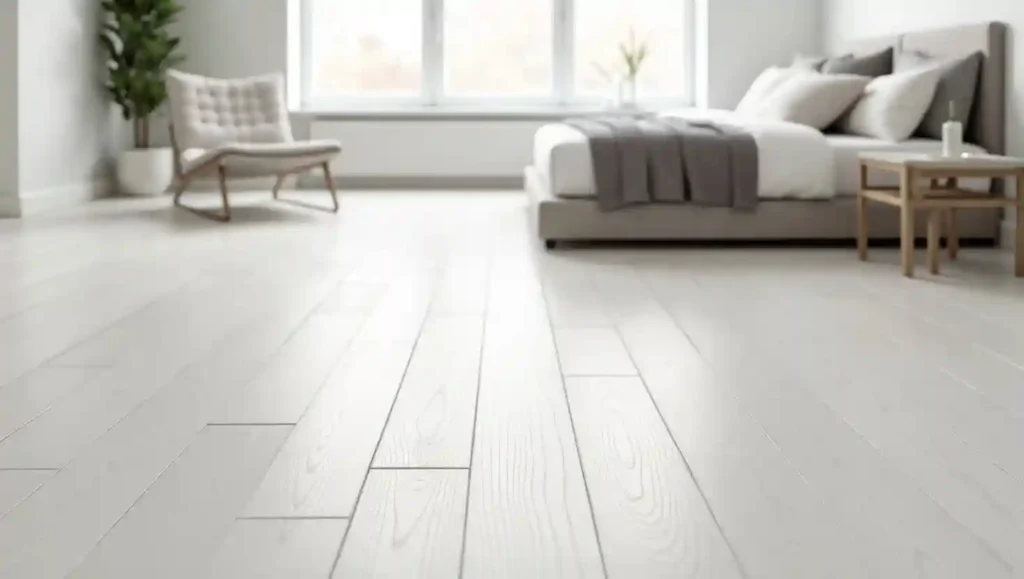
Coastal design leans on a specific material vocabulary: bleached wood, natural linen, whitewashed surfaces, and materials that feel like they’ve been weathered by salt air. Whitewashed or white-toned waterproof laminate fits this vocabulary exactly. The pale, sun-bleached finish reads as relaxed and informal — appropriate for a bedroom meant to evoke vacation rather than formality.
In a bedroom, the case for waterproof laminate over standard laminate is less about immediate water risk and more about humidity resilience. Coastal environments — whether you’re literally near the ocean or simply want that feel — tend toward higher ambient humidity. A waterproof-core laminate handles seasonal humidity swings without the gapping and cupping that standard laminate can develop over time.
White laminate works best in rooms with abundant natural light. Under artificial light alone, very pale floors can look flat and cold. Pair with natural fiber rugs, linen window treatments, and furniture in light timber or rattan to keep the coastal feel grounded. The floor should feel like sun-bleached driftwood, not a hospital corridor — the choice of finish (matte, with subtle grain variation) makes all the difference.
7. Wide-Plank Waterproof Laminate for an Open-Plan Living and Kitchen Space
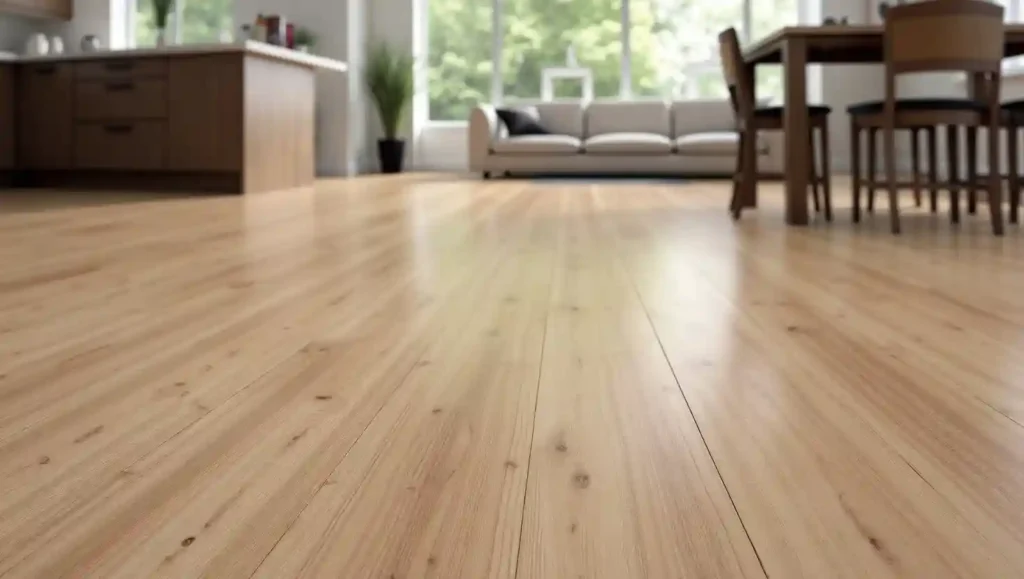
Open-plan layouts create a specific flooring challenge: how do you use a single floor to unify a kitchen, dining area, and living zone that each have different practical demands? The kitchen needs water resistance. The living area needs comfort and acoustics. The dining area needs durability against chair legs and foot traffic. Wide-plank waterproof laminate handles all three demands from a single product.
Running the same plank throughout the entire open-plan space — without transitions or changes in direction at room boundaries — is the most powerful visual move you can make in this context. It makes the floor read as a continuous plane, which makes the space feel larger and more cohesive. Wide planks (7 inches and above) reinforce this effect because fewer visible seams means a calmer, more unified visual surface.
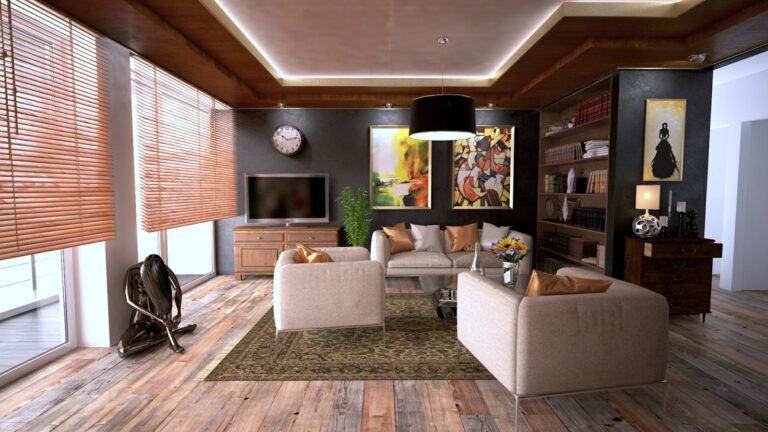
For a medium-tone oak or hickory look in an open-plan setting, the floor becomes the element that ties together disparate furniture styles, cabinet finishes, and décor choices. It’s neutral enough to recede when you want it to, and rich enough to anchor the room when the rest of the furnishings are light or minimal.
The visual direction of the planks in a large open space is a decision worth making deliberately — the options and how they affect perceived room dimensions are explored in detail in the article on which direction to lay laminate flooring.
8. Dark Grey Waterproof Laminate in a Contemporary Master Bath
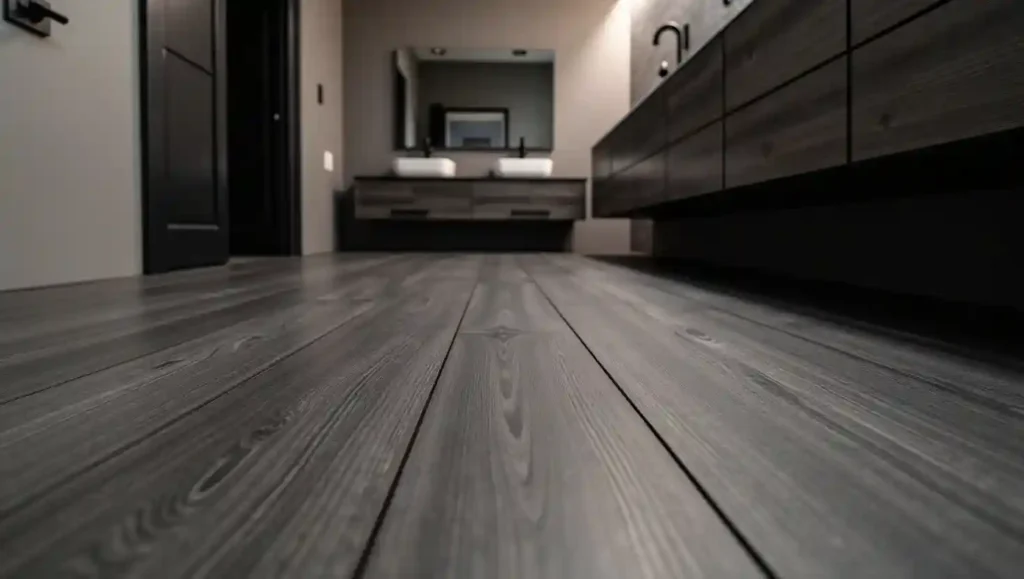
Dark grey waterproof laminate in a master bathroom sits in the intersection of industrial and luxury design. When paired with matte black fixtures, wall-hung vanities in dark timber or charcoal, and large-format grey wall tiles, a dark grey laminate floor creates a space that feels intentional and considered — the kind of bathroom that photographs well and feels like a boutique hotel rather than a domestic utility room.
This look requires careful management of light. Dark floors absorb rather than reflect, which means artificial lighting placement becomes critical. Recessed ceiling lights, LED strips under the vanity, and a well-lit mirror all compensate for what the floor takes in. Without adequate lighting, a dark grey laminate bathroom can feel shadowy and closed-in regardless of its size.
For the floor specification itself, a dark grey waterproof laminate with a wire-brushed or sawn texture breaks up the flat appearance that solid-color dark floors can produce. The slight surface variation catches light differently at different angles, giving the floor visual movement that makes it feel luxurious rather than industrial. An AC4 or AC5 rating provides durability appropriate for a master bathroom with high daily use.
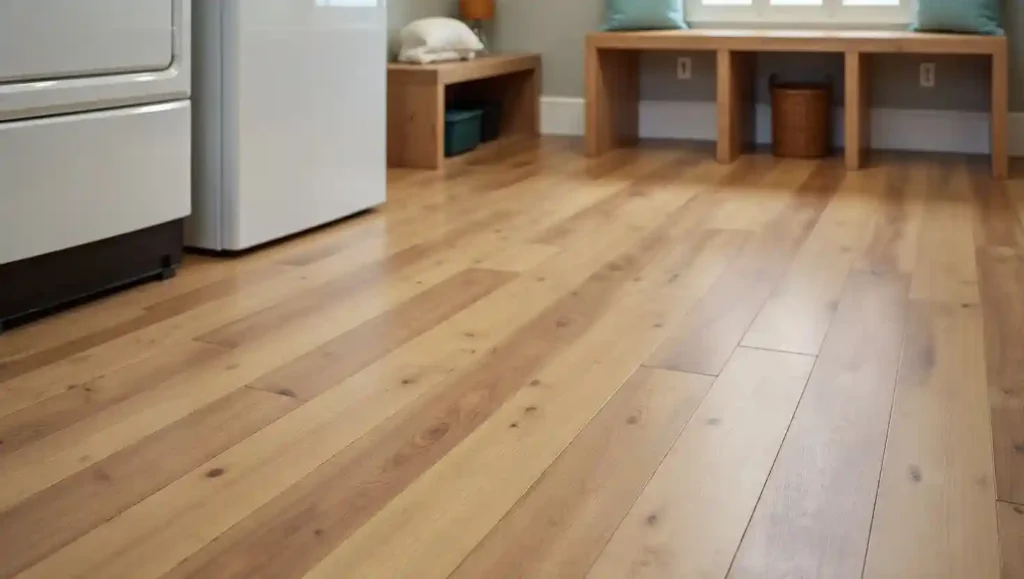
9. Natural Hickory Waterproof Laminate in a Mudroom or Laundry Room
Mudrooms and laundry rooms are where floors take the most punishment in any home. Wet boots, dog paws, dropped laundry, water from appliances, tracked-in mud — every kind of moisture and abrasion lands in these rooms daily. They also tend to be overlooked when it comes to design consideration, which means most mudrooms end up with vinyl tile or plain ceramic purely on the logic that “it just needs to be functional.”
Hickory waterproof laminate challenges that assumption. Hickory is one of the most visually active wood species — high contrast between light and dark tones within the same plank creates a busy, characterful grain that camouflages dirt and minor scratches better than a uniform tone. A hickory-look waterproof laminate in a mudroom or laundry room gives you the aesthetic richness of a designed space while being practical enough to handle the daily abuse these rooms receive.
The installation in a laundry room specifically requires attention to the appliance area. Washing machine hoses fail, and when they do, the volume of water that hits the floor can exceed what even waterproof laminate is designed to handle long-term. Running a quality moisture barrier beneath the laminate and ensuring the perimeter is sealed at the baseboards provides an additional layer of protection between the laminate and the subfloor.
10. Light Greige Wide-Plank Waterproof Laminate Throughout a Whole Home
Greige — the blend of grey and beige that has dominated interior design for the past decade — works as a whole-home flooring tone precisely because it is neither warm nor cool on its own. It shifts depending on the light and the surrounding colors, reading as warmer in amber artificial light and cooler in daylight. This chameleon quality makes it the safest whole-home laminate choice when you want visual continuity from room to room without the floor clashing with any particular paint color or furniture finish.
A whole-home approach with waterproof laminate means you can run the same floor into the kitchen, bathrooms, and laundry without switching to a different material and needing transition strips. The visual and practical continuity of a single floor across every room in the house — including the wet ones — is one of the most compelling arguments for choosing waterproof laminate over standard options.
When specifying a whole-home floor, consistency in the product lot matters. Order all the material at once from the same dye lot to avoid color variation between rooms. Slight variations that are invisible in a single room become noticeable across 2,000 square feet when rooms are viewed from the same sightline.
11. Reclaimed Wood-Look Waterproof Laminate in a Rustic Kitchen
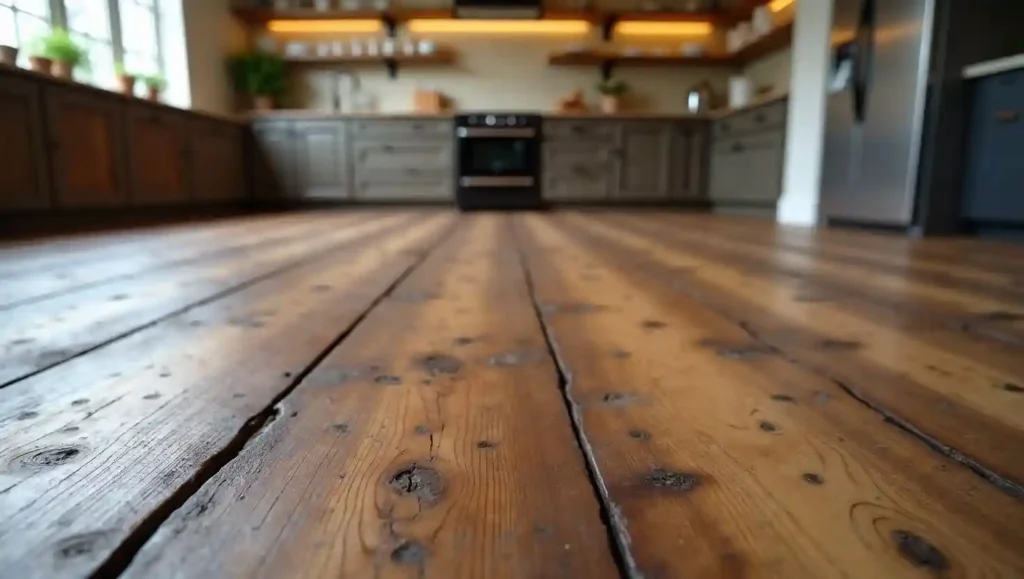
Reclaimed wood flooring carries visual appeal that is hard to replicate — the irregular grain, knots, color variation, and distressed surface tell a story of age and character. The problem is that reclaimed wood is expensive, inconsistent in quality, difficult to source at volume, and genuinely incompatible with a kitchen’s moisture demands. Reclaimed-look waterproof laminate solves all of those constraints at once.
Modern printing and embossing technology allows laminate manufacturers to reproduce the exact appearance of hand-scraped, knot-heavy, color-varied reclaimed planks with considerable fidelity. Boards with saw marks, knot holes printed into the surface layer, and deliberately inconsistent coloring within each plank create a visual impression of reclaimed material without any of its practical drawbacks.
In a rustic kitchen — open shelving, exposed brick or shiplap, farmhouse sink, raw timber accents — a reclaimed-look waterproof laminate in warm brown or tobacco tones provides the floor that completes the aesthetic. The key is choosing a product with genuine surface texture variation, not just print variation. A product with EIR texture that follows the grain pattern adds the tactile dimension that makes the reclaimed look convincing rather than photographic.
12. Pale Ash-Tone Waterproof Laminate in a Scandi-Style Bedroom
Scandinavian interior design is built on the principles of simplicity, natural materials, and the intelligent use of light in environments where daylight is precious. A pale ash-toned laminate — almost white with faint grey grain lines — is the floor equivalent of those principles applied. It maximizes light reflection, introduces a natural material reference without visual clutter, and provides a neutral base that allows textiles, plants, and carefully chosen furniture to take center stage.
In a bedroom specifically, the pale ash waterproof laminate reads as calm and unobtrusive. The bedroom floor is an underrated contributor to how restful a room feels — a busy or dark floor can make a bedroom feel active rather than serene. A pale ash tone in a wide plank format creates the opposite effect: the room feels spacious, bright, and settled.
Waterproof laminate in a bedroom might seem like overkill in terms of specification — bedrooms don’t typically see much direct water exposure. But in rooms above ground-floor level, or in homes where humidity control is imperfect, the moisture-resistant core prevents the long-term gapping and cupping that standard laminate can develop over time. It’s a specification that extends the product’s lifespan regardless of whether water is ever directly spilled on the floor.
13. Waterproof Laminate on Bathroom Walls as Well as Floors
One of the more unexpected applications for waterproof laminate is vertical — running it up the lower portion of a bathroom wall as wainscoting, or covering a feature wall entirely. This creates a visual wrap that unifies floor and wall surfaces and gives a bathroom a highly designed, intentional feel that is difficult to achieve with mismatched materials.
The technical consideration here is different from floor installation. Wall-mounted laminate doesn’t face the same impact and abrasion demands as a floor, but in a bathroom it faces humidity and direct splash from the sink area or shower. Waterproof laminate with sealed edges handles this, but the adhesive and mounting method matter as much as the product itself. Most manufacturers do not warranty laminate for wall applications, so the installation method and any waterproofing of the wall substrate behind it need to be handled carefully.
Visually, running the same waterproof laminate from the floor up onto a bathroom wall creates the kind of cohesive material story that makes small bathrooms feel deliberately designed rather than improvised. It works best when the laminate tone is kept consistent — floor and wall in the same product — rather than mixing tones, which can fragment the visual effect.
Interestingly, the same concept applies to other rooms — the full argument for laminate on walls and how it works in different contexts is laid out in whether laminate flooring can be used on walls.
14. Waterproof Laminate in a Children’s Playroom
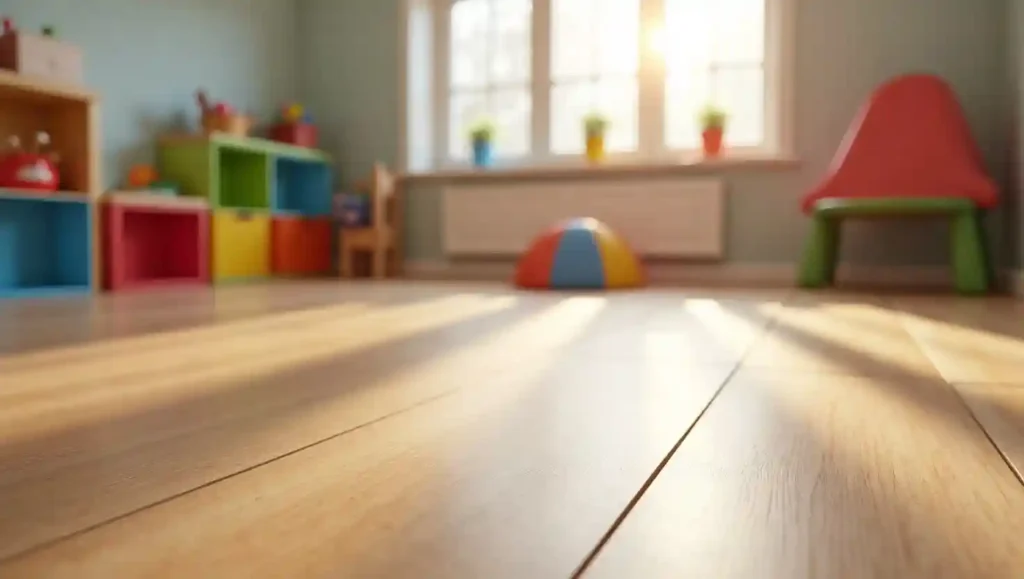
Children’s playrooms take more punishment than almost any other room in the house. Paint spills, juice boxes, water tables, food, and the general chaos of daily play mean the floor needs to be genuinely durable and genuinely easy to clean. Waterproof laminate ticks both boxes in a way that carpet cannot and that polished concrete or tile does not in terms of comfort and safety.
The right tone for a playroom laminate depends on whether you want the floor to recede visually or to be part of the room’s personality. A medium natural wood tone — mid-oak, warm beech — reads as warm and inviting without being fussy. If the rest of the room has strong color (painted walls, furniture in primary tones), a calm floor prevents visual overwhelm. If the room is neutral, a warmer floor tone adds the energy that young children respond well to.
For a playroom, thickness matters practically. A 10mm or 12mm waterproof laminate provides a noticeably softer underfoot feel than thinner options, which matters in a room where children sit and play on the floor for extended periods. Adding an appropriate underlayment increases this comfort further while also improving acoustic performance — which parents will appreciate when the room is directly above a living area.
The underlay buying guide for laminate flooring explains which underlayment types deliver the best combination of comfort, sound insulation, and moisture protection — all relevant for a playroom installation.
15. Waterproof Laminate in a Finished Basement Home Gym
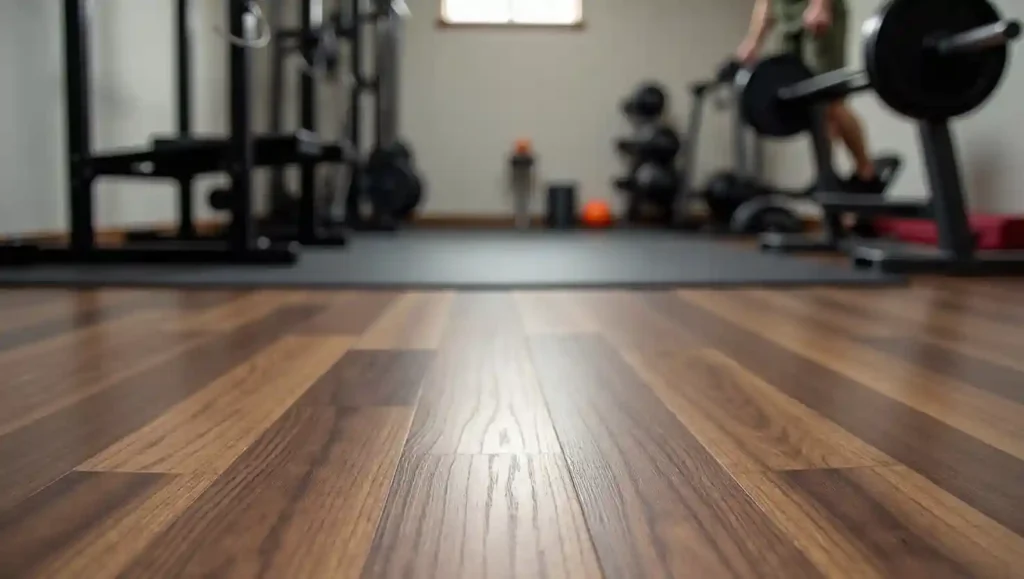
Home gyms in basements have become one of the most common renovation projects for homeowners, and the floor is one of the most consequential decisions in that space. Rubber gym tiles are the typical choice for equipment areas, but they leave the non-equipment zones — the stretching and cardio areas, the pathway between stations — looking unfinished. Waterproof laminate in those zones bridges the gap between the functional rubber sections and the visual character of a finished room.
A medium-to-dark tone laminate in a basement gym reads as purposeful and energetic rather than domestic. It also holds up better under the specific demands of a gym environment: rubber-soled shoes, occasional dropped equipment near the perimeter, and the elevated humidity that comes from concentrated human activity in an enclosed below-grade space. Waterproof laminate handles all of this where standard laminate would eventually fail at the seams from humidity alone.
One practical note for gym applications: do not install waterproof laminate directly under heavy free weights or machine footprints. The concentrated load from a loaded barbell rack or a treadmill exceeds what any laminate is designed to bear, and point-load damage to the surface is not covered by any laminate warranty. Rubber mats under equipment are the correct approach; laminate for the surrounding floor area is where the material earns its place.
If you’re comparing laminate against other options for a high-demand residential space, the comparison between waterproof laminate and waterproof vinyl is a useful reference point — both have arguments in their favor depending on the specific demands of the space.
What to Understand Before Installing Waterproof Laminate
Across all 15 of these ideas, a handful of technical principles apply regardless of the room or aesthetic.
The waterproof designation applies to the plank, not the entire system. The subfloor beneath waterproof laminate remains vulnerable if water manages to get under the floor through the perimeter, through a failed plumbing connection, or through a subfloor that holds moisture before installation begins. A quality moisture barrier is still appropriate — and often manufacturer-required — in kitchens, bathrooms, laundry rooms, and basements. The question of whether waterproof laminate needs a moisture barrier gets into the specifics of when and why that underlayer matters.
AC ratings tell you about abrasion resistance, not water resistance. An AC4 laminate is more durable against scratching and surface wear than an AC3, and that matters for kitchens and bathrooms where both traffic and cleaning frequency are high. But AC rating does not indicate how waterproof the product is — that is a function of the core and edge treatment, which is a separate specification. Both matter; neither substitutes for the other.
Expansion gaps remain critical even in waterproof laminate. Laminate — waterproof or not — is a floating floor that expands and contracts with temperature. Eliminating the expansion gap at walls, cabinetry, or transitions to avoid visible gaps is one of the most common installation errors, and it causes buckling that has nothing to do with moisture. The gap requirements and how they relate to room size are covered in the piece on maximum expansion gaps for laminate flooring.
Acclimation still applies. Even waterproof laminate needs time in the room it will be installed in before installation begins. The planks need to reach equilibrium with the ambient temperature and humidity of the space. Skipping this step leads to installation problems regardless of the product’s waterproof credentials. The reasoning behind this requirement is explained in detail in the article on why acclimating laminate flooring matters.
Finally, if you’re working with a contractor on any of these installations, the most important conversation to have upfront is about subfloor preparation. No laminate product — waterproof or otherwise — performs as intended over a subfloor that is uneven, has high moisture content, or has not been properly repaired. Time and budget spent on subfloor preparation almost always pays back in the form of a floor that lasts decades rather than one that needs replacing in five years.
Waterproof laminate has moved well beyond its origins as a budget substitute for real wood in dry rooms. The technology behind it is genuinely capable, the range of looks available is wider than it has ever been, and the rooms it can now go into include almost every space in the home. The 15 ideas above cover the breadth of that range — from pale Scandi bedrooms to dark industrial bathrooms to high-humidity basements — and each one is achievable with products available from major manufacturers at price points that make the upgrade accessible. The main constraint is no longer the technology. It’s knowing which look you want and making sure the installation is done right.
James Miller is a seasoned flooring contractor with years of hands-on experience transforming homes and businesses with high-quality flooring solutions. As the owner of Flooring Contractors San Diego, James specializes in everything from hardwood and laminate to carpet and vinyl installations. Known for his craftsmanship and attention to detail, he takes pride in helping clients choose the right flooring that balances beauty, durability, and budget. When he’s not on the job, James enjoys sharing his expertise through articles and guides that make flooring projects easier for homeowners.
A transition strip is a narrow piece of molding that bridges two flooring surfaces where they meet, covers the expansion gap between them, and creates a safe, finished edge between rooms or materials. Different types of transition strips exist because flooring materials vary in thickness, hardness, and movement behavior, and each junction requires a profile…
Wood flooring is a long-term investment. The moment you start researching, you realize the conversation goes far beyond aesthetics. Species, grain structure, finish type, dimensional stability, moisture response — these are the variables that separate a floor you refinish once a decade from one you replace in five years. Most buyers anchor their decision on…
Basements sit below grade. That single fact changes everything about how flooring performs in them — and it is the reason you cannot walk into a flooring store, point at the softest carpet on the wall, and expect it to hold up for more than a few seasons. Concrete slabs are porous. Ground moisture migrates…
Your carpet does not tell you when it is done. It does not send a notification, throw an error, or visually collapse in a way that makes the answer obvious. It just accumulates — slowly, silently, and in layers that regular vacuuming cannot reach. By the time most homeowners recognize a problem, the carpet has…
You have spent weeks picking the right wood species, decided on the plank width, and finally settled on a stain color. Then someone at the showroom asks: matte or satin finish? Most homeowners treat it as an afterthought. It is not. The finish you choose changes how the floor reads in natural light, how often…
A gap in laminate flooring is a visible separation between two adjacent planks — a space where the locking joints have either partially disengaged or failed to close flush. This is not a surface crack or a scratch. The gap runs along the seam between planks, and it can appear mid-floor, along rows, or near…