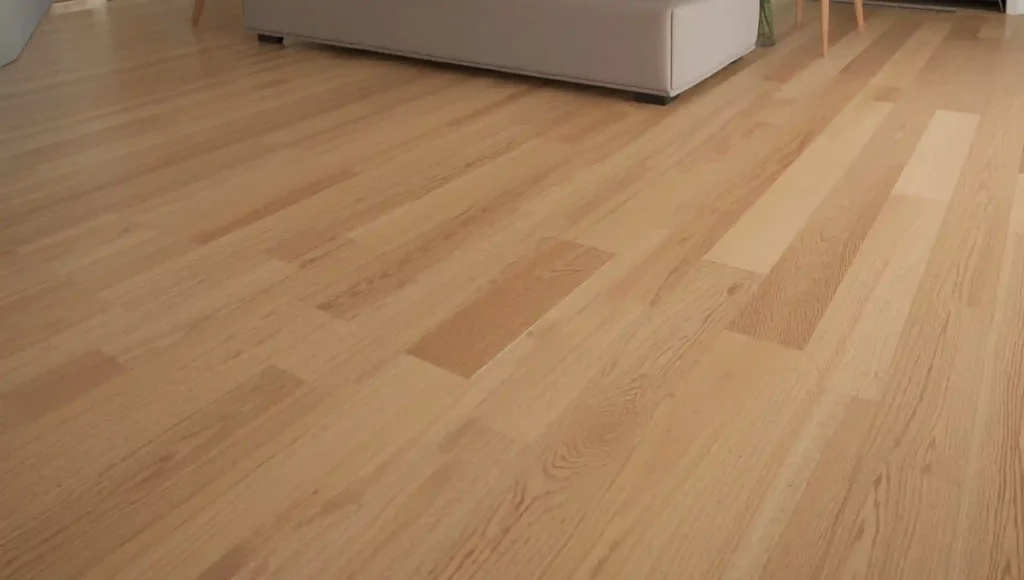
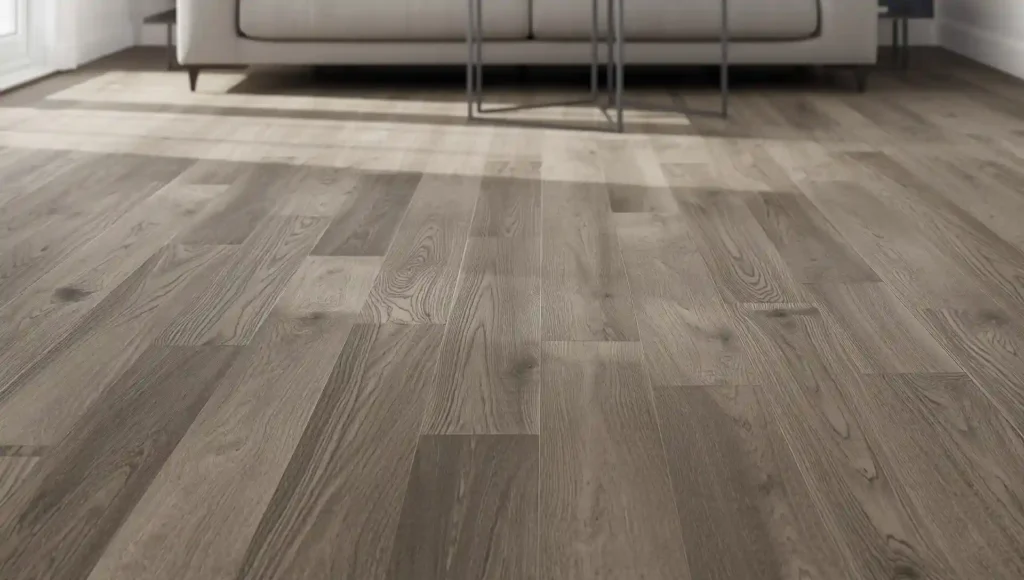
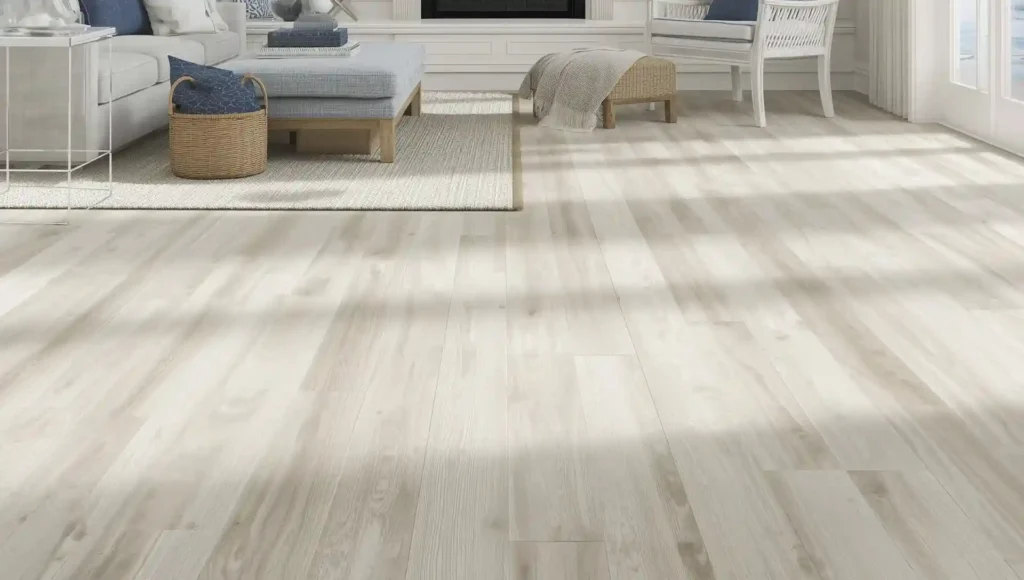
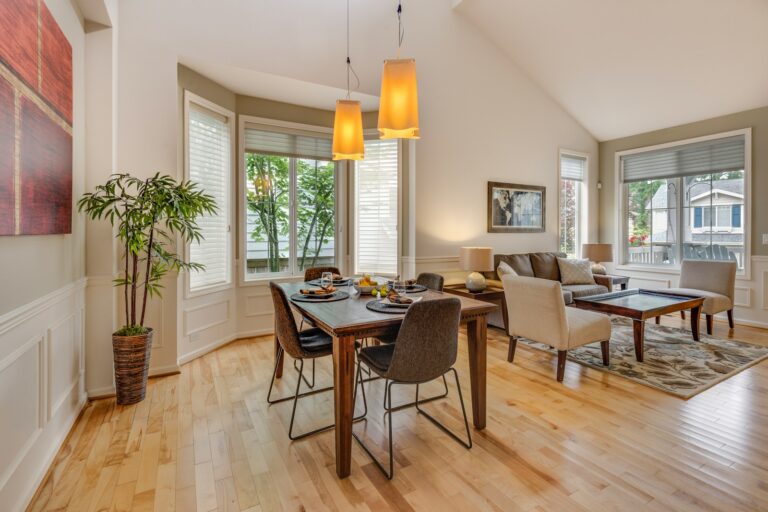
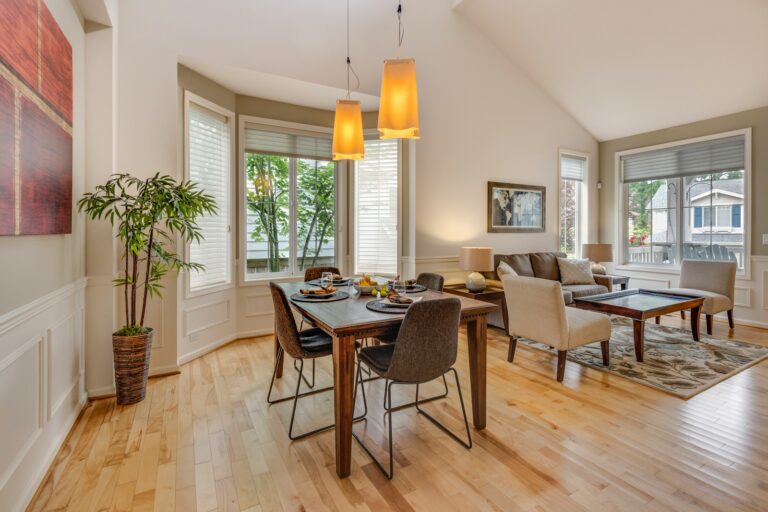
Matte finishes on wide plank floors hide everyday dust and light scratches far better than their glossy counterparts, a practical advantage in a room that sees constant use. The low-sheen surface also avoids reflecting ceiling lights in a way that can feel sterile or institutional. If the living room flows into a dining area or hallway, this format handles transitions well because its restrained palette does not fight with adjacent spaces.
For installation, wide planks require an especially flat and level subfloor since any variation will be amplified across the broader surface. Acclimating the boards properly before installation is also more critical with wider formats because they have more surface area to respond to moisture changes in the room. Your contractor should assess the subfloor and room conditions before committing to a plank width above six inches.
If you are weighing species options alongside white oak, it is worth reading through the differences between red oak and white oak (42) to understand how the undertones and hardness ratings compare before making a final decision.
2. Dark Walnut for Warmth and Luxury
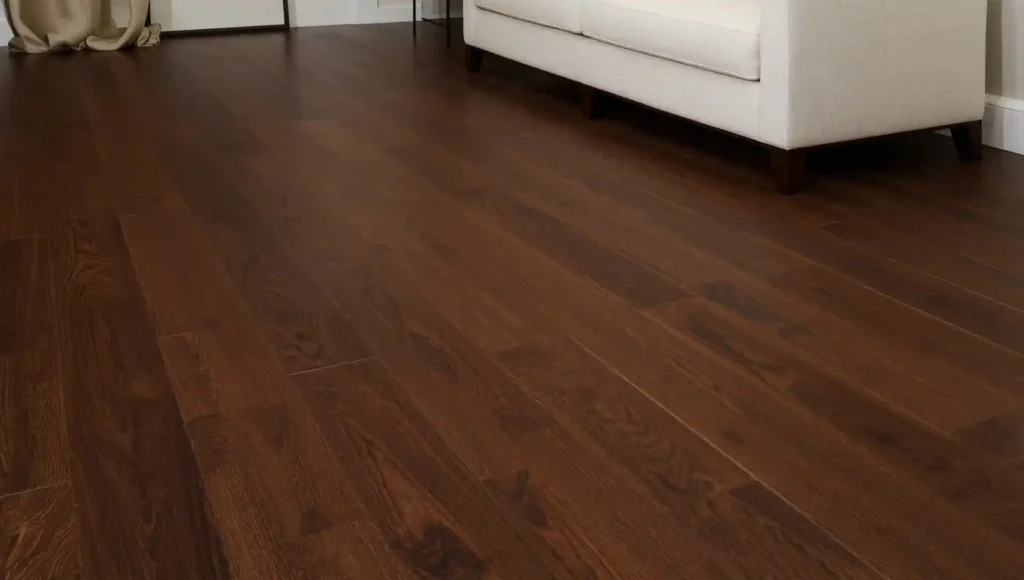
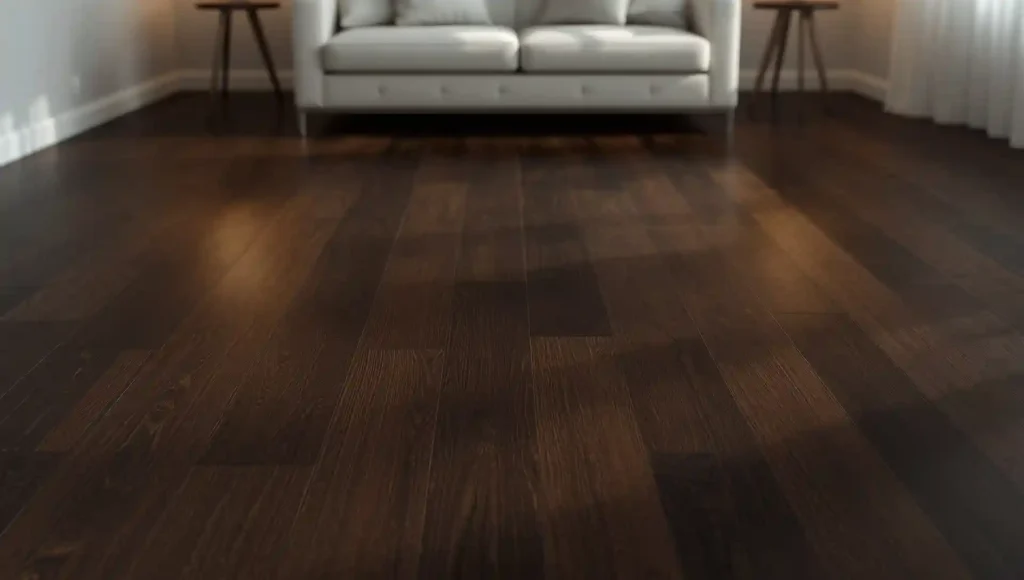
There is a reason walnut has been associated with fine furniture and premium interiors for centuries. The wood’s deep chocolate-brown tones, ranging from rich cocoa to near-espresso depending on the specific cut and finish, create an immediate sense of warmth and sophistication that lighter species simply cannot match. In a living room, dark walnut flooring anchors the space visually, giving furniture and upholstery something substantial to sit against.
The design challenge with dark floors is preventing the room from feeling heavy or closed-in. The solution lies in contrast. Pairing walnut floors with light walls, whether painted white, soft greige, or a pale warm cream, keeps the space from becoming cave-like. Large windows and good artificial lighting are equally important. When natural light rakes across a walnut floor at different times of day, the grain shifts from chocolate to amber to almost red, producing a floor that looks different depending on the hour. That responsiveness to light is one of the most appealing qualities of genuinely dark hardwood.
Walnut also pairs naturally with mid-century modern furniture, a design category that never seems to fully go out of fashion. The combination of walnut floors, clean-lined sofas with tapered legs, and simple geometric rugs produces a cohesive room that feels curated without being overthought. For a more contemporary take, walnut floors work equally well with furniture in lighter wood tones since the contrast between the floor and the pieces above it creates visual depth rather than monotony.
American black walnut is the domestic standard and typically runs softer than oak or hickory on the Janka hardness scale, which means it can show dents more readily in households with heavy furniture or active pets. Engineered walnut is worth considering in these situations since the plywood core adds dimensional stability and the veneer still delivers the full visual character of the species. For those thinking about the longer-term maintenance picture, knowing how to properly clean and care for walnut floors is an important part of the ownership experience.
3. Herringbone Pattern in Natural Oak
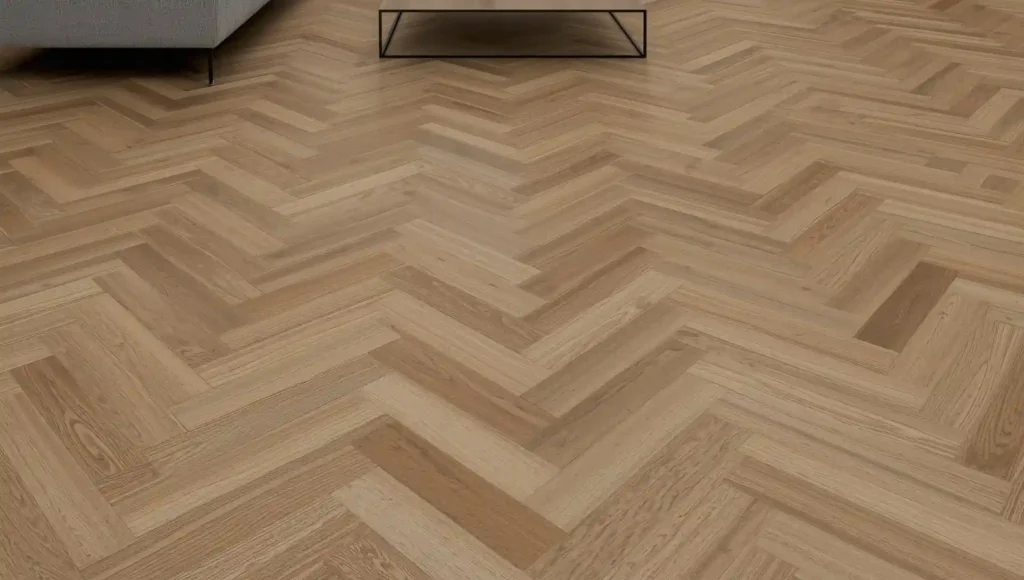
Of all the ways to lay hardwood flooring, few carry the historical weight and visual impact of herringbone. The pattern, which arranges rectangular planks at 90-degree angles to create a continuous zigzag, has been appearing on the floors of fine homes and public buildings for centuries. Its current resurgence in residential interiors is not nostalgia for its own sake. Herringbone does something that straight-laid planks cannot: it introduces movement and visual rhythm into the floor itself, making it an active design element rather than a neutral backdrop.
In a living room, a herringbone floor in natural oak becomes the room’s most distinctive feature. It draws the eye down and across the space in a way that makes even a modestly-sized room feel architecturally considered. The pattern works particularly well in traditional, transitional, and contemporary-classic interiors where the floor’s character is meant to be appreciated rather than concealed beneath furniture and rugs.
The scale of the individual staves matters enormously. Narrower staves, typically around two to three inches wide, create a denser, more intricate pattern that suits smaller rooms and period-style spaces. Wider staves above four inches produce a bolder, more modern version that sits comfortably in open-plan living areas. The pattern reads most legibly in lighter to medium tones where the diagonal lines between planks remain visible. Very dark finishes can merge the individual staves visually and reduce the pattern’s impact.
Installation is more labor-intensive than straight runs, which is reflected in the cost. The installer must establish a precise center line and work outward from it, cutting angled pieces along every wall. Any deviation from level or square in the subfloor will compromise the pattern’s geometry. This is work that benefits from an experienced hand rather than a DIY approach. The result, however, is a floor that immediately elevates a space in a way that few other choices can match at comparable cost. If you want to explore herringbone beyond hardwood, herringbone laminate flooring ideas offer a useful point of comparison for the same pattern in a different material.
4. Light Ash Hardwood for Scandinavian and Minimal Interiors
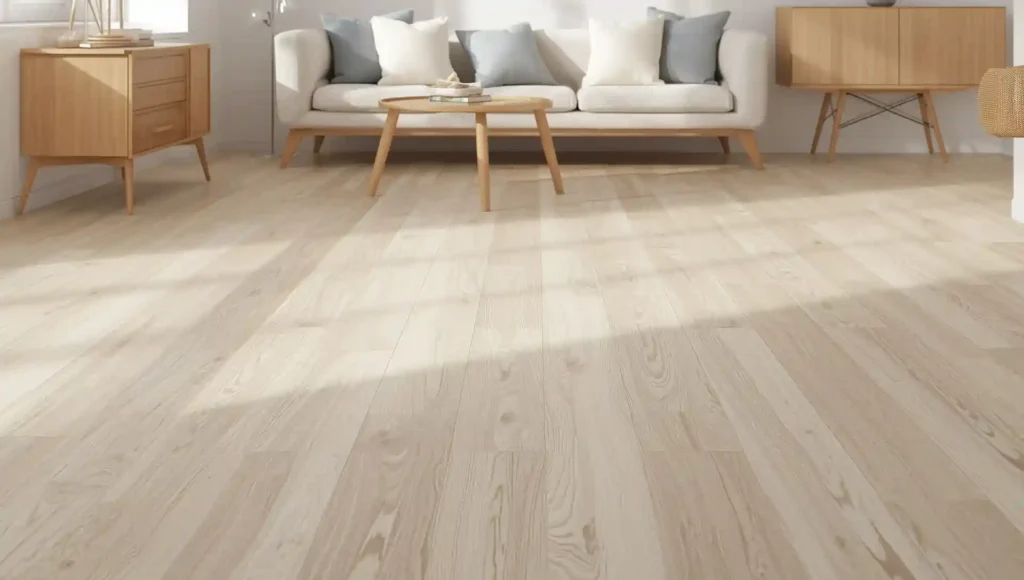
Ash hardwood occupies an interesting space in the species conversation. It is physically similar to oak in density and grain structure, but its natural color tends to run lighter and more even-toned. Where oak often has a pronounced golden or pinkish cast, ash in its natural state reads closer to pale blonde or creamy white, particularly when finished with a clear oil or a lightly pigmented wash. This makes it a genuinely distinctive choice rather than a pale imitation of something else.
The appeal of light ash in a living room is its ability to make a space feel open, airy, and larger than its measurements suggest. Natural light bouncing off a pale ash floor distributes itself throughout the room more effectively than it would with a darker wood. This is particularly valuable in north-facing living rooms where sunlight arrives at a lower angle or arrives less frequently. The floor becomes a tool for amplifying whatever light is available rather than absorbing it.
Aesthetically, light ash aligns naturally with Scandinavian interior design, where pale woods, natural textiles, and restrained ornamentation create a sense of thoughtful simplicity. It also works well in minimalist and coastal interiors, and in rooms where the furniture and textiles carry the design weight while the floor provides a clean, uncluttered base. The visual quietness of a light ash floor is not absence of character but a deliberate choice to let other elements lead.
One practical consideration worth noting: light floors reveal dust, debris, and pet hair more visibly than medium or dark tones, which can influence how frequently cleaning is required in high-traffic rooms. For households considering both ash and oak, a detailed look at how ash compares to oak in terms of hardness, appearance, and performance will help clarify which direction fits your situation better.
5. Reclaimed Wood for Character and Warmth
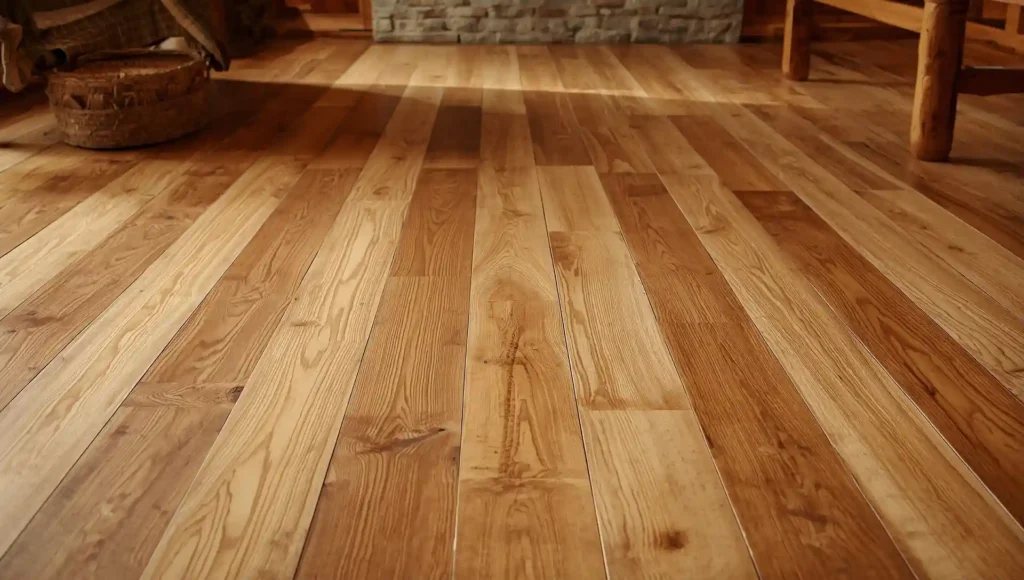
Reclaimed hardwood brings something into a living room that no newly manufactured floor can replicate: genuine history. These boards were milled from old-growth timber, used in barns, factories, warehouses, and demolished buildings, and they carry a depth of grain and density that modern fast-growth timber simply cannot match. The old-growth wood used in 19th and early 20th century construction came from trees that grew slowly over a century or more, producing tight, dense growth rings that result in a harder, more stable board than most contemporary harvesting can provide.
The character visible in reclaimed boards, the nail holes, saw marks, color variation, and occasional checking in the grain, is not a flaw to be corrected but the material’s primary visual asset. Each plank tells a different part of the same story, which gives a reclaimed floor an authenticity that cannot be manufactured. In a living room, this translates to a floor that feels genuinely lived-in and grounded from the moment installation is complete.
Species available in reclaimed form include antique oak, heart pine, chestnut, elm, and even Douglas fir, each with its own color profile and grain character. Antique oak tends to run from pale honey to deep amber with strong grain contrast. Heart pine, harvested from old buildings in the American South, has a golden-orange warmth and a tight, resinous grain that becomes richer over time. Chestnut, largely unavailable as a newly harvested species due to the blight that devastated American chestnut populations in the 20th century, can only be obtained through reclaimed sources and carries an unmistakable soft-gray patina.
The sourcing and grading process for reclaimed wood is more complex than buying new flooring, and the price typically reflects this. Boards must be de-nailed, kiln-dried to stabilize moisture content, and often re-milled to a consistent thickness. When comparing options, it is helpful to understand how grades of hardwood flooring are defined to evaluate what level of character and variation is appropriate for your specific space.
6. Wire-Brushed Oak with a Textured Surface Finish
Wire brushing is a finishing technique in which the soft outer fibers of the wood grain are abraded away with a metal brush, exposing the harder underlying grain structure and creating a subtly ridged, tactile surface. The result is a floor that engages the senses in a way that a smooth, sanded surface does not. When light falls across a wire-brushed floor from a low angle, it picks up the texture and creates a shadow play that gives the floor visual depth well beyond what the color alone would suggest.
For oak specifically, wire brushing works especially well because oak has a pronounced open grain structure with dramatic early-wood and late-wood contrast. Brushing accentuates this naturally occurring variation rather than imposing an artificial surface treatment. The final appearance reads as authentically weathered rather than obviously processed, which aligns with the broader design shift toward materials that feel natural and honest.
Wire-brushed floors also offer a practical advantage in living rooms: the textured surface is significantly more forgiving of minor scratches and scuffs than a smooth finish because the surface already contains variation. A scratch that would be immediately visible on a mirror-smooth floor disappears into the existing texture of a brushed surface. This makes wire-brushed oak a smart choice for families with pets or children, or for any living room that sees frequent use.
The finish applied over the brushed surface matters as well. Oil finishes that penetrate the wood preserve the tactile quality of the texture, while some urethane-based coatings fill the brushed channels partially and reduce the effect. Specifying a penetrating oil or hardwax oil finish over a wire-brushed surface gives the floor its fullest character while maintaining a durable, cleanable surface for everyday life.
7. Chevron Pattern for a Modern Statement
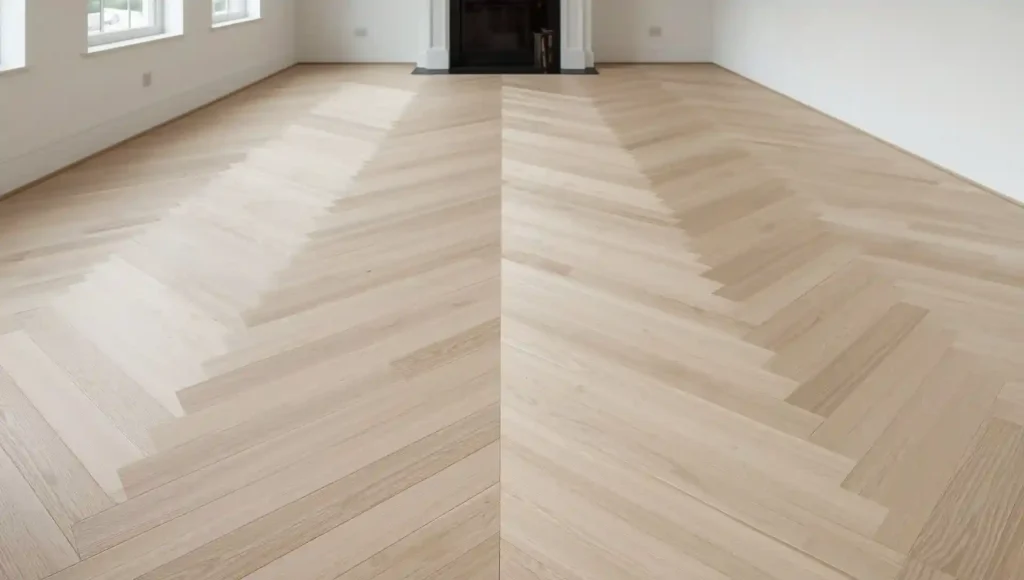
Chevron and herringbone are often confused, but they are distinct patterns that produce different visual effects. In a herringbone layout, the ends of planks meet the sides of adjacent planks at a right angle, creating a staggered zigzag. In chevron, the planks are cut at a 45-degree miter on each end and meet point-to-point at the center of the pattern, creating a continuous V-shape that runs the length of the room. The result is more geometric and precise-looking than herringbone, with a stronger directional pull that can either lengthen or widen a room depending on orientation.
Laid pointing toward the main focal wall of a living room, whether that is a fireplace, a window, or a media wall, a chevron floor creates a converging perspective line that draws the eye purposefully through the space. This directional quality makes chevron floors more graphic and assertive than most straight-lay formats. They work well in rooms with a strong architectural anchor to point toward and can become the defining element of an otherwise restrained interior.
The contemporary appeal of chevron lies in its precision. Because the pattern requires perfectly mitered planks cut to the same angle, the finished floor has a tailored, almost architectural quality. Lighter species like white oak or ash in chevron reinforce a modern, European-influenced aesthetic. Darker tones like fumed oak or smoked hardwood in a chevron pattern produce something more dramatic and nighttime-appropriate. The pattern performs best in medium to larger rooms where the geometry has room to develop before it encounters a wall.
Installation demands the same level of technical care as herringbone, amplified by the requirement for precise angle cuts on every single plank end. Subfloor quality is especially important here because any deviation will compound through the pattern geometry. Budget accordingly for labor, as this is not a format where cost-cutting on the installation side is advisable.
8. Dark-Stained Hardwood for a Moody, Sophisticated Living Room
Beyond species-native dark tones like walnut, any hardwood can be taken to a deep, dramatic finish through staining. Dark staining allows you to achieve the visual weight and richness of an ebony or espresso floor using more readily available and affordable species like oak or maple. The stain penetrates the grain, depositing pigment that deepens the color while still allowing some of the wood’s natural grain variation to read through.
The design intent behind a dark-stained living room floor is usually specific: to create a sense of depth, formality, and moody sophistication that lighter floors cannot achieve. This is a look that works particularly well in rooms with high ceilings, generous natural light, or bold architectural features like exposed beams or dramatic millwork. The floor becomes a visual foundation that grounds the room, and the darker it goes, the more deliberately everything placed above it needs to be considered.
Light walls are almost always necessary to prevent the dark floor from making the room feel smaller than it is. White, soft cream, or very pale gray walls create contrast that lifts the ceiling visually and keeps the space from collapsing into darkness. Furniture in lighter upholstery or natural wood tones pops against the dark floor in a way that creates visual interest at eye level. Rugs, which serve a practical function in protecting the floor from heavy furniture legs, also gain an additional design role when placed over a dark stained floor because the contrast at the rug’s edge becomes a deliberate framing device.
One practical consideration with dark stains is that they can show fine dust and light scratches more visibly than natural-toned finishes. Regular sweeping and an understanding of the maintenance requirements before installation will set appropriate expectations. It is also worth understanding how finish choice interacts with stain color: some finishes, particularly those with a slight amber cast, will warm the stain tone over time, which affects the final result.
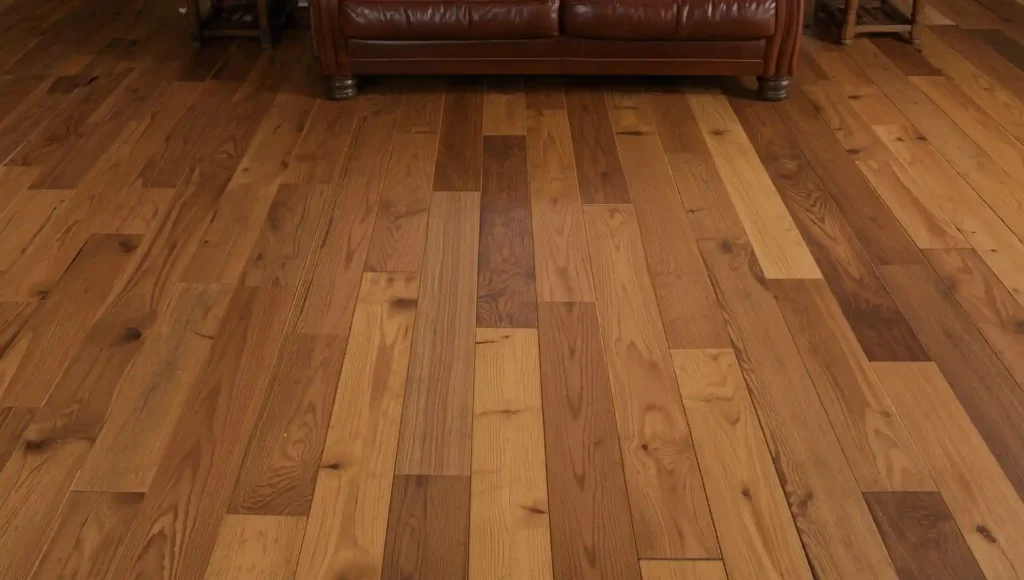
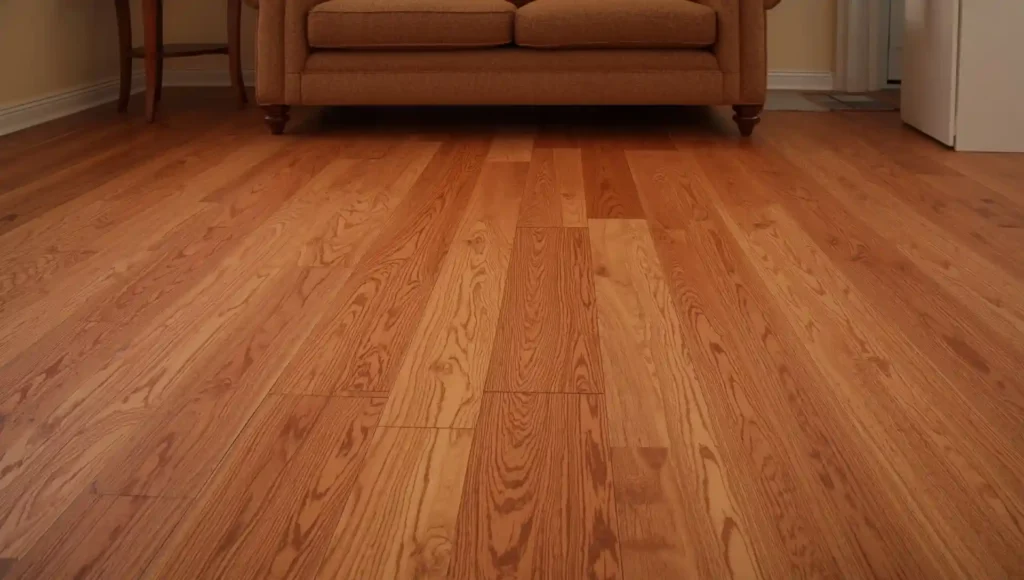
Red oak has spent decades as the most common hardwood flooring species in American homes, and for reasons that hold up under scrutiny. Its Janka hardness rating of 1290 makes it one of the more durable domestic species, sitting above walnut and below maple. Its grain is open and pronounced, providing visual texture even under a smooth finish. And its warm, reddish undertone gives a living room an immediate sense of approachability and comfort, the quality that makes a room feel like a place people actually want to spend time.
The classic red oak look has occasionally been dismissed in design circles as too familiar, too expected. But that familiarity is partly a measure of how well it works. The warm tone mediates between cool wall colors and warm-toned furniture without dominating either. It holds up well in both traditional and transitional living room designs. And because it is so widely used, the range of stains and finishes available for red oak is broader than for almost any other species, giving you significant control over the final appearance.
Choosing engineered red oak rather than solid brings specific practical benefits in a living room context. Engineered boards are dimensionally more stable across temperature and humidity changes, which reduces the risk of seasonal gapping or cupping. They can be installed over radiant heat systems where solid hardwood would be problematic. And in a room where the subfloor includes a concrete slab, as is common in Southern California homes, engineered hardwood provides the only practical wood floor option without significant floor buildup or risk of moisture damage.
Standard plank widths for red oak run from three inches in traditional strip formats to five or six inches in wider contemporary formats. The wider the plank, the more the individual grain character of each board comes forward. If the goal is a warm, approachable living room that works with a wide range of furniture, few choices are as reliably effective as engineered red oak in a satin finish.
10. Hickory for High-Traffic Living Rooms
Hickory is one of the hardest domestic hardwood species available for residential flooring, with a Janka hardness rating above 1820, considerably harder than red oak and roughly comparable to some exotic species. In a living room that sees significant daily traffic, whether from children, pets, frequent entertaining, or simply a large household, that hardness translates directly into scratch and dent resistance. Furniture legs, pet claws, dropped objects, and shoe heels leave less of an impression on hickory than they would on softer species.
The aesthetic character of hickory is its own argument for using it. Unlike the relatively uniform grain of maple or the steady warmth of oak, hickory has dramatic color variation within a single board, ranging from pale cream to deep amber to russet brown, sometimes with distinct streaks of each running through a single plank. This variation is not a defect but the species’ defining visual quality. A hickory floor does not fade into the background; it draws attention to itself as a material with genuine character.
The high color contrast in hickory pairs well with rustic, farmhouse, and craftsman interiors where materials are allowed to express their natural state without excessive processing. It also creates interesting visual tension in more contemporary rooms where clean-lined furniture sits against the energetic grain of the floor. In either case, the visual busyness of hickory means the rest of the room’s palette tends to work best when it stays relatively restrained, letting the floor do the talking.
Hickory is also worth considering in homes with dogs or other animals that spend significant time in the living room. The combination of hardness and a textured surface finish makes it one of the more forgiving species under daily animal activity. If you are comparing it against other durable species, a direct comparison between hickory and oak covers the practical differences in hardness, appearance, and cost in detail.
11. Bleached or Whitewashed Hardwood for Coastal and Contemporary Spaces
Bleaching or whitewashing hardwood introduces a finish treatment that goes beyond selecting a natural wood tone. A bleached floor has had some of its natural pigment drawn out of the surface wood fibers, resulting in a pale, almost driftwood-like color that retains the grain texture while muting the tonal variation. A whitewashed floor has a light, diluted white stain applied in a manner that soaks into the grain without fully concealing it, leaving a surface that reads as pale and light-reflective without appearing painted.
Both treatments work exceptionally well in living rooms designed around a coastal or beach-house aesthetic, where the palette typically gravitates toward whites, soft blues, sandy neutrals, and natural textures. The bleached or whitewashed floor becomes a visual reference to driftwood, bleached timber, or the kind of worn wooden floors found in old beach houses, contributing to the room’s sense of relaxed, sun-saturated comfort.
Outside of coastal contexts, these treatments perform equally well in contemporary rooms built around a very light, almost monochromatic palette. When the walls, ceiling, trim, and floor all operate within a narrow band of whites and pale neutrals, the result is a space where architecture reads cleanly and furniture becomes the room’s only color accent. The floor in this context is intentionally backgrounded, providing texture without competing for attention.
Oak is the most common species for bleaching and whitewashing because its open grain structure accepts the treatment readily and allows the diluted pigment or bleach to penetrate evenly. Ash also responds well given its naturally pale base tone. The finish durability over a bleached surface deserves particular attention since some bleaching processes can leave the surface more vulnerable to staining from spills. Discussing the specific finish chemistry with your flooring supplier before committing is worthwhile.
Maintenance for bleached and whitewashed floors is an area where homeowners sometimes encounter surprises. Knowing how to maintain and restore the appearance of hardwood floors without compromising the delicate surface treatment will help preserve the look over the long term.
How to Choose the Right Hardwood Idea for Your Living Room
Each of these eleven ideas represents a genuinely different design direction, and the right one depends on factors specific to your room and household rather than a universal hierarchy of better or worse. A few questions help narrow the field.
The first is about the room itself. How much natural light does it receive, and from which direction? Rooms with generous south-facing or west-facing windows can carry dark floors without feeling heavy. Rooms with limited natural light will benefit from lighter tones and finishes that amplify whatever light is available. Room size also matters: patterned floors like herringbone and chevron read best when there is enough floor area to let the geometry develop, while very small living rooms often fare better with straight-run planks in a lighter tone.
The second question is about durability requirements. A household with young children, large dogs, and frequent entertaining has different needs than a couple with no pets whose living room functions primarily as an occasional-use space. Species hardness, surface texture, and finish type all contribute to a floor’s real-world performance. Understanding how different hardwood species perform in high-traffic conditions is especially relevant for living rooms, which bear more daily wear than most other rooms in the house.
The third question concerns the rest of the home. If the living room is open to a dining area, hallway, or kitchen, the flooring choice should read coherently across those connected spaces. Abrupt changes in tone, pattern, or material between adjacent open-plan areas can fragment the visual continuity that makes open-plan living feel cohesive. A single consistent species or at minimum a consistent undertone family across connected spaces usually produces the most resolved result.
Finally, it is worth thinking about long-term value. Hardwood floors consistently appear among the home improvement investments that return the most in terms of resale value. The hardwood flooring buying guide walks through species selection, installation methods, and cost considerations in a format that helps homeowners make an informed decision from the beginning of the process rather than discovering constraints partway through.
For those considering professional installation in the San Diego area, the hardwood flooring services page outlines what the installation process involves and how to get an estimate specific to your room’s dimensions and conditions.
Finishing and Maintenance Considerations That Apply Across All Ideas
Whatever direction you choose from this list, a few universal principles apply to hardwood floors in living rooms.
Finish selection affects both appearance and durability in ways that the species choice alone does not. High-gloss polyurethane produces the shiniest surface and the most visible scratches. Satin polyurethane is the middle ground that most residential floors settle on, offering reasonable sheen with better scratch concealment. Matte and natural oil finishes read closest to the wood’s inherent character and forgive minor surface wear most effectively. The trend across contemporary residential design has moved decisively toward lower-sheen finishes, and for most living rooms, this direction makes aesthetic and practical sense.
Area rugs are part of nearly every living room with hardwood floors, and their interaction with the floor matters beyond aesthetics. Felt-backed or rubber-backed rugs protect the floor from the furniture weight placed on them. Rugs without adequate backing can trap grit against the floor surface and act as abrasives underfoot. Using quality rug pads beneath every area rug in the room protects the floor finish while also preventing the rug from slipping.
Humidity management is often underestimated by homeowners new to hardwood floors. Wood expands and contracts with seasonal humidity changes, and in regions with significant humidity swings, this movement can produce seasonal gapping in winter or slight buckling in summer if the room’s humidity is not controlled. Maintaining indoor humidity between 35 and 55 percent is the generally accepted range for stable hardwood floors. In San Diego’s relatively mild Mediterranean climate, extreme humidity fluctuations are less of a concern than in many other regions, but it is still worth monitoring, particularly in years with unusual weather patterns.
Cleaning practices also have a long-term impact on floor condition. Excessive moisture, steam cleaners, and harsh chemical cleaners all damage hardwood finish over time. A dry or barely-damp microfiber mop for regular cleaning, combined with a pH-neutral hardwood cleaner used sparingly for deeper cleaning, is the approach that preserves finish integrity the longest. Understanding the correct method for deep cleaning hardwood floors without causing damage is knowledge worth having before the first major cleaning occasion arises.
Hardwood flooring remains one of the most versatile and enduring material choices available for a living room. The eleven ideas presented here represent the range of what is possible, from the quiet restraint of wide plank white oak to the bold geometry of a chevron pattern, from the pale airiness of bleached ash to the grounded luxury of dark walnut. Each works, each requires different things from the room around it, and each will reward thoughtful execution with a floor that serves the space well for years.
James Miller is a seasoned flooring contractor with years of hands-on experience transforming homes and businesses with high-quality flooring solutions. As the owner of Flooring Contractors San Diego, James specializes in everything from hardwood and laminate to carpet and vinyl installations. Known for his craftsmanship and attention to detail, he takes pride in helping clients choose the right flooring that balances beauty, durability, and budget. When he’s not on the job, James enjoys sharing his expertise through articles and guides that make flooring projects easier for homeowners.
What Historic Wood Floors Actually Are — And Why That Changes Everything Most conversations about preserving wood floors in historic homes start at the wrong place. They start with products — which oil to apply, which sander to rent — when the real starting point is understanding what you are standing on and why it…
Most waterproof flooring on the market today relies on PVC, vinyl composites, or engineered wood cores that have nothing to do with the surface material you are actually walking on. Amorim’s WISE line is built differently. The waterproof core, the underlayment, the finish, and the decorative layer are all derived from or dependent on cork…
Laminate flooring over carpet padding is an installation method that places floating laminate planks directly on top of existing carpet underlay instead of a manufacturer-approved underlayment. The method is rejected by every major laminate manufacturer because residential carpet padding is 9–12 mm thick and compresses 2–5 mm under body weight, while laminate underlayment is 2–3…
11 Budget Carpet Flooring Ideas That Look Expensive There is a widely held belief that beautiful carpet flooring requires a significant financial commitment. Walk into any showroom and the plush wool options stacked against the wall can make the whole project feel out of reach before you even start. But the gap between what looks…
Wood flooring has been the dominant surface choice in homes for centuries. That is not a coincidence. It is not nostalgia, either. It is the outcome of a material that genuinely performs across every dimension that matters to a homeowner: durability, health, comfort, acoustic quality, thermal behavior, sustainability, and long-term financial return. This guide breaks…
Concrete is one of the most common subfloor surfaces beneath laminate in North America, particularly in basements, ground-level slabs, and newly built homes. It is also one of the most unforgiving. You can spend several hundred dollars on quality laminate planks and still end up with a floor that bubbles, gaps, squeaks, or fails outright…