That lower number is the most consequential fact about American cherry. It is a genuine hardwood, but it is softer than almost everything it gets compared to in a flooring context. The softness is also what gives it the satiny surface sheen and comfortable underfoot feel that makes it appealing in the first place. These are two sides of the same coin.
When first installed, cherry hardwood flooring has a light pink tone that deepens to a rich red over the course of six months to two years, depending on the lighting in the home. This transformation is one of the defining characteristics of the species. Buyers who choose American cherry should expect the floor they receive to look meaningfully different one year after installation — typically darker, warmer, and richer.
Brazilian Cherry (Jatoba — Hymenaea courbaril)
Brazilian cherry is an entirely different species with no botanical relationship to American cherry. The shared name is a marketing convention that can genuinely mislead buyers who think they are selecting a similar product with a slightly exotic origin.
While domestic American cherry scores a 950 on the Janka scale, making it one of the softer woods used for flooring, Brazilian cherry happens to be one of the hardest woods used for flooring, with a Janka rating around 2,700. To put it into perspective, red oak, with a Janka of 1,290, is most commonly used as a benchmark — and American cherry is actually softer than red oak, while Brazilian cherry is just more than twice as hard as red oak.
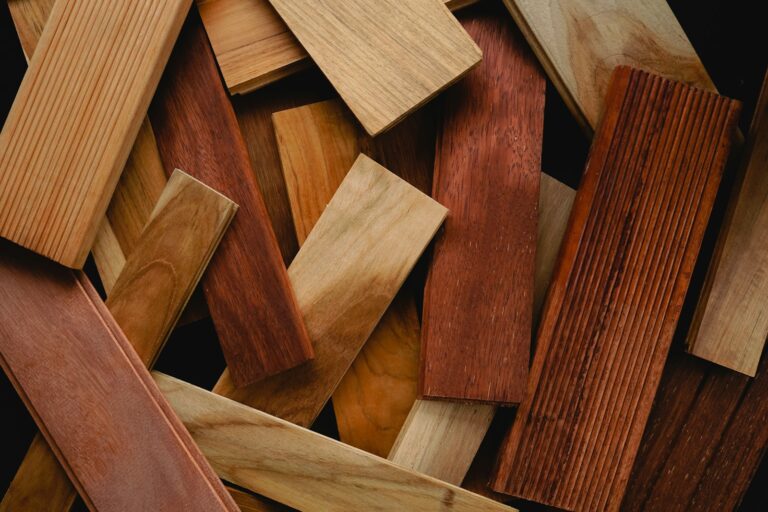
One of the differences that stands out most between these two species is probably their appearance. American cherry is a lighter color with variations of blond and some red and brown tones. Brazilian cherry, on the other hand, is a much deeper color with variations including red, brown, and some lighter yellow or blond pieces. In American cherry, the color difference between heartwood and sapwood is much more minimal compared to the much more drastic difference between Brazilian cherry’s heartwood and sapwood colors.
The density of Brazilian cherry makes it both fire resistant and bug resistant as well. Natural oils contained in the wood kill mites and spores, making it a great option for allergy sufferers.
The practical takeaway: if you are prioritizing durability and scratch resistance above everything else, Brazilian cherry is a genuinely exceptional performer. If you want the subtle, domestic warmth and the graceful color evolution that cherry is historically known for, American cherry is the real thing. Both are real wood. They are just very different materials wearing the same name tag.
How the Janka Hardness Numbers Translate to Real-World Performance
Janka ratings become meaningful when you translate them into daily life. American cherry at 950 means it will show dents from high-heeled shoes, chair legs, and pet nails more readily than oak. American cherry performs best in low to moderate traffic spaces such as bedrooms, offices, or formal living areas, where its surface can remain smooth and elegant.
This is not a fatal flaw. It is a placement question. The same logic applies to pine floors, which have been used in American homes for hundreds of years despite being dramatically softer than cherry. The patina that develops on a softer wood floor — the small marks, the worn pathways — is something many homeowners genuinely value. It reads as history rather than damage, depending on the household’s relationship with imperfection.
Brazilian cherry at 2,350 to 2,700 lbf behaves completely differently. Its hardness makes it strong enough to hold up to use in even the most high-traffic areas of the home. Contractors who work with it regularly note that it dulls saw blades significantly faster than domestic species, which contributes to its higher installation cost.
If you are deciding between cherry and some of the other premium hardwood species, the comparison to species like hickory and oak is worth making directly. Our guide on hickory vs. oak flooring covers how Janka ratings play out in high-traffic household settings, which maps directly onto the cherry conversation.
The Color Change Question — What No One Tells You Before You Buy
Both cherry species darken significantly after installation, and this catches some buyers off guard. The change is photochemical — exposure to UV light triggers a reaction in the wood’s natural compounds that shifts the color toward warmer, deeper tones.
For American cherry, the initial color is a light pink tone that deepens to a rich red over the course of six months to two years, depending on the lighting in the home. Brazilian cherry darkens faster and more dramatically in its early months.
The practical implications of this are real. Area rugs placed on new cherry floors will leave lighter patches underneath when moved. Furniture arrangement changes will expose uneven toning. This is not a defect — it is the nature of the species — but it requires thinking about floor layout and furniture placement before installation rather than after.
When selecting this flooring, go a little lighter than your desired shade, as the wood will naturally darken over time. This is the single most useful piece of advice for cherry buyers who are choosing between a prefinished light sample and a prefinished darker sample at the showroom. Buy lighter than you think you want.
Sunlight management also becomes relevant here. Cherry wood naturally darkens as it ages, a process accelerated by exposure to sunlight. This can lead to inconsistencies in the floor’s color over time, which might not be ideal for everyone. Rooms with significant south-facing or west-facing sun exposure will see faster and more uneven toning than rooms with indirect light.
Staining Cherry Wood — Why Most Professionals Advise Against It
Cherry is one of the species where the standard flooring advice — stain it whatever color you want — genuinely does not apply.
Applying stain to cherry wood can be unpredictable, with results often varying significantly. The wood’s natural properties can lead to uneven absorption of the stain, resulting in blotches or an inconsistent finish.
Both cherry species have a beautiful natural look and the grain of the wood might not receive staining well. In fact, when people stain their hardwood floors, they are usually trying to imitate the natural look of a wood like cherry wood. If you have cherry hardwood flooring, the best thing to do is keep it in its natural state.
This is worth taking seriously. Blotchy staining on a floor is not a small cosmetic issue — it is a full sanding job to correct. Cherry’s fine, dense grain simply does not absorb stain evenly the way open-grained species like oak do. If you need a specific color that cherry’s natural palette does not deliver, a different species is the better starting point than a stained cherry floor.
Finish Selection for Cherry Hardwood Floors
Since staining is largely off the table, finish selection becomes the primary variable in how cherry floors look and perform. The main choices are oil-based polyurethane, water-based polyurethane, and hard-wax oil.
Oil-based polyurethane adds an amber warmth that can enhance cherry’s natural tones, though it may push the color warmer than desired in rooms that already get significant sun. Water-based finishes dry clearer and more neutral, which some installers prefer for cherry because it lets the wood’s own color development happen without a competing yellow cast from the finish itself.
Hard-wax oil finishes penetrate rather than forming a surface film, which produces a more matte, natural appearance and makes spot repairs easier — a relevant consideration given that American cherry’s softer surface will eventually need attention in higher-use areas.
Sheen level is also a real decision. Cherry has a smooth finish and a fine, intricate grain highlighted by small black pitch pockets that add character. A high-gloss finish can make these characteristics very visible — sometimes beautifully so, sometimes in a way that amplifies every scratch. A satin or matte finish tends to be more forgiving on softer species. If you are navigating this choice for other wood species as well, the breakdown of high-gloss vs. matte hardwood floor finishes covers the trade-offs that apply across all hardwood types.
Solid vs. Engineered Cherry Flooring
Cherry is available in both solid and engineered construction, and the choice between them matters more for cherry than for harder, more dimensionally stable species.
The beauty of cherry flooring is available as solid hardwood or engineered planks. Both are real wood with all the benefits described above. Engineered planks consist of a wood core similar to plywood and a hardwood veneer on top.
Solid cherry is milled from a single piece of wood. It can be sanded and refinished multiple times over its life, which is significant given that American cherry’s softer surface will accumulate scratches over time. A floor that can be refinished every 10 to 15 years has a very long service life. The trade-off is that solid wood is more sensitive to humidity swings — it moves more, which can cause gaps in dry conditions and cupping in high humidity.
Engineered cherry wraps a thin cherry veneer over a multi-layer plywood core. The cross-ply construction resists the movement that solid wood undergoes with seasonal humidity changes. The stability of the core allows engineered floorboards to perform better in locations with higher moisture and humidity. Engineered floors are ideal for basement or wine cellar flooring as well as installation over a concrete slab or radiant heating systems.
For most installations over a wood subfloor in a climate-controlled living space, solid cherry is a perfectly viable choice. For below-grade installations, over concrete, or in homes with significant seasonal humidity swings, engineered construction reduces risk considerably. For anyone considering installing hardwood directly over a concrete slab, the unique challenges are worth understanding in advance — our guide on hardwood floor on concrete slab problems covers what commonly goes wrong and how to prevent it.
Installation Requirements — What Cherry Needs Before the First Board Goes Down
Cherry flooring installation follows the same general requirements as other hardwood species, but its sensitivity to moisture and its relatively soft surface make proper preparation more consequential than it would be for a harder, more forgiving wood.
Acclimation
Proper moisture management is essential when installing any hardwood, especially cherry varieties, to prevent issues like gapping or cupping. Wood is a hygroscopic material, meaning it readily absorbs and releases moisture. It must be conditioned to the environment where it will be installed.
The room temperature should ideally be around 20 degrees Celsius and the humidity level between 40 and 50 percent. Allow 48 hours for the cherry wood boards to acclimate to the room in which they will be installed. Exotic species like Brazilian cherry may need longer acclimation periods.
Subfloor Preparation
The subfloor must be flat, dry, and structurally sound. The NWFA standard is flat to within 3/16 inch over 10 feet, or 1/8 inch over 6 feet. Exceeding this tolerance creates high spots that cause planks to rock and low spots that concentrate stress on the click joints or nail patterns.
Moisture content matters significantly. The wood subfloor must not exceed 12 percent moisture content. The difference in moisture content between the subfloor and the wood flooring must not exceed 4 percent, and preferably 2 percent for exotic and larger planks.
The subfloor type also informs the installation method available. Nail-down or staple-down installation requires a plywood or wood plank subfloor with adequate thickness for fastener penetration. Glue-down installation works over concrete or wood. Floating installation, where planks are joined to each other rather than fastened to the subfloor, is more common with engineered cherry than solid. Our overview of types of subfloors for hardwood flooring explains how each subfloor type constrains your installation method choices.
Professional Installation
Due to its softer nature and the precision required during installation, cherry wood flooring typically requires professional fitting. This ensures that the flooring is installed correctly, maximising its lifespan and performance. Brazilian cherry presents the opposite challenge — its extreme hardness dulls cutting tools quickly and increases labor time, which is part of why its installation cost runs higher than most domestic species.
Where Cherry Flooring Works Well — and Where It Doesn’t
Room selection is the variable that determines whether cherry performs well or underperforms relative to expectations. This is true for most wood species, but cherry’s specific Janka rating and moisture sensitivity make the placement question more significant than it would be for oak or maple.
Rooms Where Cherry Performs Well
Cherry hardwood floors work best in areas with light to medium traffic. Specifically:
Bedrooms. Cherry wood flooring offers a softer feel underfoot compared to harder woods like oak. This makes it more comfortable to walk on, particularly in areas where you might often be barefoot, such as bedrooms or living rooms. This softness also adds a layer of insulation, keeping your feet warmer during the colder months.
Formal living rooms, studies, and libraries. Cherry is not as strong as oak so is more fitting for a library or living room that is not used as heavily as other rooms. It can be the perfect touch to a study or a formal dining room where dents and scratches are less likely to occur.
Home offices. Lower foot traffic combined with the warmth and sophistication of the wood makes cherry a genuinely excellent choice for office spaces where aesthetics matter.
Sound absorption. Cherry wood flooring is particularly effective at absorbing sound, making it an excellent choice for busy homes or spaces that require a quieter environment. This natural property helps reduce echo and noise levels, contributing to a more serene and comfortable atmosphere.
Rooms Where Cherry Is a Harder Sell
Kitchens. Cherry is not generally recommended for use in kitchens, where water can splash or spill or leak from a dishwasher. American cherry’s softness means dropped pots and heavy appliance movement will mark the surface. High-traffic kitchen flooring is better served by a harder species or a waterproof flooring category.
Bathrooms and laundry rooms. Cherry should never be installed in bathrooms or laundry rooms. The humidity levels and standing water risk in these rooms are incompatible with any solid hardwood, and cherry’s moisture sensitivity makes it a particularly poor candidate.
High-traffic entryways and hallways. The combination of grit tracked in from outside and concentrated foot traffic will wear American cherry noticeably faster than it would a harder species. If you are committed to cherry throughout the home, protecting high-traffic corridors with an area runner is a reasonable mitigation.
Basements. Below-grade installations carry elevated moisture risk. If you want cherry in a basement, engineered cherry with a proper moisture barrier is a more defensible choice than solid. Even then, the humidity management demands are significant.
Pricing — What Cherry Flooring Actually Costs
Cherry occupies the mid-to-upper tier of hardwood pricing. The cost differential between American and Brazilian cherry is meaningful and should factor into the total budget calculation.
American cherry material typically runs between $4 and $7 per square foot, which positions it above entry-level domestics like pine but below premium exotics. Exotic hardwoods like Brazilian cherry are priced in the $8 to $12 per square foot range for materials. Brazilian cherry costs more due to higher material prices, the difficulty of cutting such hard wood — which dulls saw blades quickly — and the additional labor time for installation.
Total installed costs, including materials and professional labor, run approximately $10 to $18 per square foot for American cherry and $13 to $22 per square foot for Brazilian cherry, depending on the regional labor market, subfloor conditions, and installation method complexity.
Refinishing adds to the long-term cost picture. Common woods like oak, maple, and cherry are durable and straightforward to refinish, typically falling in the standard $3 to $8 per square foot range. American cherry’s softer surface means it may reach the refinishing threshold sooner than harder species in moderate-traffic rooms, so factoring in one or two refinishing cycles over a 20-to-30-year window is reasonable budget planning.
For a fuller picture of how cherry’s cost stacks up against the broader hardwood market, the hardwood flooring cost guide covers all species and installation methods in detail.
Maintenance — Keeping Cherry Floors Looking Right Over Time
Cherry floors do not require exotic maintenance, but they do require consistent care that respects the wood’s surface sensitivity.
Daily and weekly cleaning. Sweep or vacuum regularly with a soft-bristle brush or a vacuum set to the bare-floor mode. Grit tracked in from outside acts as an abrasive on any wood surface, and on American cherry’s softer face, the effect accumulates faster. A microfiber dry mop is effective for fine dust and particles.
Wet cleaning. It is paramount to use a hardwood floor cleaner but never pour it directly on the floor. Using a steam cleaner or too much water is inadvisable. Furthermore, vinegar and wax- or oil-based soaps will leave behind a residue or will gnaw away at the floor. A lightly dampened microfiber mop with a pH-neutral hardwood cleaner is the correct approach.
Spill response. In case of a liquid spill, clean it up right away before the liquid has any chance of being absorbed by the wood fibres. Cherry’s closed grain gives it some natural resistance to surface absorption, but standing liquid will always find its way to seams and edges.
Scratch and dent prevention. To avoid scratches, stick felt pads at the bottom of furniture and move furniture with the help of a rug or cardboard. Area rugs in traffic zones — in front of sofas, under dining tables, in hallway corridors — meaningfully extend the time before refinishing is needed. For anyone comparing cleaning approaches across wood types, the breakdown of best cleaning products for hardwood floors includes guidance that applies directly to cherry.
Refinishing. American cherry can be sanded and refinished multiple times over its life. The exact number of refinishing cycles depends on the plank thickness — 3/4-inch solid planks allow more passes than thinner material. When the finish shows consistent wear patterns and cleaning no longer restores the surface sheen, refinishing is the correct intervention, not replacement.
Cherry vs. Other Premium Hardwood Species — Honest Comparisons
Cherry does not exist in isolation. Buyers who are drawn to cherry’s warmth and grain character are often also considering walnut, mahogany, or maple. Each comparison reveals something specific about what cherry does and does not offer.
Cherry vs. Walnut. Both are domestic premium species with warm color profiles and fine grain. Walnut is slightly harder than American cherry at around 1,010 lbf on the Janka scale, though the practical difference in scratch resistance is modest. Walnut trends darker and cooler — more chocolate brown — while cherry trends warmer and redder. Both darken over time, though walnut’s lightening behavior (it can actually fade slightly with UV exposure) differs from cherry’s consistent darkening. If you are weighing the two seriously, our guide on walnut flooring pros and cons provides a detailed look at what that species brings to the table.
Cherry vs. Maple. Maple is significantly harder at 1,450 lbf, making it more appropriate for high-traffic zones where cherry would struggle. Maple has strikingly beautiful grain patterns and lighter, blonder hues that make it an ideal wood for homeowners seeking a neutral palette for their interior design. It’s a great match for contemporary interiors and minimalist decors, and it’s a favorite in Scandinavian design. Cherry is the warmer, softer, more traditional choice between the two.
Cherry vs. Mahogany. Both are premium species with red undertones and high aesthetic value. Mahogany and cherry share some visual similarities but differ in hardness, availability, and cost structure. Mahogany tends to be more stable dimensionally and is frequently available in wider plank formats. Our dedicated piece on whether mahogany is good for flooring covers those comparisons in full.
Cherry vs. Oak. This is the most common comparison because both are domestic hardwoods widely used in residential flooring. Oak is a hard wood with a predictable grain. It naturally comes in a variety of shades ranging from tan to rich brown, and it can easily be stained to match any interior. Oak’s higher Janka rating — red oak at 1,290 and white oak at 1,360 — makes it more forgiving in active households. Cherry wins on color character and the living transformation it undergoes over time. Oak wins on durability, stainability, and cost predictability.
Is Cherry Wood Good for Flooring? The Unambiguous Answer
Yes — with the understanding that the question really has two parts.
American cherry is a genuine hardwood flooring species with centuries of domestic use behind it. It belongs in bedrooms, formal living rooms, home offices, and studies. It produces floors of real warmth and character that improve with age in a way that harder, more uniform species simply cannot replicate. It requires more care than oak, more thoughtful room placement, and an acceptance that the floor will look different in two years than it does on installation day. None of those are disqualifying — they are just the real terms of the material.
Brazilian cherry is a different species entirely. It is one of the hardest commercially available hardwoods, with durability credentials that put it ahead of nearly every domestic option. Its visual character is more dramatic — deeper, redder, with higher contrast between sapwood and heartwood — and its color transformation is more rapid and intense. It costs more, it is harder to cut, and its intense color can be a decorating challenge. But for buyers who want a floor that will physically outlast everything else in the room, it is a serious contender.
The question is never simply whether a species can be used for flooring. It is whether that species is right for the specific room, the traffic pattern, the subfloor condition, and the buyer’s relationship with a floor that will change, develop character, and occasionally need care. For cherry, the answer to those questions most often is yes.
If you are ready to move from research to installation, our hardwood flooring services page covers what a professional installation involves from subfloor assessment through finishing.
James Miller is a seasoned flooring contractor with years of hands-on experience transforming homes and businesses with high-quality flooring solutions. As the owner of Flooring Contractors San Diego, James specializes in everything from hardwood and laminate to carpet and vinyl installations. Known for his craftsmanship and attention to detail, he takes pride in helping clients choose the right flooring that balances beauty, durability, and budget. When he’s not on the job, James enjoys sharing his expertise through articles and guides that make flooring projects easier for homeowners.
Vinyl flooring has become one of the most searched flooring categories in North America — and the reasons are obvious once you start looking at the data. It is waterproof. It installs over almost any subfloor. It costs a fraction of hardwood. And in its modern luxury formats, it visually competes with materials that cost…
Bamboo flooring gets marketed as the responsible, durable, cost-effective alternative to hardwood. And in many cases, it genuinely earns that reputation. But there is a version of the bamboo story that retailers tend to leave out — the one about warping planks, off-gassing adhesives, a refinishing ceiling, and quality that swings wildly depending on who…
Most people treat carpet protection as an afterthought — something a cleaning technician upsells at the end of a job. That framing does it a serious disservice. Carpet protectors and sealants are one of the few maintenance interventions with a well-documented, measurable return: they slow fiber degradation, make spills recoverable rather than catastrophic, and reduce…
Installing laminate flooring over plywood is one of the most reliable paths to a long-lasting, stable floor. Plywood is the preferred subfloor material for laminate in above-grade construction — it is rigid, it accepts fasteners, it manages moisture better than OSB, and when prepared correctly, it gives your floating laminate the firm, flat foundation it…
In the world of flooring, laminate has become a popular choice for its durability, affordability, and wide range of designs. However, one critical aspect that often gets overlooked is moisture protection. Without proper moisture barriers, laminate flooring can be susceptible to damage, warping, and mold growth. In this comprehensive guide, we’ll delve into the importance…
Furniture pads are small protective accessories attached to the bottom of furniture legs to prevent scratches, dents, and noise on laminate flooring. The best furniture pads for laminate floors are high-density felt pads between 3 mm and 5 mm thick for movable furniture, rubber non-slip pads for stationary heavy items, and caster cups for rolling…