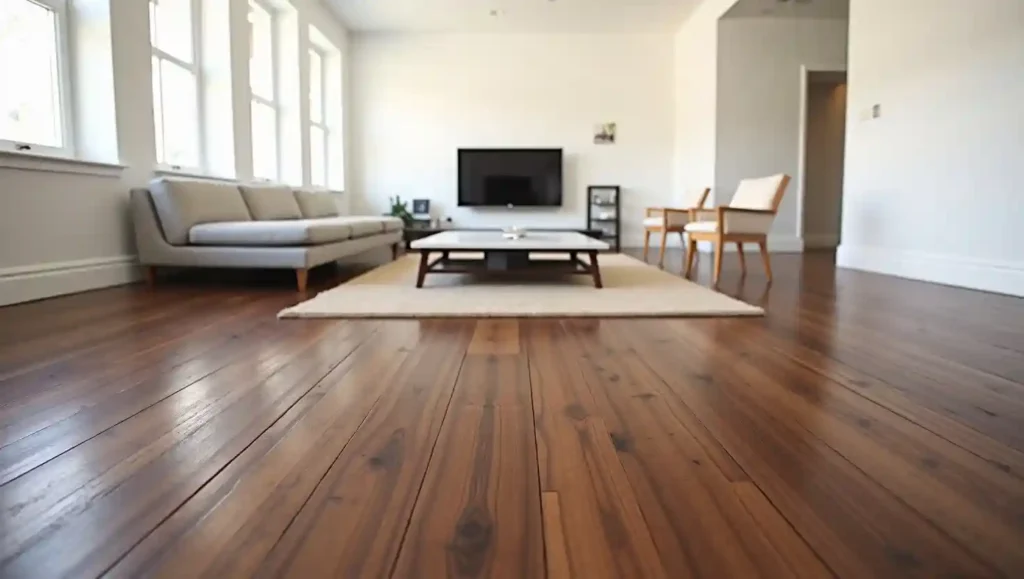
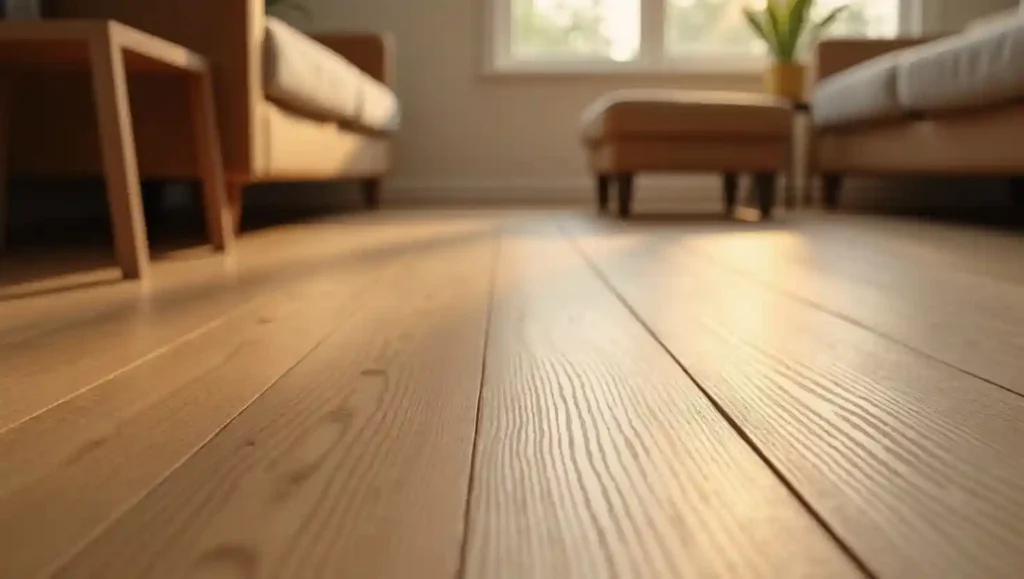
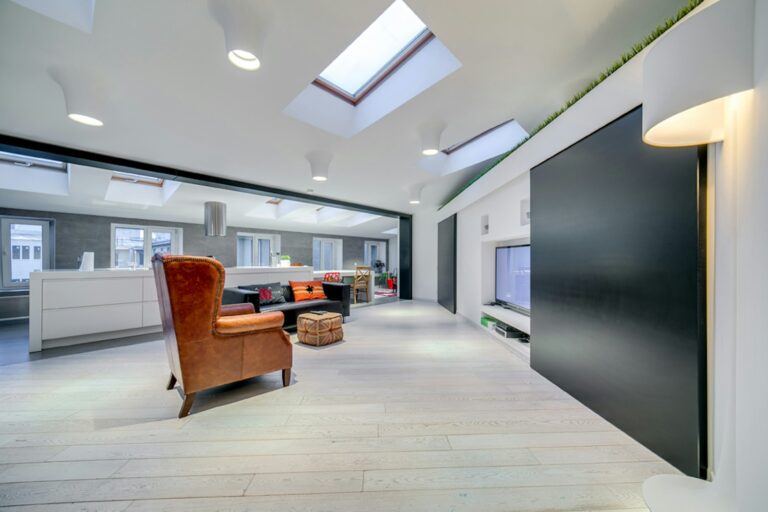
Dark hardwood flooring has always carried associations with luxury and formality, but when paired with a genuinely minimalist interior, something interesting happens: the floor stops reading as heavy and starts reading as dramatic in the best possible way. Dark walnut, in particular, brings a richness that is hard to replicate with any other material. The color ranges from deep chocolate to a warm brown with subtle purple undertones, and when the grain is allowed to show rather than being buried under a thick finish, it creates a surface with real visual depth.
The key to making dark walnut feel modern rather than dated is the pairing. High-gloss finishes were once the standard for dark floors, but they amplify every footprint and scratch in ways that become exhausting to maintain. A satin or matte finish on dark walnut changes the entire proposition — the floor becomes grounded and serious without demanding constant attention. Combine that with white or light plaster walls, minimal furniture, and clean architectural lines, and the floor becomes the anchor of the room rather than a backdrop.
Wide planks work particularly well with dark walnut for the same reasons they work with white oak: fewer seams mean a more unified field, and the dark color benefits from that expansiveness. In a living room or dining room where the furniture is light or mixed-tone, the contrast between a dark walnut floor and everything above it creates the kind of tension that makes a room feel designed rather than decorated. For homeowners who want to understand the practical considerations of dark flooring species, our guide on walnut flooring pros and cons covers durability, maintenance, and long-term value in detail.
3. Herringbone Pattern in a Classic Room With a Contemporary Spin
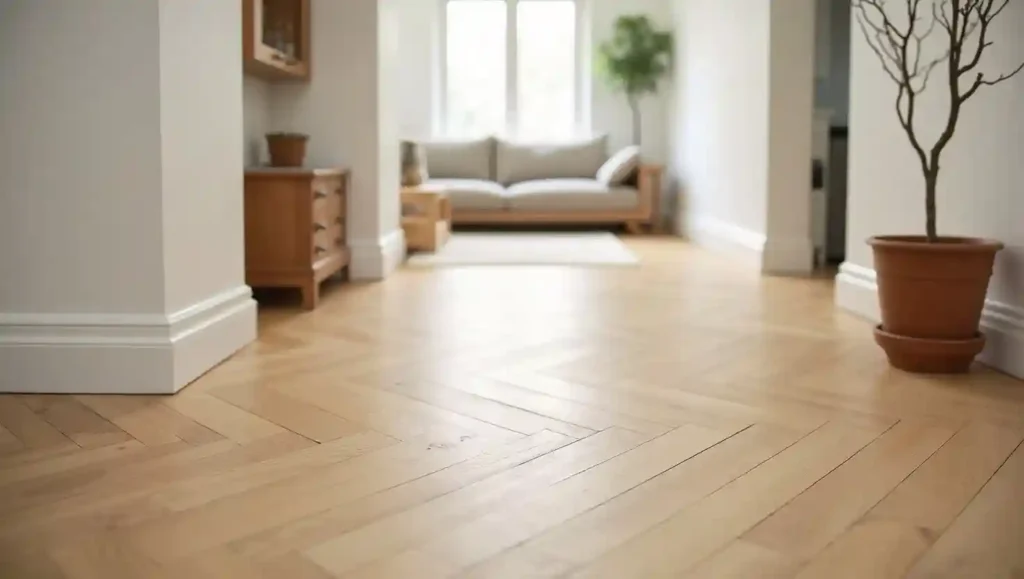
Herringbone is one of those patterns that never quite goes out of style because it operates on a geometric logic that is older than modern design itself. But the way herringbone is being used in contemporary homes has shifted considerably. Where it once appeared almost exclusively in formal European-style interiors — dark wood, high ceilings, heavy furniture — it is now showing up in spare, light-filled rooms where the pattern itself becomes the primary decorative statement.
The modern interpretation of herringbone tends to favor lighter species: natural oak, white oak, and ash are all popular choices. The boards are laid at the classic ninety-degree angle, creating the characteristic broken zigzag, but the finish is kept low-sheen and the color is kept close to the wood’s natural state. This approach highlights the geometry without pushing the floor into territory that feels too busy or too formal. In a room with clean walls and restrained furniture, a herringbone floor in natural oak can carry the entire visual weight of the space without overwhelming it.
Installation complexity is a real consideration with herringbone. Every board must be cut and laid at a precise angle, and maintaining pattern symmetry across a large room requires careful planning and skilled execution. Material waste is also somewhat higher than with straight-lay installations because of the diagonal cuts required. That said, the investment — both financial and in terms of choosing an experienced installer — pays off in a floor that reads as genuinely custom and elevates everything in the room above it. Wider planks on a herringbone layout give a more contemporary feel, while narrower planks lean toward the traditional.
4. Chevron Floors for Architectural Movement
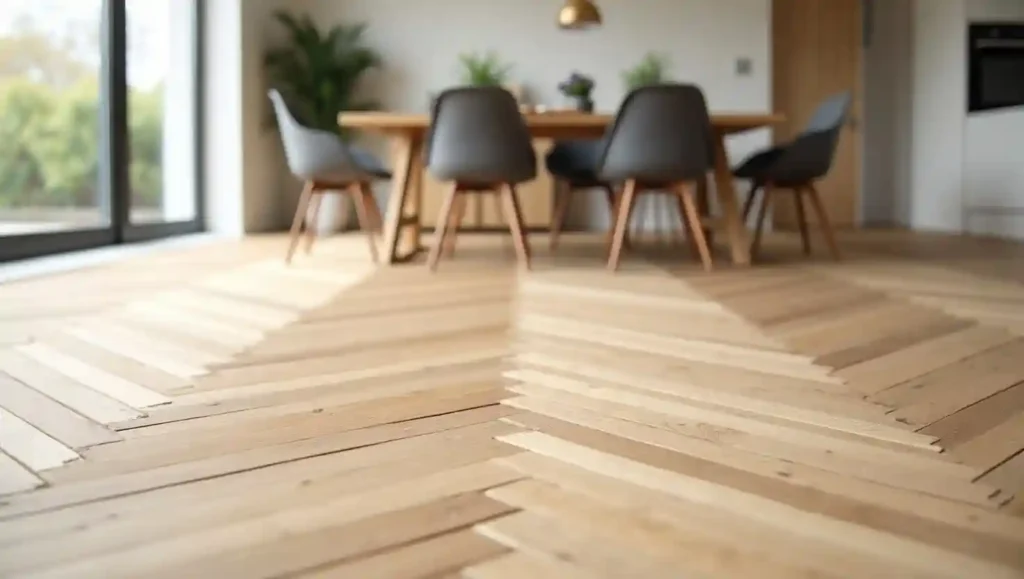
Chevron and herringbone are frequently confused, and while they share a visual family resemblance, they are distinct patterns with different spatial effects. In a herringbone layout, each board terminates at the side of another, creating the broken zigzag. In a chevron layout, the boards meet at their ends, cut at an angle so that each pair of boards forms a perfect V or arrow pointing in a single direction. The result is a continuous, flowing pattern that has a directional energy herringbone lacks.
That directional quality is exactly why chevron works so well in certain modern interiors. In a long, narrow space — a hallway, a dining room, an open-plan kitchen — chevron laid along the length of the room creates a visual pull that makes the space feel intentional and dynamic. The pattern suggests movement and flow, which complements open-plan living in a way that static, straight-lay flooring sometimes cannot. Cut at a forty-five-degree angle per board, the precision required for chevron is even greater than for herringbone, and the stakes for getting it wrong are higher because misalignment is immediately visible.
Species choices for chevron tend to favor woods with consistent grain, since high character-grade boards can make the pattern harder to read. White oak, ash, and maple all work well. The finish again leans matte or satin, and the color of the wood typically stays within a few shades of its natural state. Bold stains on a chevron floor can overwhelm — the pattern itself is already making a strong statement, and the color is most effective when it supports rather than competes.
5. Wire-Brushed Oak for Texture and Depth
Wire-brushing is a finishing technique that removes the soft fibers from the surface of the wood, leaving the harder grain lines slightly raised and creating a textured surface you can feel underfoot as much as see with your eyes. The result is a floor that has genuine physical character — not the artificial distressing of a hand-scraped plank, but a subtle, honest texture that suggests age and use without pretending to be something it is not.
Wire-brushed oak has become one of the signature finishes of contemporary residential interiors, particularly in spaces influenced by Scandinavian design, organic modernism, or the broader shift toward materials that feel natural and imperfect rather than polished and perfect. The texture diffuses light rather than reflecting it, which contributes to the same visual softness that makes matte finishes so popular. It also means that the floor handles daily life extremely well — minor surface scuffs and scratches are absorbed into the existing texture rather than becoming focal points.
The practical advantages compound the aesthetic ones. Wire-brushed floors do not show dust, pet hair, or fine debris the way smooth, glossy floors do. For households with children or pets, that matters enormously in daily life. The texture also gives the floor a grip quality underfoot that smooth finishes cannot match, reducing the slippery quality that some hardwood floors develop over time. Wire-brushed hickory, in particular, offers a dramatic grain structure when treated this way — the contrast between the light and dark rings of the wood becomes a genuine feature.
6. Light Natural-Finish Floors in Scandinavian-Inspired Spaces
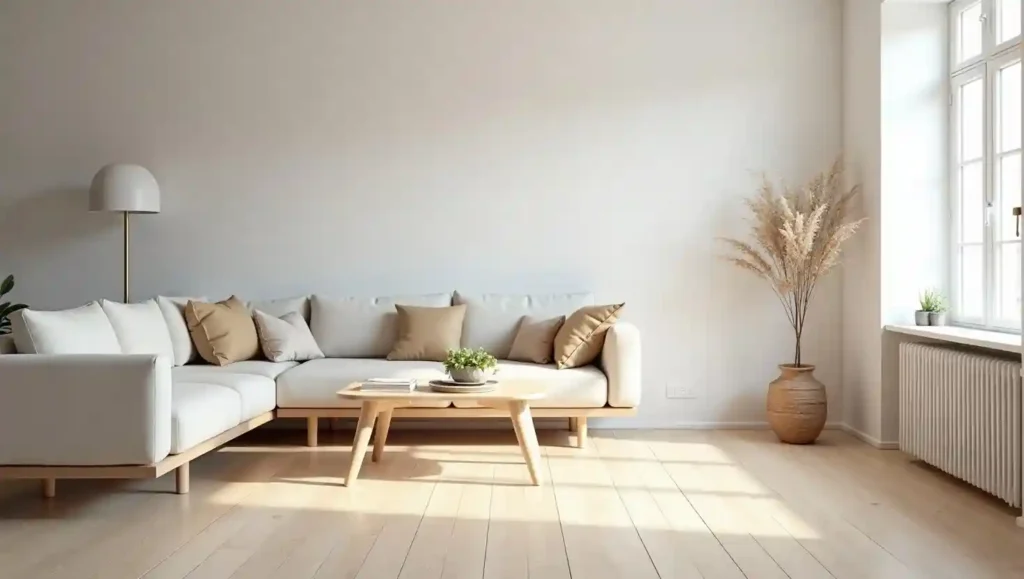
Scandinavian interior design has had an enormous influence on residential aesthetics over the past decade, and one of its most durable contributions is the normalization of very light, very natural-looking hardwood floors as the foundation of a complete interior. In traditional Scandinavian design, pale floors serve a specific functional purpose — in a climate with limited natural light for much of the year, a light-toned floor bounces what light exists deeper into the room. In contemporary interiors that draw on these principles, the effect is similar: light floors open spaces up, make rooms feel larger and airier, and create a neutral foundation that works with almost any palette above it.
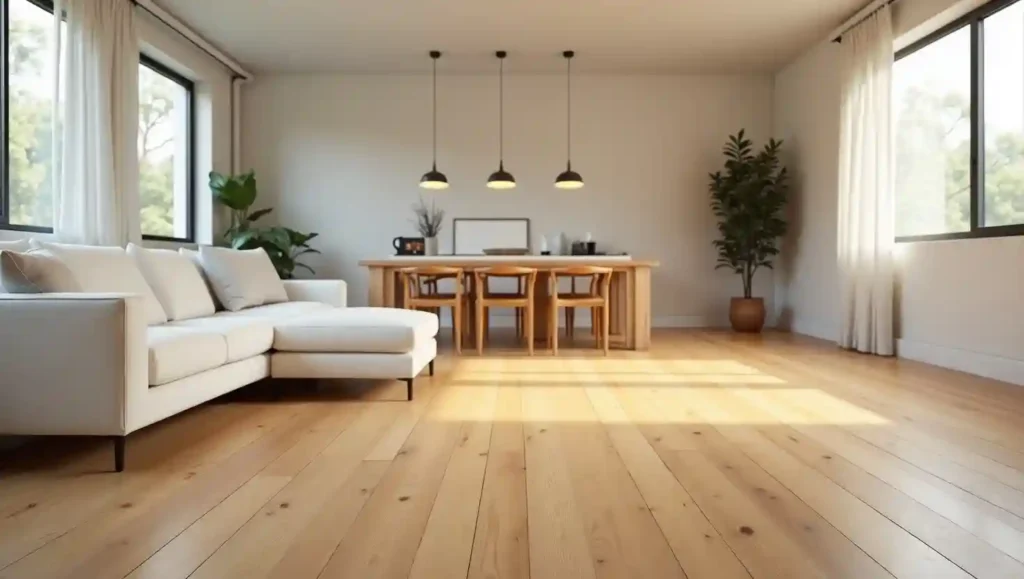
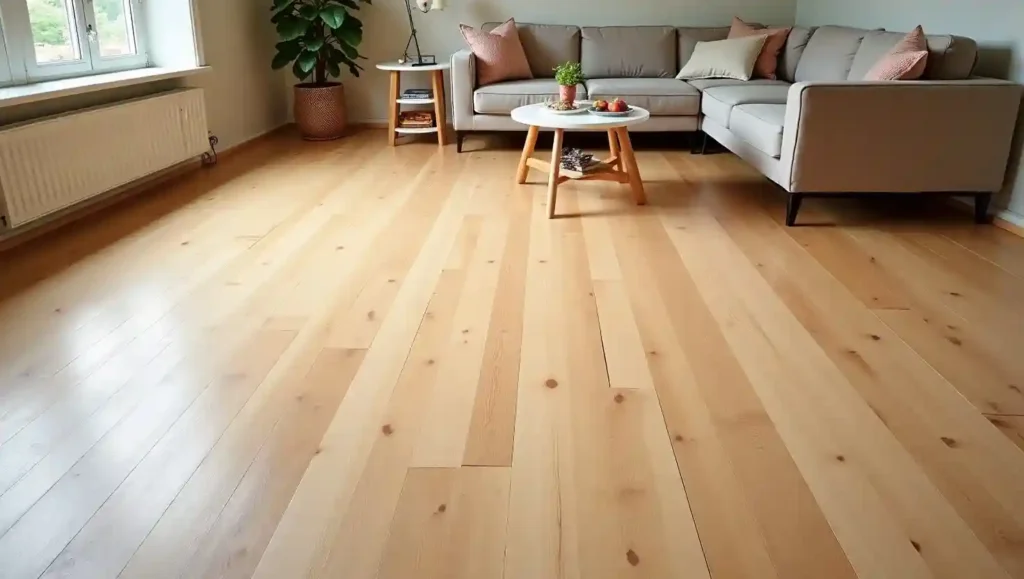
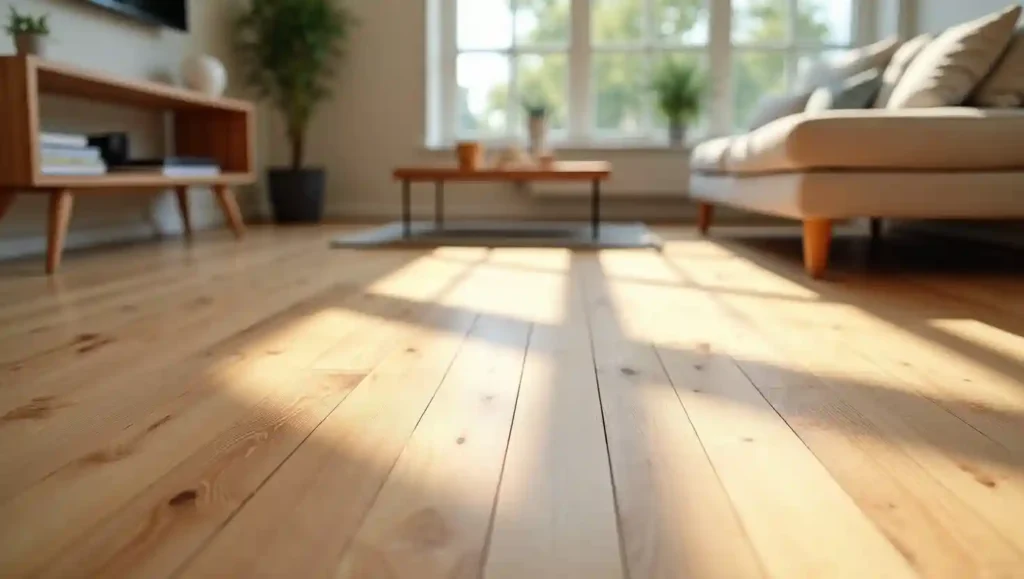
The characteristic look here is a natural or near-natural finish on a light-grained wood — blonde or pale ash, white oak sealed with a clear or lightly tinted oil, or pine in a clear finish that stays close to the wood’s raw color. The finish is almost always matte or oil-rubbed, never high-gloss, and the goal is to make the floor feel as close to unfinished bare wood as possible while still being protected and durable. The result is a surface that reads as warm despite its lightness — there is a softness to pale natural wood that white tile or light concrete simply cannot replicate.
This approach pairs particularly well with white walls, natural textiles, simple furniture with clean lines, and houseplants or natural elements that contribute organic texture. The floor becomes a platform for everything else rather than a statement on its own, which is precisely its strength in a modern interior that wants coherence over drama. Our overview of light hardwood flooring ideas explores specific room applications for pale wood floors in more detail.
7. Mixed-Width Plank Installations
One of the more quietly influential shifts in hardwood flooring design over the past few years is the move away from uniform plank widths toward installations that deliberately mix two or three different widths within a single floor. This technique has historical roots — older European and American farmhouse floors frequently used mixed widths because boards were cut from whatever timber was available — but in contemporary interiors it functions as a conscious design choice that adds organic movement and a sense of custom craftsmanship.
A typical mixed-width installation might combine planks in three-inch, five-inch, and seven-inch widths, laid in a random or semi-random sequence. The variation prevents the floor from reading as overly uniform or industrial, introducing a subtle rhythm that gives the surface visual interest without resorting to pattern. When done well — and the key is genuinely well, because a poorly planned mixed-width installation can look haphazard — the result is a floor that appears to have evolved naturally over time, as if it were assembled from real timbers cut from real trees rather than manufactured to a specification.
Species that work well in this treatment tend to be those with significant natural variation in grain, color, and figure: hickory, character-grade white oak, and reclaimed species all benefit from the mixed-width approach because the variation in plank width reinforces rather than fights the variation in the wood itself. The finish should remain relatively neutral — letting the plank variation do the visual work — and installation requires careful planning before the first board goes down to ensure the width transitions read as intentional rather than accidental.
8. Dark-Stained Ash for a Bold, Contemporary Statement
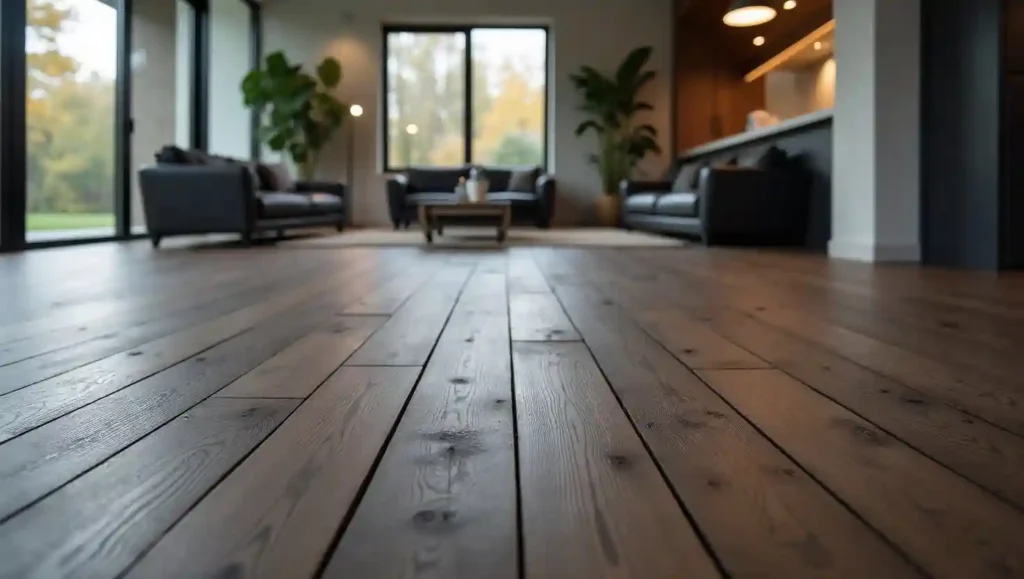
Ash is not the first species most homeowners think of when they consider dark-stained hardwood, but it deserves serious attention. Ash has a pronounced open grain — more dramatic and coarser than oak — which means that when a dark stain is applied, the result is a floor with real graphic energy. The dark stain sinks into the open grain and leaves the harder fiber rings slightly lighter, creating a subtle two-tone effect that gives depth and interest to what would otherwise be a flat, solid-colored surface.
Dark-stained ash occupies a different space in modern design than dark walnut. Walnut’s depth comes from the wood’s natural color and density; it feels luxurious and substantial. Ash stained dark reads as more architectural — bolder, more graphic, and more likely to feel at home in a contemporary or industrial interior than in a traditional one. Paired with concrete walls or countertops, exposed steel fixtures, and furniture in leather or dark upholstery, dark ash creates a floor that anchors an interior with real conviction.
The practical consideration with dark-stained floors is maintenance visibility. Dark floors show light-colored debris — pet hair, dust, sand — more readily than mid-tone floors, and they also show water spots and smears if not properly finished. A satin or low-sheen finish rather than high gloss mitigates the smear problem considerably, and texture (wire-brushing or light hand-scraping) can help with debris visibility. For a household that cleans regularly and wants drama, dark ash delivers it. For a household that prefers to clean less frequently, a more forgiving mid-tone floor might be a better match.
9. Engineered Hardwood in High-Moisture or Radiant Heat Applications
Modern living rarely confines itself to the dry, climate-controlled rooms where solid hardwood has traditionally performed best. Basements, kitchens with heavy moisture exposure, and rooms with radiant floor heating systems all present conditions that are genuinely challenging for solid wood. This is where engineered hardwood has evolved from a compromise into a genuine design choice in its own right.
Contemporary engineered hardwood uses a thick real-wood veneer — often three millimeters or more — bonded to a stable core of cross-laminated wood plies or high-density composite. The construction resists the expansion and contraction that causes solid hardwood to gap, cup, or buckle in response to moisture and temperature changes. Over a radiant heat system, engineered hardwood performs significantly more reliably than solid wood because the core dampens the wood’s natural movement response to temperature fluctuations. The surface, being real wood, looks and behaves identically to solid hardwood and can often be refinished once or twice over its lifespan.
From a design standpoint, engineered hardwood is available in every species, finish, and plank width that solid hardwood offers. Wide plank white oak in engineered format, for example, is now among the most commonly specified hardwood floors in contemporary residential projects precisely because it can go places solid wood cannot. If you are considering flooring over a concrete slab — a common scenario in modern slab-on-grade construction — understanding how that installation works is important. Our detailed piece on solid wood flooring over concrete covers the technical requirements and why engineered formats often make more sense in that context. For rooms with radiant heat specifically, our guide on hardwood flooring and underfloor heating explains what species and constructions work best.
10. Natural Color Variation: Embracing Imperfection as a Feature
For much of the twentieth century, the prevailing standard for premium hardwood flooring was uniformity. Select-grade and clear-grade lumber — with minimal knots, consistent color, and tight grain — commanded a price premium precisely because it eliminated the natural variation that cheaper grades displayed. That aesthetic has largely inverted in contemporary design. Today, high natural color variation is actively sought out rather than screened away.
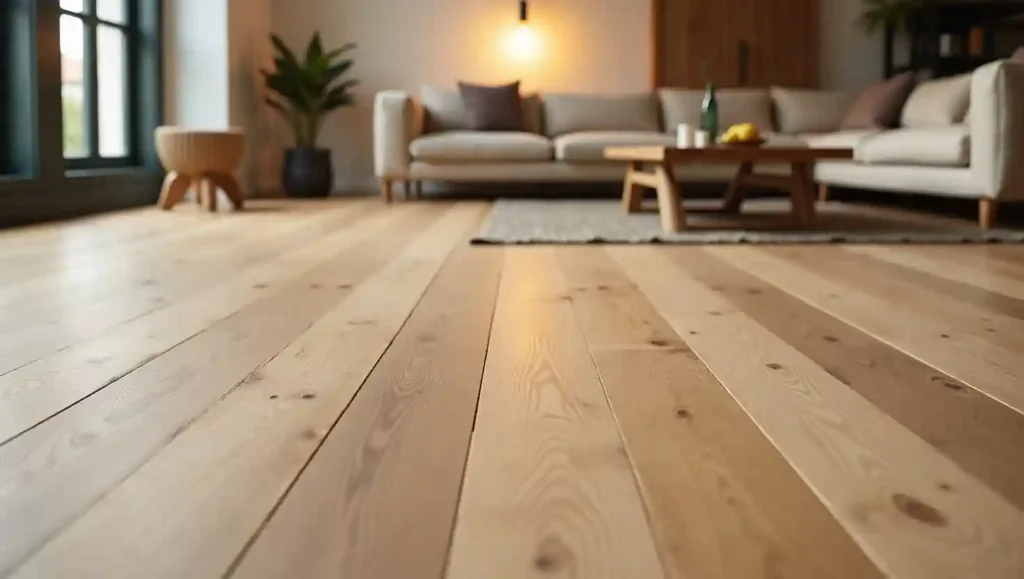
White oak and hickory are the species most commonly associated with this trend, and for good reason. Both exhibit significant natural variation in board color and grain character — boards cut from the same tree can range from pale cream to warm caramel to dark brown, and when installed randomly across a floor, that variation creates a surface that looks genuinely natural rather than manufactured to a specification. The practical benefits compound the aesthetic ones: floors with natural color variation are far more forgiving of everyday wear. Scratches, minor dents, and dust are absorbed into the visual complexity of the floor rather than standing out against a uniform background.
This approach also carries a sustainability argument. Character-grade and rustic-grade lumber produces more usable flooring from each tree because fewer boards are rejected for having natural features. Choosing a floor that embraces knots, color shifts, and grain irregularities as design elements rather than defects is a more material-efficient choice as well as a more honest one aesthetically. The key to making it work is selecting a finish — typically matte or oil — that does not flatten the variation but instead allows it to read clearly across the surface of the installed floor.
11. Hardwood Flooring Carried Through an Entire Home for Visual Flow
The final idea on this list is less about a specific species or pattern and more about an installation strategy that has become a defining characteristic of modern home design: running the same hardwood flooring continuously through every room of the living spaces, including the kitchen, to create an uninterrupted visual field from one end of the home to the other.
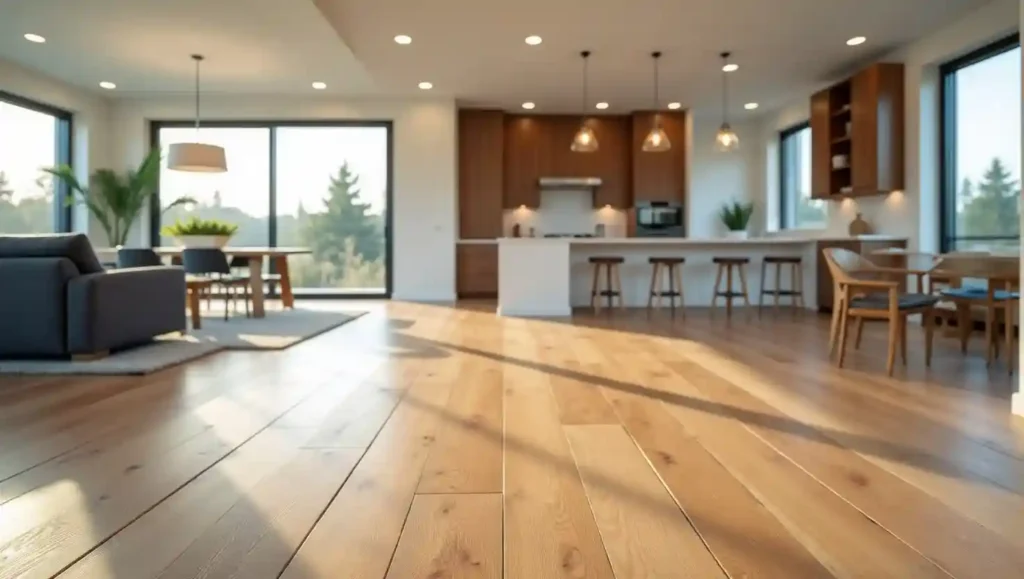
In an open-concept home, this approach is practically essential. When the living, dining, and kitchen areas share a single continuous space, using different flooring materials in each zone — or even using the same material with a seam or transition strip — creates visual breaks that fragment what should be a unified volume. A single species of hardwood, in the same finish and plank orientation, run wall to wall through the entire footprint of the living spaces, makes the home feel simultaneously larger and more deliberate. There is a clarity to it that even the best multi-material approach cannot match.
In homes where the rooms are separate, the same principle applies with slightly more nuance. Running the same hardwood through the primary living spaces — living room, dining room, hallway, and even the master bedroom — creates a coherence that makes the home feel designed as a whole rather than room by room. The species and finish choices that work best for this are naturally those on the more neutral end of the spectrum: mid-tone white oak, natural ash, or a warm greige-stained floor that reads consistently under both natural and artificial light across different rooms with different orientations. Understanding how different rooms and conditions affect the flooring choice is something our guide on hardwood flooring for high-traffic areas addresses directly, since hallways and connecting spaces take the most wear in any whole-home installation.
For homeowners mapping out their full project, it is also worth thinking through the transition details — what happens at thresholds where the hardwood meets a bathroom tile or an exterior door. Getting those transitions right is as important as the floor itself for maintaining the sense of visual continuity. Our piece on transition strips covers the available options and which work best in different scenarios.
Putting It Together: How to Choose the Right Modern Hardwood Idea for Your Space
Running through these eleven ideas, a few themes recur often enough to be worth naming explicitly. The shift from high-gloss to matte finishes is perhaps the most universal — across species, patterns, and colors, the contemporary direction in hardwood almost uniformly favors low sheen. The practical reasons are compelling: matte floors hide fingerprints, dust, and minor wear better than glossy ones. But the aesthetic reason is equally important: matte finishes make hardwood feel more material and less decorative, which is precisely the quality modern interiors tend to prize.
The move toward wider planks is similarly consistent. Wide planks reduce the number of seams across a floor, which creates a cleaner, more expansive reading of the surface and allows the natural character of the wood to express itself more fully. In small rooms, wide planks can feel out of scale; in average to large rooms, they almost always improve the result.
Pattern — herringbone, chevron — adds investment and complexity but transforms the floor from a background element into a genuine design feature. If you are renovating a room that lacks architectural interest in its walls or ceiling, a patterned hardwood floor can supply the visual complexity that other elements do not.
Species selection ultimately comes down to matching the wood’s natural character to the mood of the interior. White oak is the Swiss Army knife of modern hardwood — neutral enough to work with almost anything, interesting enough to hold its own. Walnut brings luxury and drama. Ash brings graphic energy. Hickory brings rustic character. Knowing which direction your interior is heading narrows the choice considerably.
Finally, there is the question of where hardwood can actually go in a home. Solid hardwood has real limitations in moisture-prone environments and over radiant heat. Engineered hardwood removes most of those constraints without sacrificing the look or feel of real wood. If you are curious about what the complete project cost looks like — materials, installation, and the factors that move the number up or down — our hardwood flooring cost guide breaks down the full picture in detail.
Modern hardwood flooring is not a single look. It is a family of approaches unified by a preference for authenticity, restraint, and materials that age well rather than just looking good when new. Any of these eleven ideas can be the right starting point for a home that wants to feel genuinely contemporary without abandoning the warmth and permanence that made hardwood worth choosing in the first place.
James Miller is a seasoned flooring contractor with years of hands-on experience transforming homes and businesses with high-quality flooring solutions. As the owner of Flooring Contractors San Diego, James specializes in everything from hardwood and laminate to carpet and vinyl installations. Known for his craftsmanship and attention to detail, he takes pride in helping clients choose the right flooring that balances beauty, durability, and budget. When he’s not on the job, James enjoys sharing his expertise through articles and guides that make flooring projects easier for homeowners.
When someone says “vinyl flooring,” they are describing an enormous category. Vinyl flooring spans everything from the 0.5mm sheet material glued down in laundry rooms during the 1970s to rigid-core luxury vinyl tile planks engineered to tolerate radiant heat, heavy foot traffic, and standing water simultaneously. Calling both of those things “vinyl flooring” is technically…
Carpet and vinyl flooring sit at opposite ends of the flooring spectrum — one built for softness, warmth, and acoustic comfort; the other engineered for water resistance, durability, and low maintenance. Yet when homeowners face an actual flooring decision, the real question is never as simple as “which is better?” The right answer depends entirely…
What Makes SPC Flooring Structurally Different From Other Vinyl Products SPC stands for Stone Plastic Composite. The core layer is a compressed blend of natural limestone powder, polyvinyl chloride, and stabilizers, calendared under high pressure into a rigid slab. That manufacturing process produces a core density typically between 1.85 g/cm³ and 2.0 g/cm³, which is…
The idea of parquet flooring in a bathroom divides people. Tile advocates call it reckless. Design enthusiasts call it the boldest upgrade a bathroom can get. The truth, as usual, sits somewhere in the middle — but it leans further toward “yes, it can work” than most flooring guides let on. What most articles skip…
Laminate flooring has earned its reputation as one of the most cost-effective ways to completely transform a room, and in 2025 and 2026, the gap between affordable laminate and the real thing has never been smaller. Modern manufacturing has produced options that genuinely fool the eye, with realistic wood grain textures, embossed surfaces, and color…
Walk into any flooring showroom and a salesperson will eventually say the word “grade.” Most buyers nod along, assume it means quality, and move on. That assumption costs people money — sometimes in the wrong direction. Hardwood flooring grades are not a quality ranking. They are an appearance descriptor. A #2 Common oak floor is…