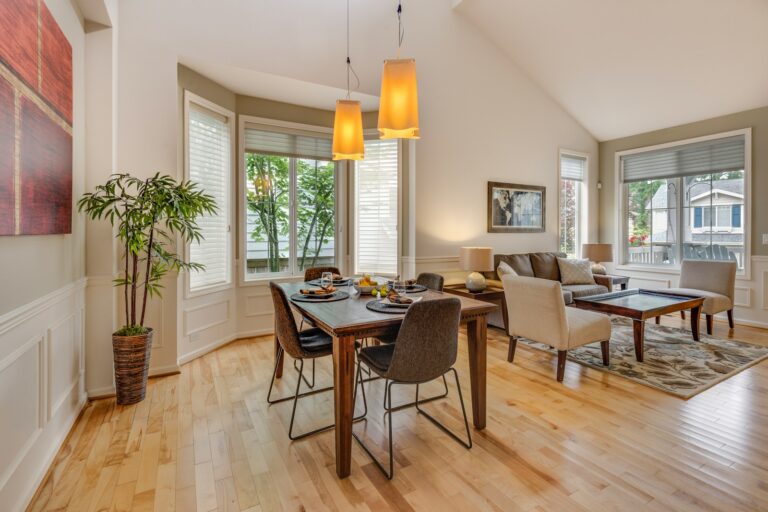
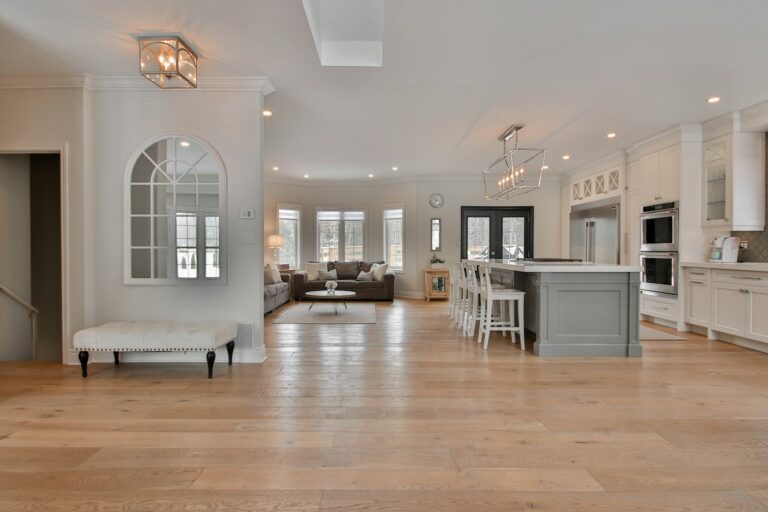
LVP is the dominant choice for living rooms, and for good reason. These planks are typically 4–7 inches wide and 36–48 inches long, mimicking the size and shape of real wood planks, making them best for living rooms, bedrooms, and hallways where you want the warmth and beauty of wood without the maintenance headaches.
The plank format aligns with how most living rooms are proportioned. Longer, wider planks make a room feel more expansive, reduce the visual busyness of too many seam lines, and photograph well — which matters if you ever sell. Wide plank vinyl flooring creates a more open and expansive feel in any room, making spaces appear larger and more inviting, a trend particularly popular in open-concept homes and large living areas.
If the format question starts and ends with living rooms, LVP is almost always the right answer. The sub-question — WPC core versus SPC core — is where the real decision lives, and we cover that below.
Luxury Vinyl Tile (LVT)
LVT mimics ceramic, porcelain, stone, or concrete and comes in squares typically ranging from 12×12 to 18×18 inches. LVT is best suited to bathrooms, entryways, laundry rooms, basements, and kitchens where you want the sophisticated look of tile without the cold, hard surface.
In a living room, LVT can work beautifully — particularly in warmer climates or contemporary interiors where a stone or concrete aesthetic supports the design direction. But the tile format in a living room requires more intentional styling. It reads as cooler and more commercial than plank, and the grout-line simulation can look dated quickly in residential settings unless it is a genuinely high-resolution print. Contemporary flooring designs such as herringbone or chevron patterns in LVT can create a dynamic focal point in living rooms or hallways, giving a space a unique edge.
Use LVT in a living room when the design intent specifically calls for it. Default to LVP otherwise.
SPC (Stone Plastic Composite)
SPC is a rigid-core construction, not a separate format. It can underpin either planks or tiles. SPC uses a core made from limestone powder and PVC, making it extremely dense and rigid, perfect for high-traffic areas. It is more dent-resistant and dimensionally stable than WPC due to its dense stone core.
For living rooms, SPC is a sound choice in homes with genuinely heavy foot traffic, large dogs, or frequent furniture rearrangement. Its dimensional stability also makes it the better option in rooms that experience temperature swings — south-facing rooms with large windows, sunrooms that connect to living areas, or rooms above garages. The trade-off: SPC can produce a more hollow click sound when walked on, especially without underlayment, and feels firmer underfoot compared to WPC.
WPC (Wood Plastic Composite)
WPC offers comfort and warmth underfoot thanks to its foamed core, and provides superior sound absorption, making it great for apartments or multi-level homes. In a living room context, WPC delivers the underfoot feeling that most homeowners want — softer, quieter, and warmer than SPC. It is the format that closes the gap between vinyl and real hardwood in terms of how it actually feels to walk on barefoot.
WPC is better for bedrooms, living rooms, and situations where comfort and sound are priorities. If your living room is on an upper floor, if the space functions as a media room, or if comfort during long periods of standing or movement is important, WPC is the stronger candidate.
The limitation: WPC is slightly less dent-resistant than SPC. In a household with very heavy furniture that rarely moves, that matters. In most living room conditions, it does not.
Understanding Wear Layers: What the Numbers Actually Mean
The wear layer is the transparent protective coating that sits on top of the design print layer. It is the only thing standing between your floor’s surface and daily abrasion. Every durability claim made about vinyl flooring ultimately traces back to this number.
Wear layer thickness is measured in mils — thousandths of an inch. A 12-mil wear layer is common for residential use, while commercial settings or homes with high traffic and pets might need 20-mil or higher.
For a living room, the practical breakdown looks like this:
6 mil: Entry-level residential. Adequate for low-traffic living rooms in households without pets, where furniture placement is stable and the floor sees minimal abrasion. Not a long-term solution in active households.
12 mil: The standard for most residential living rooms. Handles normal foot traffic, furniture movement with felt pads, and occasional pet activity. This is the minimum you should consider for a primary living space.
20 mil: The premium residential threshold. Homes with heavy traffic and pets might need 20-mil or higher for adequate protection. At this thickness, the wear layer handles large dogs, frequent furniture rearrangement, and the sustained abrasion of a genuinely active household. If you are investing in a quality floor that you want to last 15 to 20+ years, 20-mil is worth the price premium over 12-mil.
One clarification worth making: both SPC and WPC use the same wear layer technology, so scratch and stain resistance are equal at the same wear layer thickness. SPC’s advantage is specifically in dent resistance and thermal stability. When comparing products, make sure you are comparing wear layers of equivalent thickness — a 20-mil WPC and a 20-mil SPC will perform identically against surface scratching, even though their cores behave differently under load.
If you want to understand how wear layer thickness sits within the broader layered structure of a vinyl floor, the wear layer thickness guide for LVP flooring covers each layer’s function in detail.
Thickness and How It Affects Living Room Performance
Total plank thickness and wear layer thickness are different measurements that people frequently conflate. Total thickness — measured in millimeters — affects dimensional stability, how the floor bridges minor subfloor imperfections, and how it feels underfoot. Wear layer thickness affects surface durability.
SPC vinyl plank flooring has a thinner side profile of 3.2 to 7mm versus a side profile of 5 to 8mm for WPC vinyl plank flooring. A vinyl plank that is thicker will better handle uneven subfloors.
For living rooms, the practical guidance on total thickness:
A 4mm to 5mm plank is the entry point for floating installation. On a well-prepared, level subfloor — such as a smooth concrete slab or a flat plywood subfloor — this thickness performs adequately. But it has less tolerance for subfloor imperfections. Any irregularity in the substrate will telegraph through a thinner plank over time, creating a visible or tactile unevenness underfoot.
A 6mm to 8mm plank is the sweet spot for most residential living rooms. It bridges minor subfloor variations, reduces hollow sound when walked on, and provides a more substantial feel underfoot. The added mass also contributes to acoustic performance — thicker planks transmit less impact sound to the floor below.
Above 8mm, you are typically in WPC territory with an attached underlayment pad. These thicker products deliver the warmest, quietest underfoot experience but come at a higher price point and add meaningful height at transitions. If your living room connects to adjacent rooms with a different floor covering, verify that transition heights work before committing to a very thick plank.
Installation Methods for Living Rooms: Which One Is Right for Your Situation
Vinyl flooring for living rooms can be installed in three ways: floating (click-lock), glue-down, and loose-lay. Each has a specific set of conditions where it performs best, and the wrong choice for your subfloor or room conditions can undermine an otherwise excellent product.
Floating Click-Lock Installation
Click-lock floating installation is the dominant method for residential living rooms and the most DIY-friendly option. Planks lock together at their edges and float as a unified assembly over the subfloor without adhesive. Click-lock vinyl planks offer easy installation and removal, providing a cost-effective solution without compromising on appearance.
Floating installation works well in living rooms because it accommodates the minor seasonal movement that occurs in most residential structures. It also allows for straightforward plank replacement if a section is damaged — a meaningful consideration in a primary living space that accumulates furniture over decades.
The requirement for floating installation is subfloor flatness. Most manufacturers specify no more than 3/16 inch variance over a 10-foot span. Exceeding this tolerance causes planks to rock, joints to stress, and click-lock connections to eventually fail. If your subfloor has significant irregularities, address them before installation rather than hoping the planks bridge the gap. You can find out more about what to look for in a subfloor in the guide to choosing the right subfloor for vinyl flooring.
Glue-Down Installation
Glue-down installation bonds the vinyl directly to the subfloor using a pressure-sensitive adhesive. It eliminates the hollow sound that can accompany floating floors, produces a more rigid installation with less flex underfoot, and is the standard for commercial-grade applications.
In a residential living room, glue-down makes sense when the room is large enough that floating expansion gaps become problematic, when the subfloor is concrete with a history of moisture issues (though a vapor barrier must still be addressed), or when the floor design uses a loose-pattern tile layout that would shift under traffic without adhesive. The trade-off is that glue-down installation is permanent — or close to it. Removal involves significantly more labor and potential damage to the subfloor.
If you are weighing the two approaches, the detailed comparison of click-lock versus glue-down vinyl flooring walks through the conditions where each method performs best.
Loose-Lay Installation
Loose-lay vinyl uses friction and dimensional weight rather than adhesive or mechanical locking to stay in position. Peel-and-stick or click-lock vinyl planks offer easy installation and removal, but true loose-lay vinyl — with its heavy, dense construction — is a separate product category. Loose-lay suits temporary installations, rental situations, or rooms where the floor may need to be lifted for access to underfloor utilities. In a permanent living room installation, it is rarely the best choice because planks can shift at the edges under repeated furniture movement.
Subfloor Considerations Specific to Living Rooms
The living room sits in a different position structurally depending on your home’s construction. In a slab-on-grade home, you are working directly over concrete. In a raised foundation, you have a wood subfloor — typically plywood or OSB — over joists. In a multi-story home, you are on an upper floor where both subfloor flatness and acoustic performance become primary concerns.
Each scenario has specific implications:
Concrete subfloor: The primary concern is moisture. Concrete is porous and transmits vapor from below regardless of whether visible water is present. Concrete subfloors require an underlayment with an integrated vapor barrier or a separate moisture barrier, regardless of whether the vinyl has pre-attached padding. A vapor barrier — typically a 6-mil polyethylene sheet or an underlayment with a built-in moisture barrier — is essential over concrete.
Plywood or OSB subfloor: Wood subfloors introduce a different concern: flatness and rigidity. OSB in particular can have a textured surface that telegraphs through thinner vinyl planks. Sand high spots and fill low spots before installation. Ensure the subfloor is securely fastened to eliminate squeaks — floating vinyl will not fix subfloor movement, it will amplify it.
Upper-floor installation: Sound transmission to the floor below becomes a significant consideration. The hollow click of footsteps on a floating vinyl floor without adequate underlayment is one of the most common complaints in multi-story homes. Address this at the underlayment stage.
Underlayment for Living Room Vinyl: Not an Afterthought
The underlayment is where most living room vinyl installations succeed or fail in terms of comfort and acoustic performance. It is also where many homeowners make the mistake of either skipping it entirely or adding too much of it.
The most common types of underlayment for vinyl are cork, foam, felt, rubber, plywood, and OSB. When it comes to reducing noise in your home, cork is an excellent option — cork is dense and can help hide imperfections in the subfloor.
For a living room on an upper floor or in a multi-unit building, acoustic performance is the primary specification to optimize. High-density cork or rubber significantly reduces the impact sound of footsteps and movement. Even in single-story homes, noise reduction can be important in living rooms or media rooms where you want a quieter environment. Look for underlayment products with published IIC (Impact Insulation Class) ratings — building codes generally require a minimum IIC of 50 in multi-unit residential construction.
One critical boundary: too much cushioning can compromise the integrity of your floor’s locking system. Adding additional underlayment under vinyl with an attached pad can create too much cushioning, which causes the floor to come apart through use over time. If your chosen vinyl already has a pre-attached pad, do not add a separate underlayment underneath. Check the manufacturer’s specification first.
Acoustic underlayment can cut down noise levels by nearly half. Underlayment materials like cork or rubber are especially effective at absorbing sound vibrations — a meaningful difference in apartments or multi-story homes.
For those researching backing material differences, the comparison between cork-backed and rubber-backed vinyl flooring goes deeper into the acoustic and comfort trade-offs between these two underlayment types.
Aesthetics: Choosing a Living Room Vinyl That Actually Looks Right
The functional specs narrow the field to a shortlist. The aesthetic decision is what closes it. And living rooms demand more from aesthetics than almost any other space in the home.
Plank Width and Room Scale
Plank width should scale with room size. In a small living room — under 150 square feet — standard 5-inch planks avoid the overwhelming look that very wide planks can create in tight spaces. In a large or open-plan living area, 7-inch or wider planks read better proportionally and reduce the number of visible seam lines.
Finish: Matte vs. High-Gloss
Matte finishes and low-sheen textures are gaining popularity for their ability to hide scratches and dust, offering a sleek and contemporary appearance that requires less maintenance. In a living room that sees regular foot traffic, a matte or satin finish is the pragmatic choice. High-gloss surfaces show every footprint, pet paw mark, and dust particle. They look exceptional in showrooms and photographs, and require significantly more maintenance to stay that way in daily use.
Color and Light Behavior
Luxury vinyl’s smooth, streamlined surface enhances the feeling of openness, making even compact rooms feel larger and brighter. Neutral color options blend easily with modern furnishings and decor, creating harmony without distraction.
Light colors — greige, ash, pale oak tones — make small living rooms feel larger but show dirt more readily and are more vulnerable to the appearance of UV fading in sun-exposed rooms. Dark colors — charcoal, walnut, espresso — are dramatic and forgiving of dirt but make small rooms feel smaller and show dust more clearly on the surface.
The most durable aesthetic choice for most living rooms sits in the mid-range: a warm greige or natural oak tone with a subtle texture. In 2025, vinyl flooring color trends are leaning toward warm, nature-inspired tones and richly textured finishes.
Texture and Registered Embossing
Advancements in printing technology have led to vinyl flooring with realistic textures that match the visual grain, known as registered embossing. This feature enhances the authentic look and feel of wood-look vinyl. In a living room where design authenticity matters, registered embossing is worth paying for. It means the texture of the plank surface aligns with the wood grain pattern in the print layer beneath — the knots feel raised where the printed knots are, the grain channels align with the visual grain lines. The result is a floor that reads as real wood to the eye and to the touch.
The Living Room Limitations of Vinyl: What to Know Before You Commit
Vinyl flooring is excellent for living rooms under most conditions. It is not excellent under all conditions, and being honest about the limitations prevents expensive regrets.
Sun Exposure and Fading
When exposed to direct light for extended periods, some vinyl flooring can begin to lighten. This can be managed by using blinds and curtains in rooms with high sun exposure. A south-facing living room with large windows and no window treatments is a genuinely risky environment for vinyl flooring. The fading is not immediate, but over several years it can create a visible differential between areas under furniture or rugs and the exposed field of the floor. UV-resistant formulations mitigate this risk, but do not eliminate it entirely.
If your living room gets significant direct sun, this deserves attention during both product selection and the window treatment decisions you make after installation. There is a dedicated resource on preventing fading from sunlight on vinyl flooring that covers protective strategies in detail.
Heavy Furniture and Denting
Vinyl planks can dent if heavy furniture sits in the same spot for too long or if items are dragged across the floor without protection. Placing felt pads or rubber casters under furniture helps distribute weight and prevent denting. This is particularly relevant in living rooms, which typically contain some of the heaviest residential furniture — sofas, entertainment units, heavy sectionals. SPC-core products are more resistant to permanent indentation than WPC due to their denser core. At either core type, furniture coasters and felt pads are not optional accessories — they are necessary protective measures.
Resale Value
This is the limitation most often omitted from vinyl flooring guides, and it deserves honest treatment. Unlike engineered and solid hardwood flooring, vinyl floors will likely not increase the resale value of a home. However, if the vinyl flooring is high quality and gives rooms an upgrade, the home will definitely photograph and present better than if the flooring is older, out-of-style, or damaged.
If your primary objective is maximizing resale value, hardwood or engineered hardwood in the living room remains the stronger investment. If your objective is a durable, low-maintenance, visually appealing floor that performs well over a 10 to 20-year horizon in an active household, high-quality vinyl is a defensible and pragmatic choice. The decision depends on how long you intend to stay and what your buyer profile looks like in your market.
Noise
A floating vinyl floor on a hard subfloor without adequate underlayment produces a hollow, clicking sound underfoot. Without underlayment, floating vinyl produces a hollow or clicking sound of walking that is a common source of dissatisfaction. This is one of the most frequently cited complaints about vinyl flooring in living rooms, and it is almost entirely preventable through proper underlayment selection. It is not a product defect — it is an installation decision. If you are comparing vinyl to other options on acoustic grounds, the comparison of vinyl versus laminate for sound covers how both materials behave acoustically and what each requires to perform quietly.
Vinyl vs. Laminate in the Living Room: The Actual Decision Points
Most homeowners eventually face a choice between vinyl and laminate for living room installation, and the comparison deserves more precision than “vinyl is waterproof.” Both materials have evolved significantly, and the decision now turns on specific performance attributes rather than broad categories.
Waterproofing remains the clearest differentiator. Luxury vinyl’s waterproof nature eliminates warping, cupping, and moisture damage that plagues hardwood in challenging environments, and it excels in wet areas, high-traffic zones, and homes with pets or children. Laminate, even water-resistant laminate, has a wood-fiber core that reacts to sustained moisture. A living room with pets, young children, or proximity to a wet bar or kitchen pass-through benefits from vinyl’s moisture immunity.
Comfort and acoustics favor WPC vinyl over laminate. Luxury vinyl feels softer underfoot and produces less noise than laminate flooring. However, high-quality laminate can cost less while offering similar aesthetics. If budget is the primary constraint and moisture exposure is minimal, quality laminate remains a legitimate option for a living room. If moisture, comfort, and acoustic performance are all in play simultaneously, vinyl wins the comparison. For those interested in diving deeper into this trade-off, the full vinyl versus laminate comparison for pet households covers scratch resistance, noise, and maintenance side by side.
Vinyl and Pets in the Living Room: What Wear Layer and Core Type Actually Deliver
The living room is typically where pets spend the most time, which makes it the most demanding surface in a pet-owning household. The question is not whether vinyl handles pets — it does, better than most alternatives — but which specification level is required.
For busy households with kids or pets, prioritize vinyl planks with a thicker wear layer to withstand scratches and spills. For most dog breeds, a 20-mil wear layer is the appropriate specification. Large breeds with hard nails, or households with multiple dogs, should look at commercial-grade products with 28-mil or higher wear layers. These exist in the residential market and carry the durability specification that active pet households require.
The buckling concern is also relevant in pet households. Dogs that scratch at entry points — door frames, sliding door thresholds — can create localized stress on planks. Luxury vinyl can be punctured by very sharp objects, and concentrated claw pressure at a single point over time can compromise the surface. Keeping pet nails trimmed remains the most effective mitigation, regardless of how thick the wear layer is.
On moisture, vinyl is unambiguous: pet accidents that soak into the seams of a laminate floor create permanent damage. With vinyl, surface cleanup is straightforward and the waterproof core does not absorb the liquid. That single attribute makes vinyl the rational choice in living rooms where pets are a primary consideration.
How to Evaluate a Living Room Vinyl Product Before You Buy
Retail flooring environments are not neutral. Samples are photographed under optimized lighting, and the way a floor looks in a showroom almost never replicates how it looks in a real living room with your specific natural and artificial light. Before committing to a product, evaluate it against these criteria:
Request large samples. A 4-inch sample tells you almost nothing about how a floor reads across a full room. Request the largest sample available, or ask whether you can borrow a display plank. Lay it on your floor in your living room and observe it at different times of day.
Check for lippage. Lippage is the height differential between adjacent planks. Lay two planks together and run your hand across the joint. Any perceptible rise indicates either manufacturing variance or a product that requires an exceptionally flat subfloor to perform without noticeable edge transitions.
Evaluate the repeat pattern. Budget vinyl products often have a short print repeat — the same plank image appears again within a relatively short run of installed flooring. Stand back and look for repeating pattern elements. High-quality products have long or random repeats that create a convincingly natural look across a full room.
Confirm warranty terms. Residential wear warranties range from 10 years to lifetime. But the warranty conditions matter as much as the duration. Confirm that the warranty covers the living room use case specifically — some warranties exclude commercial use or require specific maintenance protocols to remain valid.
Verify installation requirements. Confirm the manufacturer’s subfloor flatness tolerance, acclimation requirements, and whether a specific underlayment is specified or excluded. Misalignment between your subfloor condition and the product’s installation requirements is the most common source of post-installation failures.
The Bottom Line on Vinyl Flooring in Living Rooms
For most living rooms — in most household types, at most budget levels — vinyl is a legitimate and competitive choice. The format question is largely settled: LVP in a WPC or SPC core, depending on whether comfort and acoustics or dimensional rigidity and dent resistance are the priority. The wear layer floor for a primary living space is 12-mil residential; 20-mil if the household is active, has large pets, or the floor needs to last through a decade of intensive use without visible degradation.
The limitations are real and worth factoring in: fading under sustained direct sun, no meaningful contribution to resale value, inability to be refinished when the surface eventually wears, and a noise profile that requires intentional underlayment to manage. None of these is a disqualifying flaw. They are conditions to plan around.
What vinyl does consistently — in a living room more than almost anywhere else — is deliver a floor that looks good, performs reliably, and requires minimal maintenance for the 15 to 25 years it is designed to last. For the majority of homeowners navigating that trade-off honestly, that is enough. For those who want to explore what a professional installation looks like in practice, the vinyl flooring services page covers what to expect from the assessment and installation process.
James Miller is a seasoned flooring contractor with years of hands-on experience transforming homes and businesses with high-quality flooring solutions. As the owner of Flooring Contractors San Diego, James specializes in everything from hardwood and laminate to carpet and vinyl installations. Known for his craftsmanship and attention to detail, he takes pride in helping clients choose the right flooring that balances beauty, durability, and budget. When he’s not on the job, James enjoys sharing his expertise through articles and guides that make flooring projects easier for homeowners.
Vinyl flooring and tile are not just two different materials. They represent two entirely different philosophies about what a floor is supposed to do for you. One is engineered for comfort, speed, and cost control. The other is built to outlast the house. Porcelain and ceramic tile have been the standard for bathrooms, kitchens, and…
Before you pick up a utility knife or reach for a circular saw, there is one thing most guides skip entirely: vinyl plank flooring is not a single material. It is a layered system, and the core type determines almost every cutting decision you will make on the job. Most planks share the same four-layer…
Most waterproof flooring on the market today relies on PVC, vinyl composites, or engineered wood cores that have nothing to do with the surface material you are actually walking on. Amorim’s WISE line is built differently. The waterproof core, the underlayment, the finish, and the decorative layer are all derived from or dependent on cork…
The question sounds simple enough. You have old laminate down. You want new laminate on top. You skip the removal, save a day of labor, and move on. That logic breaks down the moment you understand what laminate flooring actually is and how it behaves under your feet, across seasons, and over years. This guide…
Carpet tiles — also called modular carpet or carpet squares — are pre-cut sections of carpet, typically 18×18 inches or 24×24 inches, designed to interlock across a floor without the need for seaming, stretching, or tack strips. Unlike broadloom carpet that arrives in a roll and requires a professional to cut and stretch it wall…
When homeowners start narrowing down hardwood species, ash and oak tend to land on the same shortlist. And for good reason — they sit close together on the Janka hardness scale, they both accept stain, they both refinish well, and they both work in engineered or solid formats. But treating them as interchangeable is a…