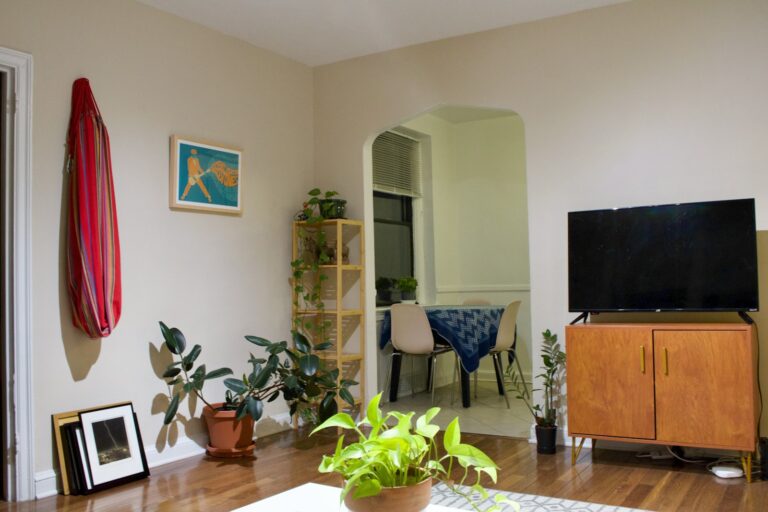
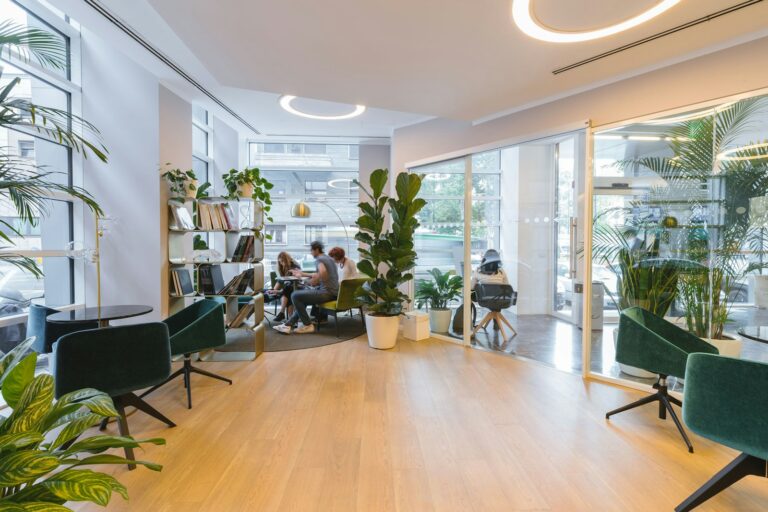
Secondary fading mechanisms include direct radiant heat from HVAC floor vents, heat buildup under south-facing windows (the floor surface temperature directly under a sun-exposed window can be significantly higher than the ambient room temperature), and certain cleaning chemicals that degrade the wear layer’s UV-protective compounds over time.
The Wear Layer Is the First Line of Defense — But Not in the Way Most People Think
When consumers read about wear layers, the conversation almost always centers on scratch resistance and traffic durability. That is a valid discussion. But the wear layer’s role in fade protection is just as important and almost never talked about.
Standard entry-level LVP products often use a 6-mil wear layer. This is adequate for light residential use in terms of scratch resistance, but it provides minimal UV buffering. Mid-range residential products in the 12-mil range offer a meaningful step up. Products at 20 mil and above — which are typically marketed for commercial use but are available for residential installation — provide substantially more UV attenuation, especially when combined with UV-inhibiting additives in the wear layer compound. For rooms with large south- or west-facing windows, more than four hours of direct sun per day, or any sunroom, 20 mil is the practical minimum, with 12 mil reserved for standard window exposure. A warranty that explicitly covers fading due to UV exposure for 15 to 25 years is a stronger signal than a generic lifetime residential warranty that never mentions fading.
What you want to look for when evaluating a product’s actual fade resistance is not just the mil thickness but whether the manufacturer specifies UV-inhibitors in the wear layer formulation. This will show up in product spec sheets or technical data sheets, not always in the marketing copy. Terms like “UV-stabilized urethane,” “aluminum oxide ceramic finish,” or specific references to ASTM D4459 (accelerated xenon arc fade testing) indicate a product that has been engineered with fade resistance as a design criterion rather than an afterthought.
Understanding wear layer thickness for LVP flooring in full detail matters here — the numbers mean different things depending on what is in the wear layer compound, and a 12-mil UV-stabilized wear layer will outperform a 20-mil standard urethane layer on fade resistance even if it loses on scratch durability.
Core Construction and Its Indirect Role in Fading
The core of the plank — whether it is SPC (stone plastic composite) or WPC (wood plastic composite) — does not directly affect how the décor layer responds to UV. However, core construction has an indirect effect that most guides miss entirely.
SPC cores are denser and more dimensionally stable than WPC cores. This stability matters for fade prevention because dimensional movement — the expansion and contraction of the plank under temperature changes — can cause micro-stress at the interface between the core and the décor/wear layer assembly. Over years of thermal cycling, particularly under sun-exposed windows where the floor experiences significant temperature swings, this micro-stress can contribute to delamination or uneven surface texture that makes any color change more visually apparent.
Beyond that, SPC floors tend to run cooler under direct sunlight than WPC floors because stone composites conduct and dissipate heat differently than foamed wood composites. Since heat accelerates photodegradation — the UV-induced chemical breakdown of pigments happens faster at higher temperatures — a floor that stays cooler under a sunny window will, all else equal, fade somewhat more slowly.
The difference between SPC and WPC flooring extends well beyond installation performance and into long-term color stability, and if you are installing in a room with significant sun exposure, SPC should be your default starting point.
UV Radiation Is the Primary Enemy — Here Is How to Control It
No product-level decision matters as much as controlling the UV that reaches your floor in the first place. A premium floor in a room with uncontrolled south-facing sun exposure will fade faster than a budget floor in a room with good UV mitigation. This is not a knock on premium flooring — it is a statement about the physics of photodegradation. You cannot engineer your way around unlimited UV exposure.
The most effective interventions, ranked roughly by UV reduction effectiveness:
Window Film
High-quality ceramic or carbon-based window films block up to 99% of UV radiation while remaining optically clear. This is the single highest-impact change you can make to protect LVP from fading, particularly in rooms where you want natural light but need UV protection. Low-e window films also reduce solar heat gain, which addresses the secondary heat mechanism simultaneously.
Not all window films perform equally. Dyed films lose UV-blocking effectiveness over time as the dye breaks down. Ceramic and carbon films maintain their performance far longer. For a floor you want to protect for 15 to 20 years, the film quality investment is worth taking seriously.
Note that window film affects the warranty coverage of some window glass — specifically, certain insulated glass units may void their seal warranty if film is applied without manufacturer approval. Verify with your window manufacturer before applying film to newer double or triple-pane units.
Window Treatments
Cellular shades, solar shades, and exterior shutters or overhangs are all effective UV control strategies. Solar shades are worth particular attention — they are specifically engineered to block UV and heat while maintaining outward visibility and diffusing rather than blocking natural light. A 5% openness factor solar shade will block approximately 95% of direct solar energy, including most UV.
The limitation of window treatments is behavioral — they only work when deployed. A UV-blocking solar shade that stays raised during peak sun hours provides no protection. If you are choosing between window film and window treatments for a room that receives intense afternoon sun, film is more reliable precisely because it is passive.
Exterior Overhangs, Awnings, and Landscaping
Structural solutions that prevent direct sunlight from entering the window are the most durable long-term solution. A well-placed exterior overhang can eliminate direct sun on a south-facing floor during the highest-sun summer months while still allowing winter sun penetration. Awnings and shade trees work similarly. These are not always feasible, but where they are, they address the UV problem at the source rather than at the glass or inside the room.
How Do You Choose Window Film and Shades That Stop LVP Fading?
The window protection that stops LVP from fading in sunlight is a clear ceramic window film on south- and west-facing glass, combined with solar shades at a 3 to 5 percent openness factor for peak sun hours. Film handles the baseline UV load around the clock; shades handle the direct beam between roughly 10 a.m. and 4 p.m.
Which Window Film Specification Protects Vinyl Floors?
Ceramic film is the specification that protects vinyl floors long term. Dyed films absorb UV with a dye that breaks down, typically within three to five years, and their UV rejection drops as they age. Ceramic films block UV with non-metallic ceramic particles and maintain 99 percent UV rejection for a service life of ten years or more.
Compare films by UV rejection percentage, not Total Solar Energy Rejected (TSER). TSER includes visible light reduction, a number that rises simply by making the film darker, while only the UV figure protects the floor. Clear ceramic films can block 99 percent of UV while transmitting 70 percent or more of visible light, so the room does not darken. When windows are being replaced anyway, low-e or UV-filtering glazing builds the same baseline protection into the glass.
Which Windows Should Be Treated First?
South-facing windows are treated first because they receive direct sun for the longest part of the day, followed by west-facing windows, which take the hottest afternoon sun. East-facing windows get morning light at lower angles and lower intensity, so they are the last priority when only some windows can be filmed.
Which Shades and Shutters Block the Most UV?
Solar shades: openness factors range from 1 to 14 percent; a 3 percent shade blocks considerably more UV than a 10 percent shade, and 3 to 5 percent is the right range for rooms with continuous direct sun.
Cellular shades with blackout liners: the most complete UV block, but they eliminate natural light when closed, so they suit rooms you can close during peak hours.
Plantation shutters: fully closed solid louvers block the direct beam, and adjusted louvers admit indirect, reflected light without the fading beam.
Heat Management Under Sun-Exposed Windows
Direct solar exposure creates a localized heating problem that most homeowners underestimate. On a clear summer day, floor surface temperatures under south or west-facing windows can reach 120°F to 140°F in some cases. At these temperatures, even UV-stabilized vinyl can experience accelerated color change, and the thermal stress on click-lock joints over time contributes to visible seam gaps or edge lifting that compounds the appearance problem.
Practical heat management strategies include:
Using area rugs in the direct sun zone under windows. A well-placed rug blocks both UV and heat from reaching the floor surface below it. The trade-off is that the rug-covered area will retain its original color while exposed areas change, creating a visible line if you ever remove the rug. Choose this approach when you intend the rug to be permanent.
Ensuring adequate HVAC airflow in sun-exposed rooms so that ambient temperature does not climb excessively during peak sun hours.
Avoiding dark-colored LVP in rooms with significant direct sun exposure. Darker colors absorb more heat, creating higher surface temperatures. Lighter colors and medium-tone woods reflect more solar energy and run cooler.
Cleaning Products and Fade Acceleration
This is an underappreciated fading mechanism. The UV-protective compounds and urethane finishes in the wear layer are chemically active surfaces. Certain cleaning products strip or degrade these protective compounds over time, effectively reducing the wear layer’s UV-buffering capacity before the physical abrasion of foot traffic would have done so.
The main offenders are bleach-based cleaners, solvent-based cleaners (including some “floor shine” products that contain wax or oil), and anything with a high or low pH. Standard vinyl floor cleaners and pH-neutral hardwood floor cleaners are appropriate. Steam mops are also problematic — they drive high-temperature moisture into seams and can cause the wear layer compound to swell or cloud, which changes how light interacts with the surface and can make UV damage appear earlier and more dramatically than it otherwise would.
Manufacturer-approved cleaners are the safe choice. When those are not available, pH-neutral cleaners diluted in water are the appropriate default. What you want to avoid is anything that leaves a residue — residue buildup on the wear layer surface creates a diffusing layer that scatters light unevenly, making any underlying color change more visible.
Choosing an LVP Product That Resists Fading From the Start
If you are still in the product selection phase, fade resistance is a specifiable property — you are not just hoping for the best. Here is what to look for:
First, look for products that reference ASTM D4459 testing in their documentation. This is the standard accelerated xenon arc weatherometer test for plastics intended for indoor use, and it measures how much color change occurs after a simulated UV exposure period. A ΔE (delta E, the colorimetric measure of color change) of 1.0 or below after 200+ hours of xenon arc exposure is a solid benchmark. Some premium products publish ΔE values well below 1.0 even after 500 hours of simulated exposure.
Second, look at the wear layer formulation descriptors. “Urethane” is generic. “Ceramic-bead urethane,” “aluminum oxide reinforced,” or “UV-inhibited urethane” are more specific and indicate engineered fade resistance rather than baseline construction.
Third, if the product is being used in a high-sun environment — a beach house, a desert climate, a room with floor-to-ceiling glazing — consider commercial-grade LVP products. Commercial specifications are tested under significantly higher UV loads because commercial installations cannot be easily replaced and must hold up in environments with all-day south-facing exposure. The UV performance standard for commercial LVP is meaningfully higher than for residential product, and many commercial products are suitable for residential use. The cost difference is often less than the cost difference between a floor that lasts 20 years and one that needs replacing in 10.
Exploring the full range of types of LVP flooring available — including the commercial grades — gives you a much clearer picture of where the performance thresholds actually are in the market.
Color and Finish Selection as a Fade Management Strategy
Color selection does not prevent fading, but it dramatically affects how visible fading becomes. This is a practical reality worth understanding before you commit to a floor color.
High-contrast dark floors show color change the most obviously. A very dark walnut or espresso plank in a sun-exposed room will look visibly bleached within a few years if UV is not controlled, because the eye can easily detect even small shifts in dark color values. Medium tones — mid-brown, greige, warm beige — show fading less because the perceptual contrast between the faded and unfaded state is smaller.
Texture matters similarly. A smooth, high-gloss plank reflects light uniformly, making any surface variation — including the kind of uneven patina that early fading produces — highly visible. Hand-scraped, wire-brushed, or embossed-in-register textures scatter light across varied surface angles, which means small color variations are visually absorbed into the texture rather than standing out against it.
Matte finishes also have an advantage here. Gloss surfaces reflect specular highlights that make color changes visible at oblique viewing angles — the way you see a floor when standing and looking across a room. Matte finishes eliminate specular reflection and make early-stage fading much harder to perceive.
None of this means you should let fading happen and just try to hide it. It means that if you are going into a high-sun room with imperfect UV control, finish and color selection is a secondary layer of protection for the appearance of your floor.
The Furniture and Rug Boundary Problem
One of the most common fading complaints is not about the floor fading uniformly — it is about furniture lines. A sofa, a bookcase, an area rug, or a coffee table all protect the floor beneath them from UV while the surrounding exposed floor fades. When the furniture is rearranged or the rug is removed, a sharp color boundary is visible between the protected and unprotected areas.
This is not a product defect. It is a consequence of differential UV exposure, and it is irreversible once the color boundary is established. The surrounding floor cannot be “unfaded,” and the protected area cannot be selectively aged to match. The practical strategies for avoiding this problem are:
Using UV-blocking window treatments or film from day one, so that the rate of UV exposure is low enough that even significant exposure differentials produce minimal color change over a long period.
Rotating rugs every six to twelve months and rearranging large furniture once a year, particularly in the first few years of a new floor installation, so that UV exposure is distributed more evenly across the floor surface.
Choosing a furniture layout that you commit to long-term in high-sun areas, so the protected zones remain consistent and the color boundary remains hidden under the furniture.
What to Do If Your LVP Has Already Started to Fade
If the color change is in the décor layer itself — a genuine UV-induced fading of the printed ink — there is no reversible treatment. The change is chemical and permanent. Products sold as “floor restorers” or “vinyl revitalizers” can change the surface appearance temporarily, but they are coating the wear layer surface, not reversing the photodegradation of the ink below it. They also almost always affect the finish sheen in ways that make the floor look inconsistently shiny, which can draw more attention to problem areas rather than less.
If the discoloration appears as yellowing rather than bleaching, particularly in areas that are not sun-exposed, the cause is likely off-gassing from rubber-backed rugs or mats reacting with the plasticizers in the vinyl. This is a different mechanism entirely — it is a chemical reaction, not UV damage — and it can be partially addressed by removing the rubber source and, in early cases, by thorough cleaning with a pH-neutral cleaner. Avoiding rubber-backed accessories on LVP entirely is the prevention.
If fading is limited to clearly defined zones and the rest of the floor is in good condition, the only structurally sound solution is plank replacement in the affected zone. Because LVP is a floating floor in most residential installations, individual plank replacement is possible without replacing the entire floor, though color matching to older stock can be challenging if the original product has been discontinued or if the unaffected floor has itself shifted slightly in color from its original state.
Before undertaking any repair strategy, understanding the full prevention system described in this guide — including what is worth trying to salvage and what is better replaced — helps clarify the most cost-effective path forward.
San Diego Conditions and Why Local UV Exposure Is a Real Factor
San Diego sits at approximately 32.7° north latitude and receives an average UV index of 6 to 8 during summer months, with peak daily UV index readings frequently reaching 10 to 11 on clear days. This is meaningfully higher than UV exposure in the northern United States, and it is relevant to how quickly even quality LVP will show fading without proper UV management.
South and west-facing rooms in San Diego homes receive intense afternoon sun during the summer months, which is also the period of maximum UV intensity. Rooms with large sliding glass doors or floor-to-ceiling windows — common in San Diego residential architecture — present particularly challenging UV conditions for flooring.
In this climate, the advice to “install UV-resistant LVP and you’ll be fine” is insufficient. The product quality floor is the foundation, but UV window film and appropriate window treatments are not optional extras in a high-sun San Diego room — they are part of the complete floor protection system.
If you are weighing LVP against other flooring categories for a sun-intensive room, the best UV and heat resistant flooring options overview gives you a comparative basis for understanding where LVP sits in the broader landscape of fade performance across flooring types.
Long-Term Maintenance Habits That Protect Against Fading
Beyond the installation-phase decisions, certain ongoing maintenance habits directly affect how long your LVP holds its color.
Sweep and dry-mop regularly. Grit on the floor surface acts as an abrasive under foot traffic, gradually scuffing the wear layer surface and reducing the optical clarity of the UV-protective coating. A worn, abraded wear layer transmits UV to the décor layer less selectively than an intact one.
Clean spills immediately and thoroughly. Standing moisture that is left to evaporate concentrates any minerals or cleaning product residues in the liquid into a surface deposit. These deposits alter the surface reflection characteristics of the floor and can create localized variations in apparent color that look like fading even when the décor layer itself is intact.
Avoid wet mopping with hot water. Hot water opens the micro-pores in the urethane wear layer surface, allowing any cleaning product or mineral content in the water to penetrate more deeply. Room-temperature water with a pH-neutral cleaner is the appropriate choice for damp mopping.
Felt pads under all furniture legs — not just chairs — prevent contact abrasion of the wear layer. Hard plastic or metal furniture feet create point-load abrasion that locally degrades the wear layer, creating micro-scratched zones where UV penetrates differently than on the surrounding intact surface. This creates a visually patchy floor even before significant fading has occurred.
The Warranty Question and What Fade Coverage Actually Means
Most LVP manufacturer warranties include fade coverage, but the coverage terms matter enormously and are frequently misunderstood. Warranty fade coverage is almost always conditional on normal indoor residential use, which typically excludes direct sunlight, meaning that if you can document that your floor was in direct sun and faded, the warranty will not apply.
What “fade warranty” actually covers in most cases is manufacturing defects — a batch of flooring where the inks were improperly applied or the UV stabilizers were omitted in a production run. It does not cover the entirely predictable result of exposing a UV-sensitive printed material to years of direct UV radiation without protection.
Reading the warranty exclusions before purchase, rather than after a claim denial, is the appropriate approach. Some premium brands do offer more robust fade coverage that includes limited sun exposure, but these are the exception rather than the rule, and they still typically require documentation of reasonable UV mitigation efforts.
Understanding the full pros and cons of LVT flooring — including the warranty limitations that rarely appear in marketing materials — sets realistic expectations for what you are getting and what you are not.
Summary: The Hierarchy of What Actually Protects LVP From Fading
Fade prevention for luxury vinyl plank is a layered problem, and the layers have a hierarchy. Starting from highest impact and working down:
First, control UV at the source — window film and solar shades before the light reaches the floor. This is the highest-leverage intervention available. No product-level choice outweighs the benefit of eliminating most of the UV before it enters the room.
Second, choose a product engineered for fade resistance — UV-stabilized wear layer, UV-resistant inks in the décor layer, ASTM D4459 test data in the spec sheet. For high-sun rooms, commercial-grade specifications are worth the premium. The pros and cons of SPC flooring are relevant here, since SPC’s dimensional stability and thermal characteristics give it an edge in sun-exposed environments over softer WPC constructions.
Third, manage the heat that comes with direct sun — lighter colors, matte finishes, and adequate HVAC airflow in sun-exposed rooms reduce the thermal acceleration of UV damage.
Fourth, use appropriate cleaning products and maintenance habits that preserve the UV-protective properties of the wear layer rather than gradually stripping them away.
Fifth, understand color and texture selection as a last line of defense — not as a substitute for proper UV control, but as a factor that determines how visible any color change becomes if the other layers of protection are imperfect.
LVP is a genuinely durable, high-performance flooring material. It does not fade as a defect — it fades as a predictable physical response to UV energy, and that response can be largely controlled with the right combination of product selection, environmental management, and maintenance discipline. The floors that hold their color for 20 years are not the ones with the most expensive wear layer. They are the ones in rooms where someone thought carefully about where the light was coming from.
If you are planning an LVP installation in a San Diego home and want guidance on product selection and installation for your specific room conditions, our vinyl flooring services team works with these environmental factors every day and can help you build a floor specification that is appropriate for your actual sun exposure situation rather than a generic residential standard.
James Miller is a seasoned flooring contractor with years of hands-on experience transforming homes and businesses with high-quality flooring solutions. As the owner of Flooring Contractors San Diego, James specializes in everything from hardwood and laminate to carpet and vinyl installations. Known for his craftsmanship and attention to detail, he takes pride in helping clients choose the right flooring that balances beauty, durability, and budget. When he’s not on the job, James enjoys sharing his expertise through articles and guides that make flooring projects easier for homeowners.
When most people say they want to pick a carpet type, they are really picking three separate things at once: the pile construction, the fiber material, and the surface style that results from those two choices. Miss the distinction and you end up comparing a Berber to a frieze without realizing one is a construction…
What the Subfloor Actually Does — and Why Preparation Is the Whole Game Every conversation about wood flooring eventually becomes a conversation about what sits underneath it. The finish, the species, the plank width — all of that matters. But none of it matters as much as whether the subfloor was prepared correctly before the…
Most gym flooring conversations start and end with rubber. It is durable, it handles dropped weights, and it is what every commercial facility uses. But that conversation is incomplete, because it skips over a material that outperforms rubber in several categories that actually matter for home gym owners, yoga studios, physical therapy spaces, and multi-use…
When most people say “steam cleaning,” they picture a machine blasting hot vapor into carpet fibers. What professional cleaners actually use is something slightly different — hot water extraction (HWE), where pressurized hot water and a cleaning agent are injected deep into the pile and immediately vacuumed back out. The two terms get used interchangeably…
Choosing hardwood floors when you share your home with dogs or cats is one of the most debated decisions in interior design. People love the warmth and character of real wood, but they worry constantly about scratches, accidents, and the daily wear that comes from paws, claws, and enthusiasm. The good news is that with…
Yes, laminate flooring can be installed over asbestos tile safely through a method called encapsulation, provided the existing tile is intact, dry, and undisturbed during the installation. Encapsulation is the recognized practice of sealing asbestos-containing materials in place rather than removing them, and a floating laminate floor is one of the most encapsulation-friendly finishes available…
,quality(85)/f/54992/2220x1110/c7c362c1c9/stoneside-custom-transitional-shades-breakfast-nook-short.png)