Pine planks can absolutely be used for flooring, and in fact they have been for centuries. Long before oak became the default hardwood choice in American homes, pine was the floor beneath your feet — from colonial farmhouses in New England to the halls of Independence Hall in Philadelphia. What makes the question interesting today is not whether pine works, but when it works well, which species gives you what, and where the trade-offs become deal-breakers.
This article covers all of that: the three main pine species used in flooring, their Janka hardness numbers, the room-by-room fit, installation requirements, finishing choices, and the honest list of where pine earns its place and where it doesn’t.
The Short Answer: Yes, With Conditions
Pine is a softwood. That single fact drives almost every conversation about pine flooring — the advantages, the limitations, and the maintenance expectations. Pine flooring over concrete slabs requires specific preparation precisely because of how pine responds to moisture and subfloor movement. But softness is not the same as fragility, and framing pine only through the lens of what it cannot do misses the point.
Pine floors installed correctly in appropriate spaces last for generations. The ones that fail do so because of mismatched expectations — homeowners who chose white pine for a high-traffic kitchen, or skipped acclimation on wide-plank boards. The conditions that make pine succeed are knowable and manageable. Start there.
Types of Pine Used for Flooring
Not all pine is the same material. The three species that appear most often in flooring each behave differently, and choosing among them is the first real decision you make when considering pine.
Eastern White Pine
Eastern White Pine sits at the softer end of the pine spectrum, with a Janka hardness rating of approximately 380 to 420 lbf. That puts it well below red oak at 1,290 lbf, and even below species like cherry or walnut. Its color is pale, creamy, and even — a clean Scandinavian aesthetic that takes whitewash and light-toned finishes exceptionally well. It is historically associated with wide-plank New England colonial floors, and it is still milled in widths up to 16 or even 20 inches.
The practical implication of that low Janka number is direct: white pine dents more readily than any other flooring pine. Heavy furniture legs will leave marks. Dropped items will leave impressions. Many homeowners who choose it consider the accumulated marks to be part of what the floor is — a record of the space being lived in. If that framing does not appeal to you, white pine is probably not your species.
Southern Yellow Pine
Southern Yellow Pine (SYP) is the workhorse of the three. Commercial-grade SYP registers around 870 lbf on the Janka scale, which puts it in the same neighborhood as cherry and mahogany — both species routinely used for hardwood flooring. Old-growth or longleaf SYP heartwood reaches even higher, sometimes approaching 1,225 lbf. That is comparable to oak.
SYP has more pronounced grain patterns than white pine, with a yellow-white sapwood and reddish-brown to orange heartwood. It stains well with proper conditioning, accepts both oil and polyurethane finishes cleanly, and is available in both standard and wide-plank formats. For most homeowners asking whether pine flooring can handle real daily use, Southern Yellow Pine is the answer.
Heart Pine
Heart pine is the heartwood of old-growth longleaf pine, a species that once covered vast stretches of the southeastern United States. Because longleaf pine grows extremely slowly, its grain is incredibly tight, and the resulting wood is far denser than anything milled from fast-growing plantation trees. Reclaimed heart pine — salvaged from old factory beams, warehouse floors, and demolished buildings — regularly tests at 1,225 to 1,570 lbf on the Janka scale. Some sources cite even higher for genuine old-growth specimens.
Reclaimed heart pine carries a rich amber-to-brown color range that modern plantation pine simply cannot replicate. It is the premium option in the category, priced accordingly, and it delivers a floor that is historically authentic, visually distinctive, and genuinely durable. If you are restoring a period home or want the warmest possible character in a wood floor, reclaimed heart pine is worth the premium.
How Pine’s Softness Actually Works in Practice
One thing that surprises many homeowners: pine floors harden over time. As foot traffic compresses the wood fibers, the surface becomes progressively denser. This is why pine floors installed in New England homes in the 1700s are still structurally sound today — the wood compresses underfoot rather than wearing away. That said, the early life of a pine floor is when it is most vulnerable, and the finish you choose plays a significant role in how much protection you get during that period.
The Janka hardness comparison to red oak (1,290 lbf) is worth keeping in mind throughout this. Oak is the industry benchmark — and comparing everything to it frames the conversation correctly. White pine at 380 lbf is dramatically softer. Southern Yellow Pine at 870 lbf is meaningfully softer but in a range most people find acceptable for residential use. Heart pine at 1,225 lbf is functionally equivalent.
Where Pine Flooring Works Well
Pine performs at its best in spaces where foot traffic is moderate, where the aesthetic fits the character of the wood, and where the homeowner has realistic expectations about maintenance.
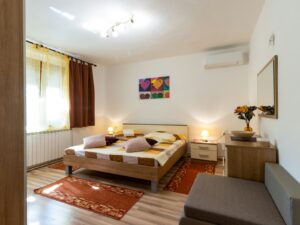
Bedrooms are the strongest fit for all three pine species, including white pine. Traffic is low, heavy furniture is typically stationary, and the warmth and grain of pine make bedrooms feel genuinely comfortable rather than showroom-staged. Living rooms work well for Southern Yellow Pine and heart pine, with caveats about furniture leg protection and area rugs in heavily used zones. Dining rooms are acceptable for SYP and heart pine, though chair leg drag will eventually show on any pine surface.
Historically, pine has appeared extensively in hallways and entryways of period homes — not because it is ideal for high traffic, but because it was what was available. In those contexts, the wear patina became part of the aesthetic. If you are deliberately going for that look, it is a legitimate design choice. If you are not, high-traffic entry zones are better served by harder species.
Pine is also commonly used for staircases in traditional and farmhouse-style homes, though stair noses and treads absorb significant concentrated wear. If stairs are part of your project, professional hardwood installation is worth considering to ensure proper fastening and nosing treatment.
Where Pine Flooring Struggles
Kitchens are the room where pine most frequently underperforms. The combination of high foot traffic, dropped utensils, moisture from spills, and the daily movement of chairs around a table creates conditions that accelerate wear on any softwood. White pine in a heavily used kitchen will show significant wear within a few years without diligent maintenance and frequent refinishing. SYP holds up better, but even it is not the first recommendation for kitchens where cooking is actually happening.
Homes with large dogs are another category where pine requires honesty. Dog claws score pine surfaces readily, especially white pine. The marks can become part of the floor’s character — or they can become a source of constant frustration. Medium and large dog breeds on white pine floors typically require more frequent refinishing cycles than the same setup on a harder species.
Basements and below-grade installations create moisture challenges for any solid wood, and pine is no exception. Pine does not resist moisture well on its own. Without a proper vapor barrier and subfloor assembly, pine planks will absorb ground moisture, swell, cup, and eventually fail. This is not a reason to categorically avoid pine below grade, but it is a reason to be thorough about the installation assembly.
Subfloor Requirements and Installation Essentials
The subfloor question is where many pine flooring projects succeed or fail before a single board is nailed down. Pine planks — especially wide planks — are sensitive to subfloor flatness and moisture content in ways that narrower, harder species are more tolerant of.
The NWFA (National Wood Flooring Association) guideline is that the moisture content difference between subfloor and wood flooring should be no greater than 4%. For wide-plank solid flooring (3 inches or wider), that tolerance tightens to 2%. Pine planks, which often run 6 to 12 inches wide or more, fall into the stricter category. You need a moisture meter, and you need to take readings from multiple points across both the subfloor and the delivered pine stock.
For installations over concrete specifically — which is a common scenario for both slab-on-grade homes and basement conversions — a proper moisture barrier between the slab and the wood assembly is non-negotiable. See our detailed breakdown of pine flooring over concrete slabs for the full preparation sequence, including screed systems and cutback mastic application.
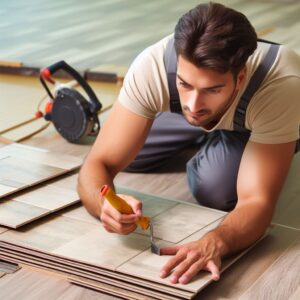
Acclimation is the other non-negotiable. Pine flooring should acclimate in the room where it will be installed for a minimum of 3 to 5 days. For thicker or wider boards, up to 7 days is appropriate. Acclimation is not simply leaving boxes in the room — it requires opening the packaging and ideally cross-stacking the boards to allow airflow to all surfaces. The goal is equilibrium moisture content: the point at which the wood is neither gaining nor losing moisture from the surrounding environment.
Skipping or shortcutting acclimation is the single most common cause of post-installation problems with pine — cupping, gapping, and board separation that could have been prevented entirely with patience before the first nail went in.
For the full installation sequence, including nailing patterns for wide boards, face-nailing requirements to prevent cupping, and starting point layout, our dedicated pine flooring installation method guide walks through each step.
Finishing Pine Floors: The Choice That Defines the Floor
The finish on a pine floor does more than protect it — it determines the floor’s entire visual character and sets the maintenance cycle you will live with. There are three main finishing categories for pine, each with distinct trade-offs.
Oil-Based Polyurethane
Oil-based polyurethane in a satin or matte finish is the most common protective coating for pine floors. It hardens into a film over the wood surface, providing strong wear resistance and good protection against spills and surface abrasion. It requires fewer coats than penetrating oils, dries to a more refined appearance, and creates a clear, durable layer that reduces (though does not eliminate) denting. A satin finish is typically recommended over gloss for pine, because the low sheen hides surface imperfections rather than amplifying them.
The trade-off with polyurethane is repair. If the finish is scratched or worn through in a specific area, touching it up is difficult. Partial repairs tend to show as patches. A full sand-and-refinish is often required for a seamless result, which means polyurethane floors have higher refinishing costs when they eventually need attention.
Hardwax Oil
Hardwax oil is a penetrating finish that soaks into the wood fibers rather than forming a surface film. It gives pine a natural, matte appearance that shows the wood’s texture and grain without the plasticky look that some people associate with thick polyurethane coats. The surface feels like wood rather than like a coating over wood.
The maintenance advantage is significant: spot repairs are straightforward. You apply more oil to the worn area, let it penetrate, and buff it in. The repair blends rather than patches. The trade-off is durability — hardwax oil shows wear more quickly than polyurethane and requires more frequent maintenance applications in high-use zones. For homeowners who want an authentic, historically correct look and do not mind periodic maintenance, it is the better choice.
Tung Oil and Traditional Wax
Traditional tung oil and wax finishes were the original treatment for pine floors, applied in the 18th and 19th centuries before modern coatings existed. They create a warm, soft sheen that deepens pine’s golden tones and ages beautifully. Wax in particular requires regular renewal — it is the most maintenance-intensive option. Neither wax nor straight tung oil provides the surface protection of polyurethane or hardwax oil, and they are primarily chosen for heritage restoration projects where historical accuracy takes priority over low maintenance.
Reclaimed Pine vs. New-Growth Pine
The distinction between reclaimed and new-growth pine deserves its own section because the two materials behave quite differently, even when they come from the same species.
New-growth pine — the commercially available plantation-grown material — is fast-growing. Fast growth means wider grain rings, more sapwood, and softer, less dense wood overall. It is affordable, consistent in dimensions, and available in any width you want. It is also the version of pine that gives rise to most of the complaints about denting and scratching.
Reclaimed pine — sourced from old buildings, factory floors, barn beams, and demolished structures — is old-growth wood that grew slowly over 100 to 200 years. The tight grain structure and high resin content of that slow growth produce a material that is significantly harder and more stable than modern plantation pine. Reclaimed heart pine, in particular, regularly outperforms commercially available hardwoods on the Janka scale. The color is also richer, the knots are tighter, and the character is irreproducible.
The cost difference is substantial. New-growth pine planks are among the most affordable flooring options available. Reclaimed heart pine commands a premium that puts it in the range of premium hardwoods. If budget is the primary driver, new-growth SYP is the practical choice. If character, durability, and historical authenticity matter more than cost, reclaimed heart pine is the option to price out.
Pine vs. Other Hardwood Species: Knowing the Trade-Off
The most common comparison people make when evaluating pine is against oak — specifically red oak, which is the benchmark species in hardwood flooring. Red oak versus white oak is a comparison many homeowners already work through in the broader hardwood decision, and pine sits adjacent to that conversation.
At 1,290 lbf (red oak) versus 870 lbf (Southern Yellow Pine) or 380 lbf (white pine), the gap is real. Oak will outperform pine on dent resistance in daily use across all scenarios. But oak also costs more, particularly in wide-plank formats where pine has a significant price advantage. The visual character of pine — the knots, the warmth of the grain, the patina it develops with age — is something oak does not replicate. These are genuinely different aesthetics, not a hierarchy where one is simply better.
For homeowners considering other wood species alongside pine, the same trade-off analysis applies. Maple, hickory, and walnut all sit above pine on the Janka scale and above it on price. The question is always whether the additional hardness is worth the additional cost given the specific room, the design intent, and the lifestyle of the household.
If durability and budget efficiency are the priorities — particularly for rental properties or secondary spaces — it is also worth understanding where solid wood flooring over concrete is viable versus where a floating floor assembly makes more sense, since pine’s behavior on a concrete substrate differs from its behavior over a traditional wood subfloor.
Maintenance Cycle: What to Expect Over Time
Pine floors require more frequent maintenance than harder species, and setting realistic expectations upfront prevents disappointment later. The maintenance frequency depends almost entirely on the finish type and the level of traffic the floor receives.
Polyurethane-finished pine in a moderately trafficked living room or bedroom typically needs refinishing every 7 to 10 years. Hardwax oil finishes may need a maintenance coat every 2 to 3 years in used areas, but those maintenance coats are simple spot applications rather than full sand-and-refinish cycles. In either case, the underlying pine plank can be sanded and refinished multiple times over its lifetime — the same quality that makes solid hardwood floors a long-term investment applies equally to solid pine.
The practical maintenance habits that extend a pine floor’s life between refinishing cycles are straightforward: felt pads under all furniture legs, area rugs in high-traffic zones and under dining tables, prompt cleanup of liquid spills before they can penetrate the finish, and avoidance of rubber-backed mats directly on the wood (rubber can trap moisture and discolor the finish over time).
One area where pine owners consistently get caught off guard is sunlight. Pine yellows and darkens with UV exposure — this is part of its natural aging, and many people consider the resulting warm amber tone to be desirable. If you want to slow that color shift, UV-protective finishes and window treatments help. If you want to prevent uneven aging across the floor (a common issue under rugs that remain in place for years), rotating the rugs periodically keeps the exposure consistent.
Is Pine Flooring Worth It?
Pine planks are a legitimate flooring choice with a documented track record that spans centuries. The floors that fail do so for predictable, avoidable reasons: wrong species for the application, skipped acclimation, inadequate subfloor moisture control, or unrealistic expectations about a softwood in a hardwood role.
The floors that succeed — and there are millions of them still underfoot in historic homes across the country — do so because someone made a deliberate choice. They chose a species appropriate to the space, they prepared the subfloor and acclimated the wood correctly, they picked a finish that matched their maintenance tolerance, and they understood that pine’s relationship with wear and age is different from oak’s, not inferior to it.
If you are drawn to pine for its warmth, its grain, its knotty character, or its affordability in wide-plank formats, those are good reasons. If you are considering it primarily because it is cheaper than oak and you are hoping it will perform identically, that is where the misalignment starts. Pine is not a budget oak. It is its own material, with its own logic — and in the right application, it is genuinely hard to beat.
For projects where the subfloor situation involves existing hardwood or floating assembly options, our guide on floating solid hardwood over concrete covers the structural considerations that apply equally to pine in those configurations. And for anyone comparing solid pine against engineered alternatives in the same wood species, the solid versus engineered hardwood breakdown is worth reading before finalizing the decision.