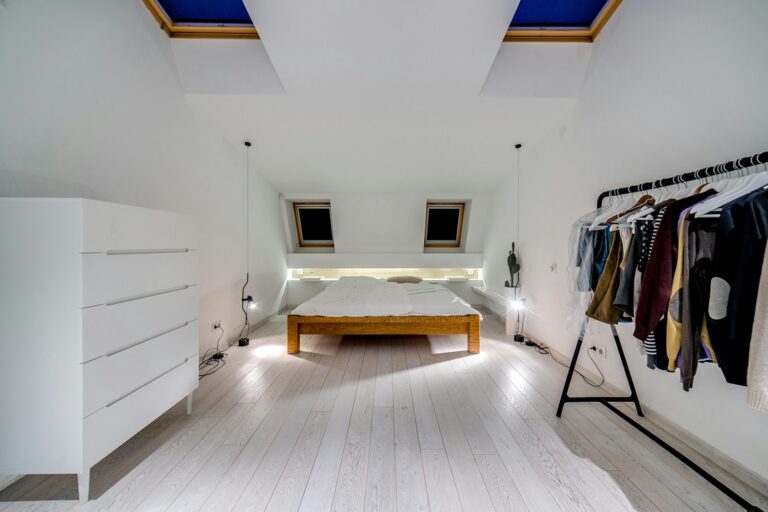
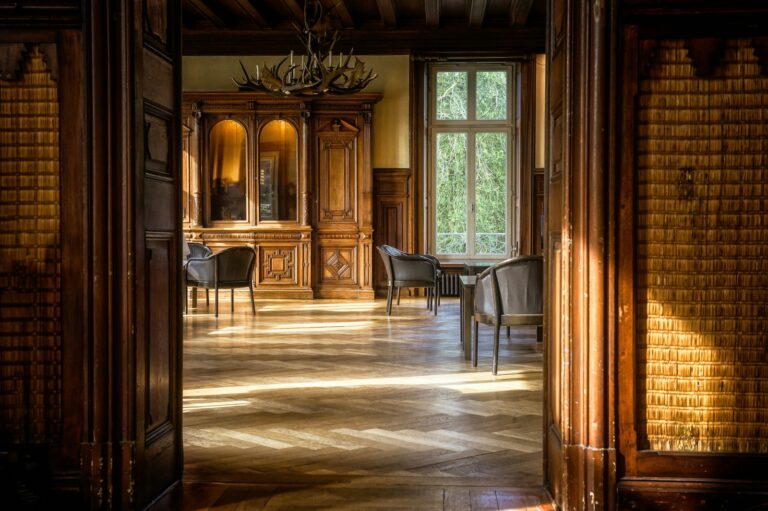
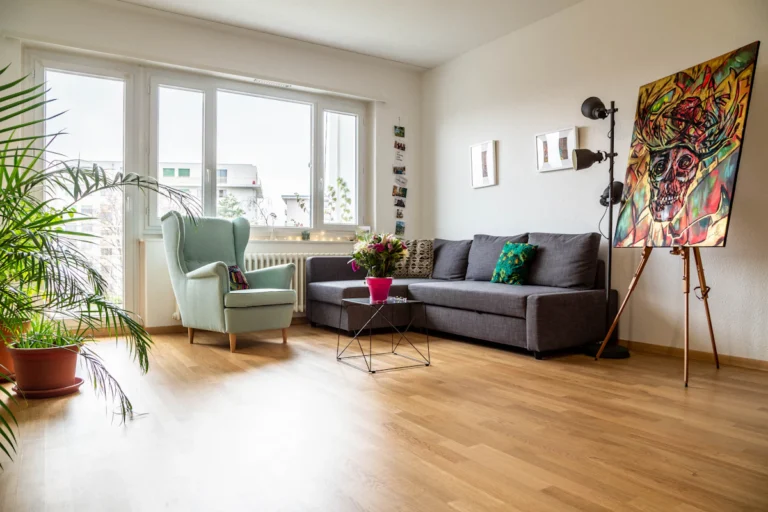
High-quality laminate has become convincingly realistic. Embossed-in-register (EIR) printing technology aligns the surface texture with the photographed grain pattern, so knots and grain lines have tactile depth that matches what you see. From a standing position in a well-lit room, distinguishing premium laminate from real hardwood is genuinely difficult for most people.
Get closer, or look at it on your hands and knees, and the difference becomes apparent. Laminate planks within the same batch repeat their image pattern at intervals — the same knot, the same grain swirl — appearing multiple times across the floor. Solid hardwood is non-repeating because it is cut from actual timber. Each plank is distinct. The variation is not printed; it is botanical.
There is also the question of how each material responds to light over time. Hardwood develops a patina — the color shifts, the character deepens, the surface tells a story of use. Laminate’s image layer is fixed at the moment of manufacturing. It may fade from UV exposure, but it does not develop; it only deteriorates.
For rooms where authenticity matters — a formal dining room, a historic home, a space where material honesty is part of the design intent — hardwood is genuinely not replaceable by laminate. For rooms where the primary goal is a clean, wood-toned surface at reasonable cost, laminate serves the brief effectively.
Durability: What Each Floor Can Take
This is where the comparison becomes counterintuitive. Hardwood is the premium product, but laminate is actually more resistant to surface scratches. The aluminum-oxide wear layer on laminate — measured in AC ratings from AC1 through AC5 — is a hard industrial coating that resists dog nails, furniture legs, and dropped keys better than the polyurethane finish on hardwood. A floor rated AC4 or AC5 will show markedly less surface wear in a high-traffic household than most residential hardwood finishes over the same period.
The critical difference is what happens after damage occurs. When hardwood is scratched or dented, it can be sanded back and refinished. A full sand and refinish removes the damaged surface and exposes fresh wood below. Solid hardwood floors can typically be refinished three to five times across their service life, depending on thickness. That is why well-maintained hardwood floors in older homes can remain functional and beautiful after eighty or a hundred years.
Laminate cannot be refinished. When the wear layer is compromised — through deep scratching, water damage, or edge deterioration — the affected planks must be replaced. If the original product has been discontinued, matching the new planks to the existing floor becomes difficult or impossible. The non-refinishable nature of laminate is the central reason its effective lifespan is shorter: fifteen to twenty-five years under good conditions, compared to fifty-plus years for properly maintained hardwood.
Moisture and Water Resistance
Solid hardwood and water have an adversarial relationship. Wood is hygroscopic — it absorbs and releases moisture in response to the ambient humidity of its environment. In a San Diego climate, where coastal humidity and seasonal dryness can fluctuate, hardwood floors expand and contract seasonally. This is normal and manageable with proper expansion gaps and acclimation, but it does mean hardwood is sensitive to sustained moisture exposure. Standing water that is not wiped up promptly will penetrate the finish, raise the grain, and eventually cause cupping or warping.
Laminate’s HDF core is also vulnerable to moisture, but from a different direction. The wear layer and image layer protect the top surface reasonably well against minor spills. The vulnerability is edge exposure and subfloor moisture. When water gets under laminate — through a plumbing leak, a failed expansion gap, or ground moisture wicking through a concrete slab — the HDF core swells and the planks buckle. Unlike hardwood, which can sometimes be dried and salvaged, water-damaged laminate typically cannot be recovered.
Neither solid hardwood nor standard laminate belongs in bathrooms, wet-area utility rooms, or below-grade installations with high moisture risk. For those environments, the relevant products are waterproof luxury vinyl plank, porcelain tile, or — in specific cases — engineered hardwood with a sealed finish. If your project includes moisture-prone spaces, the hardwood-vs-laminate question may be less important than whether either product is appropriate for the specific room.
Installation Methods and Complexity
Solid hardwood installation is a professional trade. The planks are typically nailed or stapled to a wooden subfloor through the tongue of each board, a method called blind nailing. The process requires a pneumatic floor nailer, precise layout work, and proper management of expansion gaps at perimeters and transitions. Glue-down installation is used over concrete slabs where nailing is not possible. Both methods are time-intensive, and the quality of the finished floor depends heavily on subfloor preparation — any variation greater than 3/16 inch over 10 feet needs correction before installation begins.
Laminate uses a click-lock floating system in most contemporary products. The tongue-and-groove joints snap together without adhesive, and the assembled floor floats over the subfloor on an underlayment layer rather than being mechanically fastened to it. This makes installation faster, more forgiving of minor subfloor imperfections, and accessible to capable DIYers. The trade-off is that a floating floor transmits sound and impact differently than a glued or nailed-down floor — it can sound hollow underfoot, particularly over areas where the underlayment is thin or the subfloor has flex.
For homeowners in San Diego installing over a concrete slab — common in single-story construction — laminate’s floating method is straightforward provided moisture vapor emissions from the slab are tested and addressed. Hardwood over concrete requires either a glue-down method with a moisture-mitigating adhesive, or an engineered hardwood product. Solid hardwood nailed directly to concrete is not a viable installation method.
Cost Comparison: Materials, Installation, and Lifetime Value
Laminate materials typically run between $2 and $5 per square foot at retail, with premium products reaching $7 or $8. Installation adds roughly $2 to $4 per square foot for professional labor, bringing total installed cost to approximately $4 to $9 per square foot for most residential projects.
Solid hardwood materials range from $5 to $15 per square foot depending on species, grade, and whether the product is prefinished or site-finished. Labor is more intensive — $4 to $8 per square foot is typical — making the total installed cost roughly $9 to $25 per square foot. Wide-plank, exotic species, or site-finished work can push well beyond that range. For a 2,000 square foot home, the difference in installed cost between a mid-range laminate and a mid-range hardwood floor can easily reach $20,000 to $30,000.
The lifetime cost calculation shifts significantly when refinishing is factored in. A hardwood floor installed today may be sanded and refinished two or three times over fifty years at a cost of $3 to $5 per square foot per refinish — still far less than a full replacement. Laminate, replaced once or twice over the same period at $4 to $9 per square foot each time, accumulates costs that can approach or exceed the lifetime cost of hardwood depending on how many replacement cycles occur.
For households with a defined time horizon — renters preparing a property for sale, homeowners who plan to move in five years — the upfront cost advantage of laminate is straightforwardly real and the lifetime value argument for hardwood is less relevant. For long-term owners, the calculus favors hardwood more strongly as the timeline extends.
Resale Value and Buyer Perception
The National Association of Realtors reports that hardwood floor installation carries approximately a 118% return on investment, with homeowners recovering an average of $6,500 on a $5,500 installation project when they sell. That is not a universal guarantee — market conditions, home price tier, and buyer demographics all influence the actual premium — but it reflects a durable pattern in buyer preferences: real hardwood is perceived as a premium finish, and buyers pay for it.
Laminate is perceived differently. Well-installed, high-quality laminate reads as a clean, neutral finish that most buyers accept without complaint, but it rarely adds perceived value the way hardwood does. In competitive listing environments, hardwood can be a differentiator. Laminate typically is not.
There is also the question of buyer sophistication. In entry-level and mid-market homes, buyers may not distinguish between high-quality laminate and hardwood. In higher price-tier properties, buyers and their agents typically do. If the home is in a price range where competing listings have hardwood, laminate puts the property at a presentational disadvantage regardless of how good it looks in photographs.
It is worth noting that the perception gap between hardwood and laminate has somewhat narrowed in recent years, while the perception gap between hardwood and luxury vinyl plank (LVP) has also shifted. LVP is increasingly accepted in premium markets as a practical alternative. But hardwood maintains its position as the benchmark premium flooring material in most U.S. residential real estate contexts.
Performance in Specific Rooms
Living rooms and bedrooms are the natural habitat of solid hardwood. Foot traffic is moderate, moisture exposure is minimal, and the aesthetic contribution of real wood is most visible in these spaces. Both hardwood and laminate perform well here, with laminate offering the advantage of scratch resistance in high-traffic households with children and pets.
Kitchens present a more complex picture. The combination of hard foot traffic, potential for spills, and appliance moisture exposure makes this a room where laminate’s scratch resistance is an asset but its moisture vulnerability is a liability. Hardwood in kitchens requires prompt cleanup protocols and a well-maintained finish. Both products can work in kitchens; neither is as forgiving as porcelain tile or luxury vinyl.
Basements are typically not appropriate for solid hardwood due to the moisture conditions common in below-grade spaces. Laminate can work in basements with properly managed moisture, but it requires careful vapor barrier installation and monitoring. Engineered hardwood or luxury vinyl plank are generally better suited to basement applications than either solid hardwood or standard laminate.
Stairs are a specific use case worth addressing. Both hardwood and laminate can be installed on stairs, but the processes differ significantly. Hardwood stair treads and risers are standard products. Laminate on stairs requires careful attention to nose treatment and edge securing — the floating installation method does not translate directly to stair applications.
Maintenance Requirements
Hardwood maintenance is straightforward but requires some discipline. Regular sweeping or dry mopping removes abrasive particles that would otherwise act like sandpaper on the finish. Wet mopping should be done with a damp — not wet — mop using a cleaner formulated for hardwood. Puddles and standing water must be addressed immediately. Furniture pads prevent concentrated point loads from denting the surface. Recoating the finish every five to ten years extends the service life between full refinishing cycles.
Laminate maintenance is notably simpler. The wear layer is more resistant to most household cleaning agents, and the surface does not require periodic recoating. Regular sweeping and occasional damp mopping with a laminate-safe cleaner is sufficient. The one firm prohibition with laminate is excessive moisture during cleaning — steam mops and soaking wet mops will cause edge swelling and joint separation over time.
Neither product requires waxing or polishing in normal maintenance. Products marketed as “laminate polish” or “hardwood shine” often leave residue that makes floors look worse over time and complicates future refinishing on hardwood. For hardwood that has lost its luster, the correct solution is professional recoating, not surface products.
Environmental Considerations
Solid hardwood from responsibly managed forests carries FSC certification in most cases and is both biodegradable and renewable. Old-growth timber is an exception — premium species sourced from old-growth forests raise legitimate sustainability concerns. Within the range of domestically harvested, FSC-certified species, hardwood flooring is among the more environmentally defensible flooring choices available.
Laminate contains synthetic resins, formaldehyde-based binders in the HDF core, and petroleum-derived materials in the wear layer. California Air Resources Board (CARB) Phase 2 compliance limits formaldehyde emissions in laminate products sold in California, and most reputable manufacturers meet or exceed this standard. Approximately 85% of laminate flooring is technically recyclable, though actual recycling infrastructure for laminate is limited in most markets. At end of life, most laminate goes to landfill.
For homeowners in California — where CARB standards apply — verifying Phase 2 or TSCA Title VI compliance on any laminate product is a practical first step before purchase. Most major brands sold through reputable retailers will carry this certification, but it is worth confirming before installation in a residential space, particularly in a home with young children.
How to Actually Decide
The decision between hardwood and laminate is not a ranking — it is a fit question. Hardwood is the better choice when the project has a long time horizon, the budget supports it, the rooms are low-to-moderate moisture environments, and resale value or authentic material character is a priority. Laminate is the better choice when upfront cost is the binding constraint, when surface scratch resistance in a high-traffic or pet-heavy household is the primary performance requirement, or when the floor is going into a space that does not justify a premium material investment.
The rooms matter. In a San Diego home where the primary living spaces are over a concrete slab, laminate’s easier installation and moisture tolerance relative to solid hardwood may be genuinely relevant. In a home where the subfloor is wood and the rooms are traditional living and sleeping spaces with normal residential use, hardwood is typically the stronger long-term investment even accounting for the higher upfront cost.
Species selection within hardwood also matters more than most homeowners realize. A hardwood floor is not a single product — the choice between red oak, white oak, maple, hickory, walnut, or engineered alternatives produces meaningfully different floors in terms of hardness, grain character, staining behavior, and cost. The Janka hardness rating of a species directly affects how it holds up to furniture legs and foot traffic; hickory at around 1820 and hard maple at around 1450 outperform domestic red oak at 1290, which in turn outperforms softer species like pine. If hardwood flooring is the direction, species selection deserves more attention than it typically receives in the initial conversation.
On the laminate side, thickness and AC rating are the variables that separate serviceable products from genuinely good ones. A 12mm plank with an AC4 rating installed over quality underlayment will perform noticeably better than a 7mm product with an AC2 rating, and the price difference between them is often smaller than people expect. If laminate is the choice, buying up on thickness and wear layer rating is usually worth it.
The Question Underneath the Question
There is a version of the hardwood-vs-laminate decision that is actually a question about engineered hardwood — a product that uses a real hardwood veneer over a plywood core and occupies a middle position between the two. Engineered hardwood can be floated, glued, or nailed; it is more dimensionally stable than solid hardwood in variable humidity conditions; it can be refinished at least once and sometimes two or three times depending on veneer thickness; and it carries most of the aesthetic character and resale premium of solid hardwood at a somewhat lower price point. In environments where solid hardwood is technically marginal — over concrete, in climates with significant seasonal humidity swings, in below-grade applications — engineered hardwood often resolves the tension between what you want and what the subfloor conditions will support.
The difference between prefinished and site-finished hardwood is also worth raising before a decision is finalized. Prefinished hardwood arrives from the factory with the stain and protective coating already applied — installation is clean and fast, the finish is often harder than anything achievable on-site, and the floor is ready to use immediately. Site-finished hardwood is sanded, stained, and coated after installation, which allows seamless transitions at doorways and a custom color that cannot be achieved with prefinished products. The additional labor and dry time of site finishing adds cost, but the result is a continuous surface without the small beveled edges that characterize most prefinished products. For a renovation where design continuity across rooms matters, that distinction can be meaningful.
Laminate has its own analog of this decision in the form of underlayment selection. A laminate floor’s acoustic and thermal performance is substantially shaped by what sits beneath it. Laminate underlayment is not a trivial accessory — the thickness, density, and material composition of the underlayment affects how the floor feels underfoot, how much impact noise it transmits to floors below, and whether the floor performs correctly over radiant heat systems. Products with pre-attached underlayment simplify installation but offer less control over these variables than separately purchased underlayment.
A Practical Note on Installation Quality
Whatever product you choose, installation quality is a larger determinant of long-term performance than the product itself at similar price points. A premium laminate installed over an uneven, unprepared subfloor will fail prematurely. A mid-grade hardwood installed correctly over a properly prepared surface will outperform a top-grade product installed poorly. The things that installers do before the first plank goes down — subfloor leveling, moisture testing, acclimation — are not visible after completion, which is exactly why they are easy to skip and exactly why skipping them is so consequential.
For hardwood, the NWFA (National Wood Flooring Association) installation standards provide the framework that reputable installers follow. Moisture content of both the subfloor and the wood flooring itself should be tested and documented before installation — a spread greater than 4% between subfloor and hardwood moisture content is a known risk factor for seasonal movement problems. For laminate, the manufacturer’s installation instructions govern, and most warranty claims that are denied get denied because installation did not follow those instructions precisely.
Choosing the right flooring and choosing the right installer are not separable decisions. The value of a hardwood floor — its lifespan, its appearance, its contribution to resale value — is realized only when the installation is done correctly. The same is true, to a somewhat lesser degree, for laminate. Budget for professional installation is not a line item to compress.
Frequently Asked Questions
Can you install hardwood flooring over an existing laminate floor?
Technically possible in some configurations, but generally not recommended for solid hardwood. The additional height adds up quickly, and a floating laminate layer beneath solid hardwood creates an unstable base that can cause movement problems. Removing the existing laminate before installing hardwood is the standard approach and produces a more stable, longer-lasting result.
How long does laminate flooring last compared to hardwood?
Well-maintained laminate typically lasts fifteen to twenty-five years before the wear layer deteriorates to the point where replacement is necessary. Solid hardwood, maintained and refinished as needed, can last fifty years or significantly longer. The difference is refinishability — hardwood can be renewed multiple times, while laminate must be replaced when it wears out.
Is laminate flooring good enough for a home being sold?
It depends on the price tier. In entry-to-mid-level homes, quality laminate in good condition is typically acceptable to buyers and will not significantly affect the sale. In higher-priced homes where competing listings feature hardwood, laminate may place the property at a visual and perceived-value disadvantage. If the current floors are in good condition and the home is in the mid-market range, installing hardwood specifically for resale may not pencil out; if the floors need replacement regardless, hardwood is usually the more defensible investment.
Which is better for dogs — hardwood or laminate?
Laminate’s aluminum-oxide wear layer generally handles dog nails better than hardwood’s polyurethane finish in terms of surface scratch resistance. However, dog urine that soaks into laminate joints will cause the HDF core to swell and cannot be reversed. For households with pets, a high AC-rated laminate or a hard hardwood species like hickory with a refreshed finish, combined with prompt cleanup habits, are both viable — the better choice depends more on the household’s actual cleanup patterns than on the material itself. For a deeper look at this specific question, the comparison between vinyl or laminate for pets is also worth reviewing if scratch and moisture resistance are your primary concerns.
Does the subfloor type affect which product I should choose?
Yes, significantly. Solid hardwood over a wood subfloor is the standard configuration and works straightforwardly. Solid hardwood over concrete requires a glue-down method and moisture mitigation. Laminate over concrete works well as a floating floor with appropriate vapor barrier and underlayment. The best subfloor for laminate is concrete or plywood that is flat, dry, and structurally sound — and the same standard applies to hardwood. Subfloor condition is a prerequisite for both products, not a variable that can be compensated for with product selection.
What is the actual cost difference per square foot in San Diego?
San Diego labor rates run above national averages given the cost of living and trade labor market. Expect installed laminate to land in the $6 to $10 per square foot range for most residential projects with standard subfloor conditions. Installed solid hardwood in the mid-grade range runs $12 to $20 per square foot, with premium species, wider planks, or site-finishing work pushing higher. Hardwood flooring installation cost varies considerably based on species, grade, and subfloor preparation requirements — getting a project-specific quote is more useful than relying on national averages. Similarly, the laminate flooring installation cost depends heavily on room configuration and underlayment selection.
James Miller is a seasoned flooring contractor with years of hands-on experience transforming homes and businesses with high-quality flooring solutions. As the owner of Flooring Contractors San Diego, James specializes in everything from hardwood and laminate to carpet and vinyl installations. Known for his craftsmanship and attention to detail, he takes pride in helping clients choose the right flooring that balances beauty, durability, and budget. When he’s not on the job, James enjoys sharing his expertise through articles and guides that make flooring projects easier for homeowners.
Wood flooring in commercial spaces operates under a completely different set of pressures than what you encounter in residential settings. The gap between the two is not just about traffic volume. It is about how consistently that traffic arrives, what it brings with it, how quickly moisture builds up near entrances, how HVAC systems cycle…
Small rooms have a way of making even confident decorators second-guess every decision. Furniture gets rearranged, walls get repainted, curtains get swapped out — and yet the space still feels tight. What most people overlook is the floor. The surface beneath your feet shapes every perception of a room: how wide it reads, how tall…
Heat does not damage laminate flooring the way water does — it does not soak in, rot the core, or lift the wear layer. But heat changes the dimensional state of laminate in ways that compound over time, and those changes produce outcomes that look like poor installation, substandard materials, or bad luck when the…
Laminate flooring has had a genuine reinvention. The thin, hollow-sounding boards your parents installed in the 1990s have almost nothing in common with what manufacturers are producing today. Current laminate comes with embossed-in-register surface textures where the grain you see and the grain you feel are in perfect alignment. It comes in widths that rival…
AC3 vs AC4 laminate flooring is a comparison of two abrasion class ratings that define how a laminate plank resists surface wear, foot traffic, scratching, and impact. AC3 laminate flooring is certified for heavy residential and light commercial use and withstands a minimum of 2,500 Taber test rotations before the decorative layer breaks down. AC4…
Carpet stretching is one of those maintenance decisions that gets delayed until the problem is impossible to ignore. A ripple appears near the hallway, a bubble forms under the coffee table, and suddenly a floor that was perfectly installed years ago looks like something is living underneath it. What most homeowners do not realize is…