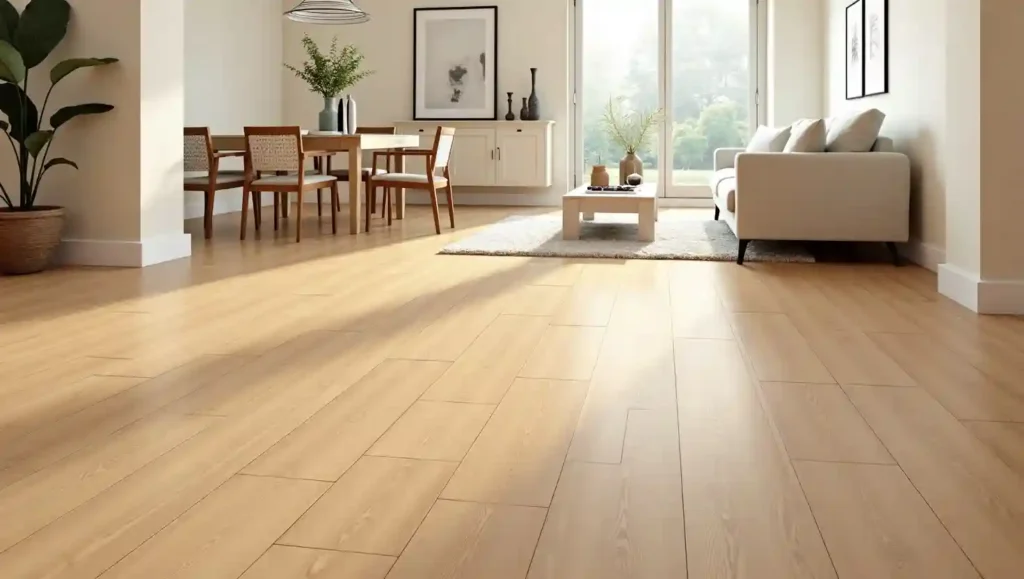
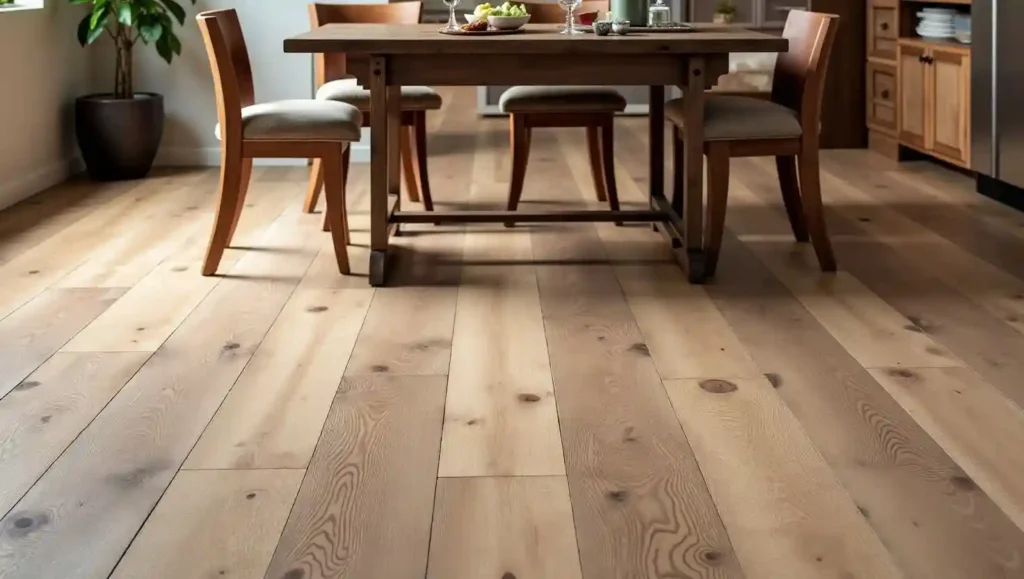
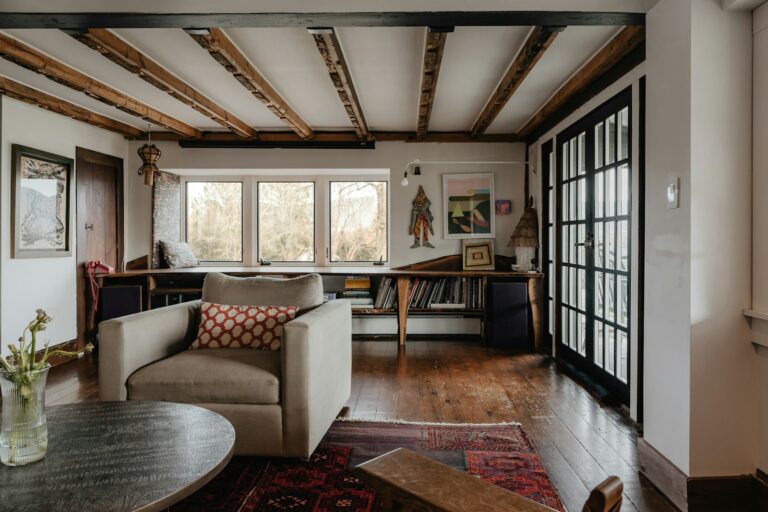
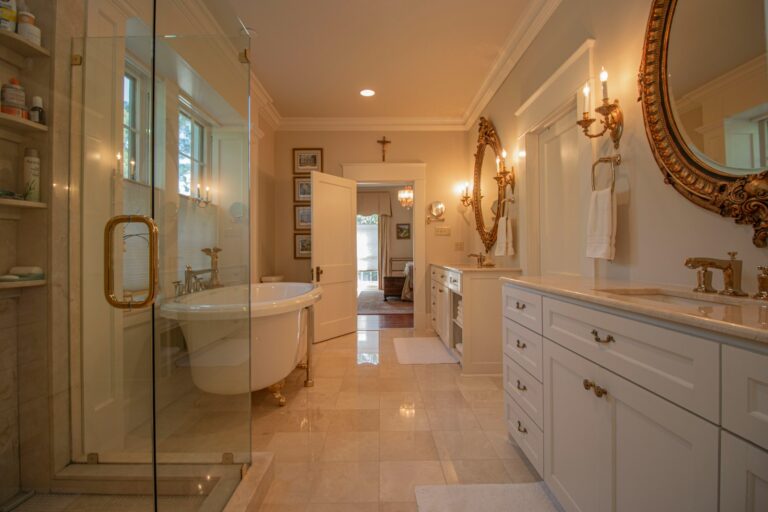
The honey or medium-brown tone is the key. It’s warm without being orange, natural without being beige, and it pairs with nearly any wall color — white, warm grey, sage green, navy, or charcoal all work. This is the flooring equivalent of a well-fitting pair of jeans: it goes with everything in your wardrobe without trying too hard.
For best results, choose a product with an embossed-in-register (EIR) texture, meaning the texture aligns with the printed wood grain rather than sitting at random across it. The result looks noticeably more realistic than flat-printed vinyl, particularly in good natural light. This style works just as well in bedrooms as it does in living rooms, and its warmth softens what can otherwise feel like a cold, hard surface in a bedroom setting.
One practical note: wide-plank LVP benefits from a clean, level subfloor. Small dips or humps in the subfloor telegraph through wider planks more readily than narrower ones, because the larger format has less flex to bridge minor imperfections. Check your subfloor carefully and address any high or low spots before installation.
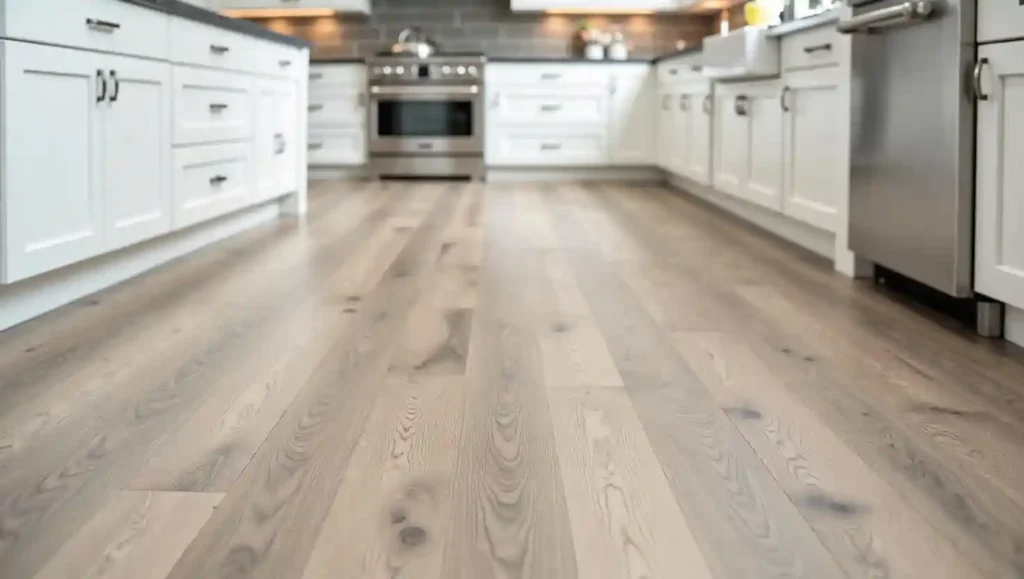
Idea 2: Greige Vinyl for the Modern-Farmhouse Look
Greige — the blend of grey and beige — has been one of the most requested flooring tones in interior design for several years running, and it’s not fading. The reason it works so well is that it belongs to no single style. It reads contemporary in a minimalist space, transitional in a traditional home, and warmly farmhouse when paired with shiplap and exposed wood elements.
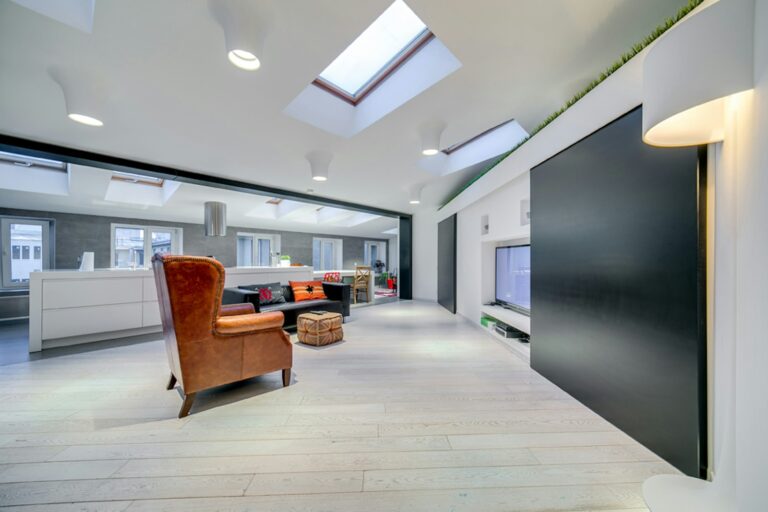
Greige vinyl planks typically land in the light-to-medium value range, which keeps rooms feeling airy without the clinical coolness of a pure grey or the dated warmth of a traditional honey oak. They’re particularly effective in open-plan spaces because they don’t compete with furniture, cabinetry, or decorative elements — they become the neutral canvas everything else is arranged on.
In practical terms, greige tones are also very forgiving in everyday use. Light dust and pet hair are less visible than on darker floors, and the matte finishes that most modern greige vinyl products use hide footprints and minor scuffs better than gloss alternatives. If you have kids or pets and want a floor that looks clean without being cleaned every day, this is worth serious consideration.
Greige vinyl pairs especially well with white or light grey cabinetry, black hardware accents, and warm-toned textiles. It also transitions cleanly into adjacent tile or carpet areas because its neutrality doesn’t fight neighboring materials.
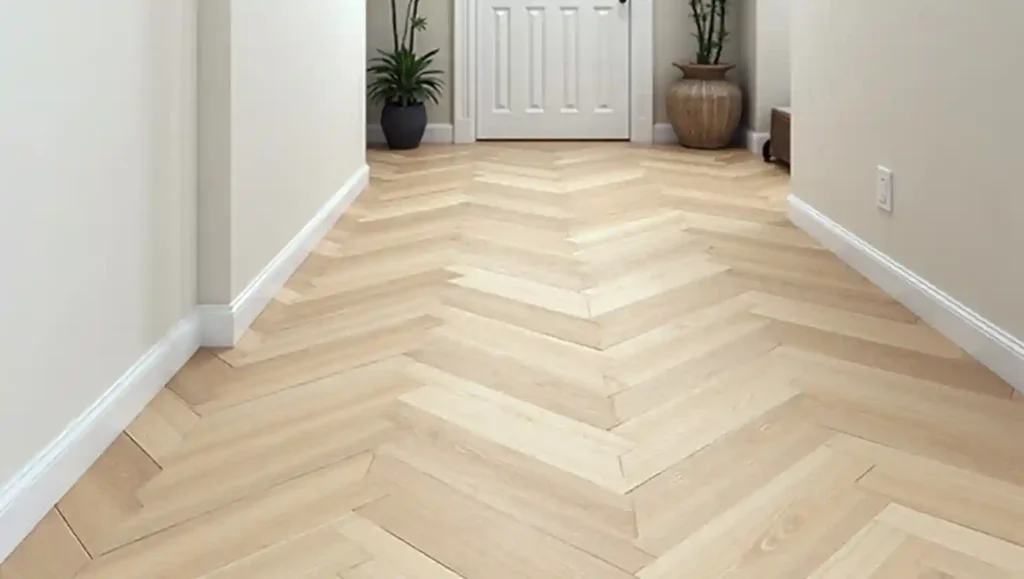
Idea 3: Herringbone Layout for Pattern and Movement
Herringbone is one of the oldest flooring patterns in Western design history — it was popular in 16th-century French aristocratic homes — and it has never really gone out of style. What has changed is the material. Installing real hardwood in a herringbone pattern requires precision-cut solid wood boards, skilled labor, and a significant budget. Vinyl herringbone requires none of that. You can purchase LVP specifically cut and sized for herringbone installation, or use standard planks laid at 45-degree angles in a job that most experienced installers can complete in a day.
The visual effect is dramatic. Where straight-laid planks lead the eye down the length of a room, herringbone creates a sense of movement and dynamism without requiring any color or pattern on the floor itself. A plain oak-look vinyl in herringbone looks ten times more considered than the same color in a standard straight lay.
This pattern works particularly well in hallways, entryways, and dining rooms — spaces where you want immediate visual impact without the floor competing with the furniture above it. It can feel slightly busy in very large open-plan spaces unless the plank width is kept narrow (under 5 inches), which lets the geometry read clearly rather than getting lost in scale.
One consideration: herringbone layouts generate more material waste than straight lays, typically adding 10 to 15 percent to the total square footage you need to purchase. Factor this into your budget before ordering.
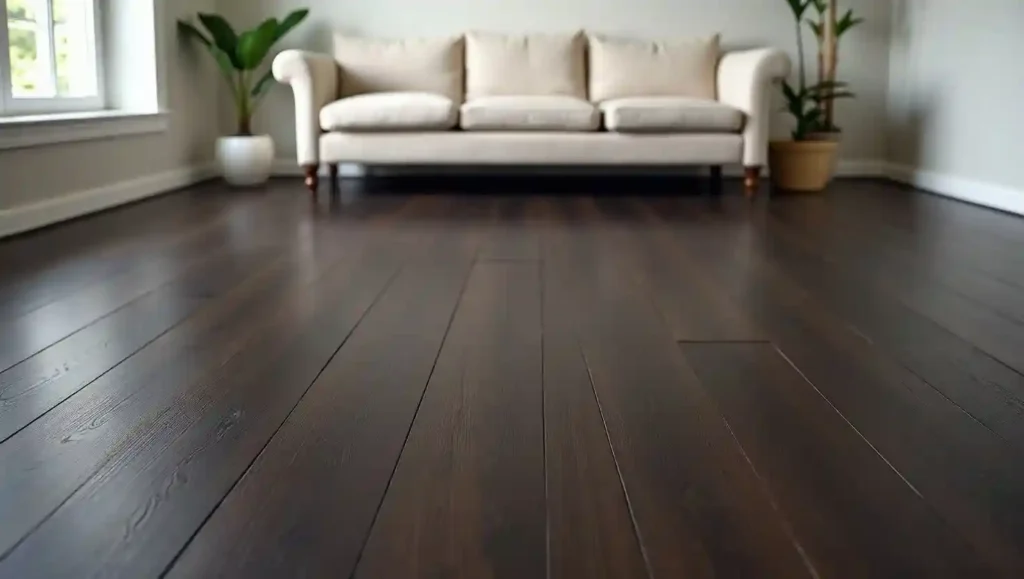
Idea 4: Dark Espresso and Charcoal for a High-Contrast Statement
Dark vinyl flooring makes a completely different design argument than the warm, approachable tones above. Espresso, charcoal, dark walnut, and near-black vinyl planks are not trying to be neutral — they’re trying to be the dominant visual element in a room, anchoring lighter walls and furniture with a confident ground plane.
The look works best in modern, industrial, or contemporary-minimalist interiors where the contrast between dark floors and white or light-grey walls is intentional and central to the design. A room with dark vinyl flooring, white walls, and black metal furniture reads as very deliberate, very current, and visually strong. It’s also a particularly effective approach in lower-ceilinged spaces because the dark floor makes the ceiling feel comparatively taller — an optical trick that costs nothing extra.
The practical reality of dark vinyl is that it shows dust, pet hair, and footprints more readily than lighter tones. A matte or satin finish helps significantly compared to a gloss surface, but dark floors do require more regular cleaning to look their best. This is the honest trade-off: the look is dramatic, but it’s not low-maintenance in the same way a mid-tone floor is.
If you’re drawn to dark flooring but concerned about maintenance, consider a dark floor only in formal spaces — a dining room, a primary bedroom, or a home office — rather than throughout an entire open-plan ground floor where foot traffic and pet movement are constant.
Idea 5: Stone-Look LVT in a Modern Kitchen or Bath
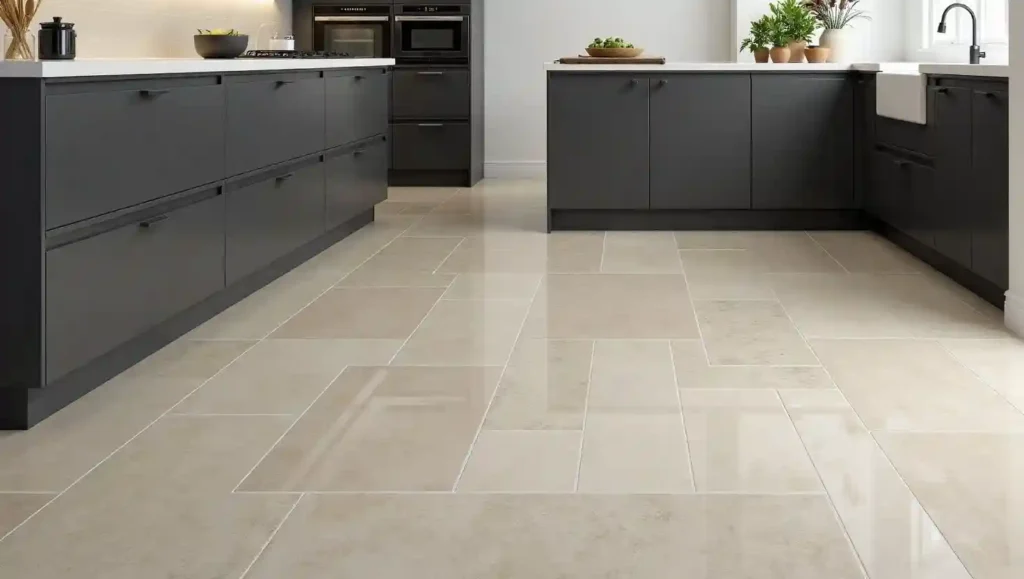
Stone-look luxury vinyl tile (LVT) achieves something that seemed impossible twenty years ago: a genuinely convincing visual replication of natural slate, travertine, limestone, and marble at a fraction of the cost and with none of the maintenance obligations those real materials carry. Today’s embossing and digital printing technology produces surface texture that is tactilely realistic — the slight unevenness of the tile face, the fine variation in color across a single tile — in a way that earlier vinyl simply couldn’t.
In a modern kitchen, slate-look or concrete-look LVT creates a clean, hard-edged aesthetic that reads as sophisticated without being fussy. In a bathroom, marble-look LVT delivers the luxury aesthetic of veined stone without the sealing requirements, the cold underfoot sensation, and the vulnerability to acidic cleaning products that real marble carries. Vinyl tile can also be used alongside underfloor heating systems, which makes a significant difference in bathrooms during cooler months.
The one area where stone-look vinyl still falls slightly short of the real thing is in very large format tiles — once you get above 24 by 24 inches, the repeat patterns in the print can become noticeable. The sweet spot for realistic stone-look vinyl is typically tiles in the 12-by-24 or 18-by-18 range, where the print scale and visual variation are well matched to the tile size.
For anyone comparing vinyl tile against actual ceramic or porcelain in a kitchen renovation, the waterproof performance, comfort underfoot, and installation simplicity of LVT make a strong case. The choice between them often comes down to how long you plan to stay in the house and what your resale expectations are, topics explored more fully in the comparison of vinyl flooring vs tile.
Idea 6: Whitewashed and Coastal Bleached Planks
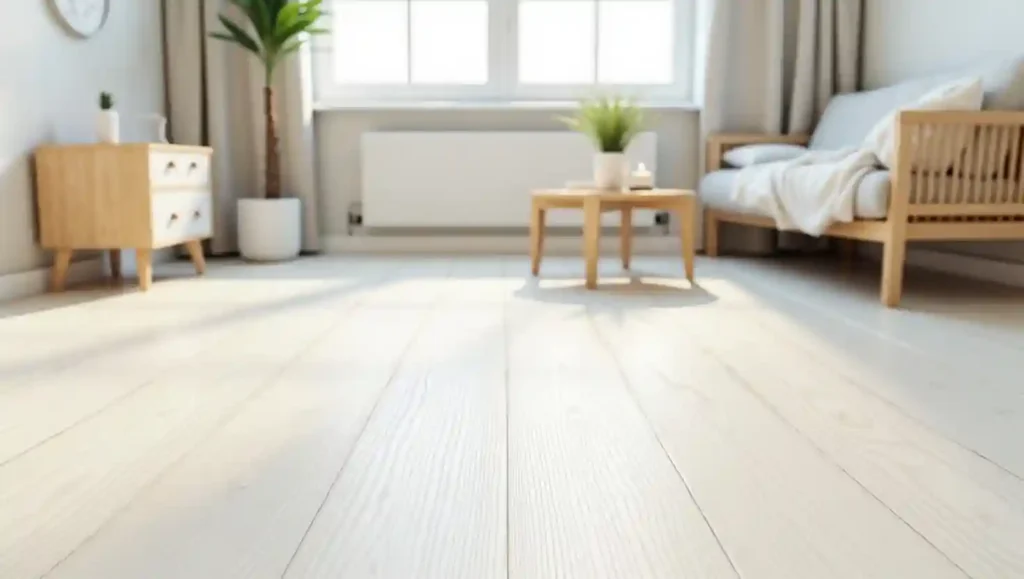
Whitewashed vinyl planks tap into the perennial appeal of coastal and Scandinavian design — the idea that a floor should feel like driftwood, beach sand, or pale birch, making the whole room feel lighter, calmer, and less heavy. The bleached or white-washed look is achieved through pale tones with strong white undertones, often combined with a wire-brushed or distressed surface texture that prevents the floor from looking plasticky or overly uniform.
This style is particularly effective in rooms that struggle with natural light. A north-facing bedroom or a basement living area that relies heavily on artificial lighting will feel markedly more open with pale, whitewashed vinyl than with a mid- or dark-toned floor. The reflectivity of a light floor — even a matte one — bounces available light back into the room in a way that darker floors absorb rather than share.
Whitewashed planks also have a uniquely versatile quality: they work in both very modern, minimal interiors and in casual, relaxed spaces that lean into natural textures — linen, rattan, jute, and unfinished wood furniture all sit comfortably over a pale vinyl floor. The challenge is avoiding a look that feels cold or institutional. The key is warm white tones with cream or grey undertones rather than stark, pure white, and a matte surface rather than anything with a sheen.
In open-plan spaces, whitewashed vinyl flowing continuously from the living area into the kitchen creates a seamless, airy sweep that makes the combined space feel significantly larger than the sum of its parts.
Idea 7: Concrete-Effect Vinyl for an Industrial Modern Interior
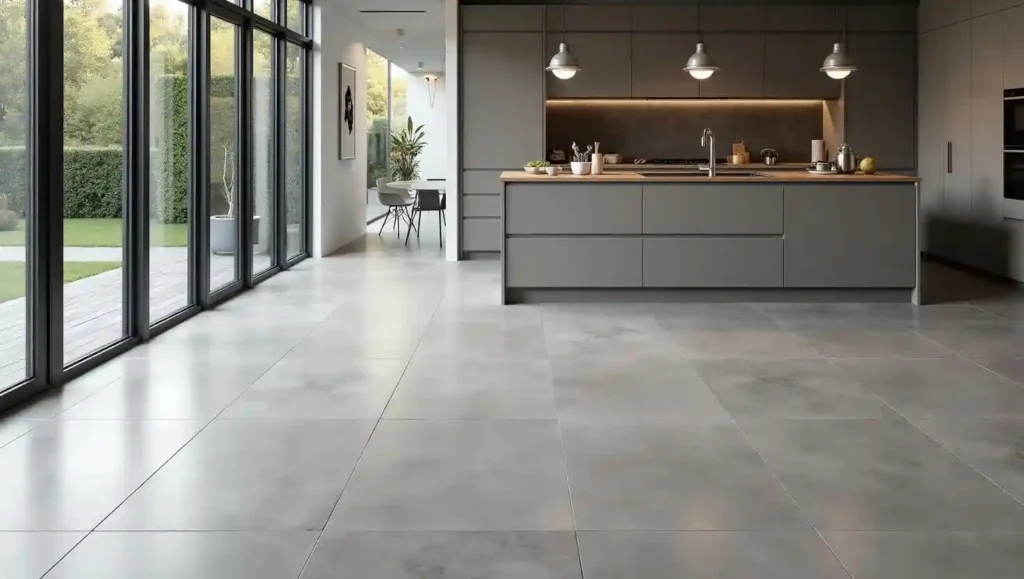
Concrete-look vinyl occupies a specific and increasingly popular design niche: the industrial-modern interior that wants the rawness and edge of poured concrete without the thermal mass, cracking risk, dust, and expense of the real thing. Concrete-effect LVT and LVP products typically come in large-format tiles or wide planks in mid-grey to dark charcoal tones, with a subtly textured surface that replicates the slight irregularity of a troweled concrete finish.
This look pairs naturally with exposed black steel, reclaimed wood shelving, pendant lights with bare Edison bulbs, and concrete-effect furniture surfaces — the vocabulary of the industrial loft aesthetic. But it also works in more refined contemporary interiors when the concrete-look floor is paired with warmer elements: natural oak furniture, textured linen cushions, or plants that bring organic warmth to what would otherwise be a very hard-edged palette.
One underappreciated advantage of concrete-effect vinyl is its visual effect in small or awkward spaces. Because the surface has no strong grain direction and no dominant pattern, it doesn’t pull the eye in any particular direction the way wood-look planks do. In an L-shaped kitchen or a bathroom with multiple alcoves and doorways, a concrete-look floor reads cleanly rather than fighting with the room’s geometry.
Concrete-effect vinyl is also one of the few vinyl styles that reads convincingly well when used in combination with real concrete elements elsewhere in the space — a concrete kitchen counter, for example, or a concrete-look feature wall. The floor doesn’t have to pretend to be something it isn’t; it simply belongs in a palette that includes concrete as one of its materials.
Idea 8: Geometric Patterned LVT as a Statement Floor
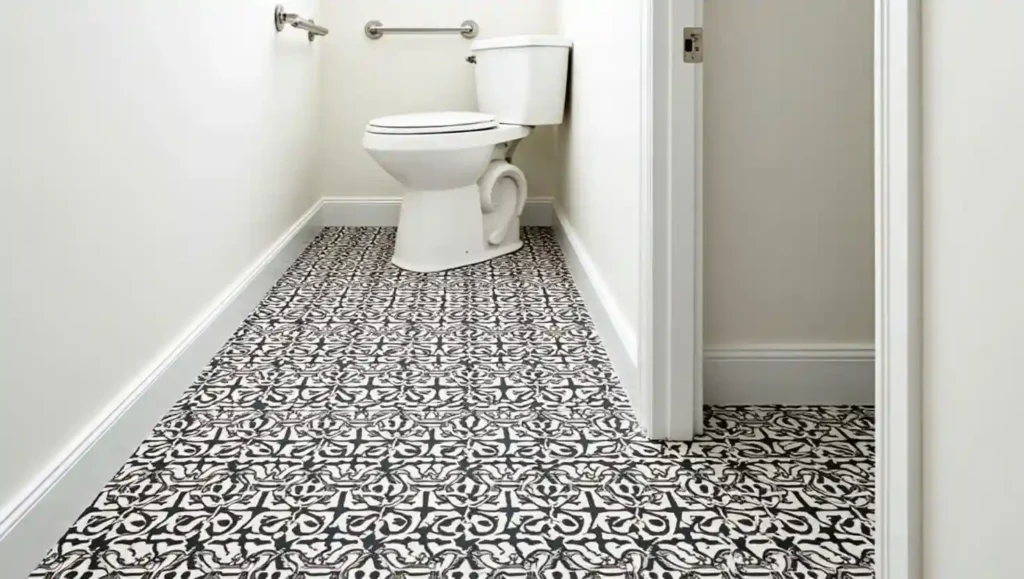
Not every floor needs to disappear into the background. In the right space — an entryway, a powder room, a home office, a kitchen nook — a boldly patterned LVT floor can serve as the visual centerpiece around which the rest of the room’s design is organized. Geometric patterns available in modern vinyl tile include hexagonal shapes, Moroccan-inspired zellige-like designs, encaustic cement tile reproductions, checkerboard black-and-white, and abstract geometric repeats in two-tone or full-color combinations.
The key to using a patterned floor successfully is restraint everywhere else. When the floor is doing heavy visual work, the walls, furniture, and fixtures should be kept simple and quiet. A black-and-white hexagon floor in a powder room with plain white walls and minimal fixtures looks considered and intentional. The same floor in a room full of patterned wallpaper, multicolored furniture, and decorative lighting looks chaotic.
Encaustic cement tile-look vinyl is a particularly strong current trend. It reproduces the handmade, artisan quality of real encaustic tile — the slight color variation, the geometric motifs, the aged-looking surface — in a material that is waterproof, scratch-resistant, and far more forgiving than actual cement tile, which requires regular sealing and is vulnerable to acidic spills. For homeowners who love the aesthetic of Moroccan or Portuguese encaustic tile but need practical performance, this is the closest available equivalent.
Idea 9: Mixed-Width Plank Vinyl for a Reclaimed Wood Aesthetic
One of the signatures of reclaimed and antique wood flooring is the variation in plank width — old-growth timber was milled at whatever width the tree allowed, so historic floors often mix 3-inch, 5-inch, and 7-inch planks in irregular sequences. Modern vinyl manufacturers have reproduced this look with mixed-width plank products that combine two or three different widths in a random or semi-random pattern, creating the organic, time-worn quality that makes reclaimed wood flooring so appealing.
The result is a floor that feels less manufactured than a uniform-width installation. The eye picks up on the variation in width and reads it as natural rather than repetitive, which is exactly what you want when the goal is to suggest real wood rather than vinyl. This style works particularly well in homes with older architectural elements — exposed beams, original brick, vintage hardware — because it complements rather than contrasts with those aged materials.
Mixed-width vinyl also has a subtle spatial effect: the variation in plank width makes rooms feel less grid-like and more relaxed, which suits informal living spaces, dining rooms, and bedrooms better than the crisp geometry of uniform-width planks.
From an installation standpoint, mixed-width products are typically pre-packaged to include the right ratio of each width, so you don’t need to calculate or source multiple SKUs. The layout does require a bit more planning to avoid awkward clusters of the same width, but most installers have straightforward systems for managing this.
Idea 10: Matte-Finish Vinyl in Moody Dark Tones for a Bedroom
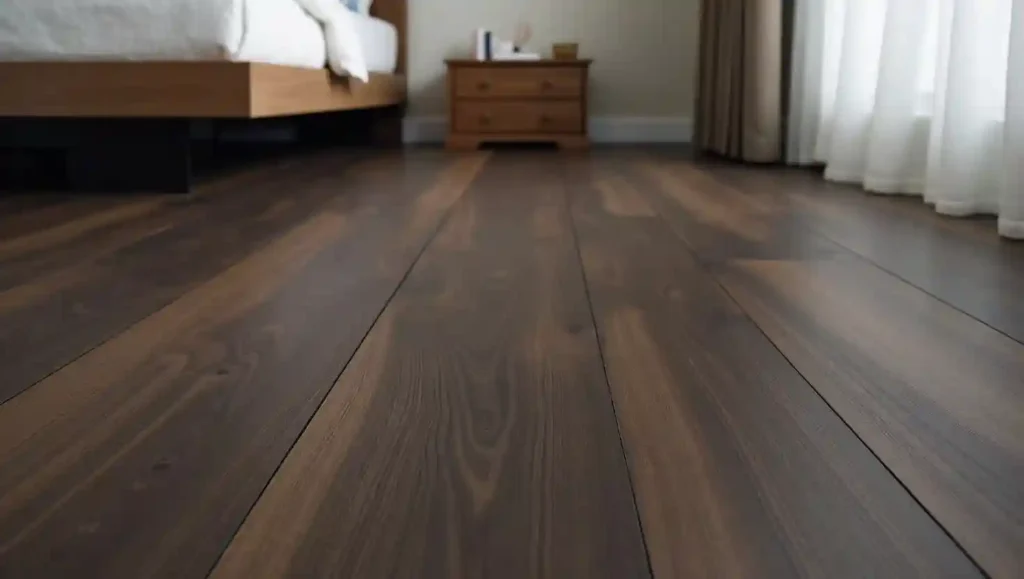
The bedroom is the one room in the house where a floor can afford to be a little dramatic. Dark matte vinyl in a primary bedroom — think deep walnut, rich tobacco, smoked oak, or even near-black ebony — creates an enveloping, sensory atmosphere that lighter floors simply don’t achieve. The darkness grounds the space, the matte finish prevents any clinical glare, and the effect is one of genuine comfort rather than showroom polish.
Matte finishes have become the dominant choice in modern vinyl flooring, and for good reason. They hide everyday marks, scuffs, and micro-scratches far better than satin or gloss surfaces. They also look more like real wood, which tends to have a naturally low sheen rather than a lacquered glow. In a bedroom, where the floor is often partially covered by a large area rug and the lighting is deliberately warm and indirect, a dark matte floor is very much at home.
The pairing possibilities for this look are wide. Against white bedding and light walls, dark matte vinyl creates a classic tonal contrast that feels effortlessly sophisticated. Against deep-toned walls — forest green, navy, terracotta — a dark floor extends the enveloping quality of the palette downward, making the room feel like a deliberate cocoon rather than a box with a dark floor in it.
One thing worth noting: if your bedroom floor is dark and your walls are also dark, make sure your lighting plan is strong enough to compensate. Dark floors in poorly lit rooms feel oppressive rather than moody. Layered lighting — a ceiling fixture, bedside lamps, and ideally some low-level lighting — makes the difference.
Idea 11: Open-Plan Continuous Flooring to Unify Multiple Zones
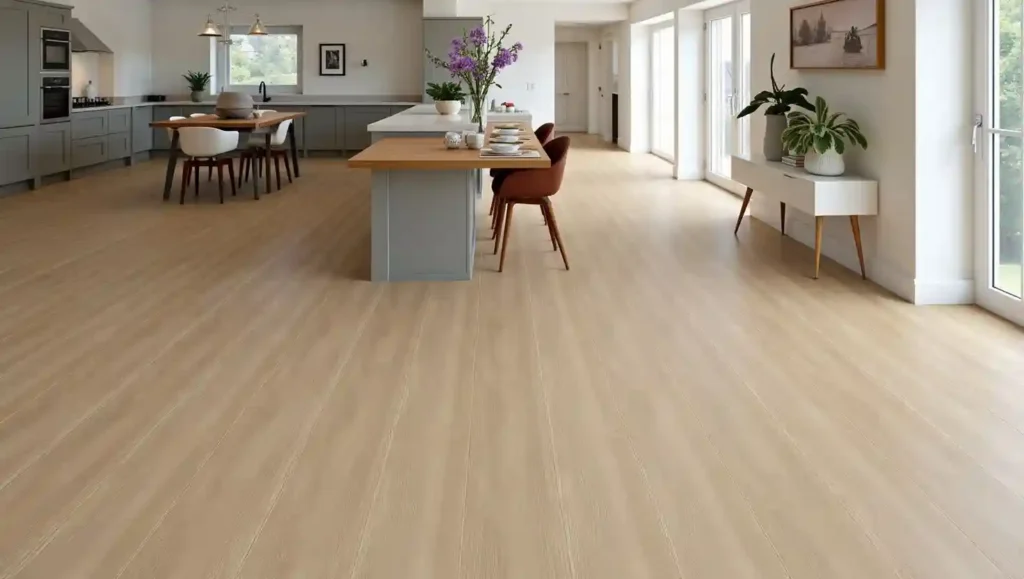
Perhaps the most practically powerful modern vinyl flooring idea isn’t about a particular color, pattern, or finish — it’s about continuity. Running the same vinyl plank or tile continuously through an open-plan kitchen, dining area, and living room, without transitions, breaks, or changes in material, creates a visual coherence that makes the combined space feel larger, calmer, and more intentional than it would with multiple materials competing for attention.
This approach works because of a simple perceptual principle: the eye tracks where materials change, and every material boundary creates a visual interruption. A living room that transitions through three different flooring materials as you walk from the entry to the sofa to the kitchen is registering three separate spatial zones rather than reading as one unified room. The same square footage in a single continuous material feels more expansive because there’s nothing breaking it into pieces.
Vinyl’s waterproof performance is what makes this practically possible. A hardwood floor that runs beautifully through a living room cannot extend into a kitchen without risk — spills, dishwasher leaks, and daily moisture from cooking and cleaning are genuine threats to solid wood. Waterproof LVP extends through the same space with no concern, which means you can design the floor as a unified element without planning defensively around moisture zones.
For this idea to succeed, the vinyl you choose needs to be sophisticated enough to work in both formal and casual areas of the open plan. A pale greige plank or a warm honey oak in a wide-plank format works well across a living-dining-kitchen sweep because it’s neither too formal nor too casual for any of those zones. Understanding the full range of vinyl flooring types — LVP, LVT, SPC, WPC, and sheet vinyl — helps you match the right product structure to the demands of each zone within a continuous run.
Choosing Between LVP and LVT for Your Modern Design Idea
Most of the eleven ideas above can be executed in either LVP (plank format, typically wood-look) or LVT (tile format, typically stone or pattern-look). But the format choice has design implications beyond aesthetics. Planks have a directional quality — they lead the eye along their length — that tiles don’t. Tiles create a grid, which can feel formal or geometric depending on the grout line choice and layout pattern. Before finalizing your design idea, be clear about which visual quality you want the floor to contribute: directionality and warmth (planks) or grid structure and hardness (tiles).
The underlayment question also matters more in modern vinyl than many buyers realize. Rigid-core LVP can be installed over a range of subfloor conditions, but the acoustics, thermal comfort, and softness underfoot all improve significantly with the right underlayment beneath. This is especially worth considering in multi-story homes and in rooms where hard surfaces would create noise concerns. The question of whether you need underlayment for vinyl plank flooring depends on the product’s construction, the subfloor material, and the performance expectations you have for the finished floor.
Color Trends Shaping Modern Vinyl in 2026 and Beyond
If you’re choosing vinyl now and want it to feel current in three to five years, there are a few directional signals worth knowing. The warm, nature-inspired palette is the dominant trend — greige, honey oak, warm brown, and bleached coastal tones continue to gain ground over the cool grey palette that dominated from roughly 2012 to 2020. Pure grey is not gone, but it’s increasingly being replaced by greige and warm neutral tones that read less austere and more comfortable.
Matte finishes are decisively dominant over gloss. This is partly aesthetic — matte reads as more contemporary and more natural — and partly practical, since matte surfaces hide wear signs better. If a flooring product you’re considering comes in a high-gloss option, you should have a strong specific reason to choose it over the matte version rather than defaulting to it.
Wide planks continue to grow in popularity, with 7-to-9-inch widths now mainstream rather than premium. The move toward wider planks is partly aesthetic (fewer seams, more open look) and partly driven by production capability — manufacturers can now produce wider vinyl planks reliably without the flatness and stability issues that affected early wide-plank products.
Texture is increasingly important. Smooth, flat vinyl surfaces are losing market share to embossed-in-register (EIR) products with realistic wood or stone texture. If you’re choosing between a flat and textured version of the same design, the textured version will look more convincing in person and photograph better for resale purposes.
Practical Decisions Before You Install
Whatever modern vinyl flooring idea you’re drawn to, a few practical decisions need to come before the aesthetic ones. The subfloor condition determines how much preparation work is needed before installation, and this can affect both the cost and the timeline of the project. The type of subfloor — concrete slab, plywood, existing vinyl, existing tile — also affects which installation method is appropriate. Understanding how to choose the right subfloor for your vinyl flooring project is one of the most important pre-installation decisions you’ll make.
The room’s function shapes the product specification. A bathroom or laundry room needs fully waterproof vinyl with a wear layer thick enough to handle cleaning chemicals. A basement installation requires a product designed for below-grade moisture conditions. A home gym or utility space needs scratch resistance and dimensional stability that not all residential LVP products provide. Matching the product to the room’s actual demands — rather than just choosing the floor that looks best in the showroom — is the difference between a decision you’ll be happy with in ten years and one that causes problems in three.
Finally, if you’re buying vinyl from a retailer, ask specifically about the IIC (impact insulation class) and STC (sound transmission class) ratings for the products you’re considering, especially if you live in a multi-story home or a condo building. These acoustic ratings tell you how well the floor dampens footfall noise and airborne sound transfer — information that’s far more important for your quality of life than the shade or texture you’ll be deciding between on the showroom floor. If noise performance is a priority, reading up on IIC and STC ratings for vinyl flooring before you shop will help you ask the right questions.
Getting the Look Right: Final Thoughts
Modern vinyl flooring is one of the most design-flexible materials available to homeowners today. Whether you’re after the warmth of wide-plank oak, the drama of a dark matte bedroom floor, the pattern interest of a geometric tile, or the seamless continuity of an open-plan run, there’s a vinyl product engineered to deliver that look at a performance level that real wood, stone, and tile often can’t match.
The eleven ideas in this guide are starting points. The best version of any of them lives in your specific space, under your specific light conditions, next to your specific cabinetry and wall colors. Order samples and live with them in your room for at least 48 hours before committing — the difference in how a floor looks between a showroom and a real room with your furniture and natural light can be significant.
If you’re ready to take the next step, the vinyl flooring buying guide covers everything from decoding product specifications to comparing brands to understanding installation cost variables. And if you want to know how modern vinyl stacks up against the other flooring options you’re considering, the detailed comparison of laminate vs vinyl plank flooring covers the performance, cost, and design differences side by side. The right floor is out there — these ideas are just the beginning of finding it.
James Miller is a seasoned flooring contractor with years of hands-on experience transforming homes and businesses with high-quality flooring solutions. As the owner of Flooring Contractors San Diego, James specializes in everything from hardwood and laminate to carpet and vinyl installations. Known for his craftsmanship and attention to detail, he takes pride in helping clients choose the right flooring that balances beauty, durability, and budget. When he’s not on the job, James enjoys sharing his expertise through articles and guides that make flooring projects easier for homeowners.
Laminate flooring and PVC flooring are often placed in the same category in flooring guides. Both float over a subfloor. Both use click-lock joints. Both mimic the appearance of wood or stone. That surface-level similarity is exactly where the confusion starts — and it is also where most comparison articles fail. The real differences between…
Yes, you can install laminate flooring over tiles — but the condition of the existing tile, not the desire to skip demolition, is what determines whether that answer holds in your specific room. This distinction matters because most homeowners ask the question hoping the answer is a flat yes. In reality, the answer is conditional,…
Wide plank laminate flooring has completely changed the way homeowners and designers think about budget-friendly flooring. With planks that typically measure 5 inches or wider — often reaching 7, 8, or even 12 inches across — wide plank laminate creates a sense of space, luxury, and authenticity that narrower floors simply cannot match. The broader…
The maximum expansion gap for laminate flooring is 10mm to 12mm (approximately 3/8 inch) at all fixed surfaces for standard rooms. For rooms wider than 8 meters in any direction, that figure increases to 15mm or more. These gaps must be maintained at every wall, door casing, pipe penetration, post, hearth, and fixed cabinet in…
Tile flooring has always been a cornerstone of interior design, but the way people are using it today looks almost nothing like it did a decade ago. Oversized slabs in soft concrete tones, terrazzo floors flecked with bold color, herringbone porcelain running through open-plan kitchens — these are the choices that are reshaping homes right…
What you put under vinyl flooring is not a secondary decision. It is, in many ways, the primary decision. The vinyl plank or tile you select determines how the floor looks. What goes beneath it determines how the floor performs, how long it survives, and whether the installation itself holds together after the first winter…