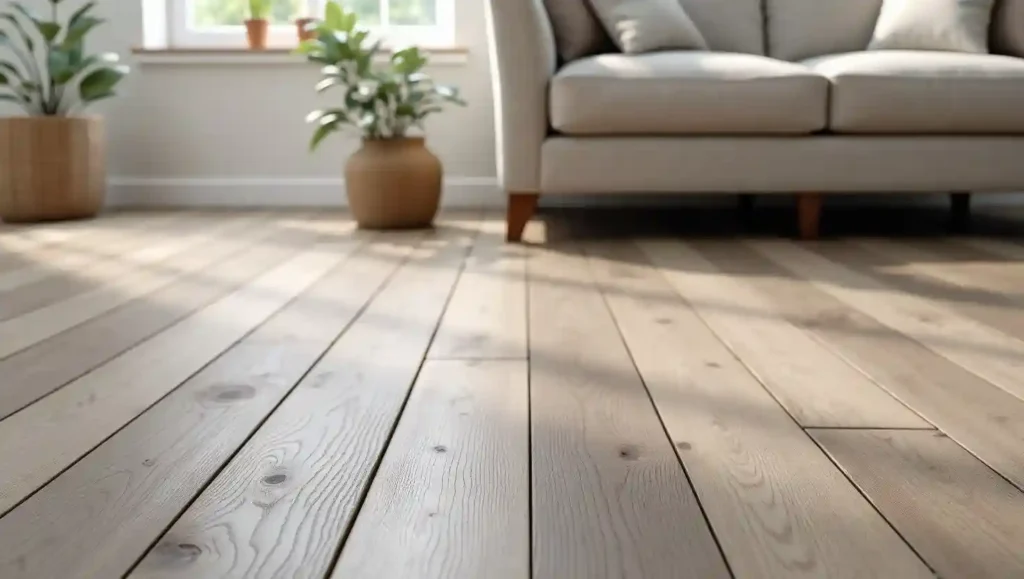
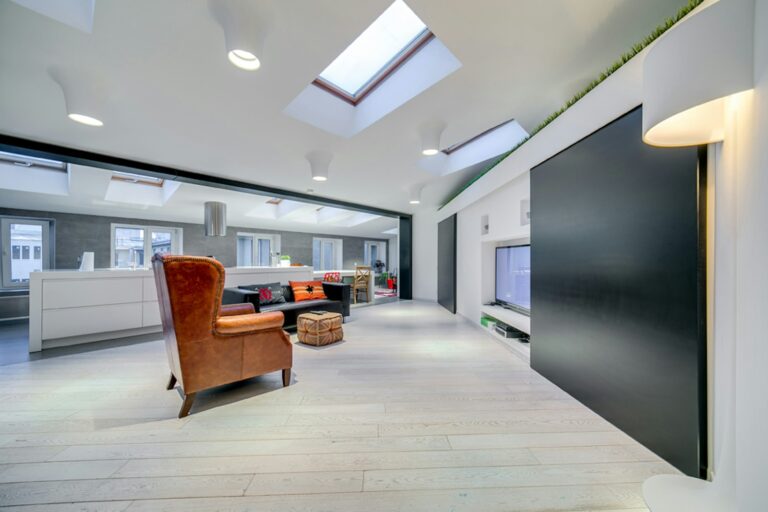
Pair this floor with linen slipcovers, a raw-edge wood coffee table, shiplap or board-and-batten walls, and metal light fixtures with an aged brass or oil-rubbed bronze finish. The floor carries the whole room’s narrative, so let everything else play a quieter role.
For a deeper look at how plank width and wear layer specification affect long-term performance, the guide to wear layer thickness for LVP flooring on this site breaks down exactly what numbers to look for before you buy.
2. Whitewashed Pine Look for Airy Farmhouse Bedrooms
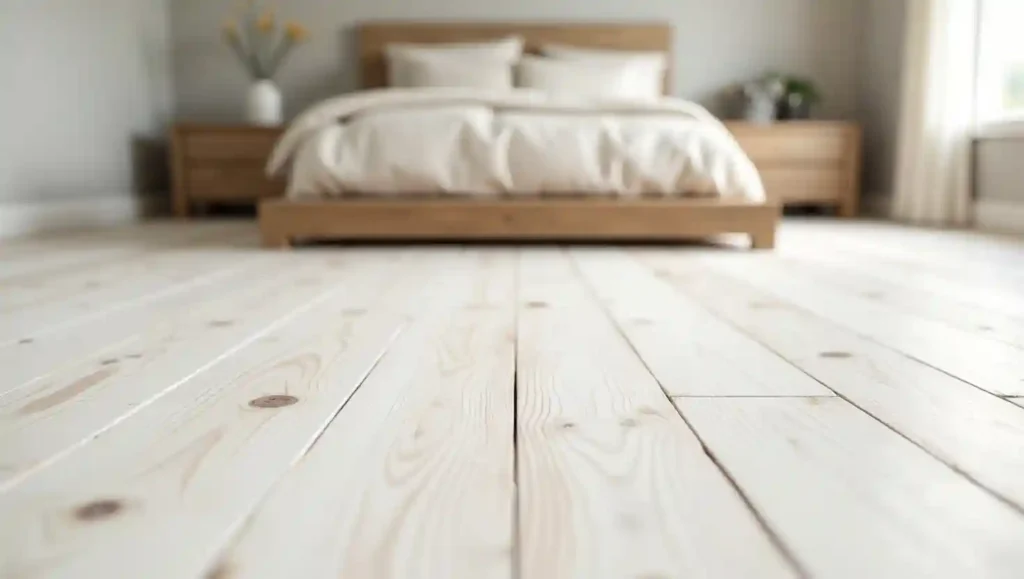
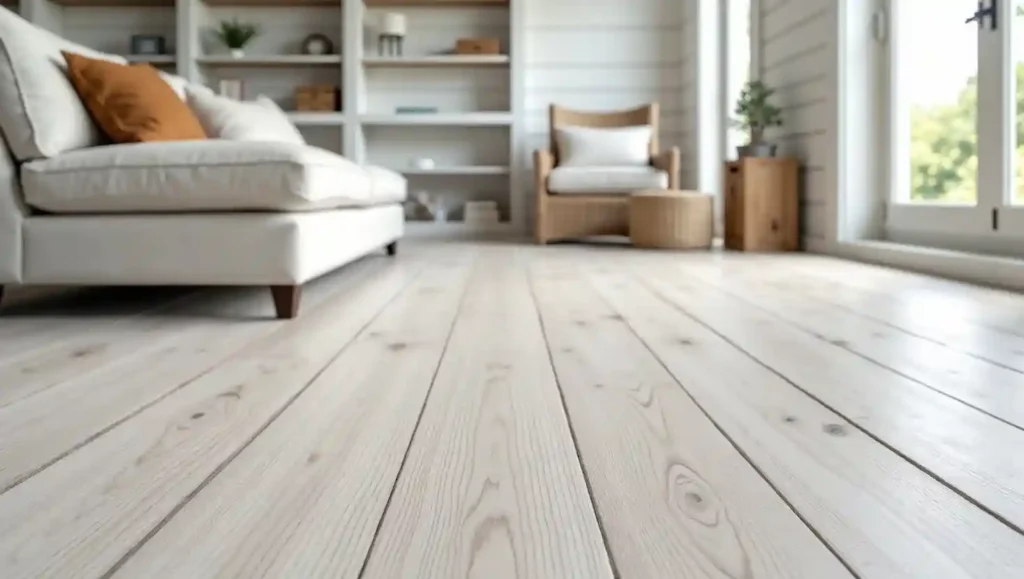
Not every farmhouse bedroom needs dark, rustic drama. The coastal farmhouse variant, sometimes called “white farmhouse” or “bleached farmhouse,” leans into pale, sun-washed tones that make rooms feel larger and airier. Whitewashed or lime-washed vinyl planks are the fastest way to achieve this effect without committing to paint on the floor itself.
Look for vinyl planks labeled as whitewashed, bleached, or pale driftwood. The best versions retain visible grain lines and subtle knot marks beneath the light finish, which prevents them from reading as plain white vinyl. Plank widths of 6 to 7 inches work well in bedrooms, and a smooth or lightly embossed surface is appropriate since bedrooms do not see the traffic levels that require deep texture for grip.
This floor pairs beautifully with soft bedding in cream, sage, dusty blue, or blush. White painted shiplap walls, rattan furniture, and woven cotton area rugs complete the look. The whitewashed floor acts as the room’s light anchor, ensuring that even on overcast days the space feels open.
3. Reclaimed Barnwood Vinyl in the Kitchen
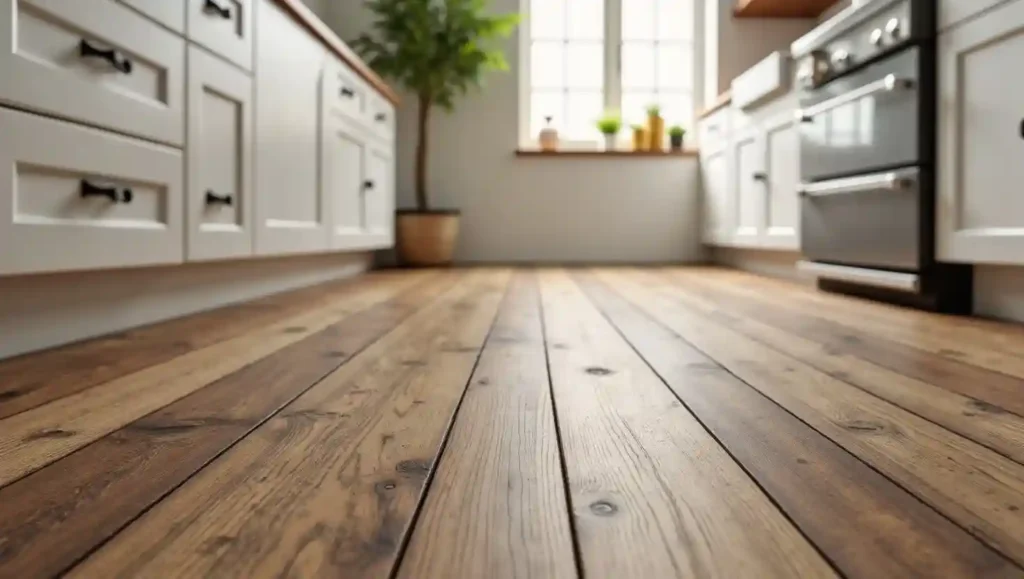
The farmhouse kitchen is the heart of the concept, and no floor suits it better than a reclaimed barnwood look. This style draws on the visual language of salvaged timber: color variation between planks, deliberate saw marks, irregular grain, and a finish that suggests decades of use rather than a showroom shelf.
In a kitchen, barnwood-look luxury vinyl delivers something real reclaimed wood cannot: it is fully waterproof, immune to spills from the sink or dishwasher, and requires only a damp mop to clean. Look for planks with strong tonal variation, mixing light wheat, warm brown, and ashy gray within the same collection. The planks should feel different from each other, not uniform. A hand-scraped or heavily embossed texture prevents the floor from looking flat or printed.
Barnwood vinyl works with both traditional and modern farmhouse kitchens. Against white shaker cabinets and black hardware it reads contemporary-rustic. Against sage green or navy cabinetry it adds warmth that balances the saturated color above. Either way, use a dark grout-colored threshold strip rather than a white one at transitions to avoid interrupting the floor’s visual flow.
4. Greige Wide-Plank Vinyl for the Modern Farmhouse Open Plan
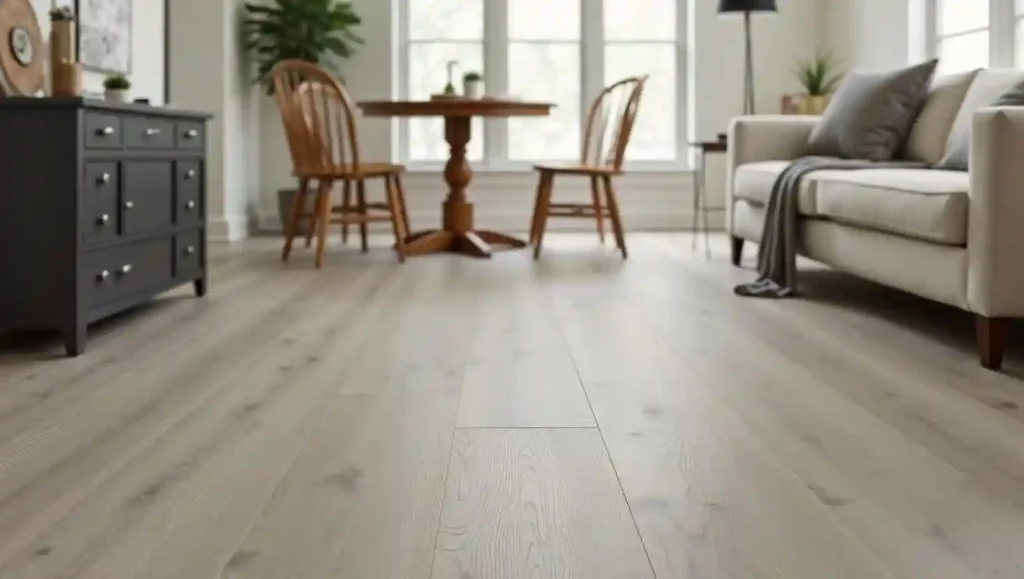
The modern farmhouse aesthetic is not purely rustic. It is a calibrated hybrid: clean lines from contemporary design blended with the warmth and texture of country living. Greige flooring — a blend of gray and beige that sits perfectly neutral — has become the defining floor color for this style because it bridges both worlds without overclaiming either one.
In an open-plan space where the kitchen, dining area, and living room share a continuous floor, greige luxury vinyl holds the composition together. It does not compete with furniture upholstery, cabinetry color, or area rugs. It simply reads as ground. The wide plank format (7 to 9 inches) extends the sense of uninterrupted horizontal space that open plans depend on for their visual success.
Look for greige vinyl planks with subtle wood grain texture rather than a smooth tile-like surface. The grain keeps the material in the wood-floor family rather than drifting toward industrial or commercial-looking flooring. A low sheen finish is mandatory; semi-gloss greige vinyl in an open plan reads as plastic.
5. Distressed Hickory Vinyl for the Mudroom and Entryway
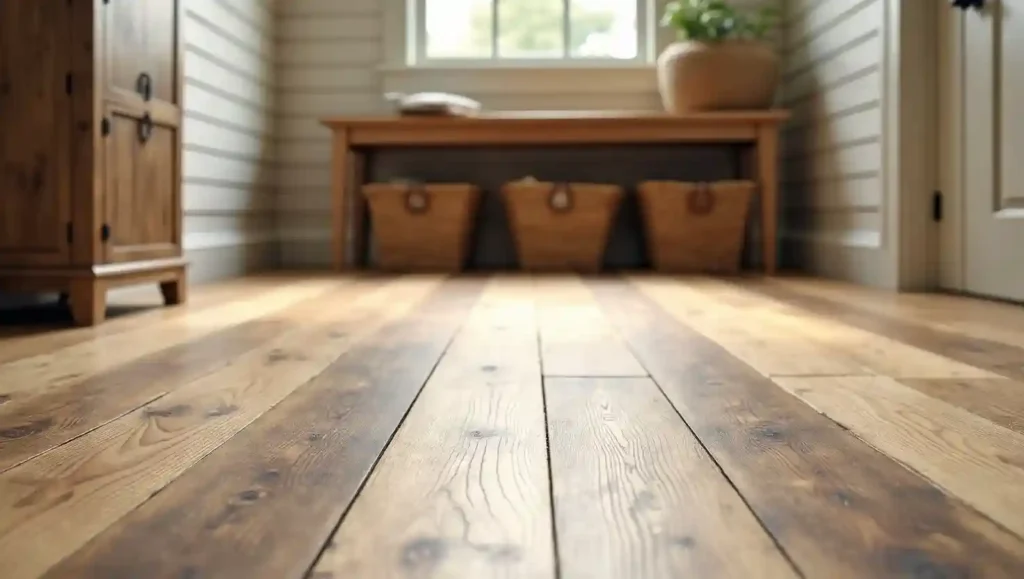
A farmhouse mudroom takes more punishment than any other floor in the house: wet boots, dog paws, dropped bags, tracked-in soil. This is exactly where distressed hickory vinyl earns its place. Hickory is naturally the most tonally varied domestic wood species, with dramatic contrast between light and dark grain, and the distressed vinyl version amplifies that variation further, adding subtle dents and wire-brushed channels that make new scuffs invisible.
Look for planks in the 6 to 7 inch width range with heavy embossed texture. The tonal range should move between cream, golden brown, and dark chocolate within a single plank. This variation means dirt and mud simply do not register visually the way they would on a uniform pale floor. For the entryway specifically, the heavier texture also improves grip when floors are wet.
Bench seating with shiplap paneling behind it, metal coat hooks, and woven baskets all amplify the farmhouse feel. A rubber-backed runner down the center of the floor adds softness without covering the full floor surface, letting the distressed hickory pattern remain visible on either side.
6. Stone-Look Vinyl Tile in the Farmhouse Bathroom
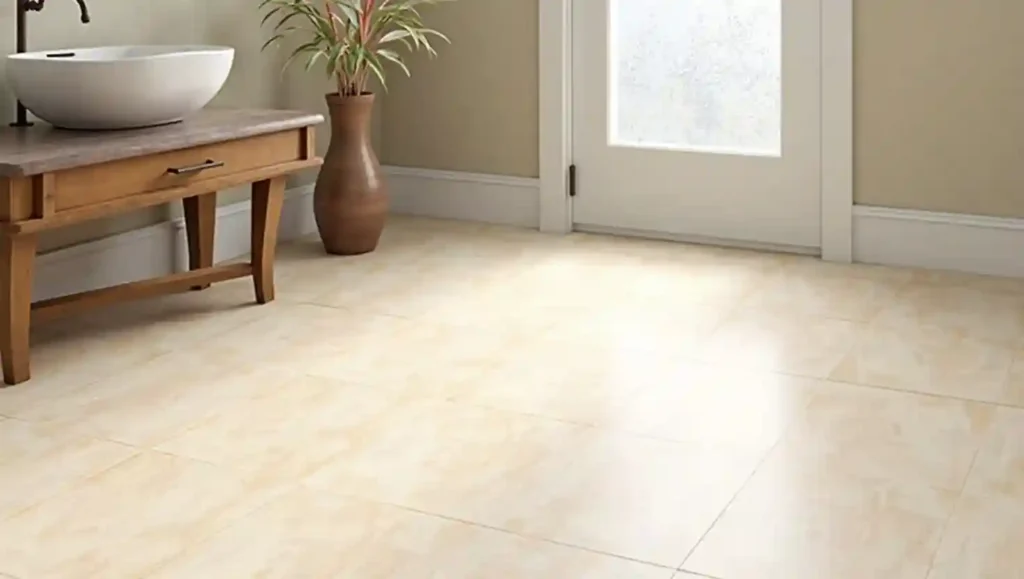
Historically, farmhouses used stone tile in wet areas precisely because it was durable, cleanable, and naturally resistant to moisture. Stone-look luxury vinyl tile recreates that heritage while eliminating the cold-underfoot problem and the maintenance demands of real stone.
For a farmhouse bathroom, look for vinyl tile in travertine, slate, or limestone looks. Travertine-look LVT in a warm cream or buff tone is particularly effective: the natural pitting and vein patterns of the original material translate well to high-resolution printing, and the warm toning connects the floor to wood vanities, shiplap walls, and oil-rubbed bronze fixtures without needing a decorating bridge. Slate-look tile in muted gray works well for a darker, more mountain-cabin farmhouse bathroom.
Tile format matters. A 12×24 inch format laid in a staggered brick pattern reads contemporary-farmhouse. Smaller 6×6 or hexagonal formats lean more traditional. The grout color should match or be just slightly darker than the tile to maintain the stone-like illusion rather than creating a grid effect that makes the floor look busier than it is.
You can read about choosing the right subfloor for vinyl flooring before installation, which is especially important in bathroom environments where moisture below the floor is as much a concern as moisture above it.
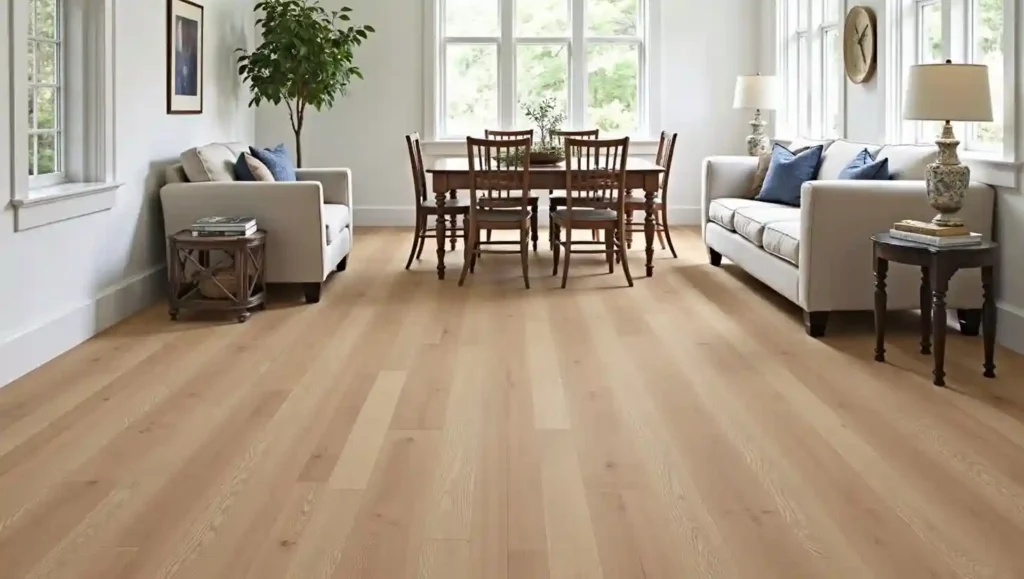
7. Honey Oak Vinyl Planks in the Farmhouse Dining Room
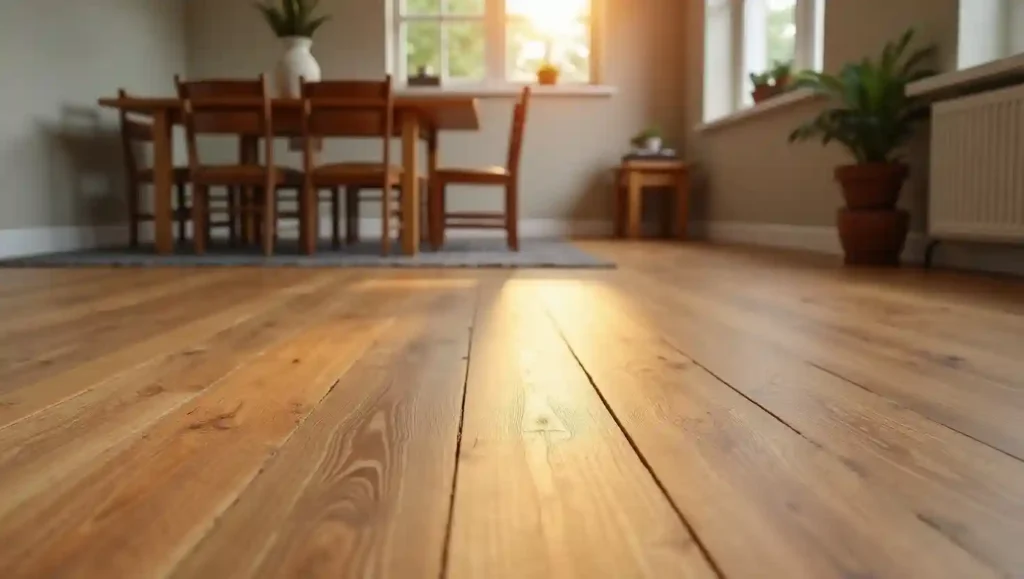
Honey oak sits in a particular sweet spot for farmhouse dining rooms. It is warm enough to feel inviting around a dining table, pale enough to keep the room from feeling heavy, and tonal enough to complement both dark-stained furniture and lighter painted pieces. It is also the color that reads most convincingly as natural wood in the mid-range of the market.
Look for honey oak vinyl with a low-sheen matte or satin finish and visible grain variation. The plank width can be slightly narrower than living room planks — 5 to 6 inches works well in a dining room, especially if the room is not large, since very wide planks in a small space can make the floor look oversized relative to the table above it.
Pair honey oak vinyl with a farmhouse table in natural pine or stained oak, mismatched chairs (a farmhouse classic), white or cream walls, and a statement pendant or chandelier. The warm floor grounds the visual composition and makes the room feel like it has always been there, which is the true ambition of farmhouse design.
8. Herringbone Vinyl Pattern in the Kitchen or Entryway
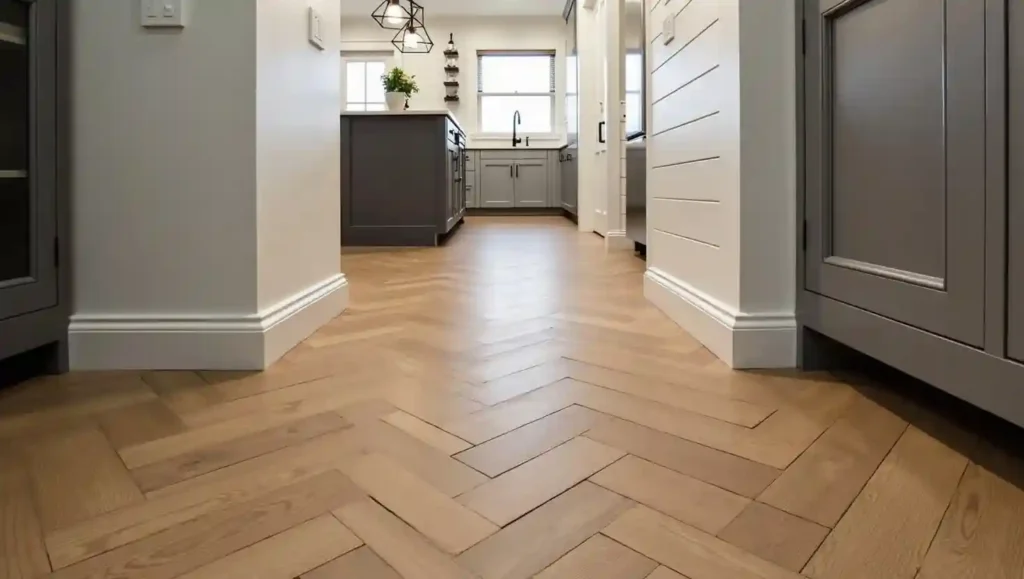
The herringbone pattern has a continuous presence in historic farmhouse and country estate interiors precisely because it was one of the few installation techniques that added visual complexity to a simple, repetitive material. Laying the same plank at 45-degree opposing angles creates a floor that looks distinctly more intentional than a straight-run installation using identical planks.
Modern luxury vinyl planks work in herringbone, but the execution requires more attention. You need planks with precisely square-cut ends (rather than the micro-beveled end joints common on floating-floor products) to achieve clean herringbone points. Many manufacturers now offer herringbone-ready LVP collections specifically for this reason.
For farmhouse applications, pair herringbone with a medium-tone wood-look plank rather than a stone look. Gray-washed or warm oak herringbone in a kitchen makes the floor feel as though it has always been there while still reading as a deliberate design choice. In an entryway, the directional quality of herringbone guides the eye inward and establishes a sense of arrival.
9. Charcoal Gray Vinyl Planks for the Industrial Farmhouse Look
The industrial farmhouse style blends the warm, lived-in quality of country interiors with the raw, unfinished aesthetic of warehouses and factory buildings: exposed beams, black metal, concrete surfaces, and dark finishes. Charcoal gray luxury vinyl planks are the flooring expression of this sensibility.
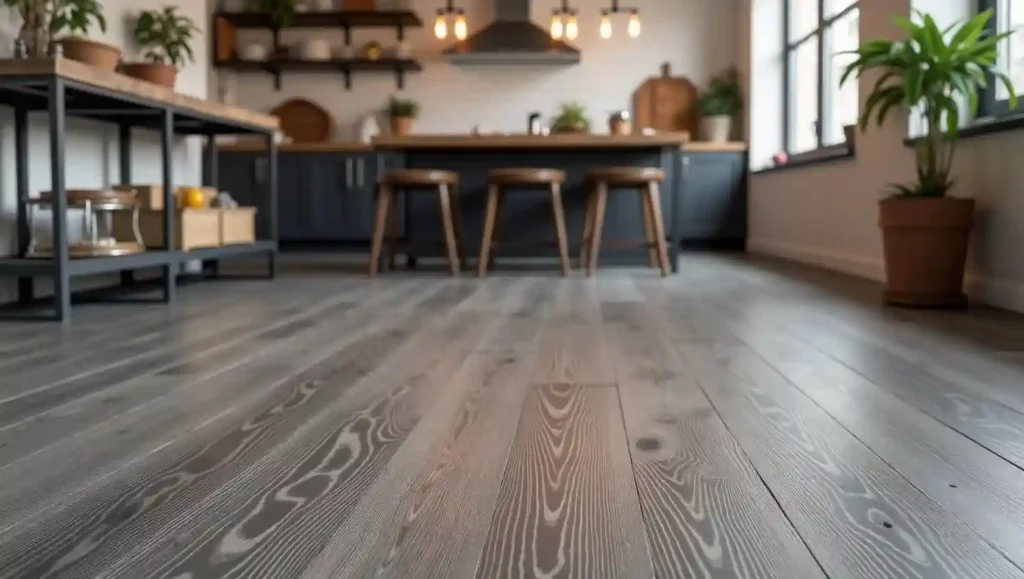
Look for vinyl planks in dark gray or charcoal with a wire-brushed or lightly distressed texture. The grain should still be visible — a flat charcoal plank reads as painted concrete, which is not the goal. The variation in the gray should move between slate, warm charcoal, and pale ash so that the floor has depth rather than looking uniformly dark. Plank widths of 6 to 7 inches suit the industrial scale of this style.
Pair with black metal open shelving, Edison bulb pendant lights, reclaimed wood countertops or tables, and white or off-white walls. The dark floor creates a grounding contrast against light walls and natural wood surfaces above, exactly the kind of high-contrast interplay that industrial farmhouse depends on. Avoid using dark charcoal floors in small, poorly lit rooms where they will absorb light rather than provide contrast.
10. Light Gray Driftwood Vinyl for the Coastal Farmhouse Aesthetic
The coastal farmhouse look has become its own distinct category, pulling together the relaxed, bleached-by-the-sun quality of beach interiors with the textural warmth of farmhouse materials. Light gray driftwood-look vinyl planks are the flooring version of this combination: pale enough to feel coastal and airy, textured enough to feel natural and grounded.
Look for vinyl planks with color variation between pale silver, driftwood gray, and soft beige-white. Mixed-width plank formats — combining 3-inch, 5-inch, and 7-inch widths in the same installation — intensify the organic, aged-timber feel that this aesthetic requires. The finish should be deeply matte with visible raised grain channels.
This floor pairs naturally with shiplap paneling in white, sea glass blues and greens in upholstery and textiles, natural fiber rugs, and open, uncluttered shelving. It works particularly well in homes close to the coast or in bright rooms with good natural light, since the pale tones need light to read as silver rather than flat gray.
11. Warm Brown Vinyl Planks Under Open-Concept Farmhouse Stairs
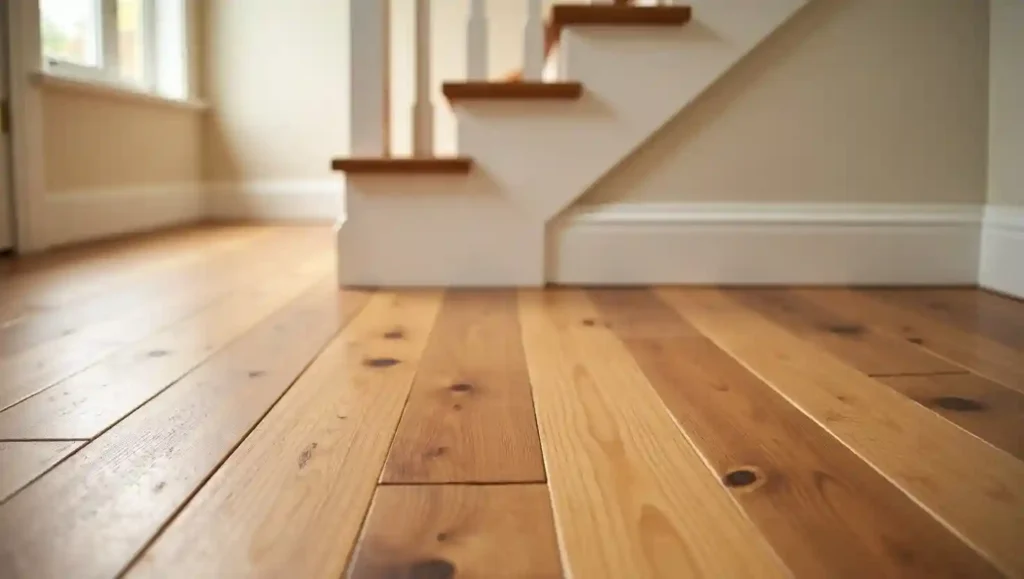
Open-riser farmhouse staircases — painted white treads with visible risers, or stained wood treads with painted risers — create a visual statement in any farmhouse home. The floor at the base of and surrounding those stairs needs to complement the staircase material rather than compete with it. Warm brown vinyl planks in a medium-tone walnut or butterscotch oak look thread this needle well.
Medium brown floors with visible grain warm up the space around a staircase while maintaining enough distinction from the stair tread color to avoid the flat, monochromatic look that can result when every wood surface in a room matches too closely. Look for vinyl planks with natural knot details, a wire-brushed or hand-scraped surface, and color variation between light amber and medium walnut within the same run.
For the staircase itself, matching vinyl stair nosing or stair treads in the same collection creates a seamless transition from floor to stair without requiring a separate material. Many vinyl flooring collections offer coordinating stair products for exactly this reason.
12. Vinyl Plank in a Classic Black-and-White Farmhouse Bathroom
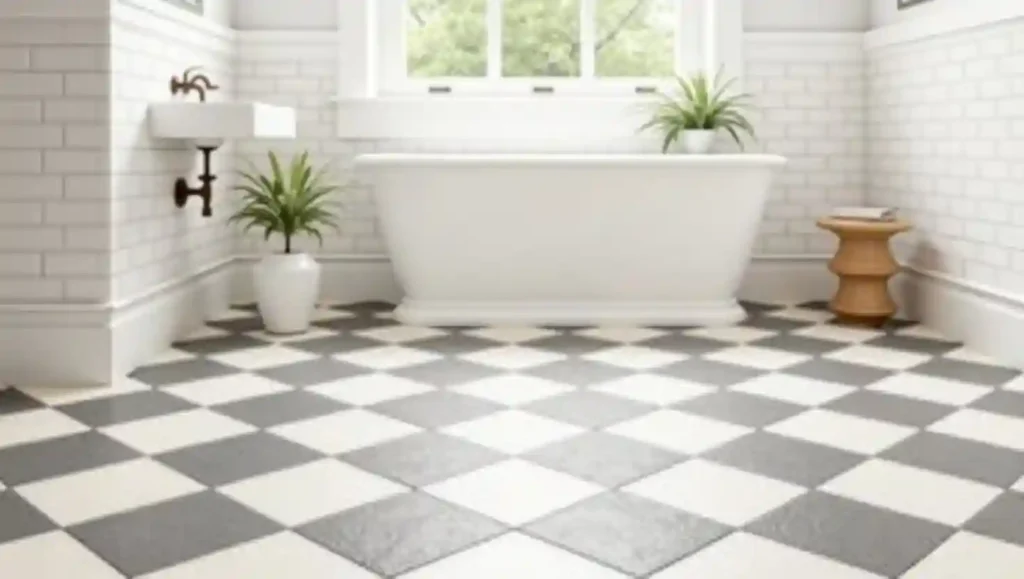
The black-and-white farmhouse bathroom is a category unto itself: subway tile walls, pedestal sinks or apron-front vanities, hex tile or checkerboard floors, and all of it bathed in the crisp, clean contrast that makes both modern and period-style farmhouse bathrooms so enduring. Luxury vinyl tile can replicate a checkerboard or encaustic tile pattern with complete authenticity while staying warmer and softer underfoot than actual ceramic.
Look for LVT in a checkerboard format with soft white and warm gray or off-black squares rather than stark white and hard black, which can feel more Art Deco than farmhouse. The squares should be 6 to 8 inches for a traditional scale. The finish should be matte or low-sheen to stay within the farmhouse visual vocabulary.
Pair with full-height subway tile walls in white with a gray grout, a farmhouse vanity or pedestal sink, and period-style faucet hardware in nickel or bronze. A thick cotton bath mat in a natural or neutral tone completes the look without hiding the floor pattern beneath it.
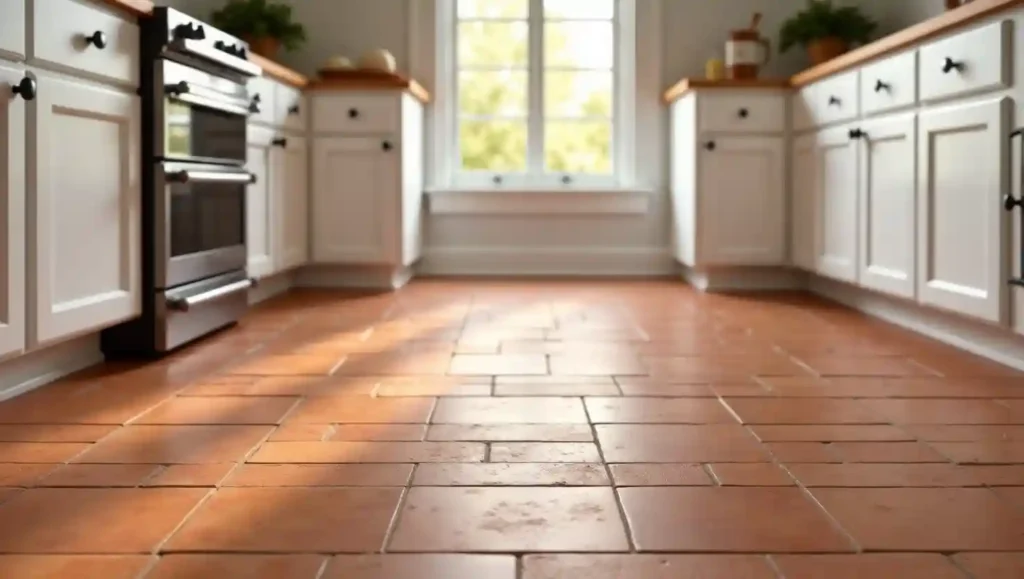
13. Terracotta-Look Vinyl Tile in the Farmhouse Kitchen
Terracotta tile is one of the oldest flooring materials in continuous use, appearing in Mediterranean farmhouses, Spanish colonial haciendas, and Provencal country kitchens for centuries. The warm red-clay color, slight surface texture, and rectangular or square format of terracotta create an immediate sense of age and authenticity. Luxury vinyl in a terracotta look delivers that visual quality without the sealing requirements, moisture sensitivity, and fragility of real clay tile.
Look for vinyl tile with a warm sienna or burnt orange base color with natural tonal variation from tile to tile. The surface texture should feel slightly irregular, suggesting handmade origin, and the format should be 8×8 or 12×12 square for a traditional farmhouse scale. Laid in a straight grid with a narrow, sand-colored grout, terracotta-look LVT creates an immediate sense of European or Spanish Colonial farmhouse warmth.
Pair with white or cream painted cabinets, natural wood countertops or butcher block, wrought iron or matte black hardware, and hand-painted ceramic accessories. This floor makes the most impact in kitchens that embrace warmth and color rather than neutral minimalism.
14. Mixed-Width Rustic Vinyl Planks for an Authentic Reclaimed Look
One of the most convincing elements of genuine reclaimed wood flooring is the variation in plank width. Salvaged barn wood or original farmhouse boards rarely came in uniform widths because they were cut from whatever timber was available. Mixed-width luxury vinyl installations replicate this quality by combining planks of two or three different widths — typically 3 inches, 5 inches, and 7 inches — in a random or planned sequence across the floor.
This installation approach requires slightly more planning than a straight-run single-width floor, but the visual payoff is considerable. The irregular pattern breaks the uniform repetition that prevents many vinyl floors from passing for real wood, and it adds horizontal movement to the surface that catches light differently at different times of day.
Look for vinyl collections that offer the same color profile across multiple widths so that the tonal variation comes from the wood simulation rather than from mismatched products. A warm, aged oak or heritage pine look in mixed widths reads more convincingly as reclaimed material than almost any single-width alternative. This approach works especially well in larger rooms where the pattern has room to unfold and the variation between plank widths becomes fully legible.
The pros and cons of loose-lay vinyl flooring are worth reading if you are considering a mixed-width installation, since some installation methods suit planks of varying dimensions better than others.
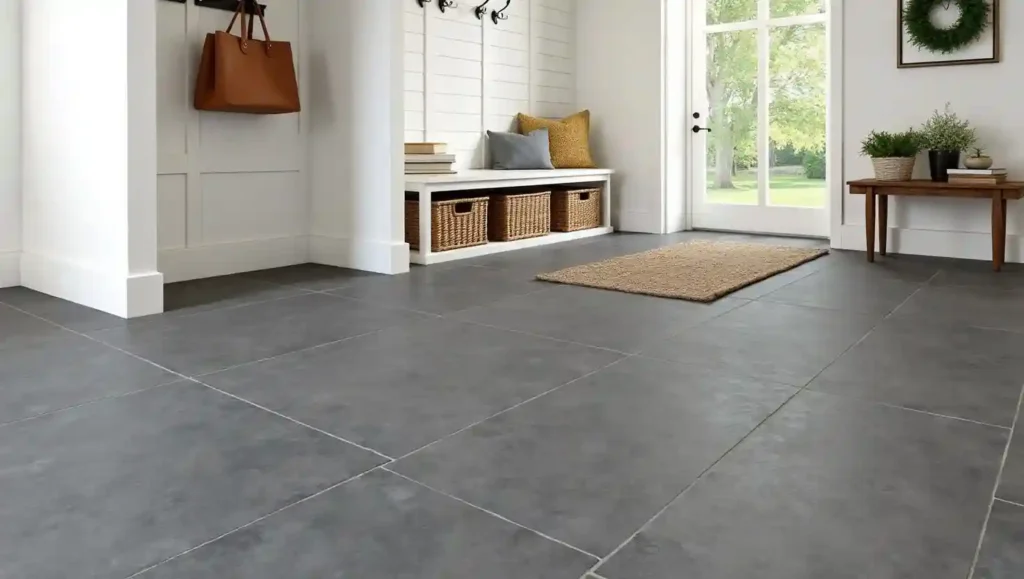
15. Gray Slate-Look Vinyl Tile for the Farmhouse Mudroom
Gray slate tile in a farmhouse mudroom is a combination that has been functioning well for over a century: slate is durable, slip-resistant when textured, and visually low-maintenance in a space where soil and moisture are guaranteed visitors. Luxury vinyl tile in a gray slate look delivers all of those qualities with the added benefit of warmth and resilience underfoot that real stone does not provide.
Look for LVT with a split-face or riven slate surface texture in a matte charcoal or blue-gray finish. The tile format should be 12×12 or 12×24 inches for a classic farmhouse mudroom scale. Laid in a herringbone or running bond pattern, slate-look LVT transforms a utilitarian mudroom into a space that feels thoughtfully finished rather than merely functional.
Pair with built-in bench seating in painted white or natural wood, metal or black iron coat hooks, wicker or wire storage baskets, and a painted wood or brick accent wall. The dark gray floor absorbs visual evidence of heavy use and provides a grounding contrast to the lighter wall colors that keep the mudroom from feeling cave-like. A textile runner or jute mat in the center of the floor adds a transitional softness without obscuring the slate pattern on either side.
If the mudroom connects directly to a bathroom or laundry room, the best subfloor options for vinyl flooring explain how to handle the moisture management in adjacent wet areas before installation begins. Understanding what goes beneath the tile is just as important as choosing the tile itself.
What Makes Vinyl the Right Choice for Farmhouse Flooring
Across all fifteen of these ideas, luxury vinyl consistently earns its place over the alternatives because of a straightforward set of facts. Real reclaimed wood, the material farmhouse style originally romanticizes, requires refinishing, is susceptible to water damage, and can splinter or shift seasonally. Genuine stone tile requires sealing, is cold underfoot, and does not accommodate the slight subfloor imperfections common in older homes. Ceramic tile is hard, brittle under impact, and grout-heavy in a way that becomes a maintenance challenge over time.
Luxury vinyl planks and tiles are waterproof at the product level, not just water-resistant. They hold up under pet claws, dragged furniture, wet boots, and cleaning products that would strip real wood’s finish. They install over concrete, plywood, or existing tile without requiring a perfectly level substrate. And they have reached a level of photographic and textural realism in the past several years that makes the distinction from natural materials difficult to perceive at a normal viewing distance.
For a farmhouse home specifically, these practical properties matter more than they do in a setting with lighter use. Farmhouse design is not precious. It is meant to be lived in, and vinyl flooring’s performance profile is entirely aligned with that philosophy.
Choosing the right visual is only one part of the decision. The product’s core construction, wear layer thickness, installation method, and underlayment requirements all affect how the floor performs over years of use rather than just how it looks on day one.
For farmhouse homes with dogs or cats, wear layer matters more than almost any other specification. A 12-mil wear layer is the minimum for pet households, and 20-mil is better in rooms where animals spend significant time. Wire-brushed and hand-scraped finishes also hide surface wear better than smooth finishes because the existing texture camouflages new marks rather than displaying them against a pristine surface.
Underlayment significantly affects how vinyl floors feel and sound underfoot, which matters in a farmhouse kitchen or living room where you stand for long periods or move through frequently. The best underlayment options for noise reduction under vinyl flooring covers the acoustic and comfort benefits of different underlayment types, which is worth reviewing before installation particularly in upper-floor rooms or over concrete slabs.
Acclimation is also frequently overlooked. Luxury vinyl planks should be left in the room where they will be installed for at least 24 to 48 hours before installation, allowing them to adjust to the room’s temperature and humidity. Skipping this step in climates with significant seasonal temperature swings can result in expansion or contraction that creates gaps or buckled seams after installation.
Finally, professional installation versus DIY is a genuine consideration for larger or pattern-heavy farmhouse floors. A herringbone installation, a mixed-width floor, or any diagonal layout requires planning and precision that rewards experience. For a standard straight-run installation in a straightforward room, click-lock vinyl is accessible to a confident DIYer. For anything more complex, the investment in professional installation protects the investment you have already made in the material itself. The vinyl flooring services available in San Diego cover the full range of installation types including pattern layouts for exactly these kinds of farmhouse projects.
James Miller is a seasoned flooring contractor with years of hands-on experience transforming homes and businesses with high-quality flooring solutions. As the owner of Flooring Contractors San Diego, James specializes in everything from hardwood and laminate to carpet and vinyl installations. Known for his craftsmanship and attention to detail, he takes pride in helping clients choose the right flooring that balances beauty, durability, and budget. When he’s not on the job, James enjoys sharing his expertise through articles and guides that make flooring projects easier for homeowners.
Carpet installation looks deceptively straightforward until you are standing in the middle of a half-stretched room with a wrinkle you cannot remove and a knee kicker that keeps slipping. The difference between a result that looks pulled from a showroom floor and one that buckles within six months almost never comes down to the carpet…
Humidity does not just make summer feel oppressive. It actively works against your carpet from the moment relative humidity levels climb past a certain threshold inside your home. The damage is rarely visible at first. Carpet fibers absorb atmospheric moisture quietly, and the consequences — mold colonies, fiber distortion, dust mite explosions, structural deterioration —…
Why Choosing the Right Wood Flooring for Pets Actually Matters Most pet owners discover the problem the hard way — a beautiful new floor reduced to a network of surface scratches within the first year of ownership. The issue is rarely that the floor was low quality. The issue is that the floor was never…
There is something about a dark floor that changes the entire personality of a room. Walls feel taller. Furniture looks more intentional. The whole space settles into itself with a quiet confidence that lighter floors rarely achieve. For a long time, dark flooring meant dark hardwood, which meant high cost, moisture sensitivity, and years of…
The Short Answer Is Conditional — And That Condition Matters More Than You Think Bamboo flooring in bathrooms is not a flat yes or no. It is a question that depends entirely on what type of bamboo you are dealing with, how you treat the subfloor, and what the actual moisture load in your specific…
Yes, you can install laminate flooring over tiles — but the condition of the existing tile, not the desire to skip demolition, is what determines whether that answer holds in your specific room. This distinction matters because most homeowners ask the question hoping the answer is a flat yes. In reality, the answer is conditional,…