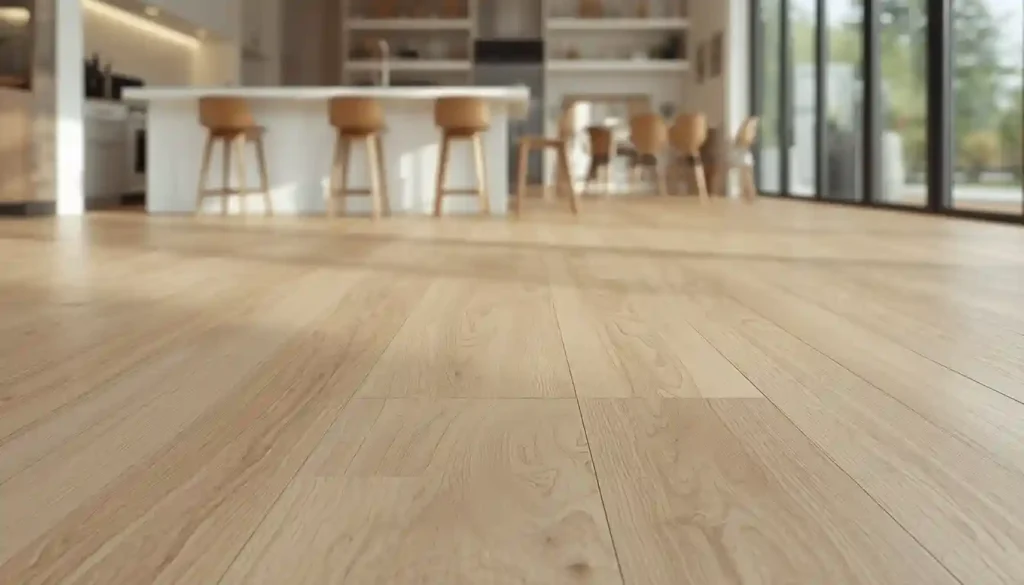
When shopping for this look, pay attention to the embossed-in-register (EIR) technology on the surface layer. EIR means the physical texture of the plank — the ridges, knots, and grain lines — is mapped precisely to the printed design beneath it, so the visual grain and tactile grain align the way they do in real wood. The result is a plank that holds up to close inspection in a way that older embossed products never could. For kitchen use, pair this format with an SPC (stone plastic composite) rigid core rather than a WPC product; SPC is denser, more dent-resistant under appliances, and better suited to temperature fluctuations near ovens and refrigerators.
Lay wide planks parallel to the longest wall or in the direction of primary foot traffic. In an open-plan layout, running the planks continuously from kitchen through dining through living area eliminates the visual choppiness that transition strips create and makes the entire first floor feel larger and more resolved.
2. Herringbone LVP for a Kitchen That Feels Expensive
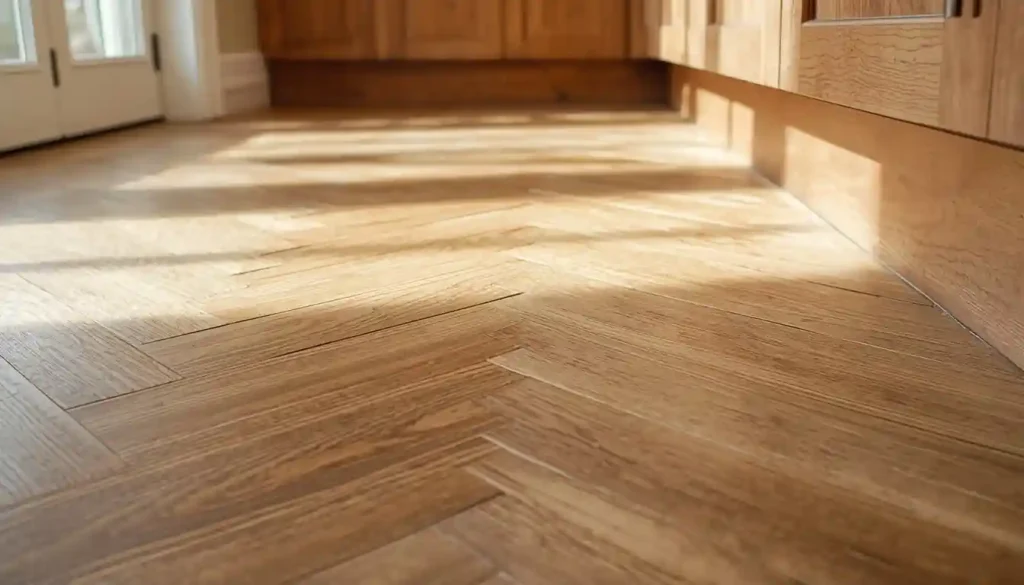
Herringbone is not a new idea — it has appeared on European parquet floors for centuries. What is relatively new is its accessibility. Until LVP made it practical, herringbone required skilled labor and expensive solid wood or engineered hardwood. Today, pre-scored herringbone LVP planks and purpose-cut herringbone tiles mean any installer can lay the pattern without the geometry-heavy cuts that drove up labor costs.
In the kitchen, herringbone earns its place because it introduces architectural energy without accessories. A simple kitchen with flat-panel cabinets, stone countertops, and a herringbone floor on a medium-tone oak vinyl instantly reads as designed rather than assembled. The zigzag pattern draws the eye downward and then inward, making the kitchen feel like a room that was carefully considered from the ground up.
Two-tone herringbone — alternating two shades of the same species look, such as a light greige and a warm honey oak — produces a particularly sophisticated result. The contrast is subtle but adds visual depth that a uniform color cannot achieve. For kitchens with lower ceilings, this depth is worth more than additional vertical elements.
Note the distinction between herringbone and chevron: herringbone uses rectangular planks arranged in a staggered, interlocking zigzag, while chevron uses planks with angled ends that form a continuous V-shape. Both are beautiful, but herringbone is more forgiving during installation and produces a slightly warmer, more traditional result. Chevron reads as sharper and more contemporary.
Wear layer thickness matters more with herringbone than with straight-lay installations because the diagonal cuts expose more plank edges. A 20-mil or thicker wear layer protects those exposed edges from chipping, particularly in high-traffic zones around the sink and island.
If you’re weighing how this pattern fits into your broader flooring plan, the relationship between pattern choice and room proportion is worth understanding before you commit — the vinyl flooring buying guide covers how format and pattern interact with room size and layout.
3. Greige Vinyl Plank for the Transitional Kitchen
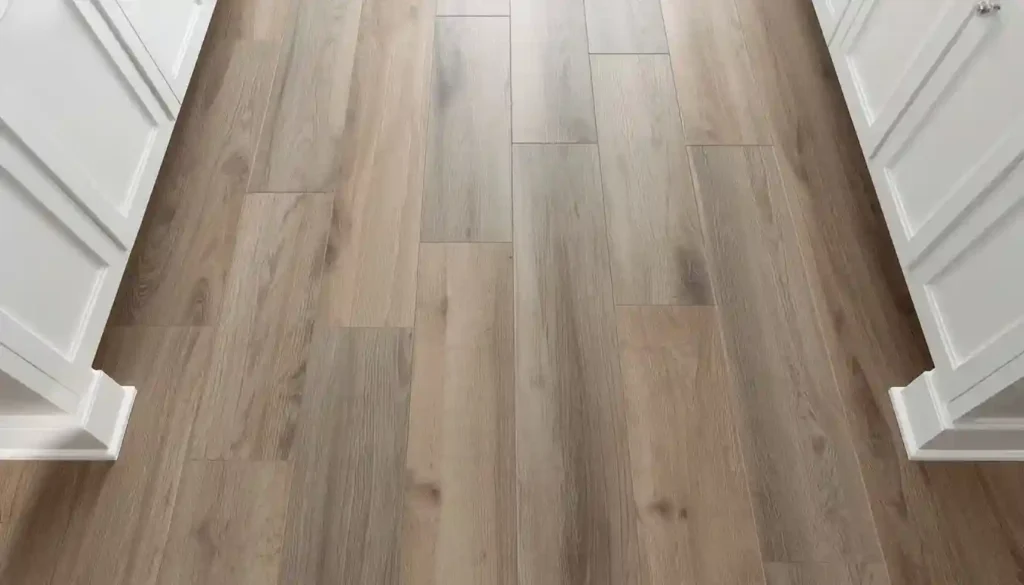
Greige — the hybrid of grey and beige — became ubiquitous in interior design for a reason: it is genuinely neutral. It does not pull warm or cool in a way that limits your options for cabinetry, hardware, or countertops. In a kitchen where the visual anchors are already strong (bold cabinet color, dramatic island, statement backsplash), a greige vinyl floor disappears into the background in the best possible sense — it creates a foundation without demanding attention.
The current generation of greige LVP has moved well past the flat, plasticky grey of early vinyl products. Today’s formulations incorporate varied undertones within individual planks — cream, taupe, soft brown — that prevent the floor from reading as uniformly grey under different lighting conditions. Under warm incandescent or warm LED lighting, it pulls beige. Under natural daylight, it reads grey. That adaptability is exactly what a transitional kitchen — one that blends contemporary and traditional elements — requires from the floor.
Greige works particularly well with white shaker cabinetry, a combination that has dominated kitchen design for over a decade and shows no signs of slowing. It also pairs naturally with brushed nickel and champagne bronze hardware finishes, both of which sit in the same warm-neutral register. Quartz countertops in soft white or light grey complete the picture without creating contrast for its own sake.
For kitchens with limited natural light, choose a greige product with a higher L-value (lighter on the brightness scale) and a slight sheen. A satin finish — rather than full matte or high gloss — reflects ambient light without producing the mirror-like reflection that shows every footprint. Matte finishes are beautiful but require more frequent wiping in kitchens because they show dried water spots more readily.
4. Dark Espresso or Charcoal LVP for a Dramatic, Modern Kitchen
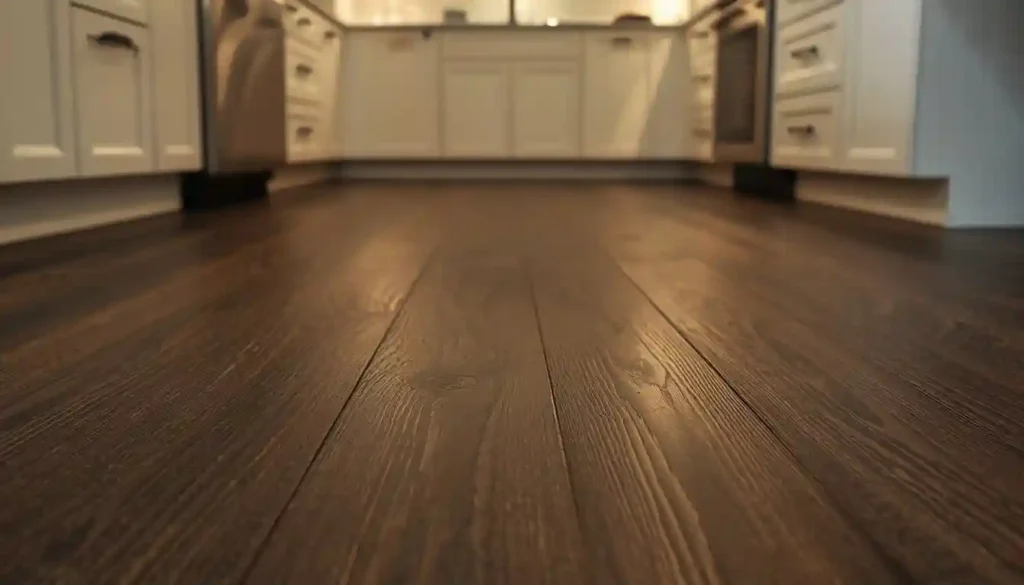
Dark vinyl plank flooring is making a strong comeback after years of lighter tones dominating kitchen design. The shift reflects a broader appetite for richer, more grounded interiors — what designers are calling “quiet luxury” or “warm minimalism.” A dark espresso or charcoal LVP floor in the kitchen creates immediate visual weight, anchors light-colored cabinetry, and gives the space a settled, intentional quality that lighter floors rarely achieve.
The practical argument for dark floors in a kitchen is often overstated in one direction and understated in another. Yes, dark floors show dust and fine debris more readily than medium tones. But they hide cooking grease, coffee spills, and dark soil far better than light floors do, and they make pet hair from darker animals virtually invisible. In a household where the kitchen gets serious use, the trade-off often favors dark.
Dark LVP with a wire-brushed or saw-mark texture surface performs better in the kitchen than smooth dark vinyl. The surface texture breaks up light reflection, which reduces the visibility of footprints and surface dust, and the textured grain gives the floor a handcrafted quality that reads as substantial rather than inexpensive. Charcoal and graphite tones work beautifully with light grey or crisp white cabinetry — the contrast is sharp and architectural. Espresso and dark walnut tones pair better with warm-toned cabinetry in natural oak, cream, or warm white.
One consideration worth noting: dark SPC vinyl can show minor thermal expansion along edges in kitchens that experience significant temperature variation — near south-facing windows or close to the oven. A proper expansion gap and ensuring no direct sustained sunlight hits the floor near windows will prevent this entirely.
5. Stone-Look LVT with Large Format Tiles
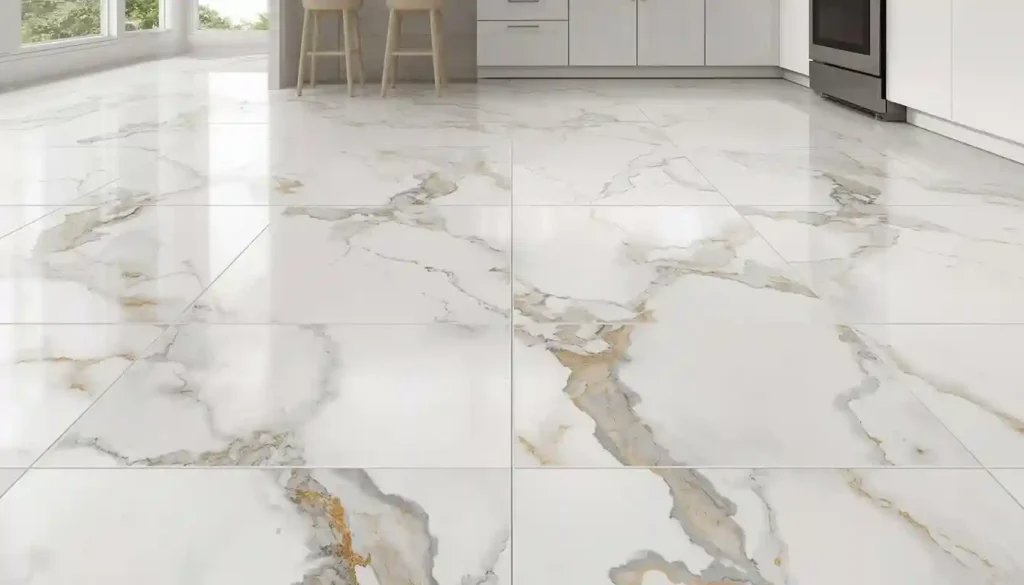
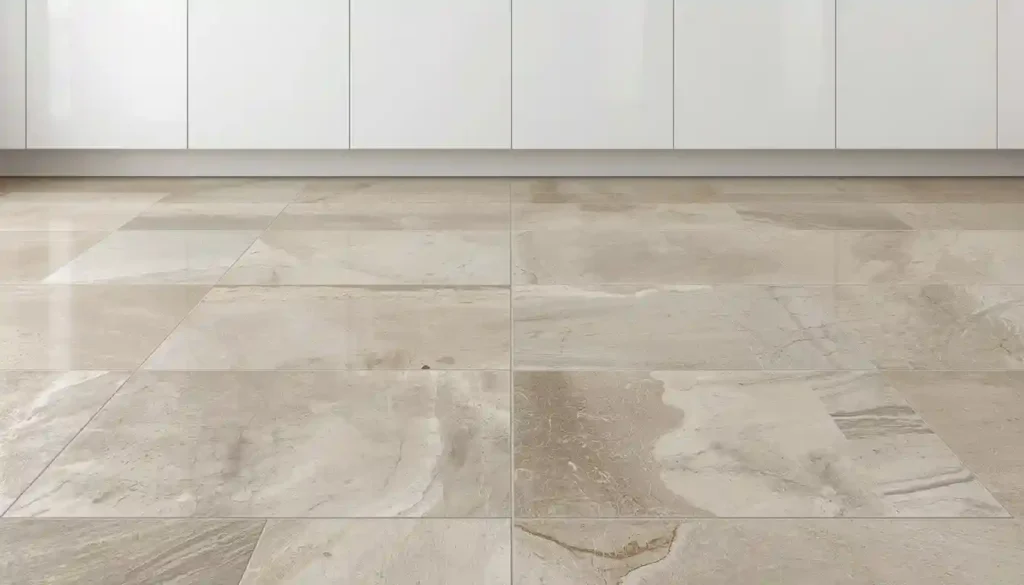
Luxury vinyl tile in large-format dimensions — typically 12×24 inches or 24×24 inches — has become one of the most requested kitchen flooring looks in the premium segment. The appeal is twofold: large tiles minimize visible grout lines, creating a cleaner, more continuous surface; and stone-look prints at this scale are convincing in a way that smaller stone-look tiles have never quite achieved.
The most popular stone looks for kitchen LVT currently are Calacatta marble (bold veining in white and gold), concrete grey (minimalist, industrial, seamless), and slate (textured surface with organic color variation). Each suits a different kitchen character. Marble-look LVT reads as classic and luxurious and pairs naturally with brass or gold hardware and dark island cabinetry. Concrete-look LVT is distinctly contemporary and suits kitchens with black hardware, open shelving, and clean-line European cabinetry. Slate-look LVT works in transitional and farmhouse kitchens where the floor needs to feel earthy and grounded.
The technical advantage of LVT over actual stone in the kitchen is significant. Natural stone requires sealing, is vulnerable to acids (citrus juice, vinegar, wine), is genuinely cold underfoot, and is unforgiving if dropped items break. LVT gives you none of those problems. It is 100% waterproof, needs no sealing, is warmer and softer underfoot, and handles dropped items with considerably less drama.
When selecting large-format LVT, look for products with a minimum 5mm total thickness and a rigid SPC core rather than a flexible vinyl core. Large tiles need dimensional stability; flexible vinyl can telegraph subfloor imperfections more readily at large formats. A subfloor flatness tolerance of 3/16 inch over 10 feet is the standard benchmark for successful large-format tile installation.
6. Whitewashed or Bleached Vinyl Plank for a Coastal Kitchen
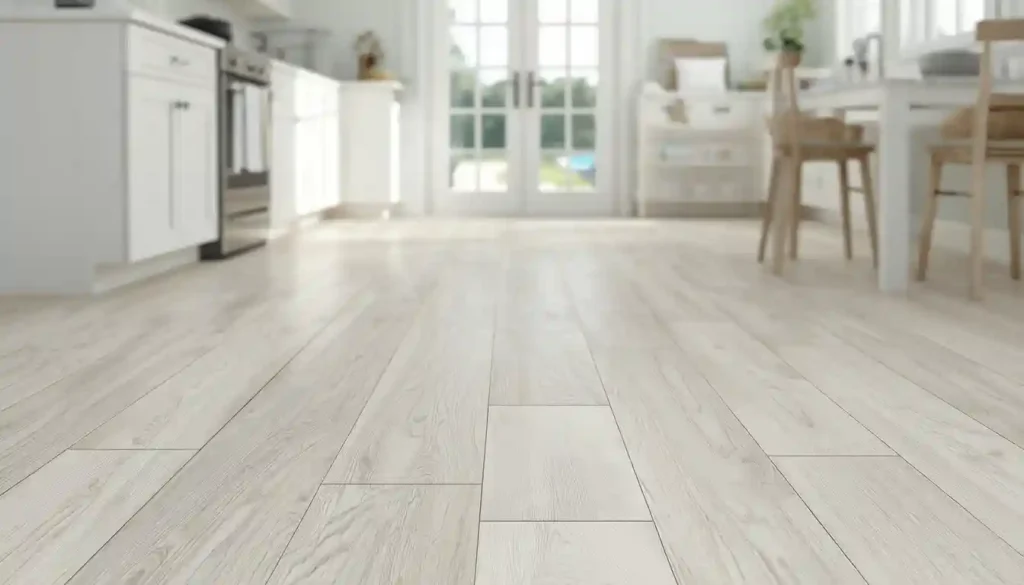
Whitewashed and bleached wood-look vinyl has a specific design function: it amplifies light. In kitchens that face north, are below grade, or simply lack the window area to feel bright naturally, a pale, washed-out plank floor acts as a reflective surface that bounces available light around the room. The effect is more substantial than it sounds — a whitewashed floor can make a dim kitchen feel like a different room.
The aesthetic sits naturally in coastal, Scandinavian, and relaxed contemporary design contexts. Paired with white shiplap or beadboard walls, open white shelving, rattan or wicker pendant lights, and simple linen window treatments, a whitewashed vinyl floor completes a kitchen that feels effortlessly light and open. The style photograph well for social platforms, which partly explains its sustained popularity on design-focused image platforms.
What distinguishes good whitewashed LVP from poor whitewashed LVP is the depth of the print layer. A shallow print produces a floor that looks uniformly bleached, which quickly reads as flat. A high-definition print layer with grain variation — areas where the wood character shows through the wash and areas where it’s more fully opaque — produces a result that looks like it came from a reclaimed beach house rather than a factory floor.
Whitewashed floors do show certain types of debris more clearly than mid-tone floors: dark crumbs, dried sauce, and pet hair from dark animals are all more visible. The trade-off is that spilled water, splashed cooking oil, and light debris are effectively invisible, which is a useful quality in a kitchen. The choice of which type of mess to see depends entirely on your household.
7. Honey Oak Vinyl Plank for a Warm, Inviting Kitchen
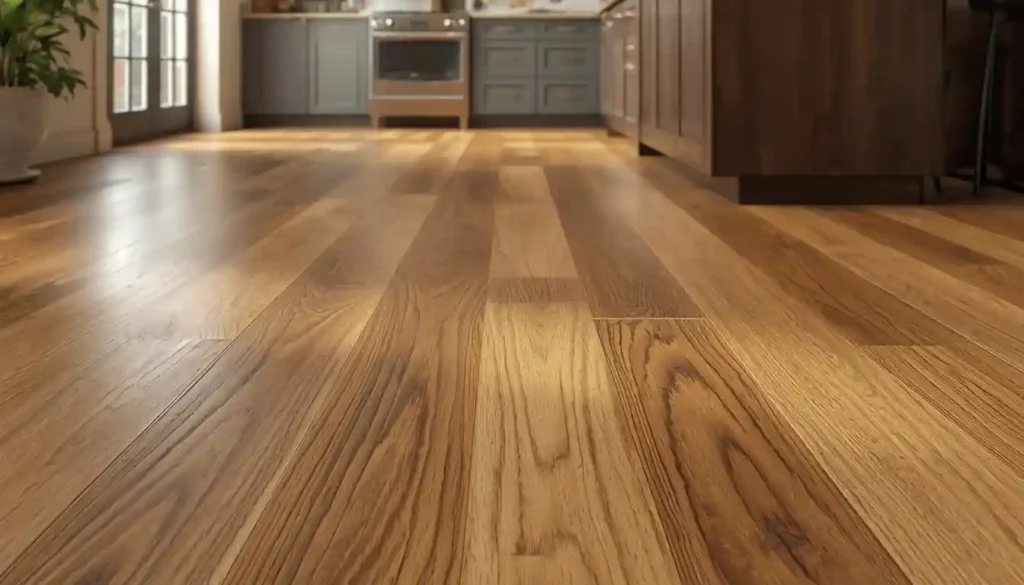
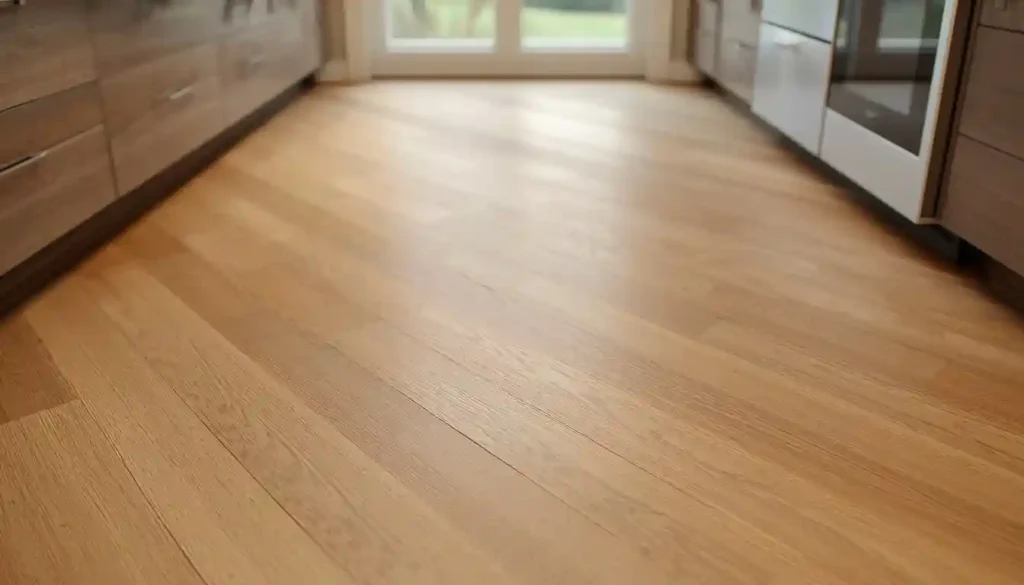
Honey oak experienced a well-documented decline in the early 2000s when grey tones took over residential design. Its return in the current decade is not a nostalgic accident — it is a response to the same design fatigue that is pushing interiors toward warmth, texture, and organic materials across the board. Honey oak LVP captures the golden, amber-inflected warmth of natural white oak at the height of its character without the maintenance, cost, or moisture sensitivity of the real material.
In the kitchen, this tone does something functionally important: it makes the room feel inhabited and comfortable rather than staged. Kitchens with grey or white floors can feel clinical at times, particularly in the morning before there is food, activity, and people in them. A honey oak floor is warm at 6 AM the same way it is at 6 PM — the light does not need to be right for it to read as welcoming.
Honey oak pairs well with a wider range of cabinet finishes than most people expect. It works with white (classic), cream (softer and warmer), forest green or sage (earthy and sophisticated), and warm wood-tone cabinetry (tonal and enveloping). The one combination to be careful with is cool grey cabinetry — the warmth of honey oak and the coolness of grey can fight each other unless one of the two is very clearly dominant.
This look is also forgiving on budget. Honey oak LVP at the 12-mil wear layer tier looks convincing enough for a rental-grade kitchen or a busy family home where the floor is expected to take punishment. It does not require the 20-mil wear layer that darker, show-more-damage finishes do.
8. Concrete-Look LVT for an Industrial or Minimalist Kitchen
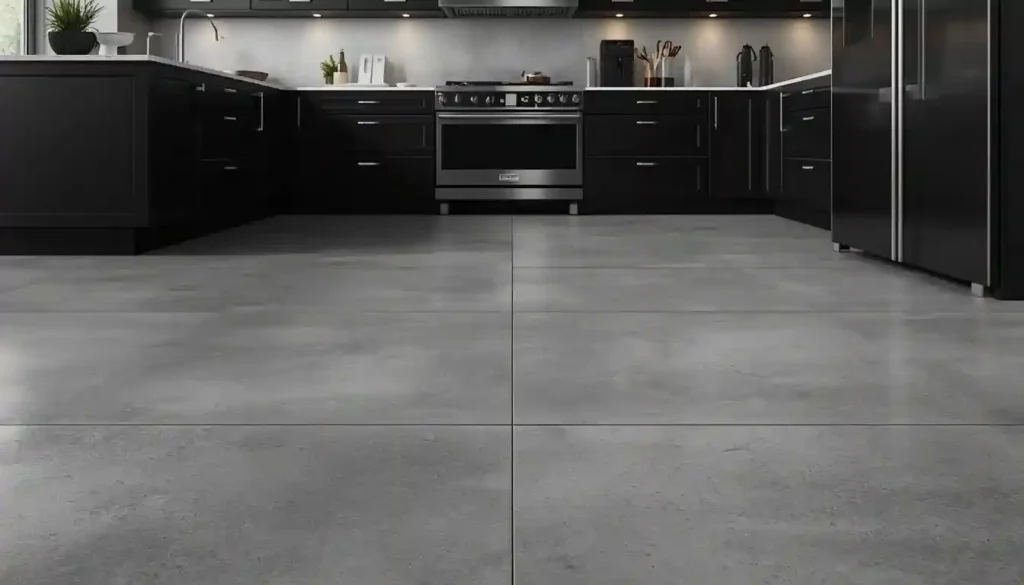
Concrete-look luxury vinyl tile occupies a specific visual territory: it is the most neutral floor you can install in a kitchen. Where wood-look vinyl has warmth, direction, and grain, a concrete-look LVT floor has neither — it is a flat, even field that disappears beneath everything placed on top of it. That quality is exactly what industrial and minimalist kitchens need from the floor. The materials that carry those styles (black hardware, open metal shelving, stainless appliances, raw wood accents) are all strong enough to define the space. A concrete floor lets them do it without competition.
Good concrete-look LVT does not look like a printed pattern. It has surface texture — slight aggregate variation, subtle tone shifts from panel to panel — that mimics the way poured concrete reads across a large surface. The best products in this category include micro-variations in tone (slightly lighter in one area, slightly darker in another) that prevent the floor from reading as repetitive, which is the core failure of poor concrete-look vinyl.
Installation tip: concrete-look LVT installed in a brick-offset pattern (each row offset by half a tile from the previous) reads much more convincingly as real concrete than a straight grid layout. The offset eliminates the visual rhythm of a regular pattern, which is exactly what natural concrete lacks.
One genuine advantage of LVT over polished concrete in the kitchen is thermal comfort. Real polished concrete is cold and hard underfoot. LVT with an SPC core sits at room temperature and has enough give to make standing at a counter for extended cooking sessions noticeably more comfortable. If you are comparing these two options seriously, understanding how LVT compares in terms of installation and performance is worth the research time.
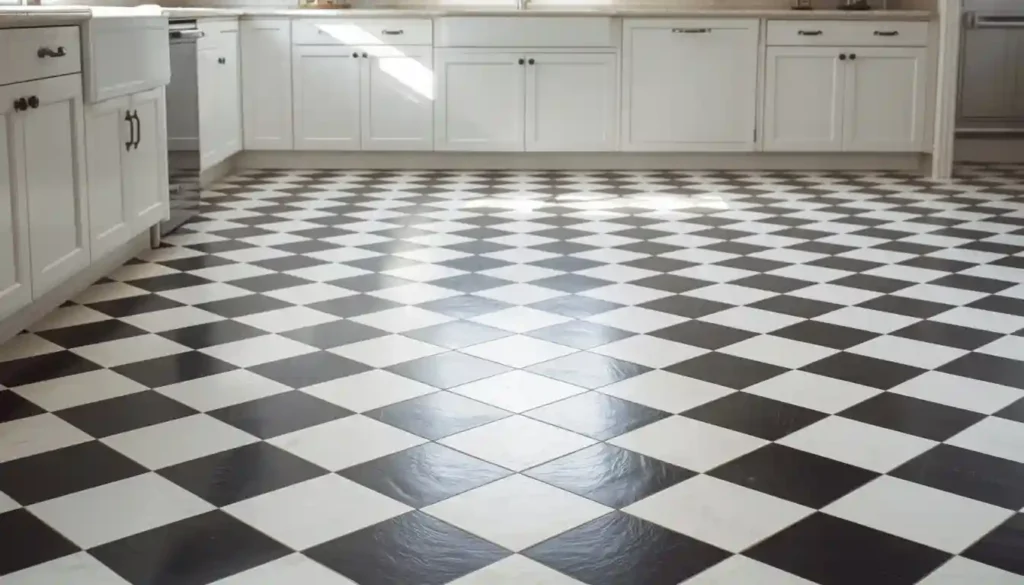
9. Checkered Vinyl Tile for a Retro or Farmhouse Kitchen
The black-and-white checkered floor is one of those patterns that transcends trend cycles. It appears in Victorian homes, 1950s diners, Parisian bistros, and contemporary farmhouse kitchens alike. Its resurgence in the current design era is backed by both the broader retro revival in home design and by genuine functional thinking: a checkered pattern is one of the few floor designs that looks intentionally bold rather than accidentally busy.
Vinyl tile makes checkered kitchens far more accessible than they have historically been. Traditional checkered floors required ceramic or porcelain tile (expensive, cold, and hard) or sheet linoleum (convincing but less durable). LVT in checkered formats offers the same visual result with better comfort underfoot, full waterproofing, and far lower installation cost. Some manufacturers produce pre-designed checkered LVT panels — large-format tiles with the checkered pattern already embedded — which eliminate the need to hand-lay and align individual tiles.
The classic iteration is 12×12-inch black and white squares. But current interpretations have pushed the format in interesting directions: larger 18-inch squares (which make small kitchens feel less grid-locked), soft ivory and sage green combinations (warmer and less graphic), and charcoal-on-cream versions (sophisticated rather than stark).
A checkered floor in the kitchen is a statement that the rest of the room needs to support. Busy countertops, fussy cabinetry hardware, and heavily patterned tile backsplashes compete with the floor and produce visual chaos. The rooms where checkered floors work best have simple, undecorated surfaces above them — white shaker cabinets, clean quartz countertops, a simple subway tile backsplash or no backsplash at all.
Image prompt: A farmhouse kitchen with classic black and white checkered LVT flooring covering the floor prominently, the crisp checkered pattern sharp and clearly defined from foreground to background, white cabinetry visible above, natural morning light from a window casting gentle light across the patterned tile surface, the floor dominating at least 65% of the frame.
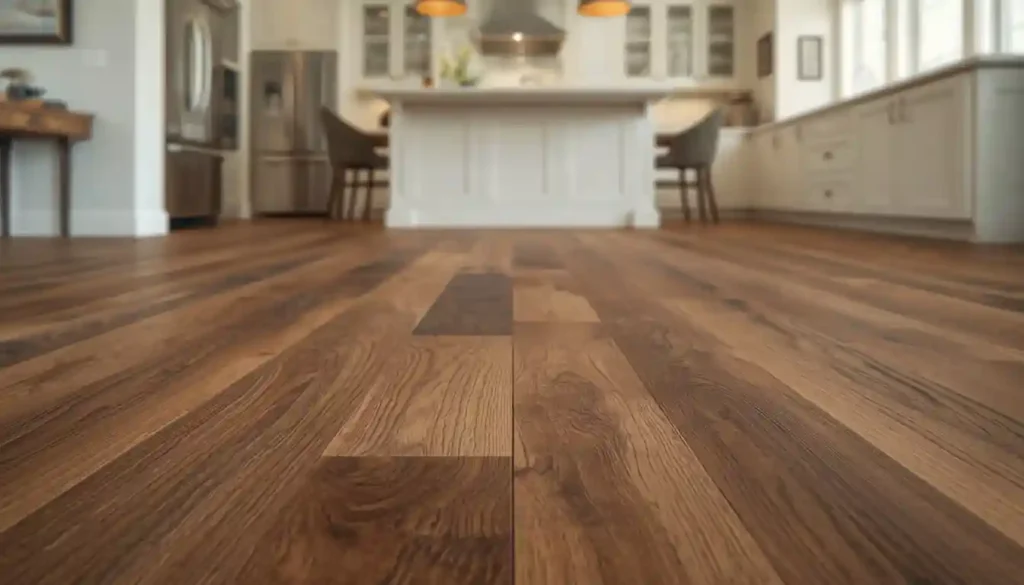
10. Wide Plank Walnut-Look Vinyl for a Sophisticated Kitchen
Walnut-look vinyl plank hits a specific sweet spot in kitchen design: it is dark enough to feel grounded and rich, warm enough to avoid reading as cold or industrial, and varied enough in its grain patterns to look authentic at close range. The color sits in the medium-dark brown register — darker than honey oak but lighter than espresso — which makes it the most versatile of the dark-toned LVP options.
In the kitchen, walnut LVP pairs particularly well with natural linen, warm white, and soft cream cabinetry finishes, where the floor provides depth without creating a high-contrast clash. It also works extraordinarily well with green cabinetry — sage, forest, and olive — where the warm brown of the walnut tone and the earthy green create an organic, botanical quality that has become one of the most sought-after kitchen combinations in contemporary design.
The grain variation in good walnut-look LVP is worth examining before purchase. Walnut in nature has dramatic figure — swirling grain, color shifts from blonde sapwood to dark heartwood, mineral streaks — and the best vinyl products replicate this variation across multiple print layers so that no two adjacent planks look identical. A product with only three or four distinct plank prints (called a “repeat”) will produce a floor that reveals its manufactured origin in larger kitchens. Look for products with eight or more print variations in the plank set.
Walnut tone also performs well under different lighting conditions in a way that some darker floors do not. Under warm incandescent or warm LED lighting, it deepens toward a rich brown-amber. Under natural daylight, cooler undertones in the grain become visible. That adaptability means the floor does not lose character when the kitchen lighting shifts between morning and evening use.
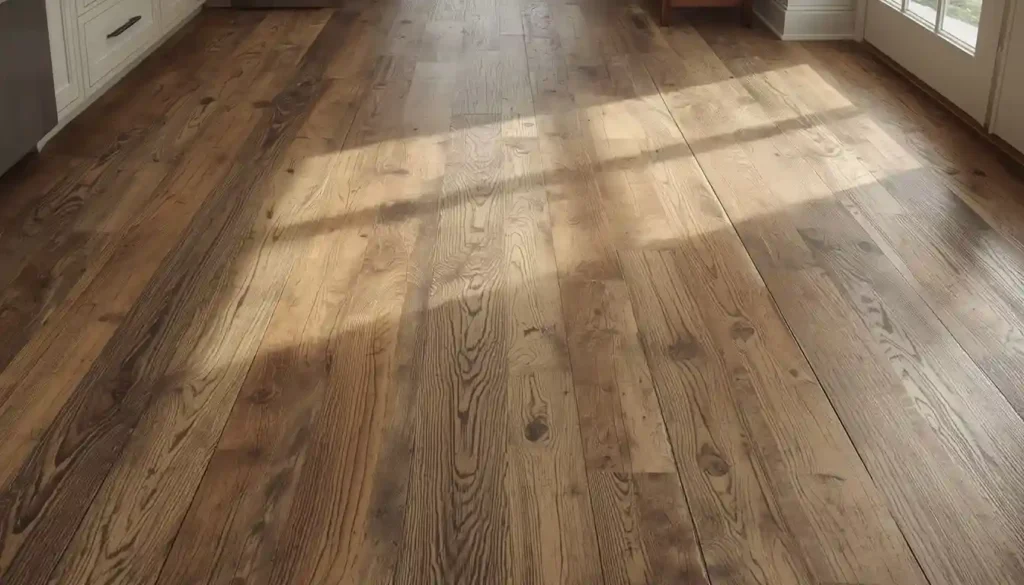
11. Reclaimed Wood Look Vinyl Plank for a Rustic Kitchen
The reclaimed wood look in vinyl represents a significant technical achievement: it reproduces the marks of actual age — saw marks, nail holes, mineral staining, checking, and face splits — on a factory-produced surface. The result, when well executed, is a floor that reads as having been salvaged from a barn or factory floor and repurposed, while actually being a brand-new product with a 25-year warranty and full waterproofing.
In the kitchen, this look belongs in spaces that embrace character over precision. Farmhouse kitchens with open shelving, exposed beams, brick or subway tile backsplashes, and apron-front sinks are natural homes for reclaimed wood LVP. The intentional imperfection of the floor texture reinforces the handcrafted, accumulated quality of the rest of the room.
High-variation is a key product attribute to seek in this category. A high-variation floor means there is significant color and character difference between individual planks and within individual planks — some are darker, some lighter, some more figured, some more uniform. That variation is what reclaimed wood looks like. Low-variation products in this format look like they are trying to look old, which is the opposite of what reclaimed character achieves.
Wire-brushed surface texture reinforces the look further. The brushing creates light shadows in the grain valleys that deepen as you view the floor at an angle — the same way real wood shows its surface structure. Paired with a matte finish (which eliminates the plastic sheen that betrays cheap vinyl), a high-variation, wire-brushed LVP in a reclaimed wood format is difficult to distinguish from the real thing at normal viewing distance.
The product format for this look is typically wider planks (5 to 7 inches) with a longer length (48 to 60 inches) and varying plank widths within the same box — a feature called “random width” that mimics the dimensional inconsistency of actual reclaimed boards.
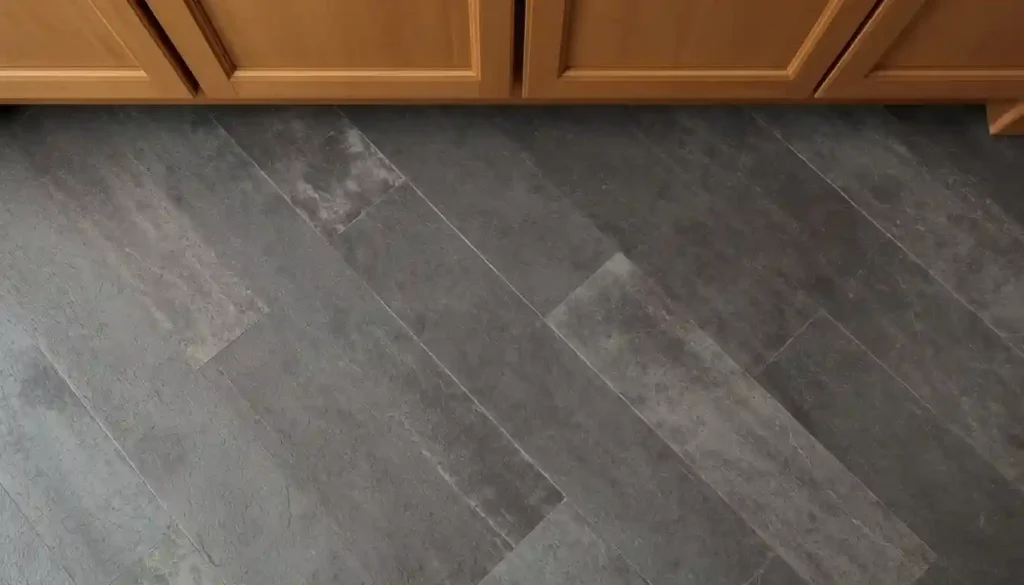
12. SPC Vinyl in a Slate or Travertine Look for a Transitional Kitchen
Not every kitchen suits a wood-look floor. In transitional kitchens — those that blend traditional and contemporary elements — stone-look tile formats in LVT often read better than wood planks because they ground the space without introducing the directional energy that plank flooring creates. Slate and travertine looks occupy a specific position in this category: they are warmer and more textured than marble or concrete looks, which gives them a quality that sits naturally in kitchens that blend old and new.
Slate-look LVT at its best captures the layered, fissured surface of real slate — the micro-clefts, the color variation from blue-grey to dark charcoal to greenish black — in a product that is warm, slip-resistant due to its textured surface, and fully waterproof. The texture is functional: kitchen floors around sinks and cooking zones benefit from slip resistance, and the natural-looking surface variation means footprints and splash marks are far less visible than they would be on a smooth tile product.
Travertine-look LVT operates in the warmer register. Real travertine is a calcium carbonate stone with a characteristic surface of small pits and cross-cut veining that pulls warm cream, ivory, and soft gold. Vinyl reproductions of this material have improved significantly with better print technology and now capture the warm, slightly Mediterranean character of the material in a way that holds up visually. In a kitchen with warm white or cream cabinetry, travertine-look LVT creates a cohesive warm tone palette from floor to ceiling.
Both of these looks benefit from the same installation approach: a diagonal 45-degree layout rather than a standard grid. The diagonal orientation prevents the tile pattern from aligning with the perpendicular lines of cabinetry and walls, which makes the floor feel more dynamic and occupies the eye in a way that a straight grid does not.
13. Sheet Vinyl for a Budget-Conscious Kitchen Refresh
Sheet vinyl occupies a different position in the kitchen flooring hierarchy than LVP or LVT, and it is worth being precise about where it genuinely excels rather than treating it as a compromise. Sheet vinyl’s core advantage is its seamless installation. A roll of sheet vinyl cut to fit a kitchen’s floor plan has no seams, which means there are no pathways for liquid to migrate below the surface layer. In kitchens where spills are frequent and thorough — particularly around dishwashers or under refrigerators with water lines — this seamless quality is a genuine technical advantage that even the best-installed LVP cannot match.
Modern sheet vinyl has moved far beyond the flat, institutional prints that defined earlier generations of the product. Current sheet vinyl from quality manufacturers includes embossed stone and wood-look surfaces, geometric patterns, and realistic tile reproductions with genuine surface texture. The limiting factor is the thickness of the wear layer: sheet vinyl typically tops out at 10 to 12 mil, which makes it less scratch-resistant than premium LVP with a 20-mil wear layer. In a kitchen without heavy furniture being moved across the floor, this is a manageable limitation.
The installation cost advantage of sheet vinyl is real. A single sheet covers the entire kitchen floor without the material waste involved in plank or tile cutting, and the labor for professional installation is typically lower than for click-lock LVP. For rental properties, starter homes, or kitchens where the priority is function over premium aesthetics, sheet vinyl delivers genuinely good results at a meaningfully lower total cost.
If you are working with a tighter budget and want to understand how different vinyl formats compare on value, the breakdown between vinyl plank and sheet vinyl covers the relevant trade-offs in practical terms.
14. Geometric or Encaustic-Look LVT for a Statement Kitchen
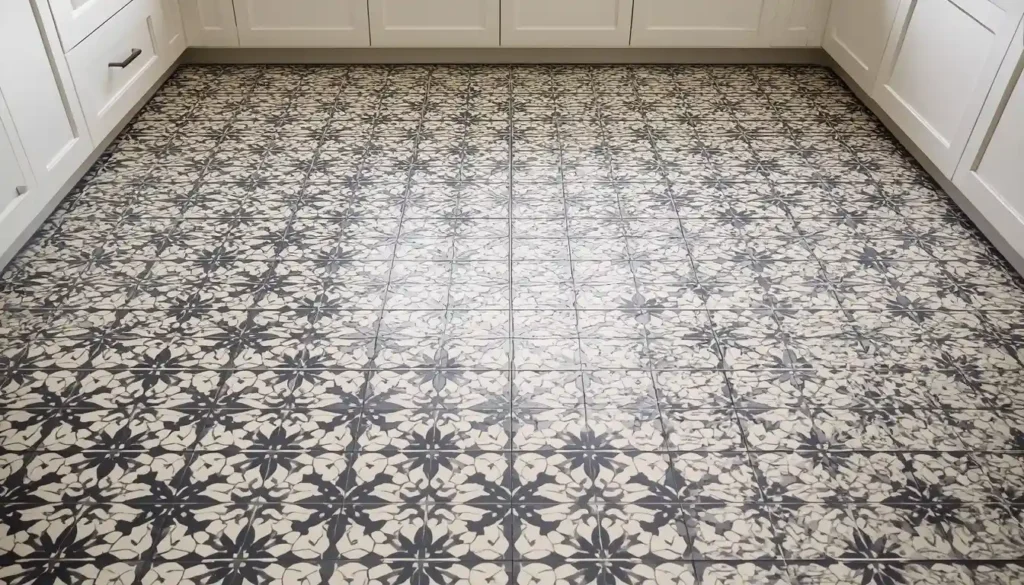
Encaustic tile — handmade cement tile with geometric patterns pressed into the surface — has been one of the dominant trend objects in kitchen design for the past several years. The problem is cost: genuine encaustic tile runs $15 to $40 per square foot before installation, requires sealing, is not waterproof, and chips if improperly maintained. Encaustic-look LVT captures the geometric pattern and matte, slightly textured surface character at a fraction of the price with none of the maintenance requirements.
The patterns available in this category are genuinely diverse: Moroccan-style star-and-cross tiles, Spanish arabesque forms, linear Art Deco geometrics, bold hexagons with contrasting grout color, and traditional Victorian floor tile reproductions. What connects them is a willingness to let the floor be the main design event in the kitchen — and in rooms where this is the intention, the approach works beautifully.
Scale matters in this category more than in almost any other kitchen floor format. A 6×6-inch geometric tile in a small kitchen can create a restless, busy effect that exhausts the eye. The same pattern in a 12×12 or 18×18 format in the same kitchen breathes properly. In larger kitchens and open-plan spaces, smaller formats can work because there is enough floor area for the pattern to establish its rhythm before the eye reaches a wall.
Color palette is equally important. The graphic patterns that define this look work best when the palette is limited — two or three colors maximum. The most successful executions are often the most restrained: black-and-white, terracotta-and-cream, navy-and-ivory. When a fourth or fifth color enters the pattern, the floor starts to compete with the room rather than anchor it.
15. Luxury Vinyl Plank Running Diagonally for Visual Expansion
The direction in which flooring planks are laid is a design decision with real spatial consequences. Diagonal installation — running planks at 45 degrees to the room’s walls — is the most powerful layout technique for making a small kitchen feel larger. The diagonal line carries the eye to the corners of the room rather than straight across it, which makes the floor appear to extend further than it does. In a galley kitchen, an L-shaped kitchen, or any kitchen under roughly 150 square feet, diagonal installation can visually add the equivalent of several feet to the perceived floor area.
There is a practical cost to diagonal installation: material waste. Diagonal cuts along the room’s perimeter waste more plank material than straight installation, typically requiring 15 to 20 percent overage rather than the standard 10 percent. This is worth factoring into the budget, but the visual return in a small space justifies the additional material cost.
The best LVP candidates for diagonal installation are mid-tone planks with consistent but not overpowering grain — honey oak, medium greige, natural grey. Planks that are too dark can make a diagonal layout feel heavy and disorienting in a small space; planks that are very light can feel busy if the diagonal creates a strong visual pattern across the room. The goal is for the diagonal to read as a subtle spatial technique rather than an obvious design gesture.
Diagonal installation pairs particularly well with flooring strategies designed for compact spaces, where every decision about direction, format, and tone works together to maximize the sense of openness. The layout direction interacts with natural light sources, cabinetry lines, and the placement of the island or peninsula in ways that reward careful planning before installation begins.
One installation detail that matters: diagonal installation produces the most visually consistent result when the starting plank is centered precisely in the room rather than started from a corner. A professional installer will snap a center reference line at 45 degrees and build outward from it, which ensures the cut planks at both ends of the room are symmetric and the pattern reads as intentional rather than misaligned.
How to Choose the Right Vinyl Floor for Your Kitchen
Across the fifteen ideas above, a few decision-making principles keep appearing that are worth naming directly.
The core layer choice — SPC versus WPC — matters more in the kitchen than in any other room. SPC (stone plastic composite) has a denser, harder core that resists denting under heavy appliances and performs better in kitchens with significant temperature variation near ovens and refrigerators. WPC (wood plastic composite) is softer and more comfortable underfoot but compresses more readily under point loads. For most kitchens, SPC is the better-performing choice, though WPC is not wrong in a lighter-use kitchen.
Wear layer thickness governs long-term durability. For a kitchen in a busy household, 20 mil is the practical minimum. 12-mil products are appropriate for lower-traffic kitchens or rental applications where the floor will be replaced on a shorter cycle. The relationship between wear layer and longevity has a direct bearing on how long any of these ideas will look their best before showing wear.
Subfloor preparation is non-negotiable. Vinyl’s flexibility in installation format — floating, glue-down, click-lock — does not make it forgiving of a poorly prepared subfloor. Humps, dips, and gaps in the substrate telegraph through vinyl over time, particularly with larger-format tiles. A subfloor that is flat within 3/16 inch over 10 feet and structurally sound is the baseline requirement for any of these installations to hold up the way the product is designed to.
Pattern and tone interact with the size of the room in predictable ways. Larger formats and lighter tones visually expand small kitchens. Smaller formats and darker tones are more forgiving in larger spaces. Directional patterns (herringbone, chevron, diagonal planks) create energy that enriches a simple room but can overwhelm a complex one. The format decision and the design of the room above the floor need to be made in conversation with each other.
If you are purchasing vinyl flooring for a kitchen renovation and want to understand total project costs, the full installation cost breakdown covers both material and labor ranges across product tiers so that the budget-setting process starts from accurate numbers rather than estimates.
James Miller is a seasoned flooring contractor with years of hands-on experience transforming homes and businesses with high-quality flooring solutions. As the owner of Flooring Contractors San Diego, James specializes in everything from hardwood and laminate to carpet and vinyl installations. Known for his craftsmanship and attention to detail, he takes pride in helping clients choose the right flooring that balances beauty, durability, and budget. When he’s not on the job, James enjoys sharing his expertise through articles and guides that make flooring projects easier for homeowners.
Laminate flooring sells itself well. It photographs beautifully in showrooms, it is priced below hardwood, and installation is straightforward enough that most homeowners consider doing it themselves. These are real advantages. The problem is that laminate flooring also has a specific set of conditions under which it degrades quickly, and those conditions are more common…
The reason most vinyl flooring installations fail has nothing to do with the vinyl itself. It has everything to do with what happens before a single plank is ever laid down. Concrete subfloors are deceptive. They look solid, flat, and ready. But a concrete slab is a porous, living material that absorbs and releases moisture,…
Every hardwood flooring decision eventually comes down to one question that most guides bury in a comparison table: does it matter where the finish is applied? The answer is yes — and it matters more than the wood species, more than the plank width, and arguably more than the installation method. Where your floor gets…
Most people shop for carpet by how it looks in the showroom. That is usually the wrong starting point. A carpet that feels luxuriously soft under your fingers in a store can look beaten, grey, and matted within two years of living at the bottom of your staircase or across the path between your front…
Laminate flooring is not termite proof. It is termite resistant — and there is a meaningful difference between those two things that will determine how you install, maintain, and ultimately protect your floor investment. The question itself reveals a deeper misunderstanding about what laminate flooring actually is made of. Homeowners often assume that because laminate…
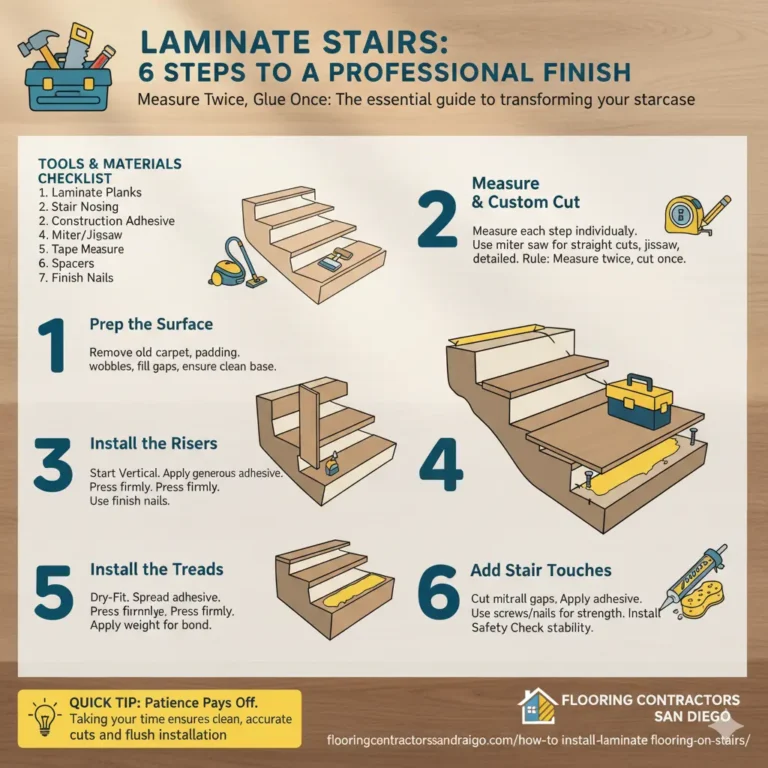
Stairs are the hardest surface in your house to floor. They take more weight per square inch than any other surface, they get used more often than the kitchen, and one loose plank turns into a slip hazard before the week is out. Laminate works on stairs, but only if you stop treating it like…