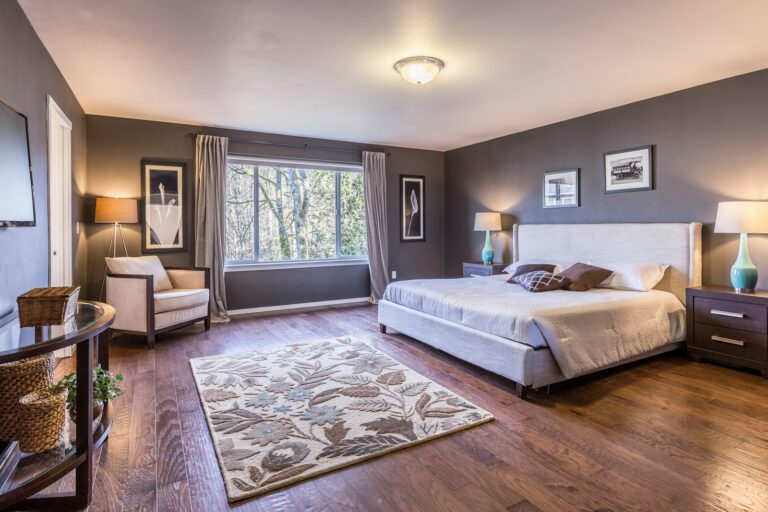
Idea 1: Light-Toned Wide Planks Running the Length of the Room
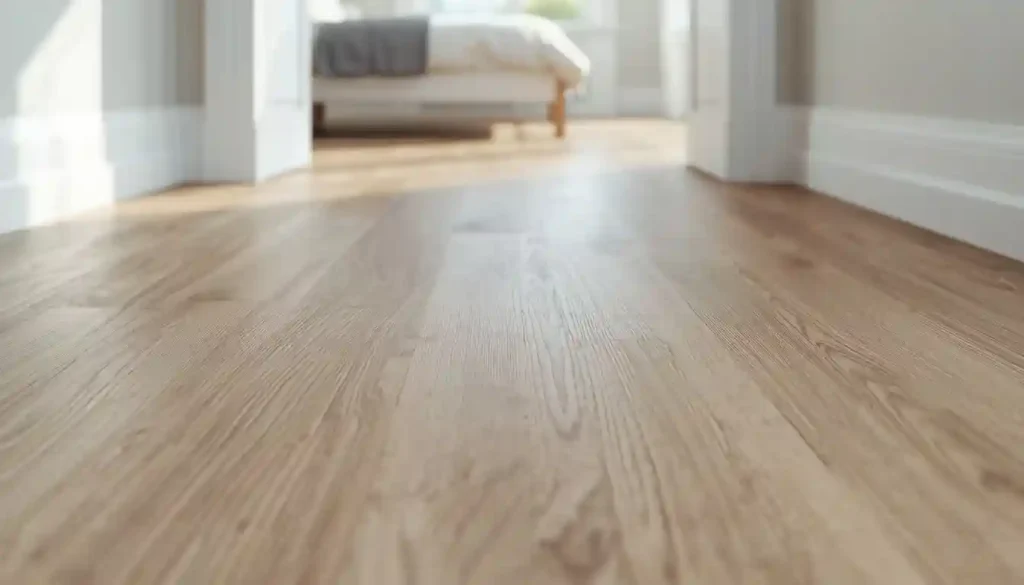
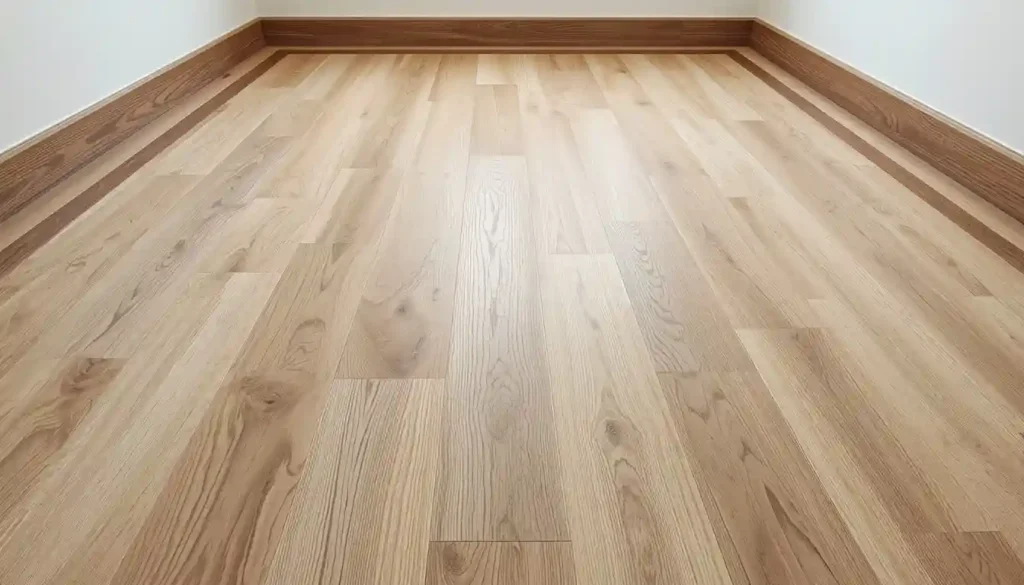
This is the single highest-impact change you can make to a small room, and it combines two separate design principles that both independently expand perceived space. The first is plank width. Narrow strips, anything under four inches, create dozens of seams across a floor. Those seams break the surface visually, creating what designers call “noise,” a cluttered, busy quality that makes the brain register the room as smaller than it is. Wide planks, typically six to eight inches across, reduce seam count dramatically. The eye reads the floor as a more continuous surface, and the room feels calmer and larger.
The second principle is plank direction. Installing planks parallel to the longest wall of a room guides the eye along the room’s greatest dimension, emphasizing its depth and creating the optical illusion of more square footage. In a narrow bedroom or a tight living area, this is not a subtle effect. The combination of a wide plank and a lengthwise run can make a room feel measurably more generous, sometimes by what feels like a quarter of the original size.
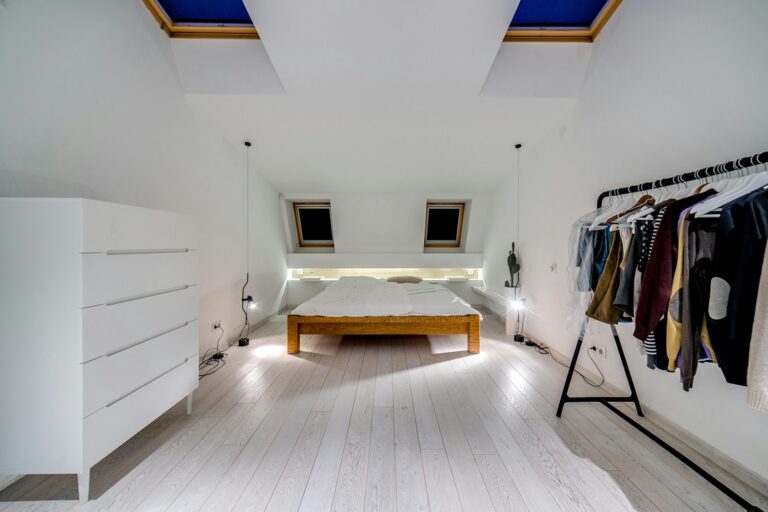
Pair this with a light oak tone, a whitewashed finish, or a pale greige (grey-beige blend), and you add a third dimension: light reflectivity. Pale floors bounce both natural and artificial light upward, which brightens the walls and ceiling and eliminates the closed-in feeling that darker floors can create in a small room. Whitewashed and coastal-bleached vinyl plank tones have seen a strong resurgence in 2025 precisely for this reason: they are unrivaled for brightening compact coastal homes, apartments, and bungalows.
Idea 2: Diagonal Installation to Maximize Every Corner
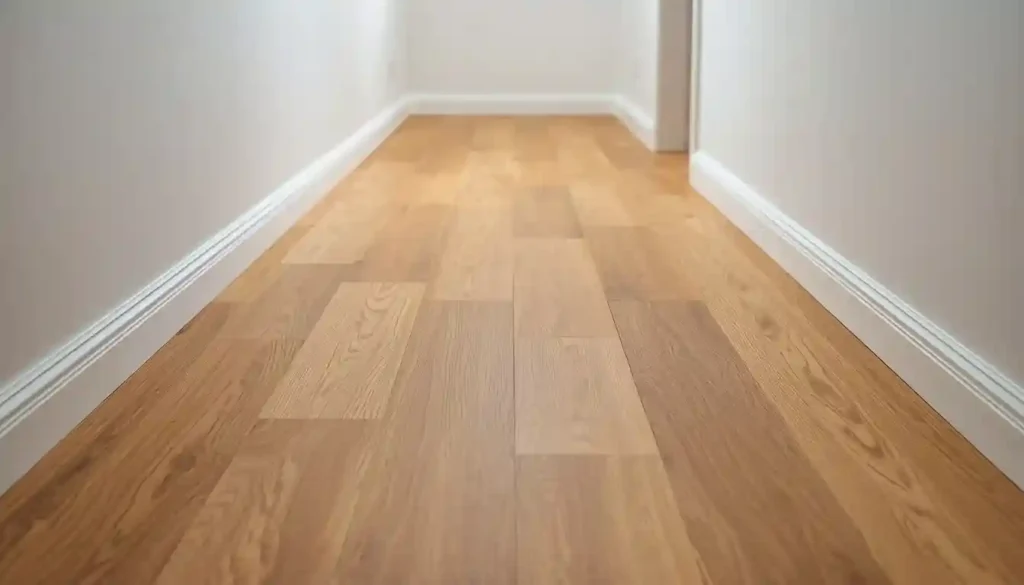
When you lay planks at a 45-degree angle to the walls, something interesting happens geometrically: you create the longest possible straight sightlines across the floor. A diagonal line running corner to corner in a rectangular room is longer than either the length or the width of that room individually. The eye follows lines, and longer lines mean a longer perceived space.
Diagonal installation also neutralizes one of the most common problems in awkward small rooms: odd proportions. A room that is much longer than it is wide, like a narrow galley kitchen or a tight entry hall, can feel tube-like when planks run straight along the length. A diagonal layout breaks that directionality and distributes visual interest more evenly across the room’s entire footprint. The result is a space that reads as more square and more open.
There is a practical trade-off worth knowing about. Diagonal installation increases material waste because every plank that meets a wall has to be cut at an angle, and those offcuts are rarely reusable. Budget for roughly ten to fifteen percent more material than your room’s square footage when planning a diagonal layout. For small rooms, the square footage is modest enough that this extra cost is usually minor compared to the visual payoff.
Medium-toned planks in a warm honey oak or greige finish work particularly well for diagonal layouts because they provide enough contrast against the walls to make the diagonal lines visible, without being so dark that they absorb the room’s light.
Idea 3: Stone-Look LVT in Small Bathrooms
In a small bathroom, traditional ceramic tile imposes a grid on the floor with grout lines every few inches. Even with larger format tile, those lines interrupt the visual surface and can make a tight bathroom feel like it’s been subdivided into a checkerboard. Stone-look luxury vinyl tile (LVT) gives you the appearance of marble, travertine, or slate without the grout lines, without the cold underfoot temperature, and without the weight loading issues that real stone creates on upper floors.
Large-format stone-look LVT, meaning tiles that are at least 12 by 24 inches, perform particularly well in small bathrooms for the same reason wide planks work in bedrooms: fewer surface breaks mean a more continuous, expansive-looking floor. A pale marble look in soft white and grey veining with minimal grout lines can transform a small bathroom into something that reads as genuinely spa-like. The key is choosing a stone-look tile with fine, low-contrast veining rather than dramatic bold patterns, which can feel overwhelming in a tight space.
Vinyl’s warmth advantage over real tile is also genuinely meaningful here. Stepping onto a bathroom floor barefoot should not feel like stepping onto a cold slab. LVT provides real warmth underfoot and can be paired with electric radiant heating much more easily than ceramic, with lower thermal resistance than real stone.
Idea 4: Continuous Flooring from Room to Room
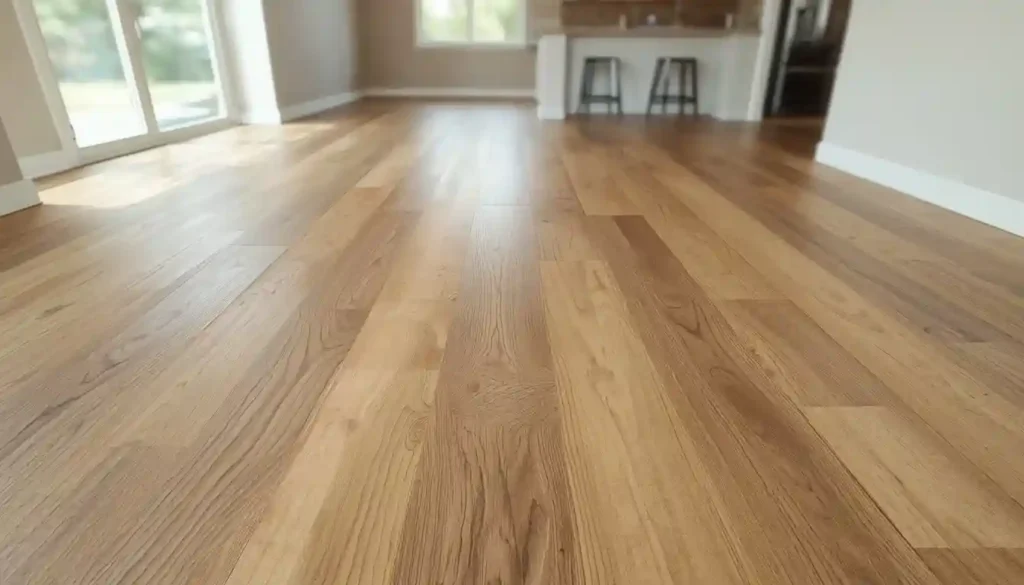
This idea is more about strategy than about a specific look, but it may be the single most impactful thing you can do in a small home or apartment. Running the same vinyl floor continuously through multiple connected rooms, from living area to hallway to kitchen to bedroom, eliminates every visual interruption that would otherwise force the eye to stop and reset. Each flooring transition, whether it’s a color change, a material change, or even a direction change, acts like a mental wall. The brain processes the change, and the space feels more divided and therefore smaller.
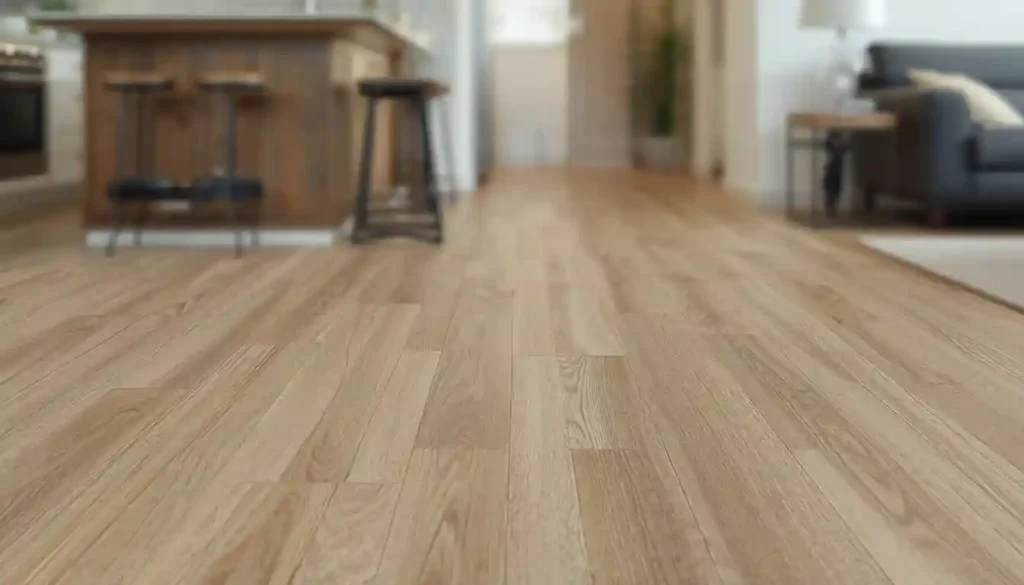
Vinyl’s key advantage here is its suitability across environments. Because LVP is completely waterproof, you can run it into a kitchen without worrying about moisture and into a bathroom without worrying about splashing. The floor becomes a single uninterrupted plane that ties the whole home together. In open-plan apartments where the living area, dining area, and kitchen all share a continuous floor, choosing a single greige or natural oak vinyl plank and installing it throughout can make the entire space read as dramatically more generous than its actual square footage.
When planning a whole-home vinyl installation, the direction decision matters. The most common approach is to run planks parallel to the longest dimension of the overall floor plan, which usually means aligning with the hallway or the main axis of the living area. This creates a consistent flow that draws the eye through the entire home rather than stopping at each doorway.
Our vinyl flooring services page covers how we approach whole-home vinyl installations for homeowners in the San Diego area, including planning for continuous runs through multiple rooms.
Idea 5: Herringbone Pattern for Small Entryways and Hallways
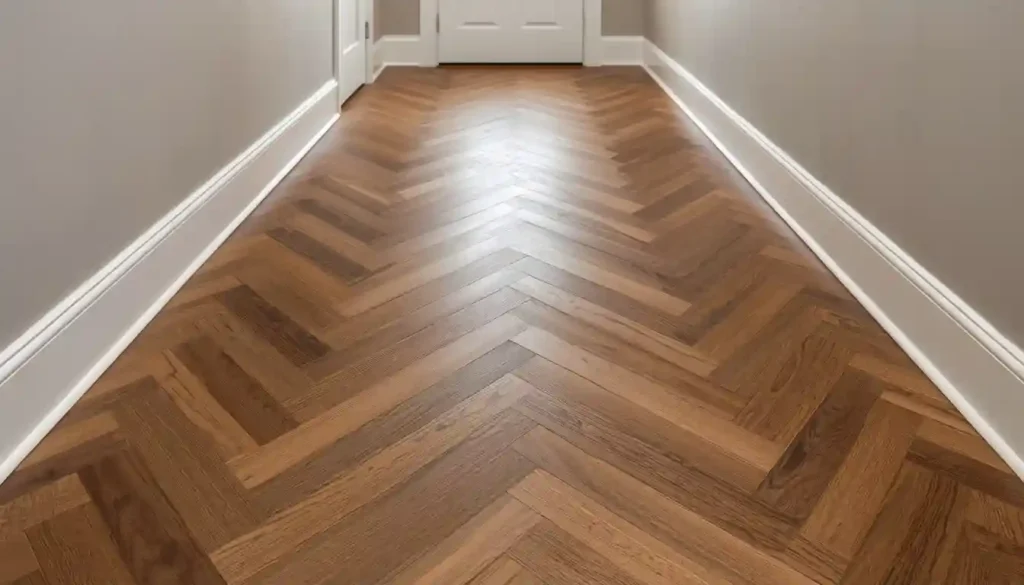
The herringbone pattern has been used in interior design for centuries because it does something no straight-lay floor pattern can: it generates visual movement that actively guides the eye through a space rather than simply covering a surface. The angled V-shape of each pair of planks creates a sense of flow that draws attention forward, which is exactly what a narrow entryway or tight hallway needs. The pattern elongates the space and makes it feel wider and less tunnel-like.
In a small entryway specifically, herringbone vinyl plank performs another function beyond visual expansion: it creates a genuine sense of arrival. An entry floor that is visually distinctive signals to anyone walking in that this space was designed with intention, not just laid as an afterthought. It elevates the entire first impression of a home.
For small spaces, medium-width planks in the three to five inch range work better for herringbone than very wide planks, because the herringbone pattern depends on the visual rhythm of the angles, and very wide planks can make the pattern feel blocky and lose its elegant movement. A dark walnut or warm charcoal herringbone adds drama; a pale oak herringbone keeps the space bright while still adding visual interest. Either way, the pattern’s diagonal nature provides the same spatial expansion benefit as a true diagonal installation.
Idea 6: Light Grey Vinyl Plank for Modern Small Apartments
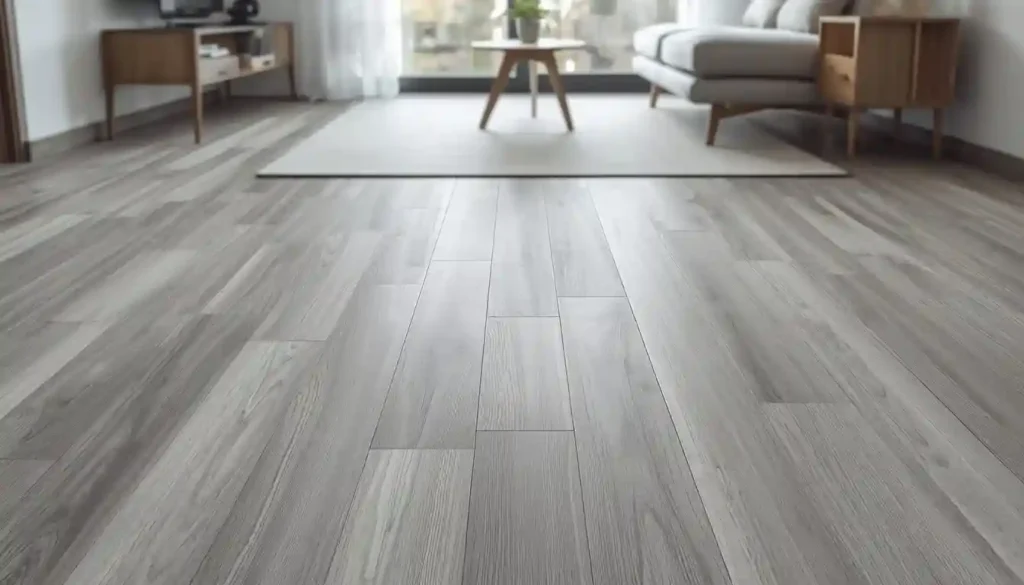
Grey has held onto its position as the most popular neutral in contemporary interior design for good reason: it reads as neither warm nor cool in isolation, which means it adapts to almost any furniture color, wall paint, or decor style the homeowner might choose. In a small apartment where the resident may be renting and can’t paint walls, or where budget means furniture is collected over time from different sources, a light grey vinyl plank floor provides the most forgiving and cohesive foundation possible.
Light grey is not the same as dark charcoal. Dark floors absorb light, which can create a dramatic moody effect in a large room but simply makes a small room feel closed in and heavy. Light grey reflects light almost as effectively as pale natural wood tones and carries a sophistication that very pale beige or white floors don’t always achieve. Grey wood-look vinyl in a light to mid tone is particularly effective in apartments that receive limited natural light, because it reads as bright without the starkness of an all-white or bleached floor.
The 2025 trend toward greige, a blend of grey and beige, splits the difference between these two worlds and has become a dominant choice for small apartment flooring precisely because it feels current, neutral, and space-expanding all at once. It pairs naturally with white walls, white trim, and the kind of clean-lined minimalist furniture that suits a compact space.
For a full breakdown of how vinyl compares to other flooring options in compact rooms, you might find our discussion of quiet flooring options for small spaces useful, as sound transmission is another important consideration when flooring choices affect both you and downstairs neighbors.
Idea 7: Waterproof Vinyl in Small Kitchens with a Stone or Concrete Look
Small kitchens present a specific challenge: they need a floor that handles spills, splashes, and high foot traffic while also visually expanding a tight space. Ceramic tile handles the moisture requirement but brings those disruptive grout lines. Real hardwood is beautiful but cannot handle the moisture environment of a kitchen over time. Waterproof vinyl LVP or LVT hits every performance requirement while giving you design control that neither of the traditional options can match.
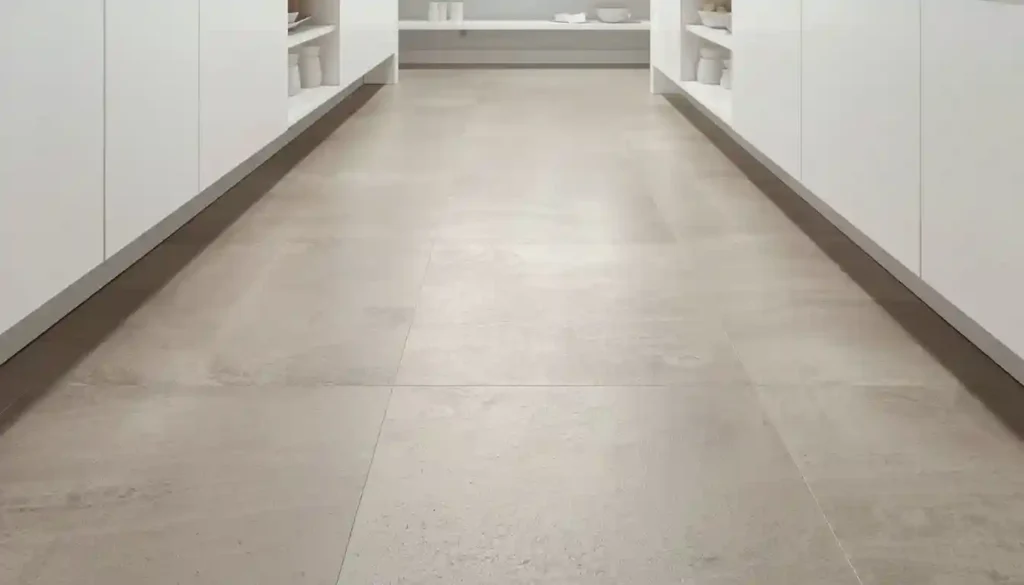
For a small kitchen, a concrete-look vinyl tile or a light stone-look LVT can do something interesting that wood-look planks don’t always achieve: they remove the grain direction entirely. Wood-look floors, even light ones, have a visual grain that the eye follows. Stone and concrete looks are more visually neutral, which can make a small kitchen feel more open because there’s no dominant directional element pulling the eye anywhere in particular. The floor simply reads as a clean, continuous surface.
A large-format concrete-look vinyl tile in a pale grey or warm stone tone works especially well in a galley kitchen because it sidesteps the grout line problem entirely while giving the space a modern, professional feel. Pair it with open shelving instead of upper cabinets and the room suddenly breathes in a way that traditional cabinetry-heavy small kitchens rarely achieve.
Idea 8: Warm Oak Vinyl for Small Living Rooms with Low Ceilings
Low ceilings amplify the feeling of being hemmed in, particularly in small rooms. The usual advice is to paint ceilings white and use vertical lines in decor, but the floor plays a role here too. Dark, cool, or heavily patterned floors in a room with a low ceiling create a compression effect: the brain registers the dark floor and the nearby ceiling simultaneously, and the room feels like a box. Warm-toned floors do the opposite. They suggest depth, they recede visually, and they create a sense of ground beneath the feet that makes the ceiling feel higher by contrast.
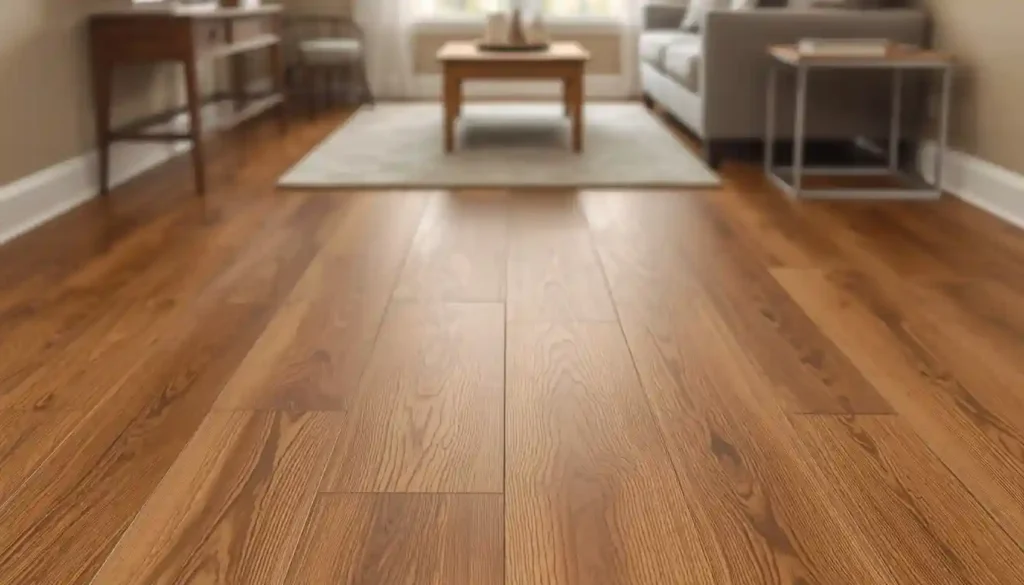
A warm honey oak or amber vinyl plank in a six to seven inch width is the ideal choice for a small living room with a low ceiling. The warmth of the tone creates a cozy, inviting energy rather than a closed-in feeling, and the wide plank reduces seam count so the floor reads as open and uncluttered. The amber-gold undertone also complements the most common small living room palettes: warm whites, soft creams, terracotta accents, and natural textile textures.
The matte finish works better than a high-gloss finish for this application. High-gloss floors reflect the ceiling back up at you, which actually draws attention to how low it is. A matte or satin finish reflects light more diffusely, brightening the room without creating hard reflections that emphasize the vertical constraints. Matte finishes also hide scratches and footprints more effectively, which matters in a lived-in living room.
Idea 9: Dark Accent Vinyl in a Small Powder Room or Half Bath
Everything discussed about light colors and space expansion is true as a general principle, but there are situations where deliberately choosing a dark vinyl floor in a small room produces a better result. A powder room or half bath is a space people spend only a few minutes in at a time. It does not need to feel like an open, airy retreat. What it needs is character, personality, and a sense of design intention that makes it memorable in spite of its small size.
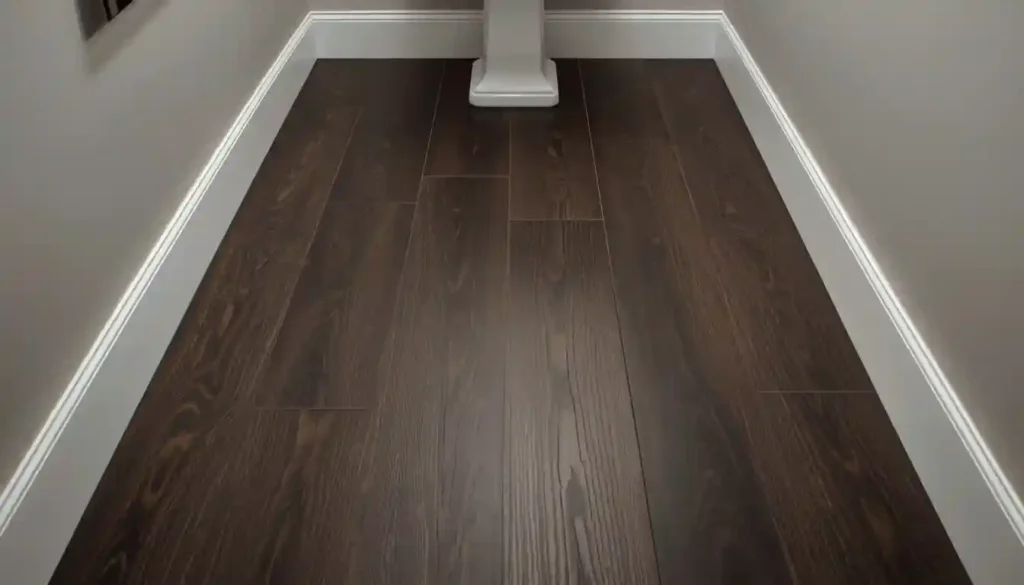
In a small powder room, a dark espresso or deep charcoal vinyl tile or plank creates a jewel-box effect. Combined with a statement mirror, a vessel sink in a bold color, or metallic wall accents, a dark floor anchors the room and gives it a sophisticated, high-end feeling that light floors rarely achieve in the same space. The room is not trying to look bigger; it is committing fully to its smallness and making that smallness feel deliberate and elegant.
This idea works particularly well with a large-format dark tile look in LVT, because the reduction in grout lines keeps the floor from looking busy even with a dramatic dark tone. A single large-format dark tile in near-matte finish reads as luxurious rather than cramped. The surrounding walls in a pale color or a dramatic wallpaper complete the jewel-box effect.
Idea 10: Mixing Wood-Look Vinyl with a Feature Border or Inset
This idea moves beyond color and direction into layout design: using a contrasting vinyl plank or tile as a border, frame, or inset within the main floor area. This is a technique that has been used in traditional parquet and hardwood flooring for generations, and modern vinyl makes it far more accessible and affordable. A simple border in a slightly darker or lighter tone running around the perimeter of a small living room or bedroom does something counterintuitive: it makes the room feel larger by defining its edges clearly.
When the edge of a room is undefined, the eye has nothing to anchor to, and the space reads as ambiguous. When a border clearly delineates the room’s perimeter, the eye fills in the full extent of the space more readily, and the room reads as larger. This is related to the same visual principle that makes a rug with a clear border make a seating area feel more generous than the same furniture arrangement without a rug.
For a small bedroom, a narrow inset border in a contrasting tone, perhaps a warm walnut frame around a pale oak field, creates a detail that elevates the room from a simple flooring job to a designed space. The inset can also serve a practical function, guiding furniture placement by visually suggesting where the center of the room lies and where its edges are. This level of detail was traditionally only achievable with expensive custom hardwood work; vinyl’s click-lock systems and the availability of complementary tones within product lines makes it a realistic DIY or contractor option.
If you’re planning this kind of detail work and want to understand installation requirements, our overview of how to install vinyl plank flooring covers the planning, layout, and cutting techniques that border and inset work requires.
Idea 11: Vinyl Plank Throughout a Small Open-Plan Space with Consistent Grout-Free Transitions
The eleventh idea brings together the most important strategic principle from all of the preceding ideas: in a small open-plan home, the floor is not just one room’s floor. It is the connective tissue of the entire living space. When vinyl plank runs continuously from the moment you step through the front door, through the living area, around the kitchen island, and into the sleeping alcove, it creates a spatial logic that no other design decision can replicate.
The specific value of vinyl here, over both laminate and hardwood, is that it can make this continuous journey through wet and dry, high-traffic and quiet zones without ever requiring a different material. A laminate floor has to stop at the bathroom. A hardwood floor becomes problematic in the kitchen over time. Vinyl does not have these limitations, which means the continuity of the floor plan is genuinely unlimited.
In 2025, the most widely recommended approach for small open-plan homes is to choose a single greige or warm natural oak vinyl plank in a seven-inch width and run it throughout, using no transition strips between rooms except where genuinely required at exterior thresholds. The absence of transition strips is a small thing that has an outsized effect on how seamless and spacious the home feels. Every strip is a visual break; every break is a perceived wall. Remove them wherever possible, and the home opens up.
Choosing the right underlayment for this kind of installation matters as well, since sound transmission between spaces in a small open-plan home can be significant. Our guide to the best underlayment for noise reduction under vinyl flooring addresses exactly this consideration and explains the IIC and STC ratings that matter most for apartment and open-plan installation.
Choosing the Right Vinyl Format for Your Small Space
Not all vinyl flooring is the same, and the format you choose affects both the look and the performance of the floor in a small room. Luxury vinyl plank is the most popular choice for wood-look designs and provides the most flexibility for the directional and wide-plank ideas described above. Luxury vinyl tile gives you the most control over large-format stone and concrete looks and is the right choice for bathrooms and kitchens where a tile aesthetic makes more design sense. Sheet vinyl, while less fashionable, remains a practical option for very small bathrooms and mudrooms where a completely seamless surface with no click joints offers the best waterproofing.
SPC (stone plastic composite) vinyl provides the most rigid and dimensionally stable core, which matters in small rooms that experience temperature variation, such as a bathroom that alternates between warm shower steam and cool ambient air. WPC (wood plastic composite) is softer underfoot and quieter, which makes it the better choice for a small bedroom or home office where comfort underfoot matters more than maximum rigidity.
The wear layer thickness of the vinyl you choose also matters for small, high-traffic spaces. A twelve-mil wear layer is suitable for residential use in rooms that see moderate traffic. A twenty-mil wear layer is worth the additional cost in an entry hallway, kitchen, or small bathroom that receives daily heavy use. The wear layer is what protects the decorative print underneath, and in a small room where the floor covers every square foot of movement, that protection matters.
For a complete breakdown of how wear layers affect the long-term durability of vinyl flooring, our article on wear layer thickness for LVP flooring explains the commercial and residential specifications and what each rating means for your specific situation.
Installation Tips That Make Small Rooms Look Bigger
Even the most carefully chosen vinyl floor can underperform if it’s installed in a way that works against the room’s proportions. A few installation decisions deserve specific attention when working in small spaces.
Expansion gaps are necessary with all floating vinyl floors because the material expands and contracts with temperature changes. However, in a small room, large visible gaps at the wall perimeter look disproportionate and draw attention to the edges of the room. Use the minimum gap specified by the manufacturer, typically one quarter inch, and choose the narrowest baseboard or quarter-round moulding that will cover it. In a small room, visual clutter at the floor-wall junction fragments the space.
Staggering plank joints with appropriate randomness is important for both structural integrity and aesthetics. Joints that align in a ladder pattern draw the eye down the room in an unnatural, artificial-looking way that reduces the sense of a natural, flowing surface. Most vinyl installation guides recommend a minimum twelve-inch offset between end joints in adjacent rows, with randomized variation beyond that. The result is a floor that reads as natural and continuous rather than patterned and repetitive.
Acclimation is sometimes overlooked for vinyl, which is more dimensionally stable than hardwood but still benefits from acclimating to the room’s temperature before installation. In a small room with limited wall-to-wall coverage, a floor that expands even slightly after installation can cause buckling or gaps at the perimeter. Allowing the vinyl to acclimate for 48 hours in the room where it will be installed minimizes this risk.
Color and Pattern Principles Summary for Small-Space Vinyl
The eleven ideas in this guide can be distilled into a handful of core principles that apply consistently across room types and design styles. Light tones expand space by reflecting light; dark tones create drama and should be used intentionally and in moderation. Wide planks reduce visual seam noise and make floors read as more open. Directional installation along the longest axis emphasizes depth; diagonal installation maximizes sightlines in oddly shaped rooms. Patterned layouts like herringbone create movement and visual interest that draws the eye through a space rather than stopping it.
Continuous flooring between rooms eliminates the visual walls that transitions create. Large-format tiles reduce grout lines in wet areas and create the impression of a more uninterrupted surface. And in any small room, the less visual noise on the floor, whether from busy patterns, too many seams, or abrupt color contrasts, the larger the room will feel.
Vinyl gives you more control over all of these variables than almost any other flooring material at any price point. That combination of design flexibility and practical performance is why it has become the dominant choice for small-space renovations, apartment upgrades, and compact new construction across every budget level.
If you’re ready to explore specific vinyl products that work well in small spaces, our vinyl flooring buying guide covers the full selection process from format and format to finish and brand, with practical guidance on what to look for at each price point.
James Miller is a seasoned flooring contractor with years of hands-on experience transforming homes and businesses with high-quality flooring solutions. As the owner of Flooring Contractors San Diego, James specializes in everything from hardwood and laminate to carpet and vinyl installations. Known for his craftsmanship and attention to detail, he takes pride in helping clients choose the right flooring that balances beauty, durability, and budget. When he’s not on the job, James enjoys sharing his expertise through articles and guides that make flooring projects easier for homeowners.
Wood flooring in commercial spaces operates under a completely different set of pressures than what you encounter in residential settings. The gap between the two is not just about traffic volume. It is about how consistently that traffic arrives, what it brings with it, how quickly moisture builds up near entrances, how HVAC systems cycle…
Carpet flattening is not a cosmetic inconvenience. It is a compounding structural problem. Once carpet fibers lose their original standing position, the backing is exposed to direct friction, the cushioning layer compresses unevenly, and the whole system degrades faster than it should. What looks like a worn path in your hallway or a dented square…
Yes, waterproof laminate flooring still needs a moisture barrier in most installations — especially over concrete subfloors, below-grade rooms, crawl-space floors, and any space where vapor can rise from beneath. The “waterproof” label only describes the top surface of the plank, not the underside. The locking edges, the core, and the backing layer remain vulnerable…
Dark hardwood flooring is having a genuine moment. After years of pale Scandinavian oak and washed-out grey planks dominating interiors, deep espresso, rich walnut, and dramatic ebony are reclaiming their rightful place as the floor choices that anchor a room with real authority. Interior designers across the country are calling it a return to warmth…
Hardwood floors do not get damaged in a single dramatic event. The damage accumulates quietly — fine grit carried in on shoes, dining chairs dragged two inches each morning, an office chair rotating on the same patch of finish every workday. None of these events feel significant. Together, over months, they dull a finish that…
The short answer is yes — but the longer answer is that not every vinyl flooring product is built for what a deck actually puts it through. A deck is a fundamentally different environment than anything inside your house. It faces direct UV exposure, pooling rainwater, freeze-thaw cycling, insects, mold pressure, and subfloor movement that…