The core type matters enormously for pet households. Stone Polymer Composite (SPC) cores are made with limestone powder, polyvinyl chloride, and stabilizers. That construction makes SPC extremely dense, rigid, and resistant to dents from heavy objects or furniture being dragged across the floor. For large, high-energy dogs, SPC is typically the better choice because the floor simply will not give under impact. Wood Polymer Composite (WPC) cores incorporate a foaming agent that makes the plank slightly softer and warmer underfoot. WPC is noticeably quieter — it absorbs the sound of dog nails rather than amplifying them — and is gentler on older pets whose joints are sensitive to hard surfaces. Both are waterproof. The choice depends on whether maximum toughness or everyday comfort is your priority.
Wear layer thickness determines scratch resistance more than any other single specification. A 12 mil wear layer is adequate for cats or small, calm dogs. For most households with medium to large dogs, a 20 mil wear layer provides the durability that allows the floor to maintain its appearance after years of regular use. Commercial-grade vinyl starts at 28 mil, and some residential-marketed products now reach that threshold, which is worth considering if you have multiple large dogs or a particularly active breed.
For households wondering about pet safety, modern luxury vinyl manufactured by reputable brands is tested for low VOC (Volatile Organic Compound) emissions. Certifications such as GREENGUARD Gold indicate that the product has been evaluated against stringent indoor air quality standards — a meaningful consideration if your dog spends the day lying directly on the floor. You can explore the broader question of how vinyl compares to laminate specifically for pet households if you are weighing both options.
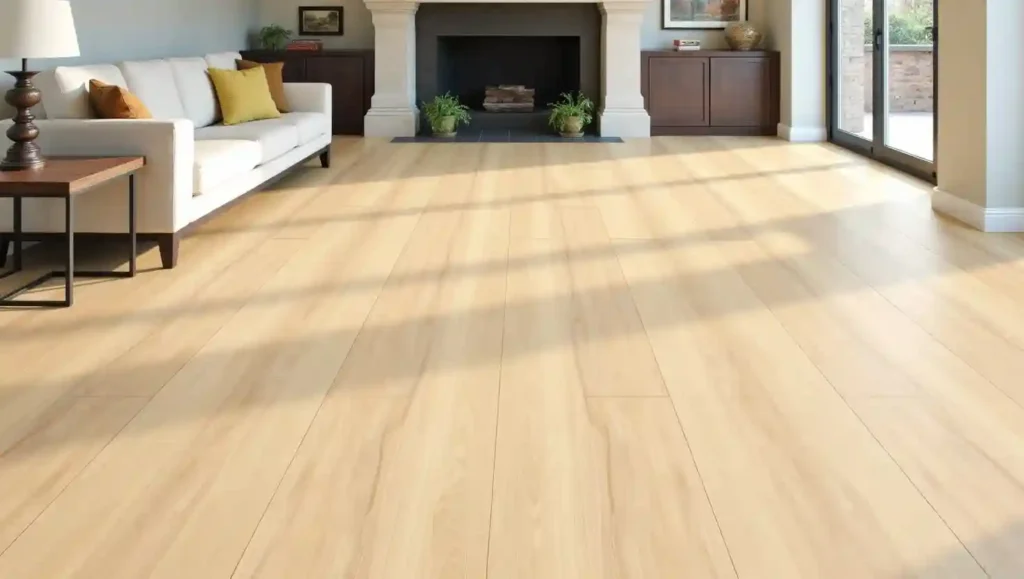
Idea 1: Wide-Plank Light Oak Vinyl in Open Living Areas
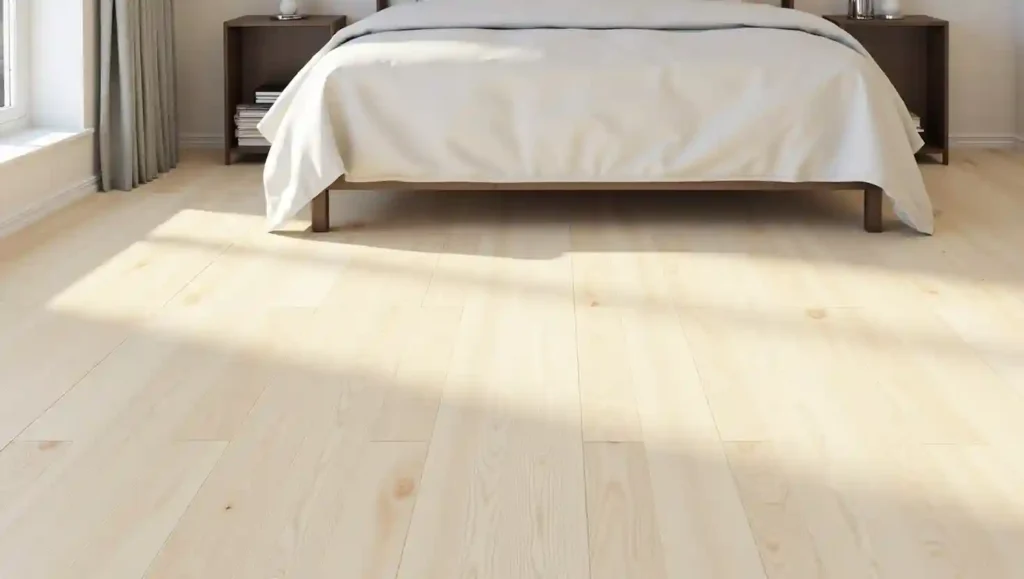
Wide-plank light oak vinyl — typically planks measuring nine inches or wider — is one of the most effective design strategies for pet-friendly open living spaces. The visual benefit is significant: wider planks mean fewer seams across the floor, which makes the room read as larger and more cohesive. From a practical standpoint, fewer seams also means fewer potential collection points for pet hair, dirt, and dander that accumulate in tight grout lines or narrow plank gaps.
Light oak colorways — pale honey tones, creamy blondes, soft sandy beiges — do something important in a pet household: they are remarkably effective at disguising shedding hair from light-colored dogs and cats. Golden Retrievers, Labrador Retrievers, and most tabby cats shed hair that vanishes against warm pale wood tones between sweeping sessions. The floor consistently looks cleaner than it actually is, which is a quality-of-life improvement that is genuinely difficult to put a price on.
For San Diego’s climate, light tones also make practical sense. Homes with southern or western sun exposure can run warm, and pale flooring reflects rather than absorbs light, keeping the visual temperature of a room cooler even when the actual temperature is not. Light oak vinyl with a matte finish prevents the glare that can make a sun-drenched living room uncomfortable to be in.
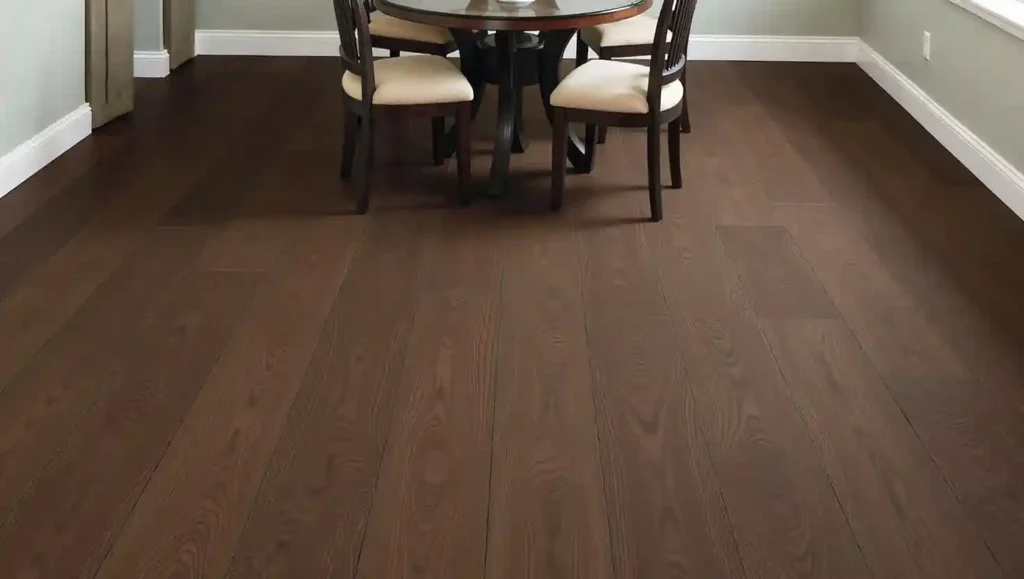
Idea 2: Dark Walnut LVP for Formal Living Rooms and Dining Areas
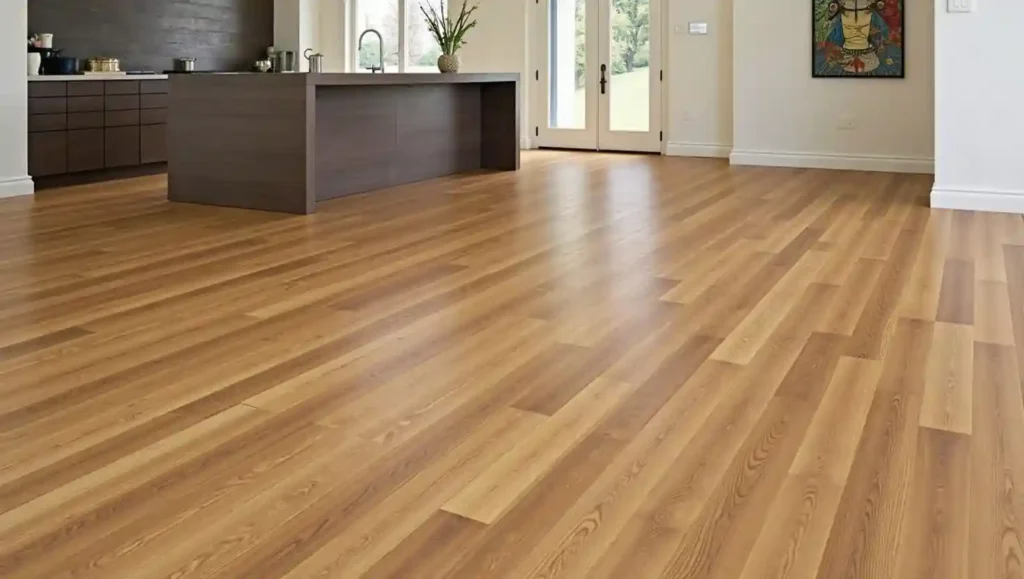
Dark walnut luxury vinyl plank brings a level of visual richness to formal living rooms and dining areas that most pet owners assume they have to sacrifice the moment a dog enters the household. The rich chocolate-brown tones, the deep grain variation, and the dimensional texture of a well-made walnut-look LVP plank can be visually indistinguishable from engineered hardwood at floor level — but it handles pet accidents without absorbing them and does not dent under the repeated impact of a dog’s claws the way real walnut wood does.
There is one honest trade-off to acknowledge with dark vinyl: it shows dust, pet hair from light-colored animals, and dried paw print residue more readily than mid-tone options. A household with a white Labrador or a silver-coated cat will see hair against dark walnut flooring between sweeping sessions. The practical answer is a consistent vacuuming or sweeping routine — something most pet households already maintain. The visual payoff of the dramatic, sophisticated look frequently justifies the slightly higher maintenance frequency.
From a specification standpoint, dark walnut vinyl particularly benefits from a textured or embossed surface finish. A smooth, high-sheen dark floor will show every smudge from a wet nose pressed against it or from paws that tracked in fine dust from outside. A low-sheen, wire-brushed, or hand-scraped texture surface scatters light more diffusely and hides the everyday surface contact that is unavoidable in a pet household.
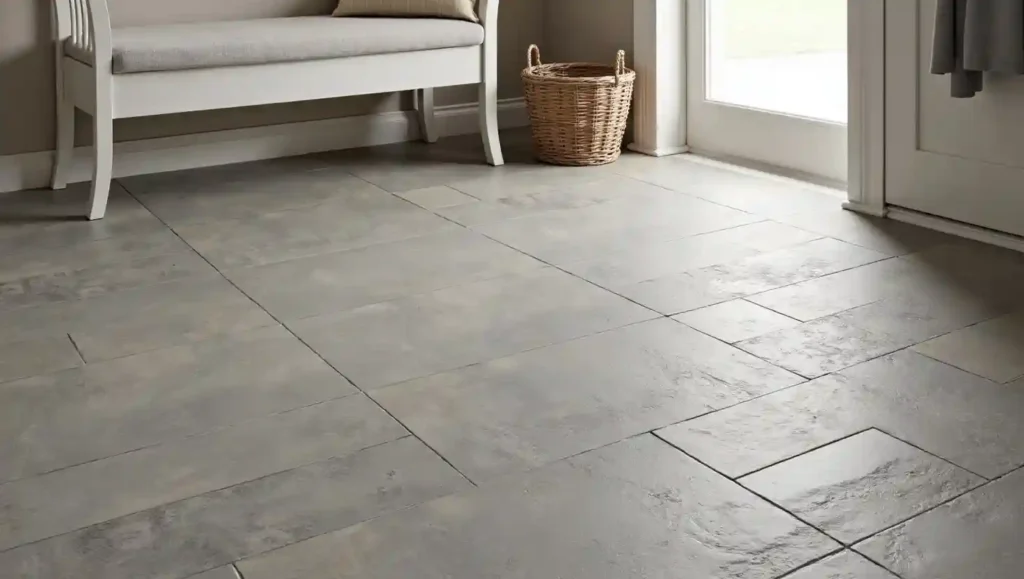
Idea 3: Stone-Look LVT in the Kitchen and Mudroom
The kitchen and mudroom are the two rooms that take the most punishment in a pet household, and they are also the two rooms where stone-look luxury vinyl tile makes the most strategic sense. Dogs track mud through the mudroom. Water bowls get knocked over in the kitchen. Food gets scattered around feeding stations. These areas need a floor that is genuinely impervious to moisture and can be cleaned quickly without the kind of sustained exposure to liquids that would damage a wood-look floor over time if the cleaning is delayed.
Stone-look LVT — particularly formats that replicate slate, travertine, or large-format porcelain — provides the visual weight and character of real stone without the cold, hard surface that makes dogs uncomfortable when lying on it and the genuine slip hazard that polished stone presents when wet paws contact it. Many luxury vinyl tile products include embossed texture that adds grip underfoot, which matters both for pets and for barefoot humans coming in from outside.
The grout-line consideration is worth thinking through carefully. LVT products that feature a slight grout gap between tiles can create a realistic stone tile appearance, but that gap can accumulate food residue and pet hair over time. Grout-free formats — tiles designed to install edge to edge without a visible gap — are considerably easier to maintain in high-use areas. If the grout-line aesthetic is important to you, choose a format where the grout gap is shallow and smooth-sided rather than deeply recessed.
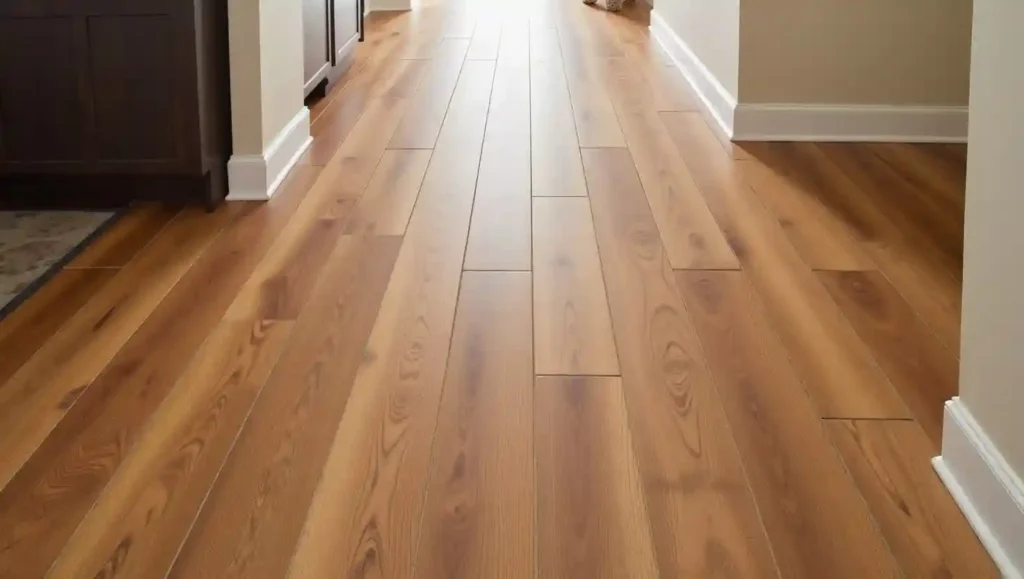
Idea 4: Medium Hickory Vinyl for High-Traffic Hallways
Hallways in pet households are among the most punishing surfaces in the home. Every trip outside begins and ends in the hallway. Leashes get dropped, collars get removed, and dogs accelerate from a walk to a full sprint through that corridor. The constant directional traffic creates a wear pattern that shows up on softer floors within months.
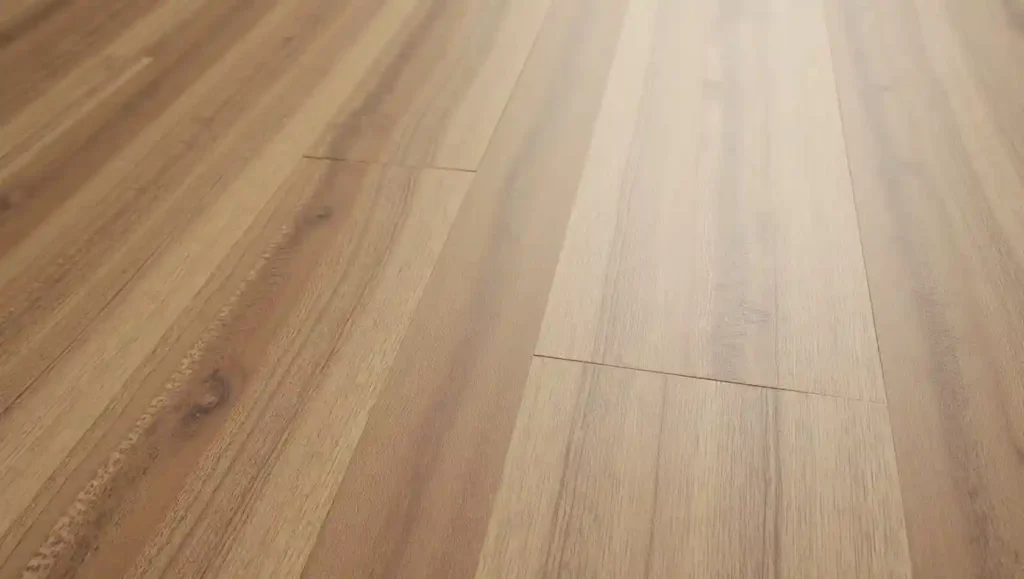
Hickory-look vinyl planks are particularly well suited to hallways because the natural color variation in hickory grain — the mix of amber, brown, cream, and grey that characterizes the species — creates a visual complexity that is extremely effective at disguising scratches, scuffs, and the general surface haze that develops from constant foot and paw traffic. A scratch on a hickory-look vinyl plank tends to blend into the existing grain pattern. The same scratch on a uniform mid-tone floor reads as a clear imperfection.
For hallway installations specifically, look for LVP products with SPC cores. The rigidity of SPC is advantageous in narrow, high-traffic spaces where the floor cannot flex under repeated concentrated loading. Plank direction also matters more in hallways than in open rooms: running planks lengthwise down the hall visually elongates the space and aligns with the primary traffic direction, which distributes wear more evenly than a perpendicular layout.
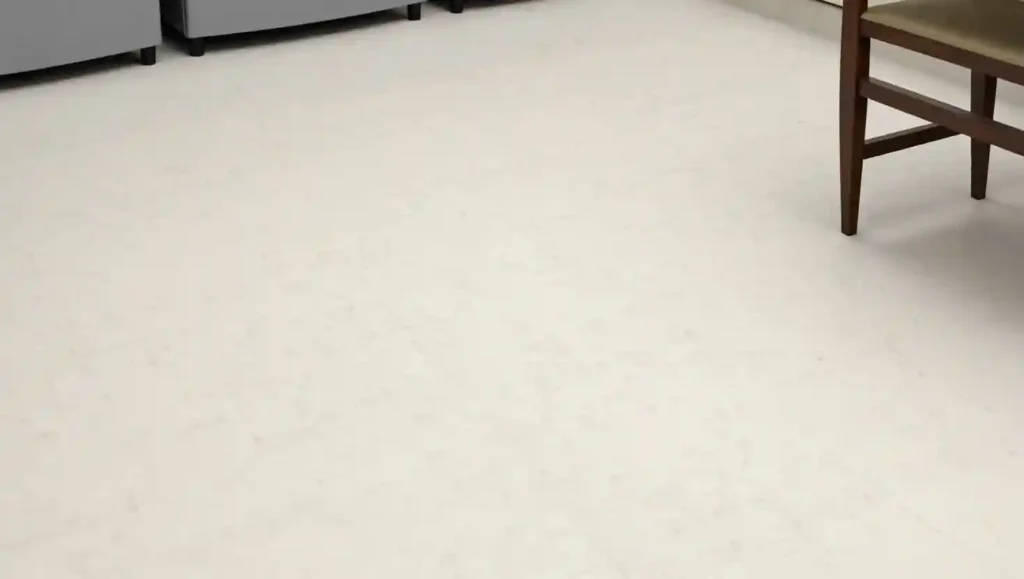
Idea 5: Waterproof Sheet Vinyl in the Laundry Room and Pet Bathing Area
If you bathe your dog at home — in a utility sink, a walk-in shower, or a designated pet washing station — the floor beneath and around that area needs to be fully waterproof and seamless. Sheet vinyl, rather than plank or tile vinyl, is the most appropriate product for this application. Sheet vinyl installs as a continuous roll with very few or no seams, which eliminates the primary path through which water can reach the subfloor.
Modern sheet vinyl is no longer the low-quality, easily torn product it once was. Products with Diamond 10 or similar proprietary technology offer surface scratch resistance comparable to quality LVP, combined with the seamless coverage that makes them genuinely impervious to the kind of sustained water exposure that occurs during a dog bath. The absence of seams also prevents the buildup of mold and mildew in the substrate, which is a significant concern in any room with regular wet exposure in San Diego’s coastal neighborhoods where ambient humidity can already be elevated.
The aesthetic range of sheet vinyl has also expanded considerably. Realistic stone, subtle tile patterns, and wood-look designs are all available in sheet formats, so the utility room does not have to look purely utilitarian. You can carry a visual connection to the rest of the home’s flooring without compromising on the waterproof performance that this space specifically requires.
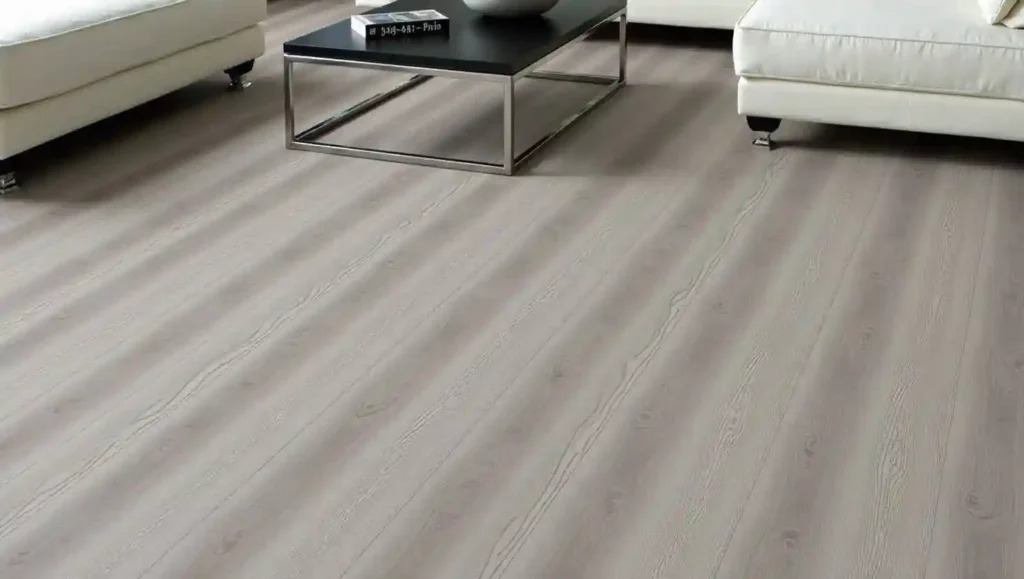
Idea 6: Grey Oak Vinyl with a Matte Finish for Modern Homes
Grey-toned vinyl flooring has been one of the dominant trends in residential design for several years, and it holds a specific practical advantage for pet households: grey occupies a mid-tone position in the color spectrum that is remarkably effective at hiding both light and dark pet hair. A warm blonde floor shows dark dog hair easily. A dark walnut floor shows light cat hair easily. A grey floor sits in the middle of that spectrum and makes the compromises on both ends simultaneously.
Grey oak LVP with a matte finish is particularly effective in contemporary San Diego homes, where clean lines, neutral palettes, and the indoor-outdoor connection through glass doors are visual priorities. The cool undertones of grey vinyl complement the bright, bleached quality of Southern California natural light in a way that warmer wood tones sometimes do not. The matte finish eliminates the glare problem that can make a highly reflective floor difficult to live with in rooms with significant sun exposure.
When selecting grey vinyl, pay attention to whether the undertone is blue-grey, green-grey, or warm grey, and test samples under the actual lighting conditions of your room. Grey tones can shift dramatically depending on whether the primary light source is warm incandescent, cool LED, or natural daylight. A floor that reads as a clean neutral grey in a showroom can look unexpectedly green or blue in a north-facing room with cool ambient light.
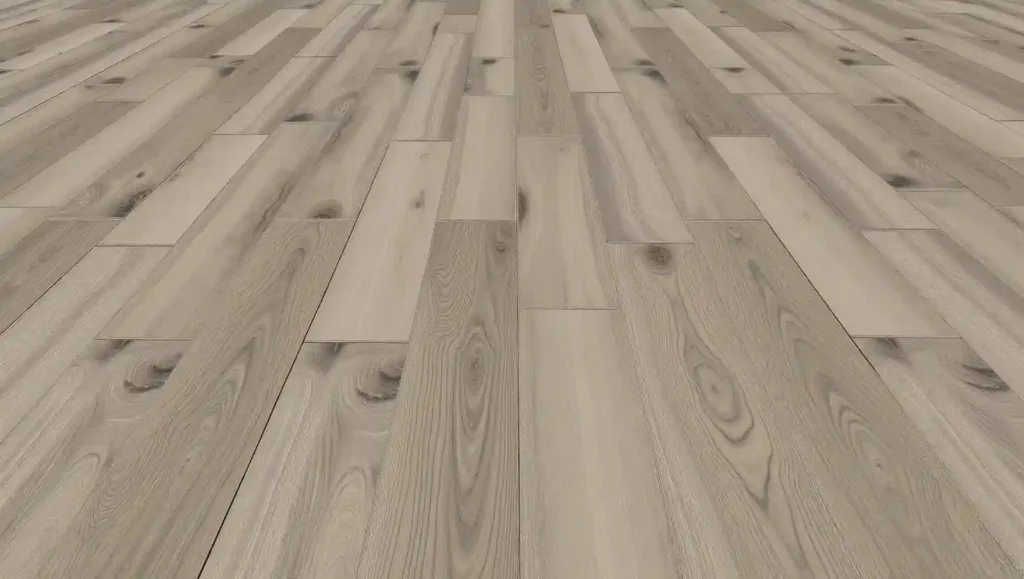
Idea 7: Rustic Barnwood Vinyl in Family Rooms and Playrooms
Rustic barnwood vinyl — characterized by wide planks, pronounced grain variation, visible knots, a wire-brushed or distressed surface texture, and a warm mix of brown, grey, and cream tones — is one of the most forgiving vinyl flooring aesthetics for active pet households, and not by coincidence. The design language of barnwood flooring is inherently about imperfection and character. A floor that looks like it came from a nineteenth-century agricultural building does not read as damaged when it shows signs of use; it reads as authentic.
The heavily textured surface of barnwood-style vinyl planks has an additional practical advantage: it diffuses light in a way that hides surface marks, small scratches, and the dull haze that accumulates on floors in heavy-traffic areas. The same surface characteristic provides better grip for both pets and people, reducing the slipping that can occur when a dog rounds a corner at speed on a smoother surface. This is particularly relevant for older dogs with reduced muscle control, or for puppies learning to navigate hard floors for the first time.
Barnwood vinyl pairs well with a relaxed, casual interior style — layered textiles, comfortable furniture, natural fibers in area rugs — that suits the everyday reality of a pet household. The overall aesthetic is designed for living in, and that alignment between the floor’s character and the household’s actual use pattern makes the whole space feel coherent rather than like a showroom trying to accommodate some inconvenient pets.
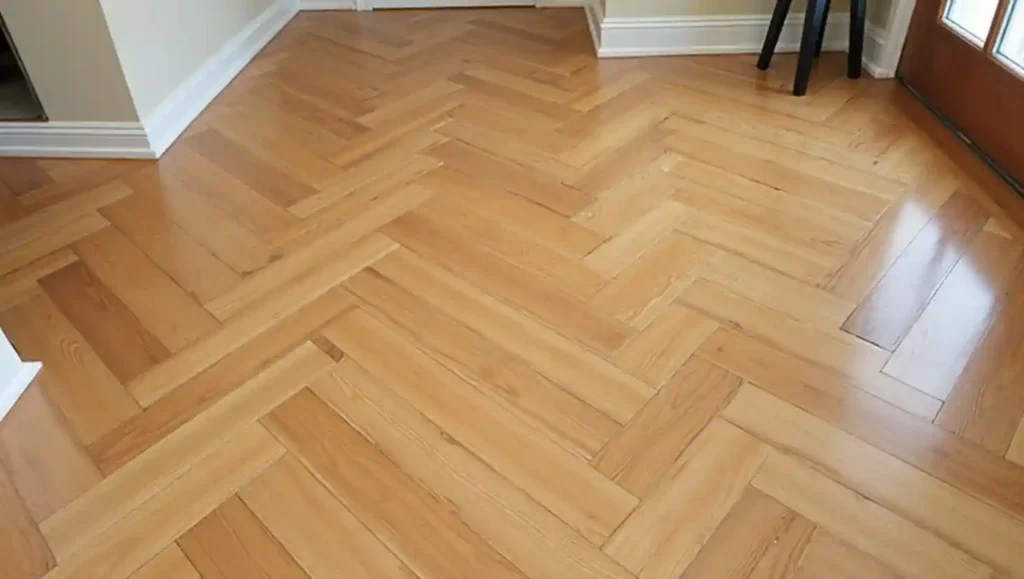
Idea 8: Herringbone LVT Pattern for a Stylish Pet-Proof Entryway
The entryway is the first surface pets contact when they return from outside, and it needs to handle everything that outdoor San Diego can deliver — damp paws after beach trips, sandy residue from canyon trails, and the general debris that dogs and cats carry inside on their feet. It is also the first space guests see when they enter your home, which means the design stakes are higher here than in a utility room.
Luxury vinyl tile installed in a herringbone pattern delivers on both requirements simultaneously. The herringbone layout — where rectangular tiles are arranged in an interlocking zigzag — creates a visually complex, architecturally intentional surface that reads as considered and high-end. From a practical standpoint, the pattern’s inherent complexity is extremely effective at camouflaging the surface dirt and scuffs that accumulate in a high-traffic entryway. No single scratch or mark dominates the visual field the way it would on a straight-laid floor.
LVT in a herringbone configuration is more demanding to install than a standard parallel layout because the cuts require precision and the layout requires careful planning to ensure the pattern reads symmetrically from the room’s primary viewpoint. This is a project best handled by a professional installer. The finished result, however, is a floor that competes visually with high-end ceramic tile herringbone while delivering the waterproof, scratch-resistant performance that a pet household actually needs in that specific location. Understanding the different types of LVP and LVT construction helps when selecting the right format for a pattern installation like this.
Idea 9: Low-Gloss Embossed Vinyl for Homes with Senior Pets
Senior dogs face a specific set of challenges on hard flooring that healthy young dogs simply do not. Reduced muscle mass, joint pain from arthritis, and the neurological decline that comes with age all reduce a senior dog’s ability to stabilize themselves on a slick surface. A hard, polished floor can become genuinely dangerous for an older pet — the equivalent of asking an elderly person with reduced balance to navigate a wet tile bathroom floor without handrails.
Vinyl flooring specifically formulated for slip resistance — products with embossed surfaces, micro-texture finishes, or matte urethane coatings that increase friction coefficient — can meaningfully improve a senior pet’s mobility and confidence on hard floors. The texture specification to look for is often described in manufacturer literature as an anti-slip or enhanced traction finish. From a visual standpoint, embossed and matte-finish vinyl looks more realistic than smooth, high-gloss alternatives because it replicates the actual surface character of real wood or stone rather than a polished approximation of it.
WPC-core vinyl is worth prioritizing for homes with senior pets not only because of the softer feel underfoot but also because the slight cushioning effect — most pronounced in products with integrated cork or foam underlayment — reduces the repetitive joint impact of walking on hard surfaces over many hours. That difference in feel underfoot is subtle for a young, healthy dog but can be meaningfully significant for one living with chronic joint pain. The question of which flooring best supports senior pet comfort comes down largely to surface texture and core construction.
Idea 10: Waterproof LVP in the Bedroom for Pet Owners Who Allow Pets on the Sleeping Area
A significant portion of pet owners in the United States allow their dogs or cats to sleep in the bedroom, and often on or near the bed. The bedroom floor in these households experiences a different category of pet-related stress than the kitchen or entryway — not heavy-traffic abuse, but the specific pattern of a dog that positions themselves at the bedside and gets up multiple times during the night, the cat that jumps from the windowsill to the floor repeatedly, and the occasional overnight accident from a pet that was not feeling well.
Waterproof LVP in a bedroom addresses these concerns without sacrificing the visual warmth and comfort that makes a bedroom feel like a restful space. Pale, warm wood tones — soft maple, light ash, creamy white oak — work particularly well in bedrooms because they create a calm, light-filled environment that reads as both welcoming and clean. The waterproof core means that if an overnight accident occurs and is not discovered until morning, the floor is not permanently damaged.
Sound absorption is particularly relevant in bedroom vinyl selections. A quiet floor makes a meaningful difference in sleep quality when a dog gets up in the night. WPC products with attached underlayment are noticeably quieter than SPC products without pads, and that difference in sound transmission from the nail click of a dog moving across the floor to the carpet-like silence of a well-cushioned vinyl plank can genuinely affect how well the household sleeps. For context on how underlayment choices affect acoustic performance, reading about underlayment options for noise reduction under vinyl flooring is useful.
Idea 11: Commercial-Grade LVP for Households with Multiple Large Dogs
Households with multiple large dogs — or any combination of large, high-energy breeds — are operating a flooring environment closer to a veterinary clinic or kennel than a standard residential home. The cumulative traffic, claw impact, and moisture exposure from several large dogs is genuinely beyond what standard residential vinyl is specified for, and selecting a residential-grade product based on its appearance without checking its technical specifications often results in a floor that fails to perform as expected within two or three years.
Commercial-grade luxury vinyl — or residential products with commercial-grade wear layers (28 mil and above) — is the appropriate specification for these households. The commercial classification indicates that the product has been tested and rated for the traffic levels, impact resistance, and maintenance cycles of non-residential environments. In a home with three large dogs, those specifications are directly relevant.
Products in this category are available in the same residential-friendly visual styles — wood look, stone look, wide plank — that homeowners expect from luxury vinyl. The difference is internal: the thickness of the wear layer, the density of the core, and the intensity of the surface treatment. Some products specifically marketed for commercial pet facilities, such as veterinary clinics, are worth examining for their technical specifications even if you purchase a residential-marketed equivalent with comparable numbers. The wear layer thickness specifications for LVP flooring explain in more detail what these numbers mean in practice.
Idea 12: Patterned Vinyl Tile in the Pet’s Dedicated Room or Dog Den
Dedicated pet rooms — spaces set aside specifically as a dog’s bedroom, a cat’s play area, or a multi-pet retreat — have become increasingly common in San Diego homes where the square footage allows for it and the owner’s commitment to their pets’ wellbeing extends to giving them intentionally designed space. These rooms have different flooring requirements than any other room in the house: maximum durability, effortless cleaning, and an aesthetic that reads as deliberate and thoughtful rather than merely functional.
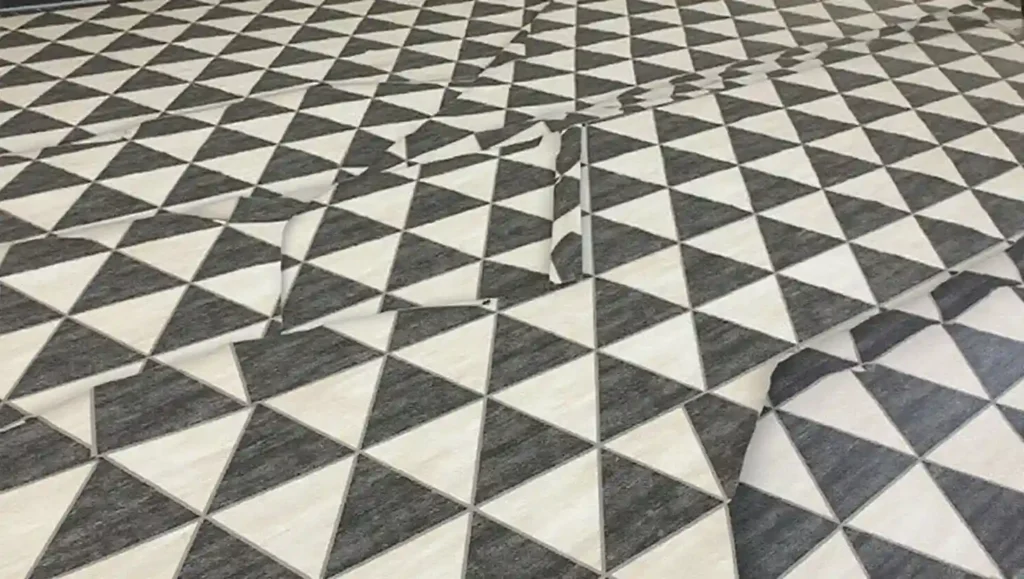
Patterned luxury vinyl tile — checkerboard layouts, geometric shapes, encaustic-inspired prints, or bold colorways — is particularly effective in dedicated pet rooms because these spaces are free from the aesthetic constraints that govern the rest of the home. Where the living room requires a neutral floor that works with existing furniture and a coherent overall palette, the pet room can be genuinely playful. A checkerboard layout in contrasting tones, for instance, creates a visually engaging, clearly intentional space that demonstrates the same design investment the rest of the home receives.
From a practical standpoint, patterned LVT in a pet room benefits from the same specifications as any other high-use vinyl application: a thick wear layer, a waterproof core, and a surface finish with sufficient texture to provide grip. The additional consideration specific to a pet room is ease of full replacement — if a pet damages a section of floor severely enough to require replacement, a click-lock LVT installation makes it possible to replace individual tiles without disturbing the rest of the floor.
Idea 13: Vinyl Plank Flooring in Wet-Zone Extension — Covered Patio or Indoor-Outdoor Transition
San Diego’s climate creates a genuine indoor-outdoor living culture that most other American cities cannot match. Covered patios, screened lanais, and climate-adapted indoor-outdoor transition spaces are common features of San Diego homes, and they represent one of the most challenging flooring applications in a pet household: surfaces that must withstand both the outdoor elements and the indoor-use aesthetic expectations that homeowners bring to any visible living space.
Luxury vinyl plank designed specifically for outdoor or semi-outdoor applications — products rated for UV exposure, temperature cycling, and the sustained moisture that a covered patio experiences — allows the visual language of the interior vinyl floor to extend into the transition zone. This continuity of material between interior and exterior space is one of the most effective ways to make a home feel larger and more cohesive, and it means that pets moving between inside and outside are always on a surface that is waterproof, cleanable, and durable enough to handle whatever they bring in with them.
Not all vinyl products are rated for outdoor use, even in covered applications. UV resistance matters because even under a roof overhang, reflected and ambient UV exposure in Southern California is significant enough to fade or degrade products not formulated for it. When selecting vinyl for a covered patio or transition space, confirm that the product’s warranty covers outdoor or semi-outdoor installation, and check the temperature range specification to ensure it accommodates both summer heat and the cooler, damper conditions of San Diego’s marine-layer mornings. The full waterproof performance of vinyl flooring in varied conditions is worth understanding before committing to an outdoor application.
For pet owners who want their dogs to have access to a seamlessly connected indoor-outdoor space without tracking in dirt and moisture every time they cross the threshold, an outdoor-rated LVP on the patio side and a matching interior-rated LVP on the inside — connected by a low-profile transition strip — creates a functional, visually unified pet-friendly zone that genuinely improves daily life for both the household and the animals in it.
Key Buying Criteria to Prioritize When Choosing Pet-Friendly Vinyl
Across all thirteen of the ideas above, a handful of technical specifications repeat as the factors that most directly determine how a vinyl floor will perform in a real pet household. Understanding these criteria will help you evaluate any specific product against what your actual situation requires.
Wear layer thickness is the most important surface-level specification. For homes with cats or small dogs with trimmed nails, 12 mil is adequate. For most households with medium to large dogs, 20 mil is the appropriate minimum. For households with multiple large dogs or especially active breeds, products approaching 28 mil provide a meaningful longevity advantage.
Core construction determines the floor’s response to moisture, impact, and thermal cycling. Both SPC and WPC are genuinely waterproof in the sense that the core material itself will not absorb water. SPC is denser, harder, and more resistant to denting from heavy objects or concentrated loading. WPC is softer, warmer, and quieter — advantages that matter most in bedrooms and living spaces where pets rest for extended periods. For a detailed breakdown of how these SPC and WPC constructions differ, their respective trade-offs apply differently depending on the room and the specific animals in the household.
Surface finish affects both aesthetics and practicality. Matte and low-sheen finishes are significantly more forgiving in daily use than high-gloss surfaces — they hide smudges, nose prints, and the surface haze from constant contact. Embossed textures improve grip for pets and reduce visible scratching compared to smooth finishes. Wire-brushed and distressed textures disguise wear more effectively than uniform smooth surfaces over the long term.
Installation method matters for maintenance and repair. Click-lock floating floor installations allow individual planks or tiles to be replaced without disrupting adjacent sections — a significant advantage in a pet household where a single severe stain or damage event might otherwise require a much larger area to be replaced. Glue-down installations are more stable in very high-traffic areas and in spaces where the floor might be subject to heavy repeated impact, but they require more involved repair processes when sections need replacement.
VOC certification provides assurance about indoor air quality, which is relevant in homes with pets that spend many hours in close contact with the floor surface. GREENGUARD Gold certification is the most stringent widely recognized standard for residential flooring VOC emissions. Choosing a certified product is a straightforward way to address this concern without needing to evaluate manufacturer claims independently.
Maintenance Practices That Extend the Life of Vinyl in Pet Households
Even the most durable vinyl flooring performs better and lasts longer when a household maintains consistent practices designed around how pets actually use and affect floors. These are not onerous requirements, but they are meaningfully different from what a pet-free household might do.
Nail trimming is the single most effective preventive measure against surface scratching. A dog whose nails are trimmed to the point where they do not contact the floor during normal walking generates far less surface wear than one whose nails click on the floor with every step. Regular nail trimming — at home or by a groomer — extends the effective life of even a mid-grade vinyl floor substantially.
Feeding station mats placed under water and food bowls prevent the bowl-edge water accumulation that occurs when a dog drinks and drips repeatedly in the same location. Even on a waterproof floor, standing water that sits in one location for extended periods can affect the adhesion of click-lock joints at the edges of nearby planks. A simple silicone mat addresses this completely.
Entry mats at doors that pets use regularly trap dirt, sand, and debris before they reach the vinyl surface. Sand is particularly abrasive against vinyl wear layers — in San Diego, where beach access and desert trail hiking are common activities that dogs participate in, an entry mat that captures sand before it reaches the floor is a practical investment in floor longevity. Learning about proper vinyl plank cleaning methods prevents the use of cleaners that degrade the wear layer or leave residue that attracts more dirt.
Routine sweeping or vacuuming — using a vacuum without a rotating beater bar, which can scratch vinyl surfaces — removes pet hair and grit that would otherwise act as abrasive particles underfoot. Damp mopping with a manufacturer-approved cleaner removes the residue from pet paws that accumulates as a dull haze on the surface. Pet urine that reaches the floor should be cleaned promptly — not because the waterproof core is at risk, but because the adhesive or locking mechanisms at plank edges can be affected by extended exposure to the acidic compounds in urine.
Final Thoughts
The thirteen ideas in this guide represent a range of practical approaches, visual styles, and technical specifications that collectively cover most of the real situations that pet-owning homeowners in San Diego encounter when selecting vinyl flooring. The underlying thread connecting all of them is the same: modern luxury vinyl flooring allows you to choose based on how you want your home to look and how your pets actually live in it, rather than forcing a compromise between aesthetics and practicality.
Whether you are replacing carpet that absorbed years of pet accidents, upgrading hardwood that has been scratched beyond refinishing, or installing flooring in a new home for the first time with pets in mind, vinyl gives you a starting point that does not require you to pretend your pets are not a significant factor in how your floors are used. For homeowners exploring how vinyl performs against other flooring categories in specific contexts, the comparison of vinyl flooring options evaluated specifically for pet households provides a useful framework for narrowing down the product category that fits your situation best.
Working with a professional installer who understands both the product specifications and the specific conditions of San Diego homes — the humidity gradient from coastal to inland neighborhoods, the temperature range across seasons, the subfloor conditions common in different construction eras — will ensure that whatever product you select is installed correctly and performs as specified for years of life with the animals who share your home.
James Miller is a seasoned flooring contractor with years of hands-on experience transforming homes and businesses with high-quality flooring solutions. As the owner of Flooring Contractors San Diego, James specializes in everything from hardwood and laminate to carpet and vinyl installations. Known for his craftsmanship and attention to detail, he takes pride in helping clients choose the right flooring that balances beauty, durability, and budget. When he’s not on the job, James enjoys sharing his expertise through articles and guides that make flooring projects easier for homeowners.
Open plan living is one of the most popular home design choices right now, and the flooring you choose can make or break the whole look. With large, flowing spaces that combine the kitchen, dining area, and living room all in one, you need a flooring option that is durable, stylish, and able to visually…
The kitchen is the one room in your house where the floor takes punishment from every direction at once. You’ve got standing water from the sink, dropped cast iron pans, cooking grease tracking outward from the stove, and chair legs dragging across the surface multiple times a day. The fact that vinyl flooring has become…
What Historic Wood Floors Actually Are — And Why That Changes Everything Most conversations about preserving wood floors in historic homes start at the wrong place. They start with products — which oil to apply, which sander to rent — when the real starting point is understanding what you are standing on and why it…
Carpet installation looks straightforward until it isn’t. You order the carpet, pull up the old floor, roll out the pad, and then somewhere between the first tack strip and the last trimmed edge, something goes wrong. A ripple shows up two weeks later. A seam opens. The edges start lifting. The floor sounds hollow underfoot…
Most flooring decisions in an office setting get made the wrong way. Someone picks a carpet that looks good in a showroom, installs it across every zone, and then watches it mat down in the reception area within eighteen months while the executive corridor still looks fine. That happens because office carpets are not residential…
Before a single hardwood plank ever touches your floor, there is a layer doing the most important structural work in the entire installation — the subfloor. Get it right, and your hardwood floors will stay flat, tight, and quiet for decades. Get it wrong, and you will be dealing with squeaks, cupping, gaps, and failed…