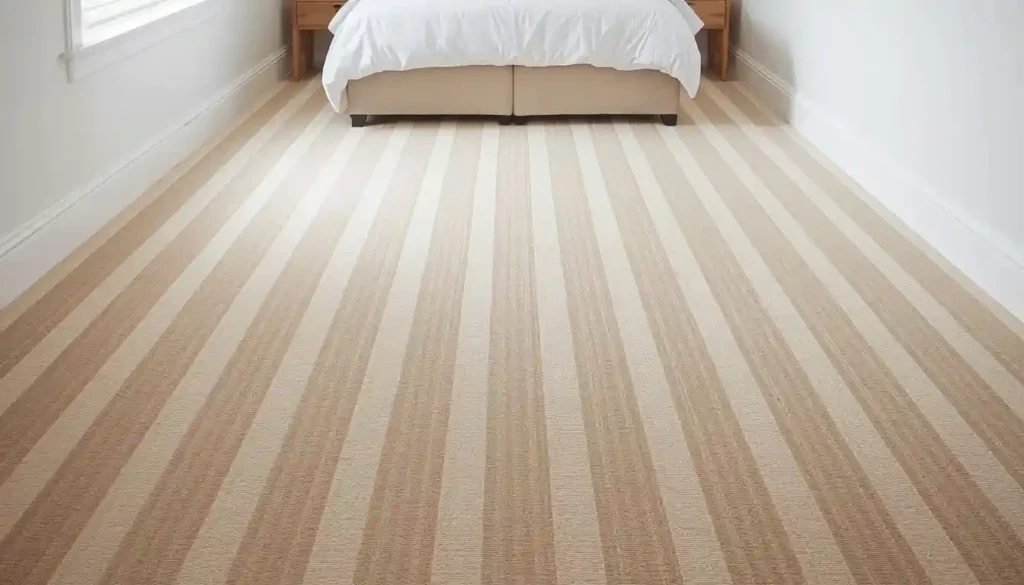
Stripes are one of the oldest optical illusions in interior design, and they work just as well on carpet as they do on fabric or wallpaper. When you lay a striped carpet so that the lines run parallel to the longest wall in the room, the pattern draws the eye forward and creates the impression of a longer, deeper space. This is particularly valuable in narrow rooms — think galley bedrooms, box rooms, or small home offices — where the width is fine but the length feels short.
The stripe does not have to be bold to be effective. A tone-on-tone stripe — where both colors are within the same family but vary slightly in value — gives you the spatial benefit of direction without the visual noise of high contrast. A carpet with soft ivory and warm linen stripes, for example, is elegant and understated while still doing the optical work.
If you are dealing with a room that is more square than rectangular, consider a diagonal stripe orientation. Diagonal lines break the rigid feel of four equal walls and introduce movement that disguises a square footprint. This is a less common approach but one that interior designers use specifically to make boxy rooms feel less constrained.
3. Berber Loop Pile in a Neutral Fleck Pattern
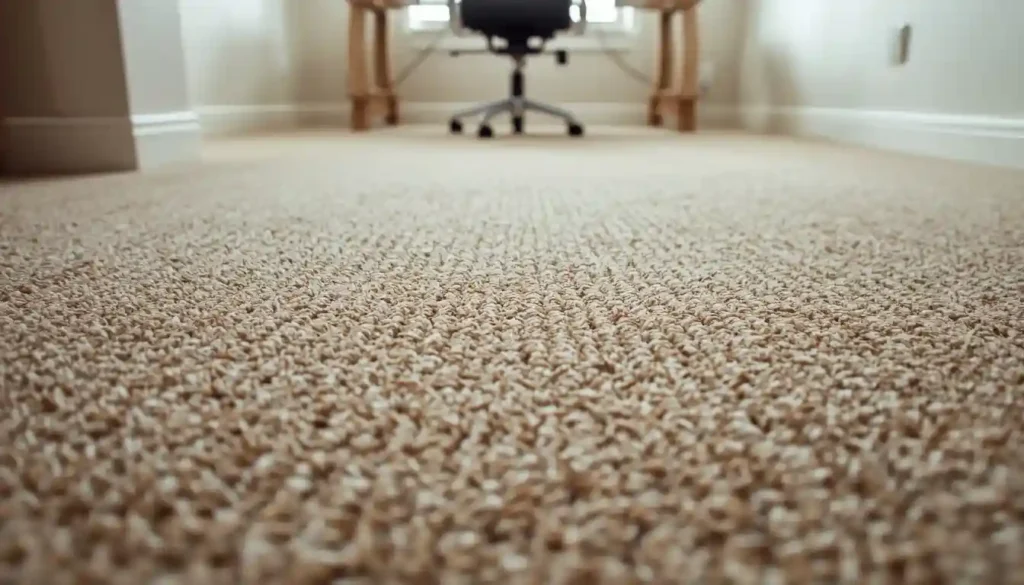
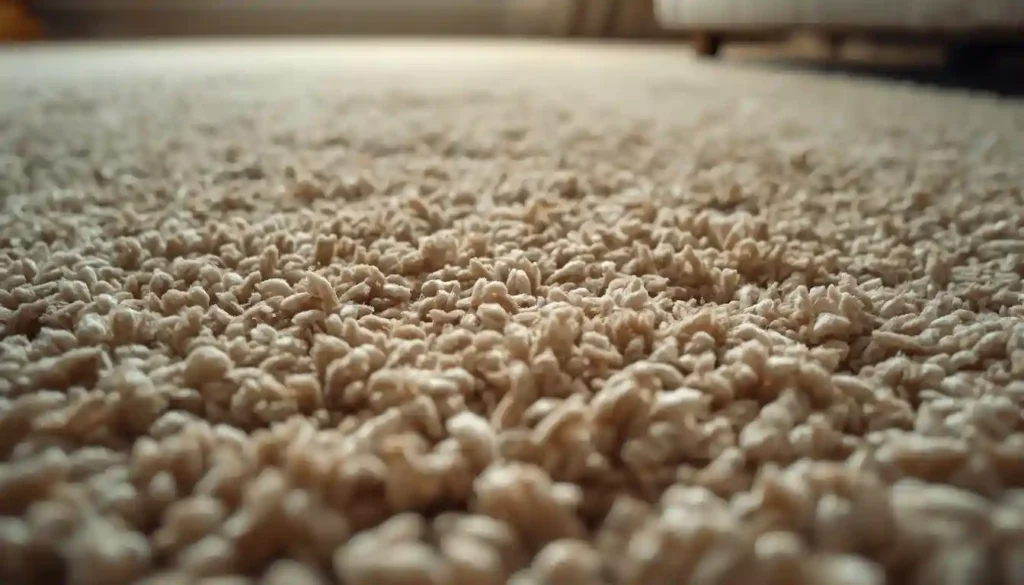
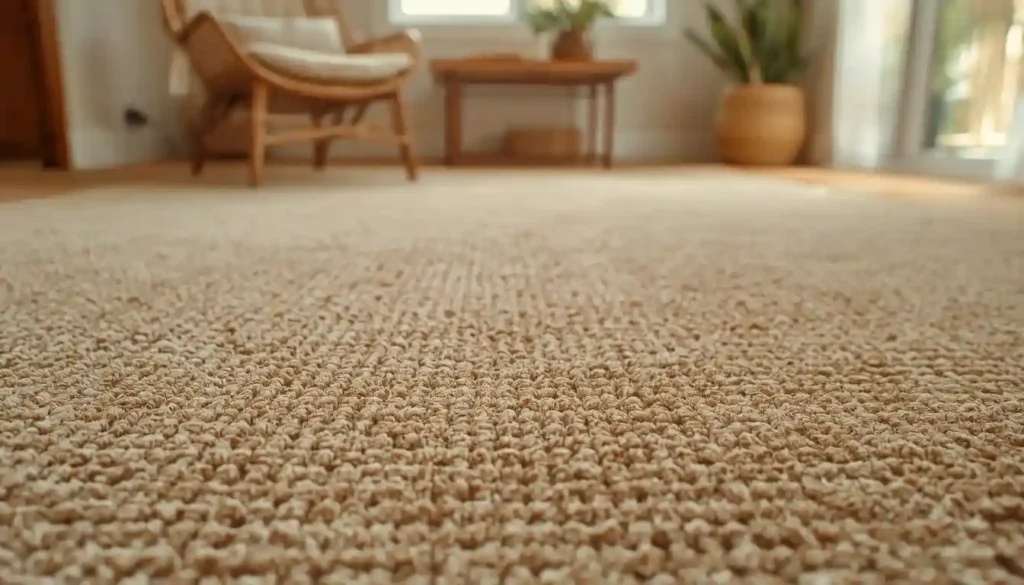
Berber carpet — named for the flat-woven textiles of North African origin — refers in modern usage to a loop pile construction with a tight, dense surface and typically features flecks of color woven into a lighter neutral base. This combination makes it one of the smartest choices for small spaces for several reasons at once.
The level loop construction sits low to the ground, which keeps furniture legs from sinking and gives the room a visually flat, uninterrupted floor plane. The flecked pattern hides dirt and light traffic wear, which matters in smaller rooms that tend to get heavier foot traffic per square foot. And the neutral base — usually cream, light grey, or warm sand with darker flecks — integrates with almost any decor without becoming a focal point that draws attention down to the floor and shrinks the room visually.
Berber holds up exceptionally well in home offices, small dens, and children’s rooms where durability is as important as appearance. It also pairs beautifully with modern Scandinavian interiors, where restraint and natural material tones are the design language. If you are weighing your options across different pile constructions, our breakdown of different types of carpet covers how loop pile compares to cut pile options in terms of longevity and everyday performance.
4. Pale Blue or Soft Green for a Receding Floor Effect
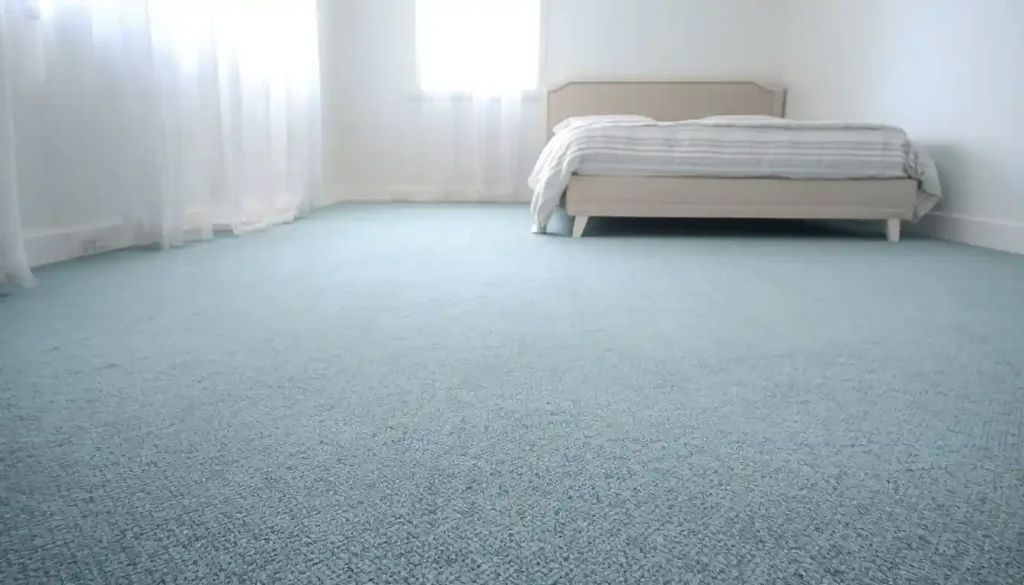
Color psychology plays a real role in how we perceive space. Cool tones — specifically pale blues and soft sage or mint greens — have a visual receding quality, meaning they appear to push surfaces slightly away from the viewer. Applied to a floor, this makes the room feel deeper and more expansive than it actually is.
This is not the same as cold or clinical. A carpet in dusty blue or soft sage reads as calm and grounded, not sterile. In small bedrooms especially, these shades create an atmosphere that feels genuinely restful — the room does not just look bigger, it also feels more relaxing to spend time in. That dual benefit is why these colors consistently appear in designer recommendations for compact sleeping spaces.
The trick is to keep the rest of the room quiet. Pale blue carpet paired with cream or soft white walls and furniture in natural linen or light wood tones gives the color room to breathe. The moment you add too many competing colors or patterns elsewhere in the room, the spatial benefit of the carpet color gets cancelled out by visual clutter.
5. Monochromatic Tonal Carpet Matching the Wall Color
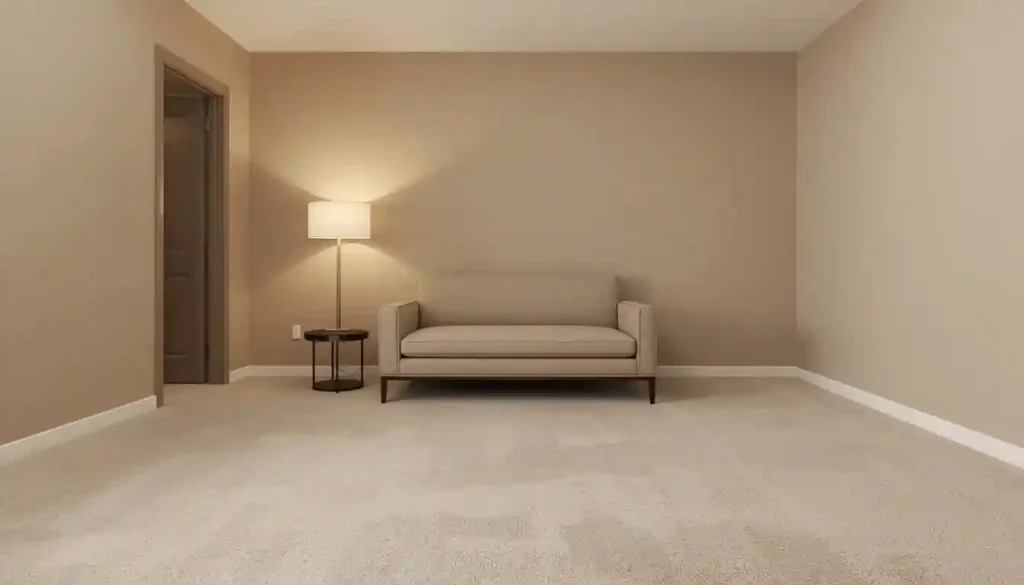
One of the most sophisticated and spatially effective techniques in small room design is tonal layering — choosing a carpet that exists within the same color family as the walls, though not necessarily the exact same shade. When the floor and walls feel like they belong to the same continuous palette, the visual seam between vertical and horizontal surfaces softens, and the room reads as one cohesive, expanding envelope rather than a box with defined edges.
In practice, this means if your walls are painted a warm greige, your carpet might be a shade or two lighter or deeper within that same warm neutral family. If your walls are soft sage, your carpet might be a lighter sage or a natural linen that picks up the green undertone. The key is that neither the floor nor the walls is fighting for attention — they are both part of the same story.
This approach works particularly well in open-plan small apartments where a single flooring choice across multiple zones creates a sense of spatial flow. It also works well in studio apartments where the bed, seating, and work areas share the same footprint.
6. Low-Pile Cut Pile Carpet for Visual Flatness
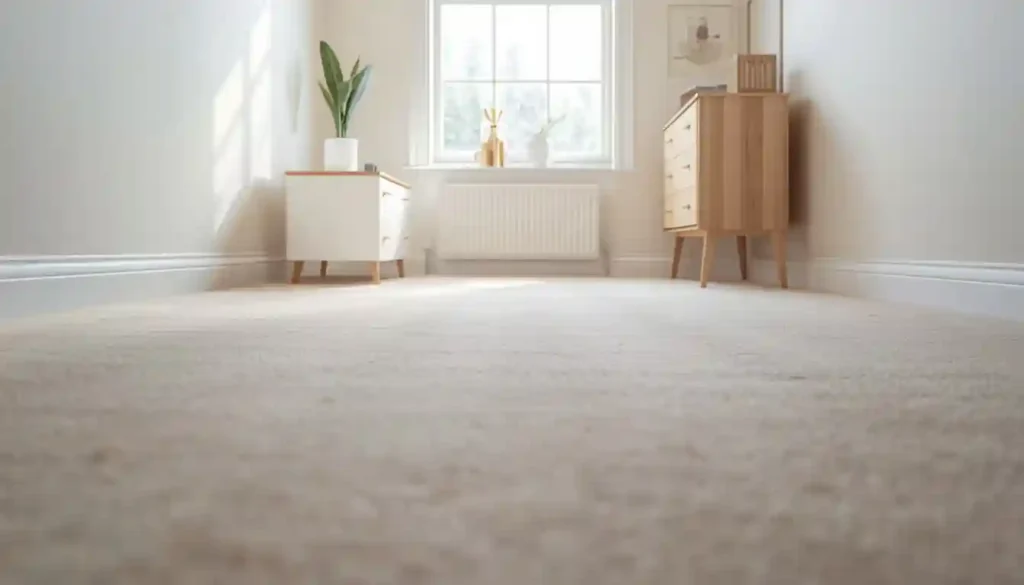
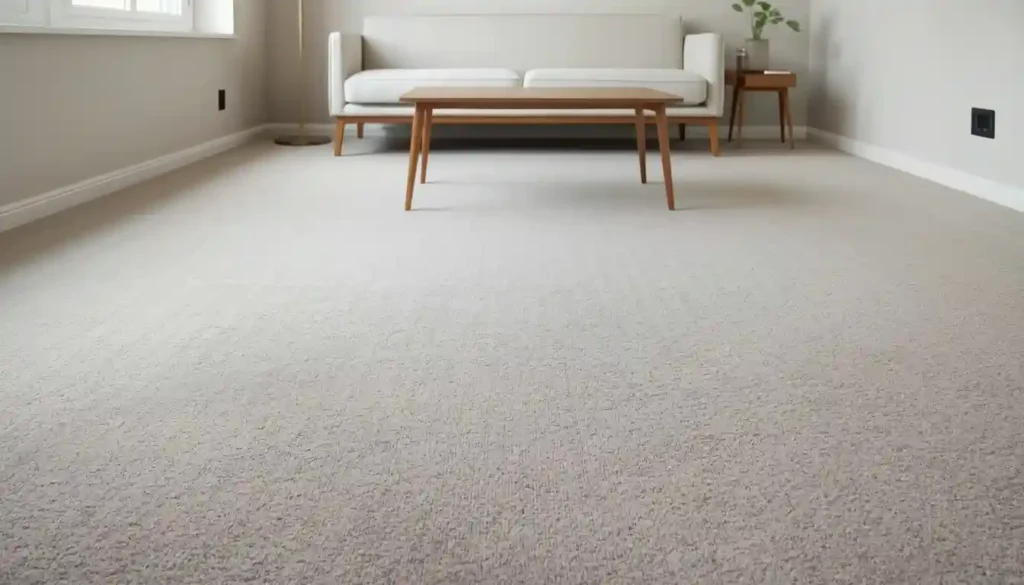
Pile height has a direct and underappreciated effect on how large a room appears. High-pile carpets — shag, plush, frieze — add a visual weight to the floor that anchors the eye downward and can make ceilings feel lower and rooms feel more compressed. In a small space, that vertical weight works against you. Low-pile cut pile carpets, with fibers typically under a quarter inch in height, keep the floor visually flat and recessive.
A flat floor surface allows the eye to travel across it quickly and without interruption. That speed of visual travel is what creates the perception of space. When the eye has to wade through a dense, fluffy texture, it slows down and the room feels smaller by comparison. This is why interior designers consistently recommend low-pile options for compact rooms — not because they are cheaper or less luxurious, but because they do a specific spatial job that high-pile carpets cannot.
This does not mean sacrificing comfort. A well-constructed low-pile nylon or triexta carpet with a quality pad underneath can feel remarkably comfortable underfoot while still reading as spatially generous. The padding is where the softness actually comes from — the pile height is about appearance.
7. Textured Cut-and-Loop Carpet for Subtle Pattern Without Busyness
Cut-and-loop carpet construction uses a combination of cut fibers and looped fibers within the same carpet, creating a surface that has visual dimension without a printed or woven pattern. The texture creates subtle shadows and highlights that add interest to the floor, but because there is no repeating motif, there is no busy pattern competing with the rest of the room’s decor.
In a small space, this is an ideal middle ground. A perfectly plain carpet can feel institutional and bland. A heavily patterned carpet can feel overwhelming and visually shrinking. Cut-and-loop texture sits between both, offering enough visual complexity to feel intentional and designed without overwhelming the eye or making the room feel more confined.
This construction also performs well in terms of hiding footprints and everyday marks, which matters in smaller rooms that see consistent use. The varied pile heights disguise compression from foot traffic in ways that a uniform cut pile cannot. It is a smart choice for small family rooms, compact hallways, and children’s bedrooms where the floor takes a lot of daily use.
8. Carpet Tiles in a Uniform Grid for a Designed, Bespoke Feel
Carpet tiles — also called modular carpet — have moved well beyond their commercial origins. Contemporary carpet tiles are available in residential-friendly colors and textures, and they offer something that traditional broadloom carpet does not: the ability to create a pattern, zone a space, or replace individual sections when they wear or stain.
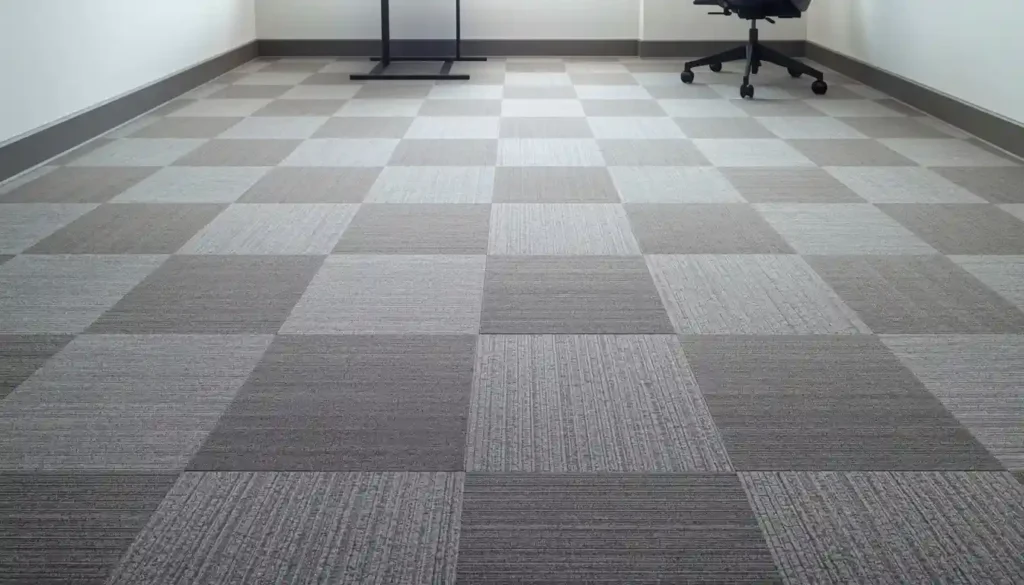
In a small room, a uniform installation of carpet tiles in a single tone can look just as seamless as broadloom when the tiles are well-matched and laid in a consistent direction. The grid of the tile seams is so subtle as to be nearly invisible in most residential colors. What you gain is practical flexibility — if a pet stains one tile or heavy furniture crushes a section, you can replace that section without pulling up the entire floor.
A more adventurous approach is to use carpet tiles in two related tones — perhaps a warm grey and a slightly lighter warm grey — laid in a large-scale checkerboard or offset grid. This creates a geometric pattern with very low contrast, adding visual interest without the busyness that high-contrast patterns introduce. The scale of the pattern matters; keep the individual tile size larger rather than smaller to avoid a visually choppy surface.
9. Warm Blonde or Sandy Tones to Borrow Warmth and Light
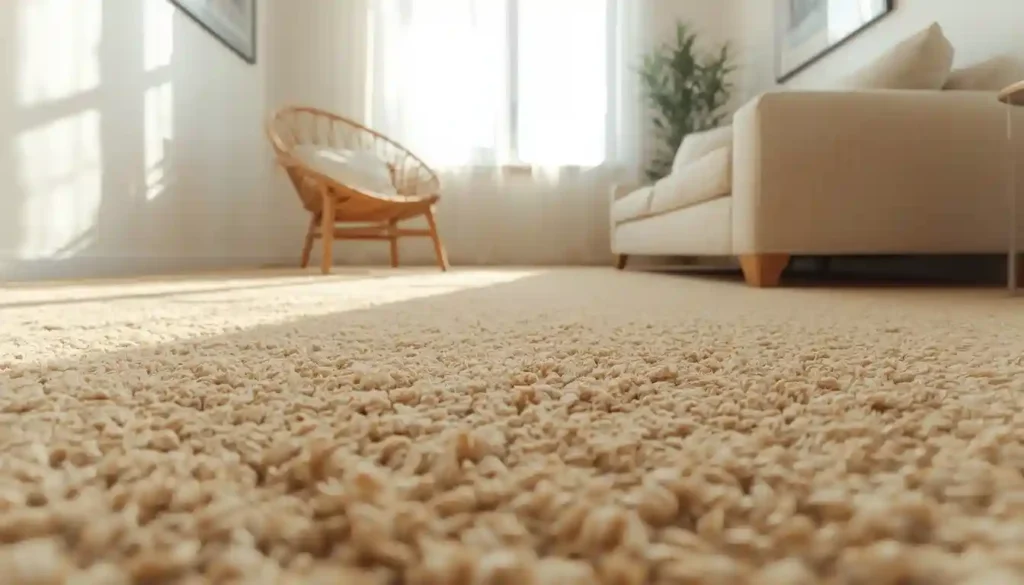
There is a particular quality of warmth that sandy, blonde, and golden-beige carpets bring to small rooms that cool neutrals cannot match. While pale greys and whites reflect light effectively, warm-toned carpets do something slightly different — they add the quality of sunlight to a room even on grey days. This warmth translates into a sense of comfort and generosity that can make a small room feel like a deliberate, curated space rather than a space that simply ran out of square footage.
Sandy tones in particular work exceptionally well in coastal-adjacent homes, bungalows, and any space where the goal is relaxed rather than formal. They pair naturally with natural wood furniture, rattan and wicker accents, linen upholstery, and white or soft cream walls. This combination creates a room that reads as effortlessly spacious because all the elements belong to the same warm, light-filled palette.
From a practical standpoint, warm-toned carpets also disguise the light sandy dirt that coastal and outdoor-adjacent homes tend to track in — which is a genuine maintenance advantage in San Diego’s climate where fine dust and sand are everyday realities.
10. Frieze Carpet for Casual Texture That Hides Wear
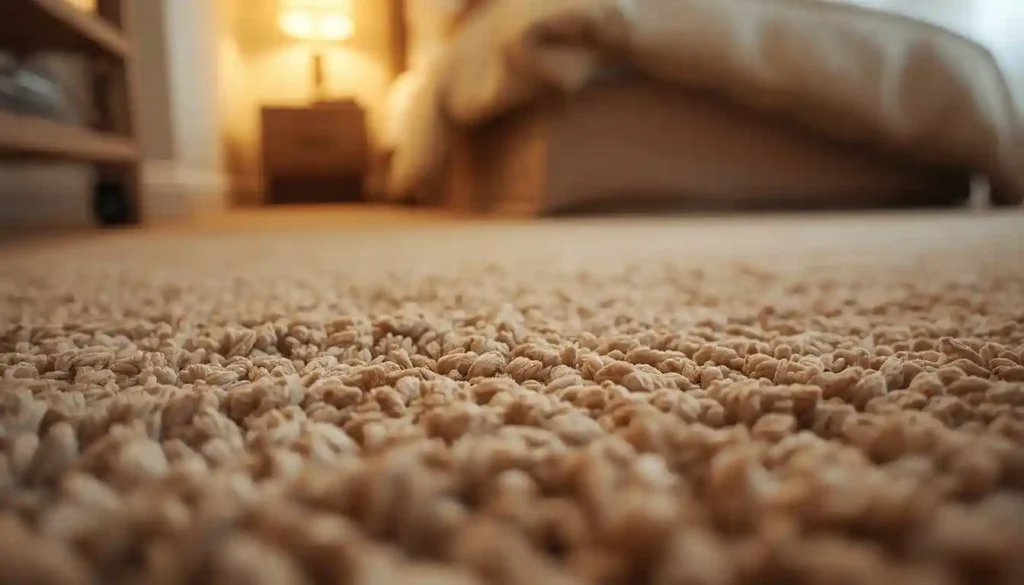
Frieze carpet — pronounced “free-ZAY” — is a cut pile carpet where the fibers are tightly twisted and then heat-set so they curl back on themselves slightly. This creates a surface that looks somewhat like a dense version of a shag rug but sits much lower to the ground and performs significantly better in terms of durability and maintenance.
In a small room, frieze offers a casual, relaxed texture that softens the look of the space without adding the visual weight of a true plush or shag pile. The tight twists also do an excellent job of hiding footprints and vacuum marks, which means the carpet consistently looks tidy even with regular use — an important quality in smaller spaces where mess is more visible per square foot.
Frieze works particularly well in small bedrooms, small living rooms in rental properties, and compact dens where the goal is a space that feels comfortable and lived-in rather than formal. Its durability makes it a practical choice for spaces that need to earn their keep day after day. Understanding the pros and cons of frieze carpet in detail will help you decide whether this construction is the right fit for your specific room size and lifestyle.
11. Dark Carpet With Light Walls for Dramatic Vertical Emphasis
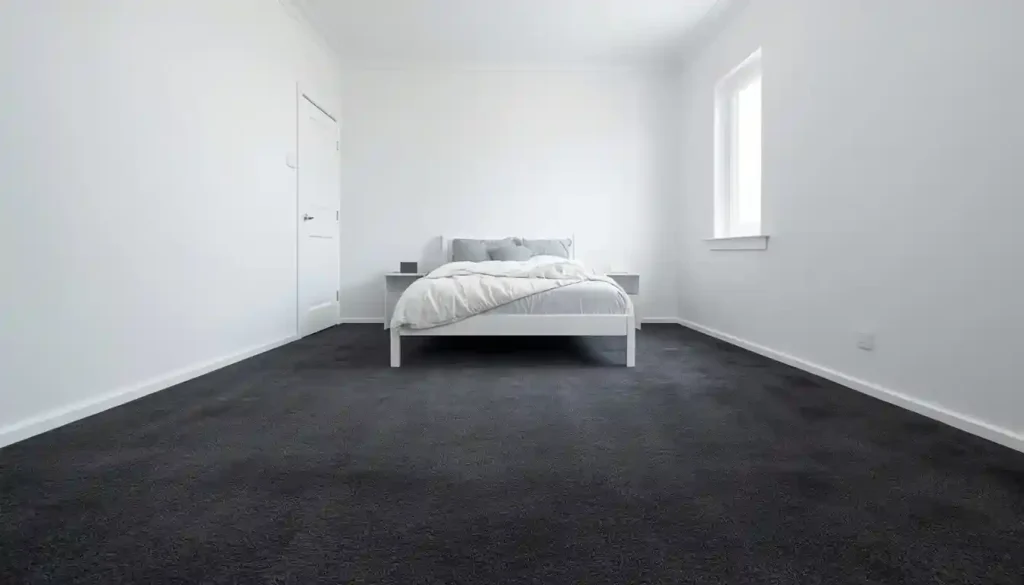
The conventional advice for small spaces is always “go light.” But there is a counterintuitive approach that experienced designers use deliberately: a dark carpet with significantly lighter walls creates a strong contrast that draws the eye upward rather than outward. When the heaviest visual weight is on the floor and the walls are pale, the room feels taller — and a taller-feeling room often feels more spacious than it would with a light floor and busy walls.
Deep charcoal, rich espresso brown, and dark slate grey carpets can all work this way when paired thoughtfully. The walls should be light — bright white, soft cream, or very pale grey — and the furniture should be modest in scale. The contrast between the dark floor and the light walls creates a visual anchor at ground level that makes everything above it feel airy and expansive.
This approach works especially well in small rooms with high ceilings or rooms that have architectural details — picture rails, crown molding, tall baseboards — that you want to draw attention to. It is also a strong choice for small bedrooms that need to feel intimate and retreat-like rather than airy and bright. Understanding what carpet type works best for bedrooms will help you pick the right pile and fiber alongside the right color for this kind of design intent.
12. Geometric Pattern Carpet at a Large Scale
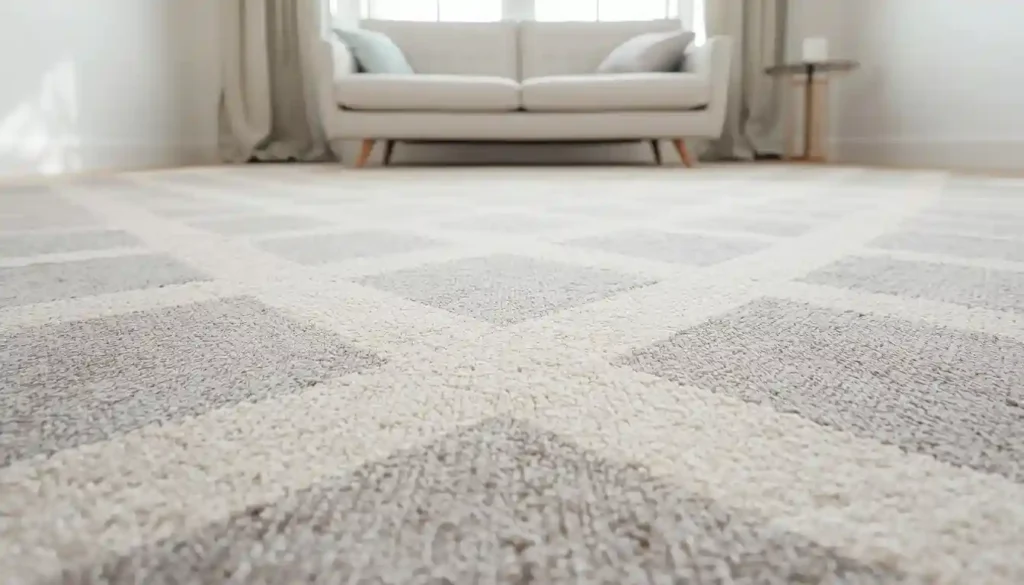
There is a common misconception that patterns have no place in small rooms. The truth is more nuanced — small, busy, high-contrast patterns make rooms feel chaotic and smaller. But large-scale, low-contrast geometric patterns on carpet can actually make a small room feel bigger by creating strong directional lines that guide the eye across and through the space.
A large diamond grid, an oversized herringbone, or a wide chevron in two closely related tones — say, soft white and pale silver — covers the floor with a pattern that reads as elegant and ordered rather than busy. The scale of the repeat is what matters. When the geometric elements are large relative to the room, the pattern does not fragment the space. Instead, it creates a sense of proportion that makes the room feel more considered and deliberate.
For a small living room, a large-scale geometric carpet in neutral tones can serve as the room’s anchor without competing with furniture or wall art. It defines the space with confidence while keeping the palette restrained. This is a strong choice for homeowners who want their small room to have a distinct design identity rather than just feeling “acceptable.”
13. Saxony Plush in a Bedroom for Comfort Without Bulk
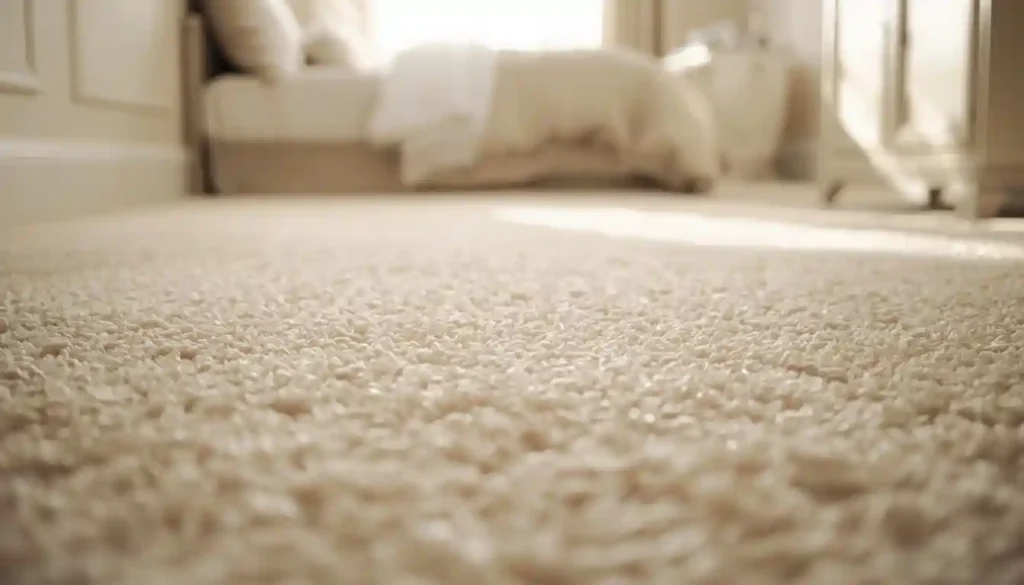
Saxony carpet is a cut pile carpet where the fibers are twisted and set at a consistent height, creating a smooth, uniform, somewhat formal surface that is significantly softer to walk on than a loop pile. It splits the difference between the visual flatness of a low-pile carpet and the obvious luxury of a deep shag — and in a small bedroom, that balance is often exactly right.
The key is to use Saxony in a small bedroom where it will not see the kind of heavy directional traffic that causes it to show footprints and vacuum lines in living areas. In a bedroom, foot traffic is relatively low and comes from multiple directions, which means the pile does not wear in obvious tracks. The result is a floor that looks consistently lush and well-maintained without requiring special care.
In a pale neutral shade — soft ivory, warm mushroom, or light stone — Saxony carpet in a small bedroom creates a floor that feels like a genuine luxury. The texture has enough visual weight to make the room feel intentionally designed, but the low to medium pile height does not overwhelm the space. Pair it with upholstered furniture in complementary tones and keep the overall palette light to maximize the sense of space.
14. Natural Fiber Look Synthetic Carpet for Texture and Warmth
Sisal, jute, and seagrass carpets have a raw, organic texture that grounds a room and adds a material richness that purely synthetic carpets often lack. The problem with true natural fiber carpets in small living spaces is their sensitivity to moisture and their relative difficulty to clean. A spill that would be manageable on synthetic carpet can be a permanent stain on real sisal.
The solution that many designers now recommend is synthetic carpet engineered to look and feel like natural fiber. Modern nylon and polypropylene carpets are produced with tight weaves, raw-material-inspired textures, and the warm sand, oat, and honey tones that characterize real sisal and jute — but they clean easily and perform well under real residential conditions.
In a small room, this texture adds warmth and character without pattern, which is exactly what small spaces need: material interest rather than visual complexity. The organic quality of the texture makes the room feel curated and considered. It works particularly well in small dining areas, small entryways, and living rooms where the goal is a relaxed, collected aesthetic. When comparing your options, it is worth looking at how different carpet materials perform across durability, comfort, and maintenance before committing.
15. Zoned Area Carpet Over Hard Flooring to Define Space Without Closing It In
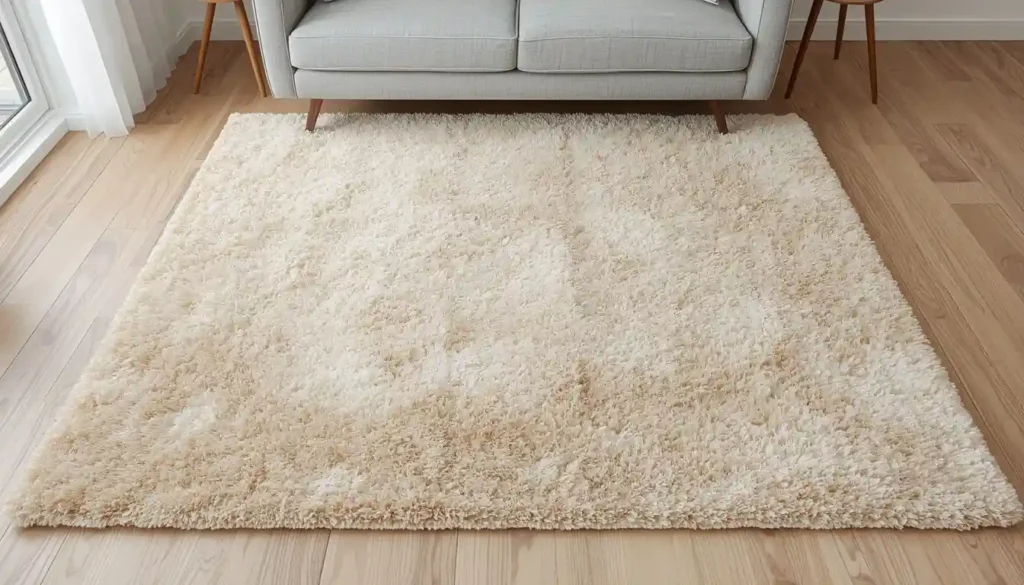
Not every small space benefits from wall-to-wall carpet. In open-plan apartments and homes where one small area flows into another, a large area rug — or a strategically oversized piece of broadloom cut and bound — over hard flooring can define a zone without physically closing it off. This creates a room-within-a-room effect that gives small living and sleeping areas a sense of defined purpose without the walls that would make the space feel truly confined.
The critical rule is size. In a small space, most people make the mistake of choosing an area carpet that is too small. A small carpet in the middle of a small room looks like an island — it calls attention to all the floor around it and makes the room feel smaller. A carpet that extends well under the furniture — ideally with the front legs of all seating pieces sitting on it — anchors the furniture grouping and creates continuity between the floor and the furnishings.
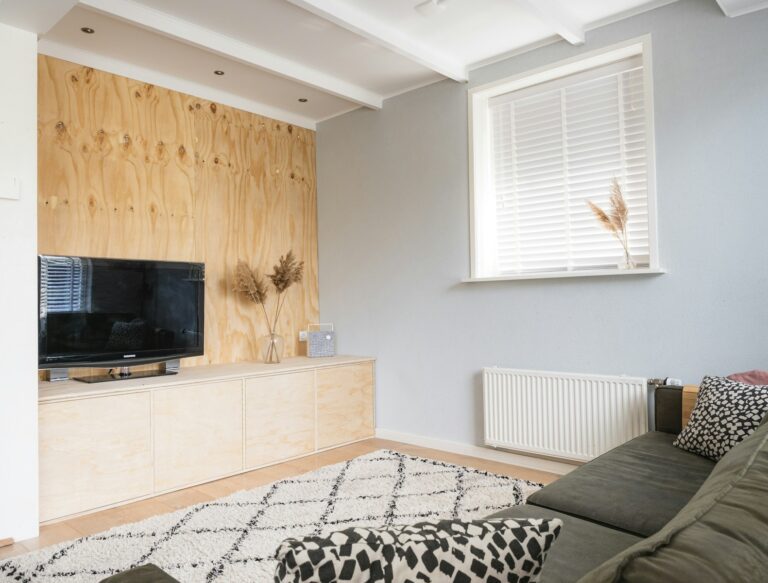
In a small living room, an area carpet should ideally be at least 8×10 feet. In a small bedroom, the carpet should extend on all three exposed sides of the bed, not just at the foot. When the carpet is sized generously, it performs the same spatial job as wall-to-wall carpet while allowing the hard floor at the perimeter to frame and define the zone. For deeper reading on how your choice of flooring connects to the broader question of what is right for a rental or compact property, our guide on best flooring for rental properties is worth a look, particularly if you are weighing carpet against hard flooring options for a property that needs to serve multiple occupants over time.
How to Choose the Right Carpet for Your Specific Small Space
Running through these fifteen ideas, several consistent principles emerge. Light colors expand. Continuous surfaces without breaks or seams read as larger. Low pile heights keep the floor visually recessive. Tonal consistency between floor and walls dissolves boundaries. And generous sizing — whether wall-to-wall or in an area rug — always outperforms modest sizing in terms of spatial effect.
The room’s function should shape the pile height and fiber choice. Small bedrooms can support slightly higher pile for comfort since foot traffic is low. Small living rooms and home offices benefit from low to medium pile for durability and cleanability. Small hallways and transitional spaces should prioritize flat, tight loop constructions that resist crushing under directional foot traffic.
Fiber type matters more than most people expect. Nylon remains the most durable and resilient fiber for residential carpet — it bounces back from compression, resists staining with proper treatment, and maintains its appearance longer than polyester under equivalent traffic. Triexta, a newer fiber type, offers comparable durability with excellent inherent stain resistance and a softer hand. Polyester is softer and more affordable but compresses more readily under use. For a small room that you want to stay looking good for years, nylon or triexta is the right starting point. Our guide on nylon versus polyester carpet goes into the practical performance differences in detail.
Color temperature — the warmth or coolness of the carpet’s tone — should be matched to the room’s natural light. Rooms that receive warm, south- or west-facing light can handle cooler carpet tones without feeling cold. Rooms that receive only north-facing or indirect light benefit from warmer tones that compensate for the cooler ambient light. Getting this wrong is one of the most common reasons a carpet that looked right in the showroom feels slightly off in the installed room.
Finally, the underpad beneath the carpet should not be an afterthought in a small space. A quality pad adds genuine underfoot cushion that a thin or no-pad installation cannot provide, and it also extends the life of the carpet above it by absorbing the compression that would otherwise crush the carpet fibers prematurely. In a small room where the carpet sees significant foot traffic per square foot, this lifecycle benefit is meaningful. For those also navigating sound and warmth considerations, it is worth knowing that the right pad contributes to both — our post on the insulation benefits of carpet explains how the system of pile, pad, and subfloor works together to regulate temperature and reduce noise transmission.
The size of your room sets the problem. The carpet you choose — its color, pile, fiber, and pattern — determines how well you solve it. With the right choice, a small room stops feeling like something to apologize for and starts feeling like something you designed on purpose.
If you are ready to explore carpet options for a small space in your San Diego home, our team at Flooring Contractors San Diego works with homeowners across a range of budgets and styles to find the right fit for each room. Whether you are starting from scratch or replacing existing flooring, the process of selecting carpet with someone who can bring samples to your space — under your actual light, next to your actual walls — makes a meaningful difference in the outcome. You can learn more about our residential carpet flooring services and get in touch to schedule a consultation.
James Miller is a seasoned flooring contractor with years of hands-on experience transforming homes and businesses with high-quality flooring solutions. As the owner of Flooring Contractors San Diego, James specializes in everything from hardwood and laminate to carpet and vinyl installations. Known for his craftsmanship and attention to detail, he takes pride in helping clients choose the right flooring that balances beauty, durability, and budget. When he’s not on the job, James enjoys sharing his expertise through articles and guides that make flooring projects easier for homeowners.
The floor is the first thing a child touches and the last thing most parents think about correctly. They think about scratches. They think about spills. They think about cost. What they rarely think about is the surface their child is going to fall on at 11 months old when they’re learning to walk, or…
There is a persistent belief that carpet is bad for the air you breathe indoors. Pull up the carpet, the argument goes, and your allergies will disappear. The problem is that the scientific literature does not support this claim. What it actually shows is considerably more nuanced — and in many conditions, the opposite is…
The bathroom is the one room where flooring decisions carry real consequences. Get it wrong and you are not just looking at cosmetic damage — you are dealing with swollen cores, subfloor rot, mold colonies, and a floor that fails in under five years. Laminate flooring in the bathroom sits right at the center of…
Choosing carpet when you live with dogs or cats is not the same decision as choosing carpet when you don’t. The fiber that looks beautiful in a showroom can delaminate within three years under daily pet traffic. The soft plush pile that feels luxurious underfoot becomes a permanent archive of pet dander, urine odor, and…
The best thermal insulation under laminate flooring is extruded polystyrene (XPS) foam board, ranked first for thermal resistance per millimetre of thickness. The full ranking, from highest to lowest thermal performance per millimetre, is XPS foam, dense wood fibreboard, natural cork, premium combination foam, rubber crumb, and standard polyethylene foam. XPS reaches a TOG rating…
The direction you lay laminate flooring is one of those decisions that looks deceptively simple on the surface — until you are standing in the middle of your room with a chalk line in your hand and suddenly nothing feels obvious. Most guides hand you a single rule (“follow the light”) and call it a…