Idea 2: Greige LVP for a Versatile, Transitional Living Room
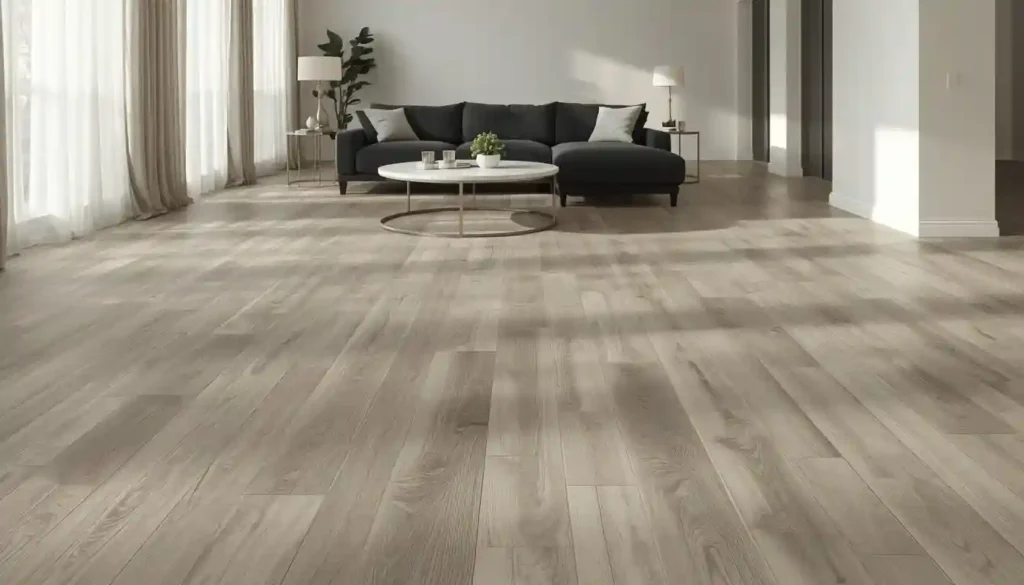
Greige — that precise blend of grey and beige — has become the defining neutral of modern residential design, and in vinyl flooring it performs even better than it looks on a color chart. The value of greige is that it contains both warm and cool undertones simultaneously, which means it reads differently depending on the light and what surrounds it. Next to a warm cream wall it looks sandy and soft; against a cool grey wall it reads more contemporary. That adaptability is rare in flooring, where you are locked in for years.
For living rooms, a greige vinyl plank pairs effortlessly with the widest range of furniture tones — honey oak, charcoal, white, walnut, or natural linen. It does not compete with a statement sofa or a textured feature wall; it grounds the room without making a declaration. This is exactly what a living room floor should do unless you are specifically building the design around the floor itself (see Ideas 5 and 7 below).
Mid-tone greige also performs well in high-traffic living rooms because it sits in the visual middle ground where neither light dust nor dark scuffs stand out clearly. For households that deal with pet hair or sandy feet from the backyard, this is a meaningful quality-of-life detail. Choose a plank with a registered embossed surface — one where the embossing pattern is physically aligned to the printed wood grain — for the most convincing result.
Idea 3: Dark Espresso or Charcoal Vinyl Plank for a Dramatic, Grown-Up Space
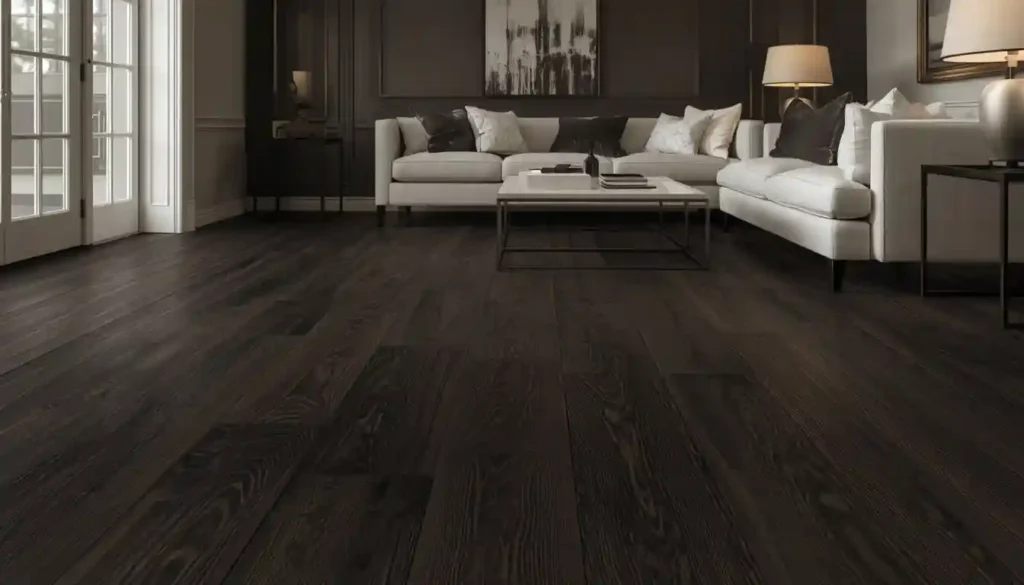
Dark floors make a room feel intimate and deliberate. In a living room where the design intent is sophistication rather than casual comfort — a formal sitting room, a moody media room, a downtown apartment with floor-to-ceiling windows — dark espresso or charcoal vinyl plank is one of the best tools available. The deep tones create a horizontal plane that the eye settles on, grounding the room and making furniture and artwork pop against it.
The old concern about dark floors showing every speck of dust is real but manageable. Modern dark vinyl planks are finished with matte or low-sheen coatings rather than high-gloss ones, which reduces the contrast between the floor surface and fine dust particles. Dark vinyl plank flooring with a hand-scraped or wire-brushed texture profile goes one step further by breaking up the surface visually — the irregular texture catches light at multiple angles so micro-scratches and dust patches blend into the floor’s character rather than announcing themselves.
The most successful dark-floor living rooms pair them with light walls — white, off-white, or very pale grey — so the contrast between floor and wall defines the room’s architecture cleanly. Keep window treatments light and airy. Dark floors absorb light, so increasing your artificial lighting plan when choosing this direction is smart: floor lamps, a statement pendant over the seating area, and under-shelf accent lighting all reinforce the sophisticated atmosphere dark vinyl sets up so well.
Idea 4: Herringbone Vinyl Plank as a Statement Floor
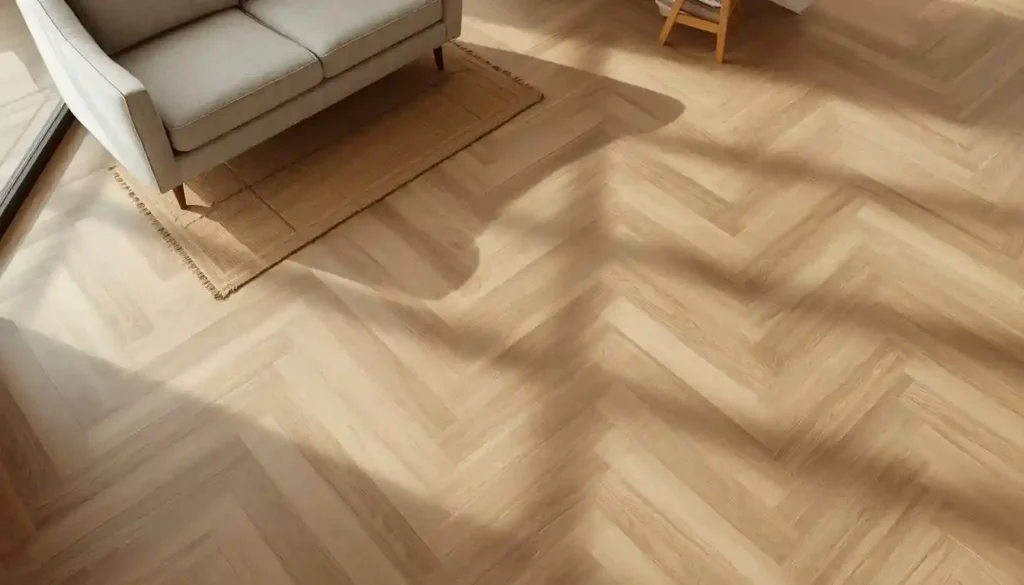
Herringbone is the pattern choice that signals design intention more clearly than any other floor layout. The V-shaped interlocking geometry has been used in European parquet floors since the Renaissance, and in traditional homes it has always meant something — a level of care and investment that a standard parallel layout does not communicate. For living rooms, herringbone vinyl plank achieves that same message for a fraction of the cost of real parquet.
Herringbone LVP uses rectangular planks arranged at alternating 90-degree angles. Unlike chevron, which requires mitered plank ends, herringbone uses standard rectangular planks — no angle cuts required. Most herringbone-specific vinyl planks come in smaller dimensions (typically around 6 inches wide by 24 to 36 inches long) that are proportioned for the pattern. The smaller format also makes this a manageable DIY layout with click-lock installation systems that do not require adhesive.
In living rooms, herringbone vinyl works best in light to medium tones — a warm blonde oak or a soft greige — where the pattern itself is the feature and the color stays neutral enough not to overwhelm the space. In small living rooms, herringbone laid diagonally (45 degrees to the walls) visually expands the room by drawing the eye across the diagonal axis, which is longer than either the room’s length or width.
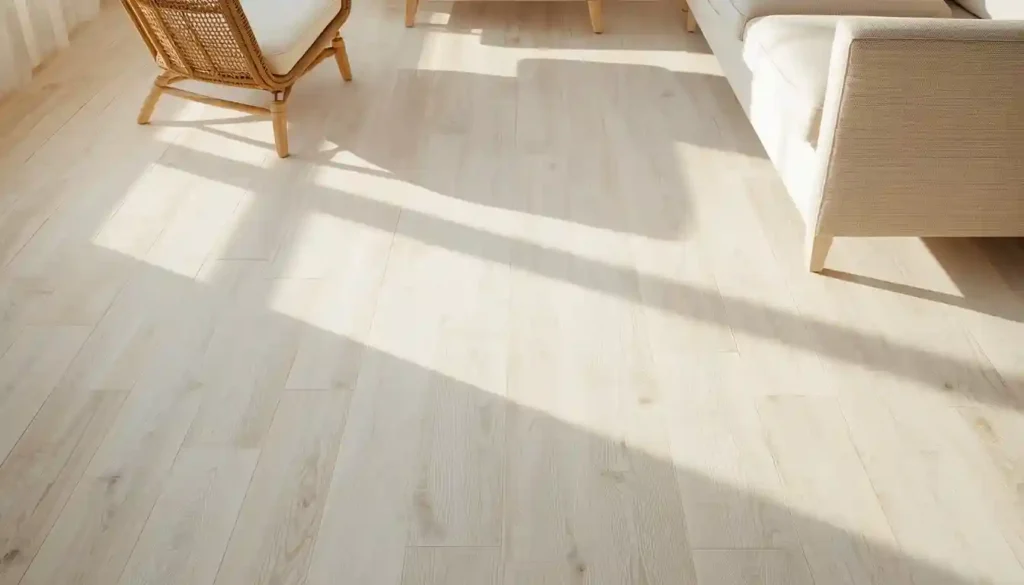
Idea 5: Whitewashed or Coastal Bleached Vinyl for a Relaxed Beach House Feel
Not every living room wants to feel like a boutique hotel. Coastal and beach house design asks for something looser — a floor that looks like it has been worn down to its essentials by salt air and foot traffic, that would look at home with a surfboard leaning against the wall or a collection of found shells on the windowsill. Whitewashed and bleached vinyl plank flooring delivers that mood without any of the maintenance headaches of real weathered wood.
The whitewashed effect in vinyl is achieved through the decorative layer’s color treatment: a pale, chalky base tone with the grain pattern still showing through creates the impression of wood that has been bleached by decades of sun. The result is simultaneously very light (making small living rooms feel open) and very textured (giving the eye something to rest on). This style of vinyl plank pairs naturally with natural fiber rugs, rattan furniture, linen upholstery, and whitewashed wall shiplap — the full vocabulary of casual coastal design.
From a practical standpoint, very light floors show dark dirt clearly, so this look works best in homes without heavy pet traffic or muddy boots coming in from outside. If you love the light coastal feel but need more practicality, consider a warm natural oak tone rather than a pure whitewash — it sits in the same design family but forgives everyday mess more readily.
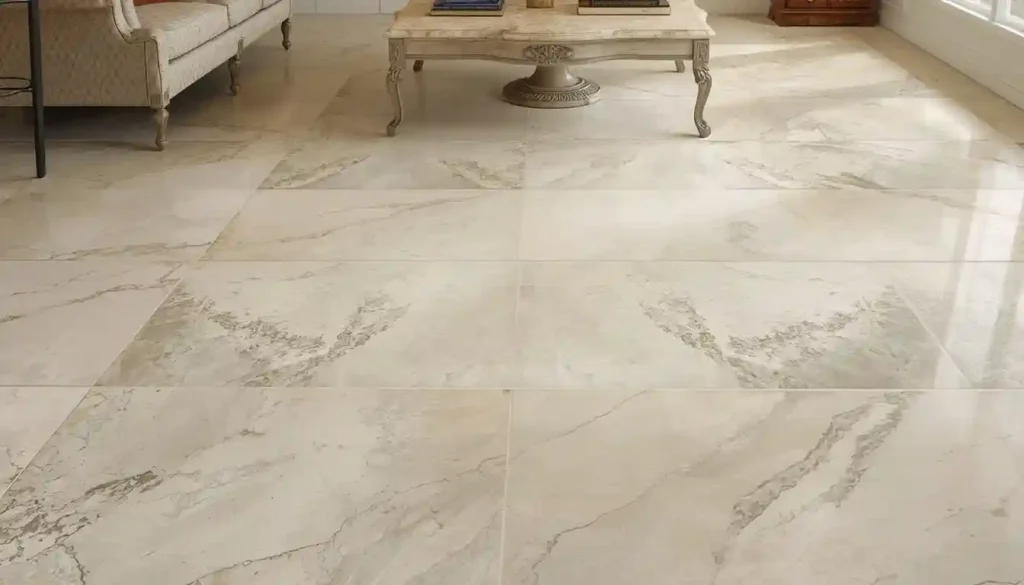
Idea 6: Stone-Look LVT for a Sophisticated, Hard-Surface Living Room
Luxury vinyl tile that mimics natural stone — slate, marble, travertine, limestone — opens up a design direction that used to require a genuine stone installation budget. The appeal is real: stone floors communicate permanence and formality that wood floors do not. In a traditional home, a formal sitting room, or a Mediterranean-style living room, stone-look flooring grounds the space with a weight and authority that wood — even very good wood — cannot replicate.
Modern LVT stone formats have advanced to the point where the veining, color variation, and surface texture are genuinely hard to distinguish from real stone at walking distance. The key quality markers to look for are: a wear layer of at least 12 mil for residential use (20 mil is better for living rooms with high foot traffic), a rigid SPC core that prevents the tile from flexing underfoot the way thinner vinyl does, and a realistic embossed surface that matches the printed pattern rather than using a generic texture stamp.
Stone-look LVT is warmer underfoot than actual stone, quieter to walk on, and far more forgiving if a dropped object hits the surface. For living rooms with underfloor heating, it performs better thermally than real stone, too. The one trade-off is that large-format stone tiles (24 by 48 inches or larger) require a very flat subfloor — any variation more than 3/16 inch over 10 feet will telegraph through rigid vinyl and cause rocking or edge lifting.
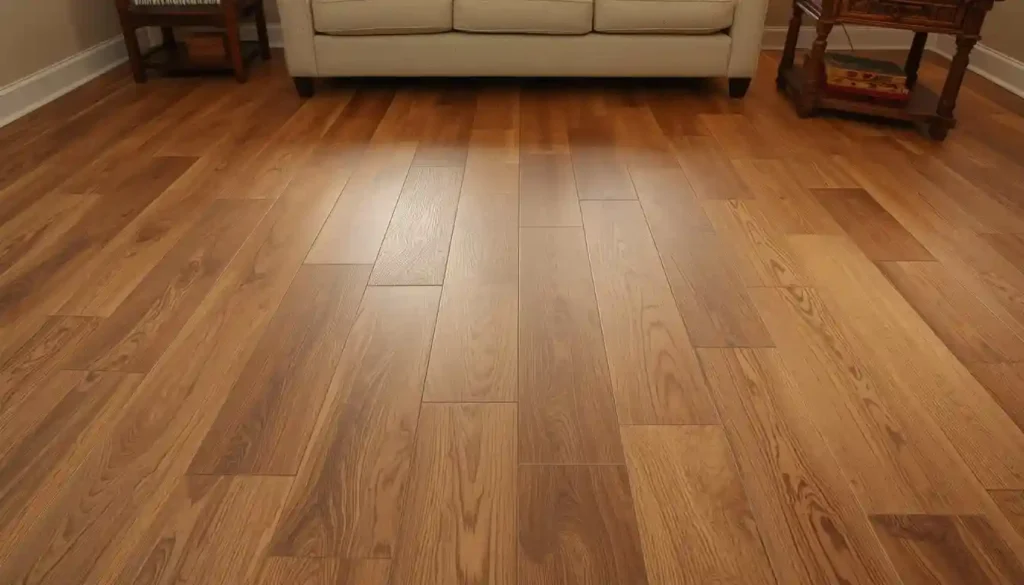
Idea 7: Honey Oak or Warm Brown LVP for a Cozy, Timeless Living Room
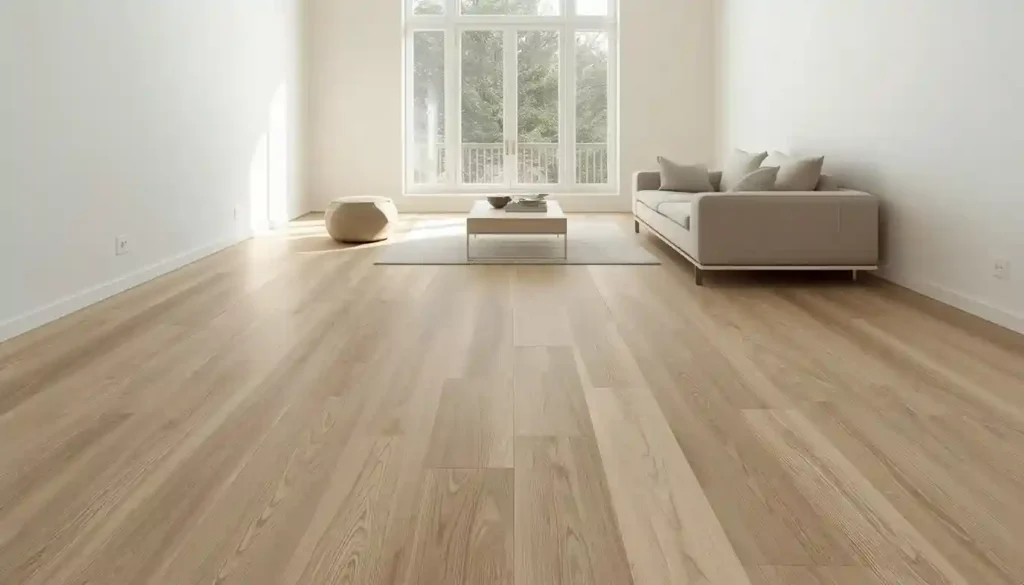
Honey oak and warm medium-brown vinyl plank tones are undergoing a genuine revival. After years of cool grey dominating residential floors, designers and homeowners have swung back toward warmth, and nowhere does warm wood-tone flooring work better than in a living room. The human eye reads warm brown tones as inviting and comfortable, which is precisely the emotional register a living room is meant to set.
Honey oak vinyl sits in the golden-brown range — lighter than walnut, darker than blonde, with visible grain variation that keeps the floor from feeling flat or artificial. This tone works with a wide furniture palette: cream, terracotta, navy, forest green, and rust all read warmly against a honey oak base. It is particularly forgiving in traditional and transitional living rooms where you are mixing older upholstered furniture with newer pieces — the warm floor acts as a unifying anchor that makes disparate elements feel like they belong together.
Medium-brown vinyl also has a practical advantage over both very light and very dark tones: it sits in the middle of the contrast range where neither light dust nor dark scuffs register clearly. For families who want a floor that looks clean without daily mopping, the mid-tone warm brown is one of the most maintenance-forgiving choices available.
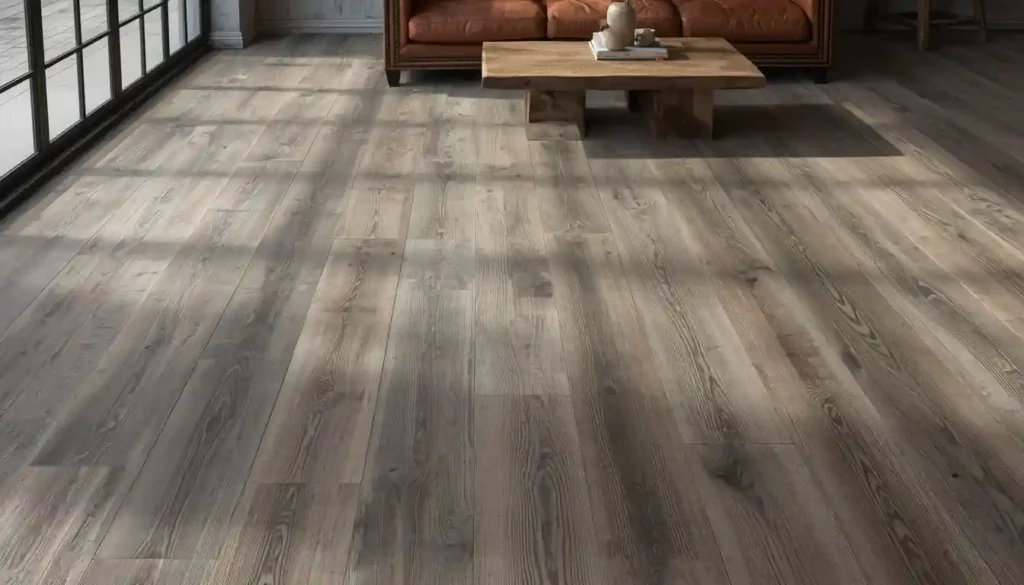
Idea 8: Weathered Gray or Reclaimed Wood-Look Vinyl for an Industrial or Rustic Space
A living room with industrial loft bones — exposed ceiling beams, concrete walls, steel window frames, brick — needs a floor that matches its raw material honesty. Polished or pristine flooring looks out of place against these textures. What works is something that looks like it has a history: weathered gray vinyl plank with saw-mark texture, hand-scraped surface effects, or the layered tonal variation of reclaimed barn wood.
The design vocabulary of weathered gray includes gray-brown base tones with lighter and darker streaks that mimic natural weathering, a matte finish that absorbs rather than reflects light (consistent with the industrial aesthetic), and a slightly rough tactile surface. This is one of the situations where the registered embossing technology in premium vinyl really earns its cost: when the surface texture physically matches the color pattern, the floor reads as genuinely aged rather than printed.
For a rustic farmhouse living room — shiplap walls, a stone fireplace, exposed wooden beams — the same weathered gray or a more brown-toned reclaimed look achieves the opposite of the industrial reading. The floor feels like an original feature of the house rather than a renovation choice. Farmhouse vinyl flooring ideas consistently gravitate toward this distressed wood aesthetic because it brings the organic warmth that defines the style without requiring the maintenance or cost of real reclaimed wood.
Idea 9: Wide-Plank Vinyl in an Open-Plan Living, Dining, and Kitchen Layout
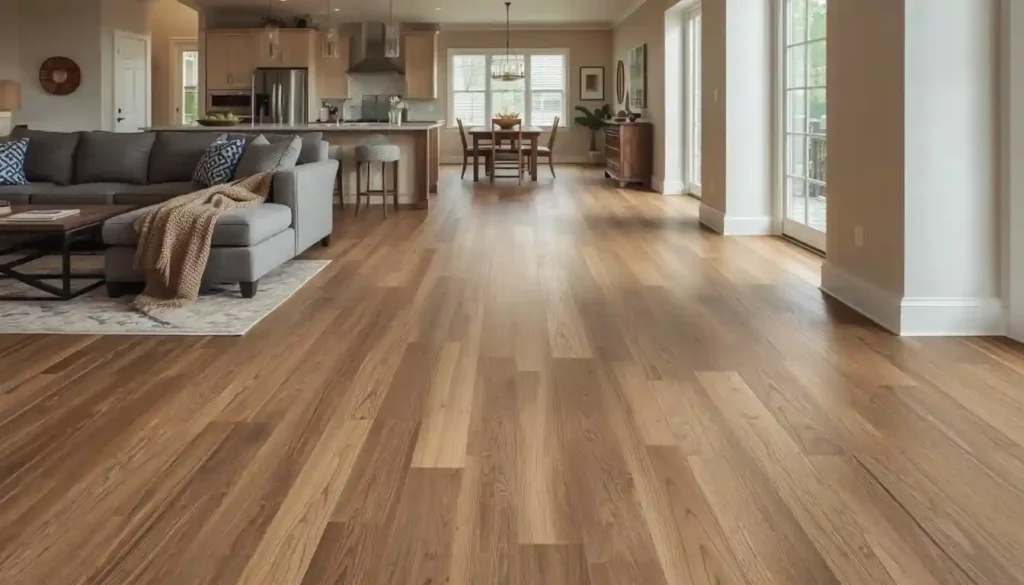
Open-plan living rooms present a specific flooring challenge: one continuous floor has to perform in three or four functionally different zones — a soft, social living area; a spill-prone dining space; and a wet, busy kitchen — without looking like a compromise in any of them. Vinyl is uniquely positioned to solve this problem because it is genuinely waterproof, scratch-resistant, and available in plank formats wide and long enough to flow through all three zones without seams breaking the visual continuity.
The choice that makes open-plan vinyl work best is wide plank. A 7- to 9-inch wide plank running the full length of an open-plan space creates a strong directional line that unifies the zones visually and makes the overall footprint feel expansive rather than chopped up. If you were to use narrow 3-inch planks in the same space, the repetition of the grain and the frequency of the lines would make the floor feel restless — the visual noise competing with the rest of the interior.
For open-plan vinyl flooring, the color and tone choice matters even more than in a single room because the floor has to look right in both natural daylight (abundant in a kitchen and dining area) and artificial lamp light (dominant in the living zone in the evenings). Mid-tone naturals — light oak, warm greige, natural blonde — perform best across all lighting conditions. Avoid very dark or very light tones in open-plan spaces where the light shifts dramatically throughout the day.
Idea 10: SPC Vinyl Plank Under a Statement Area Rug
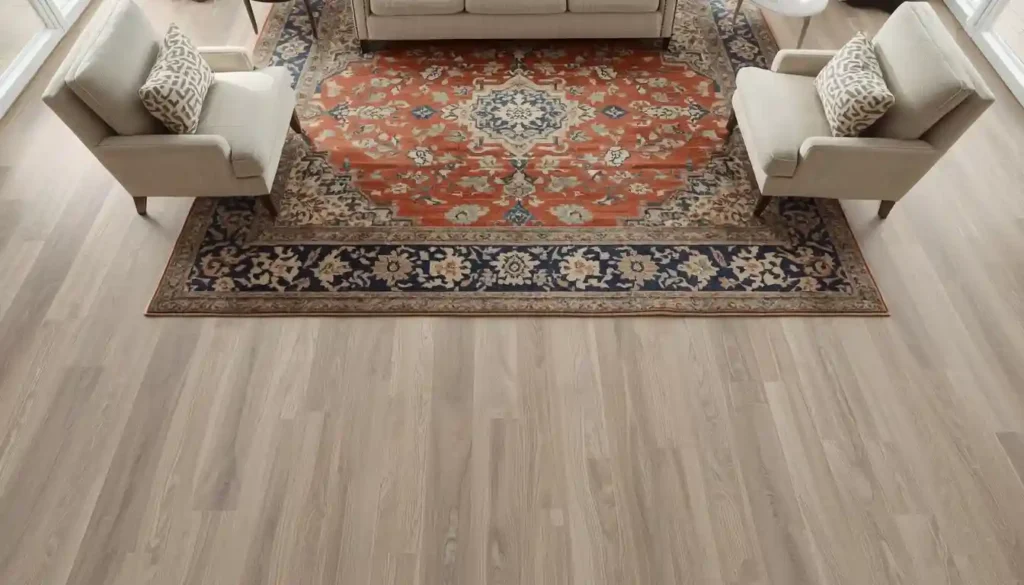
One of the most underappreciated vinyl flooring ideas for living rooms is intentionally choosing a neutral, understated plank precisely so that a statement area rug becomes the room’s design focal point. This approach flips the conventional logic — instead of asking the floor to do the decorative heavy lifting, you keep it clean and neutral (a medium-toned greige or warm natural oak) and let a large, patterned rug define the seating zone.
The practical case for vinyl under a rug is stronger than for hardwood under a rug. An SPC core vinyl plank does not need to breathe the way real wood does, so a large rug placed directly over it will not trap moisture and cause the floor to warp or cup. A good rug pad keeps the rug in place and protects the vinyl wear layer from abrasion, but the floor beneath tolerates being partially covered indefinitely without any of the issues a real wood floor would develop.
This approach also makes design changes cheap and easy. Instead of replacing the floor to refresh the room’s look, you replace the rug. A Moroccan-patterned rug in terracotta and navy makes the room feel boho; swap it for a large solid-color jute rug and the same neutral vinyl floor reads as relaxed coastal. The floor becomes infrastructure rather than decoration, and that flexibility has real long-term value in a living room that will evolve over time.
Idea 11: High-Variation Vinyl Plank for a Naturally Dynamic Look
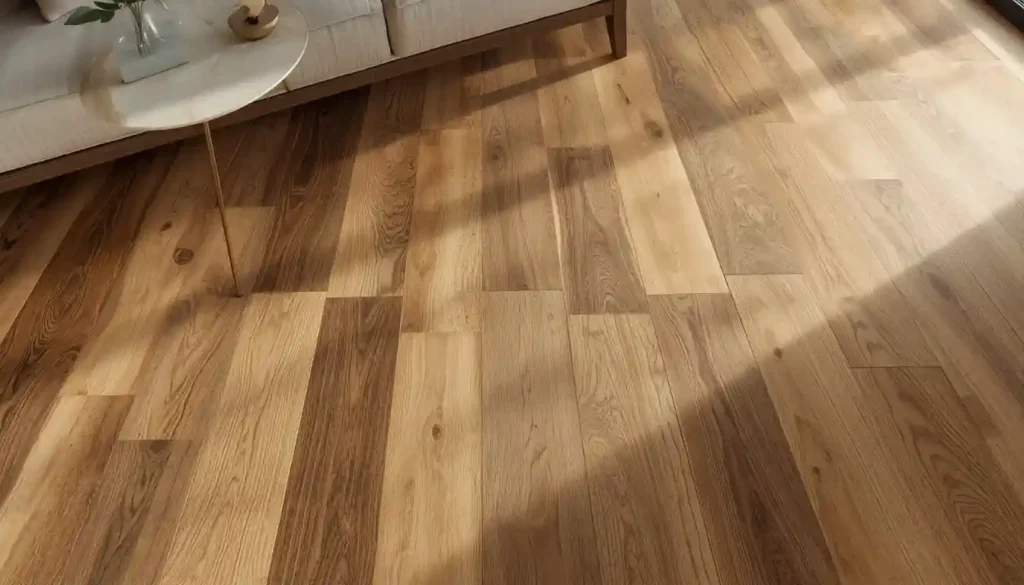
Most homeowners approach vinyl flooring with the expectation of visual consistency — planks that look similar to one another, creating a uniform, predictable floor. High-variation vinyl plank inverts that expectation intentionally, using large differences in color, grain intensity, and knot patterns from plank to plank to mimic the natural variation you would find in a real hardwood floor cut from different parts of the same tree.
The design effect is significant. A high-variation floor has visual movement — it draws the eye across the room rather than settling into a static background. In a large living room with minimal furniture, this is exactly the right quality: the floor itself provides the visual richness that a less furnished space needs to feel complete. In a smaller room, high variation can feel overwhelming, so it works better when balanced by relatively simple, quiet walls and furniture.
The practical benefit of high variation is camouflage. Because no two planks look the same, a scratch, scuff, or faded spot on one plank blends into the overall visual variation of the floor far more easily than it would on a uniform floor where the damaged plank suddenly looks like the odd one out. Vinyl scratch repair is manageable in most cases, but having a floor where individual plank variation is expected and celebrated reduces the stress of normal living considerably.
When installing high-variation vinyl, mix planks from three or four boxes simultaneously during installation. This distributes the variation randomly across the floor rather than creating visible clusters of similar planks, which would break the natural, organic appearance the style depends on.
What to Think About Before Choosing Your Living Room Vinyl Floor
These eleven ideas cover a wide range of design directions, but they share a set of practical decisions that apply regardless of which look you choose.
Wear layer thickness: For a living room, aim for a minimum of 12 mil. If you have dogs or a household with high traffic, 20 mil is worth the additional cost. The wear layer is the only thing standing between the decorative print and the foot traffic above it, and it is the specification that most determines how long the floor looks new. You can read more about this in our guide to wear layer thickness for LVP flooring.
Core type: SPC (stone plastic composite) is the better choice for living rooms with temperature fluctuations — the rigid mineral core resists expansion and contraction more effectively than WPC (wood plastic composite) in rooms that get hot from afternoon sun. The difference between SPC and WPC flooring is worth understanding before you commit to a product, especially in a San Diego home where sun exposure can be intense in certain rooms.
Plank width and room size: Wide planks make rooms feel larger but require a relatively flat subfloor — any subfloor variation over 3/16 inch over 10 feet will cause edge lifting in rigid planks. Narrow planks are more forgiving on imperfect subfloors but create more visual busyness. For most living rooms, a 6- to 9-inch wide plank is the right range.
Underlayment: If your vinyl product does not have a pre-attached underlayment, adding a quality underlayment before installation significantly improves underfoot comfort, reduces sound transmission, and adds a small but meaningful thermal barrier. Some high-end SPC products include an IXPE foam pad pre-attached to the bottom of the plank.
Finish and sheen: Matte and low-sheen finishes hide scratches, dust, and daily wear far better than high-gloss options. Unless you are specifically going for a formal, polished look (see the stone-look idea above), choose a satin or matte finish for a living room.
Vinyl flooring has earned its position as one of the most practical and design-forward choices for living rooms. The combination of genuine waterproofing, realistic aesthetics, dimensional stability, and a wide range of price points makes it the floor that solves the most problems for the most households — without asking you to give up anything on style.
James Miller is a seasoned flooring contractor with years of hands-on experience transforming homes and businesses with high-quality flooring solutions. As the owner of Flooring Contractors San Diego, James specializes in everything from hardwood and laminate to carpet and vinyl installations. Known for his craftsmanship and attention to detail, he takes pride in helping clients choose the right flooring that balances beauty, durability, and budget. When he’s not on the job, James enjoys sharing his expertise through articles and guides that make flooring projects easier for homeowners.
Quick-Step is a Belgian flooring brand founded in 1994 under the Unilin Group, which is itself owned by Mohawk Industries — the largest flooring manufacturer in the world. That corporate lineage matters because it explains something important: Quick-Step does not manufacture laminate the way most brands do. It manufactures the machinery, the raw board, the…
What Makes a Subfloor “Good” for Vinyl Flooring? The subfloor is the structural panel layer that sits on top of your floor joists and beneath the finished flooring. It is not the same as the underlayment, which is a thin cushioning layer placed directly under the vinyl. The subfloor is load-bearing. It determines how much…
Most flooring comparisons jump straight to price or aesthetics. That approach misses what actually drives the performance difference between hardwood and SPC vinyl. These are fundamentally different material systems, and understanding how each one is built is the only way to make a decision that holds up five, ten, or twenty years from now. Hardwood…
Luxury laminate flooring is a category within the laminate flooring market defined by thicker core construction, tighter surface tolerances, advanced embossing technology, and premium-grade wear layer specifications — producing a floor that mimics the visual and tactile qualities of natural hardwood or stone more convincingly than standard laminate while maintaining the cost and installation advantages…
Most people come to cork flooring the same way — they want something softer than hardwood, warmer than tile, and quieter than laminate, but they also want something that actually looks good in a living room. The problem is that most content about cork flooring either oversells it as a miracle material or dismisses it…
Most flooring comparisons waste your time. They list bullet points, dodge the hard trade-offs, and leave you exactly where you started. This one won’t do that. Laminate and vinyl plank flooring look almost identical in a showroom. They both click together. They both run $2 to $6 per square foot at the entry level. They…