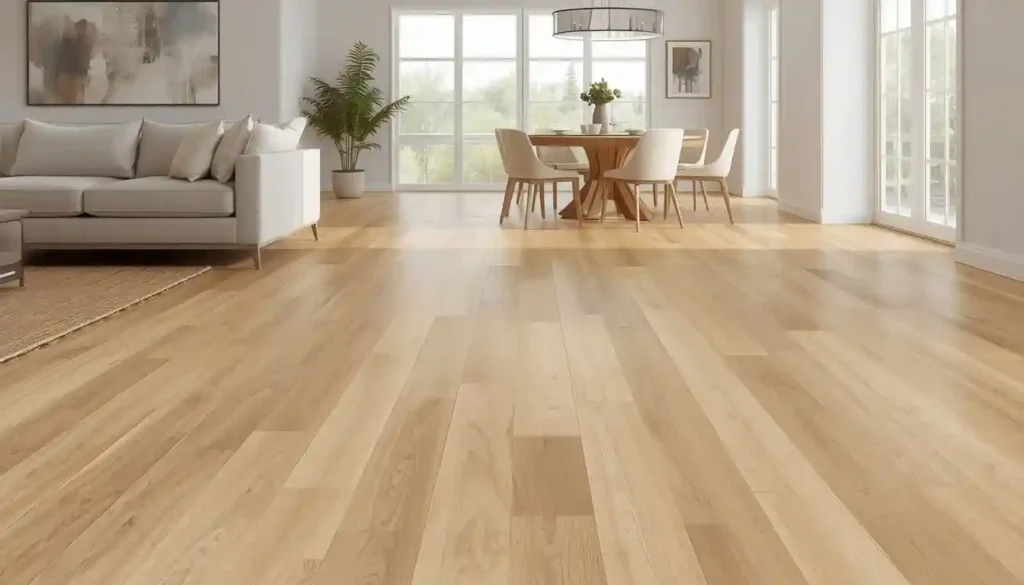
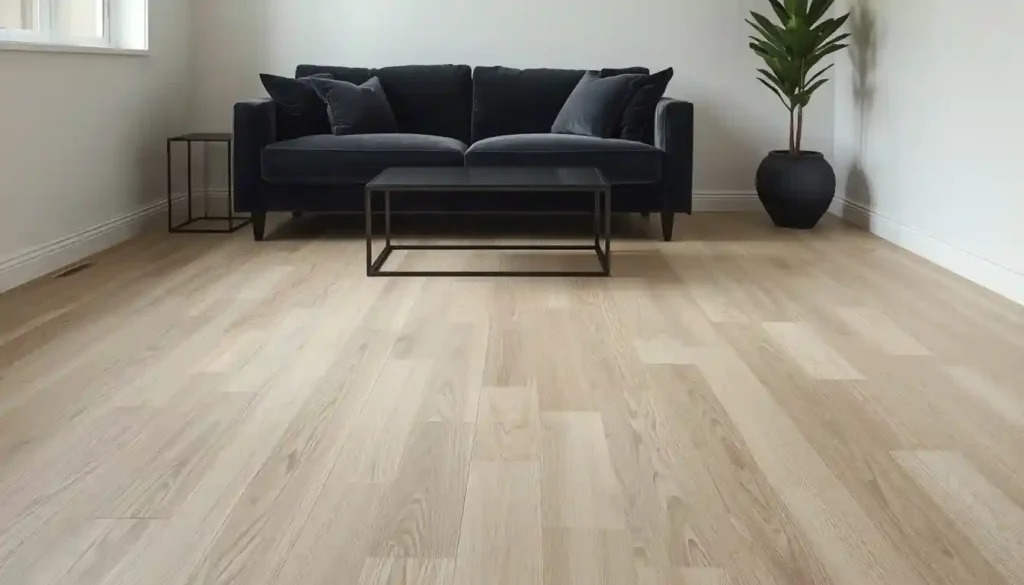
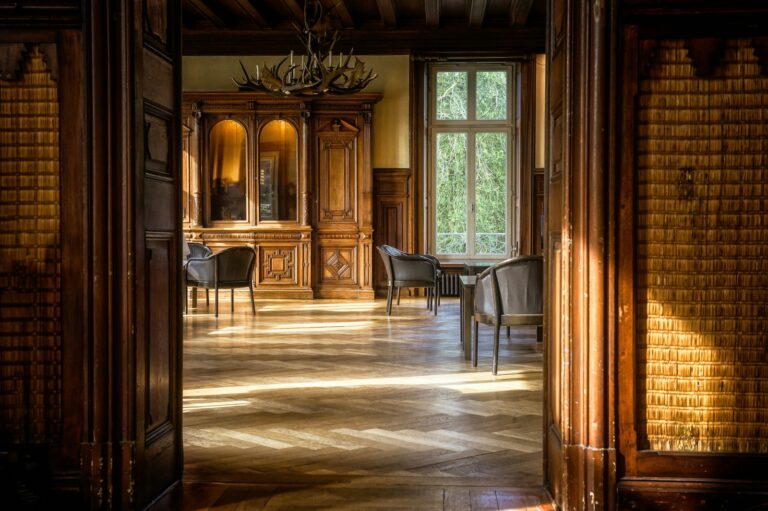
Moving slightly warmer, blonde and natural ash tones occupy the middle ground. These are arguably the most versatile shades in the entire light wood category. They carry just enough warmth to feel inviting but remain pale enough to bounce light. Blonde vinyl pairs exceptionally well with warm white walls, natural linen textiles, and raw timber or rattan furniture.
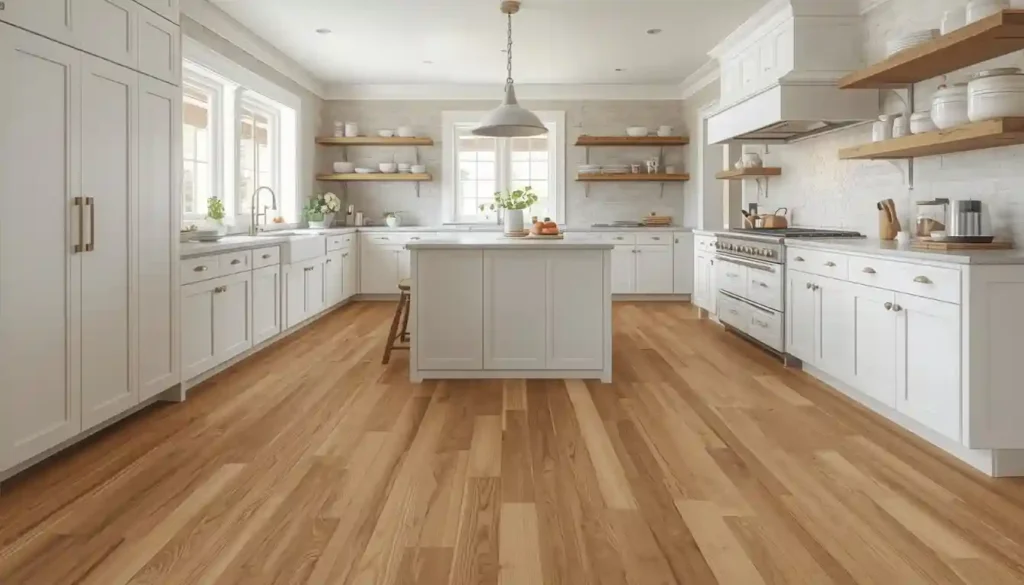
Honey oak and golden birch sit at the warmer end of light wood territory. These tones have amber and caramel undertones that make kitchens and living areas feel genuinely cozy rather than simply bright. The difference between honey oak and a medium brown floor is significant; honey oak still reads as light and airy, just with more personality.
Greige, the now-ubiquitous blend of grey and beige, straddles the line between light and neutral. A pale greige vinyl with visible grain reads as a light wood tone and works superbly in transitional and modern farmhouse interiors where the homeowner wants sophistication without warmth.
All of these fall under the light wood vinyl umbrella, and the eleven ideas below draw from across this full tonal spectrum.
Idea 1: Scandinavian Minimalism with Pale Ash Wide Planks
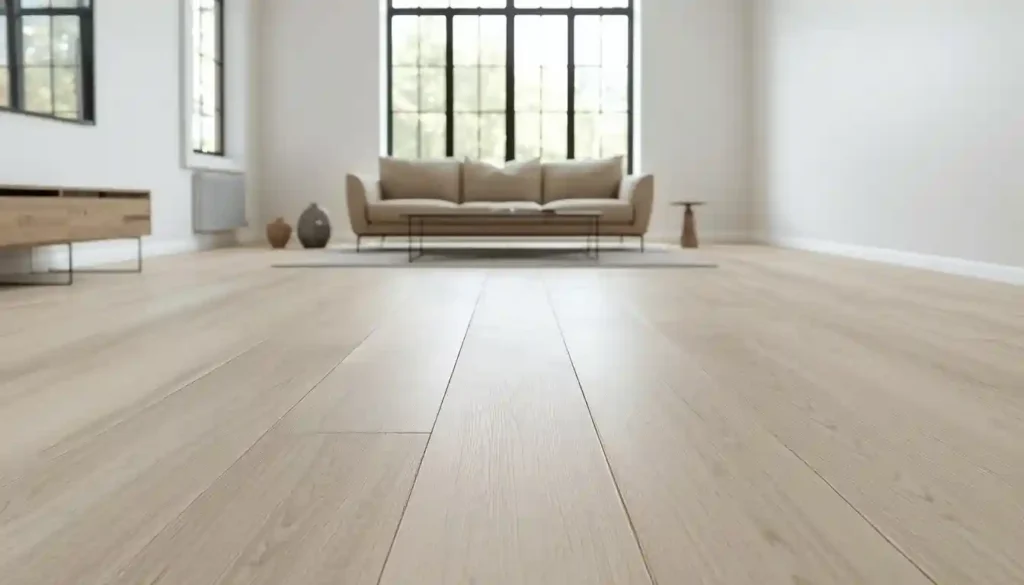
The Scandinavian interior style, often called Scandi or Nordic design, has built its entire aesthetic identity around the relationship between pale floors, white walls, and natural materials. Light wood vinyl flooring is the single most effective way to achieve this look on a renovation budget without laying actual hardwood.
For this idea, choose wide-format planks in a pale ash or bleached birch tone. Width matters here: planks between 7 and 9 inches across reinforce the sense of expansive, uncluttered space that defines the style. A matte finish is essential; any sheen reads as synthetic in a Scandi-influenced room and undermines the entire effect. Look for planks with subtle grain variation rather than uniform pattern, since high variation makes the floor feel more organic and less factory-produced.
Pair the floor with walls in a warm white (not a blue-white; think Swedish white or warm cream). Keep furniture low-profile: a linen sofa in oatmeal, a coffee table in raw oak or concrete, and a few ceramics in muted earth tones. Black-frame windows or black-frame picture frames create the high-contrast punctuation that prevents the room from feeling bland. Textiles in wool or bouclé add tactile warmth that offsets the coolness of the pale floor without introducing color.
One practical consideration with pale ash vinyl in a Scandi-styled living room: protecting the floor from sunlight fading matters more with very pale tones than with mid-range shades, since any yellowing is far more visible. Choose planks with robust UV-protective wear layers, particularly for south-facing rooms.
Idea 2: Coastal Whitewashed Planks in an Open-Plan Kitchen and Dining Space
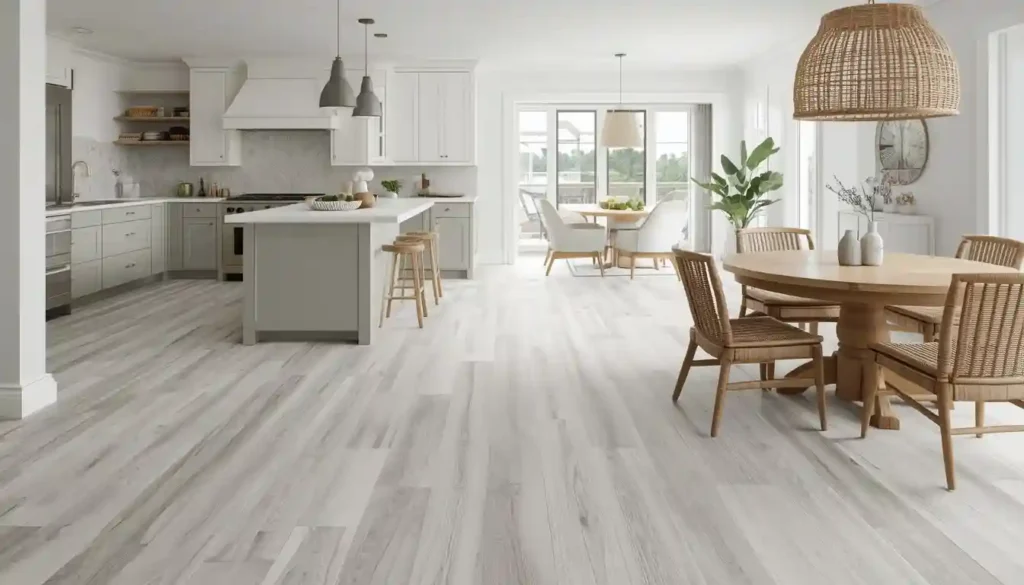
Whitewashed vinyl plank flooring carries the relaxed, sun-bleached energy of coastal interiors better than almost any other material, and unlike natural driftwood or bleached hardwood, it is fully waterproof and impervious to the humidity swings that come with proximity to the ocean or with cooking and dishwashing in a kitchen.
For an open-plan kitchen and dining area, lay whitewashed planks continuously across both zones without transition strips. This unbroken run of pale floor is what makes an open-plan space feel truly cohesive and expansive. The absence of a visual break between kitchen and dining amplifies the floor’s light-reflecting quality and makes the whole area read as a single generous room rather than two separate spaces pushed together.
Cabinet color choices: white or off-white shaker cabinets are the obvious pairing and they work well, but more interesting results come from pairing whitewashed floors with sage green or dusty blue lower cabinets and white upper cabinets. The contrast grounds the kitchen without darkening it. Hardware in brushed brass or unlacquered bronze adds warmth that the pale floor would otherwise lack.
The dining zone benefits from a round or oval table in natural oak or whitened rattan to extend the coastal material palette vertically. Pendant lights in wicker or natural fiber complete the theme without requiring any structural work.
If you are planning a kitchen renovation and want to understand all the flooring options at your disposal before committing to vinyl, reviewing the best vinyl flooring for kitchens helps narrow the field based on wear layer thickness, surface texture, and slip resistance, all of which matter more in a kitchen than in other rooms.
Idea 3: Honey Oak Vinyl in a Warm Contemporary Living Room
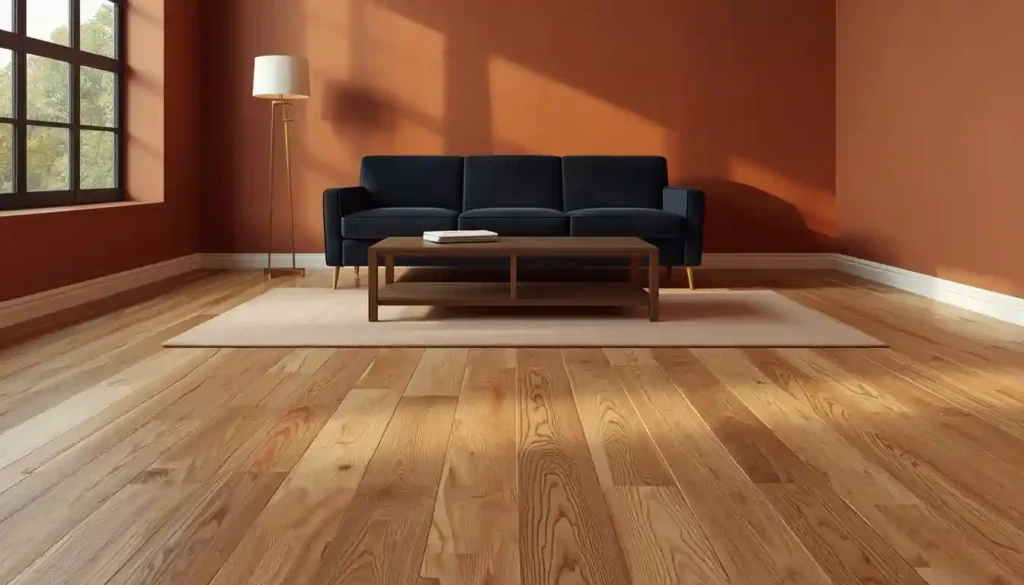
Honey oak luxury vinyl plank occupies a particularly interesting design position right now. After a decade of cool grey floors dominating the market, warm-toned flooring is making a decisive return. Honey oak, with its amber-golden undertones and moderate grain variation, delivers exactly the kind of organic warmth that contemporary interiors have been moving toward.
In a living room, honey oak vinyl creates a foundation that makes the space feel genuinely comfortable rather than simply stylish. Pair it with warm white or soft terracotta walls. Furniture in dark navy, forest green, or deep burgundy creates sophisticated contrast against the golden floor; these are rich, saturated colors that gain enormous depth when they sit above a warm pale floor rather than a grey or dark one.
Wide plank formats work particularly well with honey oak because they allow the subtle amber-to-golden color variation within each plank to read clearly. Narrower planks can make the color variation look busy; wider planks let it breathe. For a living room of average size (roughly 15 by 18 feet), planks in the 7 to 9 inch range are ideal.
Honey oak also has a practical maintenance advantage over paler shades. Because it sits in the middle of the light-to-dark spectrum, it hides everyday dust and light debris better than a true whitewash or blonde floor. Families with children or pets will find a honey oak floor far more forgiving day-to-day than a very pale option.
Light wood vinyl across a full living room works best when you also think about the acoustic experience of the space, since hard flooring amplifies sound. Understanding underlayment for noise reduction under vinyl flooring is especially relevant in living rooms where television sound, conversation, and foot traffic all converge.
Idea 4: Pale Greige Planks in a Modern Farmhouse Bedroom
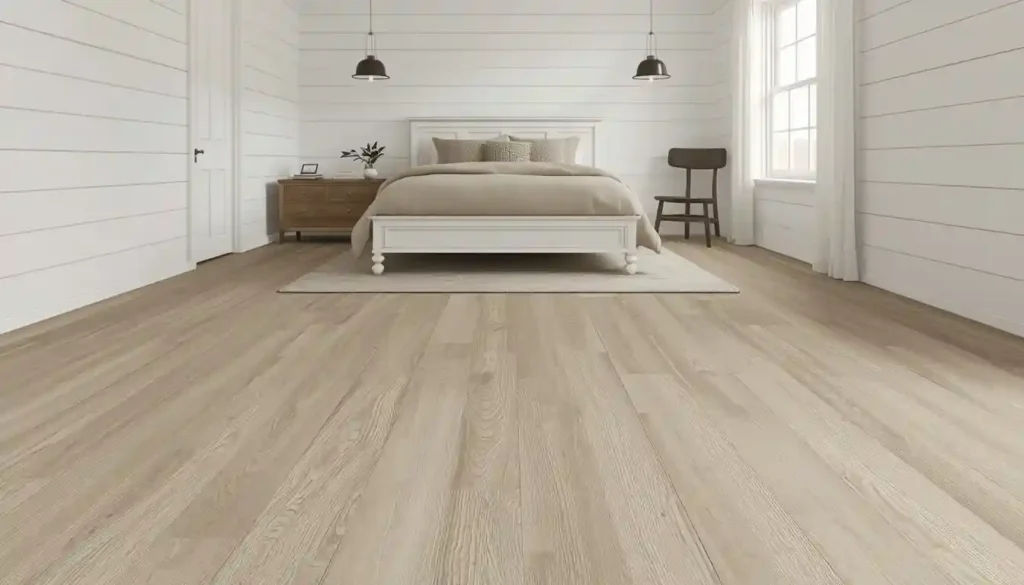
Modern farmhouse interiors balance rustic texture with clean, contemporary lines, and pale greige vinyl flooring does an exceptional job of anchoring this balance underfoot. Greige, as a tone, is simultaneously warm enough to feel cozy and cool enough to feel refined. It is the “quiet luxury” shade of the light wood vinyl category.
In a bedroom, this translates into a floor that recedes gracefully and lets the room’s textiles and furniture do the visual work. Lay the planks in the long direction of the room, parallel to the longest wall, to visually lengthen the space. Choose planks with a hand-scraped or wire-brushed surface texture rather than a smooth finish; the added surface texture adds the subtle rustic quality that farmhouse aesthetics require without making the floor look distressed or damaged.
Wall shiplap in warm white, a bed frame in antique white or raw oak, linen bedding in oatmeal and pale blue, and vintage-style black iron light fixtures form the complete farmhouse bedroom palette. The greige vinyl floor ties these elements together because it shares tonal qualities with all of them simultaneously.
From a practical standpoint, bedrooms see lower foot traffic than living areas and kitchens, which means the wear layer on your vinyl planks does not need to be as thick. This can open up more budget for investing in a better quality product with more realistic grain printing and enhanced texture, both of which matter enormously in a pale tone where every visual detail reads clearly.
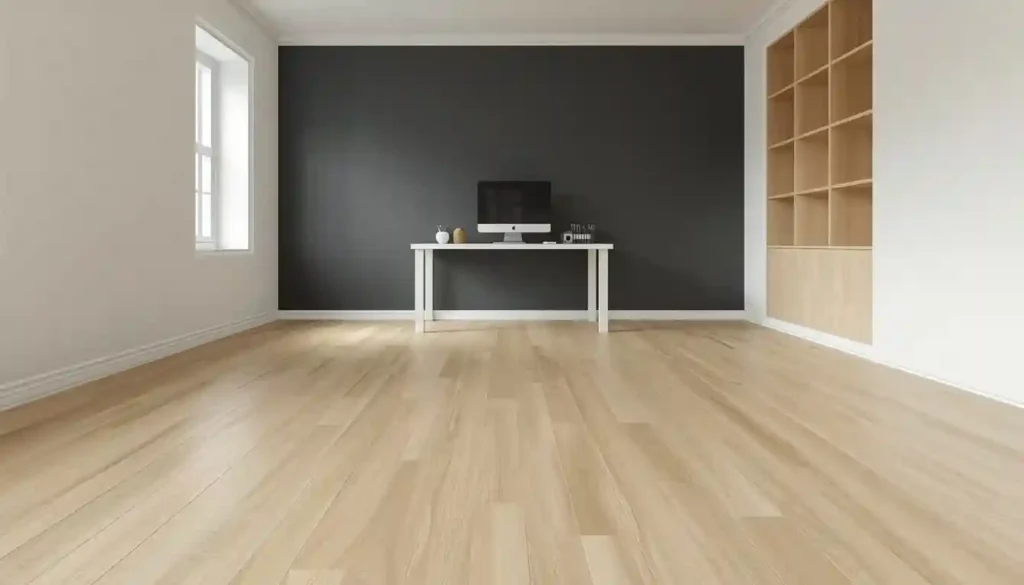
Idea 5: Blonde Maple Vinyl in a Home Office for Maximum Productivity
Light wood vinyl is particularly well-suited to home offices because pale floors create the kind of bright, energizing environment that supports focus and clear thinking. Dark floors absorb light and can make a home office feel heavier and more fatiguing to work in over long hours. Blonde maple or pale birch vinyl does the opposite: it bounces daylight upward and creates a visually clean, uncluttered atmosphere even in rooms where bookshelves, monitors, and desk equipment are all present.
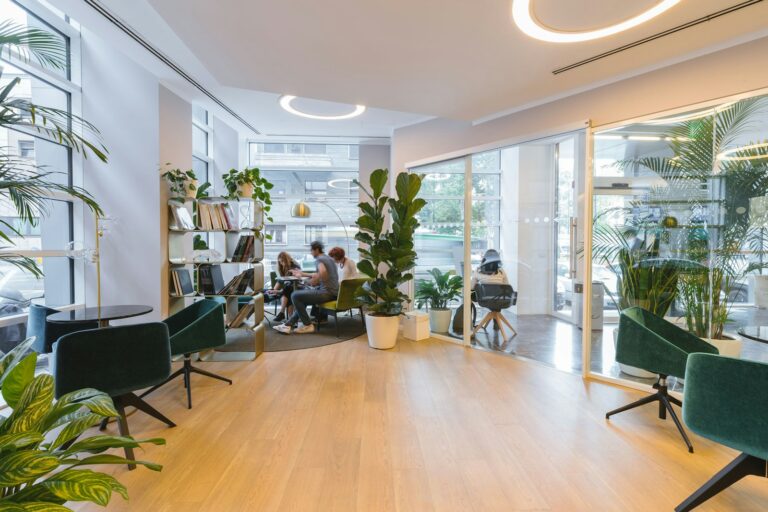
For a home office, choose planks in a clean blonde maple tone with a smooth or very lightly embossed finish. The lack of strong texture is deliberate; in a workspace, you want the floor to be a neutral, calming presence rather than a visual point of interest. Pair with off-white walls, a white or birch-toned desk, and built-in shelving in the same light wood family.
One subtle design move that works particularly well in a home office with blonde vinyl is adding a single bold element, such as a deep charcoal or forest green accent wall behind the primary desk. This creates depth and focus without darkening the room, because the pale floor continues to reflect light from the other three walls and from the windows.
If the home office sits above a living space, acoustic performance matters. The combination of hard vinyl flooring and minimal furnishings in a home office can result in noticeable sound transfer downstairs. An understanding of IIC and STC ratings for vinyl flooring helps you select the right underlayment system to manage impact noise and airborne sound before installation.
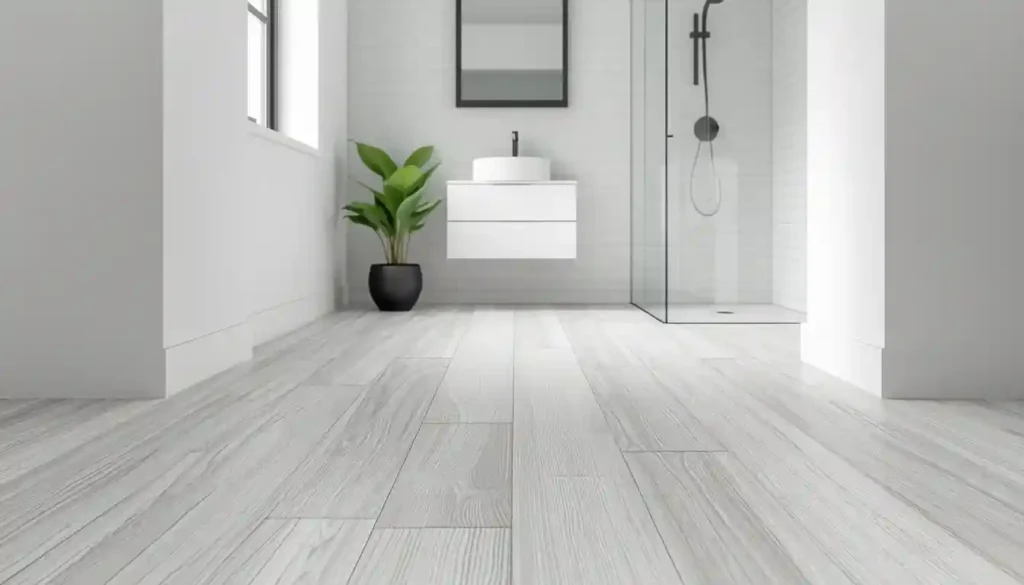
Idea 6: Wide-Plank Whitewash in a Compact Bathroom
Using light wood vinyl flooring in a bathroom is one of the most impactful design decisions you can make in a small or windowless space. Compact bathrooms are notoriously difficult to make feel generous, and dark or busy flooring only makes the problem worse. Whitewashed wide-plank vinyl, laid from wall to wall without interruption, visually enlarges the floor plate and floods the room with reflected light from every surface.
The key specification for a bathroom application is a fully waterproof product with a rigid SPC (stone-polymer composite) core. Standard LVP can handle bathroom humidity, but SPC core products are genuinely impervious to standing water and subfloor moisture, which makes them the responsible choice for wet areas. Check that the product’s warranty explicitly covers wet room installation before purchasing.
Lay the planks in a single continuous direction across the entire floor, including up to and under the vanity if possible. This continuity is what creates the visual expansion effect. Combine whitewashed vinyl with white subway tile walls and a frameless glass shower screen to achieve an unbroken flow of pale tones that makes even a 50-square-foot bathroom feel considerably larger.
Matte black fixtures, a dark-framed mirror, and a single piece of greenery are all that the space needs as accents. Because the floor and walls are both pale, even a small amount of black or deep color creates strong visual punctuation without making the room feel dark.
Bathrooms and kitchens are the two rooms where the question of vinyl’s waterproof performance comes up most often. The guide on vinyl flooring for bathrooms and kitchens covers the specific product grades and installation details that matter in genuinely wet environments.
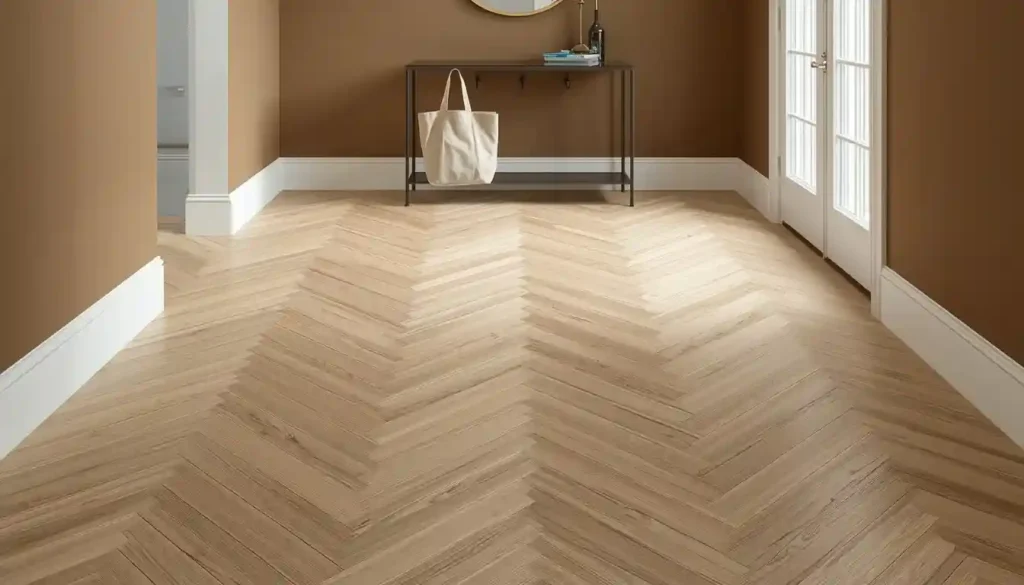
Idea 7: Herringbone Light Wood Vinyl in an Entryway
The herringbone pattern transforms light wood vinyl from a simple floor covering into an architectural statement. In an entryway, this combination is particularly powerful because it signals to visitors immediately that the home’s interiors are considered and designed, not just functional. And because entryways typically receive the most foot traffic of any space in the home, luxury vinyl is precisely the right material: durable, waterproof, and completely washable after muddy or wet shoes.
For herringbone, choose a light natural oak or warm blonde tone in planks approximately 4 to 5 inches wide. Narrower planks are essential for herringbone; wide planks in a herringbone layout can feel heavy and irregular. The pale tone ensures that the pattern reads as elegant rather than busy, because light floors make the geometry of the herringbone more legible rather than letting it compete with the material color.
Frame the herringbone floor with baseboard molding in bright white and walls in a slightly deeper greige or warm taupe. This contrast helps the pale floor pop visually. A simple console table in dark metal or oak, a round mirror, and a coat hook rail complete the entryway without overcrowding it.
Herringbone installations do require more careful planning than standard straight-lay because the pattern involves diagonal cuts at the room perimeter and precise alignment throughout. If you are considering a DIY approach, reviewing how to install vinyl plank flooring before starting the project gives you a clear picture of the preparation and technique involved so you can decide confidently whether to self-install or hire a professional.
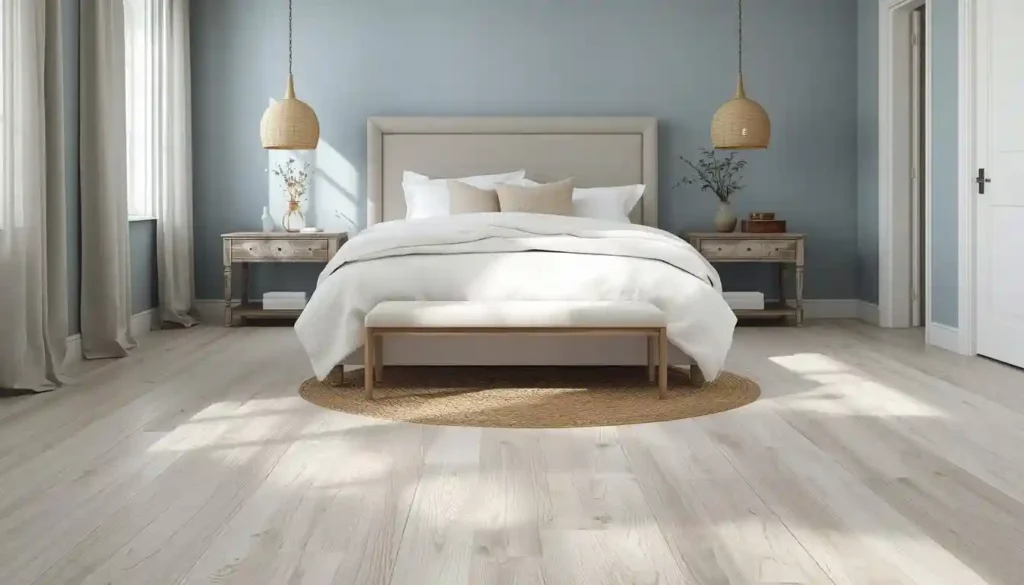
Idea 8: Pale Driftwood Vinyl in a Coastal Bedroom
Driftwood-effect vinyl flooring takes the whitewash concept a step further by introducing subtle variations in tone within each plank, mimicking the uneven bleaching and weathering that real driftwood develops over years of sun and salt air exposure. The result is a floor with more visual character and depth than a uniform whitewash, while still remaining firmly in the light wood tonal family.
In a coastal-styled bedroom, pale driftwood vinyl creates an immediate sense of place. It suggests somewhere near the water, somewhere unhurried. Combine it with walls in soft ocean blue, seafoam, or the palest sage. Natural materials should dominate the room: a linen headboard, jute or sisal bedside rugs, weathered timber nightstands, and woven basket storage. Light fittings in rattan or whitewashed ceramic reinforce the material story.
The design logic of this idea revolves around avoiding anything too polished or formal. Driftwood flooring is inherently casual and organic; the furniture and textiles should echo that quality. A perfectly symmetrical, highly formal bedroom setup would fight against the floor’s character rather than working with it.
From a technical standpoint, the multi-tonal plank variation in driftwood vinyl is excellent at concealing scuffs and minor surface wear. This makes it a particularly sensible choice for a vacation home, rental property, or beach house where the flooring gets heavy, irregular use but needs to look presentable at all times with minimal maintenance effort. Those weighing vinyl against other resilient options for a rental or vacation property will find the best flooring for beach homes a useful reference for comparing durability and moisture performance across material categories.
Idea 9: Light Wood Vinyl Flowing Through an Open-Plan Living and Dining Space
One of the most consistently effective design moves with light wood vinyl is the continuous floor: a single product laid without interruption through connected living and dining zones. This technique works especially well with pale tones because it amplifies the sense of space far more dramatically than it would with a dark floor. Dark continuous floors unify a space but keep it visually heavy. Light continuous floors unify and simultaneously expand.
For an open-plan living and dining area, choose planks in the 7 to 9 inch wide format in a warm natural blonde or pale honey tone. Lay them in the lengthiest direction of the combined space, which usually runs from the front of the living area toward the rear of the dining zone. This directional choice pulls the eye through the full depth of the room and reinforces the sense of generous, connected space.
Define the living zone with a large area rug in a natural fiber such as jute, wool, or cotton without obscuring the floor at the perimeter. This allows the pale vinyl to remain the unifying visual element while the rug provides acoustic softness and a sense of containment for the seating arrangement. The dining zone needs no rug at all; leaving the vinyl fully exposed here reinforces its practical, easy-clean appeal.
Wall color choices for the open-plan application: a single continuous tone works best, either warm white or a very pale warm neutral. Shifting wall colors between zones breaks the spatial unity that the continuous pale floor is creating. If zoning is needed for practical or design reasons, achieve it with ceiling lighting, pendant placement, or furniture grouping rather than wall color changes.
Open-plan spaces also raise questions about which direction the planks should run and whether that direction should change between zones. The guide on open-plan vinyl flooring ideas explores these layout and design decisions in depth with additional visual references.
Idea 10: Light Wood Vinyl in a Small Space with Dark Furniture Contrast
One of the most elegant uses of light wood vinyl flooring is the high-contrast pairing: pale, airy floor with dark, moody furniture. This combination works particularly well in small spaces because the light floor continues to perform its space-expanding function while the dark furniture grounds the room and adds visual weight that prevents the space from feeling insubstantial or too sparse.
For a small living room or studio apartment, lay pale blonde or natural ash vinyl throughout. Then build the room’s character through furniture and fittings in deep tones: a dark charcoal or navy sofa, a black or dark walnut coffee table, dark metal shelving, and deep-toned throw cushions. The pale floor does not compete with these elements; it makes them look richer and more deliberate by providing high contrast beneath them.
This pairing also has a practical logic: small spaces benefit enormously from contrast because it creates visual depth in a room that cannot achieve depth through physical distance. The eye reads a small room as more interesting and spatially engaging when it has strongly contrasting elements to move between, even if that movement only covers a few feet.
The specific tone of the vinyl matters in a high-contrast scheme. Very cool whitewash tones can look stark next to dark furniture if the wall color is also cool. Warmer blonde or honey tones are more forgiving because they mediate between the dark furniture and the pale floor with a quality of warmth rather than clinical brightness. For those exploring how different flooring shades behave in confined spaces, the vinyl flooring ideas for small spaces collection addresses the specific challenges of limited square footage.
Idea 11: Wide-Plank Honey Oak Vinyl in a Modern Farmhouse Kitchen
The modern farmhouse kitchen has become one of the most enduring design categories of the past decade, and for good reason. It manages to be simultaneously warm and functional, visually rich and practically hardwearing. Light wood vinyl flooring, specifically in a honey oak or golden birch tone with a wide-plank format, is arguably the defining floor for this look.
In a kitchen, honey oak vinyl reads as both warm and clean, which is an unusually effective combination. The warm undertones echo the natural materials that modern farmhouse kitchens typically feature: exposed wood beams, shaker cabinets, stone or quartz countertops, and antique-finish hardware. At the same time, the paleness of the floor bounces light around a space that is often denser and more visually busy than any other room in the house due to the presence of appliances, cabinetry, and fixtures.
For maximum impact, carry the honey oak vinyl out of the kitchen and into any connected dining or living area without a transition strip. In modern farmhouse design, the flow between kitchen and everyday living spaces is fundamental to the aesthetic; transition strips interrupt that flow and make the kitchen feel like a separate, more utilitarian zone.
Honey oak vinyl in a kitchen requires a product with at least a 12-mil wear layer for residential use, and a 20-mil or higher wear layer if the kitchen sees heavy, daily traffic. These specifications protect the floor’s finish from the chair leg scuffs, dropped utensils, and general abrasion that a heavily used kitchen produces. The question of wear layer thickness for LVP flooring is directly relevant here and worth understanding before selecting a product, since wear layer thickness is one of the single most important determinants of long-term durability.
Complement the honey oak floor with white or cream shaker cabinets, unlacquered brass or black iron hardware, an apron-front farmhouse sink, and open shelving in natural oak for displayed dishware. A large pendant light in aged iron or woven rattan above an island ties the ceiling to the floor material palette and completes the room.
Choosing the Right Shade of Light Wood Vinyl for Your Space
The eleven ideas above span a range of tones from bleached whitewash to golden honey, and choosing between them is less about personal preference alone and more about reading the specific conditions of your space. A few guiding principles help make the right call.
Natural light is the most important factor. Rooms with abundant south-facing light can support very pale, even cool-toned whitewash floors without them feeling cold. North-facing rooms with less natural light should lean toward the warmer end of the light wood spectrum, honey oak or warm blonde rather than bleached ash, to prevent the space from feeling grey or washed out.
Existing fixed elements matter. If your cabinetry, countertops, or architectural details are already in place, let them guide the floor choice. Warm-toned cabinetry calls for a warm floor. Cool-toned contemporary cabinetry in white or light grey works better with a pale ash or greige floor. The interaction between the floor and the largest fixed surfaces in the room is what determines whether the overall palette feels coherent or discordant.
Room size and ceiling height factor in too. The smaller and lower the room, the more the floor needs to contribute to a sense of space. In these cases, lean toward the palest possible tone in the widest available plank format. Both properties, paleness and width, visually expand the floor plane and make the room feel larger than its measurements suggest.
Maintenance expectations are also worth weighing. Very pale floors, particularly whitewash and bleached blonde tones, show dark dirt, mud, and wet footprints more readily than medium tones. This does not make them a poor choice; it simply means daily sweeping or a quick damp mop is needed to keep them looking their best. Families with young children or large dogs may find that honey oak or a warm greige at the warmer-middle end of the light wood range offers better real-world performance without sacrificing the light, airy quality they are looking for.
Why Vinyl Outperforms Real Wood in These Light Tones
There is a legitimate question that comes up whenever light wood vinyl is compared to real hardwood or engineered wood in the same tone: why not just use the real thing?
The answer varies by application, but in most residential contexts the advantages of vinyl become especially clear with pale tones. Light hardwood floors are notoriously sensitive to moisture. Pale ash, maple, and oak all show water marks, cupping from humidity changes, and bleaching from sunlight far more visibly than darker species. A pale hardwood floor in a kitchen or bathroom requires constant vigilance and periodic refinishing to maintain its appearance.
Light wood vinyl eliminates these concerns entirely. It is dimensionally stable in the face of humidity changes, impervious to standing water, and UV-resistant. The pale tone that a homeowner installs will look essentially the same five years later without any refinishing or specialist treatment. For comparison, real light hardwood in a high-traffic kitchen would likely require sanding and refinishing within that same window.
There is also a cost argument. Quality light wood LVP in a honey oak or pale ash tone with realistic embossing and a 20-mil wear layer typically costs a fraction of what a comparable species in hardwood would cost, installed. The savings are significant enough that most homeowners who do the comparison choose vinyl not as a compromise but as an intentional, well-reasoned decision.
Those who want to understand precisely how vinyl compares to hardwood on the full range of performance and aesthetic criteria will find the vinyl flooring buying guide a thorough and useful resource before making a final purchase decision.
Installation Considerations for Light Wood Vinyl
Light wood vinyl flooring is installed using the same methods as any other LVP or SPC product, but pale tones do require a small amount of additional preparation care that is worth noting before installation begins.
Subfloor flatness matters more with light tones than with dark ones. Any subfloor irregularity, a hump, a dip, a seam edge, creates a shadow or a slight deflection in the plank above it. On a dark floor, these deflections are largely invisible. On a very pale floor with a matte finish, they catch the light and become noticeable. The general industry standard calls for a subfloor that is flat to within 3/16 of an inch over a 10-foot span; for pale vinyl in a high-visibility area, tightening that tolerance to 1/8 inch is a worthwhile extra step.
Underlayment selection also affects the final appearance of a light wood vinyl floor. A higher-density underlayment provides better support and reduces the slight flex underfoot that can make an otherwise good-quality vinyl floor feel less substantial. Many quality LVP and SPC products now include an attached underlayment, which simplifies the installation process and ensures that the underlayment is appropriately matched to the specific product’s construction.
One installation detail that applies specifically to the design ideas in this guide: when laying light wood vinyl in a herringbone pattern, as described in Idea 7, the increased number of angled cuts produces more waste than a straight-lay installation. Budget for 10 to 15 percent additional material rather than the standard 5 to 10 percent to account for this. Those considering different ways to lay their vinyl and what each method demands practically will benefit from a fuller look at the different types of vinyl flooring products available, including the structural differences between LVP, SPC, and WPC that affect both installation method and finished performance.
Maintaining Light Wood Vinyl Flooring Over Time
Light wood vinyl is low-maintenance by any reasonable standard, but pale tones benefit from a slightly more consistent cleaning routine than mid-range or dark floors simply because surface dirt is more visible against a pale background. The good news is that this maintenance requires no specialist products and very little time.
Daily or every-other-day dry sweeping with a microfiber mop removes the fine dust and debris that accumulates naturally on any hard floor surface. This single habit is more valuable for maintaining the appearance of a pale floor than any other maintenance action. Pet owners and families with children will find that the speed and ease of microfiber sweeping makes it genuinely practical rather than aspirational.
Weekly or biweekly damp mopping with a pH-neutral cleaner addresses the footprint marks, light spills, and general grime that dry sweeping misses. Avoid steam mops on vinyl, even SPC products; the sustained heat and pressure can over time affect the adhesion of the wear layer to the core. A lightly damp microfiber flat mop is all that is needed.
For pale floors near exterior doors and in high-traffic corridors, the single most effective protective measure is a good entrance mat. Trapping grit and coarse debris at the entry point before it is tracked across the floor prevents the micro-scratching that over time reduces the floor’s reflective quality and gives pale vinyl a dull, hazy appearance. This is a straightforward, inexpensive protection that pays dividends in the long-term appearance of any light wood floor.
Sun exposure is the one factor that requires more deliberate management with pale vinyl than with dark. While modern luxury vinyl is UV-stabilized, prolonged direct sunlight through south or west-facing glass can gradually alter the tone of very pale floors over years of exposure. Applying UV-filtering window film to the most sun-exposed glazing in a room with pale vinyl flooring extends the floor’s color stability significantly and is a far less disruptive solution than replacing flooring that has developed uneven fading. This concern is directly relevant to rooms like the Scandinavian living room in Idea 1 and the coastal bedroom in Idea 8, where pale floors and large windows often coexist.
James Miller is a seasoned flooring contractor with years of hands-on experience transforming homes and businesses with high-quality flooring solutions. As the owner of Flooring Contractors San Diego, James specializes in everything from hardwood and laminate to carpet and vinyl installations. Known for his craftsmanship and attention to detail, he takes pride in helping clients choose the right flooring that balances beauty, durability, and budget. When he’s not on the job, James enjoys sharing his expertise through articles and guides that make flooring projects easier for homeowners.
Yes, laminate flooring can be installed over asbestos tile safely through a method called encapsulation, provided the existing tile is intact, dry, and undisturbed during the installation. Encapsulation is the recognized practice of sealing asbestos-containing materials in place rather than removing them, and a floating laminate floor is one of the most encapsulation-friendly finishes available…
Most people buy laminate flooring, glance at the warranty length on the box, and assume they’re protected. “Lifetime warranty” sounds comprehensive. “25-year residential” sounds serious. But the length of a laminate flooring warranty is one of the least informative things about it. What matters is the architecture of the document — what it covers, under…
Heat does not damage laminate flooring the way water does — it does not soak in, rot the core, or lift the wear layer. But heat changes the dimensional state of laminate in ways that compound over time, and those changes produce outcomes that look like poor installation, substandard materials, or bad luck when the…
There is a box of sodium bicarbonate sitting in most kitchens right now that costs under two dollars and outperforms half the cleaning products on the market for carpet care. The reason homeowners keep reaching for baking soda is not nostalgia or frugality — it is because the chemistry actually works. Understanding why it works,…
There is something about a dark floor that changes the entire personality of a room. Walls feel taller. Furniture looks more intentional. The whole space settles into itself with a quiet confidence that lighter floors rarely achieve. For a long time, dark flooring meant dark hardwood, which meant high cost, moisture sensitivity, and years of…
Most carpet stains do not need a bottle from the cleaning aisle. What they need is the right combination of ingredients you almost certainly have under your kitchen sink right now — and an understanding of why those ingredients actually work. This guide covers the core homemade solutions that reliably clean carpets, how each one…