WPC flooring uses a foamed wood-plastic composite core rather than a dense stone-based one. It is also 100% waterproof, but because the core is foamed, it is softer and warmer underfoot and does a better job of absorbing sound. WPC planks tend to be thicker overall, which can help mask minor subfloor imperfections. The tradeoff is that they are slightly less dent-resistant than SPC and can be less dimensionally stable in rooms where temperatures fluctuate dramatically, such as sunrooms or spaces adjacent to exterior walls.
The wear layer is the other variable that matters enormously for long-term performance. A 6-mil wear layer is adequate for low-traffic areas like bedrooms. A 12-mil layer handles typical residential use across the whole house. For kitchens, entryways, and any room where pets or children are consistently present, a 20-mil or thicker wear layer provides the scratch and abrasion resistance that keeps the floor looking new for years. Understanding wear layer thickness for LVP flooring before you buy is one of the most impactful decisions you can make, because it determines how the surface holds up against the specific demands of your household far more than any other single spec.
Idea 1: Light Oak LVP in the Master Bathroom
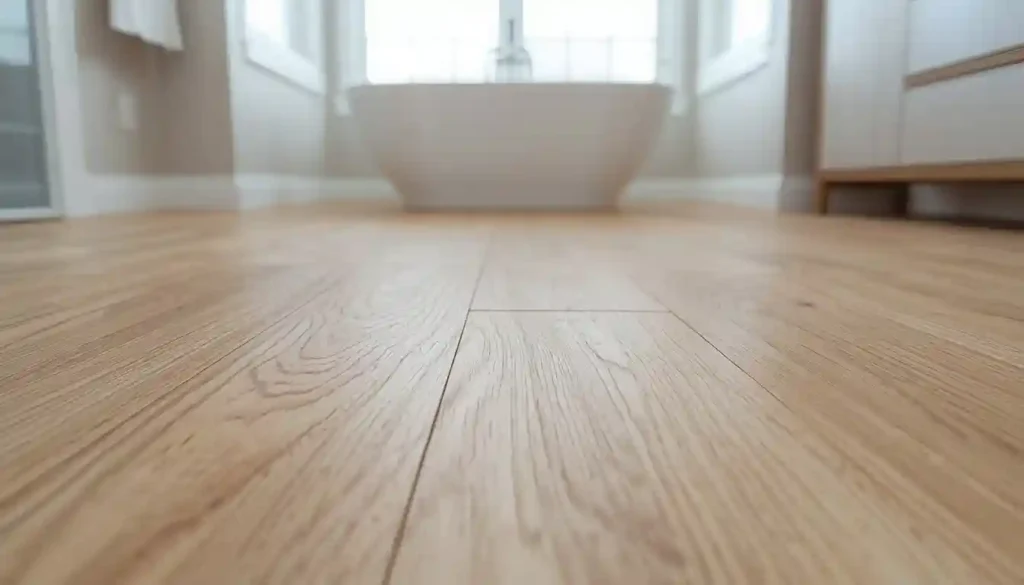
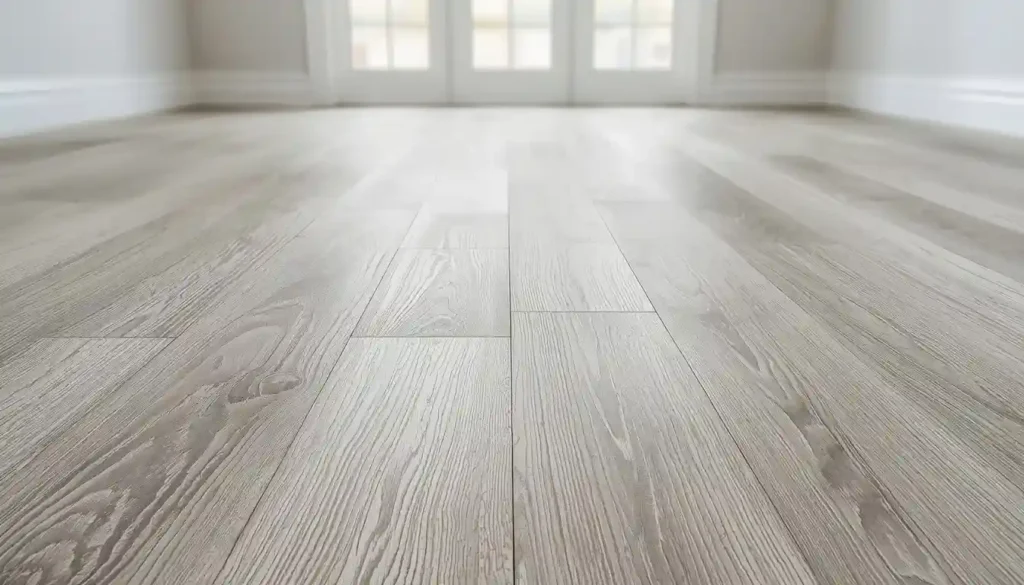
The master bathroom is the room where waterproof vinyl flooring most clearly demonstrates its value proposition. Tile has been the default choice for bathrooms for generations, and it is genuinely excellent at handling moisture. But tile is cold underfoot, hard on joints during extended standing, acoustically harsh, and grout-dependent in a way that creates a maintenance burden over time. Light oak luxury vinyl plank addresses all of those weaknesses while delivering a warmth and visual softness that tile rarely achieves.
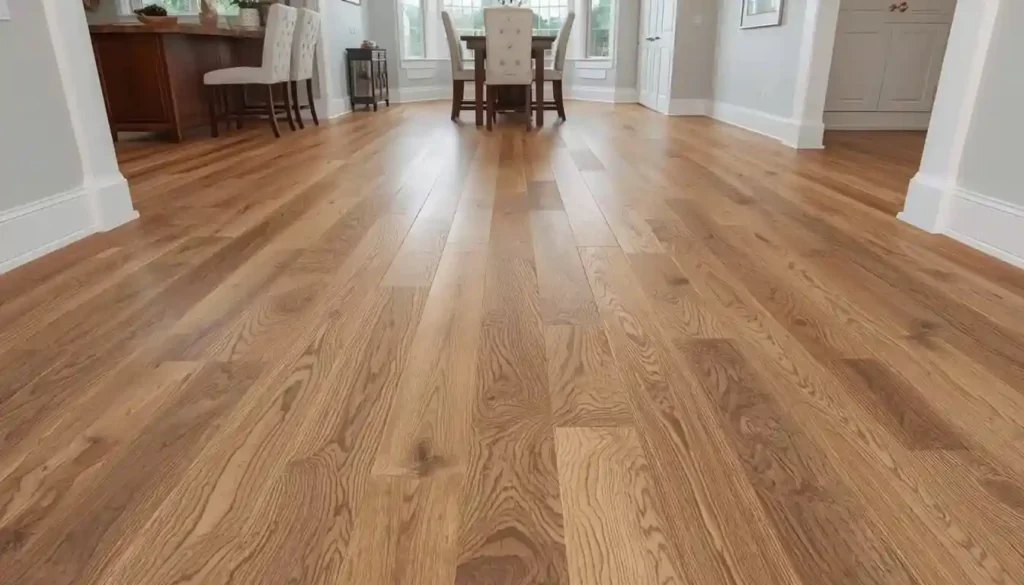
For a master bathroom, look for planks in a blonde or natural oak tone — colors in the honey, wheat, or pale ash range. These tones reflect light well, which makes the room feel larger and brighter. A matte or satin finish is preferable over high-gloss in wet rooms because it hides water spots and footprints more effectively. The texture should be embossed to replicate the grain of real wood, not only for realism but because micro-texture provides traction when the floor is wet.
Plank width is a meaningful design decision in bathrooms. Narrower planks in the 5- to 6-inch range tend to read as more traditional and work well with classic vanity styles, marble countertops, and subway tile. Wider planks in the 7- to 9-inch range feel contemporary and reduce the visual busyness of the floor pattern, which can help smaller bathrooms feel cleaner and more spacious. If the bathroom layout involves a freestanding tub or a walk-in shower with frameless glass, the wider format tends to photograph and stage better as well.
Installation in a bathroom requires attention to the perimeter. Leave the standard expansion gap at walls and use a flexible silicone caulk rather than grout or rigid trim at the transition between the floor and the shower base or tub surround. This maintains the waterproof integrity at the most vulnerable point in the room. For the shower floor itself, the plank won’t extend into the wet zone — that area still requires tile or a solid surface — but the vinyl plank can run right up to the threshold.
Idea 2: Dark Espresso Vinyl Plank in a Modern Kitchen
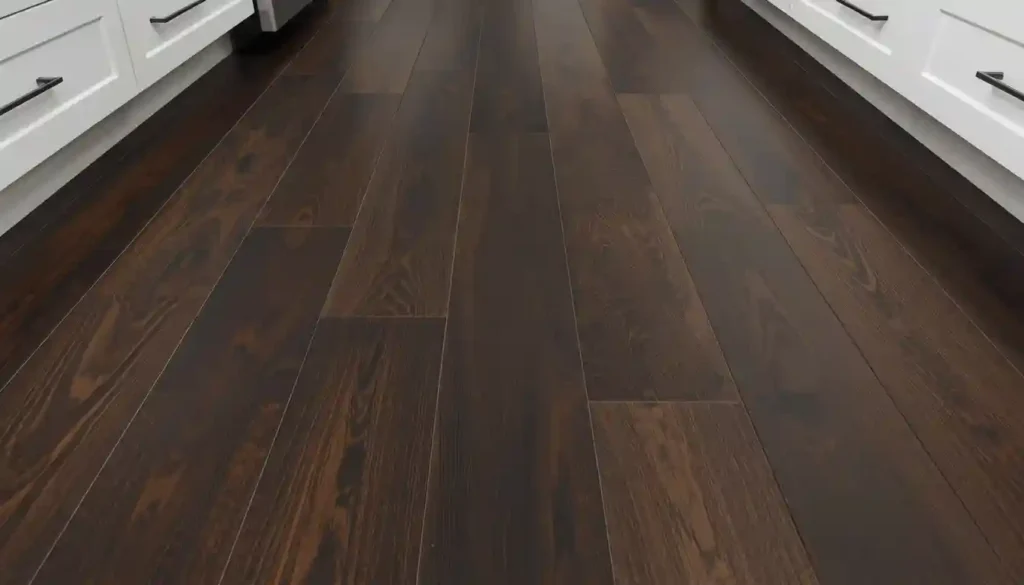
Dark flooring in kitchens was out of favor for several years as the clean, Scandinavian-influenced aesthetic of white oak and light grays dominated interior design. That cycle has shifted. Rich espresso, charcoal, and dark walnut tones are returning to kitchens with genuine momentum, and waterproof vinyl plank is the most practical way to execute that look. The combination of a dark floor with white or light-gray cabinetry, quartz countertops, and stainless appliances creates a high-contrast, highly photogenic result that reads as distinctly contemporary.
The technical case for SPC vinyl in a kitchen is straightforward. Kitchens are among the most moisture-exposed rooms in the house: steam from pots, water from the sink, condensation from the refrigerator, and spills from cooking all put pressure on the floor continuously. An SPC core handles all of that without any of the concern about subfloor moisture protection that you would need to manage with engineered hardwood or solid wood in the same application. There is no need for a moisture barrier between the planks and the subfloor with a fully waterproof vinyl, which simplifies installation significantly.
One practical consideration with dark flooring in kitchens is surface maintenance visibility. Dark floors show dust, pet hair, and dried water spots more clearly than mid-tone floors. This is largely manageable with regular damp mopping, but it is worth thinking about honestly before committing. A floor with some variation in the print layer — natural wood grain variation, mineral streaks, or subtle color variation across planks — hides everyday debris far better than a uniform dark field.
Plank direction in the kitchen also deserves thought. Running planks parallel to the longest wall in an open-plan kitchen draws the eye through the space and makes the room feel more expansive. Running them perpendicular to the kitchen’s primary axis is less common but can create a more dynamic visual break between the kitchen and adjacent dining or living areas.
Idea 3: Stone-Look LVT in the Entryway
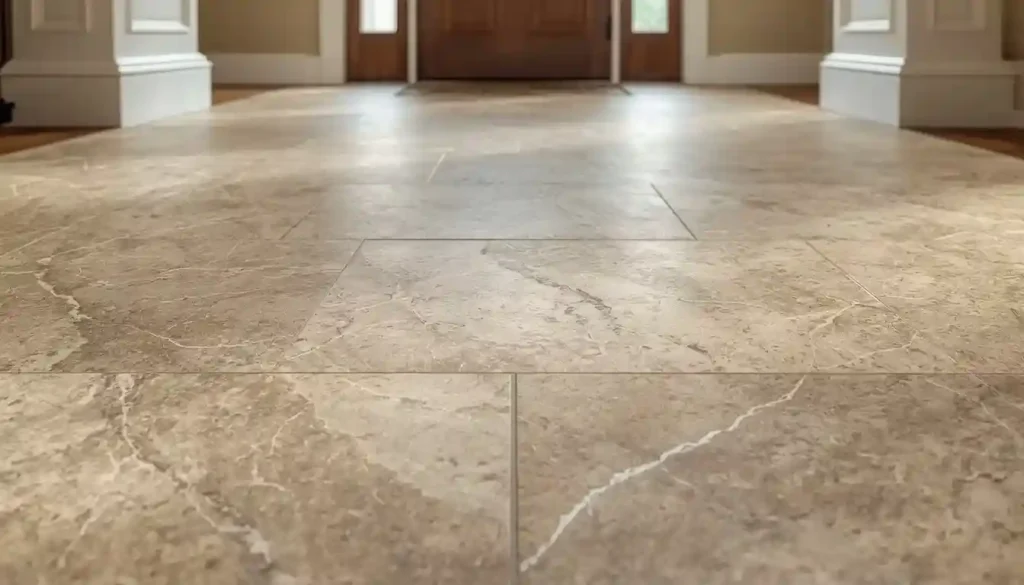
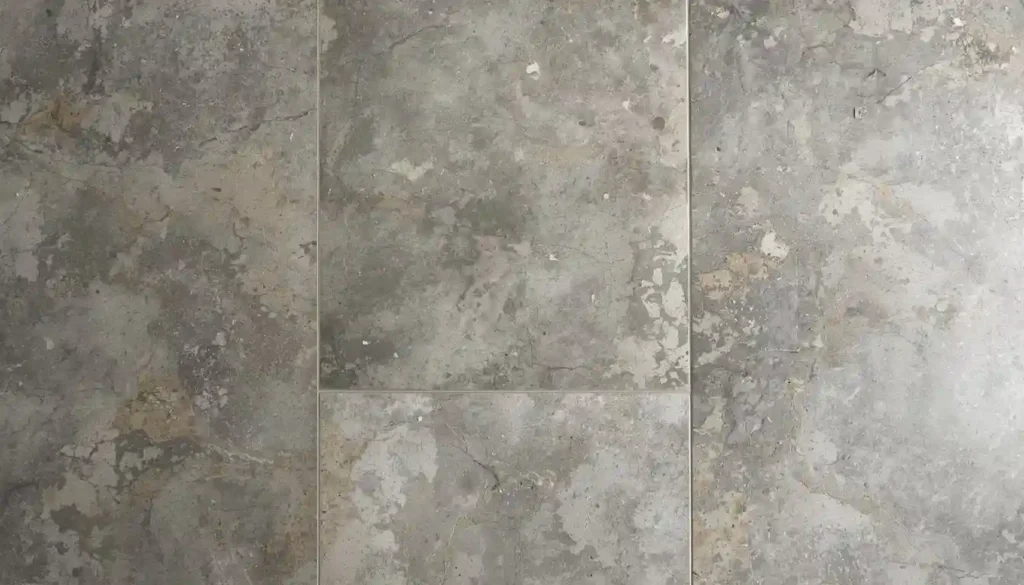
The entryway is the most abused surface in most homes. It receives the concentrated impact of outdoor grit, sand, gravel, water from rain and snow, and the mechanical stress of foot traffic that often stops and pivots in a tight area. Natural stone — travertine, slate, limestone — has been the traditional aspirational choice for entry floors because of its durability and the sense of permanence it communicates. Stone-look luxury vinyl tile captures that visual language while being far more forgiving of the conditions an entry actually experiences.
Large-format stone-look LVT, in tile sizes of 18×18 inches or 24×24 inches, is particularly effective in entries because the larger format reduces the number of grout lines and creates a more expansive, less visually fragmented look. For a slate or travertine impression, look for tiles with significant surface texture variation across units — real stone has individual character, and LVT prints that use multiple layers of variation rather than repeating a single image replicate that quality convincingly.
Color direction in an entry matters for practical reasons beyond aesthetics. Mid-tone grays and warm beiges with surface variation hide tracked-in dirt and moisture best. Very dark tiles show light debris, and very light tiles show mud and wet footprints immediately. A textured matte surface is preferable to polished for an entry because it provides traction on a surface that is regularly wet and gives the tile a more authentic stone appearance.
Radiant heat compatibility is worth confirming for entryway applications in colder climates. Most SPC and WPC vinyl products are rated for use over in-floor radiant heating systems, but the maximum surface temperature specification varies by product. Keeping the surface temperature at or below 85°F (29°C) is a common guideline. Whether vinyl flooring can be installed over radiant heat depends specifically on the product’s temperature rating and installation method, so verifying that compatibility before purchase is essential if you have an existing heated floor system.
Idea 4: Herringbone Waterproof Vinyl in the Living Room
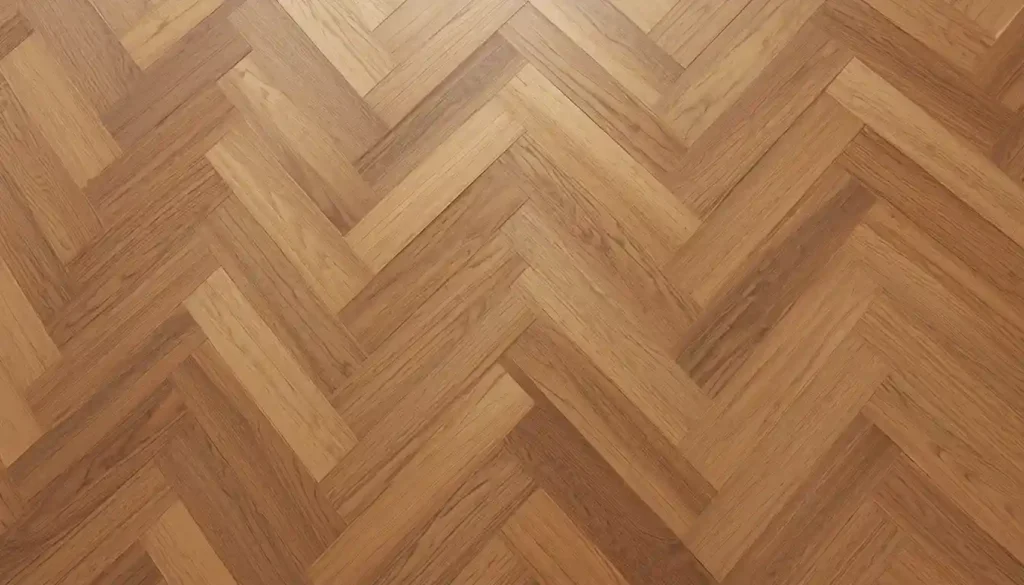
Herringbone is the pattern that most consistently elevates a standard vinyl plank floor into something that reads as intentional, crafted, and design-forward. The interlocking V-pattern creates diagonal movement across the floor that draws the eye toward the room’s focal point and adds visual complexity without introducing a competing color or material. In a living room setting, herringbone waterproof vinyl achieves the kind of layered, European-residential quality that previously required expensive solid parquet or engineered hardwood installation.
Technically, herringbone installation requires either planks that are manufactured specifically for the pattern (with square-cut ends rather than the angled ends used for chevron) or standard planks cut to consistent lengths on site. The key measurement consideration is the length-to-width ratio of the plank, which determines how open or tight the herringbone pattern reads. Short, wide planks create a smaller, more intricate pattern. Longer, narrower planks produce a larger, more graphic repeat that feels more modern.
For a living room, a mid-tone warm oak in herringbone is the most versatile choice — it reads as elevated without being demanding, works with both neutral and warm furniture palettes, and shows everyday wear gracefully because the diagonal direction of the planks distributes the visual impact of foot traffic across the grain rather than along it. Darker options like walnut-toned vinyl in herringbone create a dramatic, gallery-like floor that works powerfully with lighter upholstery and natural linen tones. Lighter options in bleached or whitewashed tones feel more coastal and casual and are excellent for living rooms that receive significant natural light.
Installation waste runs higher with herringbone than straight-lay patterns — typically 15 to 20 percent rather than the standard 10 percent — because of the additional cuts at room perimeters. Factor that into your material calculation when ordering.
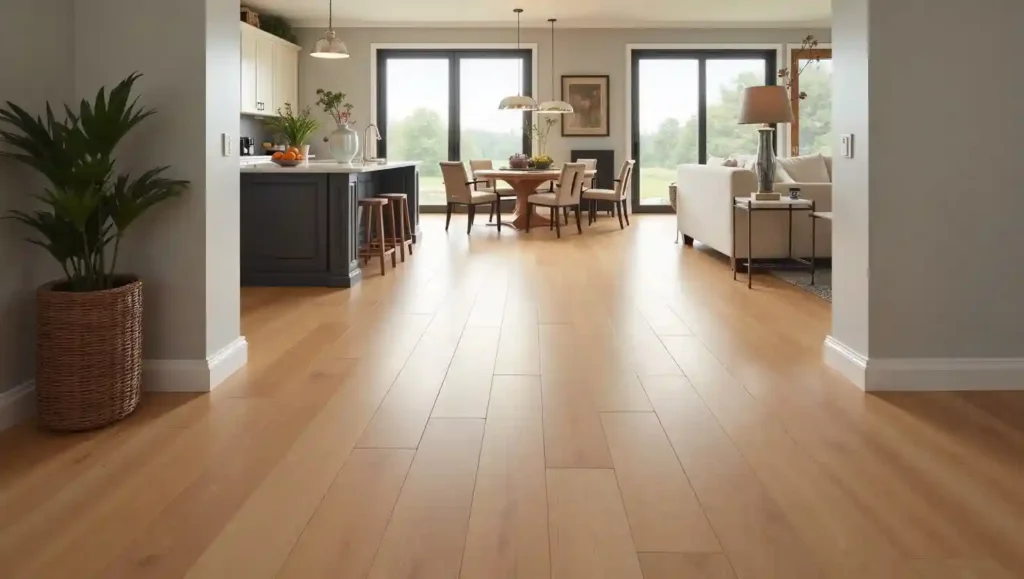
Idea 5: Wide-Plank SPC Vinyl in the Open-Plan Living and Dining Area
Open-plan living spaces present a specific design challenge: the floor must read as a continuous, cohesive element across what is effectively multiple functional zones — dining, lounging, kitchen transition — while also feeling appropriate in each one. Wide-plank vinyl, typically in the 7- to 9-inch width range, handles this better than narrow planks because the reduced number of plank seams creates a cleaner, less busy visual field that reads well from every angle and at every social distance within the space.
The case for SPC specifically in open-plan areas is dimensional stability across temperature gradients. These spaces often include exterior-facing walls, large windows, and direct sunlight exposure that create localized temperature variations across the floor. An SPC core’s high limestone content gives it superior resistance to expansion and contraction under those conditions compared to WPC or wood-based flooring options. The floor remains flat and the joints remain tight even when the sun is hitting one corner of the room while the rest stays shaded.
Wide-plank floors also reward careful attention to graining pattern on installation. Planks with significant natural variation in the print layer — light and dark streaks, mineral deposits, knot patterns — benefit from what installers call “racking” the floor: shuffling planks from multiple cartons and distributing that natural variation evenly across the room rather than installing full cartons sequentially. The resulting floor reads as natural and organic rather than repetitive and manufactured.
For open-plan spaces that flow between flooring types — vinyl in the kitchen transitioning to carpet in a family room, for example — transition strip selection matters for both the aesthetic and functional finish. Choosing the right type of transition strip for the height differential and material combination at each doorway or threshold keeps the floor-to-floor connection clean and prevents trip hazards over time.
Idea 6: Marble-Look LVT in the Powder Room
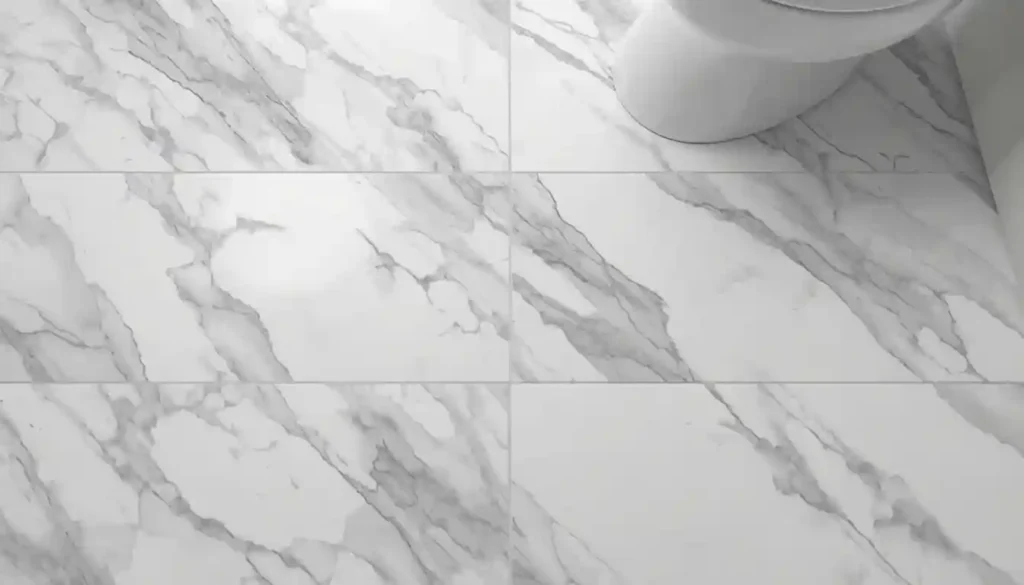
The powder room is the one room in the house where you can take a strong design risk because the square footage is small enough that commitment doesn’t feel overwhelming. Marble-look luxury vinyl tile lets you bring the visual drama of full Calacatta or Statuario marble veining into a half bath at a fraction of the cost of real stone and with none of the sealing, etching, and staining concerns that come with natural marble in a wet environment.
For maximum impact, go with a large tile format relative to the room size — 18×18 or even 24×24 inch tiles in a small powder room create the impression of seamless stone slabs rather than a tiled surface. Pair white marble-look tiles with dark grout if you want to emphasize the tile grid as a graphic design element, or use a near-matching grout color to let the marble veining read continuously across the floor without interruption.
The veining quality in marble-look LVT varies significantly between products. Look for tiles where the veining runs in consistent natural-looking directions, where the vein thickness varies organically rather than repeating a uniform line, and where multiple layers of color — gray, gold, beige, white — are present within the veining rather than a single-tone line on a white field. Products that use random print algorithms across tile faces rather than a single repeated image are substantially more convincing in installed form.
Powder rooms typically experience brief but concentrated moisture exposure: steam from hand washing, condensation from cool surfaces, and the occasional overflow that happens in any bathroom. SPC tile handles all of that reliably. The one installation detail that matters in this room is ensuring the floor is fully level and any adhesive used for glue-down applications is moisture-rated, because a small surface irregularity is much more visible in a large-format smooth tile than it would be in a textured wood-look plank.
Idea 7: Waterproof Vinyl Plank in the Finished Basement
Basements are arguably the room where waterproof vinyl flooring has the most transformative impact. For decades, homeowners converting basements into livable space faced a genuine flooring dilemma: carpet is warm and sound-absorbing but is destroyed by any moisture intrusion, hardwood is completely unsuitable below grade, and tile is waterproof but cold and acoustically harsh. Waterproof LVP changed that calculation fundamentally by providing a floor that handles below-grade moisture conditions reliably while looking and feeling like a premium above-grade installation.
The moisture situation in a basement is different from any other room in the house. Above-grade rooms face surface moisture — spills, humidity, condensation from plumbing. Basements face all of that plus vapor transmission upward through the concrete slab. This is why a fully waterproof core is not optional in a basement — it is the baseline requirement. An SPC or WPC floor won’t be harmed by vapor transmission the way wood-core flooring would be, but you still need to address the subfloor condition. Concrete should be tested for moisture emission before installation and any hydrostatic pressure issues (actual water seeping through cracks) should be resolved structurally, not floored over.
For basement comfort, the underlayment choice matters more than anywhere else in the house. A thicker foam underlayment, or one with an attached cork layer, provides meaningful thermal insulation and underfoot comfort that makes the space feel warmer and more residential. Choosing the best vinyl flooring for basements involves balancing the core type, wear layer, and underlayment to match the specific moisture profile and use conditions of your below-grade space, because basements vary more in their environmental character than almost any other room type.
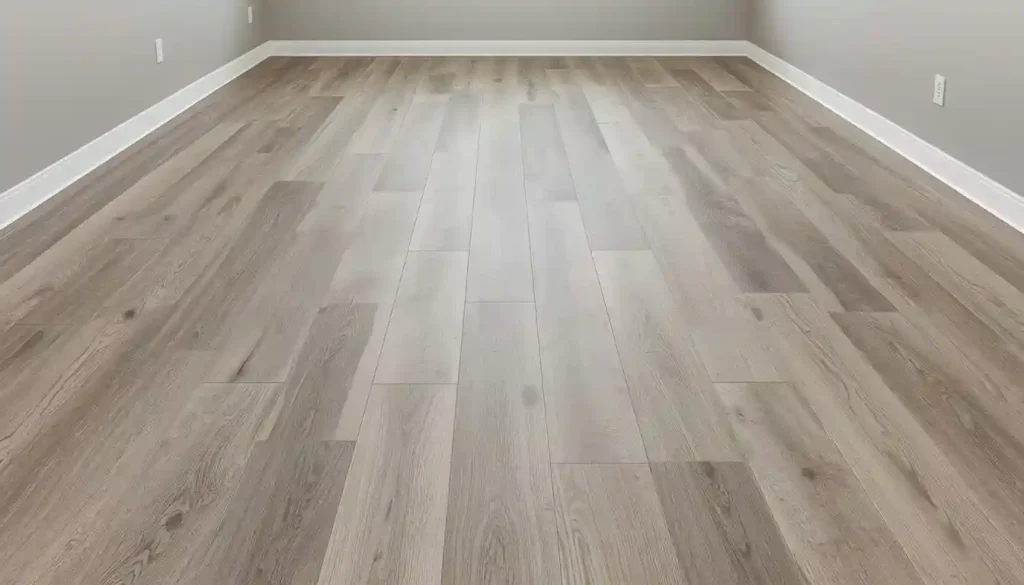
Medium-tone wood-look planks in gray-washed or greige tones tend to work well aesthetically in basements because they don’t emphasize the low-light quality of the space the way very dark floors do, and they read as contemporary and finished rather than rustic.
Idea 8: Geometric Patterned LVT for a Kitchen Backsplash Alternative Floor
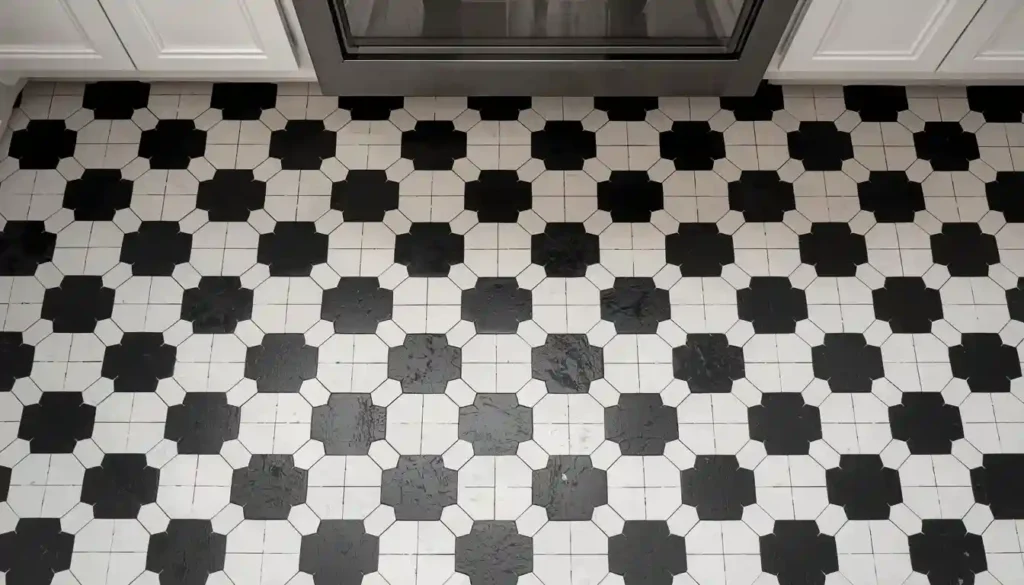
One of the most underexplored applications of waterproof luxury vinyl tile is using geometric or encaustic-style patterns to create a floor that functions as a statement design element in the same way a bold backsplash does in a kitchen. Hex tile, diamond patterns, penny tiles, and encaustic cement-look prints are all available in fully waterproof LVT formats, and they bring a level of personality and handcrafted visual quality that wood-look planks simply don’t achieve.
The practical case is strong too. A geometric LVT floor in a kitchen is easier to maintain than real encaustic cement tile, which requires sealing and is susceptible to etching from acidic spills. It is warmer and softer underfoot than ceramic or porcelain tile. And it installs faster and at lower cost than real tile because it doesn’t require mortar, grout, or curing time.
Black-and-white geometric patterns — particularly classic hex or checkerboard formats — have experienced a sustained resurgence in kitchen design because they reference mid-century and Victorian-era floor traditions in a way that feels simultaneously nostalgic and current. A matte black-and-white hex LVT floor with white subway tile backsplash and simple flat-front cabinetry in navy or forest green creates a cohesive, richly considered kitchen without any single expensive element. The floor, at roughly 3 to 5 dollars per square foot installed, does most of the visual work.
Color variation matters for longevity of satisfaction with patterned floors. A bold two-tone geometric pattern is striking in new condition, but consider how it reads when furniture, rugs, and the everyday visual complexity of a lived-in kitchen are layered on top of it. Slightly textured or variation-print versions of classic patterns typically wear better visually over time than perfectly uniform high-contrast versions.
Idea 9: Driftwood Gray LVP for Coastal-Style Interiors
The coastal aesthetic in interior design has proven far more durable as a trend than most seasonal looks, largely because it is as much about light, air, and material restraint as it is about any specific color palette. Driftwood gray luxury vinyl plank — planks in washed, bleached, or pale gray-brown tones that reference sun-exposed beach wood — is one of the most consistent high-performers in this aesthetic context. It pairs effortlessly with white walls, natural linen, wicker and rattan furniture, and the blue-green accent palette that defines coastal style.
The technical composition of driftwood gray LVP hasn’t changed, but the visual effect it creates in a room depends heavily on natural light quality. In rooms with abundant natural light, these tones feel bright, airy, and effortlessly relaxed. In rooms with limited natural light, they can read flat and cold. If natural light is limited in your space, warmer undertones within the gray range — tones that lean slightly toward greige or sandy blonde rather than pure cool gray — will read more warmly without abandoning the coastal reference.
Surface texture is particularly important for this type of floor. Smooth or semi-smooth textures in driftwood gray tend to look plastic and unnatural because the whole visual vocabulary of driftwood references weathering, grain raising, and surface erosion. A wire-brushed or hand-scraped texture profile, even a subtle one, adds authenticity and visual depth that makes the color story believable. It also hides minor surface scratches far better than a smooth finish.
For beach homes specifically, where sand tracks in constantly and the floor needs to handle the full range of coastal conditions including high humidity and occasional wet footwear, the pairing of SPC core and a 20-mil wear layer is the baseline specification. Finding the best flooring for beach homes means optimizing for dimensional stability in high-humidity conditions, scratch resistance from sandy foot traffic, and ease of cleaning — all areas where waterproof vinyl genuinely excels over wood and wood-based alternatives.
Idea 10: Reclaimed Wood-Look LVP for Farmhouse Kitchens and Mudrooms
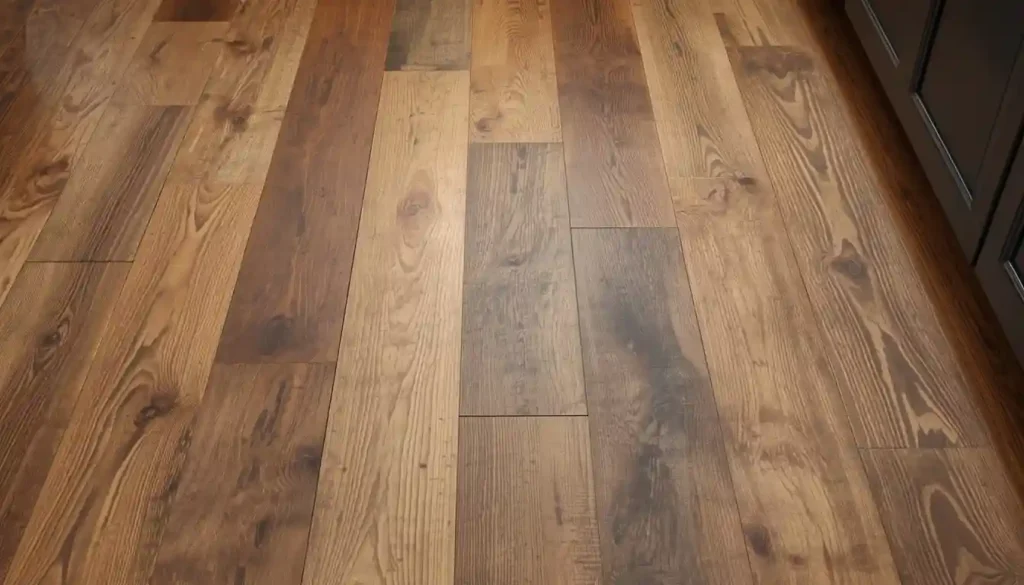
The reclaimed wood aesthetic — knots, checks, color variation, saw marks, nail holes, and the kind of character marks that accumulate over decades of actual use — is among the most popular in residential interiors right now. What makes waterproof LVP so effective at serving this aesthetic is that the imperfections that make reclaimed wood beautiful are also the elements that make printed vinyl look most convincingly like real wood. The more variation in tone, the more surface texture, and the more character marks in the print, the more authentic the plank looks and the better it hides everyday wear and dirt.
Farmhouse kitchens and mudrooms are ideal applications for this look. Both rooms experience high traffic, exposure to outdoor dirt and moisture, and the kind of lived-in, working character that makes a floor with plenty of visual personality feel appropriate rather than precious. A wide-format plank (7 to 9 inches) in a warm medium brown with significant tone variation, visible knots, and a brushed matte surface will read as genuine reclaimed board flooring from any normal viewing distance.
The mudroom in particular benefits from a material that offers zero anxiety about water, muddy boots, or the general mayhem of outdoor-to-indoor transition. SPC vinyl in a reclaimed wood look handles all of that while mopping cleanly and looking better over time than most flooring options because its character-heavy print pattern integrates surface marks rather than highlighting them. A floor that starts with built-in imperfection is a floor that ages gracefully.
Consider extending the same plank seamlessly from the mudroom into the kitchen and into adjacent hallways to create a continuous material story through the working zones of the house. This single-material continuity reduces the visual complexity of the home’s “back-of-house” and makes smaller individual rooms feel part of a larger, more considered whole.
Idea 11: Chevron Waterproof Vinyl in the Primary Bedroom
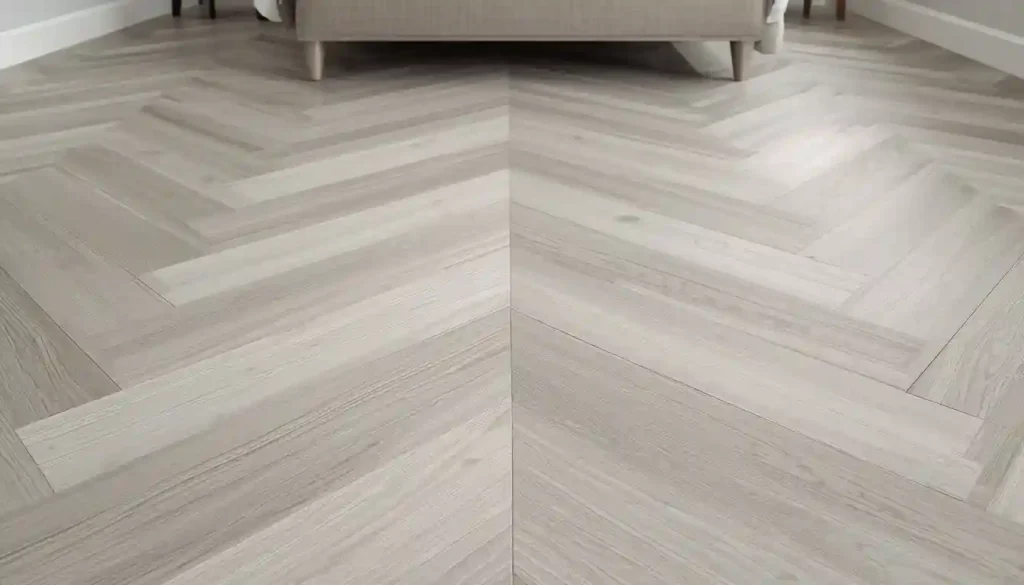
Chevron and herringbone are often discussed together but they create meaningfully different visual effects. In herringbone, planks are arranged in alternating right-angle interlocking V-shapes where the ends of adjacent planks meet the side of the next plank. In chevron, planks are cut at a consistent 45-degree angle at each end so that the heads of the planks meet in a continuous V-point that runs down the center of the pattern. Chevron is cleaner and more graphic, with a stronger directional flow that drives the eye across the room.
In a primary bedroom, chevron waterproof vinyl creates a level of design sophistication that most homeowners associate with hotel-quality interior work. The pattern reads as intentional and architectural rather than simply practical, which makes the room feel more considered and finished. A pale gray or cool blonde tone in chevron works beautifully with upholstered headboards, linen bedding, and the kind of quiet luxury aesthetic that is dominating contemporary bedroom design.
From a waterproof performance standpoint, the bedroom application is less demanding than wet rooms or kitchens, but the fully waterproof specification remains valuable for pet owners, families with young children who spill drinks in bedrooms, and anyone in a humid climate where overnight condensation from exterior-facing walls can create ambient moisture. The dimensional stability of SPC or WPC vinyl in a bedroom means the floor won’t develop cupping or gapping over years of seasonal humidity changes the way solid wood would.
The installation complexity of chevron does mean higher labor cost than straight-lay installation, and the cut waste at room perimeters is significant — typically 20 to 25 percent material overage. Budget accordingly, and if the room has an irregular shape or many door openings, discuss the pattern layout with your installer before ordering material to confirm the best orientation for the chevron point relative to the room’s focal wall.
Idea 12: Concrete-Look LVT in a Home Office or Studio
Polished concrete has been aspirational in residential and commercial design for years because of the industrial-minimalist quality it communicates: honest material, considered space, uncluttered thinking. The practical barriers to real polished concrete — the cost of grinding and sealing an existing slab, the coldness underfoot, the acoustic hardness, the limited DIY accessibility — have made concrete-look LVT one of the most consistently growing categories in the waterproof vinyl market.
For a home office or studio specifically, concrete-look LVT delivers a visual environment that feels focused and professional without the visual noise of wood grain or stone veining. The neutral, low-contrast surface recedes visually, which allows furniture, equipment, and display elements in the space to read more clearly. It photographs extremely cleanly for content creation applications, which has become a meaningful consideration as home offices increasingly double as on-camera backgrounds.
Concrete-look LVT comes in both plank and tile formats. The plank format in wider widths and longer lengths (24×48 or 36×48 equivalents) mimics the long, seamless character of a poured concrete floor more convincingly than standard square tile formats. A smooth matte or low-sheen finish with very subtle aggregate texture in the print layer is the most authentic choice. Overly veined or overly textured concrete prints can read as theatrical rather than genuine.
The acoustic properties of a home office floor deserve specific consideration. Hard smooth surfaces — including concrete, tile, and smooth LVT — reflect sound, which increases echo and makes the room acoustically harsh for video calls and recordings. Pairing concrete-look LVT with an area rug under the desk zone, cork underlayment, and soft furnishings mitigates that problem without abandoning the visual concept. For more information on how flooring choices affect sound, understanding IIC and STC ratings for vinyl flooring gives you the technical framework for comparing sound performance across product options before you commit.
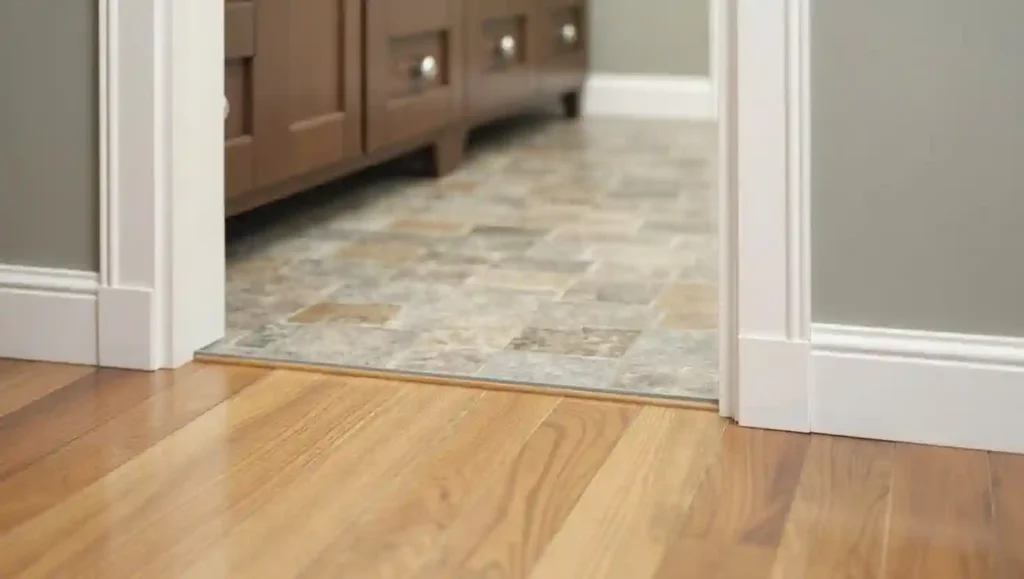
Idea 13: Mixed Material Transition — Vinyl to Tile at the Bathroom Threshold
Not every flooring idea is about the visual character of a single material in isolation. One of the more sophisticated design moves in residential flooring is the deliberate, well-detailed transition between two different floor materials at a threshold — specifically, the transition from waterproof vinyl plank in a hallway or bedroom to tile inside a bathroom. When this transition is handled thoughtfully, it adds a material richness and intentionality to the home that single-material approaches can’t achieve.
The key to a successful mixed-material transition at a bathroom threshold is height management. Tile and vinyl plank are typically close in installed height, but the exact differential depends on the tile thickness and any mortar bed, versus the vinyl and its underlayment. The transition strip profile — whether a T-molding, reducer, or threshold — should be chosen to bridge that specific differential cleanly. A poorly fitted transition strip that rocks, squeaks, or sits too high is both a trip hazard and a visual interruption that undermines the whole composition.
The design opportunity in this transition is material dialogue. If the hallway vinyl is a warm medium oak, a tile that picks up one of the undertone colors from the wood grain — a terracotta-tinged cream, a cool gray that references the ash in the wood — creates a transition that feels intentional rather than arbitrary. The floor materials should look like they were chosen in conversation with each other, not simply assigned to different rooms from different product categories.
For a contemporary approach, running the vinyl plank in the hallway right up to the bathroom opening and beginning a large-format stone-look tile inside creates a clean, deliberate material change that reads as a room signal — you are moving from a circulation space into a specific, self-contained room. This is how hotels and high-end residential projects typically handle this detail, and it’s entirely achievable with standard residential products when the installation detail is executed carefully.
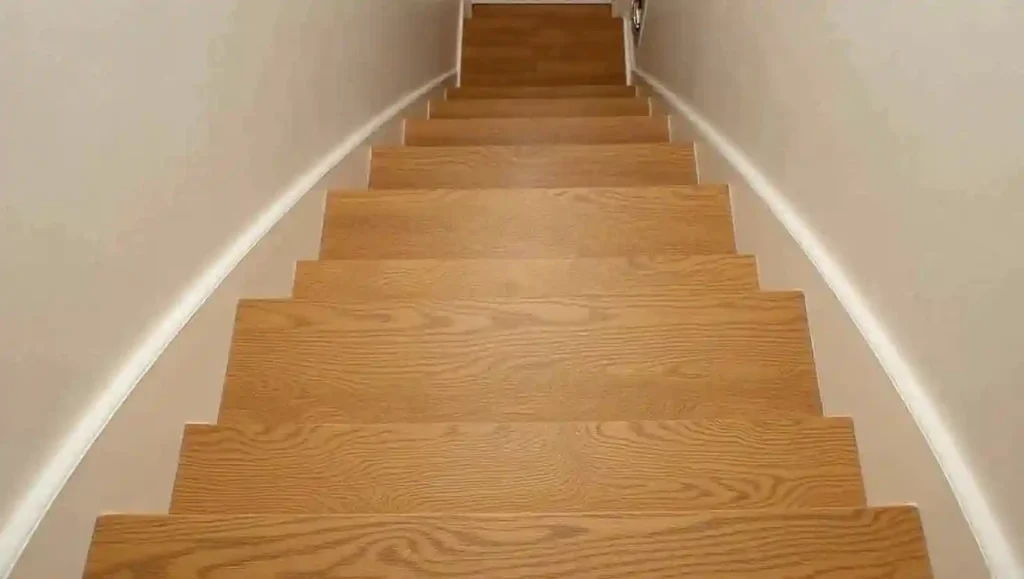
Idea 14: Waterproof Vinyl Plank on Stairs
Stairs are one of the most mechanically demanding surfaces in any home. Every step concentrates vertical and horizontal force at the nosing edge — the front of each tread — in a way that quickly exposes the quality of any flooring material. Traditional stair materials like carpet, hardwood, and tile each handle the nosing challenge differently, with carpet being most forgiving of minor installation imprecision and hardwood and tile requiring precise bullnose and trim work. Waterproof vinyl plank on stairs occupies an interesting middle position: it is durable enough to handle the mechanical demands, visually consistent with vinyl plank flooring installed on the adjacent levels, and more forgiving to install than tile while looking considerably more refined than carpet.
The critical installation detail on vinyl plank stairs is the nosing treatment. The tread nose — the exposed front edge of each stair — must be finished with either a matching vinyl stair nose profile that wraps around the edge, or by carefully routing the plank edge and applying a compatible nosing molding. A nosing that isn’t properly secured or doesn’t fully protect the plank edge at the nose will peel, lift, and chip under the cumulative impact of foot traffic, and a damaged stair nose is both a safety hazard and visually distracting.
SPC vinyl is the preferred choice for stairs over WPC because its denser, more rigid core is more resistant to the point-load impacts that occur when heels and the edges of shoes hit the nosing. A thicker wear layer — 20 mil minimum — is strongly recommended for stairs regardless of traffic level because the nosing wear pattern is concentrated and intense. For the riser (the vertical face of each step), a thinner flexible vinyl in a matching pattern is typically applied, though some installations use painted risers in a complementary color to create a deliberate contrast.
Idea 15: Full-Home Continuous Waterproof Vinyl — One Floor, Every Room
The most ambitious and arguably most design-coherent approach to waterproof vinyl flooring is using a single product continuously throughout the entire home, from entry through living spaces, bedrooms, kitchen, and bathrooms, with no material changes except where transitions between levels occur. This approach, sometimes called “one-floor-through,” has become increasingly popular in new construction and full-home renovation for compelling reasons that are both aesthetic and practical.
Aesthetically, a single continuous floor material creates a powerful sense of spatial flow and amplifies the perceived size of the home. Every interruption in the floor — a threshold, a material change, a transition strip — creates a visual break that subtly signals “this is a different room” and in doing so also signals the edge, the boundary, the limit. A continuous floor dissolves those edges and allows space to flow freely, which is particularly effective in smaller homes where every square foot of perceived volume matters.
Practically, the advantage is simplicity: one product order, one installer, consistent installation technique throughout, and consistent maintenance requirements forever after. There is no need to manage the compatibility between multiple flooring products or worry about the long-term replacement challenge of matching a specific product that has been discontinued.
The material specification for a one-floor approach has to satisfy the most demanding application in the home, which is typically the bathroom or kitchen. That means SPC core, a minimum 20-mil wear layer, and a finish that is appropriate in both wet and dry environments. A textured matte or satin finish in a mid-tone wood look is the most practical choice for whole-home application because it hides wear and dirt in kitchen and entry applications while reading as warm and residential in bedrooms and living spaces.
If you are weighing this approach against alternatives, the cost comparison between waterproof vinyl and other floor types for a full home installation is meaningful. The vinyl flooring cost guide breaks down material and installation costs across product types and quality tiers so you can evaluate the investment accurately against alternatives like engineered hardwood, laminate, or tile for the same full-home scope.
Choosing the Right Waterproof Vinyl for Your Project
After working through fifteen specific ideas, the patterns in how to evaluate and choose waterproof vinyl flooring for any application become clear. Core type — SPC versus WPC — is the first decision, and it maps to the priorities of the specific room. Rooms requiring maximum dimensional stability and dent resistance get SPC. Rooms where comfort, warmth, and sound absorption are priorities get WPC. Many homeowners choose SPC for wet areas and high-traffic zones and WPC for bedrooms and family rooms, then use a consistent visual finish across both to maintain continuity.
Wear layer thickness is the second critical specification and it should scale with traffic intensity and the presence of pets or children. A 12-mil wear layer is the baseline for mainstream residential use. A 20-mil wear layer is the right choice for kitchens, entryways, stairs, and any space with pets. For commercial applications or rental properties where the floor needs to withstand intensive use without owner-level care, 28 mil or higher is available and worth the additional cost.
Visual selection — the print layer, texture, color, and format — should be made in the room where the floor will be installed, not in a showroom or on a computer screen. The same plank looks different under fluorescent showroom lighting, under natural daylight, and under warm residential lamp light. Many retailers offer sample loans for exactly this reason, and the investment in testing a sample in your actual space under your actual lighting conditions saves significant regret.
If you are comparing waterproof vinyl against other flooring types to resolve a specific performance question, the choice between waterproof laminate and waterproof vinyl is one of the most common decisions homeowners face. Both categories have improved substantially, and the right answer genuinely depends on the moisture conditions, subfloor quality, and design goals of the specific application. Understanding the technical differences between the two makes that comparison straightforward rather than confusing.
Installation quality matters as much as product quality for long-term performance. A high-quality SPC floor installed over an improperly prepared subfloor — one that isn’t flat, has moisture issues, or has debris under the planks — will fail prematurely in ways that the product itself would not. The subfloor flatness specification for most click-lock vinyl (3/16-inch variation in 10 feet, or 1/8-inch in 6 feet) is a real technical requirement, not a formality. Knowing what subfloor conditions support vinyl flooring is part of the preparation work that ensures the product performs as designed for the full duration of its rated lifespan.
Finally, the relationship between the floor and the rest of the room’s material and color palette is worth deliberate attention beyond the in-room sample test. Waterproof vinyl’s visual range is now broad enough that the floor can either harmonize with or counterpoint cabinetry, countertops, wall color, and trim in precisely the way a designer would intend. That range is an opportunity, but it requires choice. The ideas in this guide are not meant to be copied literally but to demonstrate the breadth of what is possible so that the choice you make reflects your specific home, your specific aesthetic sensibility, and the specific performance demands of each room where the floor will live.
James Miller is a seasoned flooring contractor with years of hands-on experience transforming homes and businesses with high-quality flooring solutions. As the owner of Flooring Contractors San Diego, James specializes in everything from hardwood and laminate to carpet and vinyl installations. Known for his craftsmanship and attention to detail, he takes pride in helping clients choose the right flooring that balances beauty, durability, and budget. When he’s not on the job, James enjoys sharing his expertise through articles and guides that make flooring projects easier for homeowners.
A teak shower floor sits at an interesting crossroads between practical engineering and bathroom aesthetics. It is not simply a flooring choice — it is a system decision, one that touches subfloor preparation, waterproofing assemblies, drain geometry, wood species behavior under constant moisture, and long-term maintenance chemistry. Most guides collapse all of that into a…
The vinyl flooring market has become genuinely crowded. There are hundreds of brand names on store shelves and even more floating around online, and most of them use the same language: waterproof, durable, easy install, realistic wood look. That uniformity makes the brand comparison problem harder than it looks. You are not comparing apples to…
Bamboo flooring does not forgive a careless substrate setup. The underlay you choose is not a minor accessory — it is the functional layer that determines whether moisture rises into your planks, whether footsteps echo through the room, and whether the floor feels solid or springy underfoot. Get it wrong and even a premium strand-woven…
11 Herringbone Tile Flooring Ideas That Work in Every Room The herringbone pattern is one of the oldest floor layouts in the world, and somehow it keeps looking like the newest idea in the room. Roman engineers used it to surface roads. Elizabethan craftsmen used it to dress palace floors. And today, homeowners from San…
What Historic Wood Floors Actually Are — And Why That Changes Everything Most conversations about preserving wood floors in historic homes start at the wrong place. They start with products — which oil to apply, which sander to rent — when the real starting point is understanding what you are standing on and why it…
Glued down laminate flooring is bonded directly to the subfloor using a pressure-sensitive adhesive, locking each plank permanently in place. Floating laminate flooring is not attached to the subfloor at all — the planks interlock with each other through a click-lock or tongue-and-groove system and rest on top of an underlayment, free to move as…